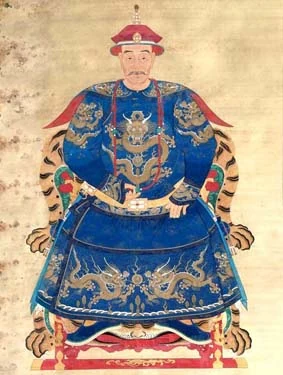
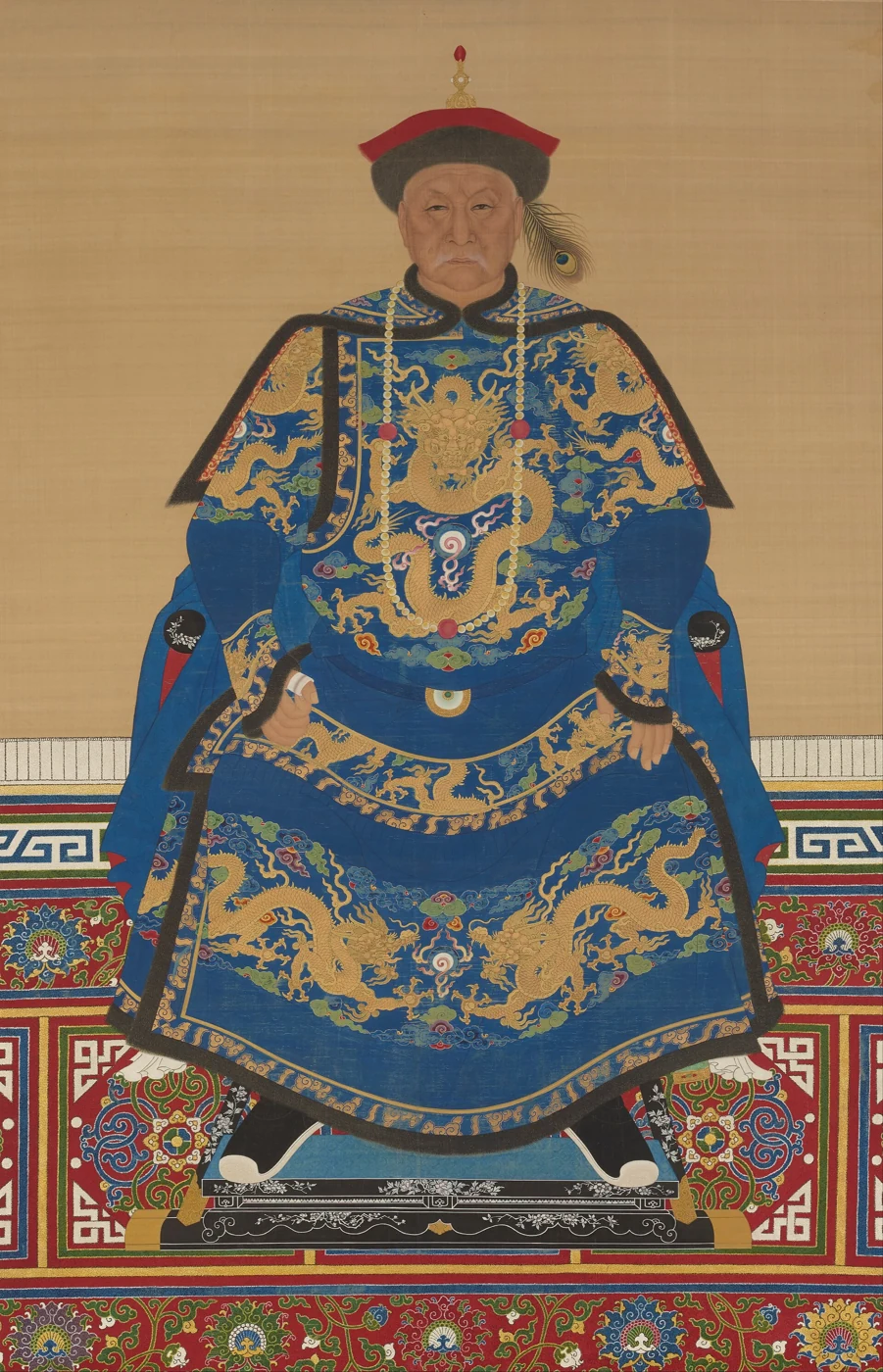
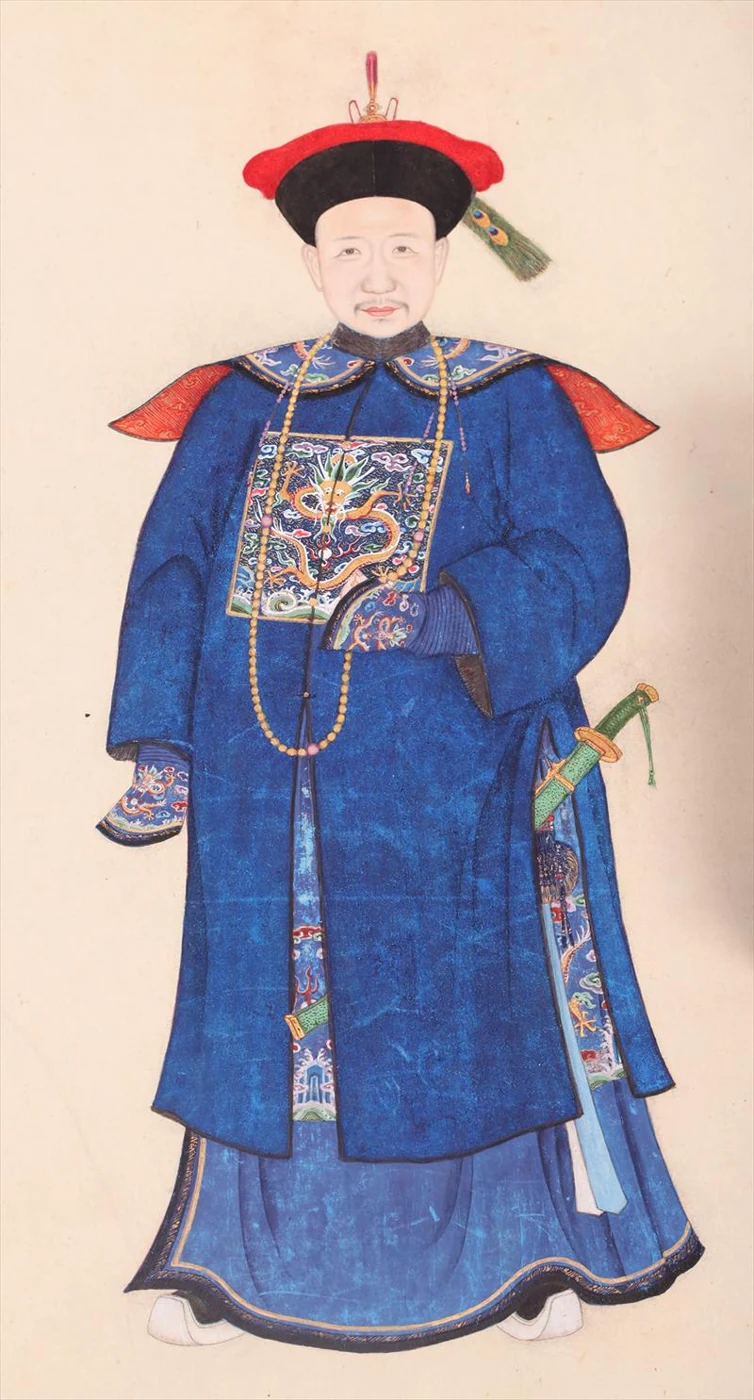
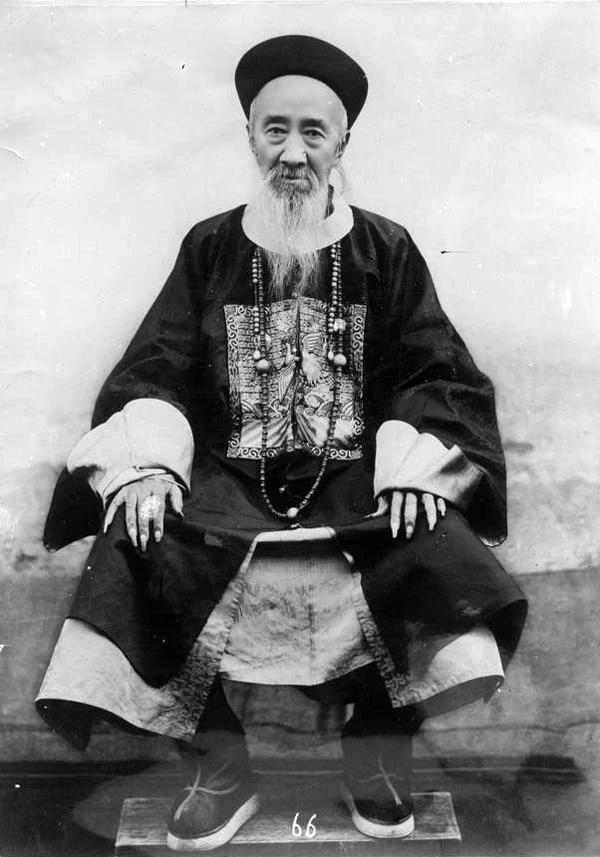
1644 CE–1912 CE

Qing Dynasty

Empire at a global turning point

清朝

The Qing (1644–1912) was the last imperial dynasty in Chinese history and was established by the Manchu Aisin Gioro house. It was also known as the Great Qing, the Great Qing State, and the Great Qing Empire. Its ancestral founder, Nurhaci, leader of the Jianzhou Jurchens, established a state and assumed the title khan in 1616, the forty-fourth year of the Wanli era. The state was called Jin and is known historically as Later Jin. In 1636, the tenth year of Tiancong, Hong Taiji changed the…

1644 CE–1912 CECapital · Beijing

ERA OVERVIEW

The Qing (1644–1912) was the last imperial dynasty in Chinese history and was established by the Manchu Aisin Gioro house. It was also known as the Great Qing, the Great Qing State, and the Great Qing Empire. Its ancestral founder, Nurhaci, leader of the Jianzhou Jurchens, established a state and assumed the title khan in 1616, the forty-fourth year of the Wanli era. The state was called Jin and is known historically as Later Jin. In 1636, the tenth year of Tiancong, Hong Taiji changed the state name to "Great Qing." In the fourth lunar month of 1644, the first year of Shunzhi, the Ming general Wu Sangui allowed Qing forces to enter through the passes. After defeating the forces of Li Zicheng, the Qing moved the capital to Beijing and gradually defeated the Southern Ming and other anti-Qing forces. By the Kangxi reign, Taiwan had been incorporated, completing the dynasty's unification of the country. During the early Qing, through the Kangxi, Yongzheng, and Qianlong reigns, state power and territorial extent reached their height in the period commonly called the High Qing (Kangxi-Qianlong) era. The Mongolian Plateau, Xinjiang, Tibet, and other regions were successively incorporated into the Qing imperial order, establishing much of the territorial framework of modern China. After the Daoguang reign began, foreign military pressure and repeated internal rebellions weakened the state. The 1911 Revolution broke out in the third year of Xuantong. On February 12, 1912, the Xuantong Emperor, Aisin Gioro Puyi, issued an abdication edict, bringing the Qing Dynasty to an end and ushering China into a republican era.

Time span1644 CE–1912 CE
CapitalBeijing

ERA TIMELINE

Qing forces entered the passes and movOpen

Qing forces entered the passes and moved the capital to Beijing, beginning Qing rule over the Central Plains.

The Kangxi Emperor succeeded to the thOpen

The Kangxi Emperor succeeded to the throne.

Qing forces unified Taiwan under Qing Open

Qing forces unified Taiwan under Qing rule.

The Yongzheng Emperor succeeded and stOpen

The Yongzheng Emperor succeeded and strengthened central administration.

The Qianlong Emperor succeeded, and thOpen

The Qianlong Emperor succeeded, and the dynasty entered the later phase of its high period.

The Jiaqing Emperor succeeded, as sociOpen

The Jiaqing Emperor succeeded, as social crises became increasingly visible.

The Opium War began.Open

The Opium War began.

Modernizing experiments associated witOpen

Modernizing experiments associated with the Self-Strengthening Movement began to develop.

The First Sino-Japanese War began.Open

The First Sino-Japanese War began.

The New Policies were launched.Open

The New Policies were launched.

The 1911 Revolution began.Open

The 1911 Revolution began.

(third year of Xuantong; first yeOpen

1912 (third year of Xuantong; first year of the Republic): The Qing emperor abdicated and the dynasty ended.

FULL ENTRY

Historical Development

Establishment: In the early Ming Dynasty, the Jurchens were divided into the Jianzhou, Haixi, and Yeren groupings. The Aisin Gioro family hereditary held military offices associated with the Jianzhou Left Guard. In 1583, the eleventh year of Wanli, after his father and grandfather were accidentally killed by Ming forces, Nurhaci began his rise with the "thirteen suits of inherited armor" and gradually unified the Jianzhou Jurchen groups. In 1616, the forty-fourth year of Wanli, he established a state, assumed the title khan, set his capital at Hetu Ala, present-day Xinbin in Liaoning, and named the state Jin, later known as Later Jin. After Hong Taiji succeeded him, the ethnonym Jurchen was changed to Manchu in 1635, the ninth year of Tiancong. In 1636, the tenth year of Tiancong, Hong Taiji proclaimed himself emperor at Shengjing, present-day Shenyang, and changed the state name to "Great Qing." In 1644, the first year of Shunzhi, Li Zicheng captured Beijing. To oppose the rebel army, the Ming general Wu Sangui submitted to the Qing. Qing troops under Aisin Gioro Dorgon entered Shanhai Pass, defeated Li Zicheng's forces in the fourth lunar month, moved the capital to Beijing, and formally established Qing rule over the Central Plains.

Height: During the approximately two decades after entering the passes, the Qing successively defeated the Shun, Xi, Southern Ming, and other regimes. In 1661, the eighteenth year of Shunzhi, Zheng Chenggong led forces that recovered Taiwan; in 1683, the twenty-second year of Kangxi, Qing forces defeated the Ming-Zheng regime in Taiwan and incorporated the island into the Qing state. The Kangxi court suppressed the Revolt of the Three Feudatories between 1673 and 1681 and concluded the Treaty of Nerchinsk with Russia in 1689. Under Yongzheng and Qianlong, the dynasty continued to strengthen frontier control. During the Qianlong reign, the Qing subdued the Dzungars and the Muslim regions, unified Xinjiang, and incorporated Tibet into effective imperial administration. Through the warfare and government of the Kangxi, Yongzheng, and Qianlong emperors, Qing military power, economy, and culture recovered and expanded, and the empire controlled an unprecedentedly broad territory and tributary sphere. This period is commonly called the High Qing (Kangxi-Qianlong) era and represented the high point of the dynasty's development.

Turning Point: By the later Qianlong reign, official corruption had intensified, while White Lotus and other uprisings became more frequent and social tensions accumulated. In 1840, the twentieth year of Daoguang, the First Opium War began. The Qing court was defeated and forced to sign unequal treaties with Britain, after which China entered a semi-colonial and semi-feudal condition and faced repeated encroachment by foreign powers. Following the Industrial Revolution in the West, the gap in state power between the Qing and the industrialized powers widened rapidly. Maritime prohibitions and policies of restricted foreign contact left the Qing at an increasing disadvantage in a new era of technological competition.

Decline: During the Xianfeng and Tongzhi reigns, large internal conflicts included the Taiping Rebellion, the Nian Rebellion, and Muslim uprisings. At the same time, Anglo-French forces invaded northern China and the Russian Empire acquired territory in the north, causing a severe decline in Qing power. To preserve the state and the dynasty, Qing officials launched the Self-Strengthening Movement, the Hundred Days' Reform, and the New Policies, but none fundamentally reversed the decline. Defeat in the First Sino-Japanese War further reduced Qing international standing.

Fall: After the Boxer Rebellion was defeated under suppression involving the Qing state and foreign forces, the court implemented the New Policies. Because these reforms continued to protect imperial interests, many constitutionalists became disappointed and increasingly supported revolution. In 1911, the third year of Xuantong, the 1911 Revolution broke out and provinces successively declared independence. On January 1, 1912, the Provisional Government of the Republic of China was established in Nanjing. On February 12, Empress Dowager Longyu issued the Abdication Edict in the name of the Xuantong Emperor Puyi. The Qing Dynasty formally ended, and more than two centuries of its imperial rule came to a close.

Politics and Institutions

Qing political institutions brought imperial centralization and autocratic rule to a high point. The state privileged Manchu status in appointments and official recruitment and did not establish the office of Grand Councilor. The highest decision-making institutions changed according to imperial authorization and included, in succession, bodies such as the Council of Princes and High Officials, the Grand Council, and the Zongli Yamen, formally the Office for the General Management of Affairs Concerning the Various Countries. These institutions increased administrative efficiency while also concentrating authority in the emperor. At the local level, the Qing used the provincial system, with governors-general and governors overseeing provincial military and civil administration above prefectures, subprefectures, departments, and counties. The imperial examination system remained a major route into office, while the Eight Banners, Green Standard Army, and hereditary offices formed important parts of the military and political order. The *Great Qing Legal Code and Substatutes* served as the basic legal code, and the system also reflected distinctions between banner populations and ordinary civilian subjects. In the middle Qing, literary inquisitions became frequent, and statements suspected of opposing the court could produce extensive prosecutions. In the later Qing, new foreign-affairs institutions such as the Zongli Yamen were established, while military training, industrial arsenals, factories, and other Self-Strengthening initiatives gradually introduced elements of modern state administration. The detailed evolution of individual offices and institutions is treated in the relevant entries.

Military and Diplomacy

In military affairs, the early Qing relied on the Eight Banners as its elite core and on the much larger Green Standard Army as a principal force. Combined use of mounted archery and firearms helped the dynasty conquer the country and expand its frontiers. In the middle and later periods, the Qing increasingly relied on Green Standard units and regional militia armies, including the Xiang Army and Huai Army, and later created modernized land and naval forces such as the Beiyang Fleet. Qing expansion on land and at sea and the administration of frontier regions helped shape the territorial basis of modern China. In diplomacy, the early Qing inherited the tributary order and implemented forms of maritime restriction and limited foreign trade, while maintaining significant contacts with neighboring East Asian states and with European missionaries and merchants arriving by sea. The Kangxi Emperor was initially supportive of Jesuit missionaries in China, but the Chinese Rites Controversy—especially papal prohibitions on Chinese Christian participation in ancestral rites and Confucian ceremonies—contributed to growing restrictions on Christianity late in the Kangxi reign and under Yongzheng. Western powers later sent repeated missions seeking more open and equal commercial relations, which the Qing generally rejected or limited. The Opium Wars opened a new phase of modern Chinese history, and foreign powers compelled the Qing to sign a succession of treaties that expanded treaty ports and foreign commercial access.

Economy and Commerce

Political stabilization in the early Qing, the spread of new crops such as sweet potatoes and maize, and changes in taxation contributed to a population that eventually exceeded 400 million. Fiscal reforms included the fusion of the poll tax with the field tax. Agriculture continued to expand, while commerce and handicraft production prospered, producing regional merchant networks and long-distance trade systems in which silver served as a major medium of exchange. During the Kangxi-Qianlong period, the Qing economy ranked among the largest in the world. International trade grew and supported agricultural and handicraft production, although foreign commerce remained concentrated in ports such as Guangzhou while most other ports were long subject to restrictions. After the Daoguang reign began, foreign manufactured goods increased, silver flowed outward, and government finances came under strain, while the traditional economy gradually weakened. During the Self-Strengthening Movement, modern military and civilian industries were established, marking the beginnings of modern industrial and commercial development in China.

Culture and Society

In culture, evidential scholarship flourished, and large court-sponsored compilations such as the *Siku Quanshu* became major scholarly projects. Popular drama and fiction, including works such as *Dream of the Red Chamber* and *The Scholars*, also developed strongly. After the Qing conquest, Sino-Western cultural exchange expanded through missionaries and foreign trade, gradually introducing Western science and learning and contributing to later Self-Strengthening and reform movements. Society remained organized around Confucian ethical norms and maintained distinctions between Manchu banner populations and Han civilian subjects, with substantial legal and social hierarchy. Policies such as the queue order and distinctions in residence and occupation were important features of Qing ethnic rule, while practices such as footbinding continued among many women. In the later period, Western learning and treaty-port contact altered social attitudes, and after the First Sino-Japanese War new currents advocating reform and revolution became increasingly influential, helping create the conditions for Preparative Constitutionalism and revolutionary politics.

Historical Assessment and Legacy

Contemporary assessment: The Qing court portrayed itself as the legitimate successor to the Ming and celebrated the prosperity of the High Qing (Kangxi-Qianlong) era. In foreign relations it often presented itself as the center of a universal imperial order, referred to itself as "China" and the "Great Qing State," and used "China" as the name of a sovereign state in the Treaty of Nerchinsk. Contemporary officials and court writers frequently praised the military achievements of the conquest and the rule of the Kangxi, Yongzheng, and Qianlong emperors. In the later period, however, criticism increasingly focused on restricted foreign contact, official corruption, and diplomatic humiliation.

Later assessment: Modern scholarship commonly identifies the Qing as the last dynasty in Chinese history. It credits the dynasty with consolidating a unified multiethnic state, establishing much of the territorial framework of modern Chinese sovereignty, and creating important demographic and economic foundations, while also recognizing population growth and regional economic development. At the same time, later historians have criticized authoritarian centralization, literary inquisitions, restrictive foreign policies, and humiliating foreign defeats and treaties, and have emphasized the failure of the late Qing to complete a successful modern political transformation. Overall assessments often combine the achievements of the high period with the crises of the dynasty's decline.
Rulers

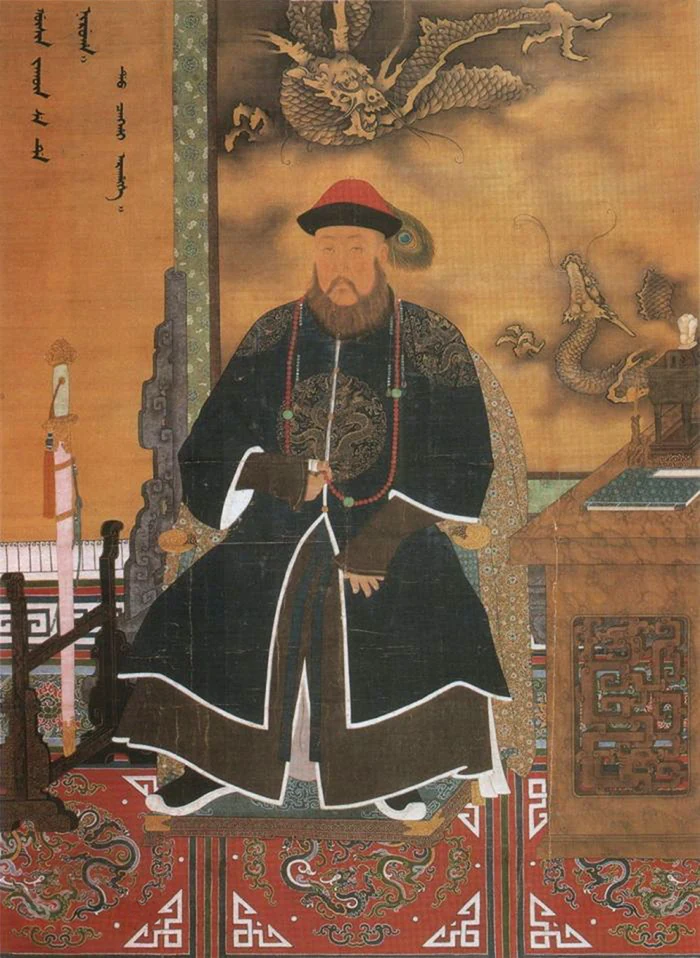
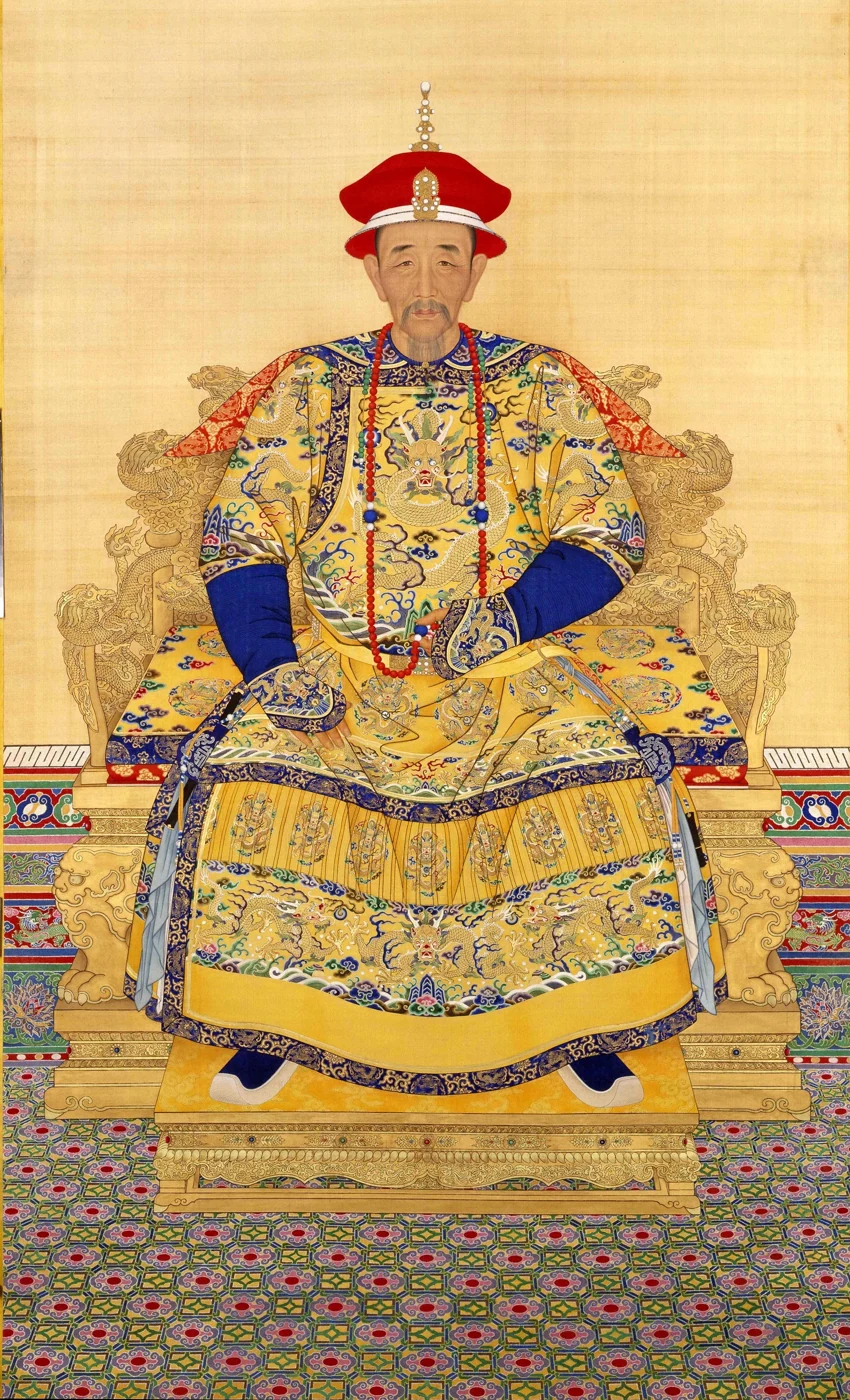
Later artistic depiction of Aisin Gioro Xuanye in a historical painting or book illustration.Qing Dynasty

Qing emperor

Aisin Gioro Xuanye

1654 CE–1722 CE

Aisin Gioro Xuanye was born on 4 May 1654(18th day of the third lunar month, Shunzhi 11) and died on 20 December 1722(13th day of the 11th lunar month, Kangxi 61). He was known by the era name Kangxi and temple name Shengzu, and was the fourth emperor of the Qing Dynasty, reigning from 1661(Shunzhi 18) to 1722(Kangxi 61). Xuanye ascended the throne as a child and was initially assisted by four regents. After taking p

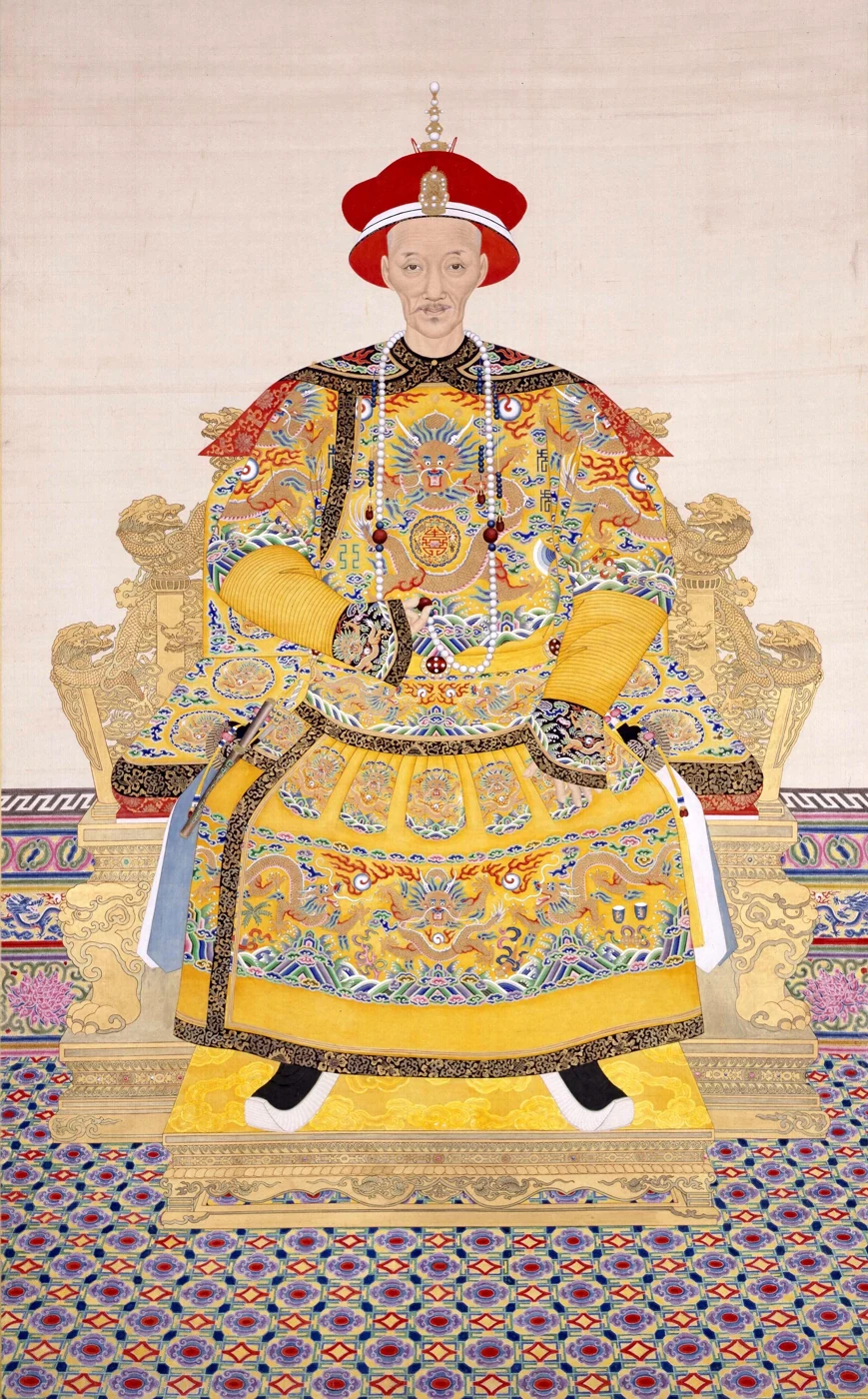
Later artistic depiction of Aisin Gioro Hongli in a historical painting or book illustration.Qing Dynasty

Emperor

Aisin Gioro Hongli

1711 CE–1799 CE

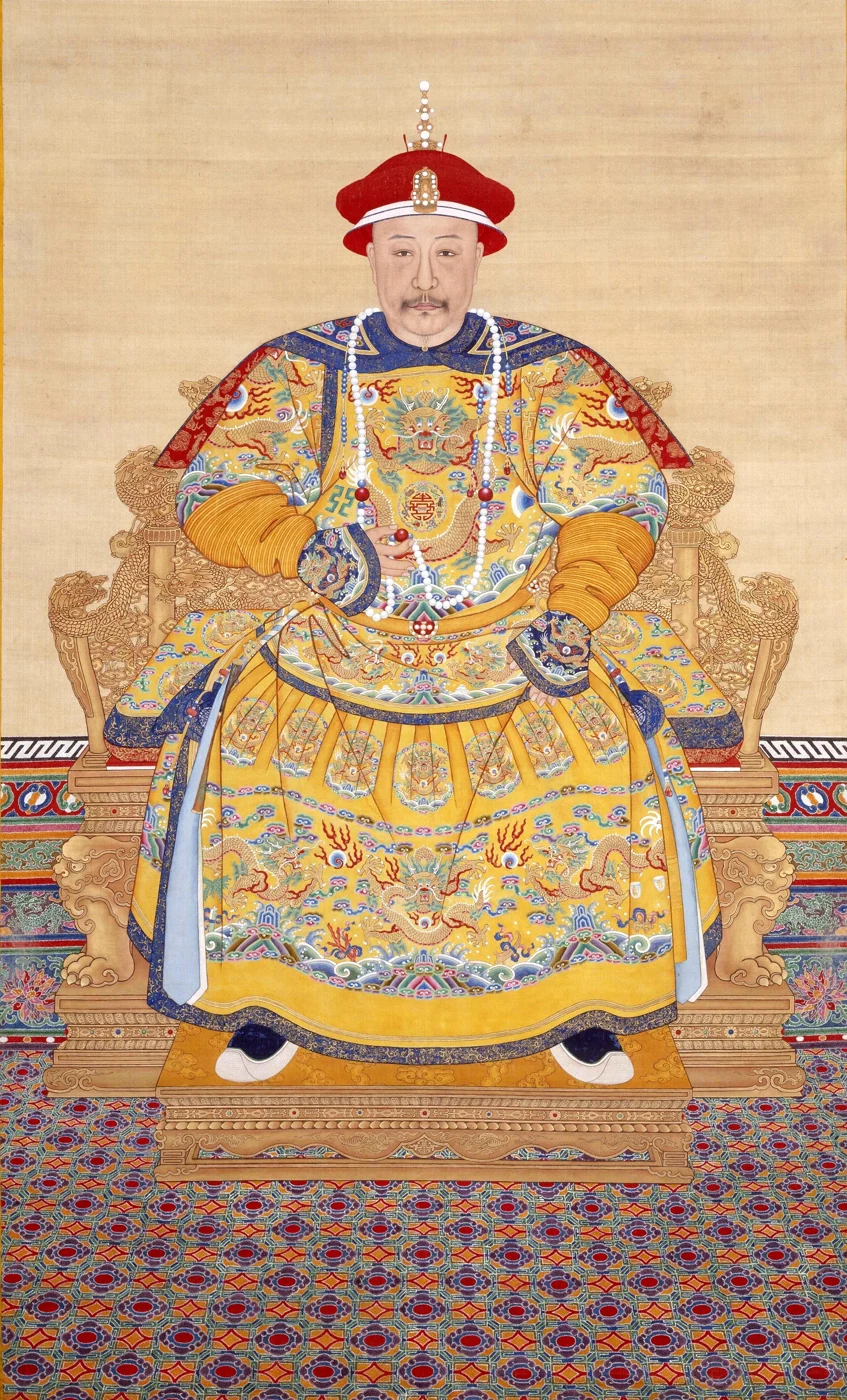
Aisin Gioro Hongli (September 25, 1711–February 7, 1799) was an Emperor of the Qing Dynasty whose era name was Qianlong and whose temple name was Gaozong. He was the fourth son of the Yongzheng Emperor. He ascended the throne in 1735. In 1795 he announced Yongyan, his fifteenth son, as heir and set the date for his abdication the following year. He transferred the throne to Yongyan on February 9, 1796, and continued

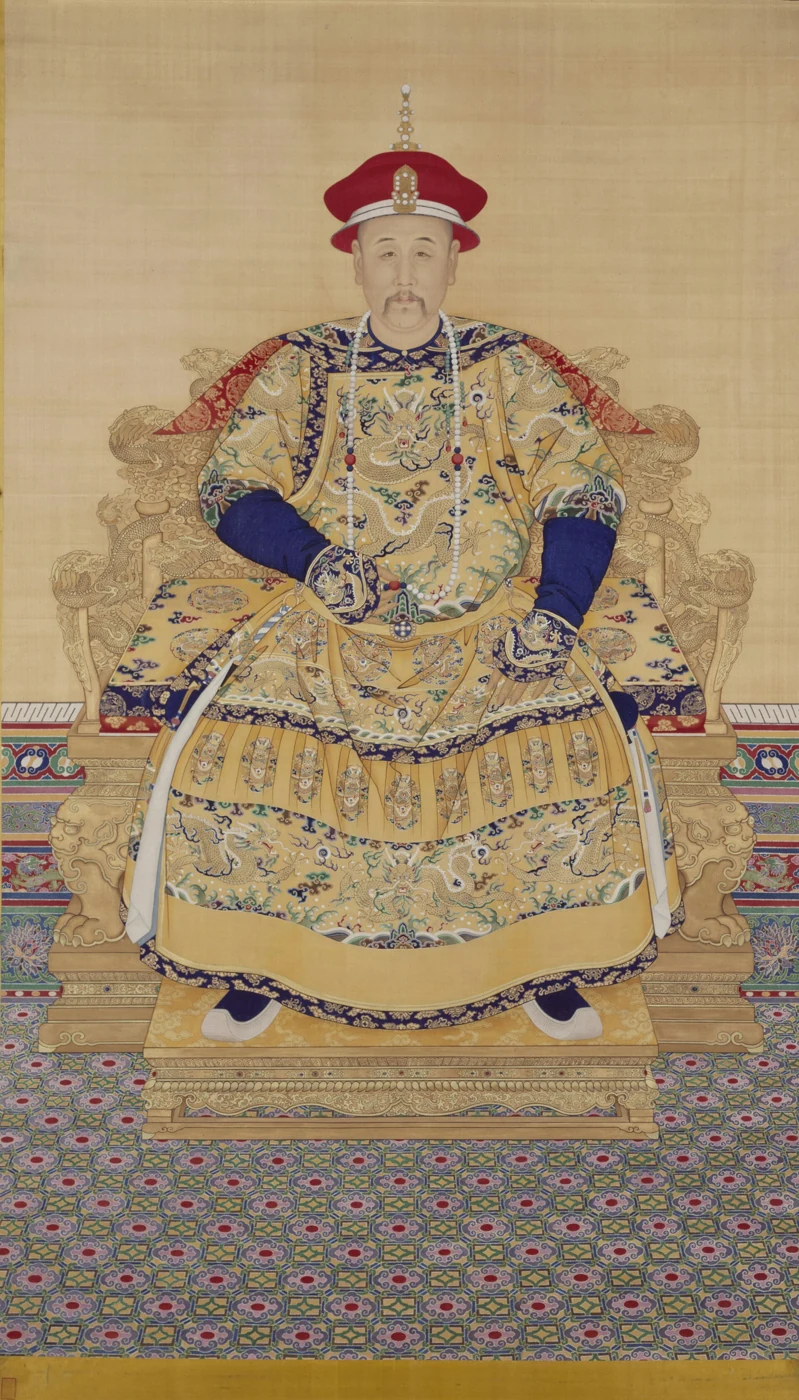
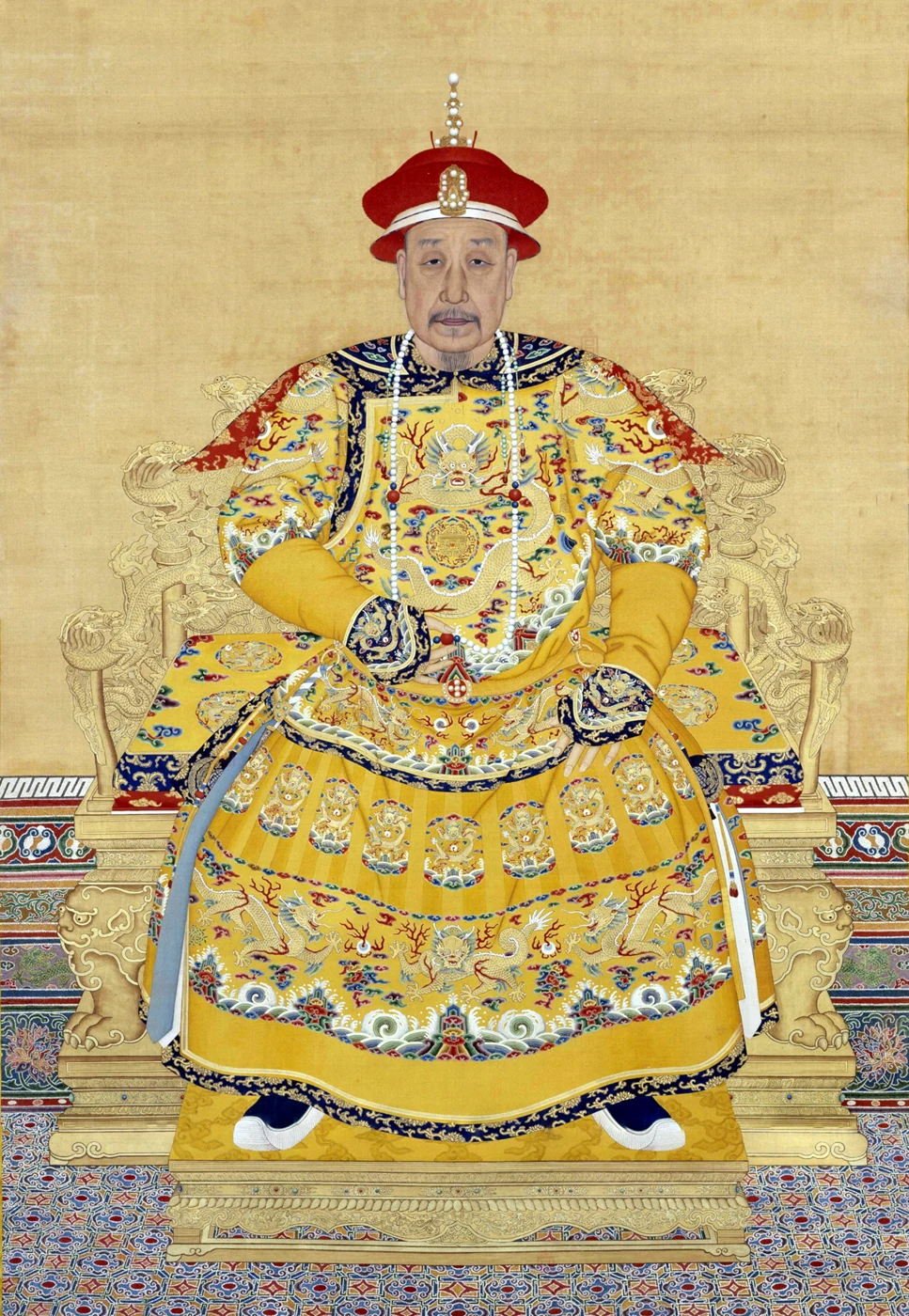
Later artistic depiction of Yongzheng Emperor in a historical painting or book illustration.Qing Dynasty

Emperor

Aisin Gioro Yinzhen

1678 CE–1735 CE

Emperor Shizong of Qing, Aisin Gioro Yinzhen (December 13, 1678–October 8, 1735), was the fifth emperor of the Qing dynasty and the third Qing emperor after the dynasty established its capital in Beijing. He reigned under the era name Yongzheng. He was the fourth son of the Kangxi Emperor, and his mother was Empress Xiaogongren of the Uya clan. Yinzhen was made a beile in 1698, the thirty-seventh year of Kangxi, and

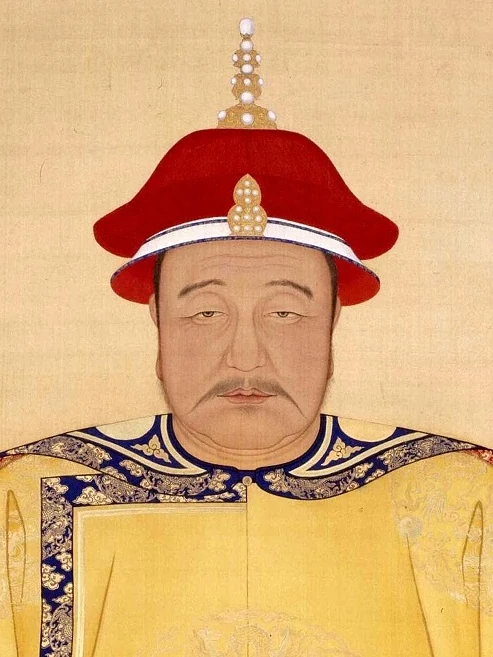
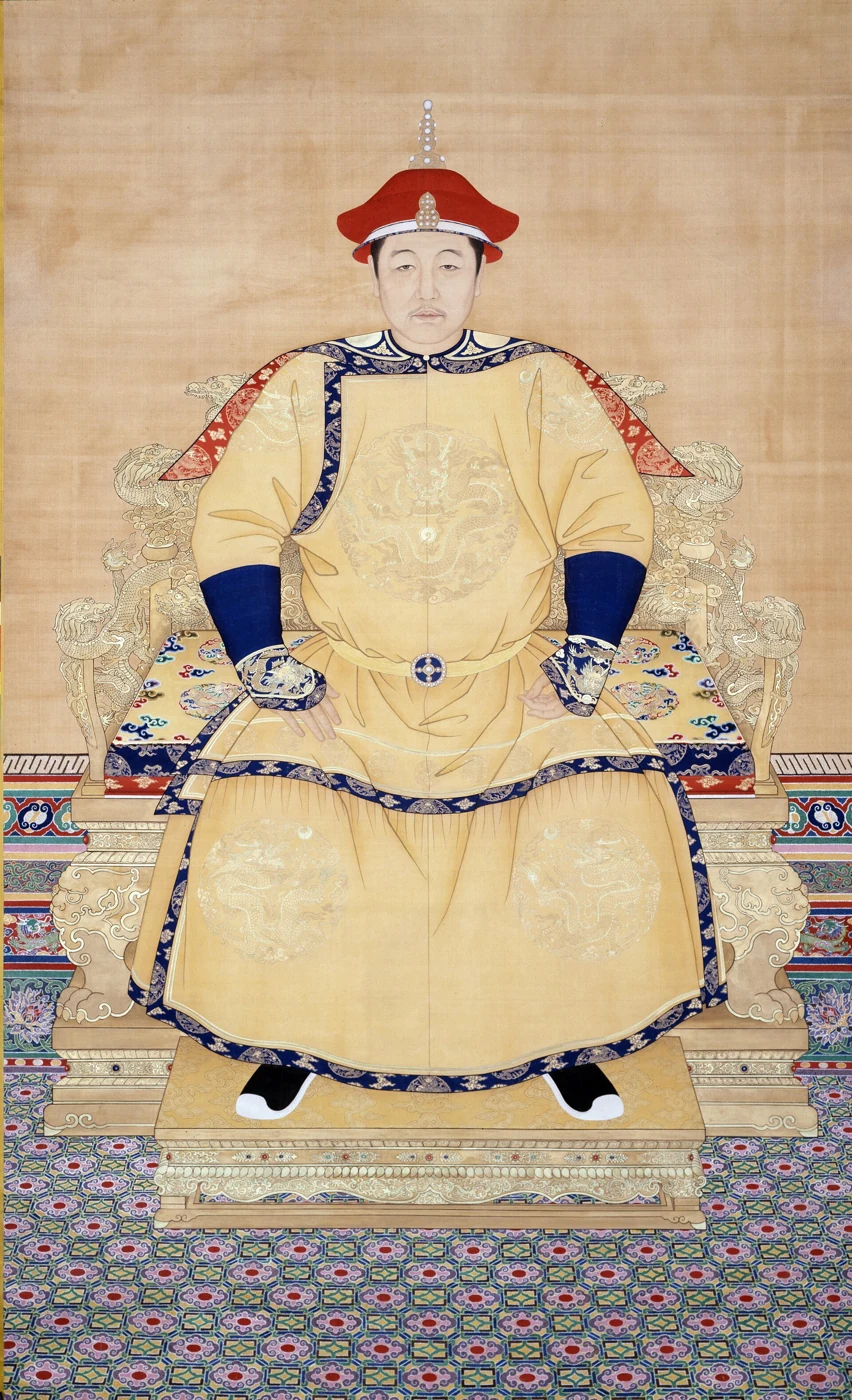
Detail of a historical portrait of Hong Taiji in court dress, anonymous Qing court artist, Palace Museum, Beijing.Qing Dynasty

Khan of the Later Jin

Aisin Gioro Hong Taiji

1592 CE–1643 CE

Aisin Gioro Hong Taiji was born on 28 November 1592(25th day of the tenth lunar month, Wanli 20) and died on 21 September 1643(9th day of the eighth lunar month, Chongde 8). He was the eighth son of Nurhaci and succeeded as khan of Later Jin in 1626, using the era names Tiancong and Chongde. After accession, he gradually concentrated khanal authority within a political structure in which the four senior beile initial

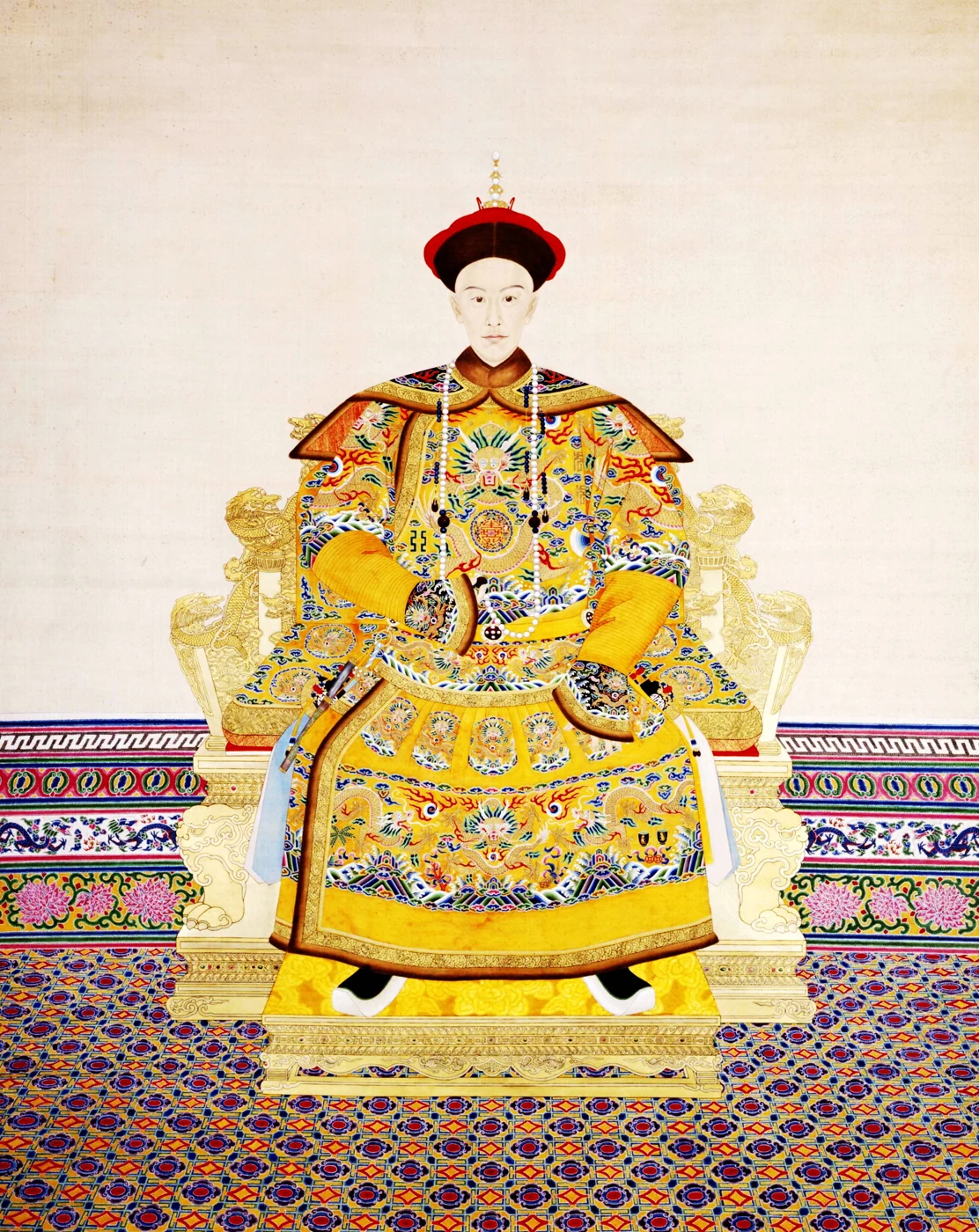
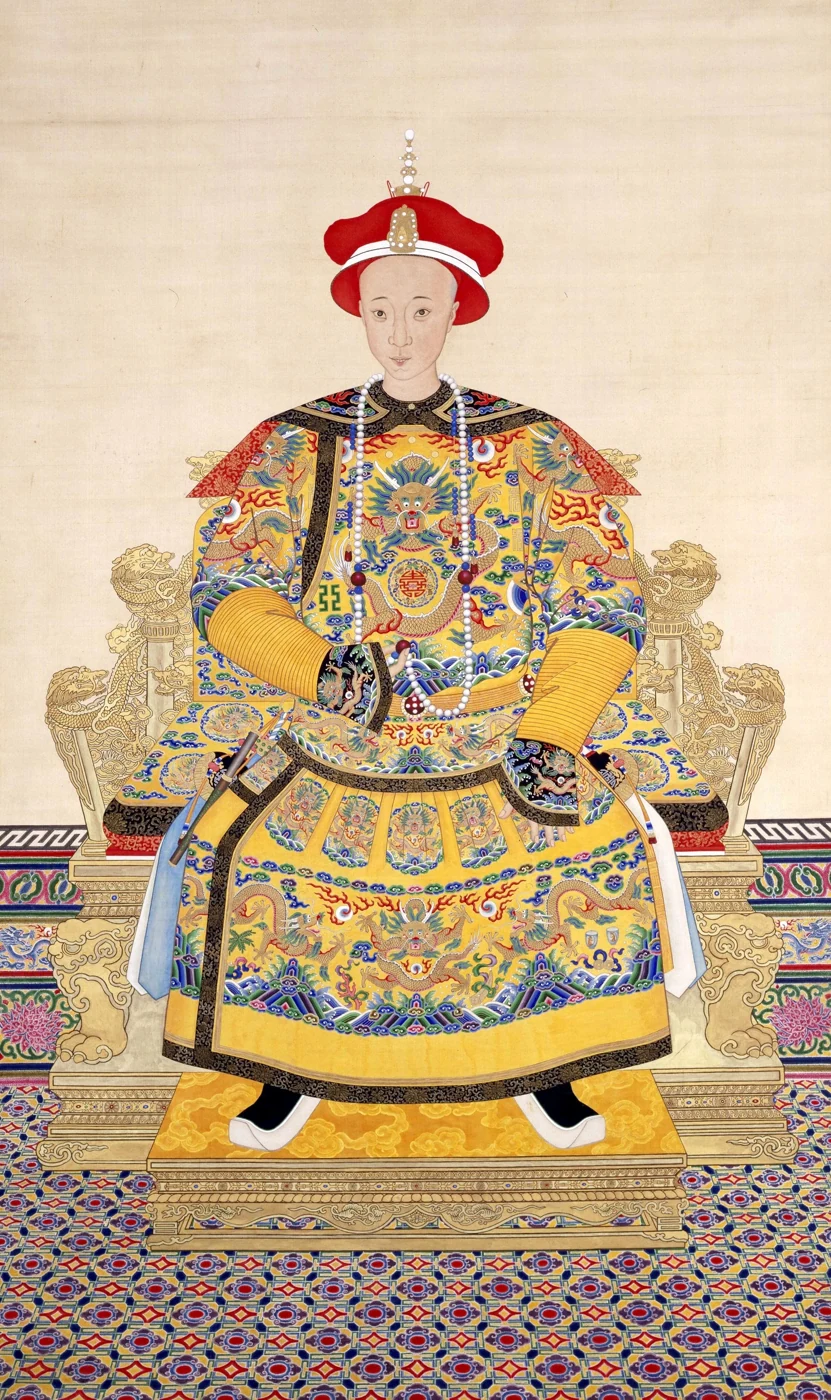
Historical painting or book illustration depicting 爱新觉罗·载湉; a later artistic interpretation.Qing Dynasty

Emperor

Aisin Gioro Zaitian

1871 CE–1908 CE

Aisin Gioro Zaitian (August 14, 1871–November 14, 1908), known by the era name Guangxu and temple name Dezong, was an emperor of the Qing dynasty. His biological father was Yixuan, Prince Chun, and his biological mother, Lady Yehenara Wanzhen, was a younger sister of Empress Dowager Cixi. After the Tongzhi Emperor died without an heir in 1875 (thirteenth year of Tongzhi), Zaitian was selected as successor and adopted

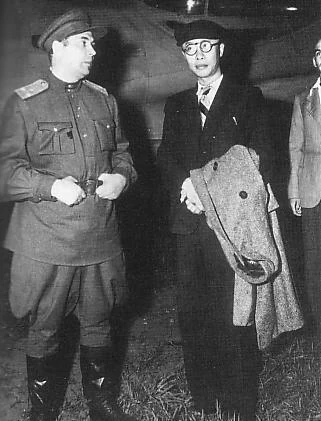
Puyi with a Soviet military officer, 9 August 1946Qing Dynasty

Emperor

Aisin Gioro Puyi

1906 CE–1967 CE

Aisin Gioro Puyi (7 February 1906–17 October 1967), courtesy name Yaozhi, was the last emperor of the Qing Dynasty, with the era name Xuantong. He later served first as Chief Executive and then as Emperor of Japanese-sponsored Manchukuo, using the era names Datong and Kangde. He was the son of Prince Regent Zaifeng. Puyi ascended the throne as a child in 1908 and abdicated in 1912; during the Zhang Xun Restoration of

Later artistic depiction of Shunzhi Emperor in a historical painting or book illustration.Qing Dynasty

Emperor

Aisin Gioro Fulin

1638 CE–1661 CE

Shunzhi Emperor Fulin (March 15, 1638–February 5, 1661), of the Aisin Gioro clan and known by the Manchu childhood name Fangkala, was the first Qing emperor after the dynasty entered the passes and the first Qing ruler after the capital was established at Beijing. He was the ninth son of Hong Taiji, Emperor Taizong of Qing, and his mother was Empress Xiaozhuangwen of the Borjigit clan. After Hong Taiji died suddenly

Historical painting or book illustration depicting 爱新觉罗·旻宁; a later artistic interpretation.Qing Dynasty

Emperor

Aisin Gioro Minning

1782 CE–1850 CE

Aisin Gioro Minning (September 16, 1782–February 25, 1850), the Daoguang Emperor and temple-named Xuanzong of Qing, was originally named Mianning and changed his name to Minning after ascending the throne. He was the eighth emperor of the Qing Dynasty and the sixth Qing ruler after the conquest of China proper. His era name was Daoguang, his temple name Xuanzong, and his posthumous title Emperor Cheng. He was born in

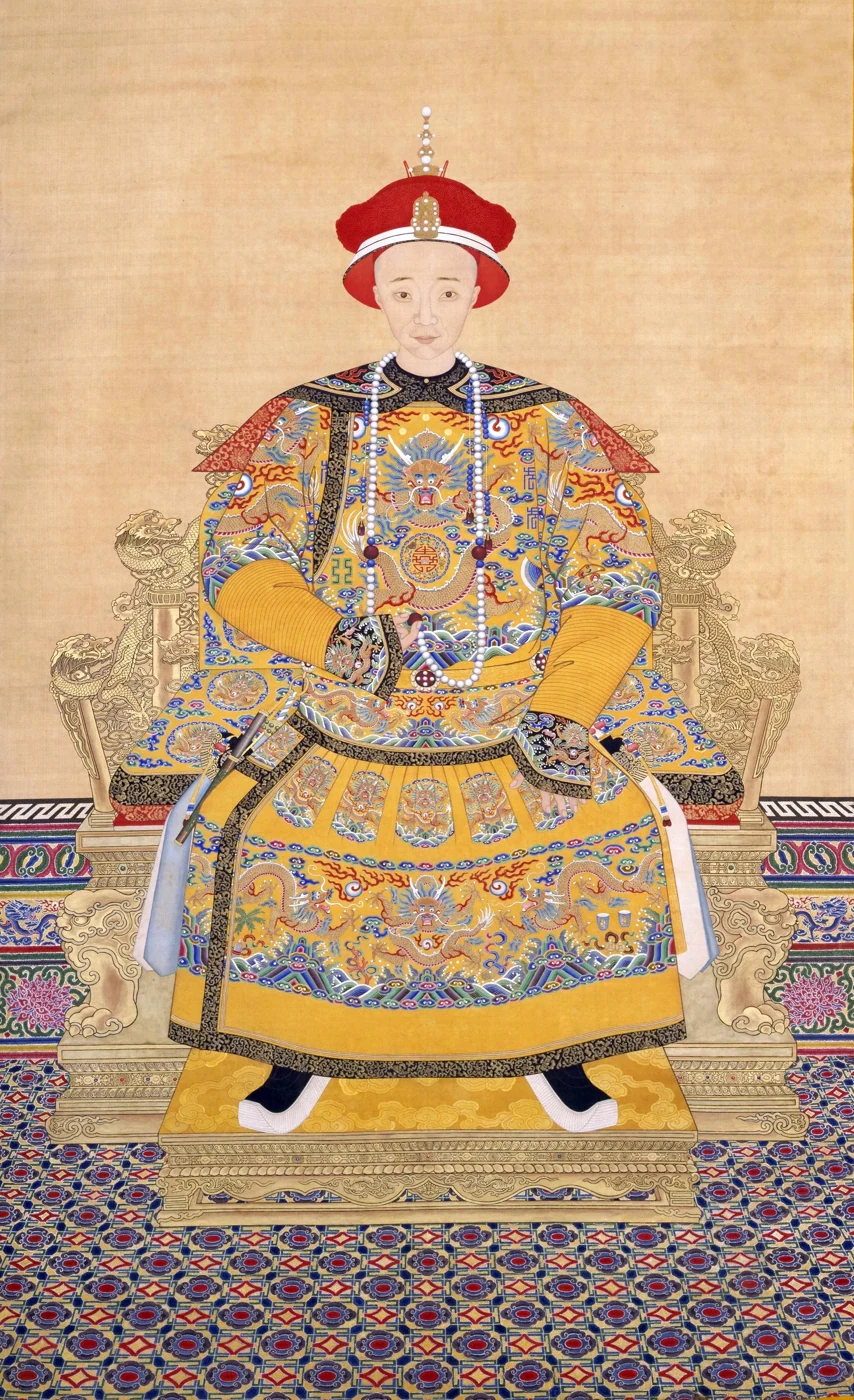
Later artistic depiction of Tongzhi Emperor in a historical painting or book illustration.Qing Dynasty

Emperor

Aisin Gioro Zaichun

1856 CE–1875 CE

Emperor Muzong of Qing, Aisin Gioro Zaichun (April 27, 1856–January 12, 1875), was the eldest son of the Xianfeng Emperor and was born to Lady Yehenara, later Empress Xiaoqinxian, better known as Empress Dowager Cixi. He was the tenth emperor of the Qing dynasty, reigning from August 22, 1861 to January 12, 1875, and the eighth Qing emperor after the conquest of China proper. His era name was Tongzhi. He was born in

Later artistic depiction of Xianfeng Emperor in a historical painting or book illustration.Qing Dynasty

Emperor

Aisin Gioro Yizhu

1831 CE–1861 CE

The Xianfeng Emperor, Aisin Gioro Yizhu (July 17, 1831–August 22, 1861), who called himself Master Qiele, was the ninth emperor of the Qing dynasty. His era name was Xianfeng and his temple name Wenzong; his full posthumous title was Xietian Yiyun Zhizhong Chuimo Maode Zhenwu Shengxiao Yuangong Duanren Kuanmin Zhuangjian Xian Huangdi. He was the fourth son of the Daoguang Emperor and Empress Xiaoquancheng of the Nioh

Later artistic depiction of Jiaqing Emperor in a historical painting or book illustration.Qing Dynasty

Emperor

Aisin Gioro Yongyan

1760 CE–1820 CE

Aisin Gioro Yongyan (November 13, 1760–September 2, 1820), originally named Yongyan, was the fifteenth son of the Qianlong Emperor, Emperor Gaozong of Qing. His mother was Empress Xiaoyichun of the Weigiya clan. He was the seventh emperor of the Qing dynasty and the fifth after the Qing entry through the passes. In 1795, the sixtieth year of Qianlong, he was named crown prince. He ascended the throne after the Qianlo

Qing Dynasty

Founding emperor of Vietnam's Nguyen dynasty

Nguyễn Phúc Ánh

1762 CE–1820 CE

Nguyễn Phúc Ánh (8 February 1762 – 3 February 1820), also known as Nguyễn Ánh and by his era name Gia Long, was the founder of the Nguyễn dynasty, the last traditional dynasty of Vietnam, reigning from 1802 to 1820 with the temple name Thế Tổ. A son of Nguyễn Phúc Luân of the Nguyễn lords, he fled south to Gia Định with his uncle after the Trịnh captured Phú Xuân in 1775, and after the Tây Sơn killed most of the Nguy

Qing Dynasty

Emperor

Nguyễn Huệ

1753 CE–1792 CE

Nguyễn Huệ (Vietnamese: Nguyễn Huệ; 1753–1792), also known as Nguyễn Văn Huệ and later renamed Nguyễn Quang Bình, was the second emperor of Vietnam's Tây Sơn dynasty. Because his era name was Quang Trung, he is historically known as the Quang Trung Emperor. Nguyễn Huệ was a renowned military commander in Vietnamese history and was later regarded by Vietnamese people as a national hero. Born into a family of lower-ran

Qing Dynasty

Founding ruler of Burma's Konbaung dynasty

Alaungpaya

1714 CE–1760 CE

Founding ruler of Burma's Konbaung dynasty; invaded Siam and became involved in border conflict with Qing China in the Yunnan–Burma frontier region.

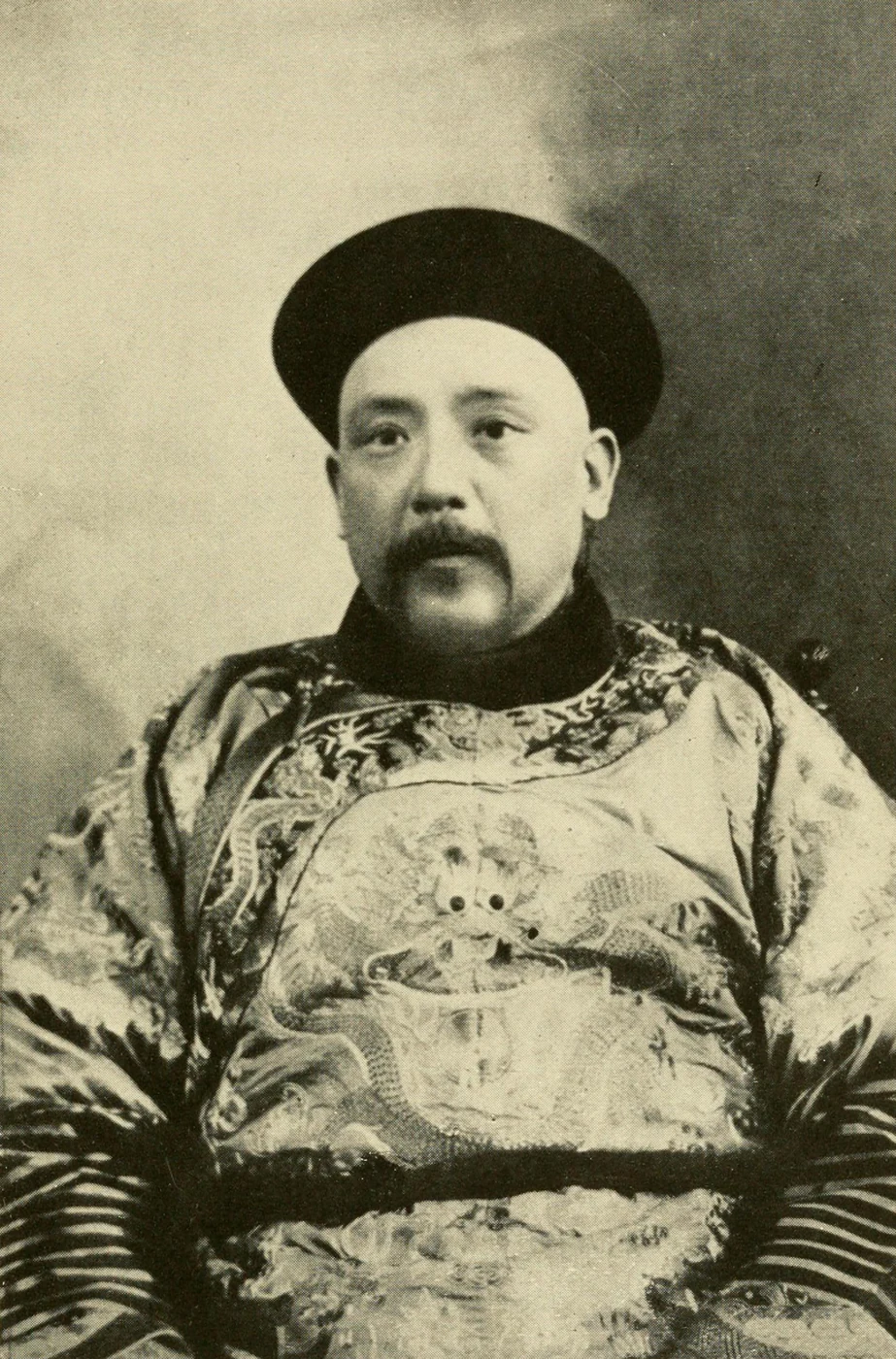
Historical photograph of Yuan Shikai, published in Old China and Young America (1913).Qing Dynasty

Emperor

Yuan Shikai

1859 CE–1916 CE

Yuan Shikai was commander of the Beiyang New Army. In the late Qing he organized modern military forces and played the decisive political role in forcing the Qing court to abdicate. During the Republic of China he later attempted to restore monarchy and proclaimed himself emperor.

KEY PEOPLE

All people
Later artistic depiction of Empress Dowager Ci'an in a historical painting or book illustration.Qing Dynasty

Empress

Empress Dowager Ci'an

1837 CE–1881 CE

Empress Dowager Ci'an (12 August 1837 – 8 April 1881), posthumously Empress Xiaozhenxian, was a woman of the Niohuru clan and a member of the Manchu Bordered Yellow Banner. She was the daughter of Muyang'a, circuit intendant of Youjiang in Guangxi, and the second empress of the Xianfeng Emperor. During the early Tongzhi and Guangxu periods she was one of the Qing court's de facto supreme rulers. Selected in the 1852

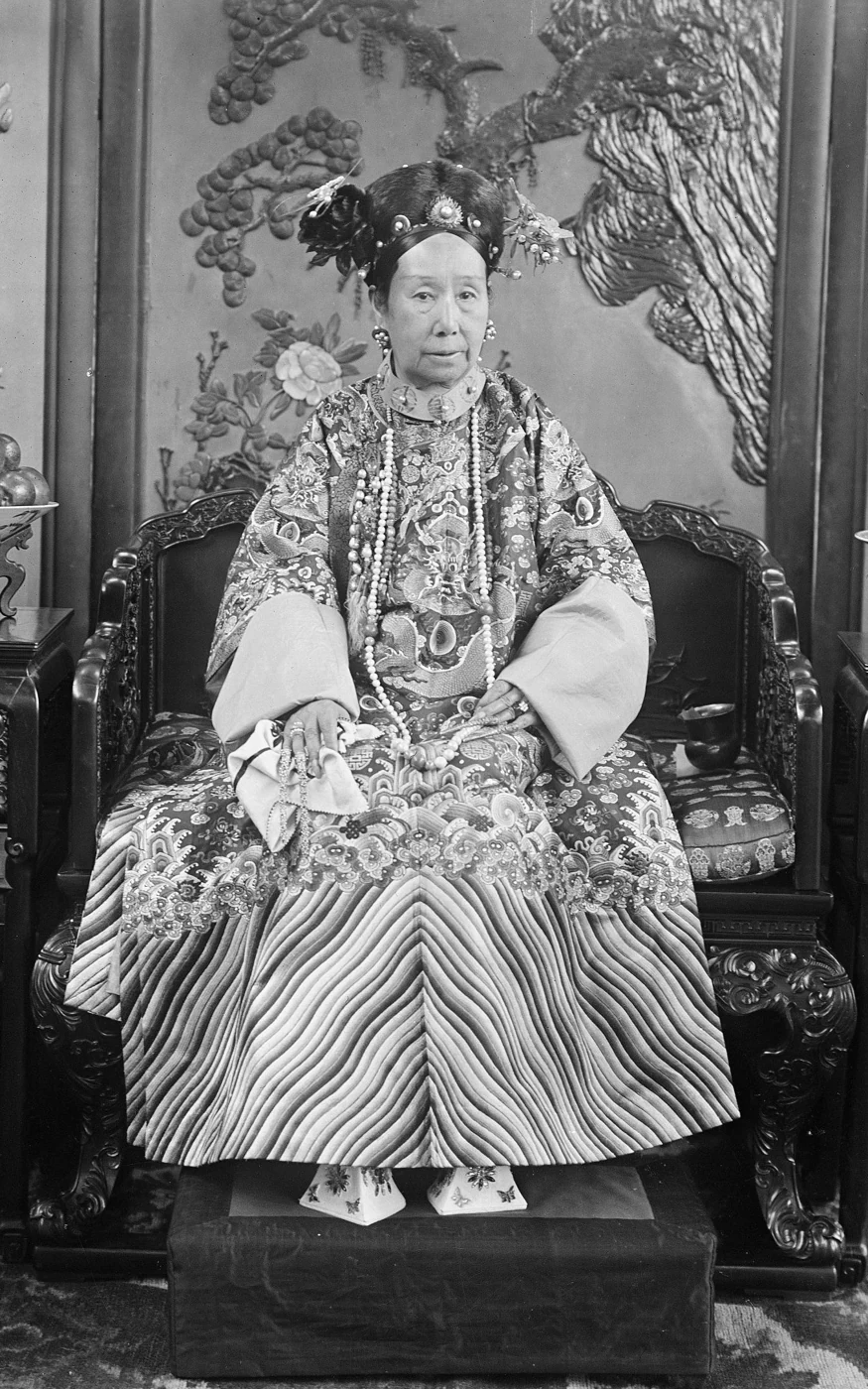
Historical photograph of Empress Dowager Cixi.Qing Dynasty

Empress dowager

Empress Dowager Cixi

1835 CE–1908 CE

Empress Dowager Cixi (November 29, 1835–November 15, 1908), of the Yehe Nara clan, was a Manchu woman of the Bordered Blue Banner, later raised into the Bordered Yellow Banner. She was a consort of the Xianfeng Emperor, the birth mother of the Tongzhi Emperor, and the de facto supreme ruler of the late Qing through the Tongzhi and Guangxu reigns. She entered the palace in 1852, the second year of the Xianfeng era, wi

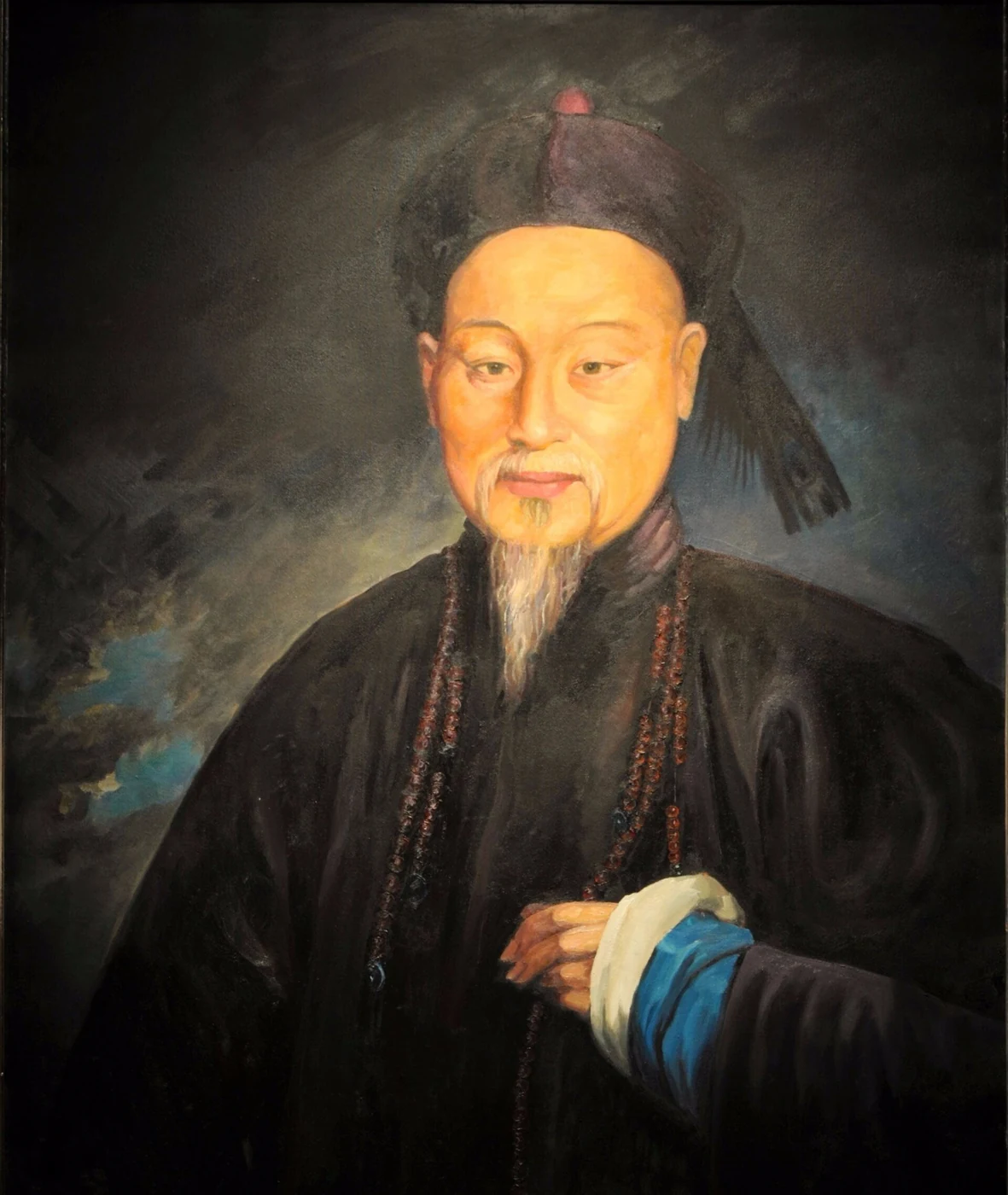
Later artistic depiction of Lin Zexu in a historical painting or book illustration.Qing Dynasty

Official and politician

Lin Zexu

1785 CE–1850 CE

Lin Zexu (26th day of the seventh lunar month in the 50th year of Qianlong–19th day of the tenth lunar month in the 30th year of Daoguang; August 30, 1785–November 22, 1850), courtesy name Yuanfu and also Shaomu and Shilin, and in later life known by such sobriquets as Sicun Laoren, Sicun Tuisou, Qishierfeng Tuisou, Pingquan Jushi, and Lishe Sanren, was from Houguan County in Fujian, now Gulou District of Fuzhou. He

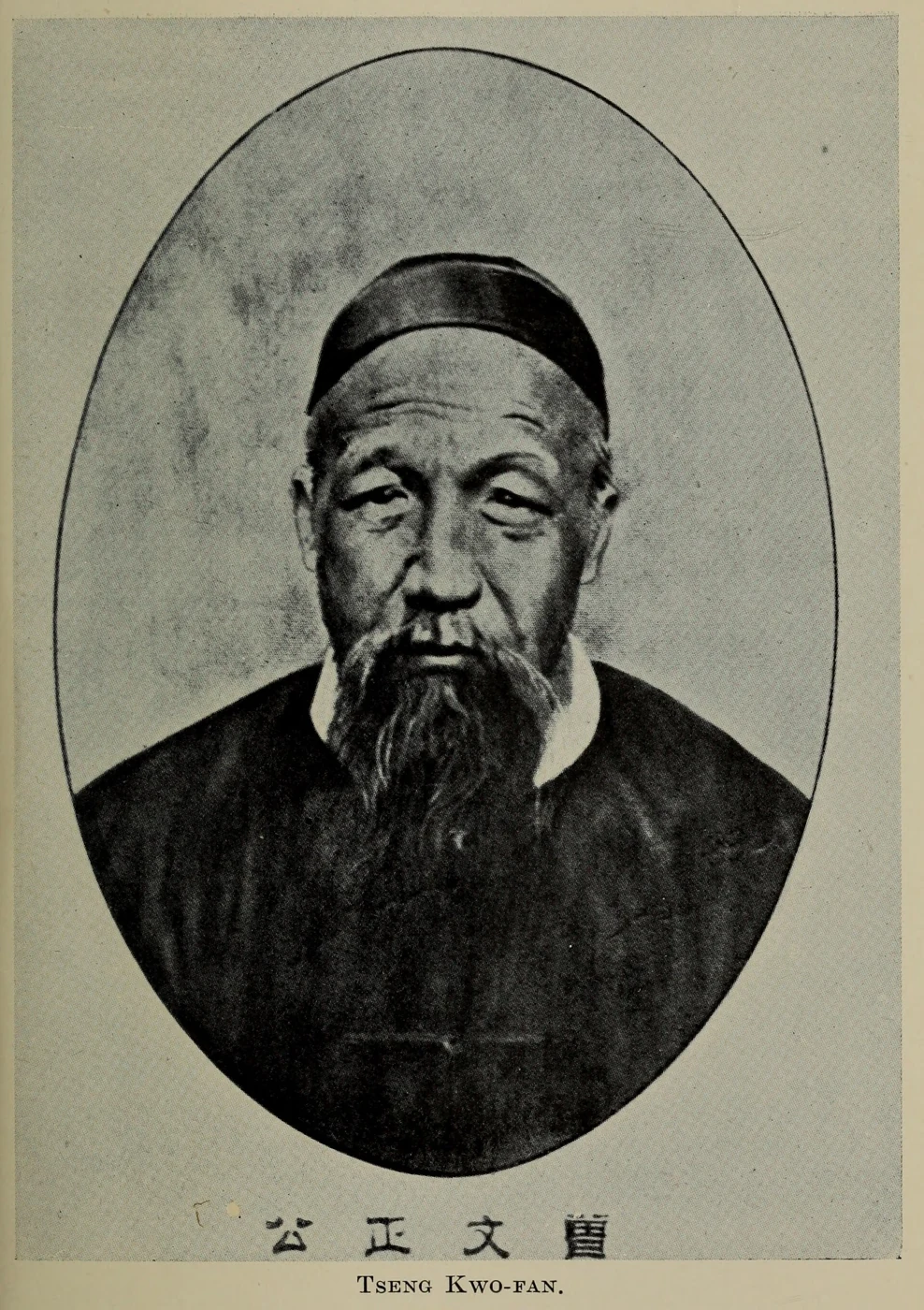
Historical painting or book illustration depicting 曾国藩; a later artistic interpretation.Qing Dynasty

Military commander

Zeng Guofan

1811 CE–1872 CE

Zeng Guofan (November 26, 1811(16th year of Jiaqing)–March 12, 1872(11th year of Tongzhi)), originally named Zeng Zicheng, courtesy name Bohan and art name Disheng, was a native of Xiangxiang, Hunan. He passed the presented-scholar examination in 1838(18th year of Daoguang) and thereafter served in Beijing in the Hanlin Academy and central ministries. After returning home in 1852(2nd year of Xianfeng) to mourn his mo

Later artistic depiction of Dorgon in a historical painting or book illustration.Qing Dynasty

Statesman

Aisin Gioro Dorgon

1612 CE–1650 CE

Aisin Gioro Dorgon (November 17, 1612–December 31, 1650), a Manchu, was the fourteenth son of Emperor Taizu of Qing, Aisin Gioro Nurhaci, and a younger brother of Emperor Taizong of Qing, Hong Taiji. He was an outstanding military commander and statesman of the early Qing. He led the Eight Banners through the passes into the Central Plains and was a key figure in the Qing conquest. In the early Shunzhi reign, he effe

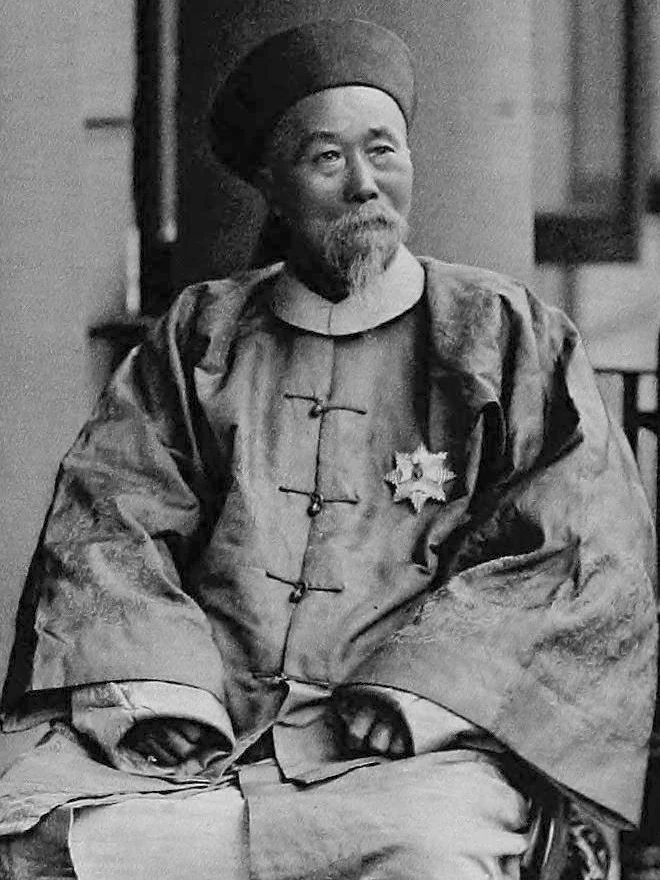
Historical photograph of Li Hongzhang.Qing Dynasty

General

Li Hongzhang

1823 CE–1901 CE

Li Hongzhang (February 15, 1823–November 7, 1901), generational name Zhangtong, courtesy names Jianfu and Zifu, and style names Shaoquan (also written Shaoquan), Yisou, and Shengxin, was from Modian Township, Hefei County, Luzhou Prefecture, Anhui, now part of Hefei. He was a senior late-Qing official and an important modern Chinese politician, military leader, diplomat, industrial promoter, and reformer. He was wide

Historical photograph of Zuo Zongtang.Qing Dynasty

General

Zuo Zongtang

1812 CE–1885 CE

Zuo Zongtang (November 10, 1812, the seventh day of the tenth lunar month in the seventeenth year of the Jiaqing era–September 5, 1885, the twenty-seventh day of the seventh lunar month in the eleventh year of the Guangxu era), courtesy name Jigao, also known by the courtesy name Pucun, art name Xiangshangnongren, signature Jinliang, and posthumous name Wenxiang, was a native of Zuojia Village in Xiangyin, Hunan (pre

Later artistic depiction of Wu Sangui in a historical painting or book illustration.Qing Dynasty

General

Wu Sangui

1612 CE–1678 CE

Wu Sangui was a Ming general who brought Qing forces through Shanhai Pass in 1644. He was enfeoffed as Prince Who Pacifies the West and later rose in rebellion against the Qing, launching the Revolt of the Three Feudatories in 1673.

Later artistic depiction of Oboi in a historical painting or book illustration.Qing Dynasty

Senior official

Guwalgiya Oboi

1610 CE–1669 CE

Guwalgiya Oboi (c. 1610–1669), of the Guwalgiya clan and the Manchu Bordered Yellow Banner, was a veteran of the founding generation of the Qing and a regent. Born into a military family, he was a nephew of the Later Jin founding minister Guwalgiya Feiyingdong. He rose through military service and served through the Tianming, Tiancong, Chongde, Shunzhi, and Kangxi eras, advancing from guard officer to Chamberlain of

Later artistic depiction of Heshen in a historical painting or book illustration.Qing Dynasty

Powerful court official

Niohuru Heshen

1750 CE–1799 CE

Niohuru Heshen (1 July 1750 – 22 February 1799), of the Niohuru clan, was originally named Shanbao, with the courtesy name Zhizhai, and styled himself Master of Jialetang, Shihuyuan, and Lüyeting. A member of the Manchu Plain Red Banner who was later transferred to the Plain Yellow Banner, he traced his ancestral home to Kaiyuan County, Fengtian Prefecture (present-day Qingyuan County, Liaoning). He was a powerful mi

Historical photograph of Zhang Zhidong.Qing Dynasty

Senior official

Zhang Zhidong

1837 CE–1909 CE

Zhang Zhidong (third day of the eighth lunar month of the seventeenth year of Daoguang, September 2, 1837 – twenty-first day of the eighth lunar month of the first year of Xuantong, October 4, 1909), courtesy name Xiaoda, art names Xiangtao and Xiangyan, also known as Hugong and Wujing Jushi, and in his later years as Baobing Laoren, was originally from Nanpi in Zhili (present-day Nanpi County, Hebei) and was born in

Historical painting or book illustration depicting 爱新觉罗·奕訢; a later artistic interpretation.Qing Dynasty

Late Qing imperial clansman

Aisin Gioro Yixin

1833 CE–1898 CE

Aisin Gioro Yixin (11 January 1833–29 May 1898) was a Qing imperial clansman, the sixth son of the Daoguang Emperor and a younger half-brother of the Xianfeng Emperor. He held the title Prince Gong of the First Rank and received the posthumous title Zhong. From the final years of the Xianfeng reign into the early Guangxu period, he participated for long periods in central Qing decision-making and served successively

Related entries

Lin Zexu↗Era association

Original note (Chinese): 清;清

Wu Sangui↗Era association

Original note (Chinese): 清;清

Aisin Gioro Yixin↗Era association

Original note (Chinese): 清朝;清朝宗室、和硕恭亲王、政治人物;清

Wei Yuan↗Era association

Original note (Chinese): 清;清

Ji Yun↗Era association

Original note (Chinese): 清朝;清

Shi Lang↗Era association

Original note (Chinese): 清;清

Khoja Jahan↗Era association

Original note (Chinese): 清朝;南疆和卓势力首领;清

Wu Qijun↗Era association

Original note (Chinese): 清;清

Hohori↗Era association

Original note (Chinese): 清;清

Hu Linyi↗Era association

Original note (Chinese): 清;清

Peng Chun↗Era association

Original note (Chinese): 清;清

Keying↗Era association

Original note (Chinese): 清朝;清

Jirgalang↗Era association

Original note (Chinese): 古代;清

Deng Tingzhen↗Era association

Original note (Chinese): 清朝(嘉庆、道光朝);清

Wanrong↗Era association

Original note (Chinese): 清朝(逊清皇室)、伪满洲国;清

Guo Xiu↗Era association

Original note (Chinese): 清朝;清

Gao Bin↗Era association

Original note (Chinese): 古代;清

Songgotu↗Era association

Original note (Chinese): 古代;清

Jieshu↗Era association

Original note (Chinese): 清朝;清

Sun Shiyi↗Era association

Original note (Chinese): 清朝;清

Lin Shuangwen↗Era association

Original note (Chinese): 清朝 / 顺天起义政权;清

Xu Naiji↗Era association

Original note (Chinese): 清朝;清

Ma Hualong↗Era association

Original note (Chinese): 清朝;清

Gangyi↗Era association

Original note (Chinese): 清朝;清

Šuhede↗Era association

Original note (Chinese): 清朝;清

Feng Xifan↗Era association

Original note (Chinese): 明郑、清朝;明

Bibliography

  • 《明史》
  • 《清史稿》
  • 《清实录》
  • 《东华录》
  • 《大清会典》