Birth in Manchuria
Oboi was born into the prominent Suwan Gualgiya clan of the Bordered Yellow Banner.
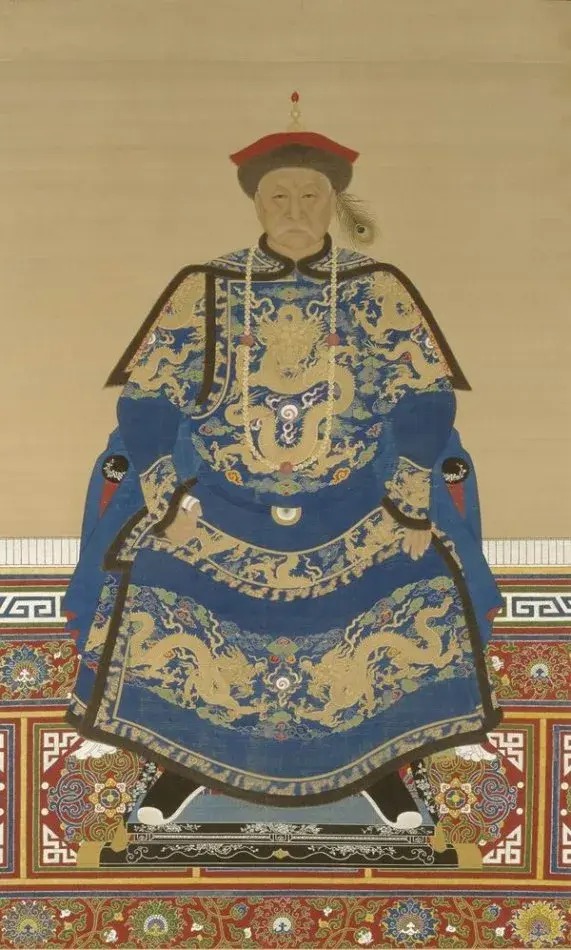
1610 CE–1669 CE
瓜尔佳·鳌拜
Gualgiya Oboi (c. 1610–1669), of the Manchu Bordered Yellow Banner and the Suwan Gualgiya clan, was an illustrious founding military general and statesman of the early Qing Dynasty, remembered as one of the Four Co-Regents during the minority of the Kangxi Emperor. He attained the supreme offices of Grand Minister of the Imperial Guard, Deliberative Minister, Junior Preceptor, and Grand Tutor to the Crown Prince, receiving…
Gualgiya Oboi (c. 1610–1669), of the Manchu Bordered Yellow Banner and the Suwan Gualgiya clan, was an illustrious founding military general and statesman of the early Qing Dynasty, remembered as one of the Four Co-Regents during the minority of the Kangxi Emperor. He attained the supreme offices of Grand Minister of the Imperial Guard, Deliberative Minister, Junior Preceptor, and Grand Tutor to the Crown Prince, receiving the hereditary rank of First-Class Duke Chaoyong and the imperial title Baturu, celebrated throughout the empire as the "Foremost Warrior of Manchuria." Born into an eminent military lineage, Oboi distinguished himself during the conquests of Hong Taiji, storming Pi Island, smashing Ming lines at the Battle of Songjin, and slaying the insurgent peasant monarch Zhang Xianzhong in Sichuan. Following Hong Taiji's sudden death in 1643, Oboi played a pivotal role in preserving dynastic succession by drawing his sword in the palace to insist that only an imperial son inherit the throne, securing the accession of the Shunzhi Emperor. In 1661, Shunzhi's deathbed decree appointed Oboi alongside Sonin, Suksaha, and Ebilun to govern during Kangxi's childhood. During the regency, Oboi capitalized on Sonin's infirmity and Ebilun's timidity to monopolize state authority. He enforced land expropriations favoring his banner, executed dissenting grand secretaries, and orchestrated the judicial murder of fellow regent Suksaha. In May 1669, the sixteen-year-old Kangxi Emperor orchestrated a palace coup using young imperial wrestlers (buku) to overpower and capture Oboi in the Forbidden City. Spared execution due to his battlefield contributions to the dynasty, Oboi was stripped of all offices and imprisoned for life, dying in confinement shortly thereafter before his noble rank was posthumously restored in the mid-Qing.
Oboi was born into the prominent Suwan Gualgiya clan of the Bordered Yellow Banner.
Commanded the amphibious vanguard that captured the strategic Ming naval base at Pi Island, promoted to commander.
Led armored cavalry charges breaking Ming infantry formations; Hong Taiji bestowed upon him the title Baturu.
Drew his sword in Chongzheng Hall, leading Yellow Banner commanders to insist on enthroning an imperial son, securing Shunzhi's accession.
Campaigned across Shaanxi and Henan pursuing the retreating armies of Li Zicheng's Shun regime.
Slain the peasant rebel emperor Zhang Xianzhong with an arrow at Xichong, disintegrating the Western insurgent army.
Appointed Grand Minister of the Imperial Guard and Deliberative Minister by Shunzhi upon the emperor's assumption of personal rule.
Appointed one of four regents in the Shunzhi Emperor's testament to guide the eight-year-old Kangxi Emperor.
Executed Grand Secretary Sunahai and governors Zhu Changzuo and Wang Denglian over opposition to land exchanges.
Fabricated treason charges against fellow regent Suksaha, compelling the young monarch to order Suksaha's execution.
Ambushed and wrestled to the floor by adolescent imperial wrestlers in the palace; sentenced to lifelong imprisonment.
Passed away in captivity; later posthumously rehabilitated by Kangxi and elevated to First-Class Duke by Yongzheng.
Oboi was born into the formidable Suwan Gualgiya clan of the Bordered Yellow Banner. His grandfather Solgo had brought his tribe to swear allegiance to Nurhaci, and his uncle Fionggdon was one of the Five Founding Ministers of the Later Jin state. Growing up in garrisons, Oboi developed extraordinary physical strength, becoming a master of archery, equestrian combat, and frontal assault.
Serving in the imperial vanguard under Hong Taiji, Oboi distinguished himself during the 1637 campaign against Pi Island, an insular fortress off the mouth of the Yalu River fortified by Ming forces under Mao Wenlong. The stronghold had repulsed several Jurchen assaults. Volunteering to lead the amphibious assault, Oboi took a solemn oath, rowed light boats through heavy gunfire under cover of darkness, and scaled the seaward cliffs. Personally cutting down over a hundred defenders, he opened the beachhead for the main army, earning immediate promotion to Meiren-i-Janggin from Hong Taiji.
During the great Battle of Songjin (1640–1642), Oboi repeatedly led armored cavalry squadrons into the Ming center, shattering the divisions of Hong Chengchou and Cao Bianjiao. Awed by his reckless bravery, Hong Taiji summoned Oboi to his tent, honoring him with the ultimate Manchu martial designation "Baturu" and promoting him to first-class rank, establishing his reputation as the "Foremost Warrior of Manchuria."
In September 1643, Hong Taiji died suddenly without designating an heir. Prince Regent Dorgon, backed by the White Banners, moved to claim the throne, creating an existential clash with the Yellow Banners.
At the summit of princes in Chongzheng Hall, Oboi and fellow Yellow Banner commanders appeared with swords buckled to their belts, proclaiming with fierce determination: "The late Emperor showered us with boundless favors! If an imperial prince of his line is not seated upon the throne, we shall take our own lives before his tomb rather than live under another!" This unyielding display of military defiance broke Dorgon's unilateral bid, leading to the compromise enthronement of Hong Taiji's ninth son, Fulin (the Shunzhi Emperor).
Following the conquest of Beijing in 1644, Oboi joined Prince Hooge in the 1646 expedition into Sichuan. At the Battle of Mount Fenghuang in Xichong, Oboi identified the rebel monarch Zhang Xianzhong inspecting the front lines and shot him through the heart with an arrow. The death of their leader shattered the peasant army, enabling the Qing conquest of the southwest. When the Shunzhi Emperor initiated personal rule in 1651, he rewarded Oboi's steadfast loyalty during the succession crisis by elevating him to Grand Minister of the Imperial Guard, Deliberative Minister, and Second-Class Duke.
In February 1661, the Shunzhi Emperor succumbed to smallpox at age twenty-four. To prevent a recurrence of Dorgon's princely autocracy, Shunzhi established a collective regency of four non-imperial Manchu grandees: Sonin, Suksaha, Ebilun, and Oboi, charged with steering the eight-year-old Kangxi Emperor.
However, the council quickly fractured. Sonin, advancing in years, remained aloof; Ebilun was timid and sycophantic; and Suksaha, representing the rival White Banner, was isolated. As the most aggressive and physically commanding member, Oboi consolidated executive dominance. In 1666, citing perceived inequities dating to Dorgon's regency, Oboi forcibly decreed the confiscation and exchange of fertile lands held by the Plain White Banner in Zhili for his own Bordered Yellow Banner. When Minister of Revenue Sunahai and Zhili Governor Zhu Changzuo petitioned against the immense civilian dislocation caused by the decree, Oboi forged imperial warrants, executing them without imperial sanction.
Following Sonin's death in 1667, the young Kangxi Emperor officially assumed personal rule. Seeking to counter Oboi's growing tyranny, Suksaha petitioned to retire to guard the imperial tombs. Infuriated by this implicit demand to surrender power, Oboi fabricated twenty-four capital charges of treason against Suksaha, berating and threatening the fourteen-year-old emperor in court until the monarch relented. Suksaha was strangled and his entire household liquidated. Thereafter, Oboi governed without restraint: cabinet documents were submitted to his private residence for approval, provincial appointments were reserved for his creatures, and he openly bullied the young monarch during imperial audiences.
Confronting Oboi's suffocating grip on power, the teenage Kangxi Emperor devised an ingenious counter-strategy. Aware that Oboi commanded formidable martial strength and had informants throughout the Forbidden City, Kangxi avoided standard palace guards. Instead, he assembled a cadre of athletic adolescent Manchu aristocrats in the South Library, ostensibly engaging them in traditional Manchu wrestling (buku) games. Oboi, viewing the young sovereign's activities as frivolous boyish play, lowered his vigilance.
On June 14, 1669, Kangxi summoned Oboi to a private imperial conference in the Wuying Hall. Unarmed and confident, Oboi walked into the chamber. At a prearranged signal from Kangxi, dozens of young wrestlers sprang from behind the screens, tackling the towering general. Despite Oboi's legendary strength, the boys swarmed his limbs, pinned him to the flagstones, and bound him in iron chains.
Brought before the Deliberative Council of Princes, Oboi was convicted on thirty counts of treason, insubordination, and arbitrary executions, with ministers unanimously demanding execution by slow slicing. However, Kangxi demonstrated masterly imperial clemency: acknowledging Oboi's exceptional martial contributions under Hong Taiji and his decisive intervention in preserving Shunzhi's succession, Kangxi spared his life. Oboi was stripped of all ranks, his property confiscated, and he was remanded to solitary confinement for life.
Broken in spirit, Oboi died in confinement within several months at age fifty-nine. In 1713, the aging Kangxi Emperor, recalling Oboi's early battlefield valor, posthumously conferred upon him a hereditary barony, which was elevated to First-Class Duke by the Yongzheng Emperor in 1727.
In 1637, Oboi led the night amphibious storming of Pi Island, breaking the entrenched Ming maritime garrison and eliminating a chronic flank threat to the Manchu heartland. At the Battle of Songjin, his repeated cavalry penetrations fractured Ming resistance, earning him the prestigious title Baturu and cementing his status as the premier warrior of the early Qing military.
In 1643, during the succession crisis following Hong Taiji's death, Oboi and Yellow Banner commanders took an unyielding armed stand at Chongzheng Hall, deterring Dorgon from seizing the throne and securing the enthronement of the Shunzhi Emperor, thereby safeguarding the unity and survival of the young Qing dynasty.
In 1646, serving as vanguard commander in Sichuan, Oboi personally shot and killed insurgent peasant emperor Zhang Xianzhong at Xichong, precipitating the immediate collapse of the Great Xi regime and enabling the Qing annexation of the southwest.
Oboi's turbulent regency and subsequent overthrow served as the formative trial for the Kangxi Emperor. The peaceful elimination of Oboi's faction dismantled bureaucratic factionalism and restored absolute monarchical authority, inaugurating Kangxi's sixty-one-year golden era of personal governance.
FIGURES ASSOCIATED WITH THIS DYNASTY