Offices through time
One stable term, with responsibilities and institutional change explained by dynasty.
DYNASTIC RIVER · 59 STATES
Major dynasties and concurrent states from Qin to Qing share one panorama. Every state in the Sixteen and Ten Kingdoms has its own named, dated stream.
Use the horizontal scrollbar to explore the panorama · Select a stream to open its entry
PEOPLE
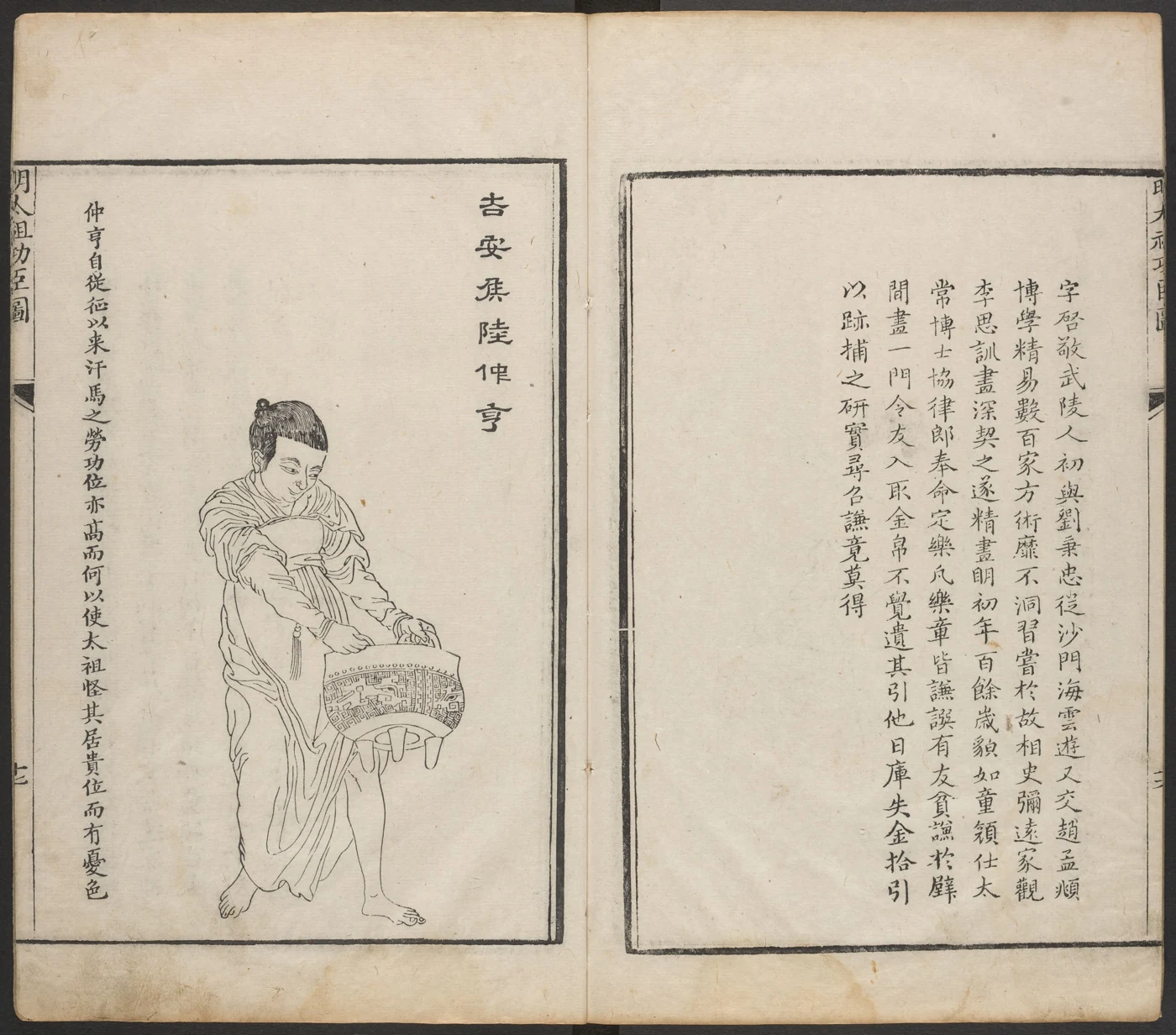 Ming Dynasty
Founding General
Lu Zhongheng (1336–1390), courtesy name Guxiang, was a native of Haozhou (modern Fengyang, Anhui Province) and a prominent founding commander of the Ming dynasty, celebrated as one of the original "Twenty-Four Generals of Huaixi." Orphaned at age seventeen during the chaos of the late Yuan dynasty, he was discovered hiding in the marshes by Zhu Yuanzhang and enlisted into his personal bodyguard. Lu fought with except
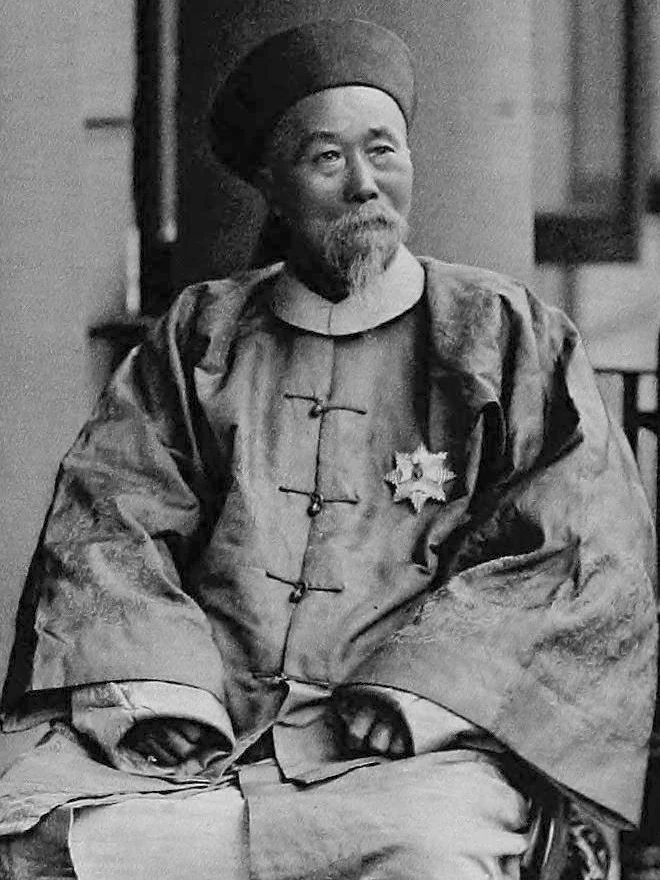 Qing Dynasty
General
Li Hongzhang (February 15, 1823–November 7, 1901), generational name Zhangtong, courtesy names Jianfu and Zifu, and style names Shaoquan (also written Shaoquan), Yisou, and Shengxin, was from Modian Township, Hefei County, Luzhou Prefecture, Anhui, now part of Hefei. He was a senior late-Qing official and an important modern Chinese politician, military leader, diplomat, industrial promoter, and reformer. He was wide
Official
Yan Su (961–1040), courtesy name Muzhi and also called Zhongmu, was a Northern Song official, painter, and poet whose work also ranged across astronomy, tidal observation, mechanics, and timekeeping. His family came from Yidu in Qingzhou; his father, Yan Jun, moved the family to Caozhou to escape warfare. Yan was left poor and without a father at a young age. He passed the jinshi examination during the Dazhong Xiangf
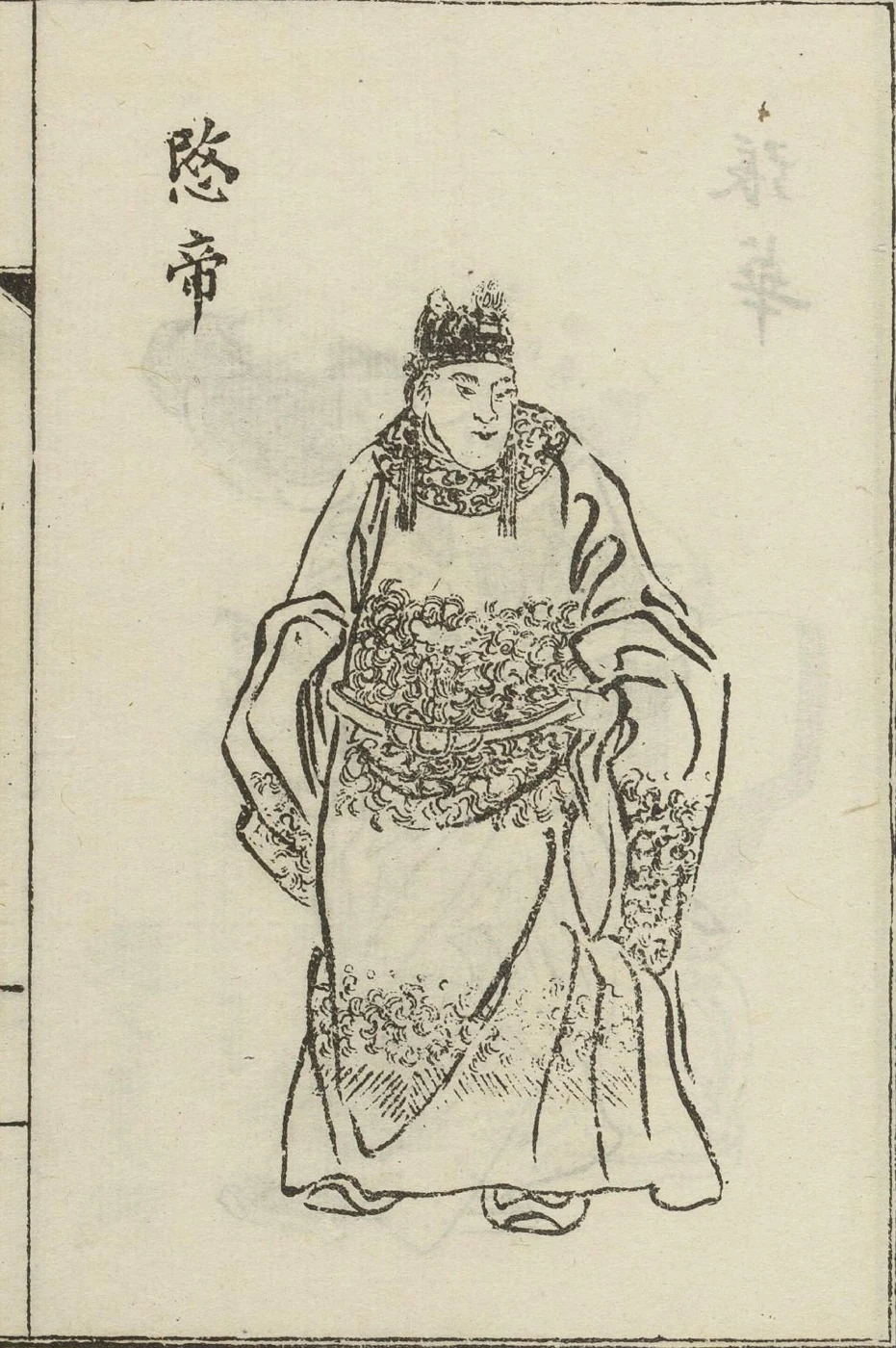 Former Zhao
Emperor
Sima Ye (300–February 7, 318), also written Sima Ye, courtesy name Yanqi, was a native of Wen County in Henei Commandery (present-day Wen County, Henan) and the last emperor of the Western Jin. He was a grandson of Emperor Wu of Jin, Sima Yan, and the son of Sima Yan, Prince Xiao of Wu. In 311, the fifth year of the Yongjia era, Former Zhao captured Luoyang. After moving from refuge to refuge, Sima Ye was escorted to
Historical figure
Ashina Helu (d. 659), of the Ashina clan, was a Western Turkic noble who served as yabghu and later proclaimed himself Shaboluo Qaghan. After a succession crisis within the Western Turks, he submitted to the Tang and received official appointments, including command in a campaign against Kucha. After Emperor Taizong's death, Helu broke with the Tang, proclaimed himself qaghan, united the Duolu and Nushibi tribes, and
General
Su Dingfang (592 or 600–667 AD; birth year disputed), original name Su Lie, styled Dingfang, native of Wuyi in Jizhou (modern Wuyi County, Hebei Province), later relocating to Shiping, was one of the most celebrated and consequential grand generals and military strategists of the early Tang dynasty. Rising to prominence during the late Sui rebellions, he fought under Dou Jiande before entering Tang service. In 630 AD
Chieftain of Qifu Xianbei
Qifu Sifan (birth year unknown – 376) was a prominent chieftain of the Qifu branch of the Xianbei people, supreme military commander, and foundational architect of the Western Qin dynasty during the Sixteen Kingdoms period. The son of chieftain Qifu Qiuji, he was the father of Qifu Guoren (founding Emperor Liezu of Western Qin) and Qifu Gangui (King Gaozu). Around 355, Qifu Sifan succeeded his father as tribal leader
Historical figure
Guanqiu Jian, courtesy name Zhonggong, a native of Wenxi in Hedong, was a distinguished general, military strategist, and writer of Cao Wei during the Three Kingdoms period. In his early years, Guanqiu Jian developed an intimate friendship with Cao Rui (later Emperor Ming of Wei), serving successively as Imperial Secretariat Drafter, Supervisor of the Imperial Forest Guards, and Agricultural Commandant of Luoyang. In
Powerful minister
Sun Chen (231–January 18, 259), courtesy name Zitong, was a native of Fuchun in Wu Commandery, present-day Fuyang District, Hangzhou, Zhejiang. He was a member of the Sun imperial clan and a powerful minister of Sun Wu during the Three Kingdoms period. He was a great-grandson of Sun Jing, younger brother of Sun Jian; grandson of Sun Gao; son of Sun Chuo; a younger cousin of Sun Jun; and elder brother of Sun Ju, Sun E
Military Commander
Ren Zhong (birth and death years unknown), courtesy name Fengcheng and childhood name Mannu, was a prominent military commander, supreme general, and high dignitary during the Southern and Northern Dynasties and the Sui dynasty. A native of Ruyin (present-day Fuyang, Anhui), he was renowned for equestrian archery, physical courage, and tactical agility. Rising from the ranks during the Hou Jing rebellion under the Li
Emperor
Yelü Dashi (1087–1143), courtesy name Zhongde, was a Khitan, an eighth-generation descendant of Yelü Abaoji, and the founding emperor of Western Liao, with the temple name Dezong. Literate in both Khitan and Chinese and skilled in riding and archery, he is the only Khitan jinshi explicitly recorded in the *History of Liao*. During the collapse of the Liao he led followers west and founded Western Liao in Central Asia
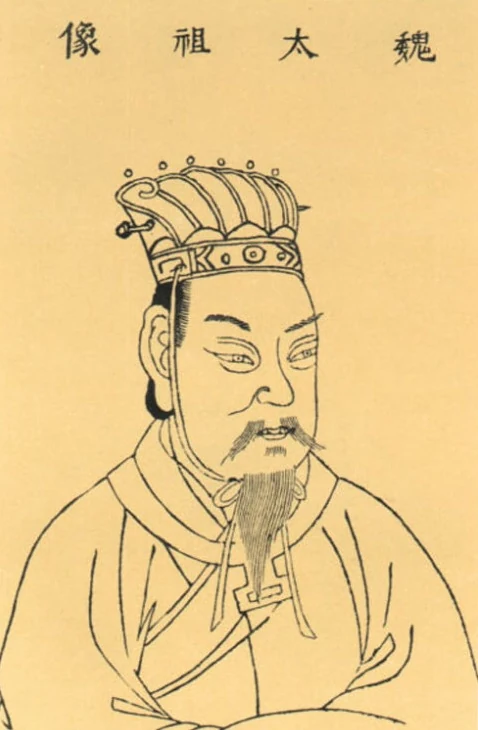 Eastern Han
Late Eastern Han statesman and military commander
Cao Cao (155(1st year of Yongshou)–220(25th year of Jian'an)), courtesy name Mengde and childhood name Aman, was a native of Qiao County in Pei Commandery and a late Eastern Han statesman, military commander, and poet. He entered Eastern Han service early in life. After the Yellow Turban Rebellion began, he took part in suppressing the rebels and later established a military base in Yan Province. After bringing Emper
HISTORICAL SCENES
The Chu–Han Contention, also called the Chu–Han War and by several other names in Chinese, was a large-scale war from 206 BCE to January 202 BCE between the two major groups led by Xiang Yu, Hegemon-King of Western Chu, and Liu Bang, King of Han, for political supremacy. The conflict took its name from the titles of the two sides: Xiang Yu called himself Hegemon-King of Western Chu, while Liu Bang had been enfeoffed
ChinaThe Yellow Turban Rebellion, also called the Yellow Turban Uprising or Yellow Turban revolt, was a large-scale peasant rebellion led by Zhang Jue, leader of the Way of Great Peace, in the late Eastern Han. It broke out in 184, the first year of the Zhongping era under Emperor Ling of Han, and took its name from the yellow headscarves worn by the rebels. The uprising lasted about nine months. Although it was suppresse
ChinaKublai Khan (23 September 1215–18 February 1294), a member of the Borjigin imperial lineage, was a grandson of Genghis Khan, the fourth son of Tolui, and a younger brother of Möngke. He founded the Yuan Dynasty, proclaimed the dynastic name “Great Yuan” in 1271, conquered the Southern Song in 1279, and unified China. During his reign he adopted Chinese administrative practices, strengthened central authority, and bui
See the event narrativeThe Dazexiang Uprising, also known as the Chen Sheng and Wu Guang uprising, was the first recorded large-scale uprising of commoners in Chinese history. In the autumn of 209 BCE, the first year of Qin Er Shi, Chen Sheng, Wu Guang, and more than nine hundred conscripted garrison troops were ordered to Yuyang on the northern frontier. On the way, heavy rain stopped them at Dazexiang in Qi County (southeast of present-d
ChinaLin Zexu publicly destroyed confiscated opium at Humen near Guangzhou, an important act of resistance to foreign aggression in modern Chinese history.
ChinaThe Battle of Red Cliffs was a decisive battle in 208, the thirteenth year of the Jian'an era in the late Eastern Han, in which the allied forces of Sun Quan and Liu Bei defeated Cao Cao's army near Red Cliffs on the Yangtze River (northwest of present-day Chibi, Hubei). It is one of the best-known Chinese battles in which a smaller and weaker force defeated a larger one, and one of the most famous of the “three grea
ChinaEXPLORE MORE
One stable term, with responsibilities and institutional change explained by dynasty.
Names, locations, administrative roles, and urban change.
Painting, porcelain, poetry, and historically themed reading.