Prince of Fu Zhu Yousong proclaimed himself emperor at Nanjing, establishing the Hongguang regime and beginning the Southern Ming period.
1644 CE–1662 CE
Southern Ming
Continuation regime and period overview南明
The Southern Ming (1644–1662) is the collective name for several regimes established in southern China by members of the Ming imperial house after the Chongzhen Emperor died by suicide and Qing forces entered China proper. It lasted eighteen years. On the nineteenth day of the third lunar month of 1644 (Chongzhen 17), Li Zicheng captured Beijing and the Chongzhen Emperor Zhu Youjian hanged himself at Coal Hill, bringing the Beijing-based Ming government to an end. Qing forces subsequently…
1644 CE–1662 CECapital · See entry
ERA OVERVIEW
The Southern Ming (1644–1662) is the collective name for several regimes established in southern China by members of the Ming imperial house after the Chongzhen Emperor died by suicide and Qing forces entered China proper. It lasted eighteen years. On the nineteenth day of the third lunar month of 1644 (Chongzhen 17), Li Zicheng captured Beijing and the Chongzhen Emperor Zhu Youjian hanged himself at Coal Hill, bringing the Beijing-based Ming government to an end. Qing forces subsequently entered through the pass, while the Ming still retained substantial territory south of the Huai River. On the fifteenth day of the fifth lunar month of the same year, Prince of Fu Zhu Yousong proclaimed himself emperor at Nanjing, adopted the Hongguang era name, and established the Hongguang regime. The Longwu, Shaowu, and Yongli regimes followed. Zhu Youlang, the Yongli Emperor, was the last Southern Ming emperor. He was killed at Kunming in 1662 (Yongli 16), bringing the Southern Ming to an end. The Zheng regime in Taiwan continued to use the Yongli era name until its surrender to Qing in 1683 (Yongli 37).
Time span1644 CE–1662 CE
CapitalSee entry
ERA TIMELINE
Qing forces captured Nanjing; the Longwu Emperor subsequently ascended the throne at Fuzhou.
The Longwu regime collapsed, and Zhu Youlang proclaimed himself emperor at Zhaoqing, establishing the Yongli regime.
The return of Li Chengdong and others to the Southern Ming allowed the regime to recover territory for a time.
Qing forces entered Guangdong and Guangxi, and the Yongli regime continued retreating toward the southwest.
Li Dingguo escorted the Yongli Emperor into Kunming, and anti-Qing forces in the southwest were reorganized.
Qing forces entered Yunnan. The Yongli Emperor fled to Burma and was later handed over.
The Yongli Emperor was killed at Kunming, bringing the Southern Ming imperial line and mainland regime to an end.
FULL ENTRY
Overview
The Southern Ming (1644–1662) is the collective name for several regimes established in southern China by members of the Ming imperial house after the Chongzhen Emperor died by suicide and Qing forces entered China proper. It lasted eighteen years. On the nineteenth day of the third lunar month of 1644 (Chongzhen 17), Li Zicheng captured Beijing and the Chongzhen Emperor Zhu Youjian hanged himself at Coal Hill, bringing the Beijing-based Ming government to an end. Qing forces subsequently entered through the pass, while the Ming still retained substantial territory south of the Huai River. On the fifteenth day of the fifth lunar month of the same year, Prince of Fu Zhu Yousong proclaimed himself emperor at Nanjing, adopted the Hongguang era name, and established the Hongguang regime. The Longwu, Shaowu, and Yongli regimes followed. Zhu Youlang, the Yongli Emperor, was the last Southern Ming emperor. He was killed at Kunming in 1662 (Yongli 16), bringing the Southern Ming to an end. The Zheng regime in Taiwan continued to use the Yongli era name until its surrender to Qing in 1683 (Yongli 37).
Historical Development
In the late Ming, exploitation of the population by the ruling class had become extremely severe. Expenditures of the imperial house and central institutions increased sharply, and the court repeatedly increased taxes and even seized civilian land through the imperial-estate system, leaving large areas of productive land abandoned and worsening popular hardship. The Ming enfeoffment system provided large annual stipends to imperial princes and commandery princes, adding further burdens. Social conflict intensified, while natural disasters caused widespread displacement. In 1628 (Chongzhen 1), Wang Jiayin first led a peasant revolt in northern Shaanxi, and Gao Yingxiang, Zhang Xianzhong, Ma Shouying, Luo Rucai, and others followed. In 1630 (Chongzhen 3), Li Zicheng joined Gao Yingxiang’s forces. After Gao was captured and killed, Li Zicheng was chosen as the Dashing King. In 1643 (Chongzhen 16), Li Zicheng established a political regime at Xiangyang, took the title Xinshun King, and in the same year captured Xi'an and established the Dashun regime. In the third lunar month of 1644 (Chongzhen 17), his army captured Beijing and the Chongzhen Emperor died by suicide, ending the Ming government at Beijing.
At the same time, Qing forces were poised beyond the passes. In 1643 (Chongzhen 16), the Shunzhi Emperor ascended the throne, with Dorgon and Jirgalang serving as regents, and the Qing launched operations to destroy Ming resistance. Qing forces reached Ningyuan but were repelled by the Ming general Wu Sangui. After Li Zicheng captured Beijing, Wu Sangui withdrew to Shanhai Pass. In the fourth lunar month, Wu allied with Dorgon, submitted to Qing under the queue order, and guided Qing forces through the pass. On the twenty-second day of the fourth lunar month, Dorgon’s forces attacked and Li Zicheng was defeated. On the second day of the fifth lunar month, Dorgon entered Beijing. In the ninth lunar month, the Shunzhi Emperor traveled from Shengjing to Beijing and formally established Beijing as the capital on the first day of the tenth lunar month.
After Beijing fell, the Ming secondary-capital institutions at Nanjing remained intact, including the Six Ministries, Censorate, and other organs mirroring those of Beijing. When news of the Chongzhen Emperor’s death reached Nanjing, officials divided over the choice of a new emperor. Former Minister of War Shi Kefa supported Prince of Lu Zhu Changfang, considering him more capable than Prince of Fu Zhu Yousong. However, the Jiangbei generals Gao Jie, Huang Degong, Liu Zeqing, and Liu Liangzuo jointly supported Prince of Fu, and Fengyang governor-general Ma Shiying joined their camp.
On the twenty-ninth day of the fourth lunar month of 1644 (Chongzhen 17), Prince of Fu Zhu Yousong reached Nanjing. On the third day of the fifth lunar month he became regent, and on the fifteenth day he formally proclaimed himself emperor and adopted the Hongguang era name. Zhu Yousong appointed Shi Kefa Grand Secretary of the Eastern Pavilion and Minister of War, while Ma Shiying became Grand Secretary of the Eastern Pavilion, Minister of War, and Right Vice Censor-in-Chief. Shi Kefa proposed a defense plan for the lower Yangtze and organized the “Four Garrisons”: Gao Jie at Xuzhou, Liu Liangzuo at Fengyang, Huang Degong at Luzhou, and Liu Zeqing at Huai'an.
The Hongguang court quickly became corrupt. After Ma Shiying gained control of government, he restored the previously condemned Ruan Dacheng despite opposition from other officials, and many officials identified with the upright faction resigned. The Hongguang Emperor neglected government, while Ma Shiying organized extensive palace recruitment and court spending. In the first lunar month of 1645 (Hongguang 1), Gao Jie was killed at Suizhou by Xu Dingguo, who then surrendered to Qing. In the fourth lunar month, Zuo Liangyu moved east along the Yangtze under the slogan of “clearing the emperor’s side” and launched a rebellion. At the same time, Qing forces advanced south. On the twenty-fifth day of the fourth lunar month, Qing forces captured Yangzhou and carried out the ten-day massacre; Shi Kefa was killed. In the fifth lunar month, Qing troops crossed the Yangtze. The Hongguang Emperor fled to the army of Huang Degong but was soon betrayed by Liu Liangzuo and taken under guard to Nanjing. The Hongguang regime collapsed.
In the intercalary sixth lunar month of 1645 (Hongguang 1), Prince of Tang Zhu Yujian proclaimed himself emperor at Fuzhou with the support of Zheng Zhilong and other civil and military officials and adopted the Longwu era name. Zhu Yujian was a descendant of Zhu Jing, the twenty-third son of Emperor Taizu of Ming. He showed an intention to restore Ming rule, but military and political authority remained largely in the hands of Zheng Zhilong. The Longwu regime and the Prince of Lu Zhu Yihai’s regency regime at Shaoxing competed with one another, weakening anti-Qing forces. In the eighth lunar month of 1646 (Longwu 2), Qing forces entered Fujian and the Longwu Emperor was captured and killed at Tingzhou.
In the eleventh lunar month of 1646 (Longwu 2), Prince of Gui Zhu Youlang proclaimed himself emperor at Zhaoqing, Guangdong, and adopted the Yongli era name. Several days later, Zhu Yuyue, the younger brother of the Longwu Emperor and also a Prince of Tang, proclaimed himself emperor at Guangzhou and adopted the Shaowu era name. The two regimes immediately fought over legitimacy, and Yongli forces were badly defeated. In the twelfth lunar month, Qing forces captured Guangzhou and the Shaowu Emperor died by suicide. The Shaowu regime collapsed, leaving the Yongli Emperor as the only Southern Ming emperor.
The Yongli Emperor Zhu Youlang was a grandson of the Wanli Emperor and a son of Zhu Changying, Prince Duan of Gui. He was born in Beijing in 1623 (Tianqi 3) and was enfeoffed as Prince of Yongming during the Chongzhen era. In the third lunar month of 1646 (Longwu 2), after his elder brother Zhu You'ai, Prince of Gui, died, Zhu Youlang inherited the title Prince of Gui. On 24 December 1646 (the eighteenth day of the eleventh lunar month of Longwu 2), he formally proclaimed himself emperor at Zhaoqing and designated the following year as Yongli 1.
In the early Yongli period, the court repeatedly fled before Qing forces. In 1647 (Yongli 1), Qing armies entered Guangdong and the Yongli Emperor withdrew into Guangxi. He Tengjiao, as Governor-General of Huguang, supervised military affairs in Hunan, while Qu Shisi defended Guilin; the two became major supports of Southern Ming resistance in the southwest. In 1648 (Yongli 2), Qing commanders changed sides: Jiangxi commander Jin Shenghuan and Guangdong commander Li Chengdong successively returned to the Ming, allowing Southern Ming forces to recover much of Jiangxi and Guangdong for a time. The recovery was brief. In 1649 (Yongli 3), Jin Shenghuan was defeated and killed at Nanchang, Li Chengdong drowned at Xinfeng, and He Tengjiao was captured and killed. In 1650 (Yongli 4), Qing forces captured Guilin and Qu Shisi died in defense of the city.
In the later period, the Yongli regime relied on former Daxi commanders such as Li Dingguo and Sun Kewang to resist Qing forces in the southwest. In 1652 (Yongli 6), Li Dingguo recaptured Guilin, forced Kong Youde, Prince Dingnan, to die by suicide, and killed Nikan, Prince Jingjin, at Hengzhou, producing the greatest military success of the anti-Qing struggle. However, Sun Kewang and Li Dingguo then fell into conflict. In 1656 (Yongli 10), Li Dingguo escorted the Yongli Emperor into Yunnan, and Sun Kewang later surrendered to Qing. In 1658 (Yongli 12), Qing armies attacked Yunnan from three directions and the Yongli Emperor fled into the Toungoo kingdom of Burma. In 1661 (Yongli 15), a major purge in Burma killed most of the Yongli Emperor’s attendants. In the same year, the Burmese king Pindale’s successor Mang Bai handed the Yongli Emperor over to Wu Sangui. On 1 June 1662 (the fifteenth day of the fourth lunar month of Yongli 16), the Yongli Emperor and his son were strangled at Kunming, bringing the Southern Ming to an end.
Politics and Institutions
The Southern Ming was not a single stable central government. Instead, the Hongguang, Longwu, Shaowu, Yongli, and Prince of Lu regency centers appeared successively or simultaneously. Each continued Ming official institutions and era names and appealed to the legitimacy of the Ming imperial house. However, disputes over succession, factional conflict, fragmented finances, and divided military authority made central coordination difficult. Regional governors, military commands, and maritime groups often controlled their own resources, and nominal ruler-subject relationships did not always correspond to actual territorial control.
Military and Diplomacy
Southern Ming warfare moved successively across the Jiang-Huai region, Fujian, Guangdong and Guangxi, the southwest, and the southeastern coast. Shi Kefa’s defense of Yangzhou, Zheng Chenggong’s maritime operations, and Li Dingguo’s counteroffensives in the southwest represented different phases of resistance to Qing rule. Stable coordination among theaters was lacking, while military pay, manpower, and rivalries among commanders remained persistent problems. Warfare with Qing forces also overlapped with local defections, the reorganization of former peasant armies, and maritime commercial networks.
Economy and Commerce
Southern Ming territory continually contracted, and regular land taxes could not sustain prolonged warfare. Military finances increasingly depended on local levies, salt taxes, commercial taxes, contributions, and maritime trade. After Jiangnan was lost, the different economic structures of Fujian, Guangdong and Guangxi, and the southwest made fiscal unification difficult. The Zheng maritime group relied on trade and naval resources along the southeastern coast to sustain prolonged resistance, demonstrating the growing importance of maritime networks to the late Southern Ming.
Culture and Society
The Southern Ming period generated a powerful memory of loyalism and political legitimacy. Scholars responded to dynastic change through martyrdom, withdrawal, religious life, and historical writing. Warfare, massacres, migration, and the queue order profoundly altered local society. Southern Ming sources include court records, literati notebooks, local writings, and overseas materials, and their political positions and levels of factual reliability require careful distinction.
Rulers and Governing Core
Zhu Yousong (Hongguang), Zhu Yujian (Longwu), Zhu Yuyue (Shaowu), Zhu Youlang (Yongli); Prince of Lu Zhu Yihai and other regency forces are discussed separately.
> This section describes the rulers’ positions in the evolution of the polity; full individual biographies are carried by the corresponding person entities.
Rulers
Zhu Yousong (Hongguang), Zhu Yujian (Longwu), Zhu Yuyue (Shaowu), Zhu Youlang (Yongli); Prince of Lu Zhu Yihai and other regency forces are discussed separately.
Southern Ming
Regional prince
Zhu Yousong
Zhu Yousong (5 September 1607 – 1 July 1646), grandson of Emperor Shenzong, eldest son of Zhu Changxun, Prince Zhong of Fu, and cousin of the Tianqi and Chongzhen emperors, was the first emperor of the Southern Ming, known by his era name Hongguang. After Li Zicheng took Luoyang and killed his father in 1641 he inherited the title Prince of Fu; when Beijing fell and the Chongzhen emperor died in 1644 he was raised at
Southern Ming
Southern Ming emperor
Zhu Yujian
Zhu Yujian (May 25, 1602–October 6, 1646), childhood name Changshou, was the second emperor of the Southern Ming, commonly known as the Longwu Emperor. He was an eighth-generation descendant of Zhu Jing, Prince Ding of Tang, the twenty-third son of Zhu Yuanzhang, and was of the same generation in the imperial lineage as the Wanli Emperor. In 1632, the fifth year of the Chongzhen era, he inherited the title Prince of
Southern Ming
Southern Ming emperor
Zhu Youlang
Zhu Youlang (November 1, 1623 – June 1, 1662), grandson of Zhu Yijun, Emperor Shenzong of Ming, and fourth son of Zhu Changying, Prince Duan of Gui, was the fourth and last emperor of the Southern Ming. He reigned under the era name Yongli and is commonly known as the Yongli Emperor. During the Chongzhen reign he was enfeoffed as Prince of Yongming. After Qing forces entered China proper, he proclaimed himself empero
KEY PEOPLE
Southern Ming
Ninth-generation descendant of Zhu Yuanzhang
Zhu Yuyue
Zhu Yuyue (1605 – January 20, 1647) was a native of Nanyang Prefecture, Nanyang County (present-day Nanyang, Henan Province), of Han ethnicity. He was a ninth-generation descendant of Zhu Yuanzhang, the founding emperor of the Ming Dynasty, and younger brother of Emperor Longwu Zhu Yujian. He held the title Prince of Tang and was the third emperor of Southern Ming, historically known as the Shaowu Emperor, reigning f
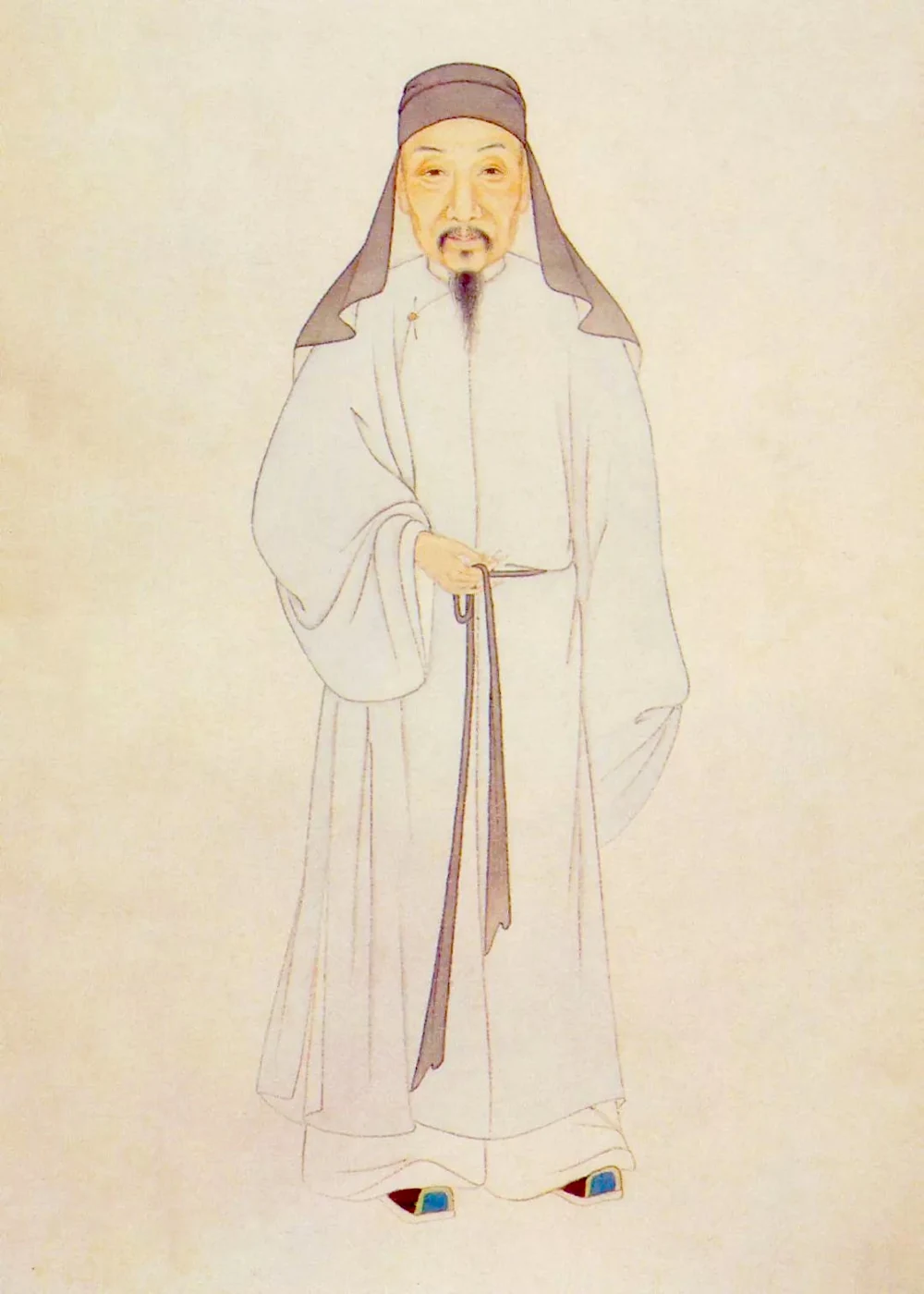 Ming Dynasty
Thinker
Gu Yanwu
Gu Yanwu (1613-1682), originally named Jiang, courtesy name Ningren, and also known as Tinglin, was a native of Kunshan in Southern Zhili and a thinker, classical scholar, and Ming loyalist of the late Ming and early Qing. He joined the Restoration Society in his youth and later abandoned examination-oriented composition to investigate history, geography, institutions, and popular livelihood. After the fall of the Mi
Southern Ming
Chief Councillor
Chen Yonghua
Chen Yonghua (1634 – August 1680), courtesy name Fufu, was a native of Tongan County, Quanzhou Prefecture, Fujian Province (modern Tongan District, Xiamen, Fujian). He was the premier statesman, chief military strategist, and institutional architect of the Southern Ming's Zheng regime (Kingdom of Tungning), as well as the founding father of official Confucian education in Taiwan. Born into an intellectual family of l
Ming Dynasty
Governor-General of Huguang
He Tengjiao
He Tengjiao (courtesy name: Yunmen []; sobriquet: Yuncong []; 1592–1649), a native of Liping Prefecture, Guizhou (present-day Liping County, Guizhou Province), with ancestral roots in Macheng, Huguang (modern Macheng, Hubei), was a paramount military-political commander of the Southern Ming regime during the collapse of the Ming Dynasty. Serving across three successive Southern Ming courts—Hongguang, Longwu, and Yong
Ming Dynasty
Southern Ming Imperial Clan Member
Zhu Hengjia
Zhu Hengjia (died 1646 CE) was an imperial clan prince of the Ming Dynasty and the eleventh Prince of Jingjiang, descending tenth in line from Zhu Shouqian (grand-nephew of the Hongwu Emperor). Inheriting the princedom in 1638 CE at Guilin, Guangxi, he witnessed the fall of Beijing in 1644 CE and the collapse of the Hongguang court in Nanjing in 1645 CE. In autumn 1645 CE, exploiting the political vacuum, Zhu declare
Southern Ming
Dashun General
Hao Yaoqi
Hao Yaoqi(?–1664 CE), formally named Hao Yongzhong, was a native of Lingbao, Henan Province. He was a prominent military commander of the peasant Dashun army, an elite anti-Qing general of the Southern Ming dynasty, and a founding leader of the Kui-Dong Thirteen Families (Kui-Dong Shisanjia), enfeoffed as the Marquis of Nanping. Joining Li Zicheng's uprising in his youth, he earned the nickname Flag-Waving Hao (Hao Y
Related entries
Bibliography
- 《南明史》
- 《南明史略》
- 《明史》
- 《清史稿》
- 《明季北略》
- 《国榷》
- 《永历实录》
- 《小腆纪年附考》