Born in Southern Fujian
Born into a scholarly family in Tong'an, Fujian; his father Chen Ding achieved the Jinshi degree in 1644
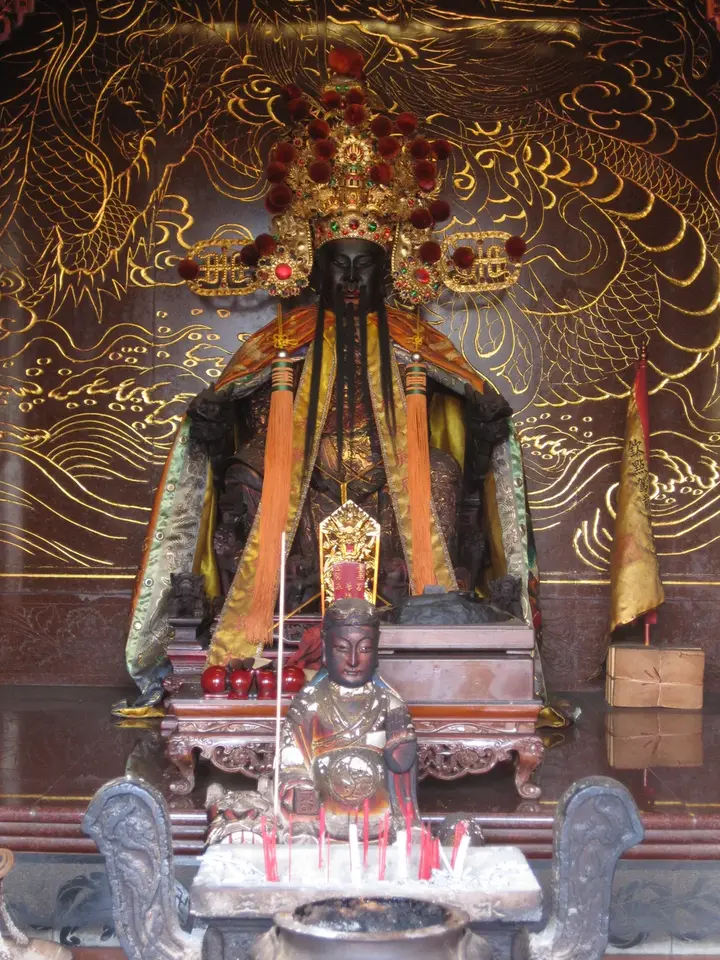
1634 CE–1680 CE
陈永华
Chen Yonghua (陈永华, 1634–1680), courtesy name Fufu (复甫), native of Tong'an County in Quanzhou Prefecture, Fujian (present-day Tong'an, Xiamen), was a preeminent statesman, military strategist, educational reformer, and the administrative architect of the Ming-Zheng Kingdom of Tungning in Taiwan. His father Chen Ding, an imperial metropolitan graduate of 1644, martyred himself by hanging when Qing forces seized Tong'an in 1648.…
Chen Yonghua (陈永华, 1634–1680), courtesy name Fufu (复甫), native of Tong'an County in Quanzhou Prefecture, Fujian (present-day Tong'an, Xiamen), was a preeminent statesman, military strategist, educational reformer, and the administrative architect of the Ming-Zheng Kingdom of Tungning in Taiwan. His father Chen Ding, an imperial metropolitan graduate of 1644, martyred himself by hanging when Qing forces seized Tong'an in 1648. Deeply affected by this family tragedy, the fifteen-year-old Chen renounced civil examination pursuits and dedicated his life to resisting the Qing and restoring the Ming dynasty. In 1656, Vice Minister of War Wang Zhongxiao recommended Chen to the Prince of Yanping, Zheng Chenggong. Following an in-depth nighttime discussion on grand strategy and governance, Zheng was captivated by Chen's vision, famously hailing him as "our contemporary Wolong" (the Reclining Dragon Zhuge Liang), commissioning him as Advisory Military Commissioner and personal tutor to his heir Zheng Jing. Following Zheng Chenggong's recovery of Taiwan and sudden passing, Chen decisively secured Zheng Jing's succession to the princely title. In 1664, Chen accompanied Zheng Jing across the Taiwan Strait, serving as Governor-General of Dongning and Advisory Army Officer, overseeing all civil, judicial, and economic affairs across Taiwan. During his sixteen-year tenure in Taiwan, Chen founded Chengtian Prefecture along with Tianxing and Wannian counties, directed the construction of the Tainan Confucius Temple as the First School of Taiwan, and inaugurated the three-tier imperial examination system, embedding classical Chinese civilization in the frontier island. He introduced military agricultural cultivation, instituted the Mutual Security (baojia) Policy, taught coastal populations how to evaporate seawater in solar salt evaporation pans, built brick and tile kilns, and organized sugar cane milling for export to Japan and Southeast Asia. During the Revolt of the Three Feudatories, Chen stayed behind to manage Taiwan, providing indispensable logistical sustenance for campaigns on the mainland. Targeted by envious courtiers such as Feng Xifan and Liu Guoxuan, he resigned his military commands and passed away in 1680 at age forty-seven. He was posthumously honored with the rank of Grand Master for Glorious Happiness and granted the prestigious posthumous name Wenzheng.
Born into a scholarly family in Tong'an, Fujian; his father Chen Ding achieved the Jinshi degree in 1644
Father martyred himself upon Qing capture of Tong'an; Chen renounced civil examinations to join anti-Qing resistance
Recommended to Zheng Chenggong by Wang Zhongxiao; Zheng praised him as modern Wolong and made him Military Commissioner
Following Zheng Chenggong's death, Chen helped heir Zheng Jing put down factional challenges and succeed as Prince of Yanping
Accompanied Zheng Jing to Taiwan after Jinmen and Xiamen fell, creating Chengtian Prefecture and two counties
Directed construction of Tainan Confucius Temple, established schools, and inaugurated civil service examinations
Appointed Governor-General of Dongning to govern Taiwan during Zheng Jing's mainland campaign during the Three Feudatories
Zheng Jing returned after defeat; Feng Xifan conspired to strip Chen of his Brave Guards command, forcing his retirement to Longhu Rock
Passed away from illness and exhaustion in the seventh month at age forty-seven; posthumously honored with the name Wenzheng
Chen Yonghua was born on the ninth day of the ninth lunar month in 1634 in Tong'an County, Quanzhou Prefecture, Fujian. His father Chen Ding was an upright scholar who passed the provincial examinations in 1627 and obtained the metropolitan Jinshi degree in 1644, serving as county education director. Inheriting his family's intellectual traditions, Chen Yonghua enrolled as a government student in Longxi County, Zhangzhou Prefecture.
In 1648, Qing armies swept south and stormed Tong'an. Refusing to submit to the new regime, Chen Ding adjusted his Ming official robes, sat inside the Minglun Hall of the local Confucian temple, and hanged himself in heroic martyrdom. The fifteen-year-old Chen wept over his father's corpse, taking a solemn vow never to serve the Qing dynasty. He abandoned civil examination pursuits, forged ties with coastal anti-Qing loyalists, and immersed himself in military manuals and statecraft to restore the Ming.
In 1656, former Ming Vice Minister of War Wang Zhongxiao encountered Chen while taking refuge in Jinmen. Struck by Chen's profound grasp of geopolitics, Wang personally introduced him to Zheng Chenggong in Xiamen. Zheng closed his doors to hold an all-night consultation with Chen regarding coastal defense and continental campaigns. Astounded by Chen's strategic clarity, Zheng exclaimed: "Fufu is truly our contemporary Wolong!" Zheng immediately appointed Chen as Advisory Military Commissioner and entrusted him with the education of his eldest son, Zheng Jing.
In early 1662, Zheng Chenggong liberated Taiwan from Dutch colonial rule, establishing a maritime resistance base, but passed away shortly thereafter from fever and overwork. A dangerous succession crisis erupted between Zheng Jing, who held Xiamen, and Zheng Xi, who held Taiwan backed by generals Huang Zhao and Xiao Gongchen.
Confronting potential fratricidal collapse, Chen remained steady. He assisted Zheng Jing in mobilizing naval forces, issuing official manifestos, and sailing across the Taiwan Strait to suppress the usurpation. Chen employed tactical deception to divide the island garrison, capturing the conspirators without extensive bloodshed and securing Zheng Jing's legitimate succession as Prince of Yanping. Zheng Jing rewarded Chen with the post of Advisory Army Officer, delegating all internal governance into his hands.
In 1664, facing combined naval assaults from Qing forces and Dutch fleets, the coastal strongholds of Jinmen and Xiamen became indefensible. Chen persuaded Zheng Jing to abandon isolated islets and concentrate all personnel on Taiwan. Upon landing, Chen established administrative frameworks by creating Chengtian Prefecture alongside Tianxing and Wannian counties, implementing pacification policies toward the indigenous Plains tribes, and establishing an enduring institutional order.
When the Ming loyalists arrived, Taiwan was a frontier wilderness lacking formal Chinese educational institutions. Recognizing that lasting governance required cultural foundations, Chen resolved to institute classical Confucian education.
In 1665, Chen submitted a landmark memorial to Zheng Jing: "Since ancient times, establishing a state requires elevating civil education; cultivating human talents begins with schooling. Though our people are upright, Taiwan remains an undeveloped frontier. We must build a Confucius temple and establish an imperial academy to educate future leaders." Zheng Jing enthusiastically approved the initiative.
In the spring of 1666, the Tainan Confucius Temple was completed inside the Great South Gate of modern Tainan, celebrated by posterity as the First School of Taiwan. Designed in classical Chinese architectural symmetry, it featured the Dacheng Hall for sacrificial rites and the Minglun Hall for classical lectures. Adjacent to the temple, Chen established the National Academy, ordering local counties to erect official schools and inviting renowned refugee scholars such as Shen Guangwen and Xu Fuyuan to lecture.
Chen established the civil service examination system across Taiwan, instituting three-tier examinations every three years. He exempted indigenous youths from corvee labor if they learned Chinese and studied classical texts, sparking a love of learning across the island and firmly anchoring Taiwan within the Chinese cultural sphere.
Confronted with acute food shortages resulting from the sudden influx of tens of thousands of soldiers and civilians, Chen carried out sweeping economic reforms. He instituted the military cultivation policy, allocating military divisions across designated districts to clear wilderness during peacetime while maintaining readiness for combat. This policy protected civilian property and transformed the coastal plains into fertile agricultural fields.
Prior to his arrival, local residents extracted salt by boiling seawater over firewood, yielding crude, bitter, and dark salt while consuming enormous quantities of timber. Chen conducted field surveys at Lekou in southern Tainan, laying out square evaporation reservoirs and crystallization beds. He taught the population how to construct sluice gates to channel seawater during high tides, letting the intense tropical sun evaporate the brine into pure white salt. Solar salt production flourished, supplying all domestic needs while yielding substantial export profits to Japan, the Ryukyu Kingdom, and Luzon.
Furthermore, Chen promoted commercial sugar cane cultivation, importing high-yield cane varieties and stone sugar-milling technology from Fujian and Guangdong to refine white sugar and crystal rock sugar. He taught settlers how to manufacture kiln-fired bricks and tiles to replace flammable thatched huts. Chen also organized commercial fleets laden with sugar, deerskins, and sea salt to trade with Nagasaki, Annam, Siam, and the English East India Company, exchanging commodities for copper, iron, gunpowder, and modern firearms, successfully neutralizing the Qing dynasty's maritime embargo.
In 1674, the Revolt of the Three Feudatories erupted across southern China. Zheng Jing mobilized the bulk of his veteran armies and crossed the strait to launch an offensive across Fujian and Guangdong. Before embarking, Zheng Jing appointed Chen as Governor-General of Dongning, Censor-in-Chief, and Commander of the Brave Guards, leaving him in complete charge of Taiwan while appointing his heir Zheng Kezang as Prince Regent under Chen's tutelage.
During the six-year campaign, Chen governed Taiwan with firm justice. He implemented the Mutual Security (baojia) Policy, audited household registrations, maintained social order, and eliminated banditry, creating a peaceful domestic environment. Confronting massive military consumption on the mainland, Chen stimulated agricultural yields, generated commercial profits, and dispatched tens of thousands of piculs of grain along with armaments annually to the front lines at Xiamen and Dongshan, providing the crucial logistical backbone for the war effort.
In 1680, Zheng Jing's mainland campaign collapsed, and his retreating armies withdrew to Taiwan. The return of aristocratic courtiers exacerbated factional infighting. Court commander Feng Xifan and admiral Liu Guoxuan formed a cabal, growing deeply jealous of Chen's preeminent stature and his close bond with Regent Zheng Kezang.
Exploiting Chen's upright disposition, Feng cunningly remarked during a private banquet: "Our state suffers because military authority is fragmented. Senior ministers like us should step down and return commands to avoid suspicion." Taking Feng at his word, Chen submitted a memorial the following day resigning his posts as Governor-General of Dongning and commander of the Brave Guards. Treacherously, Feng retained his own troops while seizing Chen's command, marginalizing Chen from the governing council.
Disillusioned by court intrigue and recognizing the decline of the dynasty, Chen retired with his family to Longhu Rock in Chishan (modern Liujia, Tainan), devoting himself to scholarship and Buddhist meditation. In the seventh month of 1680, exhausted by decades of state service and consumed by grief over the political crisis, Chen passed away at the age of forty-seven. Zheng Jing mourned him with profound remorse, posthumously granting him the title Grand Master for Glorious Happiness and the posthumous name Wenzheng, interring him in Chishan. The populace of Taiwan wept bitterly in the streets. Three years after Chen's death, the Kingdom of Tungning succumbed to internal strife and surrendered to Qing naval forces under Shi Lang.
Chen directed the construction of Taiwan's first Confucius Temple in Tainan, founded the National Academy and local schools, established the triennial civil service examinations, and recruited distinguished scholars to teach classical learning. Celebrated as the First School of Taiwan, his educational reforms transplanted Confucian heritage and civil institutions onto the island, transforming a frontier wilderness into an enlightened society.
Overcoming the inefficient method of boiling seawater, Chen surveyed the coastal terrain of Lekou, designed evaporation and crystallization ponds, and taught the population how to produce pure sea salt using solar evaporation. This breakthrough satisfied island consumption, supported long-term exports, and established one of Taiwan's most enduring coastal industries.
Chen implemented military agricultural settlements that assigned garrison troops to reclaim farmland, rapidly overcoming food supply crises. Simultaneously, he organized the island into Chengtian Prefecture and two counties, introducing the Mutual Security (baojia) Policy to create Taiwan's first comprehensive grassroots administrative and security structure.
Capitalizing on Taiwan's oceanic geography, Chen expanded commercial sugarcane agriculture and refined sugar manufacturing, deploying maritime merchant fleets to trade with Nagasaki, Manila, Southeast Asia, and the English East India Company. Exporting sugar, salt, and deerskins in exchange for iron, copper, and firearms, he broke through the Qing dynasty's economic blockade.
FIGURES ASSOCIATED WITH THIS DYNASTY