Birth in Nanyang
Born in the Prince of Tang residence in Nanyang; imprisoned in infancy with his father due to familial intrigue.
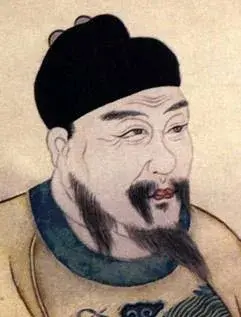
1602 CE–1646 CE
朱聿键
Zhu Yujian (朱聿键, May 25, 1602 – October 6, 1646), courtesy name Changshou, a native of Nanyang, Henan, was the eighth-generation descendant of Zhu Jing (Prince Ding of Tang, the twenty-third son of Ming founder Zhu Yuanzhang) and reigned as the second monarch of the Southern Ming dynasty from 1645 to 1646, historically known as the Longwu Emperor. In 1632, he inherited the princely title of Prince of Tang. In 1636, alarmed by…
Zhu Yujian (朱聿键, May 25, 1602 – October 6, 1646), courtesy name Changshou, a native of Nanyang, Henan, was the eighth-generation descendant of Zhu Jing (Prince Ding of Tang, the twenty-third son of Ming founder Zhu Yuanzhang) and reigned as the second monarch of the Southern Ming dynasty from 1645 to 1646, historically known as the Longwu Emperor. In 1632, he inherited the princely title of Prince of Tang. In 1636, alarmed by Qing incursions that directly threatened Beijing, he defied ancestral house laws by leading his princely guard northward to relieve the imperial capital. Enraged by this breach of dynastic regulations prohibiting princes from commanding troops, the Chongzhen Emperor stripped him of his titles and banished him to the imperial dungeons at Fengyang for seven grueling years. Following the fall of Nanjing and the capture of the Hongguang Emperor in 1645, Zhu Yujian was enthroned in Fuzhou by naval magnate Zheng Zhilong and loyalist scholar Huang Daozhou, proclaiming the Longwu era. During his reign, Zhu Yujian displayed exceptional political resolve, moral discipline, and personal frugality. He discarded the disastrous policy of treating peasant rebels as enemies and instead formed an expansive united front with former Dashun insurgents. He worked to eliminate bitter factional strife, enforced stringent anti-corruption laws, and led a modest personal life clad in coarse robes. However, his regime remained paralyzed by naval warlord Zheng Zhilong, who monopolized military and fiscal power while resisting offensive operations. Tensions were further exacerbated by a bitter dispute over imperial legitimacy with Prince of Lu Zhu Yihai in eastern Zhejiang. In autumn 1646, Qing forces invaded Fujian after Zheng Zhilong secretly defected and abandoned the mountain passes. Fleeing toward Jiangxi, Zhu Yujian was ambushed and killed by Qing cavalry at Tingzhou at age forty-five. He was posthumously honored with the temple name Shaozong and title Emperor Xiang by the Yongli Emperor.
Born in the Prince of Tang residence in Nanyang; imprisoned in infancy with his father due to familial intrigue.
Following his father's poisoning, official Chen Qiyu petitioned the throne, leading to Zhu Yujian's investiture as princely heir.
Succeeded to the principality of Tang; built Gaoming Pavilion in Nanyang to convene regional scholars.
Mobilized a thousand princely guards to relieve Beijing without authorization; degraded to commoner and jailed at Fengyang.
Released following the fall of Beijing; enfeoffed as Prince of Nanyang by Hongguang court and ordered to Guangxi.
Evacuated to Zhejiang after Nanjing's fall; escorted to Fujian by Zheng Hongkui, proclaimed regent and enthroned as Longwu Emperor.
Reconciled with Dashun peasant forces, commissioning commanders Hao Yaoqi and Li Jin as the Loyal and Just Battalion.
Grand Academician Huang Daozhou raised an untrained loyalist volunteer force; encircled at Wuyuan and executed at Nanjing.
Departed Fuzhou to advance through Yanping and Jianning toward Jiangxi to join regional resistance forces.
Zheng Zhilong defected to Qing, abandoning mountain passes; ambushed and slain by Qing cavalry at Tingzhou at age forty-five.
Zhu Yujian was a direct descendant of Zhu Jing, Prince Ding of Tang and the twenty-third son of Ming founder Zhu Yuanzhang. He was born in the princely mansion in Nanyang on May 25, 1602, to Lady Mao and Zhu Qisheng, the designated heir of the Tang principality. In his advanced age, his grandfather Zhu Shuohuang, Prince Duan of Tang, was infatuated with favored concubines and sought to alter the succession in favor of a younger son born to a concubine. Viewing his eldest son Zhu Qisheng as an obstacle, Prince Duan secretly confined Zhu Qisheng and the young Zhu Yujian within the mansion's disciplinary quarters, depriving them of outside contact in an effort to starve them to death.
Confined within the damp, narrow cells of the disciplinary compound, Zhu Yujian and his father endured sixteen arduous years of extreme privation. Despite starvation and isolation, Zhu Qisheng diligently instructed his son in the Confucian classics. In this bleak environment, young Zhu Yujian dedicated himself to learning, studying the Four Books, the Five Classics, the Twenty-One Histories, and administrative treatises, acquiring profound historical erudition and an unyielding personal character.
In 1629, Zhu Qisheng died abruptly after vomiting blood, widely believed to have been poisoned by his half-brothers Zhu Qishuang (Prince of Fushan) and Zhu Qijun (Prince of Anyang). Prince Duan attempted to conceal the murder and bypass Zhu Yujian in the succession. Chen Qiyu, a regional circuit inspector in Nanyang, discovered the truth during an inspection tour and submitted a memorial to the Chongzhen Emperor demanding adherence to dynastic lineage laws. The emperor intervened, officially designating Zhu Yujian as the imperial heir grandson of the Tang principality and securing his release from confinement.
In late 1629, Prince Duan passed away, and Zhu Yujian observed the traditional three-year mourning period. In 1632, at age twenty-eight, he formally succeeded to the title of Prince of Tang in Nanyang. The Chongzhen Emperor bestowed imperial genealogical records, dynastic administrative codes, and historical compendia upon him. Uninterested in worldly luxuries, Zhu Yujian erected the Gaoming Pavilion within his estate, gathering renowned Confucian scholars to debate statecraft, frontier defense, and administrative reform. Amid mounting peasant unrest and external Jurchen pressure, he drilled his princely guards and gathered provisions, demonstrating civic concern rare among imperial princes.
In July 1636, determined to avenge his father's murder, Zhu Yujian presided over an interrogation within the princely palace, ordering the caning death of Prince of Fushan Zhu Qishuang and severely injuring Prince of Anyang Zhu Qijun. This disciplinary action stunned the imperial court and violated princely legal protocols. Soon after, in August 1636, Qing prince Ajige led a massive invasion through Xifengkou, ravaging Northern Zhili and capturing dozens of cities. When Qing vanguard forces approached the gates of Beijing, the capital was placed under siege conditions, and the emperor issued urgent calls for assistance.
Viewing imperial security as the shared duty of the royal house, Zhu Yujian petitioned the throne for permission to lead his princely guards to the capital. The Chongzhen Emperor, adhering strictly to dynastic statutes that barred princes from military commands, denied the request. Believing the dynasty was facing imminent destruction, Zhu Yujian disregarded imperial orders, mobilized over a thousand armed guards from the Nanyang garrison, and marched north toward Beijing.
When his force reached Yuzhou in Henan, Governor Yang Shengwu reported the unauthorized military movement to the court. Enraged by this breach of royal statutes, the Chongzhen Emperor ordered Zhu Yujian to return to his fief immediately. During the return march, the princely force was ambushed by roving peasant rebels in a narrow pass. Although the guards repelled the insurgents, two palace stewards were killed and scores of men wounded before Zhu Yujian safely retreated into Nanyang.
The unauthorized mobilization aroused intense suspicion in the paranoid Chongzhen Emperor. In November 1636, the emperor stripped Zhu Yujian of his princely titles, reduced him to commoner status, and expunged him from the imperial genealogy. Imperial guards escorted him under heavy shackles to the Fengyang royal prison, while his younger brother Zhu Yuxie was created Prince of Tang. At Fengyang, corrupt tomb-guarding eunuch Shi Yingzhao subjected Zhu Yujian to brutal dungeon lock torture after he refused demands for bribes, leaving him crippled and near death.
Enduring squalor, Zhu Yujian continued to recite classical texts from memory. In 1642, Central Capital Governor Lu Zhenfei inspected the Fengyang dungeons and was deeply moved by Zhu Yujian's dignity, classical erudition, and lack of rancor. Lu Zhenfei ordered medical treatment and submitted an urgent memorial detailing the cruelty of the prison eunuchs. The Chongzhen Emperor responded by executing Shi Yingzhao. Nonetheless, Zhu Yujian remained confined in the damp dungeon for seven years until the fall of Beijing and the suicide of the Chongzhen Emperor in 1644.
Following the fall of Beijing, Prince of Fu Zhu Yousong ascended the throne in Nanjing as the Hongguang Emperor, proclaiming a general amnesty. Supported by regional commander Liu Liangzuo, Zhu Yujian was finally released from the Fengyang prison. Although officials proposed restoring his original title, court faction leaders Ma Shiying and Ruan Dacheng feared his reputation and political acumen, demoting him to Prince of Nanyang and ordering him to resettle in remote Pingyue in Guangxi.
Penniless and physically exhausted from seven years of imprisonment, Zhu Yujian reached Suzhou and Hangzhou, where lack of funds and illness forced him to pause his journey. In June 1645, Qing forces under Prince Dodo captured Nanjing, executing loyalist Shi Kefa and capturing the Hongguang Emperor. The Ming defense line along the Yangtze collapsed completely.
Zhu Yujian fled to Jiaxing and Hangzhou. When Prince of Lu Zhu Changfang surrendered to Qing forces in Hangzhou, regional resistance was left leaderless. At this juncture, naval commander Zheng Hongkui, brother of coastal magnate Zheng Zhilong, was withdrawing his fleet toward southern Zhejiang. Encountering Zhu Yujian near the Qiantang River, Zheng Hongkui was struck by his regal bearing and resolve, escorting him aboard imperial vessels to Fujian.
Upon reaching Quzhou, Zhu Yujian conducted a formal military review, swearing a public oath to lead an expedition north to restore the Ming dynasty. Senior loyalists, including Fujian Governor Zhang Kengtang and scholar Huang Daozhou, met with naval magnate Zheng Zhilong and agreed to invite Zhu Yujian to assume regent authority. On July 21, 1645, Zhu Yujian declared his regency in Jianning, subsequently establishing his temporary residence in Fuzhou.
On August 18, 1645, Zhu Yujian ascended the throne in Fuzhou as the Longwu Emperor. During the enthronement ceremony, sudden storms blew through the city, startling the horse of the seal keeper and causing the imperial jade seal to chip on stone steps. While ministers viewed this as an ominous omen, the emperor calmly mounted the throne and proclaimed Fuzhou the auxiliary capital of Tianxing. He established imperial ancestral shrines and granted posthumous imperial honors to four generations of his forebears.
To secure military backing against the Qing invasion, the Longwu Emperor showered the Zheng clan with titles, creating Zheng Zhilong Marquis of Pinglu and Zheng Hongkui Marquis of Dinglu, placing provincial military forces and maritime customs revenues in their hands. To broaden administrative legitimacy, he appointed over twenty renowned scholars to the Grand Secretariat, including Huang Daozhou, Jiang Dejing, Su Guansheng, He Wuzhou, and Zeng Ying.
When Zheng Zhilong's twenty-two-year-old son Zheng Sen was presented at court, the emperor was captivated by his intelligence, martial poise, and insight into state affairs. Stroking the young man's back, the sovereign lamented that he had no daughter to offer in marriage, urging him to remain loyal to the dynasty. The emperor granted him the imperial surname Zhu, changed his given name to Chenggong, created him Count of Zhongxiao, and appointed him imperial guard commander, originating his moniker Lord of the Imperial Surname.
The emperor hoped that granting high honors to Zheng Chenggong would motivate the Zheng clan to deploy their naval forces northward. However, Zheng Zhilong was a pragmatic seafaring merchant who exploited the court to legitimize his maritime monopoly. Whenever the emperor ordered offensive operations beyond Xianxia Pass, Zheng Zhilong fabricated excuses of supply shortages and coastal piracy to keep his forces anchored in Fujian, allowing northern resistance pockets to be crushed.
Simultaneously, the loyalist movement suffered internal discord. In late 1645, loyalist factions in Shaoxing declared Prince of Lu Zhu Yihai as regent, maintaining a separate defense along the Qiantang River. Instead of cooperating, the two regimes clashed over imperial protocol. When the Prince of Lu dispatched envoys requesting military subsidies, the correspondence addressed the Longwu Emperor as imperial uncle rather than sovereign. Infuriated by this rejection of his legitimacy, the Longwu Emperor executed the envoy, sparking frontier skirmishes between loyalist garrisons.
In winter 1645, distraught by the Zheng clan's inaction, Grand Academician Huang Daozhou volunteered to recruit a volunteer army and advance beyond the mountain passes. The Longwu Emperor wept bitterly, but because fiscal resources were held by Zheng Zhilong, the sovereign could only offer a hundred blank commission documents. Huang Daozhou mobilized thousands of local volunteers armed with spears and carrying poles, known as the Shoulder-Pole Army, marching into Jiangxi. Encircled by Qing cavalry at Wuyuan, his force was annihilated, and Huang Daozhou was captured and executed in Nanjing, bowing toward the Ming imperial tombs before his death.
In February 1646, determined to break free of Zheng Zhilong's paralysis, the Longwu Emperor launched an imperial expedition, leaving Grand Academician Zeng Ying in Fuzhou while leading several thousand palace guards toward Jianning and Yanping. His objective was to cross Jiangxi into Hunan, linking up with commander He Tengjiao and former Dashun forces to create an expansive southern resistance front. However, Qing commander Bolo broke through the Prince of Lu's defenses in Zhejiang and marched toward Xianxia Pass.
Concurrently, Zheng Zhilong finalized secret defection terms with Qing generals, who promised him high provincial appointments. To deliver Fujian to the Qing invaders, Zheng Zhilong ordered his garrison commanders to abandon the fortified passes of Xianxia without offering battle. Qing cavalry surged through the undefended mountain passes, taking Jianning and Yanping. Caught unprepared, the Longwu Emperor fled toward Tingzhou with Empress Zeng and a handful of attendants amid autumn rains.
On October 6, 1646, eighty-three elite Qing cavalrymen disguised as imperial scouts surprised the guards at the Lichun Gate of Tingzhou. When the enemy charged the palace, loyalist noble Zhou Zhifan fought fiercely at the entrance, claiming to be the emperor to cover the sovereign's retreat, and was cut down. Qing archers stormed into the courtyard where the exhausted emperor was about to take food. A volley of arrows struck Zhu Yujian in the back, killing him instantly at age forty-five. Empress Zeng drowned herself in an adjacent pond. The nine imperial seals were captured, and local residents secretly buried the fallen monarch at Luohanling. He was posthumously honored as Emperor Xiang with temple name Shaozong by the Yongli court.
The Longwu Emperor's foremost strategic accomplishment lay in dismantling the rigid policy of opposing peasant armies that had doomed the late Ming and Hongguang administrations. Recognizing that national survival superseded internal class conflict, he issued imperial decrees pardoning former Dashun insurgent forces under Li Jin, Gao Yigong, and Hao Yaoqi, incorporating hundreds of thousands of veteran fighters into the imperial ranks as the Loyal and Just Battalion.
This reconciliation transformed peasant insurgents into dedicated loyalist defenders. Operating under imperial commissions, these veteran forces achieved victories against Qing armies across northern Hunan and Hubei, briefly recapturing cities such as Ningguo and Jingde. Although the severance of communication corridors by the Zheng clan prevented coordinated joint operations between Fujian and the middle Yangtze, this unified policy established the institutional framework for subsequent prolonged alliances between the Southern Ming court and regional resistance armies.
Addressing the destructive legacy of factional warfare between the Donglin society and rival factions that had paralyzed late Ming governance, Zhu Yujian demonstrated extraordinary political magnanimity. He authored three major proclamations to the civil bureaucracy, military commanders, and Confucian scholars, announcing a complete amnesty for past factional disputes and pledging to judge officials solely on merit and loyalty.
In civil administration, he established strict penal codes punishing bureaucratic corruption, mandating demotions and asset confiscations for venal local officials. When reports reached the court that displaced civilians forced to shave their foreheads by Qing authorities were being massacred by Ming garrisons, he issued a compassionate decree declaring that civilians with intact hair were loyal subjects while shaven civilians were refugees, halting indiscriminate executions and earning widespread popular support throughout the coastal provinces.
Having spent decades in scholarly isolation and confinement, Zhu Yujian was deeply committed to Confucian learning and administrative virtue. In Fuzhou, he presided over civil service examinations to recruit scholar-officials, ensuring bureaucratic stability in wartime. Even during retreat and military campaigning, he traveled with cartloads of books, reading state memorials and historical texts late into the night.
He distinguished himself from other Southern Ming monarchs through rigorous personal frugality. He wore coarse cotton robes, dined on simple fare, and banned gold and silver tableware and theatrical performances from the palace. His ascetic personal discipline and dedication to the restoration of the dynasty earned him comparison by contemporaries to Emperor Guangwu of Han and Emperor Gaozong of Song.
In cultural and diplomatic matters, the Longwu Emperor exhibited notable breadth of vision. He extended protection to Italian Jesuit missionary Giulio Aleni, authorizing the expansion of the Catholic church in Fuzhou and presenting an imperial calligraphic plaque reading "Imperial Catholic Church." His administration fostered constructive relations with European missionaries, seeking to leverage Western casting techniques to produce firearms.
To finance regional defenses, he coordinated with coastal maritime merchants, authorizing the minting of Longwu Tongbao copper coinage in Fuzhou. These coins circulated widely throughout regional maritime trade networks, sustaining domestic commerce in Fujian and Guangdong. He also permitted trade with Portuguese and Dutch merchants at designated coastal harbors, attempting to secure arms and gunpowder to enhance loyalist firepower.
Recognizing the extraordinary promise of Zheng Zhilong's young son Zheng Sen, the Longwu Emperor bestowed upon him the imperial surname Zhu and the given name Chenggong, commissioning him as commander of the central imperial camp and inspiring his lifelong devotion to the Ming cause.
Throughout his reign in Fuzhou and Yanping, the Longwu Emperor dispatched imperial envoys to Hunan to reinforce Viceroy He Tengjiao and elevated him to Earl of Dingxing, establishing the strategic blueprint for a joint Hunan-Jiangxi counteroffensive.
To shield the western approaches to Fujian, Zhu Yujian commissioned loyalist scholars Yang Tinglin and Wan Yuanji to organize the defense of Ganzhou in southern Jiangxi, rallying local militias that held back Qing armies for nearly a year.
An accomplished prose writer, the Longwu Emperor personally drafted his imperial edicts, military proclamations, and letters to regional commanders, which were later collected by loyalist scholars into the Siwen Daji (Grand Records of Emperor Siwen).
The official History of Ming (Ming Shi) evaluates Zhu Yujian positively compared to other Southern Ming sovereigns, recording that he was fond of propriety, revered scholarship, practiced strict personal frugality, and abstained from alcohol, wealth, and arbitrary executions. While recognizing his royal virtues, dynastic chronicles lament that his emergence in a remote province under the control of powerful regional warlords rendered him unable to reverse the collapse of the dynasty. Grand Academician Huang Daozhou similarly praised his integrity and administrative talent, noting that his dedication to statecraft surpassed that of most monarchs since ancient times.
Qing scholar Yang Fengbao observed in Nanjiang Yishi that the downfall of the Longwu regime was caused by Zheng Zhilong's secret defection rather than battlefield inferiority. Contemporary historian Gu Cheng demonstrated in History of the Southern Ming that the Longwu Emperor was the most capable and strategically astute monarch of the Southern Ming. His revolutionary decision to form an alliance with the Dashun peasant forces overcame deep-seated ideological prejudices. However, deep-seated factional hostilities, internal friction with the Prince of Lu in Zhejiang, and excessive reliance on the duplicitous warlord Zheng Zhilong ultimately precipitated his tragic martyrdom.
FIGURES ASSOCIATED WITH THIS DYNASTY