Birth | Born at Qianlibin, Kawachiura, Hirado Island, Hizen Province, Japan
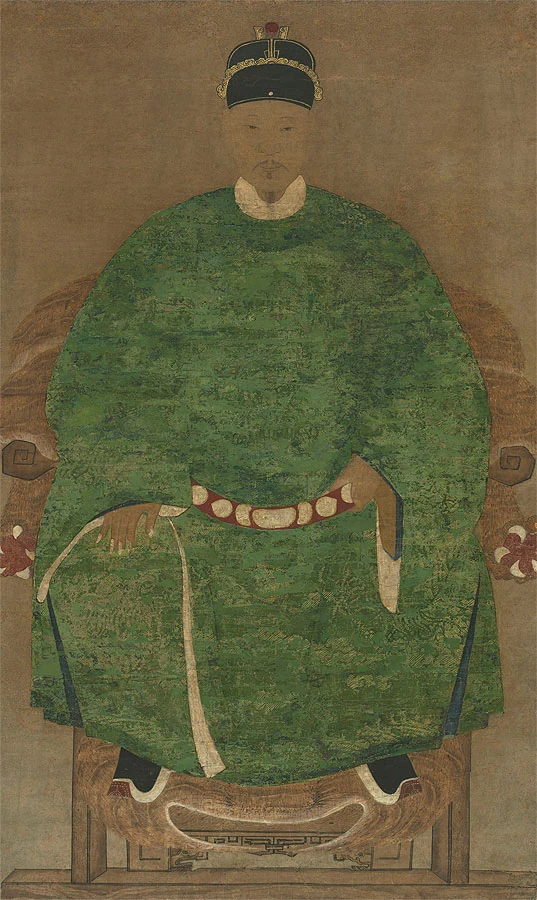
1624 CE–1662 CE
Military commander
Zheng Chenggong
郑成功
Zheng Chenggong (August 27, 1624–June 23, 1662), originally named Sen and also known as Fusong, courtesy name Mingyan and art name Damu, was a native of Nan'an, Quanzhou, Fujian, with ancestral origins in Gushi, Henan. After the Southern Ming Longwu Emperor granted him the imperial surname Zhu, his name was changed to Chenggong. He became widely known as Koxinga. He was also called Zheng Yanping after the Yongli Emperor…
1624 CE–1662 CEQing Dynasty
PROFILE
Zheng Chenggong (August 27, 1624–June 23, 1662), originally named Sen and also known as Fusong, courtesy name Mingyan and art name Damu, was a native of Nan'an, Quanzhou, Fujian, with ancestral origins in Gushi, Henan. After the Southern Ming Longwu Emperor granted him the imperial surname Zhu, his name was changed to Chenggong. He became widely known as Koxinga. He was also called Zheng Yanping after the Yongli Emperor enfeoffed him as Prince of Yanping. Zheng Chenggong was one of the most important commanders resisting the Qing in the late Ming and early Qing. Leading former troops of his father Zheng Zhilong, he continued armed resistance along the southeastern coast for more than a decade, at one point besieging Nanjing. In 1661 he led an army across the Taiwan Strait, expelled the Dutch colonial forces, recovered Taiwan, and established the Ming-Zheng regime, beginning the period of Zheng family rule in Taiwan.
- Also known as
- Koxinga
- Courtesy name
- Mingyan
- Art name
- Damu
- Era
- Qing
- Dynasty/Regime
- Qing
- Identity
- Military commander
- Date of Birth
- August 27 1624
- Date of Death
- June 23 1662
- Ethnicity
- Han Chinese
- Native place
- Nan'an, Quanzhou, Fujian
- Place of birth
- Not recorded in historical sources
- Major achievements
- A leading Southern Ming commander who resisted the Qing, recovered Taiwan, established the Ming-Zheng regime, and became a symbol of the cause of resisting the Qing and restoring the Ming
LIFE TIMELINE
Age seven | Brought back to Anping in Fujian to live and study; renamed Zheng Sen
Age fourteen | Passed the county-level examination and became one of twenty stipend students in Nan'an County
Age seventeen | Married Dong You, niece of Dong Yangxian, Vice Minister of Rites
Age twenty | Entered the Nanjing Imperial Academy for further study, became a student of Qian Qianyi, and received the style name Damu
Age twenty-one | The Longwu Emperor granted him the imperial surname Zhu, changed his name to Chenggong, and enfeoffed him as Count Zhongxiao
Age twenty-two | Zheng Zhilong surrendered to the Qing; Lady Tagawa took her own life; the Longwu regime collapsed, and Zheng Chenggong withdrew to Kinmen
Age twenty-three | Swore an oath to resist the Qing on Little Kinmen under the title “Count Zhongxiao, Generalissimo for Suppression, guilty subject of the imperial surname”
Age twenty-five | Adopted the Yongli reign era; the Yongli Emperor enfeoffed him as Prince of Yanping
Age twenty-six | Used Shi Lang's plan to seize Xiamen, absorbed the troops of Zheng Cai and Zheng Lian, and established the Kinmen-Xiamen base
Age twenty-seven | Xiamen was raided by Qing forces; he executed his uncle Zheng Zhiguan; Shi Lang defected and surrendered to the Qing
Age twenty-eight | Defeated Chen Jin's Qing army at Jiangdong Bridge and besieged Zhangzhou for several months
Age thirty-one | Renamed Xiamen Siming Prefecture and established administrative organs including the Six Offices and the Office for the Examination of Speech
Age thirty-four | Launched a major northern campaign, entered the Yangtze River, and captured Guazhou and Zhenjiang
Age thirty-five | Besieged Nanjing, was defeated, and withdrew to Xiamen
Age thirty-seven | Led an army across to Taiwan and besieged Fort Zeelandia
Age thirty-eight | Defeated the Dutch East India Company and recovered Taiwan; died of illness in the sixth lunar month of the same year
BIOGRAPHY
Biography
Family Background and Early Life
Zheng Chenggong's ancestral home was Shijing in Nan'an, Fujian, and he was born in the Hirado domain on Kyushu, Japan. The Genealogy of the Zheng Clan of Shijing records that the Zheng ancestors migrated from Gushi in Guangzhou to Fujian during the Guangqi era at the end of the Tang dynasty. Zheng Chenggong's father, Zheng Zhilong, was a maritime merchant and leader of a seaborne smuggling organization. He had five wives during his lifetime, of whom his second wife, Lady Tagawa, was Japanese. Japanese authorities at the time valued Zheng Zhilong highly, and the lord of Hirado, Matsuura Takanobu, provided him with a residence. In 1623, the third year of the Tianqi era, Zheng Zhilong traveled to Japan for trade and married Lady Tagawa. On August 27, 1624, the fourteenth day of the seventh lunar month in the fourth year of Tianqi, Zheng Chenggong was born at Qianlibin in Kawachiura on Hirado Island, Hizen Province, Japan. According to legend, Lady Tagawa was gathering seashells when labor pains began and gave birth to him on a rock later known as the “Childbirth Stone.” His childhood name was Fusong, and he lived with his mother in Hirado until the age of six.
In 1631, the fourth year of the Chongzhen era, after Zheng Zhilong accepted Ming recruitment and took office, Zheng Chenggong was brought back to Anping in Quanzhou Prefecture, present-day Anhai in Jinjiang, to live and study. His name was changed to Zheng Sen. In 1638, the eleventh year of Chongzhen, he passed the preliminary civil examination and later became one of twenty stipend students of Nan'an County. In 1641, the fourteenth year of Chongzhen, he married Dong You, niece of Dong Yangxian, a presented scholar from Hui'an in Quanzhou who served as Vice Minister of Rites. In 1644, the seventeenth year of Chongzhen, Zheng Chenggong was sent to Nanjing to study at the Imperial Academy and became a student of the eminent Jiangnan scholar Qian Qianyi. Qian gave him the style name Damu, alluding to a great timber fit to support a great building. That same year Li Zicheng captured Beijing and the Chongzhen Emperor hanged himself at Coal Hill, bringing the Ming dynasty to an end in the capital. Wu Sangui then allowed Qing forces through the passes, defeated Li Zicheng, and entered Beijing. Ming officials in Nanjing enthroned Zhu Yousong, Prince of Fu, who adopted the Hongguang reign era the following year.
Grant of the Imperial Surname and Raising Troops against the Qing
In the fifth lunar month of 1645, the first year of the Hongguang era, Dodo, Prince Yu of the Qing, led troops south and captured Nanjing, bringing the Hongguang regime to an end. The brothers Zheng Zhilong and Zheng Hongkui then supported Zhu Yujian, Prince of Tang, as emperor at Fuzhou, and the new regime adopted the Longwu era. After the Longwu regime was established, Zheng Zhilong introduced Zheng Chenggong to the Longwu Emperor. The emperor greatly admired his abilities and reportedly lamented that he had no daughter to give him in marriage, urging him to remain loyal to the imperial house. As a sign of favor, the Longwu Emperor granted Zheng the Ming imperial surname Zhu and changed his name from Sen to Chenggong. Zheng Sen thus became Zhu Chenggong. At court he was called “the holder of the imperial surname,” while the people respectfully called him Koxinga. The Longwu Emperor successively appointed him to posts in the Court of the Imperial Clan and the imperial guards, and entrusted him with military responsibilities in the imperial field army.
In the third lunar month of 1646, the second year of Longwu, Zheng Chenggong was stationed at Yanping and presented military proposals to the Longwu Emperor, later known as the “Yanping Proposals.” The emperor praised them highly, enfeoffed him as Count Zhongxiao, gave him the seal of Generalissimo for Suppression and an imperial sword of authority, and sent him to fight Qing forces on the Fujian-Jiangxi frontier. Zheng Zhilong, however, held the real military and administrative power and had no intention of fully resisting the Qing. When Qing forces advanced into Fujian, he ordered Shi Fu, commander at Xianxia Pass, to withdraw his troops to Fuzhou, allowing Qing forces to enter northern Fujian with little resistance. Hong Chengchou, a Qing grand secretary and fellow native of Nan'an, reportedly enticed Zheng Zhilong with the promise of a princely title over three provinces. Ignoring the opposition of Zheng Chenggong and Zheng Hongkui, Zheng Zhilong decided to go north and submit to the Qing. Unable to dissuade his father, Zheng Chenggong led about twenty followers to the Confucian temple at Nan'an, burned his scholar's robes, and swore before Confucius that he would henceforth act as a lone loyal subject. He then left for Kinmen.
After Zheng Zhilong surrendered, Bolo, commander of the Qing expedition into Fujian, broke his promises and took Zheng Zhilong and several of his sons to Beijing. Qing troops also attacked the Zheng family's home region in southern Fujian. Zheng Chenggong's mother, Lady Tagawa, had by then moved from Japan to Nan'an and took her own life amid the fighting. On learning of her death, Zheng Chenggong became still more determined to resist the Qing. In the eighth lunar month Qing forces captured Pucheng and Xiapu. The Longwu Emperor fled toward Jiangxi, was captured at Tingzhou, and died after refusing food. Zhu Youlang, Prince of Gui, succeeded to the Southern Ming imperial line and adopted the Yongli era. After the collapse of the Longwu regime, Zheng Chenggong withdrew to Kinmen, recruited troops along the coast, absorbed former soldiers of Zheng Zhilong, and raised several thousand men at Nan'ao. In the first lunar month of 1647, the third year of Longwu as retained in his usage, he swore an oath on Little Kinmen, present-day Lieyu in Kinmen County, to resist the Qing under the title “Count Zhongxiao, Generalissimo for Suppression, guilty subject of the imperial surname.”
Consolidating Southern Fujian and the Kinmen-Xiamen Base
In the seventh lunar month of 1647, Zheng Chenggong joined forces with Zheng Cai to attack Haicheng but failed. In the eighth lunar month he and Zheng Hongkui besieged Quanzhou, but when Wang Jin, Qing deputy general at Zhangzhou, arrived with reinforcements, the Zheng forces were defeated and withdrew. In 1648, the fourth year of Longwu, former Southern Ming officials including Lu Ruoteng came to join him. After rebuilding his strength, Zheng Chenggong attacked again and captured Tong'an County. In the fifth lunar month his forces besieged Quanzhou; in the seventh lunar month Qing commanders Chen Tai and Chen Jin, together with Fujian commander Zhao Guozuo, turned their forces against Tong'an. The Zheng army was defeated and the defenders and civilians suffered very heavy casualties. Soon afterward the Qing suppressed the anti-Qing forces of Jin Shenghuan and Wang Deren in Jiangxi, while Li Chengdong's army in Guangdong was also destroyed the following year, and the wider resistance entered a period of decline.
In the tenth lunar month of 1649, the third year of Yongli, Zheng Chenggong decided to campaign south. In addition to attacking Qing forces in southern Fujian, he intended to bring local fortified settlements under his control in order to secure grain supplies. Over the next month he captured Zhangpu and Yunxiao from the Qing and subdued settlements such as Dahao and Xiamei. In the eleventh lunar month he failed to take Zhao'an and therefore moved into eastern Guangdong through Fenshui Pass to campaign against local forces around Chaozhou that refused cooperation. By the following fifth lunar month he had taken Chaoyang and many surrounding fortified villages. Hao Shangjiu, commander at Chaozhou, had earlier joined Li Chengdong in opposing the Qing, but he had also attacked the forces of Shi Lang and Zheng Hongkui and rejected Zheng Chenggong's calls for joint action. Relations between the two men were therefore poor. In the sixth lunar month of 1650, the fourth year of Yongli, Zheng Chenggong attacked Hao on the grounds that his political stance was unclear. Hao's troops were defeated and withdrew into the prefectural city, while Jieyang, Puning, Huilai, and other counties fell to Zheng's forces. When Qing troops again advanced into Guangdong, Hao Shangjiu angrily surrendered to the Qing and brought Qing forces into Chaozhou to resist Zheng. Zheng Chenggong besieged the city for three months without success and lifted the siege in the eighth lunar month before returning to southern Fujian.
In 1650, Zheng Chenggong's clansmen Zheng Cai and Zheng Lian controlled troops based in Xiamen. After returning to southern Fujian, Zheng Chenggong followed a plan proposed by Shi Lang to seize Xiamen. At the Mid-Autumn Festival that year, while Zheng Cai was away from the island, Zheng Chenggong visited Zheng Lian in Xiamen. Zheng Lian, caught off guard, was killed. When Zheng Cai returned after learning of Zheng Lian's death, he handed over his military authority. Zheng Chenggong thereby absorbed most of the troops of Zheng Cai and Zheng Lian and gained effective control of Xiamen and Kinmen as his principal bases. In the eleventh lunar month Shang Kexi, Prince Pingnan, and Geng Jimao, Prince Jingnan, led tens of thousands of cavalry into Guangzhou. Zheng Chenggong received orders to go south to aid the Southern Ming court and left his uncle Zheng Zhiguan to guard Xiamen.
In the first lunar month of 1651, the fifth year of Yongli, Zheng Chenggong reached Nan'ao. On the twenty-fifth day of the second lunar month, his fleet encountered a violent storm near Yanzhou Harbor. His flagship nearly broke apart and capsized, almost all equipment aboard was lost, and Zheng himself went without food for two meals. It was the most dangerous storm he ever faced at sea. In the third lunar month the fleet reached Daxingsuo in Guangdong. Meanwhile, Qing governor Zhang Xuesheng learned that Zheng's main forces had gone to Guangdong and ordered Ma Degong, Wang Bangjun, and others to attack Xiamen while it was weakly defended. Ma Degong seized Zheng Zhibao at Anping and forced him to provide ships to transport Qing troops to Xiamen. The city fell, and the Zheng family's stores and equipment were looted. Lady Dong and Zheng Chenggong's eldest son Zheng Jing escaped by sea with only the ancestral tablets. On learning of the attack while in Guangdong, Zheng Chenggong was forced to return because the officers and soldiers all longed for home. After retaking Xiamen, he punished those responsible and executed his uncle Zheng Zhiguan for fleeing from battle. Zheng Hongkui, who had allowed Ma Degong to escape, surrendered his command and retired to Baisha at Dongshi, withdrawing from political affairs. In the fifth lunar month, Shi Lang, one of Zheng Hongkui's senior commanders, secretly defected after his disloyalty was exposed and executed Zheng Chenggong's officer Zeng De without authorization. Zheng Chenggong then sought to execute Shi Lang's entire family. Shi escaped with the help of friends, but his father and younger brother were put to death. From then on he bore a deep grudge against Zheng and again surrendered to the Qing.
In the second half of 1651, Zheng's forces fought at Xiaoyingling, Haicheng, and elsewhere in southern Fujian, winning engagements at Cizao, Qianshan, and Xiaoyingling and recovering Pinghe, Zhangpu, Zhao'an, Nanjing, and other places. By the end of the year figures including Marquis Dingxi Zhang Mingzhen had joined him, further strengthening his forces.
The Northern Campaign against Nanjing and Retreat
In the first lunar month of 1652, the sixth year of Yongli, He Wenxing, the Qing commander at Haicheng, surrendered to Zheng Chenggong. In the second lunar month Zheng attacked Changtai. The Qing sent Chen Jin with a large relief army, and the two sides fought a major battle at Jiangdong Bridge. Taking advantage of his familiarity with the terrain of southern Fujian, Zheng Chenggong placed numerous ambushes near the bridge and inflicted a major defeat on Chen Jin's army, killing most of its soldiers and winning the Battle of Jiangdong Bridge. Changtai fell soon afterward. After taking the city, Zheng concentrated his forces on Zhangzhou, surrounding the prefectural capital. In the fourth lunar month the Qing assembled a hundred vessels to attack Xiamen in order to relieve Zhangzhou. Zheng sent Chen Hui, Zhou Rui, and others with more than one hundred warships and defeated the Qing fleet off Chongwu. The defenders of Zhangzhou, however, resisted strongly. The siege lasted more than half a year, water and food ran out, and large numbers of soldiers and civilians starved to death. Contemporary accounts said that people in the city ate one another and that eight out of ten commoners died. In the ninth lunar month the Qing general Jili arrived in Fujian with an army of ten thousand, and only then did Zheng order the siege lifted. He deployed his army at Guxian near Zhangzhou, intending to ambush Jili as he had Chen Jin, but the Qing general saw through the plan. In the ensuing battle several of Zheng's senior commanders were killed. Zheng's army fell back to Haicheng, while Qing forces recovered Nanjing, Changtai, Pinghe, and Zhao'an counties.
Over the following years Zheng Chenggong consolidated the Kinmen-Xiamen base while also negotiating intermittently with the Qing. In 1655, the ninth year of Yongli, he renamed Xiamen Siming Prefecture and created a more complete governmental structure, including the Six Offices, the Office for the Examination of Speech, the Hall for Storing Worthies, and the Hall for the Education of Heirs. In 1657, the eleventh year of Yongli, Zheng accepted the proposal of He Bin, a former interpreter for the Dutch, and began preparations for an expedition against Taiwan. In 1658, the twelfth year of Yongli, he launched a major northern campaign with an army said to number 170,000 and several thousand vessels. He entered the Yangtze River, captured Guazhou and Zhenjiang, and advanced toward Nanjing. In 1659, the thirteenth year of Yongli, he besieged Nanjing but was defeated after underestimating the Qing response and retreated to Xiamen. Following this failure, he concluded that the islands of Kinmen and Xiamen could not sustain his cause indefinitely and decided to seize Taiwan.
Recovery of Taiwan and Final Years
In the third lunar month of 1661, the fifteenth year of Yongli, Zheng Chenggong sailed from Liaoluo Bay on Kinmen with an army of about 25,000 and crossed the Taiwan Strait. In early fourth lunar month his forces reached Luermen. Taking advantage of the rising tide, they entered the Taijiang inland sea through the channel between Beixianwei and Kunshen islands. They first seized Fort Provintia, present-day Chihkan Tower, and then laid siege to the Dutch stronghold of Fort Zeelandia, present-day Anping Fort. Frederick Coyett, governor of Taiwan for the Dutch East India Company, held out in the fort for several months. In the first lunar month of 1662, the sixteenth year of Yongli, Dutch relief forces were defeated, and Coyett was compelled to surrender and evacuate the remaining Dutch troops from Taiwan. Zheng Chenggong recovered Taiwan, designated Chihkan as his Eastern Capital, established prefectures and counties, reorganized the army, promoted military farming, encouraged migration, and advanced the development of the island.
After recovering Taiwan, Zheng Chenggong began planning its administration but soon faced serious difficulties, including shortages of military grain, illness among troops unaccustomed to the local climate, and a family scandal involving Zheng Jing and a wet nurse in Xiamen. In the fifth lunar month of 1662 Zheng suddenly fell ill. He died on June 23, 1662, at the age of thirty-nine. His son Zheng Jing succeeded to the title Prince of Yanping and continued to rule Taiwan. Zheng family rule lasted until 1683, the twenty-second year of the Kangxi era, when Qing forces attacked Taiwan and Zheng Keshuang surrendered.
His Four Refusals in the Negotiations with the Qing and the Failure of the East-West Junction
In the fifth month of 1653, after two heavy defeats, the Shunzhi emperor enfeoffed Zheng Chenggong as duke of Haicheng, which he refused; in the eighth month the two sides negotiated in the Baoen temple at Anping in Quanzhou, which allowed the Zheng forces to rest, raise grain and money and set their affairs in order; and in the eleventh month the emperor enfeoffed him again and promised a whole prefecture, Quanzhou, to settle his officers and men, which Zheng Chenggong still refused. In 1654 Zhang Mingzhen, marquis of Dingxi, seeing that the Qing had concentrated their strength in Fujian and reasoning that the defences of Jiangsu and Zhejiang must be thin, asked Zheng Chenggong for troops and sailed north with a hundred warships to take the Jiangnan region; his northern expedition went up the Yangtze as far as the Jinshan temple and threatened Nanjing, but had to turn back for want of support and supply. In the second month of the same year the Qing sent envoys again, promising four prefectures, and Zheng Chenggong refused once more on the ground that his troops were many and could not be settled in fewer than several provinces; and in the eighth month the Qing sent envoys yet again, Zheng Du and Zheng Yin, brothers of Zheng Chenggong himself, being among them, and he said that the Qing had no sincerity and that while he had not accepted the edict his father enjoyed honour at court, refusing the Qing's terms once more and holding to his resistance. In the same year Li Dingguo, prince of Xining of the Southern Ming, got in touch with Zheng Chenggong hoping to attack Guangdong from east and west together so that the Ming forces might be joined, and then to march north up the Yangtze into Jiangxi, Anhui and Jiangsu, whereby the restoration might be hoped for. Zheng Chenggong sent Lin Cha and Zhou Rui west with troops, but for reasons of his own delayed beyond the appointed time with Li Dingguo, so that Li Dingguo fought alone: though he recovered several cities he was heavily beaten outside Guangzhou and came back. Li Dingguo had expected much of the joint northern march, and had even brought about a marriage between the Li and Zheng houses to cement the alliance, and was much disappointed at Zheng Chenggong's repeated failure to keep the appointed time. In the same year the Qing garrison commander at Zhangzhou surrendered to Zheng Chenggong and brought his troops into the prefectural city, where the chief commander Zhang Shiyao, seeing that all was lost, surrendered with the officers under him; and in the twelfth month Zheng Chenggong divided his forces, taking Tong'an, Nan'an, Hui'an, Anxi, Yongchun and Dehua and entering the Xinghua region.
The Six Ministries, the Drilling Pavilion, and the Two Fleets Sent Out
In 1655, since the Yongli emperor was far from Zheng Chenggong's territory, he was specially permitted to establish the six ministries with the officers of scrutiny, transmission and judicial review to carry on government, and to appoint officers himself, military officers up to the first rank and civil officers up to the rank of the six ministries' secretaries. Whenever Zheng Chenggong conferred office he had the Ming imperial clansmen such as the prince of Ningjing stand by to witness it, so as to show respect for the constitutional forms; and he changed the name of Xiamen, then called Zhongzuosuo, to Simingzhou and built a pavilion for drilling, so that he might oversee the training of his officers and men himself. In the ninth month of the same year the Qing general of distant pacification Jidu came into Fujian with thirty thousand men and, joining the Qing forces already there, prepared to attack Xiamen; and Zheng Chenggong, while strengthening the defences of Quemoy and Xiamen, sent officers with two fleets, one north to Zhejiang and one south to Guangdong, so that the Qing should be attacked front and rear and could not guard both ends; and the northern fleet won battle after battle and entered the Zhejiang coast, but was broken by Qing relief troops with very heavy losses. In the fourth month of 1656 Jidu gathered the fleets of the several routes to attack Xiamen and was heavily beaten by the Zheng fleet in the waters off Weitou, the Qing going home defeated, so that the Zheng won the battle of Quanzhou; and in the twelfth month Zheng Chenggong's troops won the battle of Huguoling in northeastern Fujian. In 1658 he led a hundred and seventy thousand men by water and land, joined forces with Zhang Huangyan of eastern Zhejiang and set out on a great northern expedition; but before the host entered the Yangtze it met a hurricane off Yangshan and suffered very heavy losses, so that it had to withdraw to Xiamen for the time being.
The Brilliant Beginning and Ruinous End of the Nanjing Campaign of 1659, and the Battle of Xiamen in 1660
In 1659 Zheng Chenggong again led a great northern expedition and, joining Zhang Huangyan's troops, entered the Yangtze without hindrance, taking Zhenjiang and Guazhou in succession, winning the battles of Dinghaiguan, Guazhou and Zhenjiang, and investing Nanjing, where the fighting at Baitushan began; and Zhang Huangyan's force recovered more than ten prefectures and counties along the lower Yangtze, so that Jiangnan was shaken for a time. This campaign may be called the most brilliant and most important of Zheng Chenggong's career, yet it began in strength and ended in ruin: he fell for the Qing's delaying tactics and was surprised by a sudden attack, so that the Zheng army was heavily beaten and lost both men and officers, several of his chief generals dying in the fighting. After the defeat he tried to take a base at the mouth of the Yangtze for another advance up the river, but after a long and unsuccessful siege had to withdraw all his troops to Xiamen. In 1660 he destroyed more than forty thousand men under the Qing general Dasu at Haimen port in Fujian, winning the battle of Xiamen and reviving his reputation.
The Crossing to Taiwan in 1661 and the Founding of the Eastern Capital
Since his rising at Little Quemoy in 1647 the Zheng forces had fought along the coasts of Zhejiang, Fujian and Guangdong and had many times helped Ming imperial clansmen and common people cross the sea to settle in Taiwan and Southeast Asia; and Zheng Chenggong had Chinese merchants take out his household's passes and the "Lord of the Imperial Surname" flag to protect them in trading overseas, many overseas Chinese merchants indeed doing so and so getting safely to sea. But with tens of thousands of men under arms against the Qing and no larger base ever won, Zheng Chenggong was forced to raise grain and money by overseas trade; and after the failure before Nanjing his force was much weakened and short of military grain, so that to solve the problem of supply he decided, on He Bin's advice, to recover Taiwan from the Dutch. In April 1661, leaving his son Zheng Jing to hold Xiamen and Quemoy, he sailed from Liaoluo bay in Quemoy for Taiwan with twenty-five thousand officers and men and several hundred warships. The Dutch had two great fortresses in the southwest of the island, the castle Zeelandia at Tayouan and the castle Provintia inland at Sakam on the inner sea of the Taijiang. A violent storm suddenly came on at sea, and in the worst of weather Zheng Chenggong ordered the host to press on through the waves by night; and on the first day of the fourth month the Zheng fleet used the rising tide to enter the inner Taijiang by the Luermen channel and first took Provintia. Having refused the demand for surrender, Zheng Chenggong at one point ordered a direct assault on Zeelandia; but failing to take it and with his army short of grain, he was forced to change his plan, sending most of his troops to the north and south to farm and collect grain and money to meet the immediate shortage, and turning to a long blockade of Zeelandia. On the fifth day of the fifth month of 1661 he renamed Sakam the Eastern Capital of the Ming, established the prefecture of Chengtian and the two counties of Tianxing and Wannian; and the enemy commander Maiaoding surrendered after defeat, whereupon Zheng Chenggong left officers to hold Fort Sakam and led his troops on to attack Zeelandia. In the first month of 1662 the Dutch relief force was beaten by the Zheng fleet and Coyet was forced to surrender, withdrawing from Taiwan with the remnant of his men.
The Coastal Evacuation Edict, Troubles Within and Without, and the Several Accounts of His Death
On the Qing side, to cut off the Zheng sources of trade and money, the "five measures against the rebels" were adopted, including an evacuation of the coast twenty li inland from Shandong to Guangdong lasting twenty years, the destruction of coastal shipping with not a plank allowed on the water, and the destruction of the boats; Zheng Zhilong was beheaded at Yanjing, the Zheng ancestral graves were dug up, and the surrendered officers and men were moved and settled on waste land. Zheng Chenggong heard one piece of bad news after another, his officers and men in Taiwan could not bear the climate and were uneasy, and his son Zheng Jing committed adultery with the nurse of his fourth brother, so that he was beset within and without and died of a sudden illness on the eighth day of the fifth month of 1662 at the age of thirty-nine; and it is recorded that before dying he cried out that he had no face to meet the late emperor below and tore his own face with his nails. The accounts of his death differ: the Taiwan Waizhi says his illness was not at first serious and that he could still read, look out from the terrace and drink, whence some have thought he was poisoned; Xia Lin's Minhai Jiyao records that as he lay dying the commander Hong Bingcheng brought him medicine which he threw to the ground and then, stamping his feet and beating his breast, cried out and died; and the Hexia Congtan says that he "suddenly went mad" and "bit through his fingers and died." Another record describes the weather while he lay ill as dark sky and yellow wind, then wind and rain together, then thunder and lightning as if the mountains were splitting, until on the eighth day "the Lord of the Imperial Surname returned to heaven." Before his death, having learned of Zheng Jing's adultery with a woman of the Chen family at Xiamen, he flew into a rage and ordered the officer Zheng Tai to kill his son, which Zheng Tai, unable to bear it, refused; and he had already been preparing to punish the Spanish in the Philippines, comforting and settling the Chinese who had fled from the Philippines to Taiwan on the one hand and on the other raising troops and secretly getting in touch with the Chinese in the islands so as to act from within and without, when he died before any troops could sail.
Major Activities
Resistance against the Qing
From the oath he swore on Little Kinmen in 1647, the third year of Longwu, Zheng Chenggong continued armed resistance against the Qing for fifteen years and became one of the principal military forces of the late Southern Ming. Using Kinmen and Xiamen as bases and relying on a powerful navy, he repeatedly attacked along the coasts of southern Fujian and eastern Guangdong and won important engagements at Jiangdong Bridge and off Chongwu. In the northern campaign of 1658–1659, the twelfth and thirteenth years of Yongli, he led a force said to number 170,000 into the Yangtze, captured Guazhou and Zhenjiang, and besieged Nanjing, causing great alarm across southeastern China. Although the campaign ended in defeat, it was one of the largest and most influential military operations of the Southern Ming resistance. Zheng also cooperated with other anti-Qing leaders including Zhang Huangyan and Zhang Mingzhen.
Recovery of Taiwan
In 1661, the fifteenth year of Yongli, Zheng Chenggong adopted He Bin's proposal and personally led about 25,000 troops and several hundred warships across to Taiwan to attack Dutch East India Company positions. After months of siege and several naval engagements, he compelled the Dutch governor Frederick Coyett to surrender in 1662, ending thirty-eight years of Dutch colonial rule on Taiwan. After recovering the island, Zheng made Chihkan his Eastern Capital, established Chengtian Prefecture and the two counties of Tianxing and Wannian, introduced military farming, and encouraged migrants from the mainland, contributing to the development of Taiwan. The Chinese source characterizes this as the formal incorporation of Taiwan into China and as a major event in the history of the Chinese nation.
Establishment of the Ming-Zheng Regime
After recovering Taiwan, Zheng Chenggong established a relatively complete administrative system. He created Chengtian Prefecture and Tianxing and Wannian counties, issued regulations on land reclamation, implemented military farming, and transplanted mainland administrative institutions to Taiwan. He continued to use the Southern Ming Yongli era name and maintained the political banner of resisting the Qing and restoring the Ming. After his death, his son Zheng Jing and grandson Zheng Keshuang successively inherited the regime. The Ming-Zheng regime continued on Taiwan for more than twenty years, ending only in 1683, the twenty-second year of the Kangxi era, when Qing forces attacked and Zheng Keshuang surrendered.
Relations with Contemporaries
Zheng Chenggong interacted with many prominent figures. He studied under the Jiangnan scholar Qian Qianyi and allied with anti-Qing commanders such as Zhang Huangyan and Zhang Mingzhen. His forces included civil and military figures such as Chen Yonghua, Liu Guoxuan, Feng Xifan, and Shi Lang, who later defected to the Qing. Zheng's relationship with his father Zheng Zhilong was complex. After Zheng Zhilong surrendered to the Qing, Zheng Chenggong repeatedly rejected Qing attempts to use his father as leverage for inducing his submission. His relationship with Shi Lang changed from one of effective service to open hostility after Shi executed Zeng De without authorization. Shi later surrendered to the Qing and eventually became the commander who destroyed the Ming-Zheng regime in 1683.
His Measures after the Recovery of Taiwan and the Working of "Soldiers Turned Farmers"
The measures Zheng Chenggong carried out after recovering Taiwan fall into four kinds, each with concrete content. The first is political: he first established a government, abolishing all the colonial institutions and organs of the Dutch, took Sakam as the Eastern Capital of the Ming and set up one prefecture and two counties, the prefecture of Chengtian and the counties of Tianxing and Wannian, Tianxing governing the northern road and Wannian the southern; he also set up a pacification office on the island to manage its affairs, so that from that time Taiwan had the same prefecture and county system as the mainland. The second concerns the peoples of the island: having entered Taiwan with his troops he governed the army strictly, ordering that the mountain peoples were not to be molested nor their fields seized, and he promoted education vigorously, setting up village schools in the areas where the mountain peoples lived and remitting taxes and labour service to those who sent their children to school. On this point a widely told story is preserved: when he led officers and men to visit a mountain tribe, four men came out of the welcoming crowd, each bearing a tray on which were laid gold, silver, wild grass and earth, and offered them to him; and after some thought he said with a smile that he had come to Taiwan to drive out the Dutch invaders and recover the land, not to seek gold and silver, whereupon he accepted the wild grass and the earth and returned the trays of gold and silver. The news spread quickly over the island and moved the mountain peoples greatly, so that in the several battles for the recovery of Taiwan they gave the Zheng forces strong support in driving out the Dutch. The third concerns land and military grain: he carried out the garrison-field system, making soldiers into farmers, to meet the shortage of grain, so that after some years the army could not only feed itself but hand surplus grain to the government; he also encouraged people from the mainland coast to come and open land in Taiwan and helped the mountain peoples improve their farming techniques. The fourth concerns commerce and overseas trade: making use of Taiwan's position as an island with convenient foreign trade, he developed overseas trade vigorously, and having while at Xiamen often sent merchant ships to trade with the countries of Southeast Asia, after coming to Taiwan, when the Qing imposed a sea ban forbidding mainland merchant ships to put to sea, he monopolized the maritime trade, continuing to trade with the neighbouring countries, exporting Taiwan's products such as sugar and importing the swords, armour and household goods he needed; the growth of overseas trade enlivened the commodity economy and increased his revenue, and promoted the island's economic development, so that within some twenty years of his death Taiwan's economy was gradually moving in step with the mainland's. As to his concern for the Chinese abroad, in 1657, learning of their situation in the Philippines, he wrote to a Chinese in Batavia in Java asking him to stop trading with the Spanish there, and he several times expressed concern for the Chinese in the Philippines and proposed to take the islands by force to punish the Spanish. In 1662, after taking Taiwan, he sent in the fourth month the Italian priest Li Kelo to the governor of the Philippines with a letter of state condemning the killing and plundering of the Chinese and ordering him sternly to mend his ways and pay tribute; but the Spanish, far from complying, carried out a third massacre of the Chinese in Manila. Zheng Chenggong was furious on hearing it and determined to punish them, comforting and settling the Chinese who fled from the Philippines to Taiwan on the one hand and on the other raising troops and secretly getting in touch with the Chinese in the islands, but he died before any troops sailed, and the matter was never accomplished.
The Taiwan Government after His Death and His Commemoration under the Qing and Later
After Zheng Chenggong's death his son Zheng Jing launched a military coup from Quemoy, styled himself prince of Yanping, defeated Zheng Xi, the brother of Zheng Chenggong who controlled Taiwan, and took the throne there; he changed the Eastern Capital to Dongning and, on Chen Yonghua's advice, transplanted the central institutions of the Ming, still using the reign title of the already dead Yongli emperor, so that Taiwan became the last base of Southern Ming resistance. In 1680 Zheng Jing and Chen Yonghua died one after the other, and the powerful minister Feng Xifan put up Zheng Jing's young son Zheng Keshuang, who surrendered to the Qing in 1683; the Zheng house had thus ruled Taiwan twenty-three years in all. In the fourth month of 1684 Taiwan was formally brought into the Qing realm as part of Fujian. In 1875 the Qing court, on the memorial of the imperial commissioner Shen Baozhen, gave Zheng Chenggong the posthumous name Zhongjie. In the fifth month of 1699 Zheng Chenggong and his son were moved from Taiwan for burial at Fuchuan hill in Kangdian village, Nan'an, Fujian, within the grave of his seventh-generation ancestor Zheng Lezhai; a popular account has it that his coffin was escorted to the Zheng ancestral hall at Gushi and a separate epitaph carved to mislead the curious, but this has no concrete evidence. As to later commemoration, schools, streets, townships and warships in Taiwan and on the mainland are named after him or his titles, such as Yanping village in Nantou county, Yanping township in Taitung county, the Yanping roads of Taipei, Kaishan road in Tainan, Taipei Municipal Chenggong High School, Chenggong Elementary School in Tainan and Anhai Chenggong Elementary School in Jinjiang, Fujian; and the Yanping Prince shrine in Tainan was turned into an "opening-mountain shrine" under Japanese rule and restored afterwards. In the 1930s, with China suffering Japanese aggression, publications about Zheng Chenggong again became current, and his partly Japanese descent made him in these a symbol of resistance to Japanese imperialism; and in the 1950s the history textbooks of the People's Republic praised him for "driving the forces of foreign aggression out of Taiwan" and wrote that "Zheng Chenggong established a government in Taiwan, united the local Han people with the mountain peoples and developed production together." The four hundredth anniversary of his birth fell in 2024, and commemorations were held at Nan'an and Xiamen in Fujian and at Tainan in Taiwan, that at the Yanping Prince shrine on Hongshan in Xiamen on 23 June being attended by more than three hundred people from both sides of the strait. These later assessments and commemorations have changed in form with the times and should be considered separately from his own historical conduct.
Personal Relations
- Father: Zheng Zhilong, a maritime merchant and leader of a maritime armed organization; later accepted Ming recruitment, surrendered to the Qing, was detained, and was eventually executed
- Mother: Lady Tagawa, a Japanese woman and Zheng Zhilong's second wife; took her own life when Qing forces attacked Nan'an
- Wife: Dong You (Lady Dong), niece of Vice Minister of Rites Dong Yangxian
- Eldest son: Zheng Jing, who succeeded to the title Prince of Yanping and ruled Taiwan
- Grandson: Zheng Keshuang, the last ruler of the Ming-Zheng regime, who surrendered to the Qing
- Uncle: Zheng Hongkui, younger brother of Zheng Zhilong and an important ally during the early anti-Qing struggle
- Uncle: Zheng Zhiguan, who fled while assigned to guard Xiamen and was executed by Zheng Chenggong
- Clansmen: Zheng Cai and Zheng Lian, who previously controlled Xiamen; Zheng Lian was killed and Zheng Cai surrendered his troops
- Qian Qianyi: prominent Jiangnan scholar and Zheng Chenggong's teacher at the Nanjing Imperial Academy; gave him the style name Damu
- Zhang Huangyan: Southern Ming commander who joined Zheng Chenggong in the northern campaign
- Zhang Mingzhen: Southern Ming Marquis Dingxi who joined Zheng Chenggong
- Lu Ruoteng: former Southern Ming governor of Zhejiang who joined Zheng Chenggong
- He Bin: former Dutch interpreter who proposed and guided the expedition to Taiwan
- Longwu Emperor Zhu Yujian: granted Zheng Chenggong the imperial surname Zhu, changed his name to Chenggong, and enfeoffed him as Count Zhongxiao
- Yongli Emperor Zhu Youlang: enfeoffed Zheng Chenggong as Prince of Yanping
- Shi Lang: Zheng Chenggong's subordinate who later defected to the Qing after a family feud and ultimately led the Qing attack that destroyed the Ming-Zheng regime
- Chen Yonghua: important adviser to Zheng Chenggong who later assisted Zheng Jing
- Liu Guoxuan: Zheng Chenggong's subordinate and a major commander in the later Ming-Zheng regime
- Hao Shangjiu: commander at Chaozhou who had a hostile relationship with Zheng Chenggong and was attacked by him
- Frederick Coyett: governor of Taiwan for the Dutch East India Company, defeated by Zheng Chenggong and forced to surrender
Historical Assessment
Qing and Contemporary Assessments
- The Qing court regarded Zheng Chenggong as a rebel but remained wary of his military abilities. The Kangxi Emperor was recorded as saying that Zheng Chenggong had entrenched himself on offshore islands and caused trouble for many years, and that the emperor repeatedly considered how to deal with him.
- Early Qing scholar Huang Zongxi wrote in Account of the Grant of the Imperial Surname that Zheng Chenggong's loyalty arose from his natural character and enabled him to remain steadfast through repeated setbacks.
- Qing writer Peng Sunyi recorded Zheng Chenggong's activities in Jinghai zhi; despite a different political standpoint, the work preserves extensive material on his determination to resist the Qing.
Republican Period
- In the late Qing and early Republican periods, Zheng Chenggong was increasingly represented as a symbol of Han Chinese nationalism. Sun Yat-sen invoked his spirit of “resisting the Qing and restoring the Ming” to encourage revolutionaries.
- Lian Heng, author of the General History of Taiwan, praised Zheng Chenggong's role in developing Taiwan and described the people of Taiwan as people of China, especially migrants from Fujian and Guangdong, whose settlement and cultivation were advanced by the arrival of the Prince of Yanping.
- Republican historian Xiao Yishan, in his General History of the Qing Dynasty, called Zheng Chenggong “a first-rate figure of the late Ming.”
Modern Assessments
- After the founding of the People's Republic of China, Zheng Chenggong was officially characterized as a “national hero,” and his recovery of Taiwan was strongly emphasized. In 1962 Guo Moruo published an essay titled “Zheng Chenggong” that highly praised the historical significance of his recovery of Taiwan.
- Contemporary scholarship in Taiwan presents more varied assessments. Some traditions honor him as the “Sacred King who Opened Taiwan,” while others criticize aspects of his rule from Indigenous perspectives; the Chinese source nevertheless notes that his contribution to Taiwan's development is generally acknowledged.
- Modern historian Gu Cheng wrote in History of the Southern Ming that Zheng Chenggong was the outstanding figure among Southern Ming anti-Qing forces and that his activities had a profound influence on early Qing history.
FIGURES ASSOCIATED WITH THIS DYNASTY
Bibliography
- Draft History of Qing, Biography of Zheng Chenggong
- GuCheng, History of the Southern Ming, 1997
- Lian Heng, General History of Taiwan
- Chen Bisheng, A Study of the History of Zheng Chenggong