Birth | Born in Yingdu, Nan'an, Quanzhou, Fujian
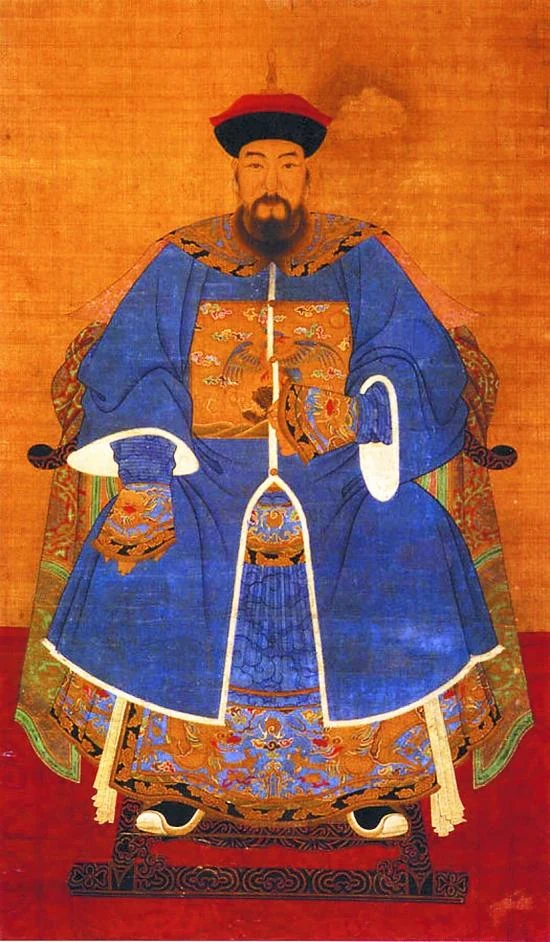
1593 CE–1665 CE
Military commander
Hong Chengchou
洪承畴
A prominent late-Ming commander who surrendered to the Qing, helped the Qing court pacify and govern Jiangnan, and remained controversial after his death.
1593 CE–1665 CEQing Dynasty
PROFILE
A prominent late-Ming commander who surrendered to the Qing, helped the Qing court pacify and govern Jiangnan, and remained controversial after his death.
- Other name
- Hong Hengjiu
- Style name
- Yanyan
- Art name
- Hengjiu
- Era
- Qing
- Dynasty / polity
- Qing
- Identity
- Military commander
- Ethnicity / group
- Not reliably confirmed in existing materials
- Native place
- Yingdu, Nan'an, Quanzhou, Fujian (present-day Xiamei, Liangshan Village, Yingdu)
- Date of birth
- October 16, 1593
- Place of birth
- Place of birth unknown
- Date of death
- April 3, 1665
- Major achievements
- A prominent late-Ming commander who surrendered to the Qing, helped the Qing court pacify and govern Jiangnan, and remained a controversial figure after his death
LIFE TIMELINE
Age eleven | Left school because of family poverty, helped his mother make and sell tofu, and later returned to study after his clan uncle Hong Qiyin recognized his ability and taught him without charge
Age twenty-three | Took the provincial examination and placed nineteenth among the successful candidates of the yimao examination
Age twenty-four | Went to the capital for the metropolitan examination, placed fourteenth in the second class of the bingchen palace examination, received the jinshi degree, and was appointed a secretary in the Jiangxi Bureau of the Ministry of Justice
Age thirty | Promoted to education intendant of Zhejiang
Age thirty-five | Promoted to Shaanxi grain administration commissioner
Age thirty-seven | Ordered to lead troops, relieved the siege of Hancheng, killed three hundred rebel soldiers, and became widely known
Age thirty-nine | Succeeded as Governor-General of the Three Border Regions of Shaanxi and replaced the previous emphasis on pacification with a policy centered on military suppression
Age forty-two | Granted the title Grand Guardian of the Heir Apparent and the rank of Minister of War and placed in charge of military affairs in Henan, Shanxi, Shaanxi, Huguang, and Sichuan
Age forty-six | Defeated Li Zicheng at Tongguan Nanyuan, pushing the rebel movement into a period of decline
Age forty-seven | Appointed Minister of War and vice censor-in-chief and made Governor-General of Jiliao military affairs
Age forty-nine | Led thirteen troops under eight regional commanders beyond Shanhai Pass to relieve Jinzhou, beginning the Battle of Song-Jin
Age fifty | Captured after Songshan fell; initially refused surrender through a hunger strike, then surrendered to the Qing and was attached to a bondservant company of the Bordered Yellow Banner
Age fifty-two | Appointed Grand Secretary of the Secretariat Academy and became one of the Qing court's Han grand secretaries; advised Prince Regent Dorgon to advance directly toward Beijing
Age fifty-three | Sent south as Grand Secretary and Governor-General for the Pacification of the Provinces of Jiangnan and took part in suppressing anti-Qing resistance
Age fifty-five | Returned home for mourning after his father's death
Age fifty-six | Recalled to Beijing and again assisted with central government affairs
Age sixty-one | Appointed Grand Guardian and concurrently Grand Preceptor of the Heir Apparent and charged with overall strategy in Huguang, Guangdong, Guangxi, Yunnan, and Guizhou, with headquarters at Changsha
Age sixty-six | Appointed Grand Secretary of the Wuying Hall
Age sixty-seven | Requested relief from office because of an eye illness and was ordered back to the capital
Age sixty-nine | Retired and received the hereditary rank of third-class Adaha Hafan, equivalent to third-class light chariot commander
Age seventy-three | Died and received the posthumous title Wenxiang
Posthumous | Included by the Qianlong Emperor in the first section of the Biographies of Twice-Serving Ministers of the Late Ming
BIOGRAPHY
Biography
Family Background and Early Life
Hong Chengchou was born in 1593, the twenty-first year of Wanli, in Yingdu, Nan'an, Quanzhou, Fujian. As a child he studied at the Xiyi school. Because his family was poor, he left school at eleven to help his mother make tofu, which he sold in the streets of Yingwei every morning. At the time, the talented clansman Hong Qiyin operated a village school at Shuigou. While selling tofu, Hong Chengchou often listened to lessons from outside and sometimes helped students compose paired phrases. Recognizing his ability and ambition, Hong Qiyin accepted him as a student without charge, allowing him to return to school.
Hong studied diligently and read widely. He borrowed and carefully studied Hong Qiyin's copies of the Records of the Grand Historian, Comprehensive Mirror in Aid of Governance, Records of the Three Kingdoms, and The Art of War. From a young age he showed an ambition to govern the state and bring peace to the realm. Hong Qiyin once wrote on one of his essays that he was “a thousand-li colt of the family and a ten-thousand-jun stone of the state.” After five years at the Shuigou school, Hong Chengchou continued his studies at a school north of Quanzhou city.
In 1615, the forty-third year of Wanli, the twenty-three-year-old Hong took the provincial examination and placed nineteenth among the successful yimao candidates. In 1616, the forty-fourth year of Wanli, he went to Beijing for the metropolitan examination and then placed fourteenth in the second class of the bingchen palace examination, receiving the jinshi degree.
Late-Ming Career and Suppression of Rebel Armies
Hong Chengchou was first appointed a secretary in the Jiangxi Bureau of the Ministry of Justice, later serving as assistant director and director, and remained in the ministry for six years. In 1622, the second year of Tianqi, he was promoted to education intendant of Zhejiang. His reputation for recognizing talented candidates won court attention, and two years later he was promoted to left administrative councillor of the Zhejiang provincial administration. In 1627, the seventh year of Tianqi, he became the Shaanxi commissioner responsible for grain supplies.
In July 1628, the first year of Chongzhen, a major peasant uprising broke out in northern Shaanxi. The Ming court ordered Yang He, Governor-General of the Three Border Regions, to combine suppression and pacification while giving priority to pacification. In 1629, the second year of Chongzhen, the rebel leaders Wang Zuogua and Miao Mei attacked Hancheng. With no commander readily available, Yang He ordered Hong, then still a provincial commissioner, to lead troops. Hong killed three hundred rebel soldiers, relieved the siege, and quickly gained a military reputation.
In June 1630, the third year of Chongzhen, Hong was appointed governor of Yansui. Wang Zuogua surrendered and later rebelled again, after which Hong had him executed. Although Hong was one of Yang He's subordinates, he did not support his superior's emphasis on pacification but instead pursued strong military suppression, including the killing of surrendered rebels. The source states that tens of thousands of surrendered rebels were killed under this policy. Li Zicheng and Zhang Xianzhong had on several occasions offered false surrender, rebuilt their strength, and rebelled again. The source presents Hong's harsh policy as anticipating this problem, while also noting that the Ming government lacked the capacity to support large numbers of famine-stricken people and that many who had accepted pacification rose again. Hong and general Du Wenhuan later defeated Zhang Xianzhong at Qingjian County.
In September 1631, the fourth year of Chongzhen, Yang He was dismissed and imprisoned, and Hong succeeded him as Governor-General of the Three Border Regions of Shaanxi. He replaced Yang's policy of “suppressing while pacifying” with “full suppression” and “first suppress, then pacify,” concentrating forces against the rebel armies of Shaanxi.
In the spring of 1632, rebel forces under pressure attempted to break through toward Qingyang. Hong personally went to Qingyang and directed operations together with generals Cao Wenzhao and He Huchen. After repeated fighting at Xi'ao, rebel forces suffered heavy losses, leader Ketianfei was killed, and Bai Guangen surrendered. Cao Wenzhao later surrounded rebels at Zhuizi Mountain in Yaozhou. When the leader Duxinglang and others surrendered, Hong ordered four hundred killed and the rest dispersed.
In the winter of 1633, rebel armies shifted into western Henan and northern Hubei, where Ming forces were weaker, using Yunyang as a center and moving through Henan, Hubei, Sichuan, and Shaanxi in mobile warfare. Hong responded by surrounding the main rebel areas with larger forces and concentrating attacks. Gao Yingxiang's army was repeatedly defeated at Queshan, Zhuxianzhen, and elsewhere and was pushed toward the western mountains. The Ming court, seeking to overcome divided authority and mutual hesitation among commanders, adopted a policy of concentrated forces and broad suppression.
In December 1634, the seventh year of Chongzhen, the Chongzhen Emperor removed Chen Qiyu after failed suppression operations. Hong remained Governor-General of the Three Border Regions and, for his achievements, received the title Grand Guardian of the Heir Apparent and the rank of Minister of War, with military authority over Henan, Shanxi, Shaanxi, Huguang, and Sichuan. This made him a principal Ming commander against the uprisings. When he returned troops to Shaanxi, rebel forces there numbered more than two hundred thousand, with Gao Yingxiang and his subordinate Li Zicheng among the strongest. Hong ordered He Renlong and Zuo Guangxian to attack from two directions. The rebels broke eastward and moved toward Lingbao and Sishui in Henan.
In the first month of 1635, the eighth year of Chongzhen, Hong led his main force out of Tong Pass and assembled commanders at Xinyang in Henan for a large-scale campaign. Rebel forces divided and moved back into Shaanxi. During subsequent fighting, Ming deputy generals Ai Wannian and Liu Guozhen were killed. Cao Wenzhao campaigned from Ningzhou; his subordinate Cao Bianjiao defeated rebels at Qiutou but was later ambushed, and Cao Wenzhao took his own life when Hong could not arrive in time. Because Hong's command area had become too broad, the Ming court assigned Lu Xiangsheng to oversee military affairs in Jiangbei, Henan, Shanxi-Shaanxi, Sichuan, and Huguang outside the passes, while Hong concentrated on forces inside the passes. The Bingzi Incident then brought Qing armies through the frontier and forced the Ming court to divert Lu Xiangsheng to defend the capital region. This relieved pressure in the central provinces, and Zhang Xianzhong revived his forces, joining Luo Rucai and others in movements along the Yangtze.
In 1637, the tenth year of Chongzhen, the emperor appointed Xiong Wencan to direct affairs in six provinces and supplied additional imperial troops for a new campaign. Li Zicheng entered Sichuan and captured a number of cities, but while returning toward Shaanxi in 1638, the eleventh year of Chongzhen, he was struck by Hong's forces near the Tao River and retreated toward Minzhou. Zhang Xianzhong was also defeated at Nanyang by Zuo Liangyu and withdrew to Gucheng. Xiong Wencan then shifted from suppression to pacification. Liu Guoneng, Zhang Tianlin, Zhang Xianzhong, Luo Rucai, and others surrendered or accepted pacification, while Li Zicheng operated with remnants along the Sichuan-Shaanxi border.
In October 1639, the twelfth year of Chongzhen, Hong ordered generals Ma Ke and Zuo Guangxian to intercept Li Zicheng's remaining force. When Li turned east, Hong ordered Cao Bianjiao to set an ambush on the Tongguan plain. Li was heavily defeated and escaped with only eighteen horsemen into the Shangluo Mountains of southern Shaanxi. The peasant uprising entered a period of decline.
Battle of Song-Jin and Surrender to the Qing
In September 1638, the eleventh year of Chongzhen, the Wuyin Incident brought Qing forces south along two routes and put Beijing under emergency defense. The Ming court recalled Hong from the western front, and he and Sun Chuanting led troops to defend the capital. Hong was permitted to enter Beijing and meet the Chongzhen Emperor.
In the first month of 1639, the emperor appointed Hong Minister of War and vice censor-in-chief and placed him in charge of Jiliao military affairs as Governor-General of Jiliao.
In 1640, the thirteenth year of Chongzhen, Hong Taiji adopted a strategy of building and farming at Yizhou to sustain a prolonged encirclement of Jinzhou. The Chongzhen Emperor ordered Hong to submit a response. Hong argued that defense in Liaodong had to be combined with battle and that battle itself required orthodox dispositions supported by surprise. He proposed distributing Wu Sangui, Liu Zhaoji, and other troops among Songshan and Xingshan; stationing his own troops between Qiantunwei and Zhonghousuo; keeping Jizhou forces across the middle and eastern sectors; retaining governor Zhu Guodong at Shanhai Pass; and deploying Ma Ke farther east. The Ministry of War strongly approved the plan and compared Hong to Han Qi and Fan Zhongyan. After minor adjustments, the emperor approved it. Hong moved beyond Shanhai Pass in the fifth month and faced Qing forces around Jinzhou, with both sides winning smaller engagements.
In the first month of 1641, the fourteenth year of Chongzhen, Hong inspected Songshan from Ningyuan and found the defenses too weak. He requested reinforcements from Yang Guozhu of Xuanfu, Wang Pu of Datong, Ma Ke of Shanhai Pass, and Tang Tong of Miyun, joining his existing commanders Wu Sangui, Wang Tingchen, Cao Bianjiao, and Bai Guangen for a total of eight regional commanders. After the outer defenses of Jinzhou fell, Hong moved between Songshan and Xingshan and then to Shimen near Songshan, where he repelled Qing troops in an engagement on the twenty-fifth day. For several months Ming forces achieved several minor successes. Hong favored a slow advance toward Jinzhou with fortified camps and a combination of fighting and defense. Minister of War Chen Xinjia instead urged a rapid offensive, persuaded the emperor to accept his policy, and sent Zhang Ruoqi and Ma Shaoyu to the front to press Hong forward. The emperor, initially inclined toward Hong's strategy, changed course in the seventh month. On the twenty-sixth day Hong swore in his army at Ningyuan. Of 130,000 troops under eight commanders, he personally led sixty thousand in the first echelon. He reached Songshan on the twenty-ninth day. On the fourteenth day of the eighth month, Hong Taiji led 120,000 Qing troops from Shengjing and deployed south of the Ming army between Songshan and Xingshan. Hong favored decisive battle while the regional commanders preferred withdrawal; the final decision was to break out with the mountains at their backs. In fighting from the twenty-first through the twenty-sixth, the Ming army was badly defeated. Hong and commanders Wang Tingchen and Cao Bianjiao, together with Liaodong governor Qiu Minyang and others, were trapped inside Songshan.
In the first month of 1642, the fifteenth year of Chongzhen, Hong sent six thousand men in a night attack after hearing that relief troops were approaching, but they were defeated. Songshan had been surrounded for half a year and supplies were nearly exhausted. Deputy commander Xia Chengde secretly contacted the Qing and offered his son Xia Shu as a hostage. On the night of the eighteenth day of the second month, Qing troops attacked by agreement. The next morning Songshan fell and Hong and other officials were captured. Apart from Xia Chengde, Hong, and Zu Dale, the source states that the other captured Ming officials were executed on the spot. Twenty days after Hong's capture, Jinzhou commander Zu Dashou surrendered. Tashan and Xingshan also fell in the fourth month, destroying the Jinzhou portion of the Ming Guanning-Jinzhou defense line.
Hong refused surrender for several days and went on hunger strike. Hong Taiji sent numerous people to persuade him, but Hong angrily rejected them. He then ordered the trusted Minister of Personnel Fan Wencheng to test Hong's resolve. Fan did not directly discuss surrender but spoke with him about history and contemporary affairs while observing his behavior. During their conversation dust fell from a beam onto Hong's clothing, and Hong repeatedly brushed it away. Fan reported that a man who still cared so much for his worn robe would value his own life even more. Hong Taiji accepted the assessment of Fan and Zhang Cunren and treated Hong with increasing courtesy.
The next day, May 4, Hong Taiji personally received Hong at the imperial ancestral temple. Hong initially remained standing. Seeing his thin clothing, Hong Taiji removed his own sable coat and placed it around him, asking whether he was cold. According to the Draft History of Qing, Hong stared for a long time, sighed that Hong Taiji was truly a ruler destined for the age, and then kowtowed and asked to surrender. He cut his hair, changed clothing, and entered Qing service. Hong Taiji rejoiced, saying that he had now obtained a guide. On May 5, Hong and Zu Dashou and other surrendered commanders formally performed the surrender ceremony.
After Hong's capture, fugitives from Jinzhou told Wu Sangui that the Qing had taken Hong to the camp of Jirgalang, Prince Zheng, north of Jinzhou and executed him, saying that Hong had asked only for a quick death. When the Chongzhen Emperor received Wu's report, he issued an edict on the twelfth day of the fourth month praising Hong's loyalty and ordered exceptional honors. Hong's servant Chen Ying'an and others also escaped to Beijing and reported that Hong had died resisting the enemy. The emperor mourned and ordered sacrificial altars prepared in front of Chaotian Palace, intending to attend personally. In the sixth month he ordered nine sacrificial ceremonies for Hong, according to another account sixteen, established a shrine, and began discussion of a posthumous title. He wept and said that he had failed to save Hong. When news later arrived that Hong had surrendered to the Qing, the emperor canceled the personal sacrifice and posthumous-title proceedings and converted Hong's tablet shrine in the Guandi Temple inside Zhengyang Gate to worship Guanyin instead.
Service under the Qing
In 1644, the first year of Shunzhi, Hong Chengchou became Grand Secretary of the Secretariat Academy. After Qing forces entered the passes, he was among the earliest officials to argue that the first priority should be destroying the rebel armies, and he advised Dorgon accordingly. While traveling south with Dorgon, they learned of the Jiashen Crisis: Li Zicheng's Great Shun army had taken Beijing, the Chongzhen Emperor had died, and the Ming dynasty had collapsed. Hong advised moving unexpectedly and rapidly toward Beijing through Jizhou and Miyun. Dorgon adopted the plan, and the Qing defeated the Great Shun forces. Hong further advised concentrating against Great Shun while recruiting former Ming officials. The Qing court soon stabilized the areas of northern Zhili, Shandong, and Shanxi and moved the capital to Beijing.
After the entry through the passes, the Shunzhi Emperor appointed Hong Grand Guardian of the Heir Apparent, Minister of War, and Right Censor-in-chief, and made him Grand Secretary of the Secretariat Academy to assist military affairs in the inner court. The source specifically notes that Hong was not the first Han grand secretary of the early Qing; Fan Wencheng, Ning Wanwo, and others were also Han grand secretaries.
In May 1645, the second year of Shunzhi, Dodo destroyed the Hongguang regime of the Southern Ming. In the intercalary sixth month Dorgon appointed Hong to replace Dodo as Grand Secretary and Governor-General for the Pacification of the Provinces of Jiangnan, granting him broad discretionary authority. Hong emphasized conciliation and recruitment in an effort to ease Manchu-Han tensions, but people who refused to submit could be executed. During the suppression of anti-Qing resistance in Jiangnan, a number of Ming loyalists, including Huang Daozhou and Jin Sheng, were captured and killed. Huang was captured after defeat in Jiangxi and taken to Nanjing; Hong personally urged him to surrender, but Huang condemned him and was ultimately executed. Jin Sheng likewise pretended not to recognize Hong and denounced him as an impostor usurping the name of the loyal Ming minister Hong Chengchou. When Hong could not persuade him to submit, Jin was beheaded. Such actions caused Hong to be widely reviled.
In 1647, the fourth year of Shunzhi, Hong returned home to observe mourning after his father's death. In April 1648 he was recalled to Beijing and again assisted with central government affairs, receiving strong support from Prince Regent Dorgon.
In May 1653, the tenth year of Shunzhi, Hong, then sixty-one and serving as Grand Secretary of the Hongwen Academy, Minister of War, Right Vice Censor-in-chief, and chief compiler of the Veritable Records of Qing Taizong, was appointed Grand Guardian and concurrently Grand Preceptor of the Heir Apparent. He was given strategic command over Huguang, Guangdong, Guangxi, Yunnan, and Guizhou, with military and grain authority, and was sent against the Yongli regime of the Southern Ming. The appointment explicitly limited interference by the Ministries of Personnel and War and delays by the Ministry of Revenue and allowed him to report actions after the fact.
In the first month of 1659, the sixteenth year of Shunzhi, after Qing forces pacified Yunnan, Hong requested the release of treasury funds to relieve poor people and recommended delaying further pursuit of remnants of the Prince of Gui who had fled toward Burma. The source states that these measures helped stabilize Yunnan and Guizhou after warfare and allowed production to recover. In the tenth month Hong asked to be relieved because of age and worsening eye disease and was ordered to return to Beijing for treatment, arriving the following year.
In the first month of 1661, the eighteenth year of Shunzhi, the Shunzhi Emperor died and the Kangxi Emperor succeeded him. Hong, then sixty-nine and still a grand secretary, petitioned to retire in the fifth month. After debate at court, he was granted the hereditary rank of third-class Adaha Hafan, equivalent to third-class light chariot commander.
Hong Chengchou died on April 3, 1665, the eighteenth day of the second month in the fourth year of Kangxi. The source gives his age at death as seventy-one sui and records the posthumous title Wenxiang.
Posthumous Reputation and the Biographies of Twice-Serving Ministers
On the third day of the twelfth month in 1776, the forty-first year of Qianlong, the Qianlong Emperor ordered the Historiography Office to compile the Biographies of Twice-Serving Ministers of the Late Ming. Hong Chengchou and others were included in its first section. The edict argued that during the founding of a unified empire the Qing had necessarily employed such men to stabilize people's allegiance and clarify the new political order, but that judged afterward they had been officials of a defeated dynasty who, when crisis came, failed to die for their former sovereign and instead surrendered in order to preserve their lives, so they could not be considered morally complete men. This official classification strongly shaped later assessments of Hong.
Major Activities
Suppression of Rebel Armies
Hong Chengchou was one of the principal Ming commanders against the late-Ming uprisings. Beginning with the relief of Hancheng in 1629, he successively served as governor of Yansui and Governor-General of the Three Border Regions of Shaanxi. In 1634 he received the rank of Minister of War and military authority over five provinces. He replaced Yang He's emphasis on pacification with a policy of forceful suppression and repeatedly defeated forces under Gao Yingxiang, Li Zicheng, and Zhang Xianzhong. In the fighting around Tongguan Nanyuan in 1638, Li Zicheng was reduced to a small mounted remnant and withdrew into the Shangluo Mountains, while the broader uprising entered a temporary decline. Hong was also known for killing surrendered rebels. The source presents this as producing short-term deterrence while also closing off surrender as a viable option for many rebel forces.
Battle of Song-Jin
In 1639 Hong became Governor-General of Jiliao and took responsibility for the northeastern frontier. In 1641 he led 130,000 troops under eight commanders beyond Shanhai Pass to relieve Jinzhou. He favored a slow advance with fortified camps and combined fighting and defense, but Minister of War Chen Xinjia pressed for a rapid battle and the Chongzhen Emperor ultimately adopted that approach. Hong Taiji personally led 120,000 troops, cut Ming supply lines, and defeated the Ming army. Hong was trapped in Songshan, which fell in the second month of 1642 after deputy commander Xia Chengde secretly contacted the Qing. Hong was captured, and the battle destroyed the Jinzhou component of the Ming Guanning-Jinzhou defense system.
Surrender to the Qing and Strategic Advice
After capture Hong refused food for several days and initially rejected surrender. Fan Wencheng was sent to persuade him and inferred from Hong's repeated brushing of dust from his clothing that he retained a strong attachment to life. Hong Taiji later personally received him and placed his sable coat around Hong's shoulders. Hong then praised him as a ruler destined for the age and submitted. In Qing service Hong became an important Han adviser. In 1644 he advised Dorgon to move rapidly and unexpectedly through Jizhou and Miyun toward Beijing, contributing to the Qing defeat of Great Shun and the establishment of Qing power in the Central Plains.
Pacification of Jiangnan
In 1645 Hong went south as Grand Secretary and Governor-General for the Pacification of the Provinces of Jiangnan. He pursued a strategy centered on inducing submission while combining conciliation with force. He worked to reduce Manchu-Han tensions and stabilize Qing rule, but those who refused to submit could be harshly suppressed. Loyalists such as Huang Daozhou and Jin Sheng were captured and executed during his tenure. His role in stabilizing Jiangnan therefore became inseparable from later condemnation of his participation in the suppression and killing of Ming loyalists.
Strategy in the Southwest
In 1653 Hong was appointed Grand Guardian and concurrently Grand Preceptor of the Heir Apparent and was charged with strategy in Huguang, Guangdong, Guangxi, Yunnan, and Guizhou, with headquarters at Changsha, directing the campaign against the Yongli regime of the Southern Ming. After Qing forces pacified Yunnan in 1659, he requested relief funds for poor residents and recommended temporarily halting pursuit of the remaining forces of the Prince of Gui in Burma. The source credits these measures with helping restore social order and production in Yunnan and Guizhou.
Personal Relations
Family
- Hong Qiyin: clan uncle who had served as provincial surveillance commissioner in Yunnan; recognized Hong Chengchou's talent, taught him without charge, and became an early mentor
- Hong Chengchou's father: died in 1647, the fourth year of Shunzhi
Teachers and Friends
- Guo Duxian: early teacher; after Hong's surrender to the Qing, Guo lived in retirement at Taojiang and mocked Hong by saying that his eyes had gone blind from the moment he knew him, refusing to acknowledge him
- Shi Kefa: friend; Hong reportedly regretted Shi's death
- Sun Zhaokui: Suzhou anti-Qing activist and old acquaintance who spoke with Hong after being captured and taken to Nanjing
Ruler–Minister Relations
- Chongzhen Emperor: Ming ruler who mistakenly believed Hong had died resisting the Qing, ordered nine sacrificial ceremonies, and later canceled plans for personal sacrifice and a posthumous title after learning of Hong's surrender
- Hong Taiji: Qing Taizong, who personally received Hong and persuaded him to surrender by showing exceptional favor
- Dorgon: Qing Prince Regent who employed Hong after the Qing entry through the passes and ordered him to pacify Jiangnan
- Shunzhi Emperor: Qing ruler who appointed Hong Grand Secretary of the Secretariat Academy and later entrusted him with strategy in five provinces
Colleagues
- Fan Wencheng: Qing Minister of Personnel sent by Hong Taiji to sound out Hong; inferred from the dust-brushing episode that Hong would surrender
- Chen Xinjia: Ming Minister of War whose pressure for rapid battle contributed to the strategic decision preceding the Ming defeat in the Battle of Song-Jin
- Zhang Ruoqi: Chen Xinjia's associate and an official of the Ministry of War who pressed Hong forward at the front
- Cao Bianjiao: Ming regional commander who was trapped with Hong at Songshan and killed after the city fell
- Wu Sangui: Ming commander at Ningyuan who broke out during the Battle of Song-Jin
- Zu Dashou: Ming commander at Jinzhou who surrendered after Songshan fell
Opponents
- Li Zicheng: rebel leader repeatedly defeated by Hong; escaped from the Tongguan-area defeat with only eighteen horsemen according to the source
- Zhang Xianzhong: rebel leader who was defeated by Hong and at one stage accepted pacification
- Gao Yingxiang: Chuang King, captured and sent to Beijing for execution
- Huang Daozhou: Southern Ming anti-Qing loyalist captured and executed under Hong's authority
- Jin Sheng: Southern Ming anti-Qing loyalist captured and executed under Hong's authority
Historical Assessment
Ming Dynasty and Contemporaries
- The Chongzhen Emperor, mistakenly believing Hong had died in resistance, praised his steadfast loyalty, wept that he had failed to save him, and later canceled plans for personal sacrifice and a posthumous title after learning of the surrender.
- Hong's servant Chen Ying'an described his master as having cursed the enemy without yielding and facing west to declare loyalty before death, according to the Guoque.
- Guo Duxian mocked Hong's surrender with the statement that his eyes had gone blind from the moment he knew him and refused to recognize him.
- Jin Sheng, when urged to surrender, denounced the man before him as an impostor, insisting that the true Hong Hengjiu had received immense favor from the late emperor and died in battle, and therefore the surrendering figure could not be that loyal minister.
Early to Mid-Qing
- Hong Taiji rejoiced after Hong's surrender, saying that he had now obtained a guide.
- The Shunzhi Emperor employed Hong heavily as grand secretary and strategist in five provinces and granted him a seal as “Grand Secretary for Strategic Direction.”
- The Qianlong Emperor ordered the Biographies of Twice-Serving Ministers of the Late Ming in 1776 and placed Hong in its first section, arguing that officials who had served a fallen dynasty but surrendered in crisis could not be regarded as morally complete men.
- The Draft History of Qing, vol. 237, records Hong's career, recognizing his military ability while retaining reservations about his surrender.
Late Qing and Republican Period
- With the rise of anti-Manchu sentiment and nationalism in the late Qing and early Republic, Hong was widely treated as a representative “traitor to the Han,” and his surrender received intense criticism.
- Republican scholarship produced sharply divided judgments: some credited him with assisting Qing unification and restoring order, while others emphasized his betrayal of the Ming and participation in the deaths of loyalist figures.
Modern and Contemporary Assessments
- Modern scholars often analyze Hong's surrender within the larger context of the Ming-Qing transition, seeing it as shaped both by the desire to survive and by disillusionment with the Ming court.
- Some scholars give positive weight to Hong's role in stabilizing Jiangnan and directing the Qing conquest of the southwest, particularly measures that restored order and reduced wartime destruction.
- His classification as a “twice-serving minister” remains controversial, and there continues to be a substantial gap between popular portrayals and academic assessments.
FIGURES ASSOCIATED WITH THIS DYNASTY
Bibliography
- Draft History of Qing, vol. 237, Biography 24
- Biographies from Qing History, vol. 78, “Twice-Serving Ministers A: Hong Chengchou”
- Veritable Records of Qing Taizong, vol. 60
- Zhao Erxun et al., Draft History of Qing