Birth in Dingbian
Born into an impoverished farming family, growing into a tall, bearded fighter known as the Yellow Tiger.
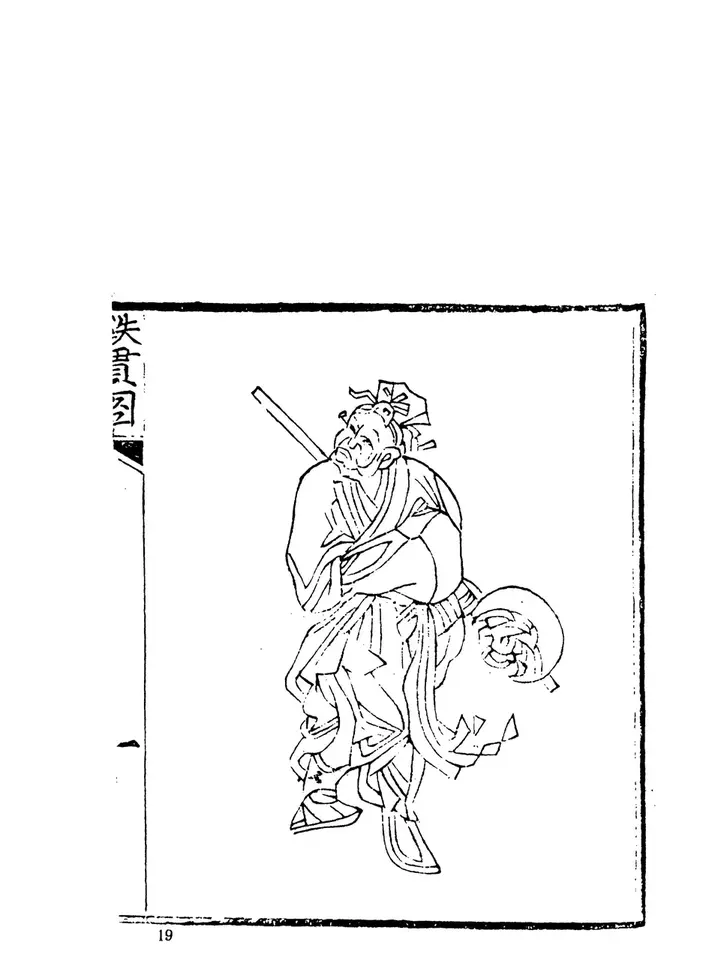
1606 CE–1647 CE
张献忠
Zhang Xianzhong (1606–1647 AD), courtesy name Bingzhong, sobriquet The Eighth Great King, was a native of Dingbian, Yan'an Prefecture (present-day Dingbian, Shaanxi Province). He was one of the most prominent peasant insurgent commanders of the late Ming Dynasty and the founder of the Great Xi Dynasty, reigning as the Dashun Emperor. Standing alongside Li Zicheng as the twin titans of the late Ming rebellions, he inflicted…
Zhang Xianzhong (1606–1647 AD), courtesy name Bingzhong, sobriquet The Eighth Great King, was a native of Dingbian, Yan'an Prefecture (present-day Dingbian, Shaanxi Province). He was one of the most prominent peasant insurgent commanders of the late Ming Dynasty and the founder of the Great Xi Dynasty, reigning as the Dashun Emperor. Standing alongside Li Zicheng as the twin titans of the late Ming rebellions, he inflicted devastating blows upon the tottering Ming imperial order. Originating from an impoverished peasant household in northern Shaanxi, Zhang served briefly as a frontier soldier before raising an insurrection in 1630 AD in response to catastrophic famine. Highly elusive, volatile, and skilled in mobile warfare, he campaigned across Shaanxi, Shanxi, Henan, and Hubei for over a decade. In February 1641 AD, he executed a legendary lightning raid on Xiangyang, riding three hundred li in a single day and night to seize the strategic fortress, executing the Ming Prince of Xiang and distributing the imperial grain reserves to the starving populace. In 1644 AD, following the fall of Beijing, Zhang led his forces into Sichuan, taking Chongqing and Chengdu, where he declared himself Emperor of Great Xi, creating the Dashun era, establishing ministries, and minting dynastic coinage. Confronted with fierce counter-offensives by loyalist gentry and tribal militias, his later rule turned increasingly bloody, severely ravaging Sichuan society. In January 1647 AD, while confronting the invading Qing army under Hooge at Mount Fenghuang in Xichong, Zhang was killed by an archer's stray arrow at age forty-one. His adopted generals, particularly Li Dingguo, subsequently allied with the Southern Ming to resist Qing conquest for two decades.
Born into an impoverished farming family, growing into a tall, bearded fighter known as the Yellow Tiger.
Recruited famine refugees to launch an insurrection at Dingbian, adopting the title Eighth Great King.
Joined the Xingyang conference of rebel leaders, sacking Fengyang and burning the ancestral Ming imperial tombs.
Trapped by Ming armies, staged a tactical capitulation at Gucheng to reorganize and rearm his forces in secret.
Renounced submission at Gucheng, defeating imperial generals and ultimately driving supreme commander Yang Sichang to suicide.
Disguised troops as imperial couriers to seize Xiangyang in a single night, executing the Prince of Xiang.
Stormed Wuchang, drowned the Prince of Chu, and declared himself King of Great Xi.
Marched into Sichuan, captured Chengdu, and formally assumed the imperial title under the reign era Dashun.
Beset by gentry insurrections and Ming loyalist forces, unleashed widespread purges that devastated local society.
Struck by a Qing archer's arrow at Mount Fenghuang in Xichong, dying instantly at age forty-one.
Zhang Xianzhong was born into a destitute farming family in Liushujian, Dingbian County. Tall, sharp-eyed, with a sallow complexion and a flowing beard, he was renowned for exceptional martial agility and ferocity, earning the popular nickname "The Yellow Tiger." In his youth, Zhang found work as a local constable in Yan'an and subsequently enlisted as a soldier in the Yansui frontier garrison. Having violated military law, he narrowly escaped execution through the intervention of an officer, returning to civilian obscurity.
By 1630 AD, severe continuous droughts struck northern Shaanxi, reducing agricultural fields to dust and plunging the population into starvation, while the Ming court ruthlessly escalated tax extractions. Zhang gathered several hundred desperate famine victims in Dingbian, declaring rebellion under the name "The Eighth Great King" and joining the rebel confederacy of Wang Jiayin. Over the following decade, Zhang operated as a master of mobile guerrilla warfare across Shaanxi, Shanxi, Henan, and Huguang. In 1635 AD, he participated in the grand gathering of thirteen rebel armies and seventy-two factions at Xingyang. Teaming with Gao Yingxiang, Zhang led a lightning raid into Nan Zhili, storming the Ming ancestral capital of Fengyang. The rebels burned the ancestral tombs of Zhu Yuanzhang, executed dozens of imperial tomb eunuchs, and pillaged the city, terrifying the Ming court and prompting the Chongzhen Emperor to don mourning garb in the ancestral temples.
Alarmed by the widespread peasant rebellion, the Chongzhen Emperor appointed War Minister Yang Sichang to oversee the "Ten-Sided Net" containment strategy. In 1638 AD, wounded and encircled by Ming armies in Nanyang, Zhang executed a daring ruse: he offered feigned surrender to Huguang Governor Wang Jiazhen and was stationed at Gucheng County, Hubei. While appearing compliant, Zhang refused to demobilize his men or integrate into the imperial military hierarchy, secretly forging weapons and stockpiling provisions.
In the summer of 1639 AD, observing that the Ming armies were concentrated to the west against Li Zicheng, Zhang raised the banner of rebellion anew at Gucheng, slaughtering imperial envoys. Yang Sichang mobilized overwhelming forces in pursuit, but Zhang maneuvered through the jagged mountains of Sichuan and Hubei with supreme agility. In February 1641 AD, after intercepting imperial dispatches, Zhang dispatched a dozen elite riders disguised as Ming cavalry couriers to gallop three hundred li overnight toward Xiangyang. The gates were opened without suspicion; Zhang's strike force overwhelmed the garrison, seized the city, and captured the immense treasury of Yang Sichang's military headquarters. Zhang executed the Prince of Xiang, Zhu Yiming, burned his palace, and distributed the wealth to destitute refugees. When news reached Yang Sichang, the humiliated grand minister starved himself to death. In May 1643 AD, Zhang stormed the metropolis of Wuchang, drowned the Prince of Chu in the Yangtze, and proclaimed himself King of Great Xi.
In the spring of 1644 AD, Li Zicheng's forces captured Beijing, driving the Chongzhen Emperor to hang himself, while the Manchu Qing army broke through Shanhaiguan to drive Li from the northern capital. Recognizing that the Central Plains had become a blood-soaked arena contested by Qing armies and Li Zicheng, Zhang resolved to lead his veteran army of over one hundred thousand soldiers westward into the natural mountain fortress of Sichuan.
Zhang's fleet ascended the Yangtze River, bursting through the Kui Gates, storming Chongqing via subterranean gunpowder mines, and executing the Prince of Rui. In August 1644 AD, his columns arrived outside Chengdu. After a fierce three-day siege, Chengdu fell, and the Ming Prince of Shu drowned himself in a well. On December 4, 1644 AD (the sixteenth day of the eleventh lunar month), Zhang formally declared himself Emperor of the Great Xi Dynasty, naming Chengdu as Xijing (Western Capital) and designating his era as "Dashun". He instituted a civil administration consisting of Six Ministries and the Five Chief Military Commissions, held imperial examinations to recruit southern degree-holders, and minted copper coinage inscribed with "Dashun Tongbao." To anchor military command, he designated his four most talented adopted sons as regional kings: Sun Kewang as Prince of Pingdong, Li Dingguo as Prince of Anxi, Liu Wenxiu as Prince of Funan, and Ai Nengqi as Prince of Dingbei.
The foundation of the Great Xi Dynasty was immediately challenged by lethal existential threats. Remnant Ming commanders Zeng Ying and Yang Zhan fortified positions in southern and eastern Sichuan, while local landlords organized mountain redoubts. In the north, the Qing Eight Banners were mobilizing for an invasion. Under extreme pressure, Zhang's suspicious, volatile temperament devolved into ferocious cruelty. In late 1645 AD, he initiated merciless purges across the Chengdu Plain, executing former scholar-officials and ordering brutal pacification campaigns that massacred rebellious settlements. These measures laid waste to Sichuan's once-thriving agricultural economy, driving the surviving populace into flight and deep hostility.
In 1646 AD, the Qing court appointed Prince Su Hooge as Generalissimo for Pacifying the Distant, with surrender general Wu Sangui leading the vanguard into Sichuan. Compounded by a catastrophic naval defeat at Jiangkou at the hands of Ming loyalist Yang Zhan, Zhang evacuated Chengdu, moving northward toward Xichong to organize an exit toward Shaanxi. On January 2, 1647 AD (the twenty-seventh day of the eleventh lunar month, Shunzhi 3), Qing shock cavalry, guided by the turncoat general Liu Jinzhong, executed a blizzard-shielded dawn assault against Zhang's camp at Mount Fenghuang.
Hearing sudden commotion outside his pavilion, Zhang believed it was merely local raiders. He rode out without heavy armor, wearing only an unlined tunic, to survey the terrain at Taiyang Creek. A Qing officer named Yaburan identified the insurgent monarch and loosed an armor-piercing arrow. The shaft struck Zhang directly in the chest; he fell from his mount and expired immediately at the age of forty-one. Hooge severed his head for display. Following his death, his adopted sons Sun Kewang and Li Dingguo gathered the remaining tens of thousands of veteran soldiers and retreated southward into Yunnan and Guizhou. There, transforming from rebels into patriots, they allied with the Southern Ming Yongli regime. Under the heroic leadership of Li Dingguo, the Great Xi remnants fought the Qing invaders for two decades, writing an indelible chapter in late Ming resistance history.
In 1630 AD, Zhang Xianzhong rose in rebellion in Mizhi, Shaanxi, styling himself the "Yellow Tiger" and "Eighth Great King."
Following the Xingyang assembly of 1635 AD, he led his forces into Anhui and burned the Ming imperial ancestral tombs at Fengyang.
After temporarily accepting Xiong Wencan's amnesty at Gucheng in 1638 AD, he rose again in 1639 AD and crushed Ming general Zuo Liangyu at Mount Manao.
In 1641 AD, his fast cavalry seized Xiangyang by surprise, executing the Prince of Xiang and driving Grand Coordinator Yang Sichang to suicide.
Capturing Chongqing and Chengdu in 1644 AD, he proclaimed the Great Xi Dynasty under the Dashun era.
Killed by a Qing arrow at Mount Fenghuang in 1647 AD, he left behind veteran armies that Li Dingguo led in twenty years of resistance against the Qing.
FIGURES ASSOCIATED WITH THIS DYNASTY