Born | Li Jiqian Stockade, Mizhi, Shaanxi
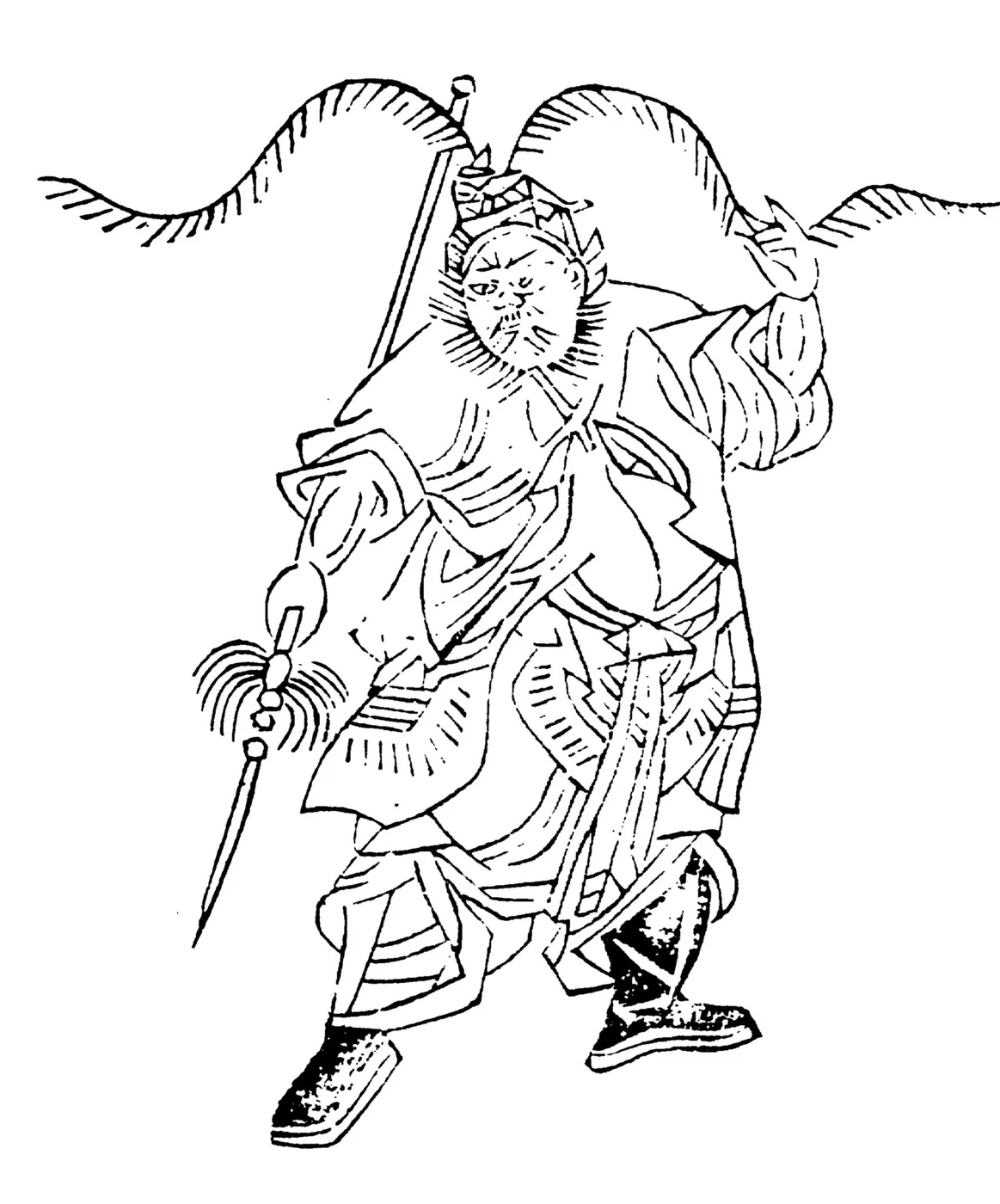
1606 CE–1645 CE
Rebel leader / ruler of a separatist regime
Li Zicheng
李自成
Li Zicheng (September 22, 1606–May 17, 1645), originally named Li Hongji, with the childhood names Huanglai'er and Zao'er, was a native of Li Jiqian Stockade in Mizhi County, Yan'an Prefecture, Shaanxi, now in Hengshan District. He became one of the principal leaders of the late-Ming peasant rebellions and founder of the Great Shun regime. In 1644, the seventeenth year of Chongzhen, he proclaimed an imperial regime at Xi'an…
1606 CE–1645 CEMing Dynasty
PROFILE
Li Zicheng (September 22, 1606–May 17, 1645), originally named Li Hongji, with the childhood names Huanglai'er and Zao'er, was a native of Li Jiqian Stockade in Mizhi County, Yan'an Prefecture, Shaanxi, now in Hengshan District. He became one of the principal leaders of the late-Ming peasant rebellions and founder of the Great Shun regime. In 1644, the seventeenth year of Chongzhen, he proclaimed an imperial regime at Xi'an under the state name Great Shun and the era name Yongchang. That same year he entered Beijing and brought Ming rule in the capital to an end. He was then defeated at the Battle of Shanhai Pass by the combined forces of Wu Sangui and the Qing army and withdrew from Beijing. In 1645, the second year of Shunzhi, he was killed in the Jiugong Mountains area of Tongshan County, Hubei.
- Other names
- Dashing King
- Style/Title
- “Dashing General of the Eight Companies”
- Period
- Ming
- Date of Birth
- September 22 1606
- Date of Death
- May 17 1645
- Dynasty/Polity
- Ming
- Identity
- Rebel leader / ruler of a separatist regime
- Ethnicity/Affiliation
- Not recorded in historical sources
- Ancestral home
- Li Jiqian Stockade, Mizhi County, Yan'an Prefecture, Shaanxi (now in Hengshan District)
- Place of birth
- Li Jiqian Stockade, Mizhi County, Yan'an Prefecture, Shaanxi
- Major achievements
- Leader of a major late-Ming peasant rebellion; captured Beijing, overthrew the Ming regime in the capital, and established the Great Shun polity.
LIFE TIMELINE
Youth | Worked as a shepherd for a landlord, spent time as a Buddhist novice, and later served as a postal-station courier at Yinchuan
Lost employment | Dismissed during postal reforms and returned home unemployed
Mutiny | Killed his creditor Ai Zhao and later his wife; fled with his nephew Li Guo to join the army at Ganzhou and participated in a mutiny near Yuzhong
Joined rebel forces | Joined Wang Zuogua, later Zhang Cunmeng, nicknamed Buzhanni, and served as a unit leader
“Dashing General” | After Zhang Cunmeng surrendered to Ming, Li crossed the Yellow River and joined his maternal uncle Gao Yingxiang, the Dashing King; Li became known as the Dashing General
Chexiang Gorge | Became trapped in Chexiang Gorge and escaped through a feigned surrender proposed by Gu Jun'en
Xingyang gathering | Participated in the gathering of thirteen rebel groups and seventy-two camps at Xingyang; advocated a strategy of dispersing forces along different directions and joined Zhang Xianzhong in attacking Fengyang and desecrating the Ming imperial ancestral tombs
Succeeded as Dashing King | After Gao Yingxiang was killed by Sun Chuanting, Li Zicheng was chosen as Dashing King
South of Tong Pass | Ambushed by Hong Chengchou and Sun Chuanting and heavily defeated; withdrew into the Shangluo Mountains with only seventeen surviving followers
Returned to action | Emerged from the mountains after Zhang Xianzhong rebelled again at Gucheng
Entered Henan | Entered Henan while the main Ming forces pursued Zhang Xianzhong, recruited famine refugees, and promoted the slogan “equalize the land and exempt taxes”
Captured Luoyang | Killed Zhu Changxun, Prince of Fu; held the so-called “Fu-Lu banquet”; besieged Kaifeng three times without taking it
Prince of Xinshun | Renamed Xiangyang as Xiangjing and assumed the title Prince of Xinshun; killed Luo Rucai and He Yilong; captured Tong Pass in the tenth lunar month, killed Sun Chuanting, and occupied Shaanxi
Founding of Great Shun | Proclaimed the new regime at Xi'an on New Year's Day under the state name Great Shun and era name Yongchang; entered Beijing on the nineteenth day of the third lunar month, after which the Chongzhen Emperor committed suicide; defeated by Wu Sangui and Dorgon at the Battle of Shanhai Pass in the fourth lunar month; proclaimed himself emperor in Beijing on the twenty-ninth day and withdrew the next day
Defeat and death | Killed in the Jiugong Mountains area of Tongshan County, Hubei, aged forty
BIOGRAPHY
Biography
Family Background and Early Life
Li Zicheng was born on the twenty-first day of the eighth lunar month in the thirty-fourth year of Wanli (September 22, 1606). His family had long lived at Li Jiqian Stockade, about two hundred li west of Mizhi. The History of Ming, vol. 309, states that Li Zicheng was from Mizhi and that his family had for generations lived at Li Jiqian Stockade in Huaiyuan Fort. His branch of the Li lineage belonged to the second tax-registration group of Tai'an li in Mizhi and was said to have migrated before the Ming period from Tai'an li in Gansu, with a claimed connection to the Tangut Tuoba Pingxia group of Western Xia. His grandfather Li Hai, under economic pressure, moved to Changmao Village, now in Hengshan. This gave rise to the saying that Li was “born at Li Jiqian Stockade and raised at Changmao Village.”
According to Fei Mi's Huangshu, when Li Zicheng was born his father dreamed of a man in yellow entering their cave dwelling, leading to the childhood name Huangwazi; another tradition gives Huanglai'er. Suikou Jilüe, vol. 9, also records the childhood name Huanglai'er. Li's original personal name was Hongji. In his youth he liked spears, horses, staffs, and martial exercises. During the Tianqi era, successive disasters struck northern Shaanxi while official grain and tax levies continued. The Li household lived in severe poverty. As a child, Li Zicheng was at one point sent to a temple as a novice monk under the name Huanglai Seng and also herded sheep for a local landlord of the Ai family. The History of Ming states that he herded sheep for a wealthy Ai household when young, later served as a courier at Yinchuan Station, was skilled at riding and archery, and repeatedly violated the law.
Li lost his mother in his teens and his father not long afterward. At twenty-one, without family support, he was recruited as a postal-station courier at Yinchuan, caring for horses. Unable to repay a debt owed to the local notable and degree-holder Ai Zhao, he was placed in a cangue and severely punished. With the aid of poor companions, he later killed the creditor and fled with his nephew Li Guo to Gansu, where he entered frontier military service. The frontier army suffered from inadequate rations and pay, while officers embezzled supplies, leaving common soldiers frequently hungry and cold.
Mutiny and Rebellion
In 1628, the first year of Chongzhen, the Ming court under Zhu Youjian reformed and reduced the postal-station system. Li Zicheng was dismissed after losing an official document, returned home unemployed, and fell into debt. In the winter, because he could not repay Ai Zhao, he was taken before the Mizhi county yamen. The magistrate Yan Zibin had him placed in restraints and paraded in the marketplace with the intention of putting him to death, but relatives and friends secured his release. By the end of the year Li killed Ai Zhao. He also killed his wife Han Jin'er after learning of her adultery with a villager named Gai Hu. With two deaths against him and the authorities in pursuit, in the second lunar month of 1629 he fled with his nephew Li Guo to Ganzhou, present-day Zhangye in Gansu, and joined the army.
At Ganzhou, assistant regional commander Wang Guo promoted Li to a minor unit-command position. In the winter of 1629, Later Jin troops advanced south and Beijing faced serious danger. The court urgently ordered armies from several regions toward the capital. Li's unit marched east under Wang Guo. When they reached Jin County, present-day Yuzhong in Gansu, soldiers demanded overdue pay. Wang Guo withheld it, provoking a mutiny. Li Zicheng and other soldiers killed Wang Guo and the local magistrate, beginning Li's career as a rebel leader.
Campaigning and Rise
After the mutiny Li Zicheng moved through Hanzhong and joined Wang Zuogua's peasant forces. In 1630 Wang accepted amnesty from the Ming, and Li transferred to Zhang Cunmeng, nicknamed Buzhanni, serving as a unit leader. Zhang surrendered in April 1631 after defeat. In October Hong Chengchou became supreme commander of the three frontier regions and gradually suppressed rebel groups in Shaanxi. In 1633 Li led remnants across the Yellow River into Shanxi and joined his maternal uncle Gao Yingxiang, known as the Dashing King, taking the title Dashing General. That year Cao Wenzhao led more than a thousand Guan-Ning troops against rebel forces in Shanxi, forcing Gao Yingxiang, Li Zicheng, Zhang Xianzhong, and others into Henan, where they were surrounded by multiple Ming armies under Cao Wenzhao, Zuo Liangyu, and others.
In 1634, after a new Later Jin incursion forced Cao Wenzhao toward Datong, the surrounded rebel forces broke out. In the sixth lunar month the newly appointed five-province commander Chen Qiyu coordinated forces from Shaanxi, Yunyang, Huguang, and Henan against rebels in southern Hanzhong. Gao Yingxiang, Zhang Xianzhong, Luo Rucai, Li Zicheng, and others mistakenly entered Chexiang Gorge in Xing'an, an area of steep mountains with one narrow exit blocked by government troops. Horses lacked fodder, bows and arrows were deteriorating, and the rebels faced destruction. Li Zicheng adopted a plan proposed by Gu Jun'en: bribing men around Chen Qiyu and offering a false surrender. Chen released the rebels and sent more than fifty pacification officials to escort them home. As soon as they emerged from the mountain road, Li killed the officials and rebelled again.
In 1635 Hong Chengchou became five-province commander and intensified suppression. Rebel armies withdrew toward Luoyang. Gao Yingxiang, Zhang Xianzhong, Lao Huihui, Luo Rucai, and other groups were said to have convened at Xingyang in Henan, gathering thirteen groups and seventy-two camps. The Chinese source notes that historian Gu Cheng considered this “Xingyang gathering” a later construction, while Wang Xingya defended its historicity. Li Zicheng is said to have proposed a strategy of dividing forces and assigning directions of attack. Afterward he joined Gao Yingxiang and Zhang Xianzhong in taking Fengyang in the Southern Metropolitan Region, opened Ming imperial ancestral tombs, burned the Huangjue Temple associated with Zhu Yuanzhang, killed more than sixty eunuchs, and executed the Central Capital commander Zhu Guoxiang. Li and Zhang then quarreled over captured palace eunuchs and ceremonial instruments and separated.
In 1636 Gao Yingxiang was defeated at Heishui Valley and killed by the newly appointed Shaanxi governor Sun Chuanting. Gao's remaining forces joined Li Zicheng, who was chosen as the new Dashing King. Li continued campaigning in Sichuan, Gansu, and Shaanxi. In 1637 Yang Sichang mobilized one hundred thousand troops and raised an additional 2.8 million in military funds, promoting a strategy of fixed main fronts and surrounding sectors intended to restrict rebel mobility and defeat them separately. In 1638 Li was ambushed south of Tong Pass by Hong Chengchou and Sun Chuanting and suffered a disastrous defeat, retreating into the Shangluo Mountains of southeastern Shaanxi with only seventeen followers, including Liu Zongmin.
In the eighth lunar month of 1638 Qing forces entered the passes for a fourth time. Yang Sichang favored peace with the Qing, while Lu Xiangsheng was killed at Julu. After Qing troops withdrew, Sun Chuanting and Hong Chengchou were transferred to Liaodong, giving Li Zicheng room to recover. During the winter he stayed at Shenglong Stockade south of Fushui Pass, where he married and had a child. In the twelfth lunar month he went from southern Hanzhong to Gucheng for a secret meeting with Zhang Xianzhong and Luo Rucai; Zhang supplied him with mules, horses, clothing, and armor.
Rise in the Central Plains and Assumption of a Royal Title
In 1639 Zhang Xianzhong rebelled again at Gucheng and Li Zicheng emerged from the Shangluo Mountains with several thousand men. In 1640 a severe drought struck Henan. While Yang Sichang's main forces pursued Zhang in Sichuan, Li entered Henan, received famine refugees, and opened granaries for relief. Zheng Lian's Yubian Jilüe records that starving people carrying hoes joined him in an unbroken stream, swelling the movement rapidly. Li's army grew to tens of thousands and promoted the slogan “equalize the land and exempt taxes,” while popular songs declared, “Welcome the Dashing King; pay no grain tax.”
On the twentieth day of the first lunar month in 1641, Li captured Luoyang and killed Zhu Changxun, Prince of Fu and son of the Wanli Emperor. Several deer from the prince's garden were cooked together with meat from the prince in what rebels called the “Fu-Lu banquet.” Li confiscated the prince's wealth and issued proclamations for famine relief. Over the next year and a half he besieged Kaifeng three times without success. In the ninth lunar month of 1642 the Yellow River breached its dikes and devastated Kaifeng. Li's forces successively killed Shaanxi commanders Fu Zonglong and Wang Qiaonian. In the tenth lunar month Li defeated Shaanxi governor Sun Chuanting at Jia County in Henan.
In the first lunar month of 1643 Li captured Chengtian and was acclaimed “Grand Marshal Upholding Heaven and Raising Righteousness in Civil and Military Affairs.” In the third lunar month he renamed Xiangyang as Xiangjing and assumed the title Prince of Xinshun. He recruited displaced peasants, distributed oxen and seed, relieved poverty, encouraged animal husbandry and sericulture, and recruited farmers to cultivate land while taking part of the harvest to supply the army. That same month he killed the allied rebel leader Luo Rucai and He Yilong of the five Gezuo camps, absorbing their followers. In the fourth lunar month he killed the defecting commander Yuan Shizhong. In the fifth, Zhang Xianzhong captured Wuchang and established the Great Xi regime.
In the eighth lunar month Sun Chuanting advanced through the passes with one hundred thousand troops. Li moved north with his main force, and the armies faced one another at Jia County in the ninth lunar month. Heavy rain disrupted Ming logistics. Li encouraged local people to clear supplies from the countryside and sent Liu Zongmin with more than ten thousand light cavalry to cut the Ming supply route near Ruzhou. When Sun turned back to reopen the road, Li pursued him for four hundred li, inflicted a major defeat, and according to the source took more than forty thousand heads. In the tenth lunar month Li captured Tong Pass, killed Sun Chuanting, and occupied all of Shaanxi.
Founding Great Shun and Capturing Beijing
On New Year's Day of the seventeenth year of Chongzhen, corresponding to the first year of Yongchang of Great Shun (1644), Li Zicheng proclaimed the new regime at Xi'an, established the state name Great Shun, adopted the era name Yongchang, and changed his personal name to Zisheng. The History of Ming records that he assumed a royal title in Xi'an, usurped the state name Great Shun, adopted the Yongchang era, and changed his name. He granted five grades of noble titles to meritorious followers, reorganized the government, renamed the Grand Secretariat as Tianyou Hall, established grand secretaries responsible for military affairs, reorganized the six departments with ministers and vice ministers, created additional provincial institutions, and appointed military governors. He then began an eastward campaign against Beijing.
In the second lunar month he built three thousand boats at Shawokou, crossed the Yellow River, and took Fenzhou, Yangcheng, and Puzhou, followed by Huaiqing. He killed Prince Zaiyin of Lujiang. On the fifth day he captured Taiyuan after the defenders' field force was destroyed; on the eighth, with the assistance of the defender Zhang Xiong from inside, artillery opened the city and Cai Maode committed suicide. Li rested at Taiyuan for eight days. On the sixteenth he took Xinzhou. At Daizhou, general Zhou Yuji defended stubbornly for more than ten days and then fell back to Ningwu Pass. Zhou continued fighting until gunpowder was exhausted, opened the gates, and died in close combat covered with arrows. His wife Lady Liu led more than twenty women in firing from rooftops and they were all burned to death. On the first day of the third lunar month Li captured Ningwu Pass after extremely heavy losses, stated in the Chinese source as more than seventy thousand killed and wounded, and ordered a massacre of the city. That night the Datong commander Jiang Xiang surrendered, followed by Wang Chengyin at Xuanfu; Juyong Pass and Changping were also taken.
On the eighth day of the third lunar month Li's army reached Yanghe. On the eleventh it entered Xuanfu, where the source says the whole city welcomed it with decorations and incense. The Chongzhen Emperor urgently summoned Wu Sangui from Liaodong, Ji-Liao commander Wang Yongji, Changping general Tang Tong, and Shandong general Liu Zeqing to defend Beijing and called on nobles and officials in the capital to contribute funds.
On the fifteenth day the rebel army reached Juyong Pass, where eunuch military supervisor Du Zhizhi and general Tang Tong surrendered without fighting. Liu Fangliang led the southern column east through Guguan. Qiu Maohua, prefect of Zhending, and guerrilla commander Xie Sufu surrendered, while Grand Secretary Li Jiantai surrendered at Baoding. On the sixteenth Li's troops passed Changping and reached Shahe; on the seventeenth they advanced through Gaobeidian toward the western gates of Beijing and bombarded the city. At midnight on the seventeenth, according to the Chinese source, the defending eunuch Cao Huachun first opened Guangning Gate on the western side of the outer city, allowing rebel troops to enter the area south of present-day Fuxingmen.
On the eighteenth Li sent Du Xun, a eunuch who had surrendered at Changping, into Beijing for secret negotiations with the Chongzhen Emperor. Xiaotian Jinian Fukao records a proposal under which Li would receive a northwestern territorial grant and a large military payment, withdraw to Henan, accept a princely title, and in return help suppress other rebels and fight the Liaodong enemy without appearing personally at court. Negotiations failed.
On the morning of the nineteenth, Minister of War Zhang Jinyan opened Zhengyang Gate and welcomed Liu Zongmin's troops. Around noon Li Zicheng, guided by the eunuch Wang Dehua, entered through Desheng Gate and passed through Chengtian Gate into the inner palace. The Chongzhen Emperor, after looking out from Coal Hill with the eunuch Wang Chengen and finding that the ministers had dispersed, eventually hanged himself on Jingshan, marking the end of the Ming dynasty in Beijing. Li ordered that Chongzhen receive a formal burial, arranged public mourning outside Donghua Gate, and later moved the body to a Buddhist temple. On the twenty-seventh day the emperor was buried in the tomb of Consort Tian.
Battle of Shanhai Pass and Defeat
After entering Beijing, Li Zicheng's regime used coercive interrogation to collect money and recover property from Ming officials. Wu Sangui's father Wu Xiang was subjected to such treatment. Wu Sangui, then in Liaodong and initially preparing to surrender to Great Shun, learned that his father had been abused and that his favored concubine Chen Yuanyuan had been taken by Liu Zongmin. He then aligned with the Qing and invited Qing troops through the pass. On the thirteenth day of the fourth lunar month Li personally led an army east against Wu Sangui. The Battle of Shanhai Pass began on the twenty-first. Li's forces fought Wu Sangui's army hard and Wu's position weakened, but on the twenty-second Qing regent Dorgon suddenly committed Eight Banner troops to the battle. Li's army was defeated and retreated to Beijing.
On the twenty-ninth day of the fourth lunar month Li proclaimed himself emperor in Wuying Hall, then withdrew from Beijing the next day and moved west. Qing forces pursued him after entering the pass, and Li retreated toward Shaanxi. In 1645, the second year of Shunzhi, Qing troops captured Tong Pass and Li abandoned Xi'an, moving through Hubei. In the fifth lunar month, in the Jiugong Mountains area of Tongshan County, Hubei, he was attacked by local militia and killed. The Chinese source gives his age as forty.
Birth, Family and His Early Livelihood
Li Zicheng was born on the twenty-first day of the eighth month of 1606 and lived from generation to generation at Li Jiqian fort, two hundred li up the river from Mizhi. The Ming History says only that "Li Zicheng was a man of Mizhi, of the fort of Li Jiqian in Huaiyuan," but local records and genealogies are fuller: the Li of Mizhi were divided into the Li of Tai'an li, second class, and the Li of Yonghe Shilou, of different descent and not of one clan, "the Li of Tai'an li, second class, being a great clan spread through town and country alike," and Li Zicheng's household belonged to that branch, which had come from Tai'an li in Gansu before the Ming and settled at Lijiazhan. Fei Mi's Book of Famine records that "when Zicheng was born his father dreamed of a man in yellow entering his cave dwelling, and so his childhood name was Yellow Boy," and the Mizhi county gazetteer notes that the local speech calls a small child "wa," which fits Fei's account, while the Suikou jilue gives his childhood name as Huanglaier. His first name was Hongji, his childhood name Waisheng, and "in youth he loved spears, horses, sticks and staves."
In a region where "famine followed famine and the government's grain levy was not reduced by a single coin," his family was very poor: as a child he was given to a temple as a novice monk named Huanglaiseng and herded sheep for the Ai family, a great house of the district. The Ming History records that "he herded sheep in youth for the Ai, a great surname of the district, and when grown became a post-station runner at Yinchuan; he was a good shot from horseback, quarrelsome and shiftless, and broke the law several times. The magistrate Yan Zibin arrested him and would have put him to death, and he escaped and became a butcher." He lost his mother in his teens and soon after his father; at twenty-one, with no one to turn to, he enlisted (in Gansu) as a frontier soldier, and "the life of frontier soldiers was then very hard, pay and rations short and the officers corrupt, embezzling the pay, so that the men often went hungry and cold." In 1628 the court reformed and cut down the post-station system, and Li Zicheng, having lost an official document, was dismissed, went home unemployed and in debt; that winter, unable to pay what he owed Ai Zhao, he was denounced to the Mizhi court, where the magistrate Yan Zibin had him "put in the cangue and paraded through the market, meaning to put him to death"; rescued by relatives and friends, he killed his creditor Ai Zhao at the year's end; then, his wife Han Jin'er having committed adultery with a villager named Gai Hu, he killed her too. With two lives on his hands and the law certain to pursue him, he took service with his nephew (Li Guo).
The Mutiny at Yuzhong and the Early Years of Revolt
In the army he was raised to be a company commander. In the winter of 1629, when the Qing came south in force and the capital was hard pressed, the court called up troops from every quarter for its defence, and Li Zicheng's unit of Gansu frontier troops marched toward the capital under the assistant general Wang Guo; at Yuzhong "the soldiers demanded their pay and Wang Guo withheld it," whereupon Wang Guo and the local magistrate were killed and "the soldiers and people mutinied" — the immediate occasion of his passing from a Ming soldier to a rebel. Afterwards he fought through Hanzhong and joined Wang Zuogua's rebel force; when Wang Zuogua surrendered to the court in 1630 he went over to Zhang Cunmeng (Butuanni). The Yan'an gazetteer of 1680 records that in the eleventh month of 1631 "Zhang Cunmeng, the surrendered rebel called Butuanni, rebelled again and took Anding; Wang Cheng'en attacked and defeated him, and the rebels fled to Suide, and Li Zicheng, post-runner of Yinchuan, went to join him as a company commander"; and the Yansui garrison gazetteer records that after his dismissal he "was foolishly pushed forward as village head to collect the dues and live by it; and the tax being pressed hard, the magistrate flogged him and put him in the cangue; he escaped and fled into the band of Wang Zuogua's son and Miao Mei, taking the name of the eighth band's Chuang general," listing the eight bands of the day — Yan Qian'er, Diandengzi, Li Jinwang, Xiezikui, Lao Zhangfei, Luanshiwang, Yebushou and the eighth, Li Zicheng. In 1633 he led his remnant east across the (Yellow) river into the Central Plain.
After 1634, when the Later Jin entered the passes a second time and Cao Wenzhao was moved to Datong against them, the encircled rebels broke out; in the sixth month the new governor-general of five provinces, Chen Qiyu, with the four grand coordinators, closed in on the rebels of Hannan, and Gao Yingxiang, Zhang Xianzhong and Li Zicheng, finding the Ming troops massed, blundered into the Chexiang gorge at Xing'an, "a gorge on the old plank road, walled in on every side and easy to enter and hard to leave, whose only exit the Ming held," so that "the horses lacked fodder and died in numbers and the bows and arrows were all spoiled," a desperate position; Li Zicheng used (Gu Junnian's) stratagem of feigned surrender, bribing Chen Qiyu's attendants, and Chen released him and sent him home with more than fifty pacification officers, whereupon "no sooner was he out of the gorge than he killed the officers and rebelled again." In 1635, when Hong Chengchou became governor-general and closed in, the rebels fell back toward Luoyang, and the seventy-two camps of thirteen houses — Gao Yingxiang, Zhang Xianzhong, Lao Huihui, Luo Rucai, Geli Yan, Zuo Jinwang, Gaishi Wang, She Tiantian, Heng Tianwang, Hun Shiwan, Guo Tianxing, (Li Zicheng) and Shun Tianwang — gathered in Henan (at Xingyang) (on the "Xingyang assembly" Gu Cheng and others hold that it "cannot be squared with the basic historical facts" and is a fiction), where Li Zicheng set out the plan of "dividing the forces and fixing directions, attacking by four roads"; after the meeting he took (Fengyang) with Gao Yingxiang and Zhang Xianzhong, killing more than sixty eunuchs and the commander of the central capital, but quarrelling with Zhang Xianzhong over captured young eunuchs and musical instruments, he led his troops west to Gansu.
Major Activities
Political Activities
After establishing Great Shun, Li Zicheng carried out a series of political reforms. At Xi'an the Grand Secretariat was renamed Tianyou Hall, grand secretaries were given responsibility for military affairs, and the six central departments were reorganized with ministers and vice ministers. Additional provincial institutions were established, including military-governor offices. The Ming Five Armies Chief Military Commissions were reorganized as five military departments, military titles and ranks were revised, and the armed forces were restructured. The source cites Juehuo Lu for further changes: posthumous honors were granted to ancestors, Li Jiqian was honored as Taizu, the six ministries became six administrative governments, the personnel-selection office was renamed, the Hanlin Academy became Hongwen Academy, the Heir Apparent's Household was abolished, the Secretariat became a writing office, and numerous censorial, communications, ritual, horse-administration, provincial, and surveillance institutions received new names. Court ritual and clothing were also changed, with dark blue favored in dress and official headgear.
Economically, Li promoted the slogan “equalize the land and exempt taxes,” opened granaries to relieve famine in occupied areas, recruited displaced peasants, distributed oxen and seed, assisted the poor, encouraged agriculture and sericulture, and called on people to reclaim land while contributing grain to supply the army. These policies won broad support among famine-stricken peasants and helped the army expand rapidly.
Military Activities
Military campaigning dominated Li Zicheng's career. From the mutiny of 1629 onward he operated across Shaanxi, Shanxi, Henan, Huguang, Sichuan, and other regions. In his early years he often used mobility, diversion, and attacks on weak points. After the 1635 Xingyang gathering he joined Gao Yingxiang and Zhang Xianzhong in attacking Fengyang and the Ming imperial ancestral tombs. After succeeding Gao as Dashing King in 1636, he captured areas in Gansu and Shaanxi. His entry into famine-stricken Henan in 1640 and the “equalize the land and exempt taxes” policy drew large numbers of recruits. He captured Luoyang in 1641 and killed the Prince of Fu, then besieged Kaifeng three times. In 1643 he destroyed Sun Chuanting's main army at Jia County, captured Tong Pass, and occupied Shaanxi. In 1644 his forces advanced rapidly east, taking Taiyuan, Datong, Xuanfu, Juyong Pass, and finally Beijing, thereby overthrowing Ming rule in the capital.
The Battle of Shanhai Pass became the decisive reversal of his military career. The deterioration of relations with Wu Sangui contributed to Wu's alignment with the Qing, allowing Qing armies to enter the pass. Li's defeat at Shanhai Pass began a rapid decline from which his regime did not recover.
Relations with Contemporaries
Li Zicheng's relationships with contemporary rebel leaders shifted between alliance and conflict. Gao Yingxiang was his maternal uncle and predecessor as Dashing King. Li cooperated with Zhang Xianzhong in the attack on Fengyang but later quarreled with him over captured property and separated. In the winter of 1638 Li met Zhang Xianzhong and Luo Rucai secretly at Gucheng, and Zhang supplied him with animals, clothing, and armor. In 1643 Li killed Luo Rucai and He Yilong and absorbed their forces. He relied heavily on men such as Niu Jinxing, Song Xiance, Liu Zongmin, and Li Guo: Niu served as a grand secretary of Tianyou Hall, Liu as a senior military commander, and Li Guo as a commander of the rear camp.
The Title of Chuang King and "Welcome the Chuang King, No Grain Tax"
In 1636 Gao Yingxiang was defeated by the new governor-general, encircled in the mountains of Yunyang and then beaten at Heishuiyu and killed by Sun Chuanting, governor of Shaanxi; his remnant joined Li Zicheng, "and Li Zicheng was raised as Chuang King." Bian Dashou's Record of a Life Spared by the Tiger's Mouth notes that in 1636 he returned to Mizhi, "gave his name of his own accord, went home to sacrifice at the ancestral graves and called himself the Chuang general, and then men first knew his name," after which he went on fighting through Sichuan, Gansu and Shaanxi. In 1637 the court massed a hundred thousand troops and added two million eight hundred thousand in pay, proposing the plan of "four uprights and six corners, a ten-sided net" to limit the rebels' mobility and destroy them one by one, "which in two years had considerable effect"; in the eighth month of 1638 the Qing broke through the wall in two columns for their fourth entry, and with the court's peace proposal failing and Sun Chuanting and Hong Chengchou moved to Liaodong against the Qing after the withdrawal, Li Zicheng "was able to breathe in the mountains," wintering at Shangnan (where, the Shangnan gazetteer records, he married a woman of the Wang family called the lady, of Fushuiguan). In 1639 Zhang Xianzhong rebelled again at Gucheng, and Li Zicheng "came out of the Shangluo mountains with several thousand men"; in 1640, taking the moment when the Ming main force was chasing (Zhang Xianzhong) in Sichuan, he entered Henan, took in the starving and opened the granaries, so that "far and near men came with hoes on their shoulders as to a flowing stream, day and night without cease, and at one call a million, whose force was as a prairie fire that could not be beaten out," his army growing to tens of thousands; he then put forward the (equal-field, tax-free) slogan known in the folk song as "welcome the Chuang King, no grain tax." On the twentieth day of the first month of 1641 he took Luoyang and killed the prince of Fu, "brought out several deer from the rear garden and boiled them with the prince of Fu's flesh," sharing the meal with his officers, seized the prince's gold, silver, grain and goods and posted a proclamation relieving the starving; thereafter, in a year and a half, he besieged the provincial capital Kaifeng three times without success, the last time, in 1642, being ended when the Yellow River burst its banks and destroyed the city. In the first month of 1643 he took Chengtian and was proclaimed "grand marshal of heaven-upholding righteousness, civil and martial"; in the third month he renamed Xiangyang Xiangjing and called himself "the new prince of Shun," winning over the starving peasants by "giving them cattle and seed, relieving the poor, breeding stock and promoting farming and silk" and "enlisting people to open waste land and taking the grain to feed the army," and in the same month killed the rebel leader Luo Rucai, with whom he had joined forces, and some of the leaders of the Geli five camps. In the eighth month Sun Chuanting, the commander, led a hundred thousand men out of the passes; Li Zicheng, hearing of it, led his main force north, and in the ninth month the two armies faced each other at Jiaxian in pouring rain with the Ming supply failing: he had the people strengthen the walls and clear the fields so that the Ming could not provision themselves locally, and sent the general Liu Zongmin with more than ten thousand light horse from Ruzhou to cut the Ming supply road, so that Sun Chuanting in alarm turned back to reopen it, and Li Zicheng, pursuing four hundred li, broke the Ming army and "took more than forty thousand heads"; he then marched west, and in the tenth month took Tong pass, killed Sun Chuanting and occupied the whole of Shaanxi.
Personal Relations
- Grandfather: Li Hai
- Father: Li Shouzhong (one account gives Li Yinfang)
- Mother: unknown
- Younger brother: Li Zijing
- Nephew: Li Guo, later known as Li Jin
- Wives: Han Jin'er (killed by Li after adultery); Lady Gao (one account identifies her as Gao Yingxiang's daughter)
- Son: Li Cuiwei (in one account an adopted son)
- Gao Yingxiang: maternal uncle and Dashing King; Li succeeded to his title
- Zhang Xianzhong: fellow rebel leader; at first an ally, later a rival
- Luo Rucai: rebel leader later killed by Li Zicheng
- Niu Jinxing: Great Shun grand secretary and adviser
- Song Xiance: Great Shun strategist associated with the prophecy “the eighteen sons will possess the sacred vessel”
- Liu Zongmin: senior Great Shun general and close supporter
- Li Guo: nephew and commander of the Great Shun rear camp
- Gu Jun'en: adviser who proposed the feigned surrender at Chexiang Gorge
- Chongzhen Emperor Zhu Youjian: last Ming emperor; Li's capture of Beijing brought his reign to an end
- Wu Sangui: Ming commander in Liaodong who later aligned with the Qing and defeated Li at the Battle of Shanhai Pass
- Dorgon: Qing regent who joined Wu Sangui in defeating Li Zicheng
- Ai Zhao: Mizhi degree-holder and Li's creditor, killed by Li
- Yan Zibin: Mizhi magistrate who once sought to put Li to death
- Hong Chengchou: Ming commander who defeated Li on earlier campaigns
- Sun Chuanting: Ming governor and supreme commander who killed Gao Yingxiang, defeated Li at one stage, and was later killed by Li's forces
- Chen Qiyu: Ming five-province commander who trapped Li at Chexiang Gorge and was deceived by the feigned surrender
- Yang Sichang: Ming Minister of War who devised a containment strategy against the rebel armies
Historical Assessment
Ming Period / Contemporary
- The History of Ming, vol. 309, calls Li a “roving bandit,” records that he was skilled at riding and shooting but violent and frequently in trouble with the law, and describes his physical appearance in strongly hostile language.
- Ji Liuqi's late-Ming/early-Qing Mingji Beilüe records Li's institutional changes after entering Beijing and criticizes the regime for altering institutions in a confused manner.
- Early Qing writer Peng Sunyi's Pingkou Zhi argued that although Li occupied Beijing, his orders did not extend effectively beyond the capital, reflecting a lack of administrative capacity.
Early and High Qing
- Gu Yingtai's Mingshi Jishi Benmo called Li a man who rose from the fields and within a few years occupied the imperial capital, making him a formidable figure of his age, but argued that he lacked the bearing of a true dynastic founder and therefore collapsed suddenly.
- Zha Jizuo's Zuiwei Lu recorded that Li did not indulge heavily in alcohol or sensual pleasures, ate coarse grain, and shared hardship with his subordinates, while also criticizing him as cruel and prone to killing.
- The Qianlong Emperor's Yupi Tongjian Jilan treated Li as a rebel who temporarily usurped a dynastic title but remained an enemy of the established state.
Late Qing and Republican Period
- Some late-Qing revolutionaries recast Li as a symbol of resistance. Zhang Taiyan referred to him by the title Dashing King and praised the spirit of revolt.
- Guo Moruo's 1944 essay The Three-Hundredth Anniversary of the Jiashen Year argued that Li's defeat resulted from becoming intoxicated with victory after entering Beijing and failing to take adequate account of Qing forces beyond the passes.
- Republican historian Meng Sen, in Lectures on Ming History, described Li as rising from hunger and cold but ending in arrogance and luxury, criticizing his failure to accept sound advice and excessive killing.
Modern Period
- Gu Cheng's History of the Late Ming Peasant War (1984) interpreted the slogan “equalize the land and exempt taxes” as expressing basic peasant demands but argued that the regime failed to create a sufficiently secure base area.
- Bai Shouyi's General History of China credited Li's rebellion with overthrowing the decayed Ming government and affecting the course of history, while emphasizing the rapid collapse of his regime.
- Wang Xingya's Studies on Historical Questions of Li Zicheng's Uprising examined many details of the rebellion and characterized Li as militarily talented but politically short-sighted.
FIGURES ASSOCIATED WITH THIS DYNASTY
Bibliography
- History of Ming, vol. 309, “Biography of Li Zicheng”
- Gu Cheng, History of the Late Ming Peasant War
- Bai Shouyi, General History of China, vol. 9