February 6, 1611 CE(38th year of the Wanli era, Ming, 12th month, 24th day) | Birth | Born in Ciqing Palace, Forbidden City, Beijing; son of Crown Prince Zhu Changluo and Lady Liu (later posthumously honored as Empress Xiaochun)
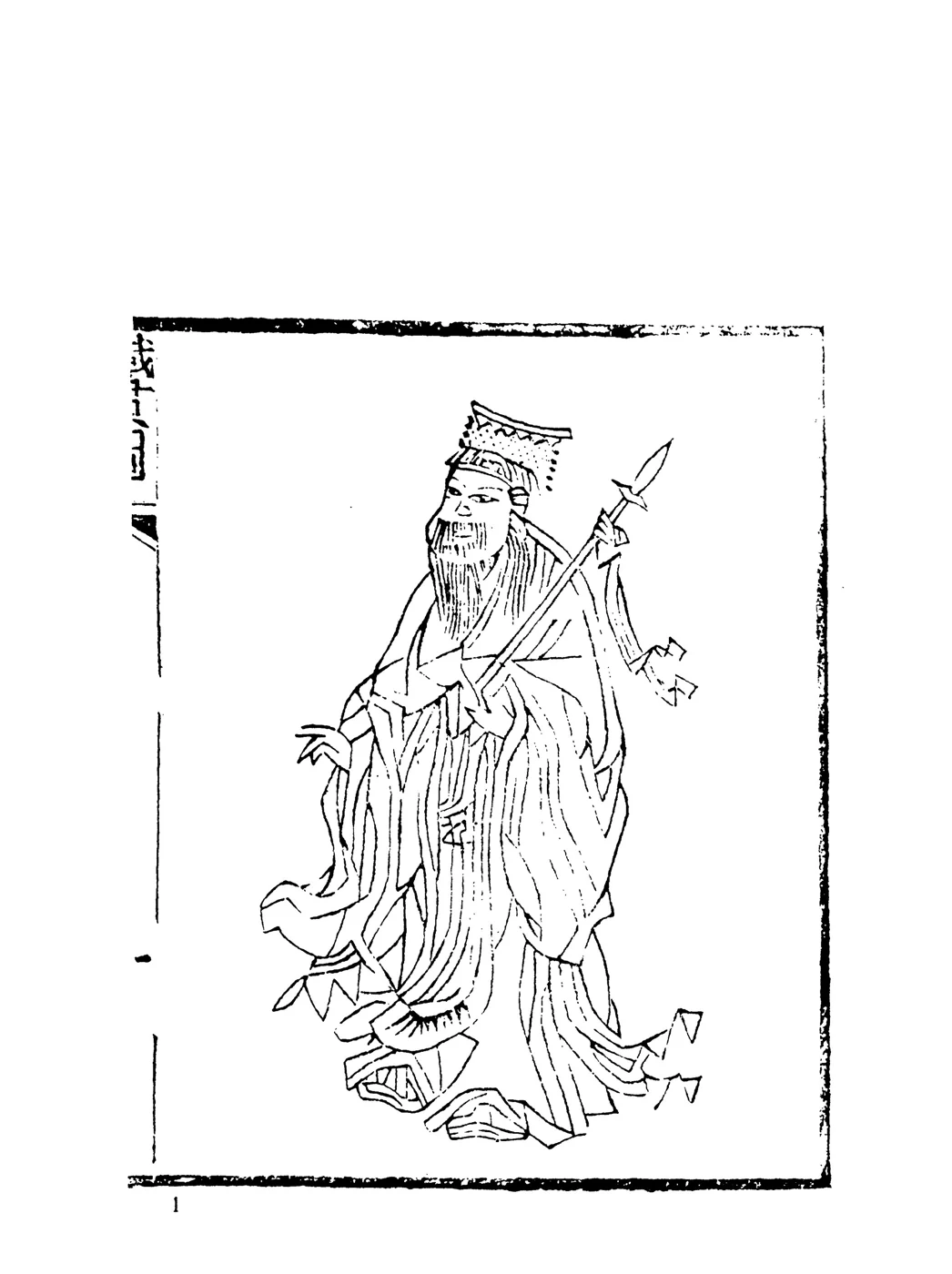
1611 CE–1644 CE
Emperor
Zhu Youjian
朱由检
Zhu Youjian (February 6, 1611 – April 25, 1644) was the fifth son of Emperor Guangzong (Zhu Changluo) of the Ming dynasty, the younger half-brother of Emperor Xizong (Zhu Youxiao), and the son of Empress Xiaochun (Lady Liu). He was the sixteenth emperor of the Ming dynasty and the last sovereign to govern a unified Chinese realm under the Ming house (reigned 1627–1644). His era name was Chongzhen, and he is historically known…
1611 CE–1644 CEMing Dynasty
PROFILE
Zhu Youjian (February 6, 1611 – April 25, 1644) was the fifth son of Emperor Guangzong (Zhu Changluo) of the Ming dynasty, the younger half-brother of Emperor Xizong (Zhu Youxiao), and the son of Empress Xiaochun (Lady Liu). He was the sixteenth emperor of the Ming dynasty and the last sovereign to govern a unified Chinese realm under the Ming house (reigned 1627–1644). His era name was Chongzhen, and he is historically known as the Chongzhen Emperor, Emperor Sizong, or Emperor Yizong of Ming. Born in the thirty-eighth year of the Wanli era, he was created Prince of Xin in his youth and resided in the Princely Mansion of Xin. In August of the seventh year of the Tianqi era (1627), as Emperor Xizong lay critically ill without surviving male heirs, Zhu Youjian succeeded to the imperial throne. Upon his accession, he demonstrated extraordinary forbearance, iron resolution, and political cunning, executing a lightning purge of the omnipotent eunuch clique led by Wei Zhongxian, banishing Lady Ke, adjudicating the "Treason Cases" (Ni'an), rehabilitating the wronged Donglin scholars, and recalling upright ministers. These bold measures revitalized the imperial court, inspiring widespread hope among gentry and commoners for a grand dynastic renaissance. However, the Chongzhen Emperor inherited an empire crippled by decades of systemic rot accumulated across the Wanli and Tianqi reigns, engulfed in existential internal and external perils. Throughout his seventeen-year reign, he labored with tireless diligence, rising before dawn and retiring past midnight, practicing rigorous frugality and abstaining from luxury and sensual distractions, standing as one of the most hardworking sovereigns in Ming history. Yet he was fatally afflicted by deep-seated personal flaws: hyper-suspicion, dogmatic obstinacy, hyper-critical impatience, and an utter lack of strategic composure or magnanimity toward subordinates. In civil administration, he rotated through fifty Grand Secretaries, summarily executed seven regional governors-general (zongdu) and eleven provincial governors (xunfu), and drove numerous senior ministers to suicide or execution, exacerbating factional paranoia throughout the bureaucracy. In military strategy, confronting the dual crises of the rising Manchu Qing empire beyond the Great Wall and catastrophic peasant rebellions within, he repeatedly squandered decisive strategic opportunities. During the Jisi Incident of 1629, he fell victim to Huangtaiji's deception, subjecting Grand Commander Yuan Chonghuan to gruesome dismemberment (lingchi) and demolishing his own primary northern bulwark. During the Battle of Song-Jin, his reckless impatience forced Hong Chengchou into premature engagement, resulting in the annihilation of his entire field army; subsequent secret peace overtures with Qing were abruptly aborted when he executed Minister of War Chen Xinjia to evade political blame. Confronting domestic peasant uprisings, he endorsed Yang Sichang's "Ten-Faced Net" strategy, imposing the crushing "Three Surcharges" (Liaodong, Suppression, and Training levies) exceeding twenty million silver taels annually, which plunged northern peasantry into destitution and spurred Li Zicheng and Zhang Xianzhong into fiercer rebellions. In early 1644, following the establishment of the Shun dynasty in Xi'an, Li Zicheng led a massive eastern expedition across the Yellow River; imperial garrisons surrendered without a fight, leaving Beijing's defenses naked. Hobbled by vanity and dread of historical reproach, Chongzhen hesitated over relocating the capital to Nanjing, while corrupt courtiers feigned poverty to withhold financial contributions. On April 24 (the eighteenth day of the third month), Shun armies breached the outer walls of Beijing as eunuch commanders opened the gates. That night, Chongzhen forced Empress Zhou to hang herself, severed the left arm of Princess Changping, and slew Princess Zhaoren. At dawn on April 25 (the nineteenth day of the third month), when not a single minister answered the morning assembly bells, the Chongzhen Emperor climbed Meishan (Jingshan) and hanged himself from a crabapple tree near the Shouhuang Pavilion. Before dying, he bit his finger to pen a tear-stained blood testament on his inner blue robe: "Though my insufficient virtue has brought down heaven's wrath, it was all my ministers who betrayed and misled me... Let the bandits dismember my corpse, but do not harm a single one of my people." He was thirty-three years old. Following the Manchu conquest, the Qing court buried him in the Siling Mausoleum with the posthumous title Emperor Zhuanglie Min; the Southern Ming court successively bestowed the temple names Sizong and Yizong. The tragic reign and catastrophic demise of the Chongzhen Emperor remain an enduring, monumental object of inquiry in Chinese political and historiographical thought.
- Alternate names
- Emperor Sizong of Ming; Emperor Lie of Ming; Chongzhen Emperor Zhu Youjian
- Courtesy name
- Deyue
- Period
- Ming Dynasty
- Date of Birth
- February 6, 1611 CE(38th year of the Wanli era, Ming, 12th month, 24th day)
- Date of Death
- April 25, 1644 CE(17th year of the Chongzhen era, Ming, 3rd month, 19th day)
- Dynasty/Regime
- Ming Dynasty
- Identity
- Emperor
- Ethnicity
- Not reliably confirmed in available sources
- Ancestral home
- Not reliably confirmed in historical sources
- Place of birth
- Unknown
- Reign
- 1627–1644
- Posthumous name
- Not reliably recorded in historical sources
- Major achievements
- Last emperor of the Ming; diligent in government but stubborn and suspicious; wrongly executed Yuan Chonghuan and hanged himself on Coal Hill after Beijing fell.
- Other name
- Emperor Sizong of Ming, Emperor Chongzhen, Prince of Xin
- Era
- Ming Dynasty
- Place of death
- Wansui Mountain, Wanping County, Shuntian Prefecture (present-day Shouhuang Pavilion, Jingshan, Beijing)
- Predecessor
- Emperor Tianqi, Zhu Youjiao
- Successor
- Emperor Anzong of Southern Ming, Zhu Yousong (Hongguang Emperor)
- Era name
- Chongzhen
- Temple name
- Sizong (later Yizong, Weizong, Huaizong)
- Tomb
- Siling
LIFE TIMELINE
Age four | Birth mother Lady Liu was beaten to death; Zhu Youjian was consecutively raised by Consort Li Kangfei (West Li) and Consort Li Zhuangfei (East Li)
Age ten | Emperor Guangzong passed away after reigning for one month; Emperor Xizong Zhu Youxiao ascended the throne
Age twelve | Enfeoffed as the Prince of Xin
Age sixteen | Moved to the Prince of Xin Residence; married Lady Zhou (later Empress Zhou)
Age seventeen | Emperor Xizong fell gravely ill and passed away; Zhu Youjian ascended the imperial throne with the decisive support of Empress Zhang, decreeing the adoption of the Chongzhen era for the following year
Age seventeen | Tribute Student Qian Jiazheng impeached Wei Zhongxian for ten heinous crimes; Zhu Youjian banished Wei Zhongxian to Fengyang, where Wei hanged himself in Fucheng; wet nurse Madam Ke was beaten to death, thoroughly dismantling the eunuch clique
November of 1627 CE – December of 1627 CE(7th year of the Tianqi era, 10th to 11th month) | Age eighteen | Granted an audience to Yuan Chonghuan at the Platform and appointed him Grand Coordinator of Jiliao; promulgated the Official Register of Treason to purge eunuch factions; abolished national courier relay stations, triggering peasant rebellions in northern Shaanxi
Age nineteen | Commissioned the Chongzhen Calendar under Xu Guangqi and Johann Adam Schall von Bell; in the sixth month Yuan Chonghuan executed Mao Wenlong; in the tenth month Hong Taiji breached Da'ankou and threatened Beijing (Jisi Incident); Yuan Chonghuan rushed to relieve the capital, but Zhu Youjian fell for Hong Taiji's counter-espionage ruse and imprisoned Yuan
Age twenty | Executed Yuan Chonghuan by dismemberment (lingchi) in the Western Market; levied additional Liaodong surcharges, intensifying widespread unrest
September 22, 1630 CE(3rd year of the Chongzhen era, Ming, 8th month, 16th day) | Ages twenty-two to twenty-seven | Wen Tiren served as Senior Grand Secretary for eight years, deepening factional paralysis; peasant uprisings under Li Zicheng and Zhang Xianzhong swept the central plains as the court frequently replaced military governors
Age twenty-seven | Appointed Yang Sichang as Minister of War to implement the "Ten-Sided Net" containment strategy and imposed additional "Suppression Surcharges"
Age twenty-eight | Qing forces penetrated the Great Wall and ravaged northern China; Lu Xiangsheng died in battle at Jiazhuang; Hong Chengchou and Sun Chuanting dealt a crushing defeat to Li Zicheng at Tongguan South Plain, forcing Li to flee into the Shangluo Mountains with only eighteen horsemen; Zhang Xianzhong staged a feigned surrender at Gucheng
Age twenty-nine | Zhang Xianzhong rebelled again in Gucheng; Li Zicheng emerged from the Shangluo Mountains; Yang Sichang departed Beijing to supervise military operations; the court levied "Training Surcharges," bringing annual three-surcharge levies to over twenty million taels and driving the populace to despair
Age thirty | Qing forces laid siege to Jinzhou; Chongzhen ordered Hong Chengchou to lead thirteen generals and 130,000 elite troops beyond the Pass to relieve the fortress
Age thirty-one | Battle of Song-Jin erupted; Zhu Youjian and Chen Xinjia impetuously forced an offensive, leading to supply cutoff and catastrophic rout; Li Zicheng captured Luoyang and executed Prince of Fu; Xiangyang fell and Prince of Xiang was killed, driving Yang Sichang to commit suicide
Age thirty-two | Songshan fell; Hong Chengchou was captured and defected to the Qing; Zu Dashou surrendered Jinzhou, eradicating Ming elite forces beyond the Pass; Zhu Youjian secretly ordered Chen Xinjia to negotiate peace with the Qing, then executed Chen to evade culpability after the plot leaked; Li Zicheng besieged Kaifeng
Age thirty-three | Sun Chuanting marched out of Tongguan and fell in battle at Shiyuan against Li Zicheng; Tongguan fell; Li Zicheng took Xi'an; Qing armies raided northern China; Hong Taiji died and Shunzhi succeeded him
Age thirty-four | Li Zicheng established the Dashun dynasty in Xi'an and launched an eastward offensive across the Yellow River; Taiyuan and Datong surrendered; Zhu Youjian wavered over fleeing to Nanjing, but ministers obstructed the move and the southern relocation was abandoned
Age thirty-four | Li Zicheng breached Beijing; Zhu Youjian forced Empress Zhou to hang herself and struck down his daughters; at dawn he climbed Jingshan and hanged himself from a crabapple tree near Shouhuang Pavilion, bringing an end to the unified Ming dynasty
Age 31 | In July 1641, Hong was forced forward to Songshan.
Age 32 | In February 1642, Songshan fell, and Hong Chengchou was captured, eventually defecting to the Qing; in March, Zu Dashou surrendered Jinzhou.
Age 33 | In October 1643, Sun Chuanting—the last capable field commander in the interior—was pressured by Chongzhen into premature battle, perishing at Shiyuan in Henan; as historians lamented, "With Chuanting dead, the Ming was no more." Li Zicheng captured Tongguan, overran Shaanxi, and formally proclaimed the Shun dynasty in Xi'an in January 1644, adopting the era name Yongchang.
Age 34 | In October 1643, Sun Chuanting—the last capable field commander in the interior—was pressured by Chongzhen into premature battle, perishing at Shiyuan in Henan; as historians lamented, "With Chuanting dead, the Ming was no more." Li Zicheng captured Tongguan, overran Shaanxi, and formally proclaimed the Shun dynasty in Xi'an in January 1644, adopting the era name Yongchang.
April 25, 1644 CE(17th year of the Chongzhen era, Ming, 3rd month, 19th day) | Age 34 | Zhu Youjian (February 6, 1611 – April 25, 1644) was the fifth son of Emperor Guangzong (Zhu Changluo) of the Ming dynasty, the younger half-brother of Emperor Xizong (Zhu Youxiao), and the son of Empress Xiaochun (Lady Liu).
BIOGRAPHY
Biography
Family Background and Life in the Princely Residence Zhu Youjian was born on February 6, 1611 (the twenty-fourth day of the twelfth month of the thirty-eighth year of the Wanli era) in the Ciqing Palace within the Forbidden City. His father was Crown Prince Zhu Changluo (later Emperor Guangzong), and his birth mother was Lady Liu, a low-ranking concubine (shunü) in the crown prince's household. Shadowed by the bitter "Controversy over the Dynastic Foundation" (Guoben zhi Zheng) that plagued the Wanli court, the crown prince lived in constant dread of factional intrigue. When Zhu Youjian was merely four years old, his mother Lady Liu incurred the wrath of Zhu Changluo and was secretly beaten to death, her body hastily buried in an unmarked grave. Bereft of maternal protection, the young boy was initially entrusted to the care of Zhu Changluo's favorite concubine, Consort Li Kang ("Western Li"). Soon after, Western Li gave birth to her own daughter and transferred the neglected child to another gentle and compassionate concubine, Consort Li Zhuang ("Eastern Li"). Growing up amidst deep-seated palace coldness and insecurity forged in Zhu Youjian a complex psychological temperament characterized by vigilance, emotional concealment, hyper-sensitivity, and profound distrust of those around him. In 1620 (the first year of the Taichang era), Emperor Shenzi and Emperor Guangzong died in rapid succession within mere months of each other. Zhu Youjian's elder half-brother, Zhu Youxiao, ascended the throne as Emperor Xizong (reigning as Tianqi). In 1622 (the second year of Tianqi), Zhu Youjian was formally invested as Prince of Xin, leaving the inner palace in 1626 to establish his princely residence outside the Forbidden City. Throughout the Tianqi reign, the palace eunuch Wei Zhongxian achieved unparalleled dictatorial power, assuming the title "Lord of Nine Thousand Nine Hundred Years." Wei colluded with Xizong's wet nurse, Lady Ke, to unleash brutal inquisitions against the reformist Donglin faction and upright scholar-officials. Residing in his mansion, Prince Zhu Youjian was acutely aware of the perilous environment. He closed his gates, immersed himself in historical chronicles, avoided all contact with court ministers or eunuchs, and displayed absolute deference whenever Wei Zhongxian sent spies to probe his household, successfully navigating the bloody purges of the era unscathed. In August 1627 (the seventh year of Tianqi), the twenty-three-year-old Emperor Xizong fell mortally ill after an accidental boat capsizing and subsequent ingestion of toxic Daoist elixirs. Having lost all three of his infant sons, the emperor faced succession without an heir. Wei Zhongxian and his inner circle covertly plotted to conceal the emperor's condition to orchestrate a succession scheme that would perpetuate their dominance. Empress Zhang (Empress Yi'an), a woman of steadfast moral clarity, intervened resolutely, invoking ancestral house laws governing agnatic fraternal succession (xiong zhong di ji). On August 11, Xizong summoned Prince Zhu Youjian to his deathbed, gently stroking his brother's back while lamenting: "Come, my younger brother; you must act as Yao and Shun!" Zhu Youjian knelt and wept, replying: "How could your servant dare not exhaust his strength and devotion!" Following the audience, Empress Zhang dispatched a trusted eunuch to deliver a clandestine warning to the prince: "When you enter the palace to assume the throne, under no circumstances eat food prepared in the imperial kitchens; guard against poison and bring your own provisions!" On September 30, Emperor Xizong passed away. Summoned to the palace, Zhu Youjian spent his nights sleepless, surrounded by a circle of armed personal retainers. Throughout the transition, the prince survived exclusively on dry wheat cakes concealed within his sleeves, refusing to drink even a single cup of tea served by palace attendants. On October 2, 1627, flanked by Empress Zhang and loyal Confucian ministers, the seventeen-year-old prince formally ascended the imperial throne in the Hall of Supreme Harmony, proclaiming the following year as the first year of Chongzhen. ### Accession to the Throne and Purging the Eunuch Faction Upon his accession, the Chongzhen Emperor confronted an administration thoroughly dominated by Wei Zhongxian's vast patronage network, known colloquially as the "Five Tigers, Five Leopards, Ten Dogs, Ten Children, and Forty Grandchildren." The Senior Grand Secretary Cui Chengxiu, ministerial heads, and frontier governors were almost universally creatures of the eunuch dictator. Facing this entrenched cabal, the seventeen-year-old sovereign displayed astonishing cunning, patience, and political acumen. During his initial weeks, Chongzhen deliberately dissembled, showering Wei Zhongxian with polite commendations, approving the construction of ancestral shrines honoring the eunuch, and bestowing noble titles upon Wei's relatives. This calculated performance lowered the faction's guard and neutralized the risk of a preemptive palace coup. In October, once reliable imperial commanders secured the palace gates, Chongzhen began systematically dismantling the faction. His first strike was an edict expelling Lady Ke from the inner palace, severing Wei's primary source of domestic intelligence. Subsequently, he subtly encouraged censors to test the waters by impeaching Cui Chengxiu for corruption. Discerning the emperor's true intent, a courageous scholar from Jiaxing named Qian Jiazheng submitted a blistering indictment on November 13, enumerating Wei Zhongxian's "Ten Heinous Crimes": usurping imperial majesty, disrespecting the empress, manipulating military forces, defying the sovereign, despoiling imperial fiefs, distorting penal statutes, monopolizing titles, corrupting military honors, plundering private wealth, and seizing civilian lands. Chongzhen acted with decisive fury. Summoning Wei Zhongxian to the throne room, he ordered a palace attendant to read Qian's memorial aloud at full volume. Paralyzed with terror and trembling violently, Wei prostrated himself, attempting that night to bribe inner attendants with vast fortunes to secure imperial pardon. Unmoved, Chongzhen stripped Wei of his directorship of the Directorate of Ceremonial and the Eastern Depot (Dongchang), banishing him to tend ancestral tombs at Fengyang. In November, as Wei set out for Fengyang accompanied by an armed escort of rogue swordsmen and forty wagons of treasure, Chongzhen recognized that "a tiger released to the wilderness invites catastrophe." He dispatched flying squads of the Embroidered Uniform Guard (Jinyiwei) to arrest him. Reaching the Nanmafang inn in Fucheng County, Wei learned that imperial cavalry were closing in. Convinced that horrific execution was inevitable, he engaged in a final drinking bout with his conspirator Li Chaoqin and hanged himself from the rafters. Following Wei's death, Chongzhen launched a relentless clean-up of the regime. He ordered Wei's corpse dismembered and his severed head displayed in his ancestral village; Lady Ke was beaten to death with staves in the Laundry Department; Cui Chengxiu and dozens of high conspirators were executed. In 1628, the emperor personally promulgated the Imperially Authorized Treason Cases (Qinding Ni'an), formally categorizing and penalizing hundreds of eunuch partisans. Simultaneously, he issued sweeping decrees rehabilitating the "Six Gentlemen of Donglin"—including Yang Lian and Zuo Guangdou—who had been tortured to death under Tianqi, restoring their offices, conferring noble posthumous titles, and recalling exiled scholars to court. This spectacular eradication of the eunuch terror sent waves of euphoria throughout the empire, with gentry and commoners heralding the young emperor as a brilliant restorer destined to revive the golden age of the Ming. ### The Jisi Incident and the Turning Tide in Liaodong The euphoria of the early reign was short-lived, as the existential threat posed by the Jurchen Later Liang (Qing) state beyond the Great Wall rapidly intensified. In July 1628, Chongzhen granted an audience at the Platform of the Wenhua Hall to Yuan Chonghuan, the celebrated defender of Ningyuan. When Chongzhen questioned him regarding northern strategy, Yuan made a dramatic pledge: "If Your Majesty grants me full operational discretion, I can recover all of Liaodong within five years!" Delighted, Chongzhen appointed Yuan Minister of War, Right Vice Censor-in-Chief, and Grand Commander of Jiliao, conferring an imperial sword of administrative authority (shangfang baojian) and entrusting him with absolute command over the northeastern theater. However, in June 1629, while inspecting naval garrisons on Shuangdao, Yuan abused his imperial sword to summarily execute Mao Wenlong, commander of the Dongjiang garrison on Pi Island. Mao had occupied offshore islands near the Yalu River for over a decade, functioning as a permanent dagger threatening the Later Jin flank. Mao's death shattered Dongjiang morale, precipitating widespread defections to the Manchus and removing the sole strategic deterrent restraining northern offensive maneuvers. In October 1629, finding the Ningjin defensive line impregnable, Huangtaiji executed an audacious strategic bypass. Leading one hundred thousand Eight Banners cavalry across eastern Inner Mongolia, he bypassed Shanhaiguan entirely, breached the Great Wall at Da'ankou and Xifengkou, overwhelmed Zunhua, and appeared outside the walls of Beijing, precipitating the "Jisi Incident." With the capital placed under martial law, Yuan Chonghuan led nine thousand elite cavalry on an exhausting forced march, fighting desperate, bloody battles outside Guangqu Gate and Zuo'an Gate to repulse the Manchu cavalry. However, the devastation of the capital suburbs, the burning of noble estates, and the terror of the court sparked vicious recriminations against Yuan, with courtiers accusing him of "inviting the enemy into the core to force peace." Huangtaiji, acutely perceiving Chongzhen's suspicious and punitive nature, orchestrated an ingenious counter-intelligence trap (fanjianji). Outside Desheng Gate, Manchu officers intentionally staged whispered conversations in the presence of captured Ming palace eunuchs, fabricating a nonexistent secret compact between Yuan and Huangtaiji, and then deliberately permitted a eunuch to escape back into the Forbidden City. Already suspicious of Yuan's execution of Mao Wenlong and infuriated by the enemy's presence outside his palace, Chongzhen succumbed completely to the deception. Summoning Yuan to the Platform on December 1, he had him immediately arrested and thrown into the Embroidered Uniform Guard dungeons. Panicked by the imprisonment of their commander, the elite Guan-Ning host under Zu Dashou mutinied, broke through the eastern gates, and retreated in fury back to Liaodong, collapsing border defenses. In August 1630, Chongzhen issued an imperial decree condemning Yuan Chonghuan to execution by dismemberment (lingchi) in the Western Market on treason charges. Amidst mass hysteria, deceived residents of the capital purchased pieces of his flesh to consume. By destroying his foremost military commander, Chongzhen demolished his own northern bulwark; the strategic initiative in Liaodong passed permanently to the Qing, inaugurating an irreversible decline in Ming military fortunes. ### Internal and External Crises and Relentless Factional Strife Following the execution of Yuan Chonghuan, Chongzhen descended into acute political paranoia, bitterly concluding that "the realm is ruined by civil officials, while military officers are utterly worthless." Within the central government, ministerial turnover assumed unprecedented proportions. Over seventeen years, Chongzhen appointed fifty Grand Secretaries, averaging one new prime minister every few months. Senior Grand Secretary Wen Tiren retained power for eight years by catering servilely to the emperor's punitive instincts, dedicating his administration entirely to suppressing political rivals and persecuting Donglin scholars rather than addressing national survival. Later chief ministers, such as Zhou Yanru, Chen Yan, and Wei Zaode, were largely corrupt, self-serving mediocrities. Chongzhen governed through draconic terror, executing eleven provincial governors, seven supreme regional commanders, and multiple ministers of war, sending accomplished generals like Zheng Chongjian, Xiong Wencan, Fan Zhiwan, and Zhao Guangbian to the chopping block. Terrified of imperial wrath, officials adopted evasive sycophancy as their sole governing strategy. Simultaneously, peasant rebellions engulfed the interior. Northern China was trapped in the grip of the Little Ice Age, enduring decades of catastrophic drought, plague, and arctic cold. In 1628, northern Shaanxi suffered total crop failure, reducing the population to cannibalism. Exacerbating this catastrophe, Chongzhen had drastically cut expenditures by abolishing the nationwide network of courier post stations (yizhan), throwing tens of thousands of armed, athletic couriers into destitution. Among these desperate men was Li Zicheng, a former courier from Mizhi who joined the rebel bands of Wang Er and Gao Yingxiang. Rapidly coalescing, rebel armies swept across Shaanxi, Shanxi, Henan, and Hubei. Paralyzed by anxiety, Chongzhen initially appointed Yang He to pursue a policy of pacification, but the bankrupt treasury could provide no famine relief, and surrendered peasants promptly rebelled anew; Chongzhen executed Yang He and turned to brutal military suppression under Hong Chengchou, Cao Wenzhao, and Sun Chuanting. In 1637, Chongzhen elevated Yang Sichang as Minister of War. Yang formulated the "Ten-Faced Net" strategy (Shimian Zhangwang), mobilizing massive mobile reserves to surround the rebel forces. In 1638, Hong Chengchou and Sun Chuanting ambushed Li Zicheng at the South Plain of Tongguan, wiping out his army and forcing him to hide in the deep ravines of the Shangluo Mountains with only eighteen survivors, while Zhang Xianzhong feigned submission at Gucheng. Yet the empire's financial arteries were entirely severed. To fund the northern border armies and domestic counter-insurgency operations, Chongzhen enacted crushing fiscal levies on top of regular agricultural taxes, imposing the "Three Surcharges" (Liaodong, Suppression, and Training surcharges). These levies extorted over twenty million silver taels annually from an impoverished populace. Local magistrates collected taxes with ferocious brutality, while wealthy gentry shifted tax burdens onto destitute peasants. As the saying went: "When the people have no means of life, they become bandits; the more bandits arise, the higher the military levies; the higher the levies, the more people turn to banditry." The empire was locked in an irreversible downward spiral. In 1639, pushed past endurance by escalating tax extortions, Zhang Xianzhong rebelled anew in Gucheng, while Li Zicheng emerged from the Shangluo Mountains into famine-stricken Henan. Championing radical slogans such as "Equalize land ownership and abolish taxes" (juntian mianfu) and "Welcome Prince Chuang and pay no grain," Li's army swelled to hundreds of thousands within months, shattering government defenses across the central plains. ### The Disaster of Song-Jin and the Fall of Shaanxi and Shanxi In 1640, having renamed his state Qing, Huangtaiji mobilized over one hundred thousand Eight Banners troops to encircle Jinzhou, the final fortress shielding Shanhaiguan. Inside the besieged city, garrison commander Zu Dashou slaughtered horses for food, his troops facing imminent starvation. Chongzhen mobilized the empire's final elite reserves, ordering Jiliao Governor-General Hong Chengchou to lead eight regional commanders—including Wu Sangui of Shanhaiguan and Wang Pu of Datong—with 130,000 veteran troops to relieve Jinzhou. Hong Chengchou recognized that the Qing army was at the peak of its strength and advocated a prudent, step-by-step advance, establishing fortified supply depots to wage a protracted war of attrition. However, safe within the Forbidden City and facing an empty treasury, Chongzhen succumbed to his characteristic impatience. Backed by Minister of War Chen Xinjia, the emperor sent urgent imperial couriers commanding Hong to abandon his defensive posture and launch an immediate general offensive. In July 1641, Hong was forced forward to Songshan. Huangtaiji seized this strategic blunder, personally leading elite cavalry on a forced march to cut the Ming logistical lines between Songshan and Xingshan and capture the Ming grain depots on Mount Bijia. Cut off from food and retreat, the 130,000-man Ming host dissolved into utter panic. Regional commanders scrambled to flee, with Wang Pu and Wu Sangui breaking formation first. The battle devolved into a catastrophic slaughter, with tens of thousands of Ming soldiers cut down or drowned along the coast. In February 1642, Songshan fell, and Hong Chengchou was captured, eventually defecting to the Qing; in March, Zu Dashou surrendered Jinzhou. The Battle of Song-Jin completely annihilated the Ming dynasty's final field army, permanently disintegrating the Guan-Ning defense perimeter and leaving Shanhaiguan as an isolated outpost. Confronted with the impossible reality of two-front warfare, Chongzhen secretly instructed Minister of War Chen Xinjia to initiate clandestine peace talks with the Qing, hoping to cede territory outside the Great Wall and pay annual tributes in exchange for peace, freeing imperial armies to focus on Li Zicheng. However, Chen Xinjia's clerk accidentally dispatched confidential diplomatic transcripts as public administrative bulletins, igniting an explosion of moral outrage across the capital. Accused of treasonous appeasement, Chongzhen refused to admit his role in the negotiations. To preserve his self-image as a righteous monarch who "never ceded territory or made peace," he placed sole blame upon Chen Xinjia, ordering him publicly beheaded. By executing his war minister to cover his own vanity, Chongzhen slammed shut the final diplomatic avenue of imperial survival. Simultaneously, the domestic interior disintegrated. In early 1641, Li Zicheng stormed Luoyang, executing the immensely wealthy Prince of Fu (Zhu Changxun) and cooking his flesh with venison to create "Fortune-and-Prosperity Wine" (Fu-Lu Jiu) for his troops. In 1642, Li besieged Kaifeng, routing imperial armies at Zhuxianzhen. In October 1643, Sun Chuanting—the last capable field commander in the interior—was pressured by Chongzhen into premature battle, perishing at Shiyuan in Henan; as historians lamented, "With Chuanting dead, the Ming was no more." Li Zicheng captured Tongguan, overran Shaanxi, and formally proclaimed the Shun dynasty in Xi'an in January 1644, adopting the era name Yongchang. ### Martyrdom on Meishan and the Fall of the Ming Empire In February 1644, Li Zicheng mobilized his grand armies across the Yellow River on an eastward drive toward Beijing. Garrisons at Datong and Xuanfu surrendered without firing a shot, and Shun vanguard forces advanced through the mountain passes into the capital basin unimpeded. Facing certain destruction, several far-sighted officials secretly urged Chongzhen to follow the historical precedents of the Eastern Jin and Southern Song by immediately relocating the capital to Nanjing, or dispatching Crown Prince Zhu Cilang to establish an administrative government in the south to mobilize the immense wealth and manpower of the Yangtze valley. Chongzhen privately favored the proposal, yet his morbid obsession with historical reputation prevented him from taking personal responsibility for "abandoning the ancestral tombs," waiting in vain for ministers to submit a unanimous public petition. Meanwhile, cowardly Grand Secretaries led by Chen Yan and Wei Zaode feared future political retribution and actively blocked the initiative. Paralyzed by indecision, the window closed as Shun forces severed the southern overland corridors. In a state of frantic desperation, Chongzhen pleaded with his wealthy imperial relatives and ministers to donate silver to pay the starving garrison troops defending the city walls. The emperor's father-in-law, Zhou Kui (Marquis of Jiading), possessed immense wealth but wept poverty, grudgingly parting with only ten thousand taels after bitter haggling; Senior Grand Secretary Wei Zaode offered a pathetic five hundred taels. High courtiers universally disguised their wealth, yielding an insulting pittance of several tens of thousands of taels. The venal cynicism of his court shattered the emperor's final emotional reserves. On April 23, Shun armies closed around the nine gates of Beijing, bombarding the walls with heavy artillery. Mounting the palace ramparts to gaze upon the burning suburbs, Chongzhen wept: "Alas, my poor people!" On April 24, Li Zicheng dispatched a captured eunuch into the palace proposing terms: that Li be granted princely status and one million taels of silver in exchange for withdrawing to Shanhaiguan to fight the Manchus. Chongzhen wavered, and the talks collapsed. At dusk, the eunuch commanders supervising the city gates opened the Zhangyi Gate to welcome the rebel army. That night, as artillery shook the Forbidden City, Chongzhen confronted his household in tears, commanding Empress Zhou: "Our cause is lost; as the mother of the empire, you must die for the state!" Empress Zhou wept, saying: "I have served Your Majesty for eighteen years, yet you never listened to a single word of my advice; today we face this catastrophe, what regret have I in dying!" She hanged herself from the palace rafters. Chongzhen then ordered Noble Consort Yuan to hang herself; when the cord snapped, he slashed her with his sword. Summoning his sixteen-year-old daughter, Princess Changping, Chongzhen closed his eyes in agony and swung his sword, crying: "Why were you born into our accursed house?!" The princess raised her arm to ward off the blow, her left arm severed at the elbow as she collapsed unconscious in blood. The emperor then killed his six-year-old daughter, Princess Zhaoren. Having eliminated the women of his household, he had his three sons disguised in peasant attire and smuggled into the mansions of relatives to preserve the imperial bloodline. At dawn on April 25, 1644 (the nineteenth day of the third month), Shun troops breached the inner gates and entered the Forbidden City. As morning light broke, Chongzhen personally struck the imperial bronze bell to summon his ministers for a final audience. Not a single official answered the call. Wandering through the deserted courtyards, Chongzhen smiled bitterly, crying out: "My ministers have betrayed me! Every civil official deserves death!" Stripping off his imperial yellow dragon robe, Chongzhen donned a dark blue tunic and civilian slippers. With disheveled hair and bare feet, he walked out the northern Xuanwu Gate and ascended Meishan (Jingshan). Beneath a crabapple tree near the Shouhuang Pavilion, the thirty-three-year-old monarch unfastened his silk sash, tied it to a branch, and hanged himself. The Director of the Directorate of Ceremonial, Wang Chengen, knelt in tears and hanged himself from an adjacent tree to accompany his master in death. Before expiring, Chongzhen had bitten his finger to compose a tragic, monumental death testament in blood on the inner lapel of his blue robe:
"Seventeen years have passed since my accession. Now rebel bandits press upon the capital. Though my insufficient virtue has brought down heaven's wrath, it was all my ministers who betrayed and misled me. Dying, I have no face to meet my imperial ancestors beneath the earth. I remove my imperial crown and veil my face with my hair. Let the bandits dismember my corpse, but do not harm a single one of my people!" With his demise, the two-hundred-and-seventy-six-year unified rule of the Great Ming dynasty came to a catastrophic conclusion. On April 27, Shun soldiers located Chongzhen's body on Meishan. Placed in a simple wooden coffin covered with straw mats, his body was displayed outside the Donghua Gate for three days, where common citizens wept openly. In early May, local magistrate Zhao Yigui collected public donations to bury Chongzhen alongside Empress Zhou within the mausoleum of Consort Tian, renaming the tomb Siling. Following the Manchu conquest of Beijing, Prince Regent Dorgon entered the capital under the banner of "avenging the Chongzhen Emperor," renovating the Siling Mausoleum and bestowing the posthumous title Emperor Zhuanglie Min; the Southern Ming Hongguang court conferred the temple name Sizong, later amended to Yizong.
His Names, Early Years and Accession
Zhu Youjian, Emperor Sizong of Ming, whose courtesy name was Deyue, was the fifth son of the Guangzong Emperor, Zhu Changluo, and the half-brother of the Xizong Emperor, Zhu Youxiao, his mother being the Empress Xiaochun, née Liu; and because his era name was Chongzhen he is commonly called the Chongzhen Emperor. In the second year of Tianqi, that is 1622, Zhu Youjian was enfeoffed as Prince of Xin; five years later, when Xizong died without an heir, Zhu Youjian succeeded to the throne by testamentary edict and changed the era name to Chongzhen. At the beginning of his reign he rooted out the powerful eunuch Wei Zhongxian and his partisans, applied himself to government, practised strict economy and strove to bring about a restoration of the Ming. The earliness of his accession and the difficulty of his position were both bound up with the politics of the seventeen years that followed: at seventeen, a Prince of Xin, he inherited a ruin left by Shenzong's neglect, Guangzong's brief reign and Xizong's indifference.
The Audience with Yuan Chonghuan at the Platform
On the fourteenth day of the seventh month of the first year of Chongzhen, Zhu Youjian summoned the chief ministers, with the five chief military commissions, the six ministries, the censors, the grain transport, the general-in-chief, the commander Yuan Chonghuan and the officials of the personnel and other sections, the Henan and other circuits, and the chief officers of the Embroidered Uniform Guard, to an audience at the Platform. Chapter 3 of the Songtian lu bi records it in full: after noon the emperor came to the Platform, the ministers made their obeisance and stood in order, and the commander Yuan Chonghuan was specially called. The emperor said that the barbarian chief had rampaged for ten years, that the frontiers were lost and the people of Liao trampled in the mire, and that since Yuan had come ten thousand li at his summons, his loyalty and courage were to be praised, and his plans for pacifying the Hu should be fully stated. Yuan Chonghuan replied that his plans were all set out in his memorials; that the emperor was a Yao or Shun of a thousand years and that such a thing was not hard for him; that he had received the emperor's transcendent recognition and had been entrusted to him ten thousand li away, and that six years before he had already fixed his purpose; and that if the emperor gave him discretion he reckoned that in five years the eastern barbarians could be pacified and all Liao recovered, in requital of the emperor. The emperor said that to destroy the barbarians in five years was the plan itself; that he would not grudge the reward of a marquisate, and that Yuan should exert himself to relieve the empire's suffering, and his sons and grandsons too would share in the blessing. The four chief ministers all said that Yuan Chonghuan's spirit, judgement and plans were admirable in every way and that he was indeed a marvellous man. Yuan Chonghuan said further that the eastern barbarians had gathered their strength for forty years and the position was not easily resolved; but that with the emperor's mind on the frontier and his labour day and night, he could not bear to speak of difficulties; that he relied on the emperor's sagacity, whose rain and dew nurtured all things and whose thunder and lightning broke all things down; that by his own reckoning he had fixed the term at five years, but that in those five years everything must answer to his hand — beginning with money and grain: for since Liao had been made a matter, there was the new levy of increased taxation, and the day before he had reckoned with the minister of revenue Wang Jiazhen the annual income and outgo of that levy and found a shortfall of one million two hundred thousand; that he could cut six hundred thousand from his own command and the ministry find six hundred thousand, and then there would be no fear of insufficiency; but that there was the old levy to be set against the new, and he must be allowed to set the new against the old so that he should not be hindered in its use. He said also that the eastern barbarians had plotted long, that their weapons were sharp and their horses constantly trained, and that they were no enemy to be easily broken; and that the arms sent from the Ministry of Works were of the utmost importance and must not be provided carelessly. He said again that in five years events would vary and that the ministries of personnel and of war must both answer to his hand: the men who should be employed should be chosen for him, and those who should not be employed should not be chosen. He said further that with the emperor's sagacity above, the ministers of every ministry were public-spirited and none would not answer to his hand; but that with his own strength he could more than control the eastern barbarians while he could not control the mouths of the many; that once he left the sovereign's gate he was ten thousand li away, and that there would surely be those who envied his merit and grudged his ability; and that even though they stood in awe of the emperor's law and did not use their power to check his elbow, they could still use their opinions to disorder his plans. The emperor said that he himself would uphold him, and that even if there were loose talk it was not to be heard. Yuan Chonghuan said again that since the emperor had undertaken to settle the talk for him, and had ordered the ministries of personnel and war to provide him men and those of revenue and works to forward grain and make weapons, if he did not destroy the eastern barbarians and recover the lost land, with what face would he see the emperor. The emperor stood up and listened long, and then said that his plans were in good order and he need not be modest. The chief ministers all said that this minister's methods were peculiar to himself, that as a magistrate he had taken not a single coin, and that Heaven had produced him to assist the emperor in a restoration, and they begged that he be given authority and a precious sword; and that the precious swords of Wang Zhichen and Man Gui should be recalled so that authority might be unified. The emperor agreed with their words and had them transmitted to the ministry concerned.
Yuan Chonghuan's Dispositions for the Eastern Affairs
Since Zhu Youjian relied on Yuan Chonghuan, he let him dispose the defence within and beyond the passes. The Ming shi, in Yuan Chonghuan's life, records that he asked to join Ningyuan and Jinzhou into one garrison, that Zu Dashou should remain at Jinzhou, that the deputy commander He Kegang should be given the rank of associate commissioner and take Mei Zhihuan's place at Ningyuan, and that Zhao Shuaijiao of the Ji garrison should be moved to the pass, so that within and beyond the passes there should be only two great commanders; and that he praised the ability of the three, saying that he had set himself five years and relied on these three alone, who should be with him to the end, and that if at the term there were no success he would with his own hand kill the three and give his own body to the judge of crimes. The emperor approved, and Yuan Chonghuan remained in command at Ningyuan. Since Wang Zhichen had died, Yuan Chonghuan asked that the grand coordinator's post be abolished; and when the grand coordinator of Deng-Lai, Sun Guozhen, was dismissed, he again asked that the post not be filled, to which the emperor also agreed. The thirty-six families of the Kharchin had long received subsidies, and afterwards, pressed by the Chahar and suffering a famine, were minded to rebel; and Yuan Chonghuan summoned them to the frontier, comforted them in person, and all obeyed. His dispositions for the east were thus the joining of garrisons, the reduction of offices and the conciliation of the tribes; and in this the heaviness of what he took upon himself and the severity of his own oath may be seen.
The Beheading of Mao Wenlong
In the fifth month of the second year of Chongzhen Yuan Chonghuan beheaded the commander of Pi Island, Mao Wenlong, with the precious sword, the twelve charges being set out in full in the Ming shi. Yuan Chonghuan questioned Mao Wenlong on several breaches of orders, and Mao Wenlong argued back; whereupon Yuan Chonghuan rebuked him sternly and ordered his cap and girdle to be taken off and him bound, and Mao Wenlong was still stubborn. Yuan Chonghuan said that he had twelve crimes deserving death and asked whether he knew them. By the ancestral rule a great commander abroad must have a civil official to supervise him, yet Mao ruled one region alone and his troops, horses, money and grain were not audited, the first crime deserving death; no crime of a subject is greater than deceiving his sovereign, yet his reports were all deceitful and he killed those who had surrendered and refugees to claim merit, the second; a subject may not hold a private army, and one who does must be put to death, yet he memorialised that he could pasture horses at Dengzhou and take Nanjing as easily as turning his hand, which was great sedition, the third; tens of thousands of taels of pay a year were not given to the soldiers, only three pecks and a half of rice a month being issued, while he embezzled military grain, the fourth; he opened a horse market at Pi Island without authority and dealt privately with outer barbarians, the fifth; several thousand of his officers all bore his own surname, and below the deputy commanders he issued a thousand warrants at random, while runners and carters were all in gold and crimson, the sixth; returning from Ningyuan he plundered merchant ships and made himself a bandit, the seventh; he seized the sons and daughters of the people beyond all measure so that his subordinates imitated him and no household was at peace, the eighth; he drove refugees far off to steal ginseng, and those who would not starve, so that the bones on the island lay like rank grass, the ninth; he conveyed gold to the capital, called Wei Zhongxian his father and set up an image with imperial regalia on the island, the tenth; at the defeat at Tieshan he lost countless troops and concealed the defeat as merit, the eleventh; and in eight years of garrison he could not recover a foot of ground, watching and nourishing the enemy, the twelfth. When he had finished, Mao Wenlong was so shaken that he could not speak and only knocked his head begging to be spared. Yuan Chonghuan called his officers and asked whether Mao Wenlong's crimes deserved death; all answered in fear, and when one spoke of his years of toil Yuan Chonghuan rebuked him, saying that Mao Wenlong had been a common soldier and had reached the highest offices with his whole house ennobled, which was requital enough, and how was he so rebellious. He then knocked his head and asked the imperial will, saying that he would now put Mao Wenlong to death to set the army in order, that any officer like him would be killed likewise, and that if he himself failed the emperor should kill him as he had killed Mao Wenlong. He then took the precious sword and beheaded him before the tent and proclaimed to the troops that only Mao Wenlong was punished and the rest were guiltless. At that time the tens of thousands of bold officers and fierce soldiers under Mao Wenlong, in awe of Yuan Chonghuan's authority, not one dared move; and he had Mao Wenlong coffined, and the next day made sacrifice and obeisance with victims and wine, saying that the day before he had killed him by the great law of the court and that day he sacrificed to him by the private feeling of a colleague, and he wept. He then divided his twenty-eight thousand troops into four commands under Mao Wenlong's son Chengzuo, the deputy commander Chen Jisheng, the assistant commander Xu Fuzou and the guerrilla Liu Xingzuo; took Mao Wenlong's commission and precious sword, and had Chen Jisheng hold them in his place; rewarded the soldiers, pacified the islands by proclamation and abolished all Mao Wenlong's oppressive measures. Returning to his post he reported the matter to the throne, ending with the words that Mao Wenlong was a great commander and that it was not for him to put him to death on his own authority, and that he awaited punishment with his mat spread. It was the fifth month of the second year of Chongzhen. The emperor, hearing it suddenly, was greatly shocked, but considering that the man was dead and that he then relied on Yuan Chonghuan, he answered with a gracious edict of praise.
The Special Employment of Recommended Scholars
In the examination system Zhu Youjian had a measure of "special employment". The Tongyu zaji records that the late emperor had a dislike of the presented scholars and therefore kept all the graduates of the gengchen year who begged the favour and the tribute students who sat the court examination for special employment, first in the Hanlin and the censorate and the rest to be made up in order. The fair decree had already gone to the Grand Secretariat when the chief ministers, fearing an outcry at court, secretly memorialised to have it retracted; and so it began with the subordinate officers of the six ministries and was afterwards completed with the prefects and magistrates proper. The late emperor thought it an act unequalled in any age, and little did he think it would offend the Ministry of Personnel, whose anger was past measuring. In the great reckoning of the xinsi year the inner officials went so far as the ministry of justice, seven being degraded or dismissed, and the Ministry of Personnel still regretted that it could not empty the whole office at a stroke; for by the rule of former times the assessment of outer officials was every three years and of inner officials every six, and only after their merit and demerit were established could they be dealt with, and no case had occurred of a man entering office in the eighth month of one year and being censured in the first month of the next, which began with that year. Earlier, in the eighth month of the gengchen year, thirty-six posts in the ministries were filled and more than fifty outside as prefects and magistrates, mostly in the worst and hardest places and posts long left vacant; the selecting official Zhang Luoyan set the lots for the vacancies at the side of his seat and drew them out and noted them one by one as if dealing with demons, and all who heard it were indignant; and the reason was that outside officials, apart from the outstanding chosen for examination, were transferred to the ministries in what was called equality, and that with the times so troubled all who were in the prefectures and counties ravaged by the bandits wished to be relieved of their posts early, so that even ordinary ministry vacancies fetched a high price; and these thirty-six men, not getting what they wanted, could not but resent it. Those specially employed also thought it a great ceremony, and so Shi Dun and the others memorialised asking, by the precedent of the presented scholars, to visit the Confucian temple and perform the offering of vegetables and to set up a stone with the names inscribed; the matter went down to the Ministry of Rites and a reply had been drawn when Zhang Sizhi, the chief minister of Feixian, wrote the rescript refusing it, at which the emperor was greatly angered and struck it all out, refusing to let a new draft be made, and wrote with his own brush that the request to visit the temple and set up the stone should be carried out as proposed; and thereafter no one at court dared make an outcry. When they came to the temple the libationer Nan Juren would not receive their obeisance according to the old rule, and his colleague Wang Suchen, knowing that he could not be reasoned with, warned him that the special employment was a great ceremony and that if he made a difference of opinion the emperor, hearing of it, would not be able to explain himself; and Nan, in fear, came out and received the obeisance. The next day Shi Dun and the others gave thanks and again received the imperial assent, while the examining officer Ge Hanxin peevishly memorialised that the emperor had without cause honoured them by special employment in front while they should in justice bind them by the assessment behind, hoping for an edict to cut them down, and received only that the ministry concerned should know of it. Zhou Yizhai also asked for special employment at the court examination of the renwu year, though the earlier decree had said that it was not to be a precedent. The inscribed record of the special employment was granted, Shi Dun and a hundred and sixty-three others and Wu Kanghou and a hundred others, the grand secretary Zhou Yanru composing the text by imperial order, the Hanlin scribe Zhu Guozhao writing and sealing it by order, and Wang Hao, director of the works department of the Ministry of Works, supervising the cutting; and it stands today in the national academy.
The Inner Treasury and the Question of Economy
Zhu Youjian's economy was discussed both in his own day and later. A critic says that the late emperor attended only to saving, wearing cloth and eating plain food like a keeper of the gate, and so came to look on the inner treasury as a foundation that could never be touched, and on what his ancestors had left as not to be used by a single hair's breadth, so that the soldiers of the nine frontiers had no pay for years and no whole garment on their bodies, and how could he thus hold the empire? He says also that a sovereign of restoration is no different from a founder, and should not mind giving away a million in gold, as the Guangzong Emperor in one month issued more than three million in silver from the treasury; that the depression accumulated through the forty-eight years of Shenzong was waiting for a broad and magnanimous sovereign to clear the blockage and save the state from ruin, and that it was a pity the Guangzong Emperor's reign was so short. He says further that the late emperor, rising from the princely residence of Xin, knew the hardships of the people and would not lightly spend a single coin, and therefore cut the imperial manufactories, the banquets and the post stations, so that all under heaven saved in every way, while he daily borrowed from the meritorious ministers, from the imperial relatives and from the palace eunuchs, so that the empire looked on the treasury as wiped clean; yet when the rebel Li Zicheng broke the city, the silver that came out of the inner treasury was beyond count, and why should the late emperor have laboured to hoard, to save, to increase taxes and to borrow; once the capital was lost all went out to feed the bandits' grain, which was a grievous pity. This criticism comes from later ages, yet what it points to was the reality of the Chongzhen reign, that he could save yet could not use wealth.
The Edicts Against Luxury and for Frugality
Zhu Youjian's frugality appears in his autograph rescripts and in the edicts drafted for him. Chapter 9 of the Jingri tang waiji, in the memorial replying on the prohibition of luxury and the exaltation of frugality, records the autograph rescript that luxury should be forbidden and music at banquets stopped, as he had already told his ministers in person, and that an edict ought to be drafted to enforce it; that he would allow music only when he ascended the hall to perform the rites at the winter solstice, the New Year, his birthday, the summer festival and the mid-autumn festival and on the great ceremonies, and not otherwise; that he had already ordered that his clothes should be washed and his meals reduced, and would now use pewter, wood and porcelain to show frugality, keeping the gold and silver vessels that pertained to the ceremonies and storing the rest in the treasury for rewards; that the civil and military ministers within and without should likewise be sparing and devote themselves to dealing with the bandits, returning to the old ways when peace came; and that the ministers should look again at the edicts of former years and deliberate and report. Jiang Dejing and the others bowed and read it with admiration, saying that the luxury of the times grew daily worse, its presumption almost without degree and its expense always falling on the people, and that though strict edicts had been issued again and again the habit was unchanged; that the emperor exhorted them earnestly and set the example himself, suspending the palace music outside the ceremonies, reducing the imperial table beyond the washing of clothes, using pewter and wood so that the fashion of gourd cups and earthen dishes returned, and storing gold in the treasury beforehand for rewards to merit and service. The edict against luxury and for frugality which he had drafted proclaimed to the Ministry of Rites and the censorate that of late wars had come one after another and calamities had repeatedly appeared, yet the officials great and small and the common people alike had no thought of caution and vied in luxury and presumption, doing no small harm, which he detested; that he had ordered it strictly many times without effect, and that the turning from theft and the putting away of luxury should begin with himself; that music would be allowed only at the winter solstice, the New Year, his birthday, the summer festival and mid-autumn and on the great ceremonies at which he ascended the hall, and not otherwise; that the washing of clothes and the reduction of meals were already ordered, and that pewter and porcelain would now be used to restore the ancient manner, the gold and silver vessels pertaining to the ceremonies being kept and the rest stored for rewards; that the civil and military ministers within and without should be sparing and devote themselves to the bandits, and that any who continued in luxury and feasting or in visits and gifts, disregarding the rules of office, might be impeached by the investigating offices and arrested; that the carriages and canopies of officials and gentry should follow the Collected Statutes, and that those who used yellow or blue net canopies without authority, or scholars who used red or purple clothing and shoes, or common men and women who presumed to use brocade, damask, gold, jade, pearls and kingfisher feathers, should be punished as violating the regulations; that sleeves should not exceed a foot and a half, and that no vessel should be inlaid or encrusted with gold, or of mother-of-pearl, red sandalwood or rosewood, and no gold or silver cups and dishes be cast; and that the five-city censors within the capital and the grand coordinators and education commissioners without should post the edict widely and enforce it strictly, punishing offenders, and doubling the punishment for actors, musicians and clerks.
The Debate on Paper Currency
In his last years Zhu Youjian debated the issue of paper currency, the obstacles to which appear in Ni Yuanlu's memorial. Chapter 11 of Ni Yuanlu's memorials, on the obstacles to paper currency, says that he had been ordered to deliberate jointly with Wang Aoyong and found that paper currency could be made to circulate but that its beginning must be cautious, and that there were four obstacles. First, before it was introduced the ignorant people would not understand the imperial intention and would raise rumours and obstruction; it was therefore proposed to issue an edict early and proclaim to the empire that the law would proceed from above, that the regular taxes, customs, fines, deed taxes and house taxes should all be collected in paper, while the pay, capital, wages and craftsmen's fees issued by the court and the dealings of the people at large should be as each wished, with no compulsion or haste, so that the people would at first not fear but presently be glad, and the currency could then circulate widely. Second, it was proposed to establish merchants for the notes to receive and distribute them, but at the outset they would hesitate, and the government must first act itself; yet the government would fear the clerks' fraud and extortion, and the people would suffer from the expense and blame the law as ill made; it was therefore proposed to choose capable officials, try the matter in the metropolitan region, give them the regulations and set an example, so that it should be as simple and fair as private dealing, and the people gladly find it convenient, and so be extended to the empire like flowing water. Third, the officials in collecting might not strictly obey, and might collect silver in the name of paper, or take three parts paper and seven silver, so that there would be little outlet for the notes and the people would not think them useful; it was therefore proposed to require the grand coordinators and inspectors to enforce obedience, that where a fine or tax was one tael the officials should rather reduce the amount to show leniency than use silver, offenders to be punished as for embezzlement, and that the officials' standing should be assessed by the quantity of notes in circulation. Fourth, in buying notes to pay their taxes the poor could not buy at once while the rich and cunning might hoard and force up the price and profit by urgency, which would greatly distress the common people; it was therefore proposed to forbid and prevent this by doubling the quantity of notes allotted to each locality, as twenty thousand where ten thousand were due, so that there should always be a surplus and no rise in price. His conclusion was that the law must proceed gradually, that the present business was to settle the people's minds, that he ever held the fear of fish startled and birds scattering, and that in assisting the emperor's generous and broad government he would seek certain success and prefer slowness to haste.
The Proposal to Move South
In the first month of the seventeenth year of Chongzhen, when Li Zicheng had entered the passes, the proposal to move south arose. Chapter 8 of the Pingkou zhi records that on the renchen day the emperor summoned the left mentor Li Mingrui to audience. Li Mingrui had at first wished to urge the emperor to move west to Chang'an and, with the troops of Gansu and Ningxia, to campaign in person and break the bandits' edge; but hearing that the bandits had entered the passes he thought only of moving south to preserve the state and turn peril into safety, and so at the audience in the Hall of Virtuous Government, asked about the urgent business of resisting the bandits, Li Mingrui begged that those about be dismissed and, drawing near the imperial desk so as to touch the emperor's seat, said that since his summons he had heard on the road that the bandit atmosphere was very evil and that they were now close to the metropolitan region; that this was indeed a moment of crisis between survival and ruin, and that one could not but take long thought; and that only a move south could ease the present urgency and allow the work of suppression to be undertaken later. The emperor said that this was a great matter and not lightly to be spoken of, and pointed at Heaven, saying that he did not know the will of Heaven. Li Mingrui said that the mandate was not constant, that it was obtained by goodness and lost by the want of it; that the decree of Heaven was subtle and that human decision could prevail; that a hair's breadth of error led ten thousand li astray; that matters having come to this, how could one delay and not decide until regret was useless; and that he begged the emperor to decide within and measure the times without, and not delay a moment; for to build beside the road was to find, when one wished to act, that it was too late. The emperor, looking about and seeing no one, said that he had long had this purpose but that no one had supported it, and so it had been delayed to that day; that Li Mingrui's mind agreed with his and his resolve was fixed, but that if the ministers would not follow, what was to be done; and that he should keep it secret. The emperor asked again about supplies on the way, and Li Mingrui said that it would be better to station troops on four routes, east to Shandong and west to Henan by land, and by sea from Deng-Lai and by the canal from Tongzhou by water; and that the emperor should travel south by light carriage on side roads and reach the Huai in twenty days. The emperor said that it was so, but that the matter was great and must not be lightly divulged. Li Mingrui said that he would not dare divulge what he had devised, but begged the imperial decision; that once the emperor stepped out of the gate he would be as a dragon rising and a phoenix soaring, and presently the empire would be in his palm; and that to sit in Beijing and hold a doomed city was of no avail. The emperor nodded and said that he knew, and then withdrew into the palace, feasting him at the Wenzhao Pavilion.
The Proposal for the Heir to Command in the South and the Emperor's Refusal to Move
With the proposal to move south there was also the proposal that the heir apparent should command in the south. The supplement to the Suikou jilüe, the Yuyuan chen, records that the chief censor Li Banghua, a fellow-provincial of Li Mingrui, was of a mind to move south and, fearing that the court's opinion would not agree, wished to have the heir apparent reside in the south as a beginning. Li Mingrui said that his own earlier memorial asking for a personal campaign had been for the sake of moving south; that if the heir apparent acted on orders he would have no authority and if on his own he would be disrespectful; and that it would be better for the emperor to go in person. Li Banghua, adding his own views, presented a memorial saying that the state had two capitals precisely for progresses and for guarding in absence; that even if the emperor did not move south, the heir apparent and the princes should reside in the old capital to bind the hopes of the empire; that he himself was a southerner and that men would certainly say he wished the move for his own convenience, and that he would therefore wish to stay with the emperor holding the keys while trusted ministers and good generals were sent south; and that the heir apparent, in the weight of commanding the army and holding the dynastic vessel, might for a time forgo attending on his father and summon the southeast to join in destroying the bandits. The memorial went in and was not answered; presently an order was given that the ministers, their deputies, and the officials of the household and the Hanlin should deliberate on war and defence in the Eastern Pavilion. Li Mingrui, seeing the discussion all in doubt and nothing decided, said that the Changes said it was advantageous to rely on a move of the state and that the Pangeng of the Documents was all about a move; that Tang had twice moved and twice recovered and Song had moved once and crossed south; and what did they doubt and why did they avoid speaking of a move? The court officials, seeing his argument, were astonished and none answered, save that the junior household attendant Xiang Yu asked that the heir apparent should go south with the army, which agreed with Li Banghua's plan. The next day the emperor sat on the Platform with an angry look and summoned the chief ministers and asked whether a censor had secretly memorialised urging him to move south and whether they would examine it. He took the memorial and handed it to them with his own hand, and they said that in the deliberation in the Eastern Pavilion the day before two ministers had also held that view. The emperor asked who they were, and when they had reported the names and the substance of what had been said, he said that his ancestors had laboured through a hundred battles to fix the capital on that soil, and that if he left when the bandits came, by what right could he reproach the gentry and people of the towns for holding them, and how could he answer to the ministers who had earlier been condemned for mishaps; and that if he alone departed, what of the ancestral temple and the altars of state, what of the twelve tombs, what of the million living souls of the capital? that though the rebels were raging, he trusted that with the spirit of Heaven and the ancestors and the supporting strength of his ministers it might not come to the worst; and that if it could not be known, a ruler dying for the altars of state was the very rightness of righteousness, and his resolve was fixed. The chief ministers said again that the ministers had spoken out of loyal love with no other thought, and the emperor said that loyal love should be shown in ordinary times, but that to devise such a plan at a moment of crisis was merely to seek to save oneself. The ministers said that a heir apparent commanding an army had often happened in antiquity and was a plan for ten thousand ages; and the emperor said that in governing the empire for more than ten years he himself had not been able to save it, and what could the children do? They should speak early of war and defence, and no more of this. Earlier the emperor had ordered the section official Zuo Maodi to go south to inspect the numbers of the fleet and troops at Songjiang, and the Tianjin grand coordinator Feng Yuanyang had asked that three hundred grain ships be held in readiness at the mouth of the Zhigu, which was allowed by secret decree. The emperor's mind was not that he did not wish to go south, but he was ashamed of the flight and feared to leave regret for ten thousand ages, and meant to wait until the whole court urgently begged him and then to go; and his great ministers were unequal to deciding the move, while the bandits' edge was swift, and even if the heir apparent and the two princes were to be sent, the guards were not like the Yulin and Shence of the Tang, and if the bandits pursued with strong horse, and the flight broke up on the way, who would hold them off? Hence the orders on river transport for Zaode and Yuegong had gone out and were presently altered, saying that it was better to hold.
The Edict of Withdrawal to the Wuying Hall
Chapter 94 of the Guoque records an edict of Zhu Youjian, one of his mid-reign acts of self-blame, its text being: that he had by his slight virtue inherited the great line, intending to renew the empire and restore the ways of his ancestors; that he had not expected to rely on the wrong men, whereby the barbarians raged and the bandits rose; that Jianzhou was in origin our barbarian and the flood of banditry our own children, and had they been governed well how would they have dared to oppose him; that with an empire at its height and men of civil and military talent in numbers, yet the boastful and deceitful gaining employment and real merit seldom seen, the barbarians had come in three times and the bandits for seven years; that the armies were exposed and the people harried; that the treasury was exhausted while levies went on, and the villages worn out while the increased taxes could not be stopped; and that thinking of it at midnight he could not bear his shame and indignation. He said further that in the first month of that year the imperial tombs had been touched, and that for the grief of the ancestors and the hatred of the people the responsibility was truly his; that he had therefore set out troops and funds and pressed for results within limits, hoping to take the guilty and destroy their chiefs; and that he had not expected his ministers to miscalculate and let the flood break out again, even to the point that a great army was disgraced by petty bandits and soldiers and people dared to defy their superiors, and the regions were trampled again and living things cast into boiling water; that his heart ached and his teeth ground and how could he bear it. Of his measures he said that more funds had been kept and strong troops again moved to save the people at once, the whole work being in this one stroke; that for the civil and military in the field, the soldiers of the household and the guest troops, in toil, hunger and cold, his thoughts were deep; that thinking of them in wind and dew he could not bear to lie at ease in the deep palace, thinking of them drinking ice and eating coarse food he could not bear to enjoy delicacies alone, thinking of them in armour and peril he could not bear to wear embroidery alone; and that he had therefore chosen the third day of the tenth month to withdraw to the Wuying Hall, reducing his meals and stopping the music, wearing plain blue for everything but the ceremonies, to show that he shared the hardship of the civil and military in the field, until the day the bandits were pacified. Of military matters he said that they should make secret covenants and join, surround and attack in force and drive at the centre to destroy the strong bandits utterly; that though the bandits were many the true bandits were few, and when the true were destroyed the rest would scatter; but that they must guard against ambush and relays and not go deep with a lone army or covet abandoned goods; that if they fled they must still carry grain and follow, not failing for food on the way and losing the moment; that beyond the bandit chiefs who must be killed without pardon, the foolish and deluded who followed them he could not bear to kill, and a way of life should be opened and proclaimed beforehand; that those who laid down their arms and scattered should not be pursued; that those who came over at an opportunity should be settled; that scattered dispersal was already permitted but weapons and horses must not be carried; that the local authorities should cherish them alike and strictly forbid violence; and that the local militia, apart from defending their own districts, might form separate companies with the army if they could kill bandits and wished to serve. He said also that the governor Hong Chengchou had already received the precious sword and the prime minister Lu Xiangsheng had been allowed to act as he saw fit; that the offices of military administration, of imperial entertainments and of the imperial stables should together issue a hundred and fifty thousand in silver and the inner treasury two thousand bolts of crimson and other coloured python-patterned silk and cloth, to be distributed to the several routes, with the circuit censors as army supervisors to keep the records; and that the officers and men who won merit should have their rewards settled by the director in the field, with oxen slaughtered in feasting to rouse their spirit, and that rewards and punishments must be clear and swift to avoid the evils of delay and presumption.
The Nineteenth Day of the Third Month of the Jiashen Year
On the nineteenth day of the third month of the seventeenth year of Chongzhen the capital was broken and Zhu Youjian hanged himself at Mount Wanshou, the doings of his last night being recorded in full in the first chapter of the Jiashen chuanxin lu. That day toward evening some of the palace eunuchs hinted that the emperor should go away on a progress; and the emperor with the eunuchs went up to the summit of Mount Wanshou and looked about on every side, and after a long while, knowing that nothing could be done, returned to the Qianqing Palace. At the first drum he sent eunuchs secretly to order the Marquis of Xinle, Liu Wenbing, and the imperial son-in-law Gong Yonggu to escort him with their household retainers in a move south; and Liu and Gong came quickly to the inner hall and told the emperor that the laws were strict and how dared they keep retainers privately, and that even several hundred of their household would not be enough to face the bandits' edge. The emperor nodded, and again summoned the chief minister Wei Zaode to speak of matters, their words being secret and not heard. After a long while the emperor, seeing that the crisis had come, was about to leave the palace, and sent the heir apparent and the two princes out separately to hide; he drank a few cups of wine and told the Empress Zhou that the great matter was lost and she should die. Consort Yuan rose suddenly and ran, and the emperor took his sword and pursued her, saying that she too should die; the blade reached her shoulder and she did not fall, and he struck again and she fell, her eyes not yet closed. The empress hurried back to the Kunning Palace and hanged herself. The emperor went to the Shouning Palace, where the eldest princess was fifteen; he looked at her and said in anger, why were you born into my house; he wished to strike her but his hand could not be raised, and after a long while he suddenly wielded the sword and cut off her right arm so that she fell, and killed the Princess of Kunyi in the Zhaoren Hall, sending palace women to tell the Empress Dowager Yi'an and the Imperial Consort Li that they too should hang themselves. The emperor went with his sword to the Kunning Palace, saw that the empress had died, and cried out that she had died well. He then summoned the eunuch Wang Chengen, who commanded the palace guards within and without the capital, spoke with him a long while, and wrote with red ink to the Grand Secretariat, ordering the Duke of Cheng, Zhu Chunchen, to command all the armies within and without and to support the heir apparent, and to release all the prisoners. He then had wine brought and drank with Wang Chengen. In the third watch the emperor took Wang Chengen's hand and went to his lodging, took off the yellow cap and put on the caps, clothes and boots of Wang Chengen and Han Denggui, and with a three-eyed gun in his hand and several hundred eunuchs went to the Qihua and Chongwen gates and could not get out; reaching the Zhengyang Gate he was about to force his way out of the city, but the guards took him for a spy and shot arrows down, while the eunuch at the gate fired a gun inward; he cried out quickly that it was the emperor, and the gun had no ball and did him no hurt. The emperor in haste returned to the palace, changed his robe and shoes, and went with Wang Chengen to Mount Wanshou and into the Cap Store, where both hanged themselves. That a Son of Heaven of seventeen years should walk by night and be unable to leave the city was the confusion of his end.
The Testamentary Edict and What Followed
His testamentary edict and what followed his death appear also in the Jiashen chuanxin lu. It is recorded that when he died he wrote a testament in ink on the front of his robe, saying that having lost the altars of state by his own fault he had not the face to end his days in cap and robe upon the proper couch, and that all officials should go to the heir apparent's temporary court. Li Zicheng, on receiving the report of the emperor's death, issued a placard proclaiming that the master had saved the people from water and fire and broken the capital, that the Chongzhen emperor had fled outside the purple wall, that whoever could deliver him up would be given a thousand taels of gold and whoever concealed him would have his whole family killed; and a false decree added that whoever gave him up should be made a marquis with a reward of ten thousand in gold. Earlier the palace women in the north and the officials within and without had mostly held that the emperor should not die outside; but his own settled purpose had been fixed at the Platform when he refused to move: that a ruler dying for the altars of state was the very rightness of righteousness and his resolve was fixed. Hence later critics have said that in the several thousand years of Chinese history many rulers were taken or killed by enemies and more were killed in coups, but that the only one who took his own life at the last extremity was Chongzhen; and that because of his suicide later ages have judged him far better than he deserved. Such criticism comes from later men, yet the words about a ruler dying for the altars of state were in truth the settled view of his last years.
The Ministers Who Died for Him
After Zhu Youjian's death the officials of the capital who died for their principles are listed in the eighth chapter of the Liehuang xiaoshi. Those who may be counted are: the grand secretary Fan Jingwen, who drowned himself in a well; the minister of revenue Ni Yuanlu, who hanged himself calmly; the chief censor Li Banghua, who hanged himself in the former shrine of the Marquis of Xin of Wen; the vice censor-in-chief Shi Bangyao, the chief minister of the court of judicial review Ling Yiqu, the vice minister of the court of imperial sacrifices Wu Linzheng, the assistant of the court of the imperial stud Shen Jiayun, the section officials Wu Ganlai and Zhou Erchun, the censors Chen Liangmo with his concubine née Shi, Chen Chunde and Zhao Zhuan, the bureau director of the Ministry of Personnel Liu Tingjian, the secretary Xu Zhi, the prefectural judge of Shuntian Liu Youlan, the marshal Yao Cheng, the commanders of the Embroidered Uniform Guard Li Ruogui and Wang Guoxing, and the secretary Song Tianxian, all of whom hanged themselves; the junior household attendant Zhou Fengxiang, who hanged himself on the twenty-first day; the mentor Ma Shiqi, who hanged himself with his concubines née Zhu and née Li; the compiler Liu Lishun, who hanged himself with his wife née Wan, his concubine née Li, a son who was a provincial graduate, and eighteen servants; the reviser Wang Wei, who hanged himself in the hall with his wife née Geng on either side; the bureau directors of the arsenal Cheng De and Jin Xuan, who drowned themselves in a well with Cheng's mother née Zhang, his concubine née Wang and his brother the clerk Jin Zong; and the assistant of the court of imperial entertainments Yu Tengjiao, who put on cap and robe, called his wife to put on her ceremonial dress, and hanged himself with her. Of the nobles and imperial relatives: the Marquis of Xinle, Liu Wenbing, who gathered sixteen men and women of his household and burned himself with them in a tower; his brother Liu Wenyao, who drowned himself in a well with his grandmother the Lady of Yingguo, then more than ninety; the Marquis of Zhangwu, Yang Chongshan, who hanged himself; the Earl of Hui'an, Zhang Qingzhen, who burned his whole household; the Earl of Xuancheng, Wei Shichun, who with his wife and children leapt into a great well, none surviving; the associate commander Zhou Jing, who made an end of himself; and the imperial son-in-law Gong Yonggu, who with four of his sons and daughters burned himself in the hall where the coffin of the princess still stood. On the day the capital fell, from the grand secretaries down to the nobles and servants, the dead were in unbroken succession; such a multitude of officials dying for principle was rare at the fall of a dynasty.
The Ministers Who Went Over to the Rebels
Against those who died for principle there were also those who went over to the rebels and ruined the state, whom the eighth chapter of the Liehuang xiaoshi enumerates: when the rebel entered the capital those who first urged him to take the throne were Chen Yan and Zhu Chunchen; he who knocked his head to the rebel begging employment and denounced the late emperor as without principle was Wei Zaode; he who came out of prison to plan for the rebel the conquest of the south was Zhang Ruoqi; he who praised the rebel as one who saved the people from water and fire, of godlike valour and not killing, was Liang Zhaoyang; he who burned the ancestral tablets of the great temple for the rebel was Yang Guanguang; he who, having been greatly trusted by the late emperor and having failed him, at last died under torture, was Li Guozhen; and he who would not answer the late emperor's call for money and would not receive the heir apparent in his flight, and at last fed the bandits' grain, all of which became theirs, betraying his sovereign and disgracing the state with a hatred for a thousand ages, was Zhou Kui; and as for the renegade eunuchs Cao Huachun and Wang Xiangyao and their like, they are not worth punishing. That the faithful and the submissive should be set side by side in one book makes its judgement clear; and later ages discussing the fall of the Chongzhen reign have always set the words that the sovereign was no perditor of the state but his ministers all were, against the question of who it was that appointed those perditor ministers, and the dispute arose from this.
The Great Taoist Rites to Avert Evil
In his last years Zhu Youjian had great Taoist rites performed in the palace to avert evil, the matter appearing in chapter 23 of the Mingshi beilüe. It is recorded that the emperor, having issued an edict, again sent envoys to Longhu Mountain in Guixi county of Guangxin prefecture in Jiangxi to summon the celestial master Zhang of the three heavens to the capital and had a great altar of the sacrifice for prolonging happiness and long life, averting evil and protecting the state established. The envoys reached the master's residence, and those concerned went to the capital and had audience. The emperor said that of late calamities had repeatedly appeared and the palace had many evil spirits, all brought about by his own want of virtue; and that though he had cultivated himself and examined himself, the master must intercede with the High God on his behalf, so that disaster might be turned to blessing and calamity to fortune. The master said that since the emperor took the blame on himself to comfort the empire, how could Heaven's mind not be moved nor calamity cleared nor the palace quieted nor the people brought to harmony; and that he would do his utmost in the rites to requite the imperial grace. The emperor comforted him again and again. The master left the court and went to the Palace of Ten Thousand Years, where he established the great rite of the Celestial Net, choosing three hundred Buddhist and Taoist priests each from the neighbouring temples and monasteries to serve at the altar, performing the rite for forty-nine days, the emperor coming in person every third day to burn incense and pray. The master burned a petition and lay prostrate at the altar, the petition saying that peace having long endured, disorder must arise, which though the natural order was also caused by transgression; that they who were charged with the four seas and held the great plan of the altars of state, possessing the myriad regions and bearing the heavy trust of the living people, were much ashamed of their slender virtue, having drawn no light reproof, their faults deepening and calamities appearing one after another; and that he therefore set out six matters and prayed as in the mulberry grove, daring to appeal to the azure vault, that it would spread its benevolence on the black-haired people, that if the myriad regions had guilt the guilt lay on his own person, and that in a united realm without calamity calamity would be stilled by grace; and the petition was offered to the highest of the golden courts. When the rite was done the master lay prostrate before the altar and his spirit travelled to the imperial gate, and waking he dared not divulge it and only said that the calamities and evil spirits had been cut down and driven out by the High God's command through the True Lord of the North Pole and that the state would long endure for ten thousand sons and ten thousand grandsons; and the master then took leave and returned to Jiangxi. The author Ji Liuqi notes also that in his youth he had heard that the celestial master Zhang had passed by Wuxi with the report that the palace had evil spirits and the emperor had summoned him to drive them out, which was this matter; that the True Lord of the North Pole meant Xuanwu with loosened hair and a sword; that the Great Qing rose in the northeast and entered China with queues, driving out Li Zicheng, which resembled him; and that as for the ten thousand sons, the Chongzhen, Hongguang and Yongli emperors were all grandsons of Wanli, and the celestial master dared not divulge the secret of Heaven and so spoke in riddles.
A Summary of the Gains and Losses of the Chongzhen Reign
Later writers on Zhu Youjian's gains and losses have set his good government and his bringing about disorder side by side, saying: alas, from of old there was never one who dwelt in his deep palace in thought, working early and eating late, keeping away from music and women and amassing no wealth, and yet came to ruin and was judged almost with tyrants and fools for want of a method of transforming and guiding, the wind of corruption having formed below and the limbs of the state lacking talent, an isolated figure appearing above, so that in seeking safety he found danger and in seeking order found disorder. Of his good government they say: his great treasury ceased its tribute, the side halls stopped their incense, he attended to the officials who held the brush, in cold and heat he went to the lectures in the Wenhua Hall, he brought in the circuit officials and asked of the people's hardships, he gave weight to the chief ministers and honoured his tutors as guests, he came in plain clothes to review condemned criminals, he remitted arrears and quieted disorder; in self-blame he reduced the music and in famine relief he repeatedly issued silver from the treasury; and in all this love of the people, diligence in government and exposing of wickedness lay his good government. Of his bringing about disorder they say: when the bandit alarms came the levies for war increased, when the corvée was pressed the villages cried out; he broke through seniority so that the official order grew more confused, he forbade gifts so that the net of the law grew tighter, he hated private dealings so that informing multiplied below, he prized real merit so that prying inquiries multiplied in the branches; and in all this confusion of measures and confounding of the upright and the wicked lay his bringing about disorder. They add that even then there were men of deep understanding and ministers of undivided loyalty who spoke out and cried their protests and sent in their reports, though they feared that to save the crisis might bring upon them the charge of seeking near profit and that to right the times brought many anxieties of avoiding blame. Such an argument sets good government and disorder side by side, which accords with the reality of the Chongzhen reign: the traces of his diligence and the reality of his errors existed together, and what brought this about lay partly in his lack of method and the failure of talent and partly in his isolation above with nothing to rely on.
The Order Suppressing the Water Margin
Among the prohibitions of Zhu Youjian's reign was the suppression of the Water Margin, which appears in the memorial of the Ministry of War preserved in the historical materials of the Ming-Qing Grand Secretariat archives. In the sixth month of the fifteenth year of Chongzhen the minister of war Chen and others memorialised, and on the fifteenth day the decree came that the surrendered soldiers should each return to their villages and registers and not be allowed to remain gathered, that the local officials should be ordered to clear and examine them, that the Water Margin should be strictly prohibited and stones be inscribed to clear the land, all as proposed. The Ministry of War accordingly wrote to the censorate to transmit the order to the Shandong grand coordinator to require the officials of the circuits and prefectures to examine honestly, so that the surrendered soldiers should each return to their villages and registers and not remain gathered as before; and that a proclamation should be posted widely that all copies and printing blocks of the Water Margin in the shops and private houses should be burned at once and not concealed; and that stones should be inscribed on the mountain top as a perpetual prohibition and the land measured and entered in the registers; and that the same should be carried out in all the provinces, the circuits of the metropolitan region and the five-city censors. Similar letters went to the Shandong and Deng-Lai grand coordinators and to all the governors of the nine frontiers, provinces and metropolitan circuits. Because the ground of Liangshan was a region where surrendered soldiers gathered, the book and its blocks were ordered to be burned and stones inscribed as a prohibition, which was the reality of the suppression of fiction after disorder among the people.
Tan Qian on His Edicts of Self-Blame
The late Ming historian Tan Qian discussed Zhu Youjian's edicts, his words appearing in chapter 100 of the Guoque. Tan Qian says that the repentance of Luntai and the edict of Fengtian moved all within the seas and enabled the two sovereigns of Han and Tang to bring their great work to light; and that the late emperor in his last years, in earnest sincerity, suddenly issued an edict bright as the sun and moon. At that time, he says, the people suffered most from arbitrary exaction, and the edicts were mostly empty words with nothing pointed to, so that the court was in fact fond of betraying men: in urgency it took the blame on itself and in slackness it retracted, so that the foolish had grown used to it and their eyes and ears remained as dull as before. He adds that if the emperor had at once reduced that year's land tax by half, looked into the inner treasury in person and brought out all its gold, coins, pearls and jade without grudging an inch, showing the officials and people plainly that it was to be used for stipends and pay, and had put one or two extorting officials to death and turned resolutely to a new beginning, there would have been none among officials or people who were not moved. This argument sets the edicts of the two sovereigns of Han and Tang beside Chongzhen's and finds the fault of the latter in empty words with nothing pointed to and in taking the blame in urgency and retracting in slackness; and the three things it proposes — halving the land tax, emptying the inner treasury and killing one or two extorting officials — are precisely the reality of a reign that could save yet could not use wealth and blamed itself yet could not change its course.
The Order of His Life
The acts of Zhu Youjian may be set out by year: in the second year of Tianqi, 1622, he was enfeoffed as Prince of Xin; in the seventh year of Tianqi, Xizong dying without an heir, he came to the throne by testamentary edict, changing the era name to Chongzhen and rooting out Wei Zhongxian and his partisans. In the seventh month of the first year of Chongzhen he had the audience with Yuan Chonghuan at the Platform and promised him five years to recover Liao; in the fifth month of the second year Yuan Chonghuan beheaded Mao Wenlong at Pi Island; in the winter of the same year the Later Jin broke into the passes and invested Beijing, and Yuan Chonghuan was imprisoned and died. From the third to the eighth year the bandits gradually grew and the increased taxes went on without cease; in the tenth month of the ninth year Yang Sichang, still in mourning, was raised to be minister of war. In the fourteenth year at the battle of Songshan Hong Chengchou was defeated and taken, and in the fifteenth year Jinzhou surrendered and the shield beyond the passes was wholly lost; in the sixth month of the fifteenth year the Water Margin was suppressed; in the sixteenth year came the dispute over the training levy and the review of archery at Mount Wanshou, with an edict of self-blame and the remission of the three levies for two years; in the first month of the seventeenth year Li Mingrui was summoned to discuss a move south and the emperor refused it; in the second month came a second edict of self-blame; and on the nineteenth day of the third month the capital fell, the emperor and empress died, and in the fourth month they were hastily buried at the tomb of Consort Tian. From his accession at seventeen to his death for the state at thirty-four was seventeen years, the order of his acts and the order of the Ming's fall almost coinciding.
His Own Conduct and His Teaching of His Sons
Of Zhu Youjian's own conduct the histories record several things: first, economy, washing his clothes and reducing his meals, using pewter and wood, stopping music and banquets, and allowing no palace music outside the ceremonies; second, self-blame, taking the guilt on himself at every calamity, withdrawing to the Wuying Hall and wearing plain blue; third, diligence, labouring early and late, reviewing archery in person and holding audiences with his ministers; and fourth, his refusal to abandon the state, when he refused to move at the Platform and said that a ruler dying for the altars of state was the very rightness of righteousness. As for his teaching of his sons, on the nineteenth day of the third month of the seventeenth year of Chongzhen he sent the heir apparent and the two princes out separately to hide, and afterwards they fell into Li Zicheng's hands, their fate after the founding of the Southern Ming becoming a case of doubt. That one man should bear the hardship of seventeen years, with his own strictness of conduct and the misery of his end, is what later ages discussing the fall of the Ming could not leave out of account.
The Chief Events of the Chongzhen Reign by Year
The great events of Zhu Youjian's reign may be set out by year: in the seventeen years of his reign the Later Jin, that is the Qing, broke within the passes five times and took one after another the strongholds beyond Shanhaiguan, the greatest of which were the entry and investment of Beijing in the winter of the second year of Chongzhen, the battle of Songshan in the fourteenth year and the surrender of Jinzhou in the fifteenth. Of internal disorder there were the peasant risings brought on by calamities year after year in Shaanxi and Henan, whereby the two forces of Li Zicheng and Zhang Xianzhong grew great, and among them Li Zicheng's entry into the passes in the first month of the seventeenth year, the fall of Shanxi and Henan in the second month, and the breaking of the capital on the nineteenth day of the third month. At court the grand secretaries were frequently changed and the great officers of the frontier repeatedly put to death, Yuan Chonghuan, Yang Sichang, Hong Chengchou, Lu Xiangsheng and Sun Chuanting being killed or defeated; and in finance the three levies were increased, paper money debated and not carried out, and the training levy disputed and at last abolished. In portents there were locusts and drought without cease and the saying that the palace had many evil spirits, with the great Taoist rites to avert them. None of these was an event of a moment but the whole course of a reign.
The Changes of His House and State and What Followed His Death
Of Zhu Youjian's house and state there is a sequel after his death: when he hanged himself he sent the heir apparent and the two princes out separately to hide; afterwards Li Zicheng took the heir apparent and the two princes without harming them and presently went west; and the Southern Ming governments being set up south of the river, the genuineness of the heir apparent and the two princes became a case of doubt. As for his tomb, it was only in the early Qing that he was buried with imperial rites at the tomb of Consort Tian at Changping, the present Siling; his posthumous name was at first Huaizong and afterwards changed to Sizong, the Southern Ming conferring the temple names Sizong and Yizong among others. That the name of a sovereign should after death be several times altered, and his tomb at first a hasty grave and afterwards an imperial one, was the reality of the turn from Ming to Qing.
His Relations with His Ministers
Of Zhu Youjian's relations with his ministers several may be counted: toward Yuan Chonghuan, at the Platform audience in the first year of Chongzhen he promised that to destroy the barbarians in five years was the plan itself and that he would not grudge the reward of a marquisate, that he himself would uphold him and that even if there were loose talk it was not to be heard, and at the chief ministers' request he gave him authority and the precious sword; yet in the winter of the second year, when the Later Jin broke into the passes, Yuan Chonghuan was imprisoned and died, and the promise was void. Toward Yang Sichang, in the ninth year of Chongzhen he raised him from mourning to be minister of war, serving with a demotion of three grades and in a state of guilt, his reliance being complete. Toward Jiang Dejing, in the sixteenth year he held an audience in the Wenhua Hall on the training levy and in anger accused him of being clearly factional, so that Jiang Dejing knelt and dared not rise, yet afterwards the autograph rescript said that the emperor knew of it and the paper currency and the mulberry bark tax were stopped and the training levy deliberated for abolition, so that his change of mind was not slow either. Toward Li Mingrui, in the first month of the seventeenth year he deliberated secretly on a move south, saying that he had long had this purpose but that no one had supported it and so it had been delayed to that day, and that Li Mingrui's mind agreed with his and his resolve was fixed, yet in the end he did not go, on the ground that a ruler should die for the altars of state. Toward Li Banghua, he rejected the proposal that the heir apparent should command in the south with the words that in governing the empire for more than ten years he himself had not been able to save it and what could the children do. In these few matters his art of employing men and hearing advice and the vice of his self-will appear together.
His Attitude Toward Calamities
In the matter of calamities Zhu Youjian repeatedly carried out the measures of self-blame, self-examination, reduction of meals and stopping of music: his edicts, his avoidance of the main hall, his wearing of plain clothes when reviewing prisoners, his remission of arrears and quieting of disorder and his repeated issues of silver for famine relief are all in the histories; and because locusts and drought came without cease and the palace was said to have many evil spirits, he sent envoys to summon the celestial master Zhang of Longhu Mountain to perform the rite for forty-nine days, coming in person every third day to burn incense and pray. His own words were that of late calamities had repeatedly appeared and the palace had many evil spirits, all brought about by his own want of virtue; and the petition contained the words that if the myriad regions had guilt the guilt lay on his own person. That a Son of Heaven in his dignity should thus take the blame on himself for calamities shows his mind; yet his self-blame could not in the end change his policy of increased taxes or his method of using wealth, so that later critics said of him that in urgency he took the blame and in slackness he retracted, which was how his end was brought about.
His Daily Life Through Seventeen Years
Through the seventeen years of Zhu Youjian's reign this much of his daily life may be recorded: he kept away from music and women and amassed no wealth; in cold and heat he attended the lectures in the Wenhua Hall, taking note of the officials who held the brush; at calamities he wore plain clothes and avoided the main hall, reducing his meals and stopping the music; and on progresses to review archery he fixed the ranks himself. That a Son of Heaven in his dignity should wear washed clothes and eat coarse food and use pewter and wooden vessels was the ordinary measure of his whole life.
His Age and the Judgement of His End
Zhu Youjian came to the throne at seventeen and died for the state at thirty-four, reigning seventeen years, the only emperor of the Ming to die for the state.
An Outline of His Life
Zhu Youjian was the fifth son of the Guangzong Emperor of Ming and was born in the thirty-eighth year of Wanli, being created Prince of Xin in the second year of Tianqi. In the seventh year of Tianqi his elder brother the Xizong Emperor died and he came to the throne by testamentary charge, changing the era name to Chongzhen. At the outset he removed Wei Zhongxian and his faction, dismissed the eunuch party and brought back the old men of the Donglin, and for a while court and country hoped for good government. Yet he was suspicious and self-willed, and in seventeen years he changed the grand secretaries of the cabinet fifty times and put to death seven governors-general and eleven grand coordinators; taken in by a Manchu stratagem of sowing discord, he cast Yuan Chonghuan into prison; and he levied further the Liaodong, suppression and training imposts, so that the people were straitened and banditry rose. In the seventeenth year of Chongzhen Li Zicheng forced the Juyong pass and took Peking, and Zhu Youjian hanged himself on Coal hill at the age of thirty-five, and Ming perished. The Southern Ming gave him posthumously the names Sizong and Zhuanglie Min.
Major Activities
Rectification of Governance and Deepening Mutual Suspicion Upon ascending the throne, Chongzhen acted with consummate patience and tactical brilliance to eradicate the entrenched eunuch dictatorship of Wei Zhongxian, establishing the Imperially Authorized Treason Cases and rehabilitating persecuted Donglin scholars, demonstrating monumental sovereign resolve. Yet throughout his subsequent rule, his underlying personality traits of extreme impatience, suspicion, and vindictiveness were laid bare. In seventeen years, he rotated through fifty Grand Secretaries and executed dozens of regional governors and war ministers, treating his highest commanders as disposable scapegoats. Lacking mutual trust, the imperial court degenerated into bureaucratic evasion and passive sabotage, paralyzing the central state and serving as the primary political driver of the empire's internal collapse. ### Strategic Miscalculations and the Collapse of the Two-Front War Confronting the dual fronts of the Manchu invasion and internal peasant rebellions, Chongzhen failed to maintain a coherent grand strategy, committing the fatal error of sustained two-front warfare. By executing Yuan Chonghuan during the Jisi Incident based on fabricated rumors, he dismantled his primary defensive bulwark and alienated the northern border garrisons. At the Battle of Song-Jin, his fiscal impatience forced Hong Chengchou into a catastrophic premature engagement, resulting in the annihilation of 130,000 elite troops and the total loss of Liaodong. When attempting secret diplomacy with the Qing, he prioritized personal vanity over survival, executing his peace negotiator Chen Xinjia to evade political responsibility, irrevocably trapping the empire between two grinding millstones. ### Fiscal Exhaustion and the Imposition of the Three Surcharges Faced with ballooning military expenditures and a collapsing treasury, Chongzhen lacked the institutional vision to reform dynastic taxation or curb elite gentry tax exemptions, instead intensifying the predatory policies of the late Wanli era. In addition to standard agrarian levies, he imposed the crushing "Three Surcharges"—the Liaodong, Suppression, and Training levies—extracting over twenty million taels annually from destitute northern agriculturalists. This fiscal brutality created widespread economic ruin, driving starving peasants directly into the ranks of rebel armies, while imperial military expenditures were hemorrhaged through endemic corruption. The fiscal collapse functioned as the economic noose that choked the Ming state. ### The Chongzhen Calendar and the Introduction of Western Science Despite his political and military failures, Chongzhen demonstrated remarkable intellectual openness toward Western astronomy and technology. In 1629, recognizing the severe inaccuracy of traditional calendars, he commissioned Xu Guangqi to supervise the Imperial Astronomical Bureau, recruiting Jesuit scholars including Johann Adam Schall von Bell, Johann Schreck, and Giacomo Rho to compile the massive 137-volume Chongzhen Calendar (Chongzhen Lishu). This monumental work introduced Tychonic astronomy, spherical trigonometry, Euclidean geometry, and high-precision calculations to China, representing the initial zenith of Sino-Western intellectual exchange. Simultaneously, he sponsored Xu Guangqi's casting of Western-style red-barbarian cannons (hongyi daqao), actively absorbing European firearm technology for imperial defense.
The Eastern Affairs and the Defence of Liao in the Chongzhen Reign
In Zhu Youjian's reign the eastern affairs began with Yuan Chonghuan's appointment, and the changes that followed may be counted: in the winter of the second year of Chongzhen the Later Jin broke into the passes and invested Beijing, and though they withdrew they afterwards raided within the passes five times and took one after another the Ming strongholds beyond Shanhaiguan at Dalinghe, Songshan and Jinzhou. In the eastern affairs the court made a practice of changing commanders, funds and plans: after Yuan Chonghuan was imprisoned and died the Liao affairs had no unity, and afterwards Hong Chengchou, Lu Xiangsheng and Yang Sichang were charged in turn, but the decay could not be stopped. In the fourteenth year of Chongzhen, at the battle of Songshan, Hong Chengchou was defeated and taken prisoner; in the fifteenth year Jinzhou surrendered; and the shield beyond the passes was wholly lost. Hence later ages discussing the fall of the Ming have always dwelt on the eastern affairs and the internal bandits coming together: while the bandits within were unquiet the resources were spent on their suppression, and while the east was unsettled the military strength was divided between two fronts, so that the Ming court could never concentrate on one alone.
The Recall of Yang Sichang
Zhu Youjian's employment of Yang Sichang appears in the instance of his recall. Chapter 8 of Yang Sichang's collected works, in his memorial of astonished protest at the extraordinary summons, records that on the nineteenth day of the eleventh month of the ninth year of Chongzhen Yang Sichang, still in mourning, suddenly received from the messengers of the Ministry of War a document forwarding a decree of the Ministry of Personnel that on the seventh day of the tenth month of the ninth year of Chongzhen they had in obedience to the imperial will listed for selection the officials previously considered for the assistant administration of the capital camps and for the ministry of war, Lu Wanxue, Wang Yehao, Xiong Wencan, Shen Yongmao, Shang Zhouzuo, He Shishou, Zhu Dadian, Zhu Xieyuan, Fu Zhenshang and Li Ruoxing, all fit for the central military office; that on the eighth day a further decree had been received that the central military office was of great weight and that inquiries must be made widely and verified, and that if there were fit men, whether in retirement or in mourning, several more should be recommended, and that careless recommendation to fill a quota would not do; that in obedience they had consulted together with the several ministries, the censorate, the office of transmission and the court of judicial review and had jointly recommended the former governor of Xuan-Da-Shanxi and commissioner of war Yang Sichang and the serving grand coordinator of Liaodong and Ning-Jin and commissioner of war Fang Yizao, both fit for the vacancy; and that as for Yang Sichang, who ought to have headed the list, since he had been in mourning barely a year the matter could not be opened, and although the former minister Yang Bo had held the office in such circumstances there was no precedent without a clear decree, so that the ministry had not presumed to act; and it begged the imperial decision. On the eleventh day of the tenth month of the ninth year the ministry of personnel under Xie Sheng memorialised accordingly, and on the thirteenth day the decree came that Yang Sichang should be raised to be minister of war, retaining the demotion of three grades and his state of guilt, that with the frontier in many troubles the central business needed urgent attention, and that recall during mourning had precedents from former reigns, so that he should come to office with all speed and not delay. To raise a man in mourning to be minister of war, and with a demotion of three grades and a state of guilt besides, shows both the urgency of the court's need and the want of talent in the central offices of the time.
The Review of Archery and Horsemanship at Mount Wan Shou
Zhu Youjian gave no small attention to military matters. Chapter 9 of the Jingri tang waiji, in its record of the review of the noble archers at Mount Wanshou, relates that on the first day of the tenth month of the sixteenth year of Chongzhen it was proclaimed that the five chief military commissions and the six ministries should order the dukes, marquises, imperial sons-in-law, counts, guards and loose attendants to prepare in arms and on horseback at Mount Wanshou at the hour of the hare on the sixteenth day of the tenth month, the emperor himself to review their shooting on horse and foot and fix the ranks. That day only Li Guozhen, the Count of Xiangcheng, hit six arrows, and was given a large silver plate and presently, for his earlier service in training the officers, thirty piculs of annual revenue, a grade of rank, forty taels of silver and four bolts of silk. The author Jiang Dejing notes in comment the military reviews of the dynasty: that the High Emperor reviewed cavalry at Jilong Mountain, and ordered the commandants to lead their troops in drilling by squads, giving ten taels of silver to the winners and varying rewards to those who were wounded and did not fall back, with medicine for the wounded and wine and food for all; and that he reviewed officers at the halberd gate and selected cavalry with crossbows, each in their divisions, though that was before he took the throne. In the sixth year of Hongwu the troops were reviewed in the drill ground; in the eighth year of Yongle there was a great review at Mingluan; in the twentieth year a great review at Xining, where the Duke of Ying, Zhang Fu, and others were ordered to gallop and shoot in the camp, and only Zhang Fu, Liu Sheng and Chen Mao hit every time, Sun Heng failing and being deprived of his command and Zhang Xin pleading illness and not coming, being reduced to a clerk; in the twenty-first year a great review at Xuanfu; but none of these were within the palaces. Only on the fifth day of the fifth month of the eleventh year of Yongle did Chengzu go to the Eastern Park to watch polo and the shooting of willow, with the civil and military ministers, the envoys of the four quarters and the elders of the capital gathered to watch, the polo players being divided into two parties, the imperial son-in-law the Marquis of Guangping, Yuan Rong, leading the left and the Marquis of Ningyang, Chen Mao, the right; and when Xuanzong, then imperial great-grandson, hit with successive shots, Chengzu was delighted and gave famous horses, brocade, damask, gauze and cash and foreign cloth, with rewards of silk and summer cloth in varying degrees to those of the princes and ministers below who hit, the scholars composing poems and being feasted with cash and silk. In the tenth month of the fourth year of Tianshun the Yingzong reviewed archery on horseback in the Western Park, with the grand secretaries Li Xian, Peng Shi and Lü Yuan and the ministers Wang Ao and Ma Ang attending, when the commanders of the three great camps and the braves of the imperial stables all galloped and shot, and afterwards were feasted with cash in varying degrees; and so down to the sixteenth year of Chongzhen, the year guiwei, there had been three such reviews. The piece says also that the emperor was especially skilled in archery on horseback, and that at that time the barbarians were raiding Ningyuan and the rebel Li Zicheng was also raiding Shaanxi, so that to review arms and compare skills was to follow the intent of the two ancestors' reviews; but that the noble descendants were mostly fops little practised, and that among the frontier garrisons the officers were stubborn and weak by habit and knew nothing of drill, so that though strict edicts were issued again and again they looked at one another and made sport, which was truly lamentable.
The Dispute over the Training Levy
In his last years Zhu Youjian increased the training levy, and the ministers contended against it, the matter appearing in chapter 11 of the Jingri tang waiji, in the record of the audience on paper currency, the mulberry bark tax and the training levy. In the sixteenth year of Chongzhen the emperor issued the memorial of the section official Guang Shiheng, which said that the training levy harmed the people and blamed those who had proposed it; and Jiang Dejing at once drafted the rescript that the petty men of extortion who had first proposed the training levy and the various schemes of exaction had brought the people to poverty and the state to disaster, doing deep harm, and that the emperor had already taken the blame on himself and would not pursue them for the present, and that the rest had been ordered. The chief minister Chen Yan and his colleague Wei Zaode thought it too blunt and that it should be softened, but Jiang Dejing thanked them and would not. On the thirtieth day the emperor called the chief ministers and the ministers of personnel and revenue into the Wenhua Hall, and when the ceremonies were done and they had entered, the emperor took up Guang Shiheng's memorial and the chief ministers said that what the ministers drafted was the imperial will and must accord with it, and asked who the petty men of extortion in the draft were. Jiang Dejing knelt and said that the petty men of extortion meant those who had first proposed the training levy in the ministry and the sections. The emperor asked who in the ministry and sections, and Jiang Dejing answered that it was the former minister of revenue Li Shixu, though he did not remember the section official exactly. The emperor said that he was not extorting but had meant only to train troops; and Jiang Dejing answered that the emperor in his love for the people would not extort, but that with the old levy of five million and the new of more than nine million there was added the training levy of seven million three hundred thousand, for which the ministry and sections could not escape responsibility, and where were the trained troops now? The emperor said that the training levy had indeed been assessed too heavily and that the old and new levies had never produced so many troops. Jiang Dejing answered that the old and new levies, though their troops were of no use, still had their quotas, and that now besides the two levies the training troops were drawn out — as when the Ji governor was ordered to train forty-five thousand and had now only twenty-five thousand, the Bao governor to train thirty thousand and Xu Biao now spoke of only two thousand five hundred, the Bao garrison to train ten thousand and Ma Dai now spoke of two or three hundred, the rest having been lost; and that if the Shanyong troops of seventy-eight thousand, the Jimi troops of a hundred thousand, the Changping troops of forty thousand, the Xuan-Da-Shanxi troops of more than two hundred thousand and the Shaanxi frontier troops of more than two hundred thousand were taken and trained, the original quotas would not be mentioned and the drawn troops were not trained, while seven million three hundred thousand had been added to the levy, and how could the people not be in want? The emperor said that Ni Yuanlu had already merged the three levies into one, and Jiang Dejing answered that though the Ministry of Revenue had merged them, the prefectures and counties outside still collected the three. The emperor in great anger said that the minister's former draft in the case of Sun Jin had been partisan and lax, and that in Guang Shiheng's memorial it was not said plainly whom he accused but all was vague with many ambushes, and how could such a draft be made, which was clearly faction. Jiang Dejing answered that he stood alone and had never dared lean on another, and had never had dealings with Guang Shiheng; that he had always said before the emperor that the training levy should be remitted, and that in the manual of frontier defence which he had presented several of the articles on revenue spoke of the wrong of extortion, and that this was not said today for the first time. The chief minister Chen Yan and the colleagues Wei Zaode, Li Yuzhi and Ni Yuanlu all begged for leniency, Ni Yuanlu taking the blame on himself as the paper currency and levy belonged to his ministry. The emperor told them to rise, and the others rose at the word while Jiang Dejing knelt and did not dare rise, saying again that he was stupid and guilty but spoke only for the state and the people; and having lain prostrate a long while the emperor told him to rise. On the evening of the second day of the second month the autograph rescript came that the emperor knew of it, and the paper currency and the mulberry bark tax were stopped, and the training levy was also deliberated for abolition, so that for a time all within and without praised the sagacious turning of the imperial mind and rejoiced together.
The Debates on Espionage and on Using the Barbarians
In Zhu Youjian's last years the frontier plans included the two devices of espionage and of using the barbarians. Chapter 11 of the Jingri tang waiji, in the memorial replying on espionage at Ningyuan, records the autograph rescript that, since the frontier report had said the barbarian chief was dead, a secret order had been given for the Liaodong grand coordinators to work by espionage and that no effect had yet appeared; that the governor and commanders should still be required to act as they saw fit and to bring it about, to delay the enemy's insolent inroads until the frontier armies could be moved and the bandit atmosphere swept away; and that the ministers should deliberate secretly again and report. Jiang Dejing and the others observed that the barbarian chief being dead, the moment for espionage had come and there had been repeated secret orders, but that the governor and commanders had replied without any substantial plan; that about the time when the four chiefs were at variance and the eldest was set aside for the youngest there was contention and an opening; that although the moment had somewhat changed, the surrendered officers in their country would not forget to return to the right, and yet there was not one who went into the tiger's den to learn the truth, whether because the barbarian flame was still high and they thought daily of devouring, or because the opening had not yet been found; and that the governor and commanders should therefore be ordered to plan secretly, the sealed order being settled before the emperor and sent down at once so that it should not leak. The secret order to the Liaodong governor and commanders which they drafted said that, the barbarian chief having died and espionage having been repeatedly ordered without any disposition being made, the governor and commanders should purchase and enlist men ready to die, devise means of spying and entice by every kind of stratagem, the whole machinery of operations being left to the field to devise at large; and that if the invasion could be delayed and the frontier armies moved to sweep away the bandits, that would not be a bad plan; and that they should plan again closely and quickly, not sitting idle while the moment was lost, and their success would be rewarded with the same honours as a war merit. It was dated the eighteenth day of the first month of the seventeenth year of Chongzhen. As for using the barbarians, the second memorial presenting the manual of frontier defence and the rewarding of barbarians said that the eastern and western Khalkha were several thousand li west beyond the frontier of Datong, that their country produced horses and that they came yearly to trade at Huangfuchuan and Shahukou; that with the Bu chief they had dealings, but whether they were of one mind was not known; and that to give them much gold and silk to make trouble for the Jianzhou barbarians would be to deal across a great distance and they would probably not be of use to us. The author notes also that Zhang Zhiyong was a discarded officer of Xuan-Da who had memorialised on using the Khalkha against the barbarians to advance himself, and had been rejected several times by the ministry; that Jiang Dejing, examining his circumstances, had appended them to the manual on guarding the frontier and rewarding the barbarians; that the emperor secretly summoned him that day and was much pleased with the discussion, though the Khalkha were in the far west and the barbarians in the far east and could not reach one another; that the Bu chief in Xuan-Da, though he traded with the Khalkha, was not one who could use them; that the emperor neither summoned the chief ministers nor had anyone to argue the matter to his face, and so only the manual had been presented; and that the next day, at the audience in the Zhongji Hall, the emperor looked at Jiang Dejing and said that the eastern and western barbarian settlements in the manual of the day before were set out as clearly as eyebrows. The memorial replying on using the local people and the barbarians records another autograph rescript that the matter should be deliberated again, for fear of breeding future trouble, and the draft altered; and its argument was that to use the barbarians was in no case a matter of choice, that the Bu chief was long weak and the Khalkha were thousands of li beyond the Shaanxi frontier and would not be used by us; that only the tribes of the Taolu of Gulou proposed by the ministry were near the frontier of Yulin, though it was not known whether they would obey, and that there was no such money to bait them with; and that the trouble it would breed was beyond words.
The Remission of the Three Levies and the Edict of the Seventeenth Year
In Zhu Youjian's last years his edicts turned chiefly on remission and self-blame. Chapter 99 of the Guoque records the edict of the yihai day of the sixth month of the sixteenth year of Chongzhen: that he had with his slight person received the mandate of Heaven and held the great work for sixteen years, labouring early and late and fearing only that he could not bear its weight; that since the barbarians had come insolently into the interior the metropolitan region and Shandong were waste to the eye, and though the campaign had driven them far off the harm was truly pitiable; that as for the roving bandits, being our own children, they too had taken on themselves to run riot, taking one princedom after another and affrighting the tombs, so that Henan, Huguang and the north of the Yangzi were half ruined; that to this were added calamities reported one after another, locusts and drought without cease, while wicked and greedy officials laboured only at extortion, taxing and levying without regard to exhaustion, so that disaster was knit to war and frontier and interior alike distressed, the old and weak turning in the ditches and the able-bodied consumed in arms; and that the myriad people, what guilt had they, should meet such calamity, all of it brought about by his own want of virtue. Of his measures he said that he therefore deeply repented and would begin anew with all within the seas, issuing an edict of self-blame and spreading the benevolence of good government; that he thought the increased taxation heavy and long due for removal, and that though it was a time of war and the necessity unavoidable, yet apart from Henan which had been five years ruined and was already remitted, the ruined prefectures, guards, departments and counties of the provinces and the metropolitan region should from the sixteenth year have all the three levies and every kind of money and grain remitted for two years; that where the country had not been ruined but the villages were reduced to ashes the grand coordinators and inspectors should memorialise in detail and remit or postpone as fitting; that as to the edicts of grace already issued, the clerks being corrupt and extorting and levying privately, the poor remnant could not know of them, and the grand coordinators and inspectors should post and print them; that any who concealed the former abuses should be punished more severely; and that the local officials should encourage farming and sericulture, call back the wanderers, forbid the extra levies and lighten the corvée, so that the poor might all share the nurture. It ended that the guilt of the myriad regions lay on his own person and he could not forget the fear of driving a rotting rein, and that the people should be granted the grace of release from hanging. Chapter 100 records also the edict of self-blame of the renshen day of the second month of the seventeenth year of Chongzhen, long and piercing, saying that he had held the great line for seventeen years, deeply mindful of the majesty of Heaven's ascent and descent and the weight of his ancestors' trust, cautious morning and night and never daring to be idle; that of late calamities had come one upon another, the Hu and the bandits both urgent, the living people poisoned and having no rest; that the crafty barbarians might be called dogs and sheep and not of our kind, but that the roving bandits were divided between ruler and people and bound by the affection of children, forgetting the nurture of many generations and loosing the ferocity of twenty years, the more pardoned the more insolent, the more pacified the more rebellious, making killing benevolence and plunder righteousness; that he was the parent of the people and could not shelter them, and the people were his children and he could not swaddle them; that the ruin of Qin and Yu and the stench of Jiang and Chu, the shame to the ancestral house and the hurt to the black-haired people, if the guilt were not his own whose was it? He blamed himself in five ways: that the people should meet spears and arrows, tread water and fire, fill the ditches and heap the mounds, was his fault; that the people should cart fodder and grain, supply their own provisions at home and on the road, and suffer levies increased without limit and collected in advance with the hardship of borrowing, was again his fault; that the people's houses should hang empty as a suspended chime-stone and their fields be choked with weeds, looking for smoke and finding no door, crying to the cold wind and dying, was again his fault; that the days should bring evil tidings, drought and flood come again and again, and wherever the armies were there should be pestilence, offending the harmony of Heaven and gathering the grudges of households, was again his fault; and that as for employing great ministers who were lawless, lesser ministers who were corrupt, censors who were timid and whose arguments were unclear, and generals who were arrogant and weak and achieved nothing, all came of his failure to govern and his sincerity not yet winning belief; and that thinking of it at midnight he could not find where to set his feet. What he promised was that the ministers who had been condemned, if publicly loyal, upright, honest and capable and still fit to use, should without regard to civil or military be verified and promoted by the ministries of personnel and war to show the use of the tried; that men of ability in the marshes who recovered a prefecture or a county should be given office and hereditary title, their merit equal to that of opening territory; that even those who had fallen in and followed the rebels, if they turned from rebellion and came over with their following, should be pardoned and allowed to win merit; and that those who could take or kill Li Zicheng and Zhang Xianzhong should still be given the reward of a marquis.
The Encoffining and Burial of the Emperor and Empress
The encoffining and burial of Zhu Youjian appear also in the first chapter of the Jiashen chuanxin lu. On the twentieth day, at noon, the rebel soldier Li Cai reported that the emperor had died in the Cap Store; and Li Zicheng ordered that the emperor and Wang Chengen be carried on two door leaves and laid beside the Donghua Gate, and that they be encoffined in a willow coffin bought in the market, with a clod for a pillow and a mat shed over them. Presently the Empress Zhou too was brought out of the Donghua Gate and laid on a dragon-patterned bench, with a brocade mattress beneath and a brocade coverlet over; and the emperor was still exposed, so the coverlet was taken off him and given to the empress. On the twenty-first day the emperor was moved to the Tea Hermitage, and Li Zicheng, on the advice of the eunuch Wang Dehua, gave him a red-lacquered coffin and the empress a coffin too; and the emperor wore hollow boots, and when someone asked why, a eunuch said that the phoenix does not bind its head nor the dragon its feet. He who wept beside them was Liu Yangzhen, a secretary of the Ministry of War. The eunuchs asked that the sacrifices and burial should be with imperial rites, and Li Zicheng allowed burial as an emperor and sacrifice as a prince, so that the court of imperial entertainments provided a few offerings. On the twenty-second day the emperor's cap and robe and the empress's were prepared; several eunuchs combed the emperor's hair and placed the cap and encoffined him; and among the people of the capital were those who knocked their heads and wept bitterly, and among the officials those who bowed in passing, and some who went far round by the south. At dawn on the twenty-seventh day a false decree ordered the renegade eunuchs to provide a small escort and move the coffins of the late emperor and empress outside the city; the two princes came in blue kerchiefs to bow before the coffins, mournful and silent, and afterwards took food at the residence of the Duke of Cheng with five western soldiers attending; when the Duchess of Cheng, née Chang, had paid her respects to the two princes the five soldiers pressed for the coffins to be moved, and the two princes turned back at the gate and the burial was still not accomplished. At dawn on the third day of the fourth month the emperor and empress were buried in a hasty grave at the tomb of Consort Tian, none being present but the eunuchs and the common people. That the emperor and empress of a dynasty should have so hasty a burial, with none present but eunuchs and commoners, was the most miserable of the ends of the late Ming.
His Lute and Old Matters of the Palace
Of Zhu Youjian's life in the palace there is the record in the Ji qin ji. Qu Dajun records that in the spring of the wuxu year he went north to the capital to seek the place where the Lie Emperor of Wei Zong died for the altars of state, and the old eunuch Wu pointed to the iron-stemmed crab-apple tree at the Shouhuang Pavilion on Mount Wanshou, where Qu Dajun bowed and wept aloud; and Wu, moved, kept him two nights in his house. Qu Dajun asked him of old matters in the palace and of the survival of the imperial vessels in the inner treasury, and Wu sighed and said that since the bandits had taken the capital the books and precious vessels of every reign had been reduced to ashes; and that one lute named Xiangfeng, which the late emperor had handled, had passed through the fire of war and been bought back by a family named Li of Jinan. He said that formerly, when the emperor applied himself to government and seldom visited the inner palace, on one mid-autumn night he went to the Yuxi Palace and at a feast had Consort Tian play the lute, performing four stanzas of the Guanju; and that with the moon like frost and the instrument clear and far-reaching the emperor was delighted and told the consort that her fingering was well proportioned and asked who had taught her, and she answered that her mother could play and had taught her; and that the next day her mother was summoned to the palace and played several pieces, and was generously rewarded. That was in the early years of Chongzhen, when the bandits were not yet raging, and the office of bells and drums from time to time presented water sports and the plays of Guojin, and the palace singers in the warm chamber with gilt curved-necked lutes played the airs of Qing-shang, singing and dancing in peace, and the emperor listened with delight and never wearied. Before long Henan fell, and in Qin, Chu, Yan, Qi and the three Jin the barbarians and bandits troubled one another, and the emperor had no leisure morning or night, reducing his meals and stopping the music, and there was no more such joy in the Yuxi Palace as before. There was also the grand master of ceremonies Yang Zhengjing, versed in music and especially skilled on the lute, whose family had been the pacification commissioners of Xiyang with merit in war for generations; and when he himself became a general, at the crisis of the jisi year he brought troops from Si and Shi to the relief of Shanhaiguan and won great slaughter, recovering Shanggu, Luancheng and other places, and presented ten songs of victory, and the emperor, admiring their vigorous words, had him revise the music of the suburban and temple sacrifices; and he played the lute in the side hall in an ancient manner, and the emperor said he surpassed Master Xiang, and made him grand master of ceremonies and gave him two lutes. When the capital fell in the jiashen year the grand master took his two lutes and hid in Huaiyin, composing two pieces, the Western and the Wind and Tree, the one thinking of his sovereign and the other of his parents, and when he played them the hearers all wept. It is recorded also that the emperor loved the lute greatly and had the secretary Yin Ye revise the lute scores of successive ages, and composed himself five lute pieces, the first being the Fivefold Establishment of the Imperial Norm in the palace mode for the sovereign, the second the Model of the Hundred Officials in the merchant mode for the ministers, the third the Transformation and Concord in the jue mode for the people, the fourth the Peace of All Regions in the zhi mode for affairs, and the fifth the Coming of the Four Barbarians in the yu mode for things; and five pieces on seeking the way, also divided into five matters and five elements, the Song of Kongtong, the Song of Knocking the Lines, the Chanting by the Paulownia, the Token of Union and the Journey to Lanke; and that he had two hundred bronze lutes made and had the secretary Wen Zhenheng write encomia for each, all now lost. Qu Dajun, hearing this, sighed and wept with him; and afterwards he went to Jinan and asked to see the Xiangfeng lute, which was about four feet long, with a divine light gleaming on it, adorned with gold, jade, ivory and rhinoceros horn, with the words the Treasure of Broad Fortune and the imperial lute of the Chongzhen Emperor of the Great Ming engraved on its back and the two seal characters Xiangfeng at its tail; and Qu Dajun held it and wept, as if the imperial majesty were within a foot of him, and bowed and could not rise. The Li family had many old lutes and built a lofty tower to keep them, the other lutes encircling the imperial one in several rings as if the ministers surrounded the sovereign; and the grand master Yang, on every anniversary of the late emperor's death, would come from Huai and Si to wipe the imperial lute and set up a jade seat and sacrifice to it with the proper rites.
The Changes of the Grand Secretariat and His Employment of Men
Of Zhu Youjian's employment of men this much may be counted: he frequently changed the grand secretaries, put to death Yuan Chonghuan and seventeen other great officers of the frontiers, and employed Hong Chengchou, Yang Sichang, Lu Xiangsheng and Sun Chuanting to deal with troubles within and without, yet in the end failed. Later critics say that Chongzhen had suspicion to spare and ability to spare little, and that in governing he changed his commanders like lanterns on a string, so that every civil and military officer was a door god; and that in seventeen years he had fifty chancellors. They say also that on the eve of the fall he wrote a note that all the civil ministers could be killed; that he hated his subordinates and said that he was not a perditor of the state but his ministers were; and yet who appointed those perditor ministers, and who but a perditor sovereign had the power to do so good a deed? They say further that at last, on the day Li Zicheng entered Beijing, the sovereign went up Mount Wanshou and hanged himself, taking his own life at thirty-four; and that after death he wrote on his robe still blaming his ministers for having misled him and ruined him. These words come from later ages, yet what they point to was the reality of the Chongzhen reign, that changes were too frequent and trust too divided.
His Position and His Character
Later writers on Zhu Youjian's position and character say that though the man was base and cruel, one cannot but feel some pity for him: that he was very lonely, with not a single man about him with whom to take counsel, because he trusted nobody; that his elder brother Tianqi took the greatest pleasure in carpentry, doted on his nurse and believed everything Wei Zhongxian said, and so was at peace in mind, whereas Chongzhen was only fretful, anxious, doubting and hesitant, and in seventeen years as emperor lived seventeen years of pain; that he strove to manage the great affairs of state but had no idea how; that he had no one truly in his confidence, not even a Wei Zhongxian; that he had no spiritual faith, having at one time, on Xu Guangqi's advice, believed in Catholicism, but when his beloved son the Prince of Daoling fell ill and the Catholic God did not save the child's life he lost his faith; that he had no real pleasures; and that he was not given to women, sending even so beautiful a woman as Chen Yuanyuan out of the palace without interest. They say also that in the several thousand years of Chinese history many rulers were taken or killed by enemies and more were killed in coups, but that the only one who took his own life at the last extremity was Chongzhen; and that because of his suicide later ages have judged him far better than he deserved. The judgement holds both praise and blame, while the facts it records — loneliness, suspicion, diligence, indifference to women and suicide at the extremity — have been repeatedly cited by later writers on Chongzhen.
The Natural Calamities and Popular Risings of His Time
Of the situation of Zhu Youjian's reign this may be counted: in Shaanxi and Henan and elsewhere in the Ming there were natural calamities year after year, bringing on the peasant risings of the late Ming; and the court's suppression and conciliation were ill judged, so that the two forces of Li Zicheng and Zhang Xianzhong grew great. Abroad the Later Jin was not weakened but in the winter of the second year of Chongzhen broke into the passes and invested Beijing, and though they withdrew they afterwards raided within the passes five times and took one after another the Ming strongholds beyond Shanhaiguan; at home the increased taxes went on without cease and the levies were never stopped, while the regions were ruined and the people fled; and at court the Grand Secretariat changed hands and the great commanders were put to death, so that within and without could not support one another. Hence the end of the Chongzhen reign is summed up in the four words that frontier and interior were alike distressed: the ruin of the frontier came of the failure in the east and the disorder of the interior of the weight of the increased taxes, and the two, acting on one another, could not be summed up in a single failure or a single man's fault.
The Southern Ming After Him and the End of the Ming Line
After Zhu Youjian's death the imperial clan set up one government after another in the south: the Hongguang, Longwu and Yongli regimes rose in succession, and all perished before long. Later critics say that the Chongzhen, Hongguang and Yongli emperors were all grandsons of Wanli, and the riddle of ten thousand sons and ten thousand grandsons was read as the fulfilment of the dynasty's fate. From the founding of Hongwu to the fall in Chongzhen was two hundred and seventy-six years; and from the fall of the capital on the nineteenth day of the third month of the seventeenth year of Chongzhen the rule of the Ming throughout the empire came to an end. That a sovereign who came to the throne at seventeen and died for his state at thirty-four should meet such an end is why later ages have grieved for him, since his life's diligence and the misery of his end were set one against the other.
The Finance and Institutions of His Reign
Of the finance and institutions of Zhu Youjian's reign this may be counted: in taxation there were the three levies of Liao, suppression and training, which though merged into one at the end were still collected as three in the prefectures and counties, and at the end the three levies were remitted for two years in the ruined prefectures, guards, departments and counties; in currency paper money was debated, with four obstacles, and never widely circulated; in stipends and pay there were the precedents of recall from mourning and of serving with a demotion and under guilt, the special employment of recommended scholars, and the methods of circuit censors as army supervisors with recorders to verify; in prohibitions there was the edict against luxury and for frugality and the order suppressing the Water Margin; in military affairs there were the posts of general-in-chief, prime minister and governor, the grant of the precious sword, and the edicts for surrounding and attacking in force and for opening a way of life; and in foreign affairs the debates on espionage and on using the barbarians. Of these measures some were carried out without effect, some debated and not carried out, and some carried out to the people's hurt; and the reason lay in the war that never ceased, the resources that daily shrank and the talent that failed, each acting on the others.
The Judgements of Later Ages and His Name
Zhu Youjian's name has been known to later ages mostly as Chongzhen, and the centre of judgement upon him has been the phrase that he was no perditor of the state yet met the fate of one. His critics say variously that he was diligent and loved the people but met hard times, or that he was suspicious and harsh and brought his own ruin, or that he could save yet could not use wealth and blamed himself yet could not change his course, or that he was lonely and doubting and had no man he could use; yet the fact of his taking his own life at the extremity none, whether praising or blaming, can deny. Hence later ages have always set his good government and his bringing about disorder side by side in speaking of his seventeen years: the reality of his diligence meeting the end of accumulated abuses, and the empty name of strenuous government reaping the substantial disaster of ruin. This was the end of his reign and his name after death.
The Causes of the Fall of the Ming and Chongzhen's Responsibility
Of the causes of the fall of the Ming that later ages have counted, this much may be said: first, the depth of accumulated abuse, with Shenzong's neglect and Xizong's indifference loosing the bonds of the royal order and shifting the handle of state in secret; second, the weight of the frontier danger, with Jianzhou grown strong breaking in five times and the frontier garrisons beyond the passes falling one after another; third, the ferocity of internal disorder, with calamities without cease and increased taxes never stopped, whereby the bandits grew great; fourth, the exhaustion of resources, with the three levies piled together while the inner treasury was not opened, so that the people were distressed by exaction and the armies short of grain and pay; fifth, the want of talent, with fifty-two grand secretaries changed and the great frontier officers mostly put to death, so that there was none to use; and sixth, the faults of the sovereign himself, suspicious and harsh, his measures confused, able to save yet not to use wealth, blaming himself yet not changing his course. The blame therefore lay not wholly with one man nor wholly with his ministers; and since Chongzhen gave his own body for the altars of state, later ages, in their praise and blame, could not in the end leave out the one point of his dying for the altars of state.
The Place of His Reign in Chinese History
The reign of Zhu Youjian was the end of a great turn in the ancient history of China: from the founding of Hongwu to the fall in Chongzhen was two hundred and seventy-six years; and thereafter China was ruled by a newly risen northern regime, so that the politics, society and culture of the turn from Ming to Qing changed with it. Hence later ages discussing Chongzhen have always taken the phrase that he was no perditor of the state yet met the fate of one as the centre of judgement; and his diligence, his frugality, his suspicion, his loneliness and his death at the extremity have been rehearsed again and again by later writers on the fall of the Ming, through several centuries without decline.
His Handling of the Three Great Troubles
The three great troubles that Zhu Youjian's reign faced have generally been named together as the eastern affairs, the roving bandits and the finances, and his handling of each has something to record: in the eastern affairs he relied on Yuan Chonghuan to join garrisons, reduce offices and conciliate the tribes, promising him five years to recover Liao and giving him the precious sword to unify authority; and then, when the enemy broke into the passes and invested the capital, Yuan Chonghuan was imprisoned and the eastern affairs had no unity, so that afterwards Songshan and Jinzhou fell one after the other. With the bandits, he at first divided the work among general-in-chief, prime minister and governor, and afterwards used self-blame, remission and conciliation together, his edicts allowing that those who laid down their arms and scattered should not be pursued and that those who turned from rebellion and came over with their following should be pardoned and allowed to win merit; yet conciliation could not last, so that they grew the greater. In finance he increased the three levies, debated paper money, deliberated the abolition of the training levy and would not open the inner treasury. The three troubles acting upon one another, his measures failed sometimes by haste, sometimes by doubt and sometimes by want of persistence, which was why he could never save the state.
The Transmission of His Testament and His Name After Death
The text of Zhu Youjian's testament has come down in more than one version: what he wrote in ink on the front of his robe said that having lost the altars of state by his own fault he had not the face to end his days in cap and robe upon the proper couch, and that all officials should go to the heir apparent's temporary court; while the words that have come down to later ages, that he was no perditor of the state but his ministers all were, appear in the accounts of later men. His name after death was at first Huaizong and afterwards changed to Sizong, the Southern Ming conferring the temple names Sizong and Yizong. Seen in his testament and in his posthumous names, his treatment of the guilt of the fall of the state held both words of self-blame and words of blame for others; and later ages have therefore set the two phrases, that the sovereign was no perditor of the state but his ministers all were and who was it that appointed those perditor ministers, one against the other, disputing for several centuries without end.
The Weight of His One Death
When the capital fell the emperor and empress took their own lives, and the officials of the capital from the grand secretaries down to the nobles and their servants died in unbroken succession; and afterwards the governments of the Southern Ming rose one after another, all appealing to Chongzhen's death for the state. Hence his one death was not only the end of one man but the ground on which the integrity of a whole generation of officials rested.
The General Judgement of His Government
In the seventeen years of his government diligence and misgovernment existed together; and those who later praised him rested in the end on the one point of his dying for the altars of state.
An Outline of His Deeds
In his seventeen years Zhu Youjian was diligent in government, often rising before dawn and eating late and answering memorials into the night, and kept the expenses of the palace strictly frugal, stopping music and reducing his meals; yet his measures repeatedly failed. The removal of the eunuch party was the chief act of his early rule: he fixed the case of the traitors, put Wei Zhongxian to death and confiscated the property of Madam Ke, but the accusations spread too wide and the evil of factions grew deeper. In arms he relied on Yuan Chonghuan to hold Liaodong, then grew suspicious of him and had him torn apart in the marketplace; in his last years he dismissed Sun Chengzong and Chen Xinjia, and the frontier grew ever worse. In finance he raised the three imposts without cutting the expenses of the imperial house, so that vagrants filled Shaanxi and Henan and the hosts of Li Zicheng and Zhang Xianzhong rose again and again after every defeat. At last the city fell and the state perished, and the testament he left before hanging himself, that he was no sovereign of a fallen state but that all his ministers were ministers of a fallen state, has been sighed over by those who judge him since.
Personal Relations
- Grandfather: Emperor Shenzong of Ming (Wanli Emperor).
- Father: Emperor Guangzong of Ming (Taichang Emperor).
- Birth Mother: Empress Dowager Xiaochun (Lady Liu, died prematurely).
- Foster Mothers: Consort Li Kang ("Western Li"), Consort Li Zhuang ("Eastern Li").
- Elder Half-Brother: Emperor Xizong of Ming (Tianqi Emperor); close fraternal bond, entrusted the throne to Chongzhen on his deathbed.
- Sister-in-Law: Empress Xiaoaizhe (Empress Yi'an, Lady Zhang); ensured Chongzhen's peaceful accession, committed suicide upon the fall of Beijing.
- Empress: Empress Xiaojielie (Empress Zhou); native of Daxing, Shuntian; frugal and dignified; hanged herself in the Kunning Palace prior to the fall of the capital.
- Noble Consort Yuan: Resided in the Yikun Palace; wounded by Chongzhen's sword, survived and was granted state pension by the Qing.
- Noble Consort Tian (Tian Xiuying): Resided in the Chengqian Palace; accomplished in the arts; died prematurely; her tomb was expanded to create the Siling Mausoleum.
- Crown Prince Zhu Cilang (born to Empress Zhou): Appointed Crown Prince at age seventeen; captured after hiding in Zhou Kui's residence, subsequently disappeared.
- Zhu Cixuan, Prince of Huaiyin (born to Empress Zhou): Died in infancy.
- Zhu Cijiong, Prince of Ding'ai (born to Empress Zhou): Disappeared after the fall of Beijing.
- Zhu Cizhao, Prince of Yongdao (born to Consort Tian): Prince of Yong.
- Zhu Cihuan, Prince of Daoling (born to Consort Tian): Inspiration for the legendary folk hero "Third Prince Zhu"; apprehended and executed by the Qing in his old age under Kangxi.
- Princess Kunyi (born to Empress Zhou): Died in infancy.
- Princess Changping (born to Empress Zhou, Zhu Meichuo): Left arm severed by Chongzhen's sword; survived, married Zhou Xian under the Qing, died of grief and illness shortly after.
- Princess Zhaoren (born to Empress Zhou): Slain by Chongzhen's sword in the Zhaoren Hall at age six. - Chief Grand Secretaries: Han Kuang, Qian Longxi (early purge of eunuchs), Wen Tiren (dominant prime minister for eight years, champion of political persecution), Zhou Yanru (twice chief minister, executed after military failure), Xue Guoguan, Chen Yan, Wei Zaode (surrendered to Li Zicheng, tortured to death).
- Yuan Chonghuan: Grand Commander of Jiliao; executed by dismemberment.
- Sun Chengzong: Respected imperial tutor and general; committed suicide with his entire family when Gaoyang fell.
- Lu Xiangsheng: Commander of the Tianxiong Army, Governor-General of Xuan-Da; died heroically at Jia Zhuang.
- Sun Chuanting: Governor-General of Shaanxi; perished at Shiyuan in Henan.
- Hong Chengchou: Governor-General of Jiliao; captured at Songshan, defected to the Qing.
- Zu Dashou: Brigade General of Liaodong; surrendered Jinzhou to the Qing.
- Wu Sangui: Brigade General of Liaodong; opened Shanhaiguan to the Qing.
- Xiong Wencan: Minister of War; executed following the failure of the pacification of Zhang Xianzhong.
- Yang Sichang: Minister of War and Supreme Commander of Seven Provinces; committed suicide after the fall of Xiangyang.
- Chen Xinjia: Minister of War; executed to cover up secret peace negotiations with the Qing.
- Wei Zhongxian: Dictatorial eunuch under Tianqi; forced to commit suicide by Chongzhen.
- Wang Chengen: Director of Ceremonial; hanged himself alongside Chongzhen on Meishan.
- Cao Huachun, Du Xun: Eunuch commanders who surrendered Beijing's gates to Li Zicheng. - Huangtaiji: Khan of Later Jin and founding Emperor Taizong of Qing; invaded via the Jisi Incident and annihilated Ming armies at Song-Jin.
- Dorgon: Prince Regent of Qing; launched multiple raids into northern China, commanded Qing forces entering Beijing following Chongzhen's death.
- Li Zicheng: Founding Emperor of the Shun dynasty; campaigned across central China, captured Beijing, and forced Chongzhen's suicide.
- Zhang Xianzhong: Founding Emperor of the Daxi dynasty; rebelled across Shaanxi, Sichuan, and Huguang, executing the Prince of Xiang.
Historical Assessment
Contemporary Ming and Late Ming Historical Records - *Li Zicheng (Imperial Proclamation upon Entering Beijing)*: "Though the Ming sovereign was not entirely benighted, every one of his civil officials truly deserved execution!"
- *Tan Qian (State Inquiries / Guo Que)*: "Emperor Sizong labored with fierce determination to govern well, working from dawn to night without relaxation; among sovereigns seeking good governance in antiquity, none pursued it with greater urgency. Yet his administrative methods were excessively severe, his suspicions ran too deep, his appointments were ill-chosen, and his rewards and punishments were misdirected, ultimately bringing about the total disintegration of the sacred realm and the ruin of the ancestral temples. How tragic!"
- *Ji Liuqi (Northern History of the Late Ming / Mingji Beilue)*: "Emperor Zhuanglie was frugal, diligent, and devoid of personal vices; rising before dawn and laboring past midnight, he never indulged in luxury for a single day. Why, then, did he suffer such extraordinary catastrophe and witness the collapse of his dynastic altars? His draconic policies alienated his ministers; his hyper-suspicious nature led to the slaughter of brilliant generals. Who can fathom the interplay of heaven's will and human agency?!"
- *Zhang Dai (Later Volume of the Stone Casket / Shigui Shu Houji): "Though Emperor Sizong possessed none of the personal vices typical of rulers who lose their empires, he suffered from the psychological sickness of a fallen sovereign: hyper-impatience, venomous suspicion, over-reliance on petty courtiers, and the slaughter of forthright men, thereby tearing down his own long walls." ### Traditional Historical Records and the History of Ming - Zhang Tingyu et al. (History of Ming, Vol. 24, "Basic Annals of Emperor Zhuanglie 2"): "The Emperor earnestly contemplated pacification, never ceasing his aspiration to achieve prosperous governance. From the moment of his accession, he eradicated the eunuch faction, causing the entire realm to long for peace. Yet throughout his seventeen-year reign, overreacting to the abuses of the Tianqi era, he became paralyzed by suspicion, governing with cold, impatient cruelty. High ministers were constantly condemned to the block, such that scholar-officials viewed imperial service as a terrifying peril. In deploying troops against rebels, he micromanaged and undercut his commanders, demanding immediate success and executing them when they failed. Peasant rebellions multiplied, the Three Surcharges piled on without relief, draining the people's lifeblood until their livelihoods collapsed. Thus did the fortunes of the state grow ever more dire, ending in total ruin. Alas! The Emperor was by no means a benighted ruler, yet he met with the ultimate cataclysm of history; exhausting draconic methods without grand strategic vision, the fall of the altars was rooted in ancestral abuses, yet the Emperor brought it upon himself. Nevertheless, in dying with dignified composure for his altars, refusing surrender and humiliation, and leaving a death testament in blood that remembered his common people, he may truly be called heroic (lie)!" ### Modern Scholarly Perspectives - Meng Sen (Lectures on Ming History)*: "Sizong ascended the throne in his youth and purged Wei Zhongxian, electrifying the empire. Yet his lifelong flaws of impatient cruelty and suspicion meant that his ceaseless labor bore no fruit; he governed through punitive law rather than men. In seventeen years, armies multiplied while revenues collapsed, civil and military morale disintegrated; far from preserving the realm, his policies accelerated its descent into the abyss of destruction."
- *Xiao Yishan (General History of the Qing Dynasty)*: "Chongzhen was excessively conceited and demanded immediate results in governance, leading to reckless impatience in statecraft. Executing Yuan Chonghuan alienated Liaodong; executing Chen Xinjia extinguished the hopes of frontier commanders; rejecting the southern relocation doomed him to die with his capital. Though possessing the will to achieve great governance, he lacked the operational statecraft to rescue an empire."
- Modern historians of the Ming dynasty analyze Chongzhen as a tragic, paradoxical ruler trapped in a fatal intersection of "extreme diligence, extreme arrogance, extreme suspicion, and extreme weakness." He inherited an empire undergoing systemic collapse across fiscal, climatic, military, and institutional dimensions. Yet he externalized structural crises onto the moral failings of his ministers, responding to collapse with endless purges, executions, and predatory surcharges that turned crises into avalanches. His final blood testament on Meishan—demanding that bandits dismember his corpse rather than harm his people—demonstrated both the uncompromising moral dignity of a dying monarch and the tragic, self-exonerating blind spot ("It was all my ministers who betrayed and misled me") that defined his doomed reign.
FIGURES ASSOCIATED WITH THIS DYNASTY
Bibliography
- Veritable Records of the Ming Dynasty (Ming Shilu), "Veritable Records of Chongzhen"
- History of Ming (Ming Shi), Volume 23, "Basic Annals 23: Emperor Zhuanglie 1"
- History of Ming (Ming Shi), Volume 24, "Basic Annals 24: Emperor Zhuanglie 2"
- History of Ming (Ming Shi), Volume 305, "Biographies 193: Eunuchs 2" (Biography of Wei Zhongxian)
- History of Ming (Ming Shi), Volume 259, "Biographies 147" (Biography of Yuan Chonghuan)
- Northern History of the Late Ming (Mingji Beilue), by Ji Liuqi (Qing Dynasty)
- Later Volume of the Stone Casket (Shigui Shu Houji), by Zhang Dai (Late Ming / Early Qing)
- Lectures on Ming History (Ming Shi Jiangyi), by Meng Sen