Age one | Born in Shuinan Village, Dongguan County, Guangzhou Prefecture (present-day Dongguan, Guangdong)
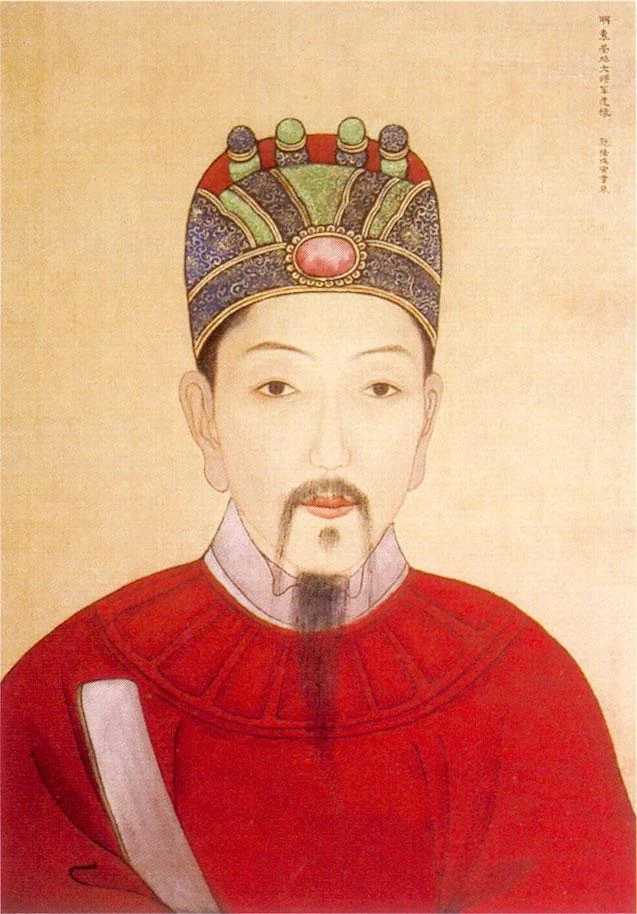
1584 CE–1630 CE
General
Yuan Chonghuan
袁崇焕
A prominent late-Ming general in resistance to the Qing, Yuan Chonghuan repeatedly checked Later Jin forces while defending Ningyuan and Ningjin. He was later executed after a counterintelligence scheme, and his historical reputation has remained highly controversial.
1584 CE–1630 CEMing Dynasty
PROFILE
A prominent late-Ming general in resistance to the Qing, Yuan Chonghuan repeatedly checked Later Jin forces while defending Ningyuan and Ningjin. He was later executed after a counterintelligence scheme, and his historical reputation has remained highly controversial.
- Other Name
- Yuansu
- Courtesy Name
- Yuansu
- Art Name
- Ziru (some accounts identify this as his courtesy name)
- Period
- Ming
- Date of Birth
- June 6 1584
- Date of Death
- September 22 1630
- Dynasty/Regime
- Ming
- Identity
- General
- Ethnicity/People
- Not recorded in historical sources
- Native Place
- Shuinan Village, Dongguan County, Guangdong (now Dongguan, Guangdong), near the Dong River
- Place of Birth
- Not recorded in historical sources
- Major Achievement
- Prominent late-Ming general in resistance to the Qing; repeatedly checked Later Jin at Ningyuan and Ningjin; executed after a counterintelligence scheme and remained highly controversial after death.
LIFE TIMELINE
Age fourteen | Passed the children's examination and became a county student of Teng County, Guangxi, through transferred/disputed registration
Age twenty-three | Took the provincial examination in Guilin and became a juren
Age thirty-six | Ranked fortieth in the third class of the metropolitan degree and received the jinshi degree; observed government business in the Ministry of Works
Age thirty-seven | Appointed Magistrate of Shaowu, Fujian
Age thirty-nine | Traveled to Beijing for the triennial official evaluation; during the visit rode alone beyond the passes to inspect Shanhai Pass
Age thirty-nine | Appointed Secretary in the Bureau of Operations of the Ministry of War, then promoted to Assistant Surveillance Commissioner of Shandong and military supervisor at Shanhai Pass
Age thirty-nine | Disagreed with Liaodong commander Wang Zaijin over fortification and rescue of refugees and memorialized Grand Secretary Ye Xianggao
Age thirty-nine | Sun Chengzong returned from inspecting Shanhai Pass and supported Yuan Chonghuan's position; Wang Zaijin left office
Age forty | Sun Chengzong formally adopted Ningyuan as the defensive anchor; Yuan Chonghuan took station there and built defenses with Man Gui, Zu Dashou, and others
Age forty-one | Promoted to Deputy Surveillance Commissioner for military defense and then Right Administrative Commissioner of Shandong; after his father's death he was ordered back to duty before completing mourning
Age forty-two | After the Ming defeat at Liuhe, stopped fleeing troops and preserved the cities beyond the pass; in the tenth lunar month Sun Chengzong resigned and Gao Di succeeded him
Age forty-two | Gao Di ordered abandonment of all territory beyond the pass; Yuan Chonghuan refused and held Ningyuan alone
Age forty-three | At the Battle of Ningyuan, repelled the Later Jin khan Nurhaci and won the Ningyuan Victory
Age forty-three | Promoted to Governor of Liaodong and began developing the Guan-Ning-Jin defensive line
Age forty-three | Nurhaci died; Yuan sent envoys to express condolences and began peace contacts with Later Jin
Age forty-four | During the Battle of Ningjin, defended Jinzhou and Ningyuan with Zhao Shuaijiao and others and repelled Hong Taiji
Age forty-four | Criticized for negotiating with Later Jin and for failing to aid Dongjiang; resigned and returned home
Age forty-five | Recalled by the Chongzhen Emperor as Minister of War and concurrently Right Deputy Censor-in-Chief, with supreme military command over Jizhou-Liaodong, Dengzhou-Laizhou, Tianjin, and related regions
Age forty-five | At an imperial audience on the palace platform, proposed “recovering Liaodong within five years”
Age forty-six | Executed Dongjiang commander Mao Wenlong on charges summarized as “twelve major crimes”
Age forty-six | Later Jin entered through the passes and the Jisi Crisis erupted; Yuan rushed to defend the capital and repelled Later Jin forces at Guangqu Gate
Age forty-six | Summoned into the palace by the Chongzhen Emperor and immediately imprisoned under imperial warrant
Age forty-seven by East Asian reckoning | Executed by lingchi at the age of forty-seven by East Asian reckoning
BIOGRAPHY
Biography
Family Background and Early Life
Yuan Chonghuan's ancestors originated from Lishan in Shanxi and later migrated through Ninghua in Fujian, Yudu and Xinfeng in Jiangxi, and Nanhai in Guangzhou. His grandfather Yuan Shixiang finally settled at Yuanwudun in Shuinan, Dongguan, now Shuinan Village in Shijie, Dongguan, Guangdong. The Yuan family farmed for generations, while Yuan's father Yuan Zipeng moved to Baima Market in Pingnan, Guangxi, where he opened a shop and traded timber. Some scholars, drawing on the family's waterborne commercial background and its worship of the Sanjie deity, have speculated that the family may have belonged to the Tanka people, but the evidence is insufficient and no academic consensus exists. Yuan Chonghuan grew up around Pingnan and Teng County in Guangxi.
From childhood Yuan Chonghuan was said to have studied military strategy early, mastered martial skills, and excelled in riding and archery. He was fond of military affairs and also of travel, saying that throughout his life he had “a fondness for mountains and waters.” Before entering office he had already traveled widely. From an early age he aimed at examination success. After being reported for registered residence in Pingnan, he transferred his registration to nearby Teng County. In 1597 he passed the children's examination and became a county student there. In 1606 he went to Guilin for the provincial examination and became a juren. He failed four subsequent metropolitan examinations before finally obtaining the jinshi degree in 1619, ranking fortieth in the third class and receiving the status of “same degree as jinshi”; he then observed administrative work in the Ministry of Works.
Early Official Career: Magistrate of Shaowu and Entry into Frontier Service
In 1620, the forty-eighth year of the Wanli era, Yuan Chonghuan was appointed Magistrate of Shaowu in Fujian. During his term he was described as clear and decisive, courageous, devoted to the people, skilled at redressing injustice, and acute in hearing lawsuits. When a house caught fire, he reportedly climbed onto the roof in boots to help extinguish it, moving over steep walls as though on level ground; afterward he organized relief in an orderly manner.
On February 5, 1622, Yuan traveled to Beijing for the triennial evaluation of officials. By then Later Jin had captured the Liaodong-Shenyang region and the frontier crisis was severe. Yuan considered himself capable in border affairs and, while awaiting the evaluation result, rode alone beyond the passes to inspect Shanhai Pass, returning after roughly twenty days. Colleagues publicized the feat, and his reputation for willingness to dedicate himself to the state spread through official circles in Beijing. In the first lunar month of 1622 the evaluation ranked him highly. Ordinarily he would have expected a prestigious censorial post, but news then arrived of the fall of Guangning, shocking court and country. Recommended by Censors Hou Xun and Jiang Ricai, Yuan passed an examination convened by the Ministry of War. In the second lunar month he was appointed Secretary in the Bureau of Operations of the Ministry of War, then quickly promoted to Assistant Surveillance Commissioner of Shandong and military supervisor at Shanhai Pass. Before leaving, he visited the former Liaodong commander Xiong Tingbi, then under investigation, and discussed Liaodong affairs with him through the night.
Achievements in Liaodong: From Shanhai Pass to Ningyuan
After taking office, Yuan was first stationed at Shanhai Pass. Liaodong commander Wang Zaijin ordered him to move to Zhongqiansuo and later to Qiandunwei to settle refugees from Liaodong. Yuan reportedly traveled at night through thorn scrub and country inhabited by tigers and leopards, entering the city around the fourth watch. Wang praised his courage and determination and recommended him as Assistant Surveillance Commissioner responsible for military defense at Ningyuan and Qiantun.
The two men, however, developed a serious strategic disagreement. Wang advocated building an additional fortified barrier at Balipu outside Shanhai Pass. Yuan argued that Ningyuan should instead serve as the main defensive anchor and strongly urged rescue of refugees trapped by Later Jin at Shisanshan. After their dispute proved irresolvable, Yuan memorialized Grand Secretary Ye Xianggao in the sixth lunar month. Ye initially intended to inspect the area himself, but Grand Secretary Sun Chengzong volunteered to go. After the inspection Sun supported Yuan's view. On returning to court he praised Yuan to the Tianqi Emperor as energetic, practical, capable of responsibility, and willing to serve as a great commander. Wang Zaijin was recalled and Sun Chengzong personally assumed overall command.
In the ninth lunar month of 1623, encouraged by Mao Yuanyi and others, Sun formally decided to use Ningyuan as the defensive pivot. Yuan took station there and planned fortifications with Man Gui, Zu Dashou, and others. Under their development, merchants gathered, displaced people settled, and Ningyuan came to be regarded by those near and far as a prosperous refuge. In 1624 Sun placed Yuan specifically in charge of military defense, military farming, and horse administration at Ningyuan and Qiantun, making him one of the officials in whom Sun placed the greatest confidence. That same year Yuan's father died; while Yuan was traveling to observe mourning, he reached Fengrun County and was ordered to return immediately to service before the mourning period ended.
In the ninth lunar month of 1625, the Ming army was defeated at Liuhe. Yuan hurried to stop fleeing soldiers and thereby helped preserve the cities beyond the pass. In the tenth lunar month Sun Chengzong resigned after pressure from the eunuch faction and Gao Di succeeded him as Liaodong commander. Gao immediately ordered all territory outside Shanhai Pass abandoned. Yuan submitted a written protest, declaring that the Ningyuan-Qiantun command should live or die with Ningyuan and Qiantun and that, if the troops were withdrawn, he himself would not withdraw but would lie alone in the isolated city to face the enemy. Gao could not force him to leave. Of the cities beyond the pass, only Ningyuan continued to hold out.
Victories at Ningyuan and Ningjin
In the first lunar month of 1626, Nurhaci led Later Jin forces across the Liao River and besieged Ningyuan. Yuan Chonghuan, together with General Man Gui, Deputy Generals Zuo Fu and Zhu Mei, and Assistant Regional Commanders Zu Dashou and He Kegang, vowed to defend the city to the death. They wrote a blood oath to the army, and Yuan bowed to the soldiers. He ordered Zhao Shuaijiao at Qiantun and Yang Qi at Shanhai Pass to execute any deserter who fled back from Ningyuan. Later Jin troops used iron-covered carts to batter the walls and dug at their bases; Ming defenders crushed attackers with stone steps and used Hongyi cannon to inflict heavy losses outside the walls. Unable to capture the city after two days, Later Jin turned on Juehua Island, where Ming soldiers, merchants, and civilians were massacred. Some seven to eight thousand people were killed and large quantities of grain and supplies lost. The Battle of Ningyuan nevertheless became the first defeat suffered by Later Jin in its wars against Ming and was celebrated by the court as the “Ningyuan Victory.” Yuan was promoted for his service to Right Assistant Censor-in-Chief and in the third lunar month became Governor of Liaodong.
In the fifth lunar month of 1627, the Tianqi Emperor's seventh year, Hong Taiji attacked Jinzhou and Ningyuan, beginning the Battle of Ningjin. Yuan and Zhao Shuaijiao held their defenses. Later Jin failed to take the cities, suffered substantial casualties, and withdrew. Yuan was again credited with a “Ningjin Victory.” Rewards for the campaign were greatly reduced, however, because of the power of Wei Zhongxian. Yuan was also impeached by remonstrating officials for negotiating with Later Jin and failing to aid Dongjiang; in the seventh lunar month he resigned and returned home.
Return to Office and the Promise to Recover Liaodong in Five Years
After the Chongzhen Emperor ascended, he purged the Wei Zhongxian faction and restored officials who had been pushed aside. In the fourth lunar month of 1628 Yuan was recalled as Minister of War and concurrently Right Deputy Censor-in-Chief, with supreme military command over Jizhou-Liaodong, Dengzhou-Laizhou, Tianjin, and related regions. In the seventh lunar month, during an imperial audience on the palace platform, the Chongzhen Emperor asked for his Liaodong strategy. Yuan answered that he could “recover Liaodong within five years.” Grand Secretary Qian Longxi and Supervising Secretary Xu Yuqing, who were present, privately doubted the claim and considered it exaggerated. Yuan later acknowledged that the “five years” promise had been intended to reassure the emperor.
After returning to command, Yuan advocated a strategy in which defense was the orthodox approach, battle the unexpected approach, and negotiation a supplementary approach; he also proposed using Liaodong people to defend Liaodong territory and using the resources of Liaodong to support Liaodong people, while pacifying the western Mongols to contain the eastern enemy. In the sixth lunar month of 1629 he executed Dongjiang commander Mao Wenlong on charges summarized as “twelve major crimes.” The action caused an uproar at court and later became one of the charges used against Yuan himself.
The Jisi Crisis and Imprisonment
In the tenth lunar month of 1629 Hong Taiji led Later Jin forces through Mongol territory, broke through the Great Wall at Xifengkou, and advanced directly toward the capital, producing the Jisi Crisis. Yuan hurried the Guan-Ning army to the capital's defense and arrived outside Beijing in the eleventh lunar month. The Chongzhen Emperor ordered him to coordinate the various relief armies. On the twentieth day of the eleventh lunar month, Later Jin troops approached Guangqu Gate. Yuan personally led his forces into battle, continued fighting after being hit by an arrow, and ultimately repelled the enemy.
The emperor nevertheless became suspicious when Yuan requested permission to enter the city and was refused. Later Jin also carried out a counterintelligence scheme, spreading rumors that Yuan had a secret agreement with them, while officials at court impeached him for “colluding with the enemy” and “deliberately allowing the enemy through.” On the first day of the twelfth lunar month, the Chongzhen Emperor summoned Yuan into the palace on the pretext of discussing military funds and immediately committed him to the imperial prison.
After Yuan's imprisonment, his subordinate Zu Dashou led troops eastward in flight. Sun Chengzong was ordered to bring them back, and Yuan also wrote from prison urging Zu and the others to return; only then did they reverse course. On the sixteenth day of the eighth lunar month of 1630, September 22 in the Gregorian calendar, Yuan Chonghuan was executed by lingchi on charges including plotting treason with the enemy, independently conducting peace negotiations, and arbitrarily executing a senior commander. He was forty-seven by East Asian reckoning.
The Regard of Wang Zaijin and the Suspicion of Arbitrary Killing
Yuan Chonghuan's daring in his early days at Qiantun is preserved by Wang Zaijin's record of Liaodong affairs: "Yuan Chonghuan, of my staff, is a man of heroic courage, his will and strength both outstanding, and his cleansed breast and bright heart far above the common, so that I esteemed and loved him. And he once said to me that 'I do not spare my life', and I answered that 'which is weightier, your life or the frontier?'" Wang Zaijin sent him to settle refugees at Qiantun, where he "entered the city at the fourth watch, walking by night among thorns and in places where tigers and wolves lurked", and Wang Zaijin "never failed to admire his spirit, though much fearing his rashness". Wang Zaijin compared him with Jia Fu of the Han, whom the founder of the Later Han kept about him and so never had the merit of an independent command, saying that "when great generals were as numerous as clouds, the founder thought so highly of him — how many are there now like Chonghuan?" Of his wish to hold Qiantun with troops, he shows the difficulty of the time: "the walls of Qiantun were incomplete, its dwellings unprepared, its grain exhausted and its armour wholly lacking; of the Liao people three thousand might be chosen as soldiers, and Yuan Chonghuan wished to lead troops there, and with his own men might have got seven thousand; but to station troops he must at once repair the works, and to repair at once he must slacken training, and with a mob of men in a desperate place he could hardly live even in peace — how should he hold out when change came?"
His habit of killing without authority appears early, in Mao Yuanyi's account of a review of troops: "the men he had raised were mostly men who demanded a hundred gold, and when the ministry would not grant the pay he left gaps in the ranks to maintain his braves. And as there were robberies in the capital, all thought them the work of Yingkui's recruits, and so they were sent to hold the Taitou camp and he was made vice commander of the eastern wing; and when complaints continued the emperor ordered the general to review the troops with the governor, and the governor Yen ordered Yuan Chonghuan to go, and where the ranks were empty Chonghuan killed the men, at which the troops almost mutinied; and the general said in anger that 'in killing men at one stroke he neither asked leave before nor reported after, and whether there was mutiny or submission he did not tell, so that to this day we do not know whom he killed or why, but only that it was by the governor's order; if a supervisor may kill at will on the governor's order, what need has the commander for the sword of authority?'"
A Record of the Defence of Ningyuan
The defence of Ningyuan was seen at first hand by the Korean interpreter Han Yuan, whose record by Yi Xingling gives it most fully: "our interpreter Han Yuan, going to court with the embassy, met Chonghuan, who liked him and borrowed him from the envoys and took him to his command, so that he saw the fighting himself. The ordering of the army could not be known, but in the camp it was very quiet, and Chonghuan was chatting idly with two or three of his staff; and when a report of the rebels came he went on talking of antiquity and letters with Han Yuan and the rest with no sign of concern. Presently a single gun was fired and the sound shook heaven and earth, and Han Yuan was too frightened to raise his head, and Chonghuan laughed and said 'the rebels have come', and opened the window and looked down, and the rebel soldiers filled the plain and advanced, while within the city not a sound was heard. That night the rebels entered the outer city, for Chonghuan had purposely emptied it to draw them in. Entering the outer city, they attacked the wall with all their strength and fired their guns again, and on the wall fires were lit all at once, lighting heaven and earth, and arrows and stones came down. In the heat of the fight, from within the city great long wooden boxes were pushed out between the battlements, half within and half without, with armoured men hidden in them standing on the boxes and shooting down arrows and stones; and this was done again and again, and from the wall were thrown countless bundles of dry grass, oil and ginned cotton, until presently the mines went off and earth and stone flew on every side, and in the fire the barbarians and their horses were seen flung into the air and falling in countless numbers, so that the rebels were greatly checked and withdrew. The next morning the rebel ranks were seen gathered on one side of the plain, cowering like a leaf, and Chonghuan at once sent an envoy with gifts and thanks, saying that 'the old general has ranged the world long; that he should today be beaten by a youngster — is it not fate?', and Nuerchi, already gravely wounded, at once sent gifts and famous horses in return, asking that a day be set for another battle, and in his sullen rage died." The details of the emptied outer city, the armoured men in boxes, the burning bundles and the mines are found in no other account.
The Peace Negotiations and the Death of the Island Commander
The negotiations with the Later Jin were disputed at the time. Wang Zaijin quotes Wang Zhichen that "these years the rebel chieftain has sought peace with the western barbarians and they would not consent, and has tried to bend Korea and Korea would not submit; once we negotiate he will turn from us, and that is to strengthen the enemy and isolate ourselves. Lately a herald passed the camp of the Duyang and the barbarians whipped his back, saying that 'you Chinese have no brains at all: you say all day that we do not send troops, yet you yourselves load much gold and silk and have the Kala Mourn for him and sue for peace, and then make others his enemies — we may as well submit too'; and to this what have we to answer? And once this proposal is made the rebel will be the prouder, and will not attack the western barbarians but will come south against Korea; he will first carry out the plan of Jin against Guo and then by degrees take us — this must follow." Wang Zaijin's own comment is that "the city of Ningyuan was full of thatched sheds and mat huts, nothing to see, and envoys of the barbarians had always been met in the suburbs and never entered the city; but Fang Jinna lodged long in the city and saw the whole situation, so that he held our troops to be nothing to fear, and the rebel was left free to invade Korea, break the fence of a vassal in the south and spoil the pacification of the Duoyan in the west, the island commander being killed by this and the evil slave thus entering our borders, so that the frontier affairs could never be righted. Though the initiative was Chonghuan's, the plan came from the wicked eunuch, who wished to draw the rebel chieftain into terms and build an unrivalled merit, aiming at more than a marquisate; and since Liaodong affairs began this measure was the greatest error."
The Renewed Fighting, the Quarrel with Man Gui and His Resignation
In the Ningjin campaign there were quarrels among the commanders: "twice troops were sent to relieve Jinzhou and both times failed. On the twenty-seventh of the fifth month, Huang Taiji, leaving troops to continue the siege of Jinzhou, led several tens of thousands against Ningyuan. Over the plan of defence Yuan Chonghuan and Man Gui fell out: Yuan Chonghuan held that they should hold the city as in the previous year, while Man Gui insisted on taking the offensive, and in the dispute broke Chonghuan's arrow of command. In the end Yuan Chonghuan sat in the city while Man Gui, You Shilu and Zu Dashou led the troops out to fight bravely, and with the power of the red barbarian cannon the Later Jin army failed in its assaults on the twenty-eighth and twenty-ninth. Afterwards Huang Taiji turned again on Jinzhou and was beaten off by Zhao Shuaijiao. On the fifth of the sixth month Huang Taiji withdrew, dismantling on the way the unfinished cities of Daling river and Xiaoling river. After the relief of Jinzhou Yuan Chonghuan again pleaded illness and resigned on the twenty-second of the sixth month, but the emperor Xizong this time did not refuse him as before but approved, ordering him on the first of the seventh month to 'return home for treatment', and Wang Zhichen became commander again. The real reason for the acceptance of his resignation was the repeated impeachment by the censors over his negotiations with the Later Jin, his failure to 'chastise' them when they attacked Korea, and the failure of the relief of Jinzhou."
The March to the Relief, the Battle at Guangqu Gate and the Imprisonment
The march to the relief of the capital in the Jisi year is recorded in full by Zhou Wenyu: "on the twelfth day our Liao scouts met the slaves at Mashen bridge and beat them, killing a chief, and our army's name was greatly raised, and I urged that since the slaves had come to Mashen bridge, only twenty li from Jizhou, they must be a vanguard with the main body behind, and that we must at once take thought; and the duke with the several commanders lodged in the eastern tower of the city to wait. On the dawn of the thirteenth a report came that the slaves' whole army had passed the Shimen post; and the duke had all the horse and foot drawn up outside the city, and their ranks were barely formed when two hundred slave horse in four parties appeared to the southeast of our army, and for two double-hours they faced each other without the main body appearing. The duke had our guns fired, and the rebels, hearing the guns, drew their four parties into one line and suddenly withdrew, and for the whole day not a single horseman came again, so that we wished to fight and had no one to fight. On the fourteenth we learned that the slaves' main body had slipped past west of Jizhou, and the duke at once led the Liao troops west in pursuit; and the commanders proposed a side road to get ahead of them, while I asked that we must divide into two, one part before and one after, but the commanders all held that our troops were too few to divide. On the sixteenth … at dusk the generals were gathered to consider the advance, and all said that we should go straight to the capital to secure the root; but I held that the great army should go against the rebels and not enter the capital first, and the generals said again that the horses and men were worn and could hardly fight in the field, and I answered that 'it is not so… if our troops camp at Zhangwan and draw food from Hexiwu, with scouts to learn the truth, and if the rebels are weak we may fight them openly and have done with it, and if they are strong we may come out by night and strike where they do not look, for being deep in our country with an isolated army they cannot hold their ground — this is the settled plan'. But the generals clung to the idea that a relieving army must go to the capital and ask orders; and the duke said that 'Master Zhou is right, but I fear the rebels are crafty beyond measure and, as at Jizhou, will make a show of holding and then slip away without fighting us; and if they press straight on the capital the hearts of men who have never met an enemy will be shaken at once, and the consequences are past speaking of. Our troops must reach the wall first, with our backs to the sacred capital and our faces to the strong enemy — that is the whole plan.' And I said that 'for troops of an outer command to come to the wall without an express decree — is that permissible?', and the duke said that 'when the lord and father is in peril, what leisure is there for other scruples? If the thing be done, death is no regret.' And so he resolved to go to the capital … that night he reached the Zuo'an gate, on the seventeenth, and ordered the army to camp before the Wei duke's temple, forbidding a single soldier to enter a house, nor even to harm a tree in the fields. The capital being then under martial law, the bulletins could not come at once, and it was only at the first watch that an officer of the board of war reached the camp, and the duke sent his memorial by him. On the eighteenth the emperor sent the inner ministers Feng Yunsheng and five others to inspect the camp, and on their report the boards of revenue and war were ordered to issue grain and forage, and the eunuch of the directorate of ceremonies, Lü Zhi, was sent with a thousand catties of the imperial green salt, a hundred piculs of rice, ten jars of wine, a hundred sheep and ten thousand taels of silver to reward the army. On the nineteenth the duke was given a girdle of jade and six pieces of silk, and the commander Zu a girdle of jade and four pieces, and the several generals each a red python robe. The board of revenue then began to issue beans and grain, but the horses and men had already been two days frozen and hungry. That evening the duke secretly ordered the colonel Liu Tianlu and others to raid the slaves' camp, but they had not gone far when at Gaomi shop the slave scouts perceived them, and the camp being on guard they could not enter and returned."
The battle at Guangqu gate is given in detail: "on the morning of the twentieth a report came that the slaves' main body was coming west in six columns, and the duke ordered the camp opened to meet them, first sending the commandant Dai Cheng'en to choose the field of battle at Guangqu gate … and while the duke was forming his ranks, the commander Zu's regular troops were arrayed on the south and the flanking general Wang Chengyin and others on the northwest, while the duke and I took post due west, leaving the east open for the enemy. The slaves pressed in a body straight at the southeast corner, and our troops fought with all their strength to the death, and the slaves fell back; but seeing Wang Chengyin's troops before them they halted their horses at a loss, and had Wang Chengyin and the rest joined to press forward the slaves would have been badly cut up. Instead, Wang Chengyin and the others moved their ranks south to avoid them, so that the slaves turned back and came straight west; and a rebel whirled his sword at the duke, when a staff officer, Yuan Shenggao, caught the blade with his own and the two broke together, and the duke was saved. A great chief with a yellow banner rushed at me, and in the night's work Gao Defu shot the rebel from his horse. The rebel arrows fell like rain and the duke and I were like hedgehogs on both flanks, but our heavy armour was unpierced, and the great troops from the south coming up the rebels at last gave way, while our men, heartened, cut and killed the more; and the captains Liu Yingguo, Luo Jingrong and Dou Jun pursued the rebels to the canal, where in their haste to cross the ice gave way and countless men were drowned. In this battle, from noon to the hour of the cock, three double-hours of hard fighting, about a thousand of the rebels were killed, among them a false sixth prince of the eastern slaves and the western barbarian chief Duling, and our own loss was several hundred. Now the nine frontiers made much of taking heads, each contending to cut them off, and the duke, deeply aware of the abuse, before the battle agreed with all the officers and men that the aim was their complete destruction and that no heads should be cut; and so the officers and men could devote themselves to the killing and won this victory."
The suspicion about entering the city and the imprisonment appear in Zou Yi's account of the scholar Shen: "at that time the commander Yuan Chonghuan held a great army encamped below the wall, and there were doubts of his fidelity. The minister of war offered a reward to any man who would enter Yuan's camp and find the truth, and Master Shen boldly offered himself; and the minister wished to give him three hundred horse, but he said that 'it is not to be. Chonghuan has no rebellious heart, and if I go he will not dare to harm me; and were he to wish to kill me, three hundred horse could not save me but would only breed suspicion. If Chonghuan dares to kill me, his rebellion is plain and you will know how to guard; and what is my one death in requital of lord and father?' And the minister gave him an arrow of authority, and by night he was let down from the wall and went to Yuan's camp and cried aloud that 'the minister of war has words for the commander', and the troops bent their bows and held their arrows ready to shoot, but seeing he was but one man did not doubt him and let him in. And he said that 'the Son of Heaven newly come to the throne raised you out of the ordinary course, which shows he knows you; I know you will not bear to fail the court; but that you should encamp outside the wall and not enter court — how shall the world know your loyalty? The censors throw sand and a wise ruler takes the shuttle; your clan will have no survivor. And you have gone and killed Mao Wenlong, and men already doubt you; you should be hoping to establish merit and ransom yourself, and if you are the least remiss the world will fight to cut you in pieces — is that not to be feared?' And Chonghuan changed countenance and thanked him, asking leave to go to court that day; but Shen said that 'you are wrong: the hearts of the city are in tumult, and to go suddenly to court is the very thing by which Lu Qi blocked Huaiguang; let me go into the city, tell the whole matter, and then you may come, and all suspicion will be dissolved and you will be as safe as Mount Tai.' And Chonghuan assented and obeyed, and Shen told the minister of war the whole, and so the Son of Heaven first granted him audience, giving him a sable robe and a girdle of jade to comfort him."
Of the trial at the platform, Cheng Jiming records that "on the first day of the twelfth month of the second year of Chongzhen the emperor came to the platform and summoned the court ministers, and then summoned the commander Yuan Chonghuan and the general Zu Dashou and others to stand about. The emperor recounted all Chonghuan's crimes in failing to repel the slaves and in repeatedly asking to enter the city, and Chonghuan said that 'these are indeed my crimes, all done by me, and I accept them'. The emperor ordered the imperial guard to seize him, and all were shaken with awe, while Zu Dashou and the others alone showed a look of terror; and I, unable to bear my fear, bowed and asked for deliberation more than once, and the emperor did not understand, saying that 'deliberation is mere procrastination — what good is it?', and I pressed again and said that 'I beg Your Majesty to deliberate, for the slaves are below the wall and this is not as other times'; and the emperor, seeing my urgency, looked at me and said that 'what you fear is right, but my mind is made up and there is no more to say'."
The Flight of Zu Dashou and His Recall from Prison
The flight eastward and the recall are told most fully by Yu Dacheng: "on the second day I went again to see Liang Tingdong and said that 'the enemy is very strong and the Liao troops have no master, so that if they are not beaten they will scatter; better to bring Chonghuan out to hold the army's heart, charging him to drive the enemy beyond the border in expiation. Thus the deep-raiding enemy's spirit may be taken and the Liao troops preserved. You are a great minister of state and should look to the state's interest, not to any grudge.' And Liang said that 'the Liao troops have Zu Dashou — will they scatter at once?', and I said that 'where the nest falls and the bird is overthrown, can the chick survive alone? Dashou is a soldier and will never wait at the commandant's gate'. And Liang told it in the council chamber. The chancellor Zhou Yanru asked whether I feared that Zu Dashou would rebel, and I said I did, and he asked how soon, and I said within three days, and he asked why, and I said that 'when Chonghuan was first imprisoned Dashou thought he would surely be released; now he thinks that some may plead for him and bring him out; but in three days he will know that the emperor's mind cannot be turned and that the court indeed means to kill him. Dashou's merit and guilt are the same as Chonghuan's; if Chonghuan is held, can Dashou be at ease? Unless he rebels, what is left?' And Zhou nodded and asked what was to be done, and the other, Tiren, said that 'it is not so: if Dashou plotted with Chonghuan he would join the enemy; otherwise he must kill the enemy — where would rebellion take him?' … On the fourth day Liang reported Dashou's rebellion and said that his own officer Yu Dacheng had foreseen it and asked that he be summoned and questioned, and being received he said that 'Dashou does not dare to rebel against the court; he fears punishment because of Chonghuan. To recall him nothing but a letter in Chonghuan's own hand will serve.' And the emperor reproached Liang that 'what does your board think of, to be so alarmed at every turn? If a thing can be done, do it quickly.' And Liang went to bring Chonghuan out, and I said that 'it is not to be done: the decree is not clear, and the prison is no place for rash action', and Zhou asked how then, and I said that a clear decree must first be asked for; and we went in again to memorialise, and the emperor sent a chief eunuch out with the words that 'the matter is urgent; do it at once — what decree is there to wait for?', and I said that 'this is the clear decree'. Then the ministers and the nine chief ministers all went to the prison to explain, and Chonghuan said that 'the reason Dashou obeyed me was that I was commander; but now I am a criminal — how should I still command him?', and though they reasoned with him in a hundred ways he would not, saying that 'without an express decree I dare not meddle in state affairs as a bound man'. Then I said boldly to Chonghuan that 'your lone loyalty and your plea to be bound, holding Liao in one hand, have long been ready to give life; all the world admires your righteousness and understands your heart. For a subject, life and death are the sovereign's; if it profits the state skin and hair are not spared. And which is better, to die at the enemy's hands or by the law? The decree has not come to you, but its will has been shown — take thought of it.' And Chonghuan said that 'you are right', and wrote a letter in wax with most earnest words. By then Zu Dashou was a day's march beyond Jinzhou, and horsemen caught him up and told their errand from afar; some in the army would have loosed arrows at them, and the horsemen said that 'we come by the commander's order and are no pursuing troops', and Dashou halted his horse to wait, and the letter was produced, and Dashou dismounted and held it weeping, and the whole army wept, yet they had no mind to return. Dashou's mother was in the army, over eighty years old, and asked what the matter was, and Dashou told her, and she said that 'the cause of this is that you have lost your commander; now he is not dead, why not do good service in ransom, and afterwards beg the sovereign for his life?', and the army was stirred, and that very day turned back, recovering the region of Yongping and Zunhua."
Cheng Jiming's account has its own turns: "on a later day Zu Dashou and the others revolted and returned to Liao, and the board of war reported it, of which the cabinet knew nothing; and suddenly an urgent summons came and we went in, and the emperor sat in the warm chamber of the platform … and the chief eunuch said that 'Zu Dashou has rebelled; you, my lords, foresaw it long ago — what is now to be done?' … and he said that 'the military commissioner must be made to call him back, and then he can be brought back' … and the chief eunuch's written note came, saying that 'you, my lords, must earnestly entrust it to Chonghuan; if it be not trusted, this note is the imperial command' … and we agreed that the imperial guard commander Liu Qiao should enter the cabinet, and told him in a whisper to arrange it. And Yuan at first refused, saying that 'I have but one death; why should I seek another?', and Liu said that 'this is from the emperor; if the affair is settled there may be a special favour, who knows?', and Yuan then wept and bowed and said that 'if it be so, I will once more give this body for the state', and wrote a few lines with his own hand and signature, bidding Dashou and the others serve the throne and ransom their guilt; and it was sent in, verified and issued, and the board of war chose sturdy soldiers dressed as beggars who hid the letter in the seams of their clothes and went by side roads into Liao. Dashou, receiving it, wept aloud and turned his army west, and the recovery was at last accomplished. Yet during those comings and goings there was indeed not a soldier below the wall; and the slaves, as if they did not hear of it, froze the ground into roads and went far to raid Liangxiang and Gucheng, and did not send a single horseman to spy at the city — which was the blessing of Heaven on the emperor and beyond the power of man."
Tan Qian's record gives the emperor's charge to Sun Chengzong, that "I gave the eastern affair to Yuan Chonghuan, yet the barbarian horse has raged and Chonghuan, holding the command, made no reconnaissance in advance, so that they came deep into the land; and though he marched to the rescue by forced marches, he checked his officers and men and sat looking on at the plunder and ravishing, so that merit and guilt cannot be hid; let him be suspended to await examination. Zu Dashou with He Kegang and Zhang Hongmo and the others fought bravely and are to be praised … let officers be sent at once to proclaim my will, and ride post to the pass to arrange and soothe as is fit", and Sun Chengzong's memorial that "the Liao troops fled east to about fifteen thousand men, going south from Tongzhou to Zhangwan, and hearing of it I at once wrote in my own hand to comfort Zu Dashou and sent proclamations to the three armies, ordering the captain Shi Zhuguo to ride after them, and he came up only with their rear with weapons drawn; and Shi Zhuguo with all his strength spoke to the officers, and many too shed tears, but said only that 'our commander is slain and the great guns have destroyed us, and so it has come to this' … I consider that Dashou is in very great doubt, and being of high rank cannot bear to be under the control of his equals, and so, taking the alarm of officers and men, let the whole army scatter to shelter himself in confusion — it is not that the generals have all rebelled. The two circuits within and without the pass should at once be ordered to comfort the commanders, dismiss the soldiers and open a way of life to win back men's hearts." And afterwards "Dashou reached Shanhaiguan, the imperial will was proclaimed, and the officers and men were at peace; and he was ordered to block the slaves' line of retreat, and from that time Dashou pleaded illness and no longer attended to business."
The Charges, the Confiscation and the Papers After His Death
The names of his crimes, by the histories, were "treachery with the slaves" or rebellion and great impiety, "specifically including 'supplying grain to the rebels', 'plotting terms and killing the commander', 'letting the enemy march deep', 'halting the troops and not fighting', 'dispersing the relieving armies', 'secretly bringing the lama', and 'insistently asking to enter the city'", the account being that "in order to force the court into terms with the Later Jin and so rid himself of the crime of deceiving the sovereign by his boast of 'recovering Liao in five years', he let the Later Jin march deep within the passes after 'the killing of the commander and the keeping of the agreement', himself halting his troops and not fighting, dispersing the relieving armies of the several circuits in Jizhou to different places, keeping with the army the White Lama prepared for dealings with the Later Jin, and wishing to enter the city of Beijing to work from within". Of the destruction of his writings and the confiscation of his property there are archival records. Bi Ziyan's memorial of the fourth year of Chongzhen quotes the board of justice that "the matter of the exile of the household of the rebel commander Yuan Chonghuan was originally referred by the board of justice to my board to fix the place and send by the Shuntian prefecture to be settled", and its schedule of the household that "a concubine, one, of the Ruan family; two daughters, unnamed, one of six years and one of three; all to be exiled two thousand li by the clear decree. One clansman, Yuan Zhaoxi … also not an unconcerned person — should he be exiled with them? One Yuan Tianshe has fled; the maidservants Xinlian and three others, the servants Fu Fu and six others, and the bondswomen Zhang and two others should all be released and the baggage taken by the state", with the imperial decree that "the rebel servants Fu Fu and fourteen others with the Ruan woman and two daughters and Yuan Zhaoxi shall all be settled according to law, and the governors of the place shall report the day of their reception, and they shall not be sent back to their native place nor allowed to escape", Bi Ziyan "fixing the settlement at Changhua county of Hangzhou prefecture in Zhejiang". There is also his memorial on the surrender of the patents: "patents are by rule not to be valued for sale; the image of Lord Guan bears the seal 'Guangyun' and is no common household incense; the two girdles of jade and the one suit of python armour may be imperial gifts and are hard to sell at once, and all should be returned to the inner treasury", the confiscated goods being "valued together at one thousand one hundred and three taels eight mace five candareens of copper cash", with the decree that "this rebel spoil having been appraised, let it be sold to fill the pay", the articles surrendered being "three patents of honour, one patent roll, one decree, one scroll of the image of the Sage of Guan, one girdle of figured jade, one girdle of white jade, one bronze helmet, one suit of python armour and one suit of blue satin armour", and on the seventh day of the ninth month of the fourth year of Chongzhen the decree that "the patent roll is to be burned; the rest is to be taken in". Yan Junyan's record gives the value of the property: "Yuan Chonghuan's native place was Guangxi, and only after entering office did he make Dongguan his branch refuge; drifting through office he had no son, and all his property was managed and traded by his younger brother Chongyu. After Chonghuan's affair came out in the spring of the third year Chongyu had emptied the house and gone west without a trace, and what could not be carried off at once in Dongguan was only fields, ponds and houses, not portable goods. Now on repeated examination by the county the whole amounts to five thousand three hundred and sixty-one taels five mace five candareens and five cash, each item recorded, with nothing omitted. As to whether Yuan had capital, the two women Lin and Liang declare that he went with Chongyu to Teng county, and the province should be required to pursue it there.""
A Korean Record at His Entry and the Emperor's Urging to Fight
Of the beginning of his march to the rescue the Korean envoy Li Yi's diary gives what he saw: "on the thirtieth the commander Yuan rode by the early gate into the pass and lodged in his office, and I had the interpreter Han go to inquire with salutations, but the guard would not let him in — what is to be done? … On the first day of the eleventh month the lord Yuan went in the morning to the temple of letters to sacrifice, and having finished lecturing with the scholars returned to his office and had the interpreter Han bow and inquire after him, and inquiring further for news from the west, he said that 'the barbarians have always been like this; there is no need to be concerned, but stay a few days and ask for the true report, and then you may set out.' … On the second day, by the court report of the first, the commissioner went after the morning incense in the temple of letters up into the Minglun hall, and when the officers of the circuits and the generals had saluted in order he asked them of the barbarian situation, some answering of the Chahar tribes and some of the eastern slaves and the western barbarians, and 'by my headquarters' judgement it is certainly the bandits of Shubu's house who have lured the thousand slaves who came to terms last month to be the vanguard of the invasion; it cannot be the slave chieftain's great levy, nor the troops of Chahan. Now, when the troops beyond the pass arrive, I shall lead them myself to destroy these rebels.' … On the third day the officers of Jizhou reported that the scouts said the slaves were exactly twenty li from the city, and the commissioner at Miyun sent an urgent public letter and a sealed note asking for relief."
When the capital was in danger the emperor repeatedly pressed him to fight; Bi Ziyan records his words that "the slaves will not turn back unless badly beaten; I have given orders that Yuan Chonghuan should seize the moment to kill them and let not a horse of them return, and yet nothing is seen of it. The slave chieftain's stray horse are below my wall, plundering as they please — what sort of conduct is this? And no killing is seen from Chonghuan." Zhu Chunchen answered that "Chonghuan's troops are few and he should be cautious", and the emperor said that "caution is well, but Chonghuan's troops are all fit for fighting, men picked from men and horses from horses, as he himself memorialised; and he said that the slaves' fine cavalry are not five thousand, and the rest not worth killing — why does he not move?" And turning to the chancellors he said that "repeated orders have been given to Chonghuan to seize the moment and kill; now the barbarian horse rage, burning our houses and seizing our people, and no one kills them, not even a stray horseman driven off; if matters go on so, trampling the frontier and the interior alike, and the Guan-Ning troops are never brought up, I fear they cannot be put in order in time and the danger will be greater. You may tell Chonghuan that he must seize the moment and move, and give them one good beating."
A Different Account of the Killing and the Old Grievance of the Eastern River
Another account of the killing at Shuang island was handed down. The Xiao Pavilion Miscellany says that "Mao Wenlong too stood in awe of the emperor's wisdom and thought to establish himself, and so had dealings with the Qing, offering to contribute two million in gold in exchange for the territory of the two guards of Jin and Fu and to memorialise it as a recovery and so win imperial reward; and the agreement was already made. Yuan Chonghuan, going out beyond the pass as commander, was asked by the emperor for his plans and set five years for the pacification of Liao; and on taking his post, learning that Wenlong had the agreement, he at once sent a lama monk into the Qing with lavish offers, wishing to dissolve Wenlong's agreement and turn it to himself. But the Qing set the greatest store by oaths and held firm, and though he pressed it again and again they would not hear; and the lama monk said that 'now there is nothing for it but to behead Mao Wenlong: the Qing will not be the ones to break the agreement, and I may claim the merit.' … And after Wenlong was killed the Qing came to demand the payment, and Chonghuan had nothing to answer, and so memorialised for three million more in pay, saying that after five years all Liao would be recovered and all the additions formerly made might be remitted, an expedient of once for all. And the emperor gathered the ministers and the court debated it, and all held it not to be done; and Chonghuan, having no way out, let the Qing invade." This account holds that the Later Jin "used the return of Liao as a bait to draw Yuan Chonghuan into killing Mao Wenlong", and it is handed down alongside the others.
The growth of the quarrel between the two has its facts: "Xu Fuzou fled back to Ningyuan, and afterwards Mao Wenlong said that Xu Fuzou had lured twenty thousand Liao troops to flee west and demanded his death, though Xu Fuzou was protected by Yuan Chonghuan and escaped. Afterwards there was the case of Li Lu, colonel of Lüshun under Mao Wenlong, fleeing to Ningyuan: Li Lu was at odds with Mao Wenlong, who sent men to arrest him, and Li Lu in fear fled to Ningyuan with more than four thousand soldiers and people. Yuan Chonghuan memorialised for Li Lu, but on Mao Wenlong's counter-memorial the court ordered Yuan Chonghuan to behead Li Lu and his fellows and expose their heads. And in the campaign of the Dingmao year Yuan Chonghuan's failure to send troops actively to 'chastise the nest' made the relations of the two altogether worse, Mao Wenlong holding that Yuan Chonghuan exposed the Eastern River garrison to the Later Jin's attack in order to hold the Ningjin position, and accusing Yuan Chonghuan of being disloyal and unrighteous in negotiating with the Later Jin, while Yuan Chonghuan held that Mao Wenlong fought the Jin half-heartedly, concealed defeats as merit and failed to hold the Jin in check. And when Yuan Chonghuan became commander he thought that Mao Wenlong made nothing of him and treated him rudely, so that the quarrel sharpened. Hence Mao Wenlong's old subordinates and their partisans held that Yuan Chonghuan envied and belittled Mao Wenlong's merit and killed him out of private grudges. Some scholars hold that this view cannot be taken as the main cause, but that the private feud between Yuan and Mao is a factor in the killing that cannot be overlooked."
The Disposition of the Relieving Troops and the Situation at Jizhou
The dispersal of the relieving troops in the Jisi campaign is set out most concretely by Cheng Benzhi: "as for the relieving armies of the several circuits — would not the more be the better? But troops untrained and weapons blunt, turning to flee at the sight of the enemy, only chill the army's heart. Hence to divide them may swell the support, while to join them may not raise their ardour against the foe. Moreover, to send You Shiwei back to Changping secures the imperial tombs; to move Hou Shilu back to Sanhe gives Jizhou a rear support. The metropolitan camp is untrained and easily shaken, and to hold the capital with Man Gui's frontier troops may keep it safe against all chances." Of the situation at Jizhou he says that "Jizhou is a city of three li, and its people are not soldiers; there are more than ten thousand horse and foot of Liao, and three thousand more of the general Cao Minglei's horse and foot; and though the people of Ji have fled, more than half remain in the city. To gather troops there is already a hubbub, and to add more would be to throw them into disorder before ever fighting the enemy. And Jizhou stands alone with no support on any side. Hou Shilu was moved back to Sanhe, sixty li from Ji, meaning that he should hold Sanhe as Ji's support; but it was not foreseen that Sanhe would not admit Shilu's troops, and so Shilu's troops fell into disorder and fled west." Of Man Gui's posting he says that "Man Gui is one who is good at flight, not at fighting, as the campaign of Jin and Ning last year bears witness; yet his troops are somewhat better than those of the other circuits, and to have him encamp at the capital is because the metropolitan camp is easily shaken, and so to strengthen the root and steady men's minds." These three passages set out the joining and dividing of the relieving troops and the relative urgency of Jizhou, Sanhe, Changping and the metropolitan camp; and though the argument is made in Yuan Chonghuan's defence, what it states is the military situation of the day.
The Remainder of the Platform Audience and the Settlement after the Killing
A few more words of the platform audience may be added. Jin Risheng records his second memorial: "he said again that 'that Your Majesty should think of the people of the four seas — at that word heaven and earth and the gods bear witness. What have I learned, and what office do I hold, that I should not carry out Your Majesty's wish to bring this to an end early? My way of working is no different from that of Zhao Chongguo of the Han; let not Your Majesty be anxious, but be at ease.' And the emperor said that 'what you say shows your loyalty and love the more; you should make your orders strict, comfort your soldiers and be of one mind with the civil and military — what difficulty is there in destroying the slaves?' And he answered that 'I reverently obey the clear decree and will engrave it on my heart; I will go and proclaim it to the officers and men, to spread Your Majesty's majesty and virtue, and must pacify the barbarians' — and bowed and rose." The record also notes who were summoned that day and the gifts given: "the emperor further produced the memorial of the censor Mao Yujian asking relief for the post stations … and the emperor had tea, fruit, melons and cakes given to the chancellors and those below, and they bowed and thanked him and withdrew for the time." His likening himself to Zhao Chongguo of the Han shows his ambition to be such a one, corresponding to the five-year term for the recovery of Liao.
Of the settlement after the killing at Shuang island there was also method: Mao Wenlong being dead, "Chen Jisheng was made temporary commander of the Eastern River", and the silver brought "was given to the officers and men of the several islands, three taels to each"; and envoys "were sent to Lüshun to proclaim comfort, tablets were issued to soothe the soldiers and people of the islands, and orders were sent to Mao Wenlong's own son Mao Chengzuo, first to comfort the merchants, to pay at once the silver owed them, and to release the merchant ships Mao Wenlong had seized". The next day he "went in person to Mao Wenlong's coffin, burned incense and bowed", saying that "I killed you yesterday by the great law of the court; I sacrifice to you today by the private feeling of our kind". Afterwards he "went to Lüshun to inspect the defences and review the troops", and returning to Ningyuan "memorialised to ask pardon", whereupon the emperor "was at first greatly shocked, and then, remembering that he was leaning on Yuan Chonghuan, issued a decree that Mao Wenlong richly deserved death, praised Yuan Chonghuan for his decisiveness and told him he need not ask pardon". This settlement may be read together with the account in the Xiao Pavilion Miscellany that "after Wenlong was killed the Qing came to demand the payment, and Chonghuan had nothing to answer, and so memorialised for three million more in pay".
The Proclamations to Korea and the Island Commander
Yuan Chonghuan answered the Korean envoys with proclamations, one on the cause of the frontier ministers falling out and one on the killing of the island commander. Zhao Qingnan records the second that "the criminal commander played the tyrant in the island, without heaven and without law, like a mad dog that bites when it dies, and your country and my headquarters alike pity and fear it. By the law of the state I removed the great evil, and though in me the military law rightly required it, in your country's case it is what is meant by acting for Chu and not for Zhao", adding that "do you but drill your troops and muster your chariots to secure your borders and deal with the slaves, and with one hatred in common between us the slaves are not hard to destroy". And the Korean envoys "thanked him, saying that 'hearing the lord's words we are as if freed from a covering basin and cannot enough acknowledge it'", and Yuan Chonghuan "pointed to his heart and answered that 'because of that one word your country went so far as to memorialise in explanation, which weighs on my mind; I shall in my memorial convey the respectful intent of this your envoy'". This shows that in the killing he also had in mind the easing of a vassal state's doubts.
The Nine Days at Shuang Island
Yuan Chonghuan's coming to the Eastern River began on the first day of the sixth month, when he went to the island and met Mao Wenlong aboard ship; on the second day he went ashore and received the salutes of the officers and men; on the third he attended Mao Wenlong's feast; on the fourth he gave out reward silver and sent orders fixing the boundary and the camp organisation; on the fifth he set up a tent on the hill and, with troops in ambush, seized Wenlong; on the sixth he sacrificed at the coffin; and on the ninth he went to Lüshun to review the troops and returned to Ningyuan; nine days in all, and the matter was settled. In those nine days, from feasting and correspondence and rewards to the seizing of a man, the sacrifice and the review, the order is clear, and his decisiveness and his thoroughness are seen to go together.
Major Activities
Military Contributions
- Construction of the Guan-Ning-Jin defensive line: From the third through seventh years of Tianqi, Yuan assisted Sun Chengzong in making Ningyuan the defensive pivot and strengthening Ningyuan, Jinzhou, and other cities, forming a defense in depth from Shanhai Pass through Ningyuan to Jinzhou that effectively checked Later Jin advances in western Liaodong.
- Ningyuan Victory: In the first lunar month of 1626, with fewer than twenty thousand troops, Yuan held Ningyuan and used Hongyi cannon to repel Later Jin forces led by Nurhaci, producing the first Ming victory over Later Jin.
- Ningjin Victory: In the fifth lunar month of 1627, Yuan and Zhao Shuaijiao defended Ningyuan and Jinzhou and again repelled Hong Taiji's attack.
- Battle of Guangqu Gate: In the eleventh lunar month of 1629, Yuan led the Guan-Ning army in a fierce engagement with Later Jin outside Guangqu Gate in Beijing, fought in the front ranks, and repelled the enemy.
Political Activities
- Riding alone beyond the pass: During the official evaluation in 1622, Yuan rode alone to inspect Shanhai Pass and became famous at court for declaring, “Give me troops, horses, money, and grain, and I alone can guard this place.”
- Recovery of Liaodong in five years: During the palace-platform audience in 1628, Yuan promised the Chongzhen Emperor that Liaodong could be recovered within five years, a claim later regarded as overstated.
- Execution of Mao Wenlong: In the sixth lunar month of 1629, Yuan used the “twelve major crimes” to execute Dongjiang commander Mao Wenlong under a purported imperial order. The incident later became one of the charges cited in Yuan's own execution.
Travels and Places of Activity
Yuan Chonghuan described himself as having “a lifelong fondness for mountains and waters” and had traveled widely before entering office. After becoming an official, his movements centered on the Liaodong front: Shanhai Pass, Zhongqiansuo, Qiandunwei, Ningyuan, and Jinzhou, where he remained close to the front line.
Relations with Contemporaries
- Sun Chengzong: superior, mentor, and patron. Sun placed exceptional trust in Yuan, and Yuan in turn respected him greatly; when Sun left office, Yuan even asked to depart with him.
- Wang Zaijin: Yuan's early superior. They clashed over strategy, and Wang was eventually removed from office.
- Man Gui: early comrade in arms. They later developed severe disputes over military credit, rewards, and punishments, and Yuan memorialized for Man's transfer.
- Zu Dashou: subordinate with whom Yuan had a close relationship. After Yuan was imprisoned, Zu led his troops eastward; he returned only after Yuan sent a letter from prison urging him to do so.
- Mao Wenlong: fellow commander whose strategic and political conflicts with Yuan ended when Yuan ordered his execution.
His Words at the Platform Audience and His Requests for Money, Weapons and Men
The full record of the platform audience of the first year of Chongzhen is in Jin Risheng's work: "on the fourteenth day of the seventh month … the emperor summoned the chancellors and the six ministries, the censors, the commander Yuan Chonghuan and others to the platform … at noon the emperor entered the platform, the ministers saluted and took their places, and Yuan Chonghuan was called. The emperor said that 'the rebel chieftain has been insolent these ten years, the frontier has fallen and the people of Liao are in misery; that you should come ten thousand li at my summons shows a loyalty and courage worthy of praise — state plainly all your plans for pacifying the Hu.' And Yuan Chonghuan answered that 'all my plans are in my memorial. Your Majesty is a Yao or a Shun of a thousand ages and need find this no hard matter. I have received Your Majesty's especial knowledge, which fixes me beyond ten thousand li, and I settled my purpose six years ago. If Your Majesty will grant me discretion, within five years the eastern barbarians may be pacified and the whole of Liao recovered, in requital of Your Majesty.' And the emperor said that 'to destroy the slaves in five years is plan enough; I will not grudge the reward of a marquisate; strive to relieve the world of its hanging trouble, and your sons and grandsons too shall share the blessing.' And the four chancellors all said that 'Chonghuan's courage and spirit, his judgement and plans, are admirable in every way — a rare man indeed.'" Of money and men his words were most practical: "he said that 'the eastern barbarians have gathered for forty years to this pass, and it is not easily settled. But Your Majesty attends to the frontier, toiling from dawn, and how should I speak of difficulty? What I rely on is Your Majesty's wisdom … and my reckoning is again some five years; but in five years everything must answer to my hand. First the money: since Liao began there has been the new levy, and yesterday with the minister of revenue Wang Jiazhen I reckoned the yearly receipts and expenditure and found a shortfall of a million two hundred thousand. I can save six hundred thousand within my command, and the ministry can raise six hundred thousand, and then there need be no fear of want.'" He added that "the eastern slaves have long plotted, their weapons are sharp and their horses well trained, and they are no easy enemy to break; and the weapons sent down by the board of works are most important, and must not be dealt with perfunctorily". Of his own difficulty he said that "in five years affairs will change more than once, and the boards of personnel and war must both answer to my hand; those who should be used I must be allowed to choose, and those who should not, not forced upon me", and that "with your majesty's light above, every minister is loyal and none will fail me; but with my strength I have more than enough to master the eastern slaves and not enough to manage many mouths; once out of the palace gate I am ten thousand li away, and are there none to envy merit and grudge ability? Even if they stand in awe of Your Majesty's laws and do not check me with power, they may still confound my plans with their opinions." The emperor answered that "I shall preside myself; even if there be idle talk, it must not be heard", and the chancellors said that "this minister's method is quite unlike others; as a magistrate he would take not a coin; Heaven has produced this man to support the altars of state and aid Your Majesty's restoration; let him be given the authority and granted the sword of authority, and let the swords of Wang Zhichen and Man Gui be withdrawn to unify the command", which the emperor granted, also charging Chonghuan to "pacify the barbarian chieftain early, to relieve the distress of the people of the four seas"; "and it was already the second watch."
The Change of the Eastern River Transport and the Killing at Shuang Island
Of the Eastern River command Yuan Chonghuan proposed the change of the transport route and the setting up of a pay office. Bi Ziyan's memorial records his words of the first month of the second year of Chongzhai: "the reason a garrison is set up at the Eastern River is the rebel slaves and the soil of Liao. As for Mao Wenlong, he should daily go further from Deng and nearer to Ning; when the two armies meet early, then the holding and the cornering are both accomplished. In my poor view it would be better to maintain the sea ban of Deng and Lai, to have Deng's assistant examine strictly, and to have all the money, grain, weapons and equipment of the Eastern River carried from the pass to Juhua island and there put aboard ship. Do I not know that Deng and Lai are nearer than Juhua? But I shall soon recover Youtun and by degrees move east… The money and grain of a garrison have been left to Wenlong's own convenience without any civil officer to examine them, which is not the old rule of 'civil officers for money and grain, military officers for horse and soldiers'; and when accounts come to be settled it will be much to the disadvantage of the garrison commander. Let a pay office be set up for the Eastern River, since several hundred thousand pass in and out each year, to be discussed and abolished when the east is pacified. And the grain and stores shall all pass by Jinghai, Luan and Le to Juhua, and must be registered at my office before being allowed to go east. From this a prohibition is made, that no ship may go and come privately, that no official ship going east may moor near the southern shore, and that no boat of Deng and Lai beyond the naval troops of the assistant camp may put to sea, and whoever offends, whether official or merchant ship, shall be treated as a rebel… And Mao Wenlong shall be charged to come and settle with me the offices, troops, money and grain and the business of advance."
The meeting at Shuang island and the killing are recorded in detail. First Yuan Chonghuan went to the island and said to Mao Wenlong that "you and I must work with one heart to bring this to an end; I have come here through danger, wishing to discuss with you the plan of advance. The great affairs of state and army hang on this one move. I have a good prescription — do you know whether the patient will take this medicine?", and Mao Wenlong answered that "Wenlong is a man of the seas and has done some service, but because of the talk of petty men, wanting money and grain and lacking weapons and horses, he has not been able to fulfil his wish; if all were provided, to help bring the work to success would not be hard". Afterwards Yuan Chonghuan took his leave and ordered that "on ship it is inconvenient to spread a feast", so Mao Wenlong set up tents on the island shore and invited him to dine; and at table "Mao Wenlong seemed to show contempt for Yuan Chonghuan", and Yuan Chonghuan proclaimed that "the emperor is holy, one sovereign with Yao and Shun and Tang and Wu; you should exert yourself on the field", but Mao Wenlong "on the contrary stressed the favour of the former emperor Xizong"; and when asked for his plans he said that "the troops at Ningyuan are all useless; only use two or three thousand men of the Eastern River, hide them in a secret place, and with fire the whole work may be accomplished", and "the feast went on to the second watch". On the second day of the sixth month Mao Wenlong asked Yuan Chonghuan to the island, and "the officers and men of the Eastern River with the Nüzhen and Mongol barbarians came up in order to salute him, and Yuan Chonghuan, hearing that the soldiers about him all bore the surname Mao, was much displeased and dismissed them, and spoke with Mao Wenlong of receiving control and of fixing the camp organisation and setting up civil offices, but Mao Wenlong only railed at Yan Mingtai and Wu Zhiwang, and Yuan Chonghuan thought he was cursing himself; and at the third watch the two parted in displeasure". On the third day Yuan Chonghuan sent officers to thank him and Mao Wenlong "again set out wine and a feast to welcome him", and Yuan Chonghuan "put on plain dress and went to the island to the feast", where at table the talk came to "having long held the frontier, destroying the eastern barbarians, and Korea being weak, it might be taken and held", and Yuan Chonghuan said that "the court does not trouble itself with distant plans; there should be one to take the lord's place", and Mao Wenlong retorted "who here can take it?", "with an air of haughty displeasure"; and after the feast Yuan Chonghuan had his vice general Wang Zhu repeatedly persuade Mao Wenlong, hoping that his confidants might advise him too. On the fourth day "Yuan Chonghuan bestowed silver on the officers and men of the Eastern River and sent orders to Mao Wenlong fixing that east of Lüshun Mao Wenlong's seal should run and west of it Yuan Chonghuan's, and issued orders on the camp organisation and instructed him to recover Zhenjiang and Lüshun, but Mao Wenlong paid no attention". On the fifth day "Yuan Chonghuan set up a tent on the hill of the island and, when Mao Wenlong came to return thanks, invited him up the hill to see the troops shoot; and the colonel Xie Shangzheng, who had earlier received Yuan Chonghuan's orders, laid an ambush, and when Mao Wenlong entered Yuan Chonghuan rebuked him in a loud voice for not obeying orders over the diversion of the Eastern River", adding that "I have opened my heart and liver to you and talked with you for three days, thinking that if you turned back it was late but not too late; who would have thought that your wolf-cub's ambition is all deceit to the end? It is bad enough that you make nothing of me, but now the sage Son of Heaven is wise and martial beyond nature — how shall the law of the state bear you?" And with that "Yuan Chonghuan bowed westward, asked the imperial command, and ordered Mao Wenlong's arrest; Mao Wenlong refused to admit guilt, and Yuan Chonghuan recounted the twelve crimes for which he should be beheaded — holding one region absolutely, deceiving the sovereign and claiming merit, insolence and disloyalty, embezzling pay and grain, secretly dealing with the island barbarians, appointing and dismissing at will, plundering merchants, lust and lewdness, ill-treating the people of Liao, flattering the eunuch Wei, concealing defeats as merit, and waiting to nourish the enemy" — and said at last that "if after killing Mao Wenlong today I cannot recover all of Liao and restore it to the court, I will offer myself to the sword of authority in requital of your life". The officers of the Eastern River knocked their heads for mercy and Mao Wenlong himself begged, "but Yuan Chonghuan rebuked them sternly and refused", and then "bowed westward and asked for the sword of authority". Afterwards "Chen Jisheng was made temporary commander of the Eastern River, and the silver brought was given out to the officers and men of the several islands, three taels to each; envoys were sent to Lüshun to proclaim comfort, tablets were issued to soothe the soldiers and people of the islands, and orders were sent to Mao Wenlong's own son Mao Chengzuo, first to comfort the merchants and pay at once the silver owed them, and to release the merchant ships Mao Wenlong had seized". On the sixth day "Yuan Chonghuan went in person to Mao Wenlong's coffin, burned incense and bowed", saying that "I killed you yesterday by the great law of the court; I sacrifice to you today by the private feeling of our kind", and wept as he spoke. On the morning of the ninth day he "went to Lüshun to inspect the defences and review the troops; and the dispositions made, he returned to Ningyuan and memorialised to ask pardon. He reported the whole matter to the emperor, stressing that his execution of Mao Wenlong without asking leave was for the ordering of military government. The emperor, hearing the report, was at first greatly shocked, and then, remembering that he was leaning on Yuan Chonghuan, issued a decree that Mao Wenlong richly deserved death, praised Yuan Chonghuan for his decisiveness and told him he need not ask pardon."
The Soothing of the Mongols, the Proclamations to Korea and the Question of Military Farming
Among the Mongol tribes Yuan Chonghuan strove to mediate: "faced with the quarrels among the Chahar and the Inner Khalkha and the Kharchin, Yuan Chonghuan actively mediated, to prevent the losing party from turning to the Later Jin. But the measure had little effect, and with his removal from office and the court's cancellation of the subsidies, the Inner Khalkha were either absorbed by Ligdan Khan of the Chahar or turned to the Later Jin; and Ligdan Khan moved west beyond Xuanfu and Datong and fought the Kharchin and the Tumet, and these two too turned to the Later Jin. By the time Yuan Chonghuan took the command again the Mongols could hardly be used by the Ming. Yet he still held to the line of 'soothing the western barbarians to check the eastern', striving to draw these Mongol tribes back from the Later Jin camp, and so memorialised for the employment of Wang Xiangqian as governor-general of Xuan and Da to win back the Chahar, while he himself undertook to win back the Kharchin, and in the spring of the second year of Chongzhen, when famine came beyond the passes, he dealt with the taibunang of the Kharchin at their request." With Korea he communicated by proclamation, Zhao Qingnan recording his words that "your country has been submissive to the Heavenly Dynasty for more than ten reigns as one day, and who in China, high or low, does not hear and see it? Heaven is unkind: the frontier ministers fell out, and could neither repel the slaves nor the Japanese, so that your country has no peace and must bend and survive as best it can; that your country takes thought for itself is natural, and that I should report what I hear is the duty of a frontier minister, not any demand upon your country. Your letters and statements are stern in circumstance and earnest in wording, and my heart is grieved and convinced, and shall I bear not to make your country's case plain? I have already told the Son of Heaven of it; and if the inner feeling be without fault, what harm in doing good? If propriety and righteousness be not transgressed, why heed men's words? Let your country from this strive and strengthen itself and not take this to heart." A second proclamation dealt with the killing of the island commander: "the criminal commander played the tyrant in the island, without heaven and without law, like a mad dog that bites when it dies, and your country and my headquarters alike pity and fear it. By the law of the state I removed the great evil, and though in me the military law rightly required it, in your country's case it is what is meant by acting for Chu and not for Zhao. Your country, long versed in propriety and righteousness, has stirred its martial courage; I crane my neck toward the royal capital of Korea, and, singing of the want of clothes, grieve in thought, and, reciting the wild vine, am stirred; do you but drill your troops and muster your chariots, to secure your borders and deal with the slaves, and with one hatred in common between us the slaves are not hard to destroy — this I look for day and night." On military farming Yuan Chonghuan memorialised on the case of Zhao Shuaijiao: "the general Zhao Shuaijiao, first holding Qiantun, took the Liao people who had not attached themselves to the slaves as soldiers, and the country beyond the pass being newly recovered there were few officers and few men but much empty ground, so that he could do his utmost in tilling, and in three years stored more than a hundred thousand piculs of grain; but in the end those who returned to their trades quarrelled over the property, the troops could not keep their farms, and as the cities were recovered one after another and officers were appointed, he could not have the business and the troops to himself, and those who slandered him said that he profited by the farms — indeed, the difficulty of farming is past speaking."
Personal Relations
- Grandfather: Yuan Shixiang
- Father: Yuan Zipeng
- Great-grandfather: Yuan Deguang
- Sun Chengzong: superior and mentor
- Xiong Tingbi: consulted on Liaodong affairs
- Mao Yuanyi: colleague and friend
- Hou Xun: recommender
- Jiang Ricai: recommender
- Tianqi Emperor
- Chongzhen Emperor
- Wang Zaijin: early superior, later political opponent
- Man Gui: colleague, later estranged
- Zu Dashou: subordinate commander
- Zhao Shuaijiao: subordinate commander
- He Kegang: subordinate commander
- Zuo Fu and Zhu Mei: deputy generals
- Nurhaci: khan of Later Jin
- Hong Taiji: khan of Later Jin
- Wei Zhongxian: leader of the eunuch faction
- Wang Zaijin: strategic disagreement
- Man Gui: dispute over military credit, rewards, and punishments
- Mao Wenlong: strategic and power struggle ending in Mao's execution
- Gao Di: dispute over abandoning territory beyond Shanhai Pass
Historical Assessment
Ming / Contemporary
- Wang Zaijin praised Yuan's courage, vigor, integrity, and openhearted disposition, describing him as outstanding among his peers. (Sanchao Liaoshi Shilu)
- Sun Chengzong described him as energetic and practical, fully capable of responsibility, and willing to serve as a great commander. (Dushi Jilüe)
- Mao Yuanyi wrote that Yuan had already achieved a high evaluation and could have awaited selection for an elegant remonstrance post, yet instead threw himself into military service and discarded conventional advancement as though it were a worn shoe, because he chose to bear the weight of the realm without regard for himself. (Shimin Sishi Ji)
- Chongzhen Emperor: after Yuan's imprisonment, ordered his execution by lingchi on charges including plotting treason with the enemy, independently pursuing peace negotiations, and arbitrarily executing a senior commander.
Early to Mid-Qing
- Qianlong Emperor: while reviewing the History of Ming, expressed sympathy for Yuan Chonghuan's fate and ordered a search for his descendants, but the Qing government did not formally exonerate him or grant him a posthumous title.
- Compilers of the History of Ming, including Zhang Tingyu: “Chonghuan lacked sufficient wisdom, but possessed more than sufficient loyalty.” (History of Ming, “Biography of Yuan Chonghuan”)
Late Qing and Republican Period
- Kang Youwei and other reformist figures portrayed Yuan as an “anti-Qing hero” to stimulate national consciousness.
- Liang Qichao wrote that Yuan as military commander was open and upright, with a heart and courage visible to all. (Biography of Yuan Chonghuan)
Modern Period
- Yan Chongnian, researcher at the Beijing Academy of Social Sciences: regarded Yuan as an outstanding late-Ming commander and his death as an act by the Chongzhen Emperor that destroyed his own defensive bulwark.
- Shang Chuan, president of the Chinese Society for Ming History: expressed reservations about Yuan's “recover Liaodong in five years” promise and considered it exaggerated.
- Academic assessments of Yuan remain divided between views of him as a loyal minister and as a culpable official. Major disputes concern the feasibility of the five-year recovery pledge, the justification for executing Mao Wenlong, and command failures during the Jisi Crisis.
FIGURES ASSOCIATED WITH THIS DYNASTY
Bibliography
- History of Ming, Yuan Chong Huan Chuan, (et al.)
- San Chao History of Liao ShiLu, ()
- History of Liao BianYi, ()