Birth | Born in Yakou Village, Jinjiang County, Quanzhou Prefecture, Fujian
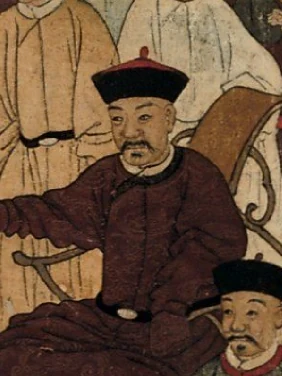
1621 CE–1696 CE
General
Shi Lang
施琅
An early-Qing naval commander who in 1683 led a fleet that defeated the Ming-Zheng regime in Taiwan.
1621 CE–1696 CEQing Dynasty
PROFILE
An early-Qing naval commander who in 1683 led a fleet that defeated the Ming-Zheng regime in Taiwan.
- Other name
- Zunhou
- Courtesy name
- Zunhou
- Art name
- Zuogong
- Period
- Qing
- Date of Birth
- 1621
- Date of Death
- 1696
- Dynasty / regime
- Qing
- Identity
- General
- Ethnicity / ethnic affiliation
- Not recorded in historical sources
- Native place
- Yakou, Jinjiang, Fujian
- Place of birth
- Yakou Village, Jinjiang County, Quanzhou Prefecture, Fujian
- Place of death
- Place of death not known
- Highest office
- See Biography and Major Activities
- Major achievements
- Early-Qing naval commander; in 1683 led a fleet that defeated the Ming-Zheng regime in Taiwan
LIFE TIMELINE
Age 17 | Entered military service as a subordinate of the Ming general Zheng Zhilong
Age 25 | Surrendered to the Qing together with Zheng Zhilong
Age 26 | Joined Zheng Chenggong's anti-Qing forces with his younger brother Shi Xian and became an important aide
Age 30 | Lost military command after strategic disagreements with Zheng Chenggong; distinguished himself in the defense of Xiamen but was not restored to command
Age 31 | Publicly broke with Zheng Chenggong over the Zeng De incident; his father Shi Daxuan and younger brother Shi Xian were killed, and Shi Lang again surrendered to the Qing
Age 35 | Accompanied the Qing Dingyuan General-in-Chief Jidu in attacking Fuzhou and was appointed deputy commander at Tong'an
Age 38 | Promoted to regional commander at Tong'an
Age 41 | Promoted to commander-in-chief of the Fujian naval forces and sent troops that defeated Zheng Jing's attack on Haicheng
Age 43 | Proposed an attack on Taiwan; two expeditions failed after being obstructed by typhoons
Age 47 | Submitted the Memorial Arguing That the Border Threat Should Be Pacified, followed the next year by the Memorial Fully Stating My Views; advocated the military conquest of Taiwan, but the policy was blocked by conservative forces led by Oboi, his naval post was abolished, and he remained on palace guard duty in Beijing for thirteen years
Age 60 | The Kangxi Emperor accepted Li Guangdi's recommendation, appointed Shi Lang commander-in-chief of the Fujian navy, and added the title Junior Guardian of the Heir Apparent
Age 61 | The Kangxi Emperor decided to attack Taiwan and ordered Shi Lang and Fujian governor-general Yao Qisheng to advance on Penghu and Taiwan
Age 62 | Led the Qing fleet to a major victory over the Zheng forces at the Battle of Penghu; on August 13 led the fleet to Taiwan
Age 62 | Zheng Keshuang surrendered with his followers, and Taiwan was incorporated into the Qing realm; Shi submitted the Memorial Respectfully Presenting the Question of Retaining or Abandoning Taiwan, strongly arguing that Taiwan should be retained
Age 75 | Died; received the posthumous name Xiangzhuang and was posthumously granted the title Grand Tutor of the Heir Apparent
BIOGRAPHY
Biography
Family Background and Early Years
Shi Lang's ancestor Shi Bing served as a judicial official during the reign of Emperor Gaozong of the Southern Song. In 1163, the first year of the Longxing era, Shi Bing moved south from Shidazhuang in Gushi County, Guangzhou, Henan, identified in the Chinese source with present-day Qingfeng Village in Guolutan Township, and settled in Fujian, becoming the founding ancestor of the Xunhai Shi lineage. Shi Lang was born into a farming family. The household had been relatively well off in his grandfather's generation but began to decline under his father, Shi Daxuan. Shi Daxuan was nevertheless regarded locally as upright, charitable, and public spirited. The source says Shi Lang had a broad face and forehead, which his father interpreted as an auspicious appearance, and he therefore disciplined and educated his son strictly in the hope that Shi might later rise to high rank.
As a youth, Shi Lang did not succeed in the study of writing and turned instead to swordsmanship. He studied military methods under a teacher and was said to master many forms of military knowledge and to possess both intelligence and courage. At seventeen, he entered military service as a subordinate of the Ming regional commander Zheng Zhilong and repeatedly distinguished himself in battle by taking the lead in combat.
Under Zheng Chenggong
In 1646, the third year of the Shunzhi era, Shi Lang surrendered to the Qing together with Zheng Zhilong. Before long, after being recruited by Zheng Chenggong, he went to sea and joined Zheng's anti-Qing forces, becoming one of the more formidable generals in the Zheng army. Shi served Zheng Chenggong as Left Vanguard and followed him in anti-Qing campaigns. Zheng treated him favorably, regarded him as an important aide, and discussed military and confidential matters with him.
In August 1650, the fourth year of the Yongli era, Shi offered a plan that helped Zheng Chenggong kill Zheng Lian, described in one account as a paternal uncle and in another as a cousin, and seize Xiamen. In April 1651, the fifth year of the Yongli era, Zheng Chenggong went south on a campaign in support of the Ming cause, and Qing commander Ma Degong took the opportunity to attack Xiamen. Shi was then remaining in Xiamen without an active command. He personally led more than sixty men in a counterattack, killed the brother of the Qing commander Ma Degong, and nearly captured Ma himself. When Zheng returned to Xiamen, he rewarded Shi with two hundred taels of silver but refused to restore his military command.
While in Guangdong, Shi had tactfully warned Zheng Chenggong that the rear would be thinly defended if the main force moved west. Zheng did not tolerate the dissenting view and stripped him of command. Dissatisfied, Shi told Zheng that he had lost heart and wished to become a monk, using the statement to test Zheng's attitude. Zheng was unmoved and instructed him to recruit troops independently to form a vanguard unit. Seeing little prospect of regaining his earlier position, Shi shaved his head in anger and ceased attending Zheng Chenggong.
Break with Zheng Chenggong and Second Surrender to the Qing
In 1652, the ninth year of the Shunzhi era, the Zeng De incident caused an open break between Shi Lang and Zheng Chenggong. Zeng De, seeking advancement, used his former ties with the Zheng family's forces to enter Zheng Chenggong's camp as an attendant. On hearing this, Shi was enraged, had Zeng arrested, and ordered him beheaded. Zheng Chenggong urgently ordered that Zeng not be killed, but Shi ignored the order and pressed for the execution.
Zheng interpreted Shi's disobedience and killing of a former Zheng officer as evidence of rebellion. He secretly ordered the arrest of Shi's younger brother Shi Xian and sent troops to surround Shi's residence, taking both Shi and his father Shi Daxuan into custody. Shi escaped to the mainland with the assistance of trusted subordinates and local residents. When Zheng learned that Shi had reached territory controlled by the Qing, he had Shi Daxuan and Shi Xian executed in July. After learning of the deaths of his father and brother, Shi became bitterly hostile toward Zheng Chenggong, committed himself to the Qing, and thereafter treated the Zheng regime as an enemy.
Qing Career and Preparations for an Attack on Taiwan
In 1656, the thirteenth year of the Shunzhi era, Shi accompanied the Qing Dingyuan General-in-Chief Jidu in an attack on Fuzhou and was appointed deputy commander at Tong'an. He was later transferred to Beijing to serve as an imperial guard official. During that period he lived in poverty and relied on his wife's sewing work to supplement the household income. In 1659, the sixteenth year of the Shunzhi era, the Qing court promoted him to regional commander at Tong'an. In 1662, the first year of the Kangxi era, he became commander-in-chief of the Fujian naval forces, sent troops that defeated Zheng Jing's attack on Haicheng, and submitted a memorial advocating Taiwan's incorporation into the Qing realm.
In 1664, the third year of the Kangxi era, Shi proposed that the Qing send him to recover the Jinmen-Xiamen area as a preliminary step toward taking Penghu and striking directly at Taiwan. After Kong Yuanzhang's attempt to negotiate a surrender in Taiwan failed in 1667, Shi submitted the Memorial Arguing That the Border Threat Should Be Pacified, and the following year submitted the Memorial Fully Stating My Views. He emphasized that Zheng Jing and his followers should not be allowed to maintain armed resistance from Taiwan, advocated a combination of military attack and inducement to surrender, and urged an early expedition. Conservative forces in the central court led by Oboi opposed the proposal, arguing that the sea was remote and dangerous, winds and waves unpredictable, and victory impossible to guarantee. Shi's memorials were shelved, his naval post was even abolished, and he spent thirteen years on palace guard duty in Beijing. He nonetheless remained committed to taking Taiwan, followed developments along the Fujian coast closely, and studied winds, tides, and seasonal conditions.
Conquest of Taiwan
In 1681, the twentieth year of the Kangxi era, Zheng Jing died. The powerful Ming-Zheng minister Feng Xifan and imperial-clan member Zheng Cong and others killed Zheng Kezang and installed Zheng Keshuang, the younger son of the previous ruler. In July, grand secretary Li Guangdi memorialized that the time was favorable for attacking Taiwan and recommended his fellow Quanzhou native Shi Lang. The Kangxi Emperor accepted the recommendation, appointed Shi commander-in-chief of the Fujian navy, and granted the additional title Junior Guardian of the Heir Apparent. Shi then actively prepared for an expedition against the Ming-Zheng regime; the source gives his age as sixty-one.
On June 14, 1683, the twenty-second year of the Kangxi era, Shi led the naval force from Tongshan, present-day Dongshan Island in Fujian. In choosing his route, he assessed prevailing winds and Zheng defenses and decided that the Qing fleet should use the June southwesterly monsoon to cross the Taiwan Strait eastward. He first aimed to seize Bazhao Island, south of the main Penghu islands and weakly defended by Zheng forces, thereby taking a favorable upwind and upstream position from which to attack Penghu. On June 16 the Qing fleet launched its first attack on the Zheng forces at Penghu and was defeated. Shi quickly adjusted his plans and divided the Qing fleet into four groups. He personally commanded fifty-six large warships as the main force in a frontal assault on the principal Zheng position at Niangmagong; regional commander Chen Mang and others led fifty ships in an eastern assault, entering Jilong Islet from the eastern side of Penghu harbor as a surprise force; regional commander Dong Yi and others led another fifty ships in the western attack, entering Niuxin Bay from the west in a feigned landing; the remaining eighty ships formed a reserve. At seven in the morning on the twenty-second, the Qing fleet launched a general assault. After nine hours of fighting, it achieved a comprehensive victory. The source states that 12,000 Zheng officers and soldiers were killed or wounded, more than 5,000 were captured, and more than 190 Zheng warships were destroyed or seized. Zheng commander Liu Guoxuan escaped toward Taiwan in a small boat through Houmen in the north. Qing losses were 329 killed and more than 1,800 wounded.
After the Qing occupied Penghu, Shi intensified military pressure while also offering terms to the Zheng group in Taiwan. Facing Shi's fleet, Zheng Keshuang accepted Liu Guoxuan's advice and decided to surrender. On August 13, Shi led the fleet to Taiwan, where Liu Guoxuan and civil and military officials went to welcome him. After arriving, Shi voluntarily visited the temple of Zheng Chenggong and praised the achievements of Zheng Chenggong and his son in developing Taiwan. He described Zheng's recovery of Taiwan as a fulfillment of duty to state and people and declared that he held no personal grudge against Zheng Chenggong. After the rites, Shi was overcome with emotion and wept.
Later Years and Posthumous Matters
After taking Taiwan, Shi memorialized strongly in favor of retaining and defending it. With support from Huang Xigun, Grand Secretary of the Eastern Pavilion who oversaw the Ministry of War, Shi's arguments persuaded the Kangxi Emperor and court officials. The Qing government ultimately decided to establish prefectures and counties in Taiwan and station troops there. For his service, Shi was appointed Jinghai General and enfeoffed as Marquis of Jinghai.
During Shi's administration in Taiwan, he issued restrictions on migration to the island, including a rule that migrants “were not permitted to bring their families.” People from Huizhou and Chaozhou in Guangdong were strictly prohibited from crossing to Taiwan, and migration from other regions was also heavily restricted. The source states that this policy created a severe shortage of women in Taiwan and hindered travel across the strait. It further states that after taking Taiwan, Shi appropriated productive land under his own name, amounting to nearly half of the cultivated land in southern Taiwan. These holdings were known as the “Marquis Shi rental estates” and continued into the period of Japanese rule in Taiwan.
Shi Lang died in 1696, the thirty-fifth year of the Kangxi era, at the age of seventy-five. He received the posthumous name Xiangzhuang and the posthumous title Grand Tutor of the Heir Apparent. He was jointly buried with his wives Ladies Wang and Huang.
Family, Early Years, and Service under the Zheng
The Shi family traced its line to the founder of the Xunhai Shi who crossed south into Fujian, and lived there for generations. Shi Lang was born into a peasant family; his grandfather had been comfortably off, but "by the time of his father Shi Daxuan the family began to decline, though Shi Daxuan was upright and generous and so had a good name in the village." Shi Lang was broad-faced with a high forehead, and his father "took this for the mark of a nobleman" and kept him strictly, hoping he would become a marquis or a general. In boyhood, "having failed at letters, he gave them up to learn the sword," studied the art of war under a teacher so that "there was no method of war he had not mastered, and he was both wise and brave," which gave him the self-confidence that marks his whole career. He joined the army at seventeen under a Ming general and "was always first among the soldiers in battle, winning merit repeatedly." In his early years he was an officer under Zheng Zhilong, and in 1646 went over to the Qing with Zheng Zhilong; soon after, drawn by Zheng Chenggong, he went to sea and joined Zheng Chenggong's resistance, becoming one of its fiercest officers. He served as left vanguard, and Zheng Chenggong treated him so well that "he looked on him as his right hand, showing him every courtesy, and consulted him on military business and secret matters alike." Afterwards, when Shi Fu was transferred from Fujian and Zhejiang into Guangdong, he took Shi Lang and five thousand troops with him, and they did much to put down the loyalist forces; but the commander Li Chengdong was contemptuous of southern officers and men, memorializing that the officers and troops brought from Fujian were "too weak to be of any use in battle or defence," and even sought to destroy and disband them, so that Shi Fu, Shi Lang and the others lived as dependents of others, swallowing their resentment with the sense of talents unused and merit unrewarded. In 1648 the Fujian officers joined Li Chengdong in his revolt, and Shi Lang, on his way back to Fujian, was plotted against by Li Chengdong's officers; "learning of it, he hastily drew off his men," held a town "for a full month, broke out and fought his way along," losing his younger cousins Shi Zhaolian and Shi Zhaoxu in the fighting, and only at the Fujian-Guangdong border got clear, going over to Zheng Chenggong, under whom he became "the youngest, most skilled in arms and most valiant of the capable officers."
The Breach with Zheng Chenggong
In 1651 Shi Lang followed Zheng Chenggong to Guangdong to relieve the throne, and because he opposed Zheng's method of "abandoning the water for the land and raising pay by plunder," Zheng was much displeased, stripped him of his command and had him return to Xiamen "as a man at leisure." Just then the Qing raided Xiamen, and its commander Zheng Zhiguan fled in panic, abandoning the city; Shi Lang, with only some sixty men about him, resisted of his own accord, "irresistibly," killing the younger brother of the Qing commander Ma Degong, who was nearly taken alive, and the Qing withdrew in confusion. Zheng Chenggong, rewarding merit on his return, gave Shi Lang two hundred taels of silver — "on the surface fair in reward and punishment, but Zheng Chenggong was on his guard against Shi Lang's arrogance," and though he acknowledged his merit at Xiamen he would not return his command. Shi Lang, expecting to be restored to the left vanguard, was not; much displeased, he reported that he was sick at heart and wished to become a monk, to sound out Zheng's attitude, and Zheng, unmoved, told him to raise new troops and form a vanguard garrison. Seeing it hopeless, Shi Lang in a rage shaved his head and ceased to attend Zheng Chenggong. In 1652 the affair of Zeng De brought the breach into the open: Zeng De, who had been under Shi Lang's command, "trusting to Zheng's intimacy, fled to Zheng's camp"; Shi Lang, hearing of it, sent men to seize him and behead him, and though Zheng Chenggong "sent word in haste that he should not be killed," Shi Lang "pressed the order to kill him." Zheng Chenggong, seeing that he had killed a Zheng family officer against orders, concluded that his rebellion was plain; on the twentieth day of the fifth month he secretly ordered Huang Shan, commander of the right garrison of the relief force, to arrest Shi Lang's brother Shi Xian on the pretext of discussing military plans, and had soldiers surround Shi Lang's house and arrest Shi Lang and his father Shi Daxuan. Shi Lang, sheltered and helped by trusted officers and the local people, escaped to the mainland; and Zheng Chenggong, learning that he had fled into Qing territory, was furious and in the seventh month had Shi Daxuan and Shi Xian beheaded. On hearing that his father and brother were killed, Shi Lang hated Zheng Chenggong to the bone and threw in his lot wholly with the Qing, set on opposing the Zheng family.
Official Life under the Qing and Thirteen Years at the Capital
In 1656 Shi Lang served under the Qing grand general Dingyuan and was given the post of deputy general; afterwards, during his time as minister of the interior at Beijing, he "was very poor, and relied on his wife's sewing in the capital to eke out the household." In 1659 the court made him commander of Tong'an; in the first year of Kangxi (1662) he became naval commander of Fujian, defeated the troops attacking Haicheng and memorialized that Taiwan should be brought within the empire's territory, at last gaining the court's support. In this period Zheng Chenggong died in Taiwan and Zheng Jing succeeded him; and when Zheng Jing later fell ill and gave the government to his eldest son Zheng Kezang, who "was clever and capable and managed everything in good order without ever a fault," then after Zheng Jing's death Feng Xifan poisoned Zheng Kezang and set up the eleven-year-old Zheng Keshuang as prince of Yanping, Feng Xifan being arbitrary, corrupt and thoroughly unpopular. In 1664 the Qing adopted Shi Lang's proposal and sent him to recover Jinmen and Xiamen, in preparation for attacking Penghu and striking straight at Taiwan, "so that the four seas should be one and the frontier people free of trouble." In 1668, after Kong Yuanzhang's mission to Taiwan to win the Zheng over had failed, Shi Lang memorialized on the taking of Taiwan, and the next year presented his "Full Statement of What I Have Seen," arguing that Zheng Jing and the rest could not be allowed to hold out in Taiwan while five provinces' coastal districts were made a boundary zone, so that the southeast's revenue fell and its people grew poorer; Taiwan must quickly be subdued, its forces reduced and its local economy restored, with taxes raised so that the people's livelihood might be settled and the frontier secure. Analysing the two sides' strength, he pointed out that Taiwan had "in all less than twenty thousand troops and no more than two hundred vessels of any size," and that its ability to hold out lay in "the vast sea, which is its protection," while the Qing had more than ten thousand officers and men besides the land forces under its control and the officers and men who had come over, so that "if picked troops to the number of twenty thousand are chosen from them, they will be enough to pacify Taiwan," and urged that attack and conciliation be combined and troops sent at once "lest a tiger be nursed into a menace." This proposal was attacked by the conservative party at court, which took the ground of "the distance and danger of the seas and the uncertainty of wind and wave, so that a quick decisive victory cannot be reckoned certain," and it was shelved; Shi Lang was even stripped of his naval command and kept in the capital on guard duty for thirteen years. At the capital he still "closely watched developments along the Fujian coast and studied the winds, tides and weather with care," waiting patiently in his house for the court to employ him; and in the tenth month of 1682, on the strong recommendation of the ministers, he was restored to the naval command of Fujian.
His Qualifications as Commander, and His Preparations
By his own qualifications Shi Lang was indeed the right man to command the expedition: first, he had grown up by the sea, "had engaged in maritime trade with his father from boyhood, was thoroughly versed in navigation and knew the climate and geography of the sea frontier perfectly," and after entering the army had campaigned along the southeast coast with rich experience of sea fighting; second, he understood the art of war and battle formation and had consistently held that Taiwan must be unified by force, having long planned the campaign and proposed the strategy of "conciliation within suppression" and a complete plan of execution, "not only thorough but practicable"; third, he was himself a rebel from the Zheng camp, "knew the inner workings of the Zheng group in Taiwan," was feared by its officers for his wisdom and daring, and had many old associates there, "which made it easy for him to win agents and gather intelligence"; and fourth, he was "not only a firm advocate of unification by force but confident of it." Restored to his post, he returned to Xiamen and worked "day and night, forgetting food and sleep," fitting out ships and drilling troops, having weapons made, choosing artisans and vessels himself, so that "within a few months the fleet, at first wholly without order, had solid ships and trained men and lacked nothing." On the fourteenth day of the sixth month of 1683 he led the fleet out, and judging his route by the wind and by intelligence of the enemy's defences, decided to sail from Tongshan and cross eastward on the southwest monsoon of the sixth month.
Major Activities
Military Contributions
Shi Lang's most important military contribution was leading the Qing conquest of Taiwan. In June 1683, the twenty-second year of the Kangxi era, he commanded the Qing navy in a decisive victory over the Ming-Zheng fleet at Penghu. The source credits careful deployment and flexible tactics and gives the result as 12,000 Zheng officers and soldiers killed or wounded, more than 5,000 captured, and more than 190 Zheng warships destroyed or seized. The Battle of Penghu is described as the high point of Shi's military career and a classic engagement in Chinese naval history. In selecting the route of attack, Shi assessed winds and enemy defenses, sailed from Tongshan with the southwesterly monsoon across the Taiwan Strait, first seized Bazhao Island as an anchorage and launching point, and occupied a favorable upwind position.
Earlier in his career, Shi had served under Zheng Zhilong, repeatedly taking the lead in battle and earning military credit. Under Zheng Chenggong he served as Left Vanguard and became a leading fighting officer. In 1651, during the fifth year of the Yongli era, Qing troops launched a surprise attack on Xiamen. Shi counterattacked with several dozen men, killed the brother of Qing commander Ma Degong, nearly captured Ma himself, and made an important contribution to holding Xiamen for Zheng Chenggong.
Political Activities
Shi's principal political contribution in the Chinese source is his strong advocacy for retaining Taiwan and establishing prefectural administration there. After Taiwan had been taken, the Qing court did not have a unified view of the island's strategic importance, and officials debated whether it should be retained. Shi submitted the Memorial Respectfully Presenting the Question of Retaining or Abandoning Taiwan, arguing for the importance of keeping the island. He described Taiwan as the “left shield of Jiangsu, Zhejiang, Fujian, and Guangdong” and warned that if abandoned it would again become a base for maritime raiders. Supported by Huang Xigun, Li Guangdi, and others, his arguments persuaded the Kangxi Emperor and court officials, and the Qing ultimately established prefectures and counties and stationed troops in Taiwan, formally incorporating it into the Qing realm.
Shi consistently advocated using military force to unify Taiwan with the Qing. Beginning in 1664 he proposed advancing on Penghu and Taiwan so that “all within the seas” would be brought together. Even after two expeditions were thwarted by typhoons, he continued to submit memorials calling for a Taiwan campaign. He opposed the Qing policy of coastal evacuation and maritime prohibition, arguing that it was inconsistent with the “unification of all under heaven” and also reduced fiscal revenue; Taiwan, he maintained, should be conquered without delay. During his years in Beijing he continued to memorialize for an expedition, sought the Kangxi Emperor's support, and cultivated contacts among court officials to build support for the campaign.
Travels and Service Locations
Shi's career took him across much of the southeastern coast. He entered military service along the Fujian coast and campaigned in Fujian and Guangdong under Zheng Zhilong and Zheng Chenggong. After surrendering to the Qing with Zheng Zhilong in 1646, the third year of the Shunzhi era, he followed Li Chengdong into Guangdong and participated in suppressing groups called “sea bandits” in Shunde County and the anti-Qing forces led by Zhang Jiayu around Dongguan and Zengcheng. He later joined Zheng Chenggong and accompanied forces south to Nan'ao in Guangdong in support of the Ming cause. After returning to Qing service he successively served as deputy commander at Tong'an, regional commander at Tong'an, and commander-in-chief of the Fujian navy, stationed along the Fujian coast. After 1668, the seventh year of the Kangxi era, he spent thirteen years in Beijing on guard duty, closely following events along the Fujian coast and studying tides, winds, and seasonal conditions. In 1681 he was restored as commander-in-chief of the Fujian navy, returned to Xiamen, and trained ships and troops day and night. In 1683 he sailed from Tongshan, won the Battle of Penghu, and took Taiwan.
Relations with Contemporaries
Shi's relations with contemporaries were complex. He was initially promoted under Zheng Zhilong and served as his subordinate. He later became an important aide to Zheng Chenggong, but the two broke over the Zeng De incident; Shi's father and brother were killed and a deep personal hostility followed. After joining the Qing, he advanced jointly on Penghu and Taiwan with Fujian governor-general Yao Qisheng, although the two were rivals during the campaign. The Chinese source states that Shi once memorialized that he had not been ordered to advance together with the governor-general; after Yao submitted the victory memorial, Shi arrived later and did not share in a reward, became depressed, fell ill, and died. Shi and Li Guangdi were both from Quanzhou; Li's recommendation to the Kangxi Emperor was crucial to Shi's restoration as commander-in-chief of the Fujian navy. Shi was related by marriage to Huang Xigun, Grand Secretary of the Eastern Pavilion, whom the source identifies as Shi's brother-in-law; Huang supported Shi's position in favor of retaining and defending Taiwan.
From Local Officer to Commander of the Taiwan Expedition
Shi Lang's career is itself a miniature of the maritime powers of the Ming-Qing transition: he entered the army young, served first under Zheng Zhilong, went over to the Qing with him, then, drawn by Zheng Chenggong, went to sea to resist the Qing and became one of the youngest of his officers; after suspicion turned to breach and his father and brother were killed, he went over to the Qing a second time, serving successively as deputy general, commander and naval commander, taking part in the Qing attacks and in the attempt to win the Zheng over. Such a career gave him three things at once — knowledge of the inner workings of the Zheng group, mastery of naval war and navigation, and a lifelong resolve to take Taiwan by force. Together they let him, after his restoration in 1682, turn the Fujian fleet within months into "solid ships and trained men, lacking nothing."
In the thirteen years from 1668 to 1682, though stripped of his naval command and kept in the capital, he never abandoned his proposal: the detailed analysis of the two sides' forces in his "Full Statement of What I Have Seen," and his judgment that "if picked troops to the number of twenty thousand are chosen, they will be enough to pacify Taiwan," show that his plan rested on long study of the winds and tides and of the Zheng group's affairs rather than on rhetoric. When he was restored and at last led the fleet east in 1683, his principle of "conciliation within suppression" was applied: breaking the defence at Penghu by force while leaving room for negotiation over Taiwan itself. The carrying out of that principle ended the Zheng hold on Taiwan and brought the island into the Qing administrative system, where it became an inseparable part of the southeast maritime defence of the dynasty.
Personal Relations
- Shi Bing: ancestor, a Southern Song judicial official and founding ancestor of the Xunhai Shi lineage
- Shi Daxuan: father, executed by Zheng Chenggong
- Shi Xian: younger brother, executed by Zheng Chenggong
- Shi Shilun: second son, later served as governor-general of grain transport
- Shi Shibiao: sixth son, led Qing troops to Taiwan to suppress Zhu Yigui
- Zheng Zhilong: early commander; Shi surrendered to the Qing with him
- Zheng Chenggong: early commander; later broke with Shi, after which Shi's father and brother were killed
- Yao Qisheng: colleague and governor-general of Fujian; jointly advanced on Penghu and Taiwan
- Li Guangdi: fellow native of Quanzhou who strongly recommended Shi for the post of commander-in-chief of the Fujian navy
- Huang Xigun: relative by marriage and Grand Secretary of the Eastern Pavilion; supported Shi's policy of retaining Taiwan
- Kangxi Emperor: Qing emperor who employed Shi Lang in the Taiwan campaign
- Zheng Jing: son of Zheng Chenggong and prince of Yanping under the Ming-Zheng regime
- Zheng Keshuang: son of Zheng Jing and last prince of Yanping under the Ming-Zheng regime; surrendered with his followers to the Qing
- Liu Guoxuan: principal Zheng commander who fled to Taiwan after defeat at Penghu
Historical Assessment
Qing / Contemporary Assessments
- The Kangxi Emperor described Shi as “a rough military man who has never studied; narrow in capacity and arrogant because of his merits,” but also said that “General Shi Lang is thoroughly familiar with the islands, and all matters must be discussed with him,” that “one who, like Shi Lang, has established such extraordinary merit must be allowed to hold command permanently and enjoy honor to the end of his life,” and that “Shi Lang's achievement was very great.”
- Within the contemporary Confucian moral framework of loyalty and treachery toward a ruling house, Shi was disdained by some Qing writers because he and Zheng Chenggong's father Zheng Zhilong had moved between the Ming and Qing and because Shi attacked the Zheng regime in what was viewed as private revenge. He was not included among portraits of the twenty meritorious officials credited with suppressing anti-Qing resistance in Taiwan.
- The Draft History of Qing, compiled in the Republican period by former Qing loyalists, stated that Shi received exclusive credit for pacifying Taiwan but that Yao Qisheng and others had undertaken planning and pacification in the various prefectures and counties, and that only after Jinmen and Xiamen were taken and the Zheng regime was confined to Taiwan and Penghu could its forces be concentrated and destroyed. The passage asks how the earlier labor could be erased, and therefore does not attribute the entire achievement to Shi alone.
Republican Period
- Lian Heng, also known as Yatang, wrote in the “Biography of Shi Lang” in his General History of Taiwan that Shi had been a Zheng officer, returned to Qing service after offending the Zhengs, and then used the Manchus to overthrow the Ming cause. He compared Shi's grievance to that of Wu Zixu and treated his actions as those of a son seeking revenge, expressing sympathy rather than simply condemning him from a pro-Zheng position.
People's Republic of China Period
- After 1949, official narratives in the People's Republic of China often emphasized Zheng Chenggong's “recovery of Taiwan” and described Zheng as a national hero. Shi Lang, traditionally regarded as a “twice-serving minister,” had been disparaged by earlier historians and initially received relatively little official attention.
- In the 1990s, as official publicity increasingly emphasized “Chinese unification,” Shi's conquest of Taiwan was publicized on a large scale. The source states that his earlier negative image began to reverse, and he was increasingly presented as a figure who safeguarded Chinese unity.
- Mainland historian Wu Boya is quoted as arguing that Shi strongly advocated retaining and defending Taiwan, consolidated frontier defense, preserved unity, helped prevent foreign aggression, and thereby made a major contribution benefiting later generations.
- In 2006, the television drama General Shi Lang was broadcast on the mainland. Because it presented Shi in an untraditionally and wholly positive light, arguments over whether he should be regarded as a “national hero” or a “traitor” intensified.
- In 2011, in an online poll concerning the naming of China's first aircraft carrier, “Shi Lang” ranked first.
Assessments in Taiwan
- Because the government of the Republic of China after its relocation to Taiwan compared itself with the Ming-Zheng regime and official narratives encouraged sympathy for the Zheng family, Shi came to be viewed by many as a traitorous general comparable to Wu Sangui.
- Advocates of Taiwan independence have described Zheng Chenggong's Dongning regime as “Taiwan's first kingdom,” called Shi a “traitor who sold out Taiwan,” and treated mainland publicity concerning Shi as a form of united-front propaganda.
FIGURES ASSOCIATED WITH THIS DYNASTY
Bibliography
- “Biography of Shi Lang,” Draft History of Qing
- Lian Heng, “Biography of Shi Lang,” General History of Taiwan