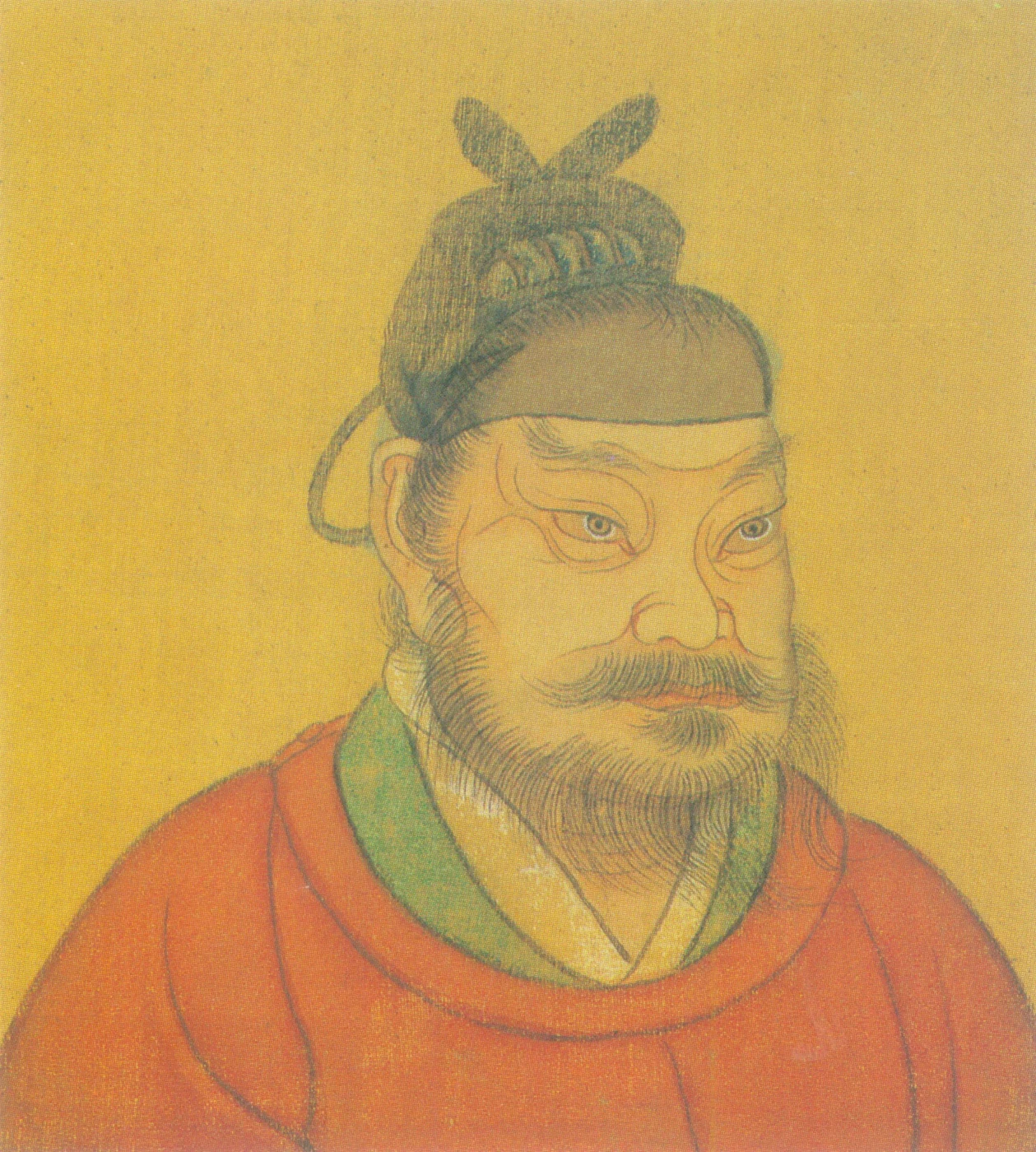
The Later Jin (936–947) was one of the Five Dynasties and a Central Plains regime. Its founder, Shi Jingtang, had been the Military Commissioner of Hedong under the Later Tang. After falling out with Li Congke, the last emperor of Later Tang, he sought aid from the Khitans (Liao). In exchange for Khitan military support, Shi Jingtang accepted the humiliating status of a “son emperor” and ceded the Sixteen Prefectures of Yan and Yun. In the third year of Qingtai (936), he was installed as…
936 CE–947 CECapital · See entry
ERA OVERVIEW
The Later Jin (936–947) was one of the Five Dynasties and a Central Plains regime. Its founder, Shi Jingtang, had been the Military Commissioner of Hedong under the Later Tang. After falling out with Li Congke, the last emperor of Later Tang, he sought aid from the Khitans (Liao). In exchange for Khitan military support, Shi Jingtang accepted the humiliating status of a “son emperor” and ceded the Sixteen Prefectures of Yan and Yun. In the third year of Qingtai (936), he was installed as emperor with Khitan backing, adopted Jin as the state name, and established the regime later known as the Later Jin. Its capital was at Bianzhou, although Luoyang also served as the capital at times. Emerging from the disorder of the Later Tang, the Later Jin entered the ranks of the Central Plains dynastic succession while maintaining a subordinate relationship with the Khitans. Its cession of territory and submission to the Khitans were sharply criticized at the time and also created long-term problems for the northern defense of the Central Plains. After Shi Chonggui succeeded to the throne, he adopted a more confrontational policy toward the Khitans. This ultimately led to a Khitan invasion, and in the third year of Kaiyun (947) Khitan forces entered Bianjing, bringing the Later Jin to an end.
Time span936 CE–947 CE
CapitalSee entry
ERA TIMELINE
Shi Jingtang proclaimed himself emperoOpen
Shi Jingtang proclaimed himself emperor with Khitan support and established the Later Jin.
After An Chongrong rebelled against thOpen
After An Chongrong rebelled against the Later Jin, Bai Chengfu's troops surrendered to Liu Zhiyuan, hastening An Chongrong's defeat.
Emperor Gaozu Shi Jingtang died. Shi COpen
Emperor Gaozu Shi Jingtang died. Shi Chonggui succeeded him and adopted a harder policy toward the Khitans.
In the first and second years of KaiyuOpen
In the first and second years of Kaiyun, Later Jin forces twice repelled Khitan attacks. However, amid political corruption, repeated natural disasters, and severe popular hardship, Shi Chonggui remained overly optimistic and launched a northern expedition in the third year of Kaiyun. The campaign failed, Du Chongwei surrendered to the Khitans, the main Later Jin army was lost, and the Khitans advanced south, forcing Shi Chonggui to surrender.
The Khitans again launched a southern Open
The Khitans again launched a southern campaign. Shi Chonggui personally led the army and again defeated the Khitans.
Bai Chengfu's troops also took part inOpen
Bai Chengfu's troops also took part in the battle at Tanzhou.
After the Later Jin fell in 947 (the fOpen
After the Later Jin fell in 947 (the fourth year of Kaiyun), Liu Zhiyuan, formerly the Later Jin Military Commissioner of Hedong, proclaimed himself emperor at Jinyang and founded the Later Han.
FULL ENTRY
Overview
The Later Jin (936–947) was one of the Five Dynasties and a Central Plains regime. Its founder, Shi Jingtang, had been the Military Commissioner of Hedong under the Later Tang. After falling out with Li Congke, the last emperor of Later Tang, he sought aid from the Khitans (Liao). In exchange for Khitan military support, Shi Jingtang accepted the humiliating status of a “son emperor” and ceded the Sixteen Prefectures of Yan and Yun. In the third year of Qingtai (936), he was installed as emperor with Khitan backing, adopted Jin as the state name, and established the regime later known as the Later Jin. Its capital was at Bianzhou, although Luoyang also served as the capital at times. Emerging from the disorder of the Later Tang, the Later Jin entered the ranks of the Central Plains dynastic succession while maintaining a subordinate relationship with the Khitans. Its cession of territory and submission to the Khitans were sharply criticized at the time and also created long-term problems for the northern defense of the Central Plains. After Shi Chonggui succeeded to the throne, he adopted a more confrontational policy toward the Khitans. This ultimately led to a Khitan invasion, and in the third year of Kaiyun (947) Khitan forces entered Bianjing, bringing the Later Jin to an end.
Historical Development
Establishment: Shi Jingtang was the Military Commissioner of Hedong under the Later Tang and became increasingly suspicious of his relative by marriage, Li Congke, the last emperor of Later Tang. In the third year of Qingtai (936), Shi Jingtang raised troops at Taiyuan and was besieged by Li Congke's army. Shi Jingtang appealed to the Khitans for aid, promising to cede the Sixteen Prefectures of Yan and Yun, acknowledge vassal status, and call himself a “son emperor.” Emperor Taizong of Liao, Yelü Deguang, personally led an army south to relieve the siege. In the same year, the Khitans formally installed Shi Jingtang as emperor. Shi then established the Later Jin, entered Luoyang, and took over the former territories of the Later Tang.
Height: In the early years of the Later Jin, under its founder Shi Jingtang (Emperor Gaozu of Later Jin), the Central Plains were generally pacified. Shi carefully observed the rites of a vassal toward the Khitans, allowing the frontier to remain relatively peaceful and order in the prefectures and counties to recover to some extent. This was the comparatively stable phase of Later Jin rule.
Turning Point: In the seventh year of Tianfu (942), relations with the Khitans began to deteriorate near the end of Emperor Gaozu Shi Jingtang's reign. He soon died, and his nephew Shi Chonggui succeeded him as Emperor Chu of Later Jin. Acting on the advice of Jing Yanguang, the new emperor adopted a harder line toward the Khitans and abandoned the earlier policy of deferential submission. The Khitans used this as a pretext for large-scale southern campaigns, and the Later Jin shifted from relative defense to years of warfare.
Decline: During Emperor Chu's reign, the Later Jin fought repeated wars against the Khitans. The treasury was exhausted, taxation became harsh, and northern prefectures were repeatedly devastated by Khitan attacks. The regime's strength steadily declined. At the same time, internal suspicion increased, commanders became divided, and military governors either rebelled or surrendered, gradually breaking down the defensive system of the Central Plains.
Fall: In the third year of Kaiyun (947), Emperor Taizong of Liao, Yelü Deguang, again launched a major southern offensive. Later Jin commanders defected or surrendered in succession, and Khitan forces advanced directly on Bianjing. Shi Chonggui surrendered, and the Later Jin was destroyed. The Khitans occupied the Central Plains for a time; afterward, Liu Zhiyuan, the former Military Commissioner of Hedong under Later Jin and later Emperor Gaozu of Later Han, raised troops and proclaimed himself emperor, definitively ending the Later Jin period.
Politics and Institutions
The Later Jin inherited the institutional framework of the Later Tang and broadly continued the central official system and local administrative structure that had developed since the Sui and Tang periods. At the center it maintained the Three Departments and Six Ministries as well as offices associated with the military-affairs and Chongzheng commissions. Against the background of late-Tang military politics, imperial authority was relatively concentrated, while sensitive military and political responsibilities were often entrusted to close associates and meritorious officials. At the local level, the prefecture-county system continued, with Military Commissioners widely appointed; the entrenched power of regional military commands remained a persistent problem inherited from the Five Dynasties era. The imperial examination system and regular selection procedures remained in use, though military merit and personal favor were also common paths to office in this period of disorder. The legal system broadly followed Tang law and Five Dynasties precedents, with relatively little institutional innovation in law and supervision. Detailed changes in offices, statutes, and supervisory institutions are treated in the relevant entries.
Military and Foreign Relations
The Later Jin relied primarily on central armies in the Central Plains and the forces of subordinate military commands. Its central military problem was its relationship with the Khitans (Liao). At the beginning of the regime, it depended on Khitan support for its establishment and often relied on Khitan assistance or deterrence for security. Under Emperor Chu, however, relations turned into repeated warfare, ending in military defeat and the destruction of the regime. The Later Jin also had intermittent conflicts and exchanges with southern states such as Southern Tang, Wuyue, and Chu, as well as with other regional powers. The shift from submissive relations with the Khitans to armed resistance was a decisive factor in the rise and fall of the Later Jin; details are treated in the relevant entries.
Economy and Commerce
The Later Jin controlled the core regions of the Central Plains, where grain transport, salt revenues, and an agricultural base remained available. Bianzhou (Kaifeng), located at an important land-and-water transport junction, retained a substantial commercial scale and later developed into the capital of a unified empire. However, the Later Jin existed only briefly and was repeatedly affected by war with the Khitans and internal upheaval. Heavy taxation imposed to meet military expenses further exhausted the population, and the economy never fully recovered; details are treated in the relevant entries.
Culture and Society
The disorders of the Five Dynasties weakened education and cultural institutions. The Later Jin was short-lived and strongly oriented toward military power, so its culture largely continued the legacy of the Tang without major new achievements. The regime was founded by the Shi clan of the Shatuo Turks, and its ruling group reflected a mixture of Inner Asian and Han elements, while the majority of society remained Han Chinese. Lineage structures and established ritual customs of the Central Plains persisted, though in weakened form. Court ritual and the imperial examination system continued largely on Tang precedents with little major innovation; details are treated in the relevant entries.
> This section explains the rulers' positions in the evolution of the regime; full biographies are provided in the corresponding person entries.
Historical Assessments and Legacy
Contemporaries and later historians, especially from the Song period onward, strongly criticized the Later Jin for founding its rule through territorial concessions, submission, and Shi Jingtang's acceptance of the status of a “son emperor.” Shi Jingtang in particular became remembered through the derisive label “son emperor.” Later historical assessments have also emphasized that the Later Jin's cession of the Sixteen Prefectures of Yan and Yun to the Khitans (Liao) profoundly altered the territorial and defensive balance between the Central Plains and northern powers. The transfer has often been regarded as a far-reaching territorial change that deprived the Central Plains of an important northern defensive screen and contributed to the continuation of Five Dynasties and Ten Kingdoms instability. The regime's rise and fall also illustrates the predicament of Five Dynasties governments that depended on external military support while relying internally on powerful regional commands. It remains important for the study of Five Dynasties political history and relations between Liao and the Central Plains.