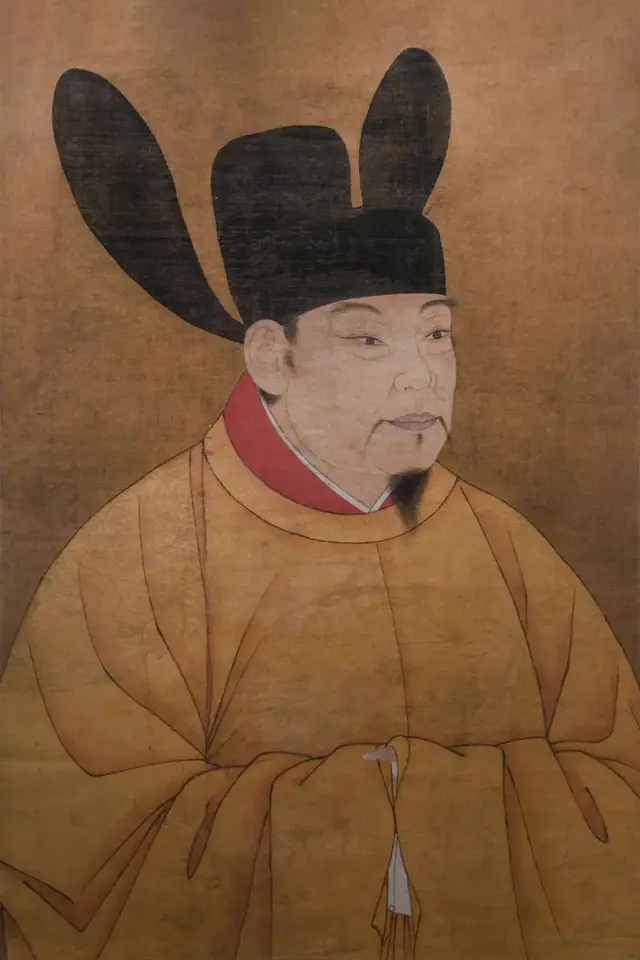
Pacification of Liangzhe
Tang authorities commissioned Qian Liu as military governor of the Zhenhai circuit after he crushed rival warlord Dong Chang, securing control of Hangzhou.
907 CE–978 CE
吴越
The Wuyue Kingdom (吴越; 907–978 CE) was the most prosperous and enduring maritime realm among the Ten Kingdoms during the Five Dynasties and Ten Kingdoms period in Chinese history, established by Qian Liu across the Liangzhe region. Spanning eighty-six years under five monarchs, the state maintained unbroken domestic peace and exceptional economic stability while northern China was engulfed in perpetual civil war. During the terminal collapse of the Tang dynasty following the Huang Chao…
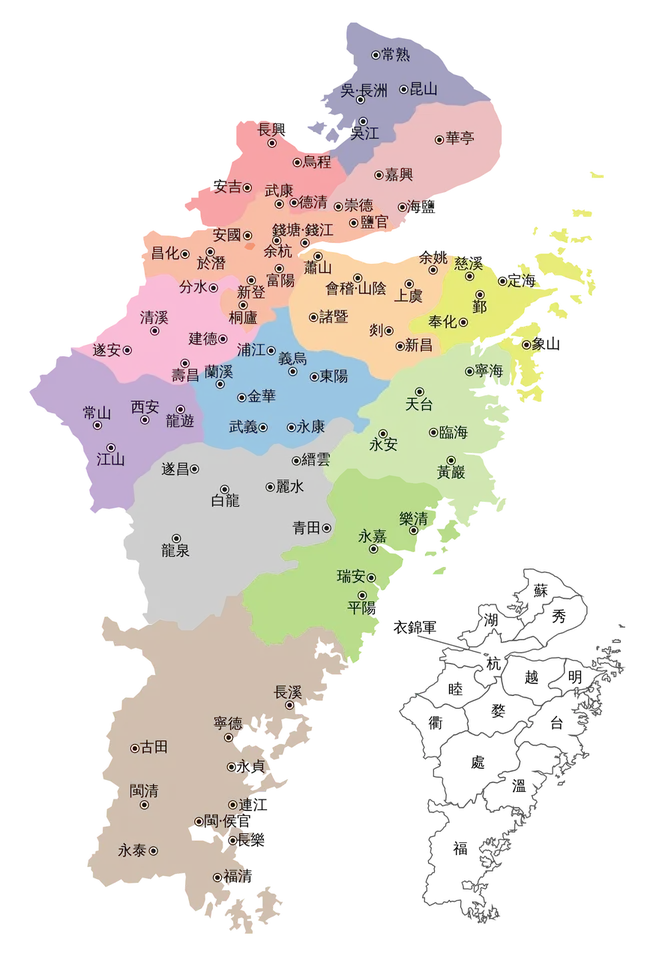
The Wuyue Kingdom (吴越; 907–978 CE) was the most prosperous and enduring maritime realm among the Ten Kingdoms during the Five Dynasties and Ten Kingdoms period in Chinese history, established by Qian Liu across the Liangzhe region. Spanning eighty-six years under five monarchs, the state maintained unbroken domestic peace and exceptional economic stability while northern China was engulfed in perpetual civil war. During the terminal collapse of the Tang dynasty following the Huang Chao uprising, Qian Liu, a native of Lin'an, rose through military service in the Eight Encampments of Hangzhou, systematically suppressing regional rivals to gain undisputed mastery over Zhejiang. In 907 CE, the founding monarch of Later Liang, Zhu Wen, formally invested Qian Liu as King of Wuyue, marking the official inauguration of the kingdom with Hangzhou as its capital. Guided by Qian Liu's visionary state doctrine of "protecting the borders and comforting the people" while maintaining respectful tributary allegiance to whichever dynasty ruled the Central Plains, Wuyue prioritized hydraulic engineering, agrarian development, and maritime commerce. Qian Liu personally directed the monumental construction of the stone Qiantang Seawall to repel catastrophic tidal surges and organized specialized canal-clearing corps to dredge West Lake and Lake Tai, transforming the region into a flourishing agricultural paradise. The kingdom was celebrated as the "Buddhist Kingdom of the Southeast," constructing renowned monuments such as the Leifeng Pagoda and Baochu Pagoda, while conducting flourishing maritime trade with Japan and Goryeo. In 978 CE, adhering to his grandfather's solemn ancestral testament to avoid civil devastation, the last monarch, Qian Chu, peacefully surrendered his thirteen prefectures and 550,000 households to Emperor Taizong of Song, concluding the kingdom without bloodshed.
Tang authorities commissioned Qian Liu as military governor of the Zhenhai circuit after he crushed rival warlord Dong Chang, securing control of Hangzhou.
Qian Liu defeated and eliminated rebel warlord Dong Chang in Yuezhou, uniting Zhenhai and Zhendong circuits under his command.
Tang Emperor Zhaozong granted Qian Liu the Iron Certificate of Immunity (Tiequan) in recognition of his loyalty and military service.
Later Liang Emperor Taizu formally invested Qian Liu as King of Wuyue, marking the establishment of the kingdom.
Qian Liu mobilized tens of thousands of workers using stone-filled bamboo gabions to construct the monumental Qiantang Seawall, halting tidal inundations.
Founding monarch Qian Liu passed away; his son Qian Yuanguan succeeded as King Wenmu, continuing conservative defensive policies and patronizing arts.
A disastrous conflagration gutted the royal palace in Hangzhou, causing severe psychological shock that led to King Wenmu's death; Qian Hongzuo succeeded to the throne.
Exploiting factional fighting between Southern Tang and Min, Wuyue naval and land forces launched an amphibious campaign to liberate and annex Fuzhou.
General Hu Jinsi deposed King Zhongxian in a bloodless palace maneuver, enthroning Qian Chu (King Zhongyi), who ruled for thirty years.
Following the founding of the Song dynasty, King Qian Chu immediately dispatched tributary embassies to Bianjing, reaffirming historic allegiance to the Central Plains.
In coordination with Song imperial hosts, King Qian Chu mobilized fifty thousand Wuyue troops to strike Southern Tang from the east, taking Changzhou.
King Qian Chu arrived at Bianjing and peacefully presented the kingdom's land registers and population rolls to Song Emperor Taizong, concluding Wuyue rule.
The origins of the Wuyue Kingdom developed during the late ninth century amidst the devastating peasant rebellion led by Huang Chao. Born to an impoverished salt-peddler family in Lin'an, Qian Liu possessed formidable martial strength and strategic aptitude. In 879 CE, when Huang Chao's insurgent armies invaded eastern Zhejiang, Qian Liu joined the regional militia organized by Dong Chang, defense commissioner of Lin'an. Forming an elite shock company known as the Eight Encampments of Hangzhou (Bayan), Qian Liu successfully defended Hangzhou through mobile ambushes, inflicting significant defeats upon rebel detachments. In recognition of these achievements, Tang authorities appointed Dong Chang as military governor of Zhendong and Qian Liu as commander of Hangzhou.
Tensions flared between the two commanders in 895 CE when Dong Chang proclaimed himself emperor of the Great Yue Luo state in Yuezhou. Qian Liu repeatedly counseled Dong Chang to renounce his treasonous imperial claims, warning that usurpation would bring ruin. When Dong Chang refused, Qian Liu secured a punitive commission from Tang Emperor Zhaozong and launched an offensive across the Qiantang River. After prolonged sieges and decisive field victories, Qian Liu captured Yuezhou in 896 CE; Dong Chang committed suicide by drowning, uniting both Eastern and Western Zhe under Qian Liu's undisputed authority. In 897 CE, Emperor Zhaozong appointed Qian Liu as military governor of both Zhenhai and Zhendong circuits, bestowing upon him the Iron Certificate of Immunity (Tiequan).
Following the usurpation of the Tang throne by Zhu Wen in 907 CE, regional warlords across southern China reacted with hostility. However, Qian Liu recognized that the Central Plains controlled supreme moral legitimacy and military strength. In the fifth lunar month of 907 CE, Qian Liu accepted the suzerainty of the newly established Later Liang dynasty. In return, Emperor Taizu issued an imperial decree investing Qian Liu as King of Wuyue, formally establishing the Wuyue Kingdom. When rival warlords in Huainan (Yang Wu) mocked him for bowing to an imperial usurper, Qian Liu answered: "I seek only to protect my borders and preserve my people from fire and sword; why should I invite devastation for mere vanity?"
This pragmatic foreign policy became the unshakeable foundation of Wuyue dynastic survival. Throughout the rapid succession of northern dynasties—Later Liang, Later Tang, Later Jin, Later Han, and Later Zhou—Wuyue systematically submitted tribute, accepted official calendars, and adopted northern reign titles. In domestic governance, Qian Liu promulgated his legendary Family Testament (Qianshi Jiaxun), enjoining his descendants: "Our sons and grandsons must govern with filial piety and thrift; if the Central Plains is unified by a righteous ruler, you must submit promptly to spare the people devastation."
The signature domestic legacy of the Wuyue Kingdom was its revolutionary hydraulic infrastructure. The lower reaches of the Qiantang River were historically prone to violent tidal bores (the Hangzhou bore) that regularly breached primitive earthen embankments, flooding croplands with seawater and contaminating freshwater wells. In 910 CE, Qian Liu initiated the construction of the permanent stone Qiantang Seawall. According to historical tradition, Qian Liu gathered five hundred expert archers on the riverbank to fire volleys of iron-tipped arrows into the surging bore, rallying civilian morale. His engineers implemented innovative modular construction, weaving colossal cylindrical bamboo gabions packed with heavy quarry stones, layered alongside interlocking timber pilings driven deep into the riverbed. This colossal seawall permanently checked the ocean tides, shielding tens of thousands of hectares of arable polder fields (weitai).
Concurrently, Qian Liu established the specialized Canal Dredging Army (Junhu Jun), a permanent corps of several thousand laborers tasked with clearing silt and weeds from West Lake and surrounding waterways. By safeguarding freshwater storage, the state ensured reliable irrigation for agriculture throughout the Hangjiahu plain and provided clean drinking water for the booming urban populace of Hangzhou. Agrarian production surged, and Liangzhe earned its historic reputation as a land where "the harvest of Suzhou and Huzhou feeds the entire world."
Following Qian Liu's death in 932 CE, his successor King Wenmu (Qian Yuanguan) and grandsons King Zhongxian (Qian Hongzuo) and King Zhongyi (Qian Chu) maintained steady administration. In 945 CE, civil war engulfed the southern Min Kingdom, and armies of Southern Tang attacked Fuzhou. Fuzhou general Li Renda appealed to Wuyue for aid. In early 947 CE, Qian Hongzuo mobilized a combined amphibious expeditionary force that sailed down the Fujian coast, defeated Southern Tang forces beneath the walls of Fuzhou, and formally incorporated Fuzhou into Wuyue territory, securing an invaluable maritime port.
The ultimate test of Wuyue statecraft arrived with the founding of the Song dynasty in 960 CE. Recognizing Emperor Taizu's irresistible drive toward reunification, King Qian Chu immediately dispatched tribute to Bianjing. In 974 CE, when Song forces besieged Southern Tang at Jinling, Qian Chu honored imperial commands by mobilizing fifty thousand troops to attack Southern Tang's eastern frontier, playing a crucial role in the fall of Changzhou. Following the destruction of Southern Tang, Qian Chu understood that Wuyue's historic mission of regional preservation had reached its natural culmination. In the fifth lunar month of 978 CE, Qian Chu journeyed to the Song court at Bianjing, presenting official memorials that voluntarily surrendered thirteen prefectures, eighty-six counties, and over 550,000 households to Emperor Taizong. In contrast to the violent destruction that befell other southern states, Wuyue transitioned into the Song Empire in absolute peace, preserving its flourishing economy, culture, and population intact.
Wuyue maintained a functional dual administrative architecture. Toward the Central Plains, it maintained the diplomatic fiction of a subordinate military circuit, communicating through the Tang and Five Dynasties chancellery channels. Domestically, however, the rulers maintained a full royal court with grand chancellors, secretariats, censorates, and specialized bureaus overseeing finance, waterworks, and ancestral rites. The kingdom was divided into thirteen prefectures (Zhou) and one military command (Jun), with Hangzhou serving as the Western Capital and Yuezhou (Shaoxing) as the Eastern Capital.
Governance was steered by the ethical precepts of the Qian Family Testament, which emphasized moral rectitude, filial duty, and civic benevolence. The court curtailed excessive commercial taxation, strictly regulated local magistrates to prevent extortion, and established royal schools in Hangzhou and Suzhou to educate the children of officials and commoners. This deep cultural commitment to education produced one of the most intellectually distinguished family lineages in Chinese history, with Qian descendants continuously serving as eminent scholars, statesmen, and scientists for over a millennium.
Under the dual system, the Hangzhou palace operated ten internal ministries alongside the military governor's headquarters, appointing trusted civil literati such as Luo Yin and Pi Rixiu's disciples as secretaries and judicial commissioners across the thirteen prefectures of Liangzhe.
To maintain uninterrupted goodwill with the northern imperial courts, Wuyue established a permanent Tributary Envoy Bureau that dispatched regular terrestrial and maritime missions bearing gold, silver, silk, and celadon to Luoyang and Kaifeng.
Later kings Qian Yuanguan and Qian Chu reformed harsh wartime penalties, established charitable granaries across all prefectures, and remitted land arrears during years of flood or drought to stabilize peasant livelihoods.
The standing army of Wuyue was partitioned into the core Eight Encampments (Bayan) guarding the capital and garrison units stationed across regional commanderies. The troops were exceptionally well-equipped with advanced iron armor, repeating crossbows, and fire-lance weapons developed in state armories. Because of its expansive coastal geography, Wuyue built a world-class navy featuring colossal multi-decked warships, known as Mengchong, capable of high-seas navigation and equipped with catapults and naval rams.
Wuyue pursued active maritime diplomacy and commercial statecraft across the East China Sea. While maintaining respectful tributary submission toward the Central Plains, Wuyue dispatching official trading fleets and diplomatic embassies to the Kingdom of Goryeo in Korea and the Heian court in Japan. Wuyue traded fine celadon (Mise Celadon) porcelain, silk brocades, and Buddhist scriptures in exchange for sulfur, timber, gold, and swords, establishing Hangzhou and Mingzhou (Ningbo) as premier international maritime emporia.
Along the Qiantang estuary, Hangzhou Bay, and the ports of Mingzhou and Wenzhou, Wuyue established fortified naval bases and beacon towers, deploying specialized marine infantry and gunpowder-equipped warships to deter piracy and Southern Tang naval incursions.
Beyond combat forces, Wuyue organized the specialized Canal Dredging Army (Junhu Jun) and dike-maintenance brigades, integrating military discipline with public hydraulic engineering to keep West Lake, Lake Tai, and coastal seawalls in peak condition.
Along its western mountain passes bordering Yang Wu and Southern Tang, Wuyue constructed fortified stockades at Yuhang, Changxing, and Quzhou, relying on defensive terrain to repel repeated invasions while projecting power southward into Fuzhou.
The economic vitality of Wuyue rested upon intensive wetland agriculture. Through the construction of dykes, polder fields, and automated sluice gates, farmers converted previously waterlogged coastal marshes into prime double-cropping paddy land. Sericulture and silk weaving reached extraordinary heights; official workshops in Hangzhou and Huzhou produced diaphanous silk gauzes, damasks, and polychrome brocades that were prized throughout East Asia.
Wuyue was celebrated for its manufacture of exquisite Yue Ware celadon, particularly the legendary Secret Color Porcelain (Mise Ci). Fired in the imperial kilns around Lake Shanglin in Cixi, these ceramics possessed a translucent olive-green glaze resembling fine jade. Strictly reserved for imperial tribute and royal altars, thousands of pieces were also exported across the Maritime Silk Road to Southeast Asia, the Persian Gulf, and East Africa. Concurrently, Wuyue minted copper, iron, and lead coinage, supporting vibrant municipal markets and cash-based commerce.
Wuyue was universally acclaimed as the "Buddhist Kingdom of the Southeast." Kings Qian Liu, Qian Yuanguan, and Qian Chu were deeply devout patrons of the Dharma, constructing hundreds of temples, shrines, and stone pagodas across Liangzhe. Hangzhou alone earned the epithet "City of Eight Hundred Temples." King Qian Chu famously cast eighty-four thousand bronze and iron miniature stupas (Asoka Pagodas) containing sacred dharani scriptures, distributing them to monasteries throughout East Asia. Monumental stone and brick pagodas erected during the Wuyue era—including the Leifeng Pagoda, Baochu Pagoda, White Pagoda, and the Six Harmonies Pagoda—remain enduring landmarks of Chinese architectural heritage.
Wuyue played an indispensable role in the preservation and dissemination of Buddhist texts through woodblock printing. When King Qian Chu discovered that centuries of warfare had destroyed vital Tiantai Buddhist scriptures in China, he dispatched emissaries bearing gold and silk to Goryeo and Japan to recover missing commentaries. The court sponsored large-scale woodblock printing of the Buddhist canon, producing exquisite folded scripture scrolls that pioneered commercial and religious book publishing in southern China.
Under Wuyue rule, Hangzhou expanded its triple-walled city perimeter by seventy li, transforming from a regional garrison town into a bustling metropolis of half a million residents with thriving markets, canals, and foreign merchant quarters.
Coastal salt fields in Liangzhe and high-mountain tea plantations in Guzhu and Longjing generated substantial fiscal revenues, funding both monumental hydraulic works and generous tributary gifts without overburdening peasant smallholders.
Qian Liu and his successors warmly welcomed northern literati fleeing the chaos of the late Tang, appointing poets and scholars such as Luo Yin, Guanxiu, and Mao Sheng to court positions and fostering a refined literary culture across Jiangnan.
Through royal patronage of Yongming Yanshou and Deshao, Wuyue revitalized the Tiantai and Fayan Chan schools, synthesizing Chan meditation with Pure Land devotion and influencing Buddhist thought across China, Korea, and Japan.
During the Wuyue era, royal donors and monastics commissioned hundreds of exquisite Buddhist cliff carvings at Feilai Peak, Ciyunling, and Yanxia Cave around West Lake, preserving masterpieces of tenth-century stone sculpture.
| Royal Title | Posthumous Title | Personal Name | Reign Period | Era Alignments |
|---|---|---|---|---|
| King Wusu | Founder | Qian Liu | 907–932 CE | Later Liang, Later Tang |
| King Wenmu | Second King | Qian Yuanguan | 932–941 CE | Later Tang, Later Jin |
| King Zhongxian | Third King | Qian Hongzuo | 941–947 CE | Later Jin, Later Han |
| King Zhongxun | Fourth King | Qian Hongzong | 947–948 CE | Later Han |
| King Zhongyi | Fifth King / Last Ruler | Qian Chu | 948–978 CE | Later Han, Later Zhou, Song |
The Wuyue Kingdom represents a radiant paradigm of benevolent, pragmatic statecraft within the violent and fractured landscape of the Five Dynasties and Ten Kingdoms. By adhering unswervingly to the policy of protecting the border and pacifying the populace, the Qian monarchs shielded southeastern China from warfare, fostering unprecedented hydraulic engineering, agrarian prosperity, and maritime commerce. The historic decision to voluntarily surrender sovereignty to the Song dynasty preserved the magnificent civilization of the Lower Yangtze intact, laying the demographic and economic foundation for Jiangnan to become the undisputed economic and cultural heartland of China throughout the Song, Ming, and Qing dynasties.
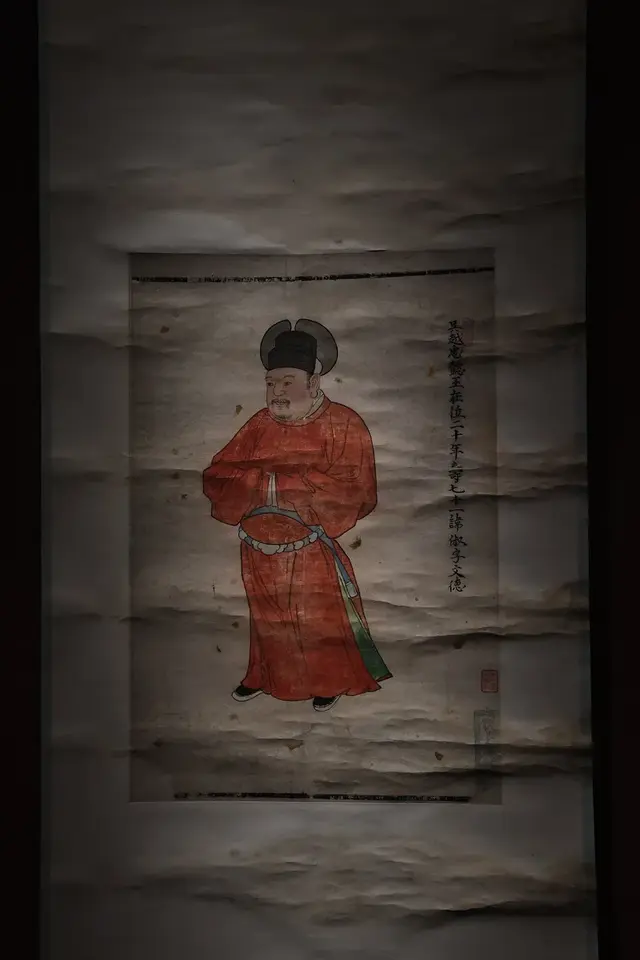 Wuyue Kingdom (吴越)
Historical figure
Qian Chu (钱俶, September 29, 929–October 7, 988), originally named Qian Hongchu (钱弘俶) and known by the courtesy name Wende (文德), was the fifth and final monarch of the Wuyue Kingdom during the Five Dynasties and Ten Kingdoms period, reigning from 948 to 978. A grandson of the founding King Qian Liu (King Wusu) and the ninth son of King Qian Yuanguan (King Wenmu), he came to the throne at nineteen following a palace coup by garrison commander Hu Jinsi. Preserving his deposed brother life with extraordinary moral resolve, Qian Chu governed the maritime realm of Wuyue for thirty-one years with deep pragmatism, Confucian benevolence, and unwavering fealty to successive Central Plains dynasties. Throughout his tenure, Qian Chu conscientiously followed the ancestral testament of Wuyue to serve the central dynasties and protect the realm and its people (bao jing an min). He maintained tributary subjection to the Later Han, Later Zhou, and Northern Song dynasties, changing his personal name to Qian Chu to observe the imperial taboo of Emperor Taizu of Song. In 974, he commanded fifty thousand Wuyue soldiers to assist the Song conquest of Southern Tang, neutralizing his historic rival while recognizing the inevitable unification of the realm. In 978 (3rd year of Taiping Xingguo), recognizing that the mandate of heaven had coalesced under Emperor Taizong of Song, Qian Chu made the momentous decision to voluntarily surrender his kingdom (natu gui Song), peacefully presenting thirteen prefectures, one army, eighty-six counties, and over five hundred and fifty thousand households to the Song court. His peaceful submission spared the vibrant Liangzhe region from wartime devastation, preserving the economic and cultural lifeline of southern China. Relocating to Kaifeng, he was treated with supreme imperial honors as Prince of Huaihai, Prince of Nanyang, and Prince of Qin, before dying suddenly on his sixtieth birthday in 988. Posthumously honored as Prince Zhongyi, Qian Chu stands as a preeminent exemplar of enlightened statecraft who sacrificed personal royal status for national unity and the welfare of millions.
 Wuyue Kingdom (吴越)
Third King of the Wuyue Kingdom
Qian Hongzuo (928–947), born Qian Zuo and courtesy named Yuan You, was the third sovereign of the Wuyue Kingdom during the Five Dynasties and Ten Kingdoms period, reigning as King Zhongxian. He was the sixth son of King Wenmu (Qian Yuanguan) and a grandson of the founding king, Qian Liu. In 941, King Wenmu died of illness following a palace fire, and the fourteen-year-old Qian Hongzuo ascended the throne pursuant to royal testament. Displaying remarkable maturity and decisiveness despite his youth, Qian Hongzuo swiftly neutralized the overbearing palace commander Cheng Zhaoyue, who had monopolized court affairs and plotted sedition, executing the rebellious factions and consolidating royal control over the palace guards. In external affairs, Qian Hongzuo adhered strictly to his grandfather's founding principle of serving the Central Plains dynasties with utmost loyalty, receiving formal investiture as King of Wuyue from Emperor Gaozu of Later Jin. During the mid-940s, when neighboring Min collapsed and Southern Tang armies laid siege to the strategic port of Fuzhou, Qian Hongzuo boldly dispatched combined amphibious expeditionary forces across the sea. The Wuyue troops crushed Southern Tang's massive army beneath the walls of Fuzhou, securing Fuzhou and expanding Wuyue's territorial jurisdiction into modern northern Fujian. Qian Hongzuo died of illness in Hangzhou in 947 at the age of twenty after a seven-year reign, remembered as an astute and courageous youthful monarch who protected the prosperity of the Liangzhe region.
 Wuyue Kingdom (吴越)
Founding General and Military Strategist of the Wu-Yue Kingdom
Gu Quanwu (顾全武, 866–930) was a paramount founding general and military strategist of the Wu-Yue Kingdom during the late Tang and Five Dynasties periods. In his early years, he was ordained as a Buddhist monk but possessed exceptional astuteness and immersed himself in non-Buddhist classics, historical annals, and military treatises. In 887, when Qian Liu secured control of Hangzhou, he recruited Gu into military service as a trusted sub-commander, with soldiers affectionately dubbing him "Monk Gu" (Gu Heshang). Known for calm resolve and tactical profundity, Gu rose swiftly to Commander of the elite Wuyong Corps. During the 895 rebellion of Dong Chang in eastern Zhejiang, Gu spearheaded the vanguard that eliminated defensive garrisons at Shihou, Shicheng, and Yuyao, broke through Wuyun Gate, and captured Dong Chang, enabling Qian Liu to absorb eastern Zhejiang. Gu subsequently led a naval expedition that shattered eighteen Huainan encampments to relieve Jiaxing, recaptured Suzhou and Changshu, and subdued Kunshan. During the dangerous Wuyong Mutiny in 902, when rebel forces besieged Hangzhou with the backing of Tian Yun, Gu discerned inner rivalries within Huainan and persuaded Qian Liu to forge an alliance with Yang Xingmi. Gu escorted the young heir Qian Chuanliao to Guangling, convincing Yang Xingmi through eloquent diplomacy to recall Tian Yun's invading forces and save Hangzhou from destruction. Through decades of frontline triumphs, Gu stood as the supreme pillar behind the territorial establishment of Wu-Yue.
Historical figure
Lin Ding (林鼎, 891–944), courtesy name Huanwen (涣文), tracing his ancestry to Houguan in Fujian, was born in Mingzhou and settled in Cixi, serving as a renowned chancellor, master calligrapher, and bibliophile scholar of the Wuyue Kingdom during the Five Dynasties and Ten Kingdoms period. Born into an erudite literary household, Lin was the son of Lin Wuyin, a celebrated late Tang poet. Known for his upright integrity and prodigious memory, he initially joined the staff of King Wusu of Wuyue, Qian Liu, serving as an escort officer. When King Wenmu, Qian Yuanguan, ascended the throne in 932, Lin was promoted to Chief Secretary of the Zhenhai Army and Section Administrative Assistant, drafting vital state edicts and diplomatic memorials. In 937, he was entrusted with the execution of royal commands, rising to Chancellor in 938 to preside over civil governance. In 940, he recognized the exceptional talent of the reclusive scholar Yuan Dezhao, championing his entry into court, which provided Wuyue with a foundational prime minister for three reigns. Beyond his statecraft, Lin Ding was one of the preeminent calligraphers and textual conservators of southeastern China. In calligraphy, he synthesized the techniques of the Two Wangs (Wang Xizhi and Wang Xianzhi) with the precision of Ouyang Xun and Yu Shinan, establishing supreme renown in the dynamic cursive clerical script. Passionate about literature, he read through the night until dawn, personally hand-copying tens of thousands of volumes to preserve classical texts from wartime destruction and mending damaged manuscripts with meticulous care. He authored the twenty-volume anthology Collected Practical Writings of Wujiang. Passing away in 944 at age fifty-four, he was honored with the posthumous title Zhenxian.