Birth in Hangzhou
Born in Gongchen Hall of Wuyue palace, ninth son of Qian Yuanguan.
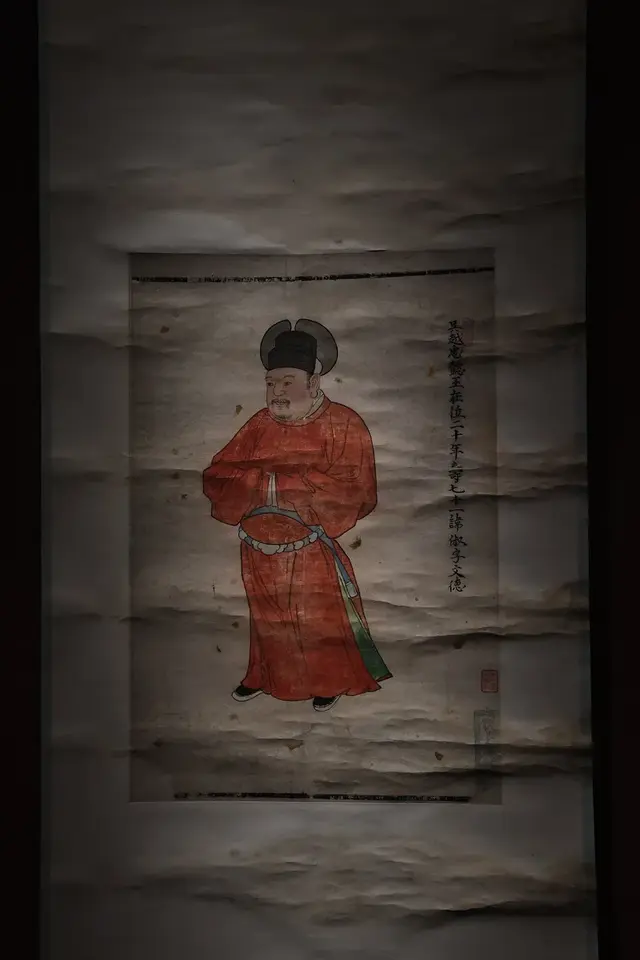
929 CE–988 CE
钱俶
Qian Chu (钱俶, September 29, 929–October 7, 988), originally named Qian Hongchu (钱弘俶) and known by the courtesy name Wende (文德), was the fifth and final monarch of the Wuyue Kingdom during the Five Dynasties and Ten Kingdoms period, reigning from 948 to 978. A grandson of the founding King Qian Liu (King Wusu) and the ninth son of King Qian Yuanguan (King Wenmu), he came to the throne at nineteen following a palace coup by…
Qian Chu (钱俶, September 29, 929–October 7, 988), originally named Qian Hongchu (钱弘俶) and known by the courtesy name Wende (文德), was the fifth and final monarch of the Wuyue Kingdom during the Five Dynasties and Ten Kingdoms period, reigning from 948 to 978. A grandson of the founding King Qian Liu (King Wusu) and the ninth son of King Qian Yuanguan (King Wenmu), he came to the throne at nineteen following a palace coup by garrison commander Hu Jinsi. Preserving his deposed brother life with extraordinary moral resolve, Qian Chu governed the maritime realm of Wuyue for thirty-one years with deep pragmatism, Confucian benevolence, and unwavering fealty to successive Central Plains dynasties. Throughout his tenure, Qian Chu conscientiously followed the ancestral testament of Wuyue to serve the central dynasties and protect the realm and its people (bao jing an min). He maintained tributary subjection to the Later Han, Later Zhou, and Northern Song dynasties, changing his personal name to Qian Chu to observe the imperial taboo of Emperor Taizu of Song. In 974, he commanded fifty thousand Wuyue soldiers to assist the Song conquest of Southern Tang, neutralizing his historic rival while recognizing the inevitable unification of the realm. In 978 (3rd year of Taiping Xingguo), recognizing that the mandate of heaven had coalesced under Emperor Taizong of Song, Qian Chu made the momentous decision to voluntarily surrender his kingdom (natu gui Song), peacefully presenting thirteen prefectures, one army, eighty-six counties, and over five hundred and fifty thousand households to the Song court. His peaceful submission spared the vibrant Liangzhe region from wartime devastation, preserving the economic and cultural lifeline of southern China. Relocating to Kaifeng, he was treated with supreme imperial honors as Prince of Huaihai, Prince of Nanyang, and Prince of Qin, before dying suddenly on his sixtieth birthday in 988. Posthumously honored as Prince Zhongyi, Qian Chu stands as a preeminent exemplar of enlightened statecraft who sacrificed personal royal status for national unity and the welfare of millions.
Born in Gongchen Hall of Wuyue palace, ninth son of Qian Yuanguan.
Appointed Commander of Inner Teeth Armies and Honorary Minister of Works at age ten.
Assigned to govern Taizhou; Buddhist master Deshao urged him to return swiftly to Hangzhou.
Summoned to Hangzhou by newly enthroned brother Qian Hongzong as Councilor of the Chancellery.
Hu Jinsi staged a palace coup; Qian Chu ascended the throne after securing his brother safety.
Wu Cheng captured Southern Tang general Cha Wenhui; Qian Chu presented captives to Later Han.
Dispatched troops to attack Changzhou and Xuanzhou in coordination with Emperor Shizong of Later Zhou.
Submitted tribute to Emperor Taizu; altered name to Qian Chu to observe the Song imperial taboo.
Mobilized fifty thousand Wuyue troops and naval squadrons to storm Changzhou and encircle Jinling.
Travelled to Kaifeng with family; Emperor Taizu gifted him the secret red box before departure.
Formally submitted memorials offering thirteen prefectures and eighty-six counties to Emperor Taizong.
Accompanied Emperor Taizong on the Taiyuan expedition, observing strict vassal protocol.
Invested as Military Commissioner of Wusheng and Prince of Nanyang, residing in Nanyang.
Reinvested as Prince of Deng; passed away suddenly on his sixtieth birthday on October 7, 988.
Qian Chu, originally named Qian Hongchu, was born in the Gongchen Hall of the Wuyue royal palace in Hangzhou on September 29, 929. He was the ninth son (and fifth biological son) of King Wenmu (Qian Yuanguan) and his consort Lady Wu Hanyue. Having waited until his forties to father this male child, Qian Yuanguan was profoundly delighted by the infant robust cries and remarkable features, granting him the affectionate childhood name Huzi (Little Tiger). From his youth, Qian Chu showed sharp literary intelligence, broad classical erudition, and accomplished skill in equestrian archery, earning the deep affection of his grandfather Qian Liu and his father.
In 939, following the established precedent for Wuyue princes, the ten-year-old Qian Chu commenced his official service as Commander of the Inner Teeth Armies, holding the honorary post of Minister of Works. In 946, the Later Jin court conferred upon him the title of Prefect of Taizhou. During his tenure in Taizhou, Qian Chu governed with integrity and benevolence, touring local districts to encourage agriculture and sericulture, while rehabilitating Confucian academies. His upright administration attracted widespread acclaim across eastern Zhejiang.
While residing in Taizhou, Qian Chu visited the Tiantai Mountains and met the renowned Buddhist master Deshao. Discerning an extraordinary aura in the young prince, Deshao privately warned him that Taizhou was not a proper resting place for a princely ruler and urged him to return swiftly to the capital at Hangzhou. Taking this counsel to heart, Qian Chu petitioned for a transfer. In the summer of 947, King Zhongxian (Qian Hongzuo) died young at twenty. As his children were infants, court ministers enthroned his younger brother Qian Hongzong (King Zhongxun), who promptly summoned Qian Chu to Hangzhou to serve as Councilor of State in the Chancellery.
During the final years of Wuyue, the Inner Teeth garrison had grown increasingly insolent. Garrison Commander Hu Jinsi, having played a decisive role in King Wenmu elevation, monopolized palace security and openly bullied the young monarch. King Zhongxun, endowed with an energetic and unyielding character, bitterly resented Hu Jinsi overbearing arrogance. He secretly formed an alliance with trusted commander Shuiqiu Zhaojuan to strip Hu Jinsi of military authority on New Year Eve.
Alerted to the impending arrest, Hu Jinsi executed a pre-emptive strike on the night of February 8, 948 (the thirtieth day of the twelfth month). Leading heavily armed garrison troops into the royal palace, he confined King Zhongxun in the Yihe Chamber, falsely announcing to the court that the king had suffered a paralytic stroke. Hu Jinsi then rode through the night to Qian Chu private residence in the southern suburbs, demanding that he assume the kingship. Comprehending the treacherous nature of the military retainers, Qian Chu remained behind his gates and declared with solemn resolve: Only if you guarantee the absolute safety of my brother life will I dare accept this mandate; otherwise, I would rather die than defile the state. Hu Jinsi and his officers took a binding blood oath to spare the deposed king.
On February 12, 948 (the fifth day of the first month), nineteen-year-old Qian Chu was formally enthroned in Hangzhou as the fifth king of Wuyue. Faithfully honoring his promise, he relocated Qian Hongzong to the Yijin Army headquarters in Yuezhou, providing him with lavish imperial stipends and guarding him vigilantly against harm throughout his life. When Hu Jinsi repeatedly urged Qian Chu to assassinate his brother, Qian Chu wept bitterly and categorically refused. Realizing that the young king possessed unyielding moral determination, Hu Jinsi grew consumed by paranoia, dying of malignant ulcers within the year. Qian Chu swiftly purged Hu Jinsi conspirators, executed double-dealing officer He Chengxun, and reclaimed absolute authority for the Qian royal lineage.
Upon ascending the throne, Qian Chu confronted continuous political upheavals across the Central Plains alongside aggressive pressure from the neighboring Southern Tang. Adhering strictly to King Qian Liu ancestral testament to honor the central son of heaven and shield the borders, Qian Chu maintained loyal tributary subjection regardless of which imperial house held power in Kaifeng. The Later Han Emperor Yindi promptly invested Qian Chu as Grand Marshal of the Southeast and King of Wuyue.
In 950, when Southern Tang sought to exploit civil turmoil in Min to seize Fuzhou, Wuyue commander Wu Cheng ambushed and captured the Southern Tang general Cha Wenhui. Rather than boasting of this triumph, Qian Chu dispatched swift couriers to present the captives directly to the Later Han court in Kaifeng, highlighting his humble vassal posture. Deeply pleased, the Later Han emperor elevated Qian Chu to Director of the Secretariat with supreme ministerial honors.
When Guo Wei founded the Later Zhou in 951, Qian Chu dispatched maritime embassies bearing lavish gifts to acknowledge the new dynasty, receiving confirmation as Grand Marshal of All Circuits. In 956, when Emperor Shizong of Later Zhou invaded Huainan, he sent an imperial summons requesting Wuyue to open a second front. Qian Chu mobilized his main armies against Changzhou and Xuanzhou, successfully fixing Southern Tang eastern armies in place. When Zhao Kuangyin established the Northern Song in 960, Qian Chu was the first regional monarch to submit tributes, voluntarily removing the character Hong from his given name to respect the imperial taboo of Emperor Taizu deceased father, for which he was granted the supreme title of Grand Marshal of the Empire.
In 974, Emperor Taizu of Song prepared to eliminate the Southern Tang, ordering generals Cao Bin and Pan Mei to advance down the Yangtze River while summoning Qian Chu to lead an offensive from the southeast. Fearing total destruction, Southern Tang ruler Li Yu sent an urgent envoy to Hangzhou, appealing to geographic solidarity: If Southern Tang falls today, Wuyue will follow tomorrow; our lands are the protective teeth to your lips.
Recognizing that the fragmentation of China was rapidly drawing to a close, Qian Chu refused to engage in futile resistance against the inevitable unification of the realm. He executed the Southern Tang emissaries, forwarded Li Yu private correspondence directly to Emperor Taizu, and mobilized fifty thousand soldiers alongside a thousand warships under general Ding Deyu. Wuyue naval forces swept across Lake Tai and the Baidang waters, crushing Southern Tang defenses at Changzhou and capturing two hundred warships.
Wuyue troops then advanced relentlessly to capture Runzhou and outer strongholds surrounding Jinling, coordinating closely with Cao Bin imperial army to seal the siege. In November 975, Jinling surrendered and Li Yu was taken captive. Qian Chu military contributions were instrumental in concluding the conquest of southern China. Although Wuyue gained immense imperial prestige and vast gifts from the Song throne, it had also surrendered its northern geographic buffer, placing its borders directly adjacent to the expanding Song Empire.
In the spring of 976, Emperor Taizu summoned Qian Chu to Kaifeng for an imperial audience. Court officials in Hangzhou were gripped by intense dread, fearing that the Song emperor would detain Qian Chu and annex Wuyue by force. Officials wept and begged the king to refuse the summons, but Qian Chu remained resolute: The imperial court possesses heavenly mandate; my family has served the Central Plains for three generations; how could I dare defy an imperial decree?
In February 976, Qian Chu journeyed to Kaifeng accompanied by Queen Sun, his heir Qian Weijun, and a thousand retainers. Emperor Taizu dispatched his brother Prince Zhao Guangyi and Prince Zhao Tingmei to greet him in the suburbs, welcoming the Wuyue king with unprecedented honors. Qian Chu presented fifty thousand ounces of silver, fifty thousand bolts of silk, and ten thousand catties of frankincense to replenish imperial reserves.
During his stay, Qian Chu was invited to dine alongside imperial princes and attend state banquets. When he prepared to return south in May 976, Emperor Taizu presented him with a sealed scarlet wooden box wrapped in yellow silk, instructing him: If you feel any doubt or apprehension along your journey, open this box and read its contents. Reaching the Yangtze River crossing, Qian Chu opened the box and was stunned to discover hundreds of memorials from Song court ministers petitioning the emperor to arrest Qian Chu and annex Wuyue immediately, all of which Emperor Taizu had rejected. Overcome with tears of gratitude, Qian Chu recognized Emperor Taizu immense magnanimity and resolved that full submission to Song was the only path forward.
In late 976, Emperor Taizu passed away and his brother Emperor Taizong ascended the throne. In the spring of 978, Emperor Taizong summoned Qian Chu to Kaifeng once more. By this time, Chen Hongjin of Zhangzhou and Quanzhou had surrendered his territory, leaving Wuyue as the sole remaining autonomous realm in southern China. While imperial hospitality remained outwardly warm, ministers like Lu Duoxun made it increasingly evident that the central court would no longer tolerate fragmented sovereignty.
Wuyue Chancellor Cui Renji entered Qian Chu lodgings and submitted an urgent plea: Your Majesty is currently in the palm of their hand, thousands of li from our homeland; unless you possess wings, you cannot fly back. If you do not promptly surrender your territory, catastrophe will be upon us instantly! Qian Chu embraced this counsel, determined to honor King Qian Liu prophecy that when a true son of heaven appeared, the Qian lineage must peacefully yield its lands rather than subject the people of Liangzhe to military bloodshed.
On June 9, 978 (the first day of the fifth month), Qian Chu formally submitted an imperial memorial offering the entire realm of Wuyue to Emperor Taizong. The submission encompassed thirteen prefectures, one military district, eighty-six counties, 550,680 registered households, 115,036 soldiers, alongside all municipal archives, armories, and granaries. Emperor Taizong accepted the surrender with boundless acclaim, issuing decrees to confirm the seamless integration of southeastern China into the Song Empire without shedding a single drop of blood.
Following the surrender of Wuyue, Qian Chu moved his entire household to Kaifeng, where Emperor Taizong granted him an expansive estate in the southern suburbs. He was invested as Grand Preceptor, Chancellor of the Secretariat, and Prince of Huaihai with an annual stipend of ten thousand households. His eldest son Qian Weijun received appointment as Military Commissioner, while dozens of Qian kinsmen and former Wuyue commanders were integrated into the elite imperial guard.
In 979, Emperor Taizong embarked on a major northern campaign against Northern Han at Taiyuan, commanding Qian Chu to accompany the imperial retinue. Qian Chu performed daily morning audiences with scrupulous modesty, contributing private grain reserves to support the army. After Northern Han was extinguished, Emperor Taizong held a celebratory banquet where Qian Chu danced and offered poetic verses of congratulations, completely dispelling lingering suspicions among Song court officials regarding the former southern monarch loyalty.
In 984, Qian Chu was reinvested as Prince of Hannan, and in 987, under administrative reallocations, he was named Military Commissioner of Wusheng and Prince of Nanyang, taking up residence in Nanyang. Governing Nanyang with gentle moderation and personal frugality, he planted vegetables in his courtyard and dispensed famine relief from his personal salary, earning the heartfelt affection of local commoners who revered him as a benevolent prince.
On October 7, 988 (the twenty-fourth day of the eighth month), Qian Chu observed his sixtieth birthday. Emperor Taizong dispatched imperial couriers from Kaifeng bearing lavish birthday gifts, imperial wines, and delicacies to his residence in Nanyang. Qian Chu hosted an elaborate feast for the imperial envoys and local civil and military officials, celebrating late into the evening in high spirits.
However, during the night immediately following the banquet, Qian Chu fell abruptly ill and passed away in his bedchamber at the age of sixty. While later unofficial histories speculated that he had been poisoned by toxic wine sent by Emperor Taizong, authoritative historical annals record that he had suffered chronically from diabetes and cardiovascular ailments. When news of his demise reached Kaifeng, Emperor Taizong was overcome with profound sorrow, suspending court audiences for seven days.
The Song court posthumously elevated Qian Chu to Imperial Father (Shangfu) and Prince of Qin, bestowing the posthumous title Zhongyi (Loyal and Righteous). The emperor funded an imperial-scale burial on the southern slopes of Mount Mang near Luoyang in 989. Qian Chu descendants, including Qian Weijun, Qian Weiyan, and Qian Weiji, flourished in the Northern Song bureaucracy, holding supreme ministerial and military offices and establishing the Qian lineage as one of the most illustrious and enduring noble families in Chinese imperial history.
During his thirty-one years on the Wuyue throne, Qian Chu made monumental contributions to hydraulic engineering and agrarian prosperity. Low-lying coastal lands across Liangzhe were perpetually threatened by turbulent oceanic tides. Continuing King Qian Liu pioneering seawall projects, Qian Chu conscripted tens of thousands of laborers to construct expansive stone embankments along the Qiantang River estuary and Hangzhou Bay, pioneering interlocking stone and timber construction techniques that withstood catastrophic storm surges.
These massive dikes protected agricultural basins around West Lake, Jian Lake, and Lake Tai, allowing double-cropped paddy rice to yield bountiful harvests across Hangzhou, Jiaxing, Huzhou, and Suzhou. Under his patronage, Wuyue sericulture, celadon porcelain production, papermaking, and shipbuilding attained supreme excellence. The famed Mi-se (secret color) Yue ware celadon reached artistic perfection, while commercial maritime networks extended to Goryeo, Japan, and Southeast Asia. The wealth generated from maritime trade transformed Hangzhou into the undisputed economic hub of southeastern China, laying the material foundation for the Song dynasty southern prosperity.
Deeply devoted to the Buddhist dharma, Qian Chu was revered as a contemporary King Ashoka. Mobilizing state resources, he erected and renovated celebrated architectural landmarks including the Leifeng Pagoda, Baochu Pagoda, Liuhe Pagoda, Lingyin Monastery, and the rock-cut sculptures of the Yanxia Grottoes, transforming Hangzhou into the renowned Southeast Buddhist Realm.
When Emperor Shizong of Later Zhou suppressed Buddhism in northern China, Qian Chu provided an asylum for monastics in Wuyue, inviting prominent figures such as Chan master Yongming Yanshou to lead Hangzhou monasteries and compose the monumental hundred-volume Zongjing Lu. Furthermore, Qian Chu sent five hundred ounces of gold to Goryeo and Japan to recover lost Tiantai commentaries, revitalizing the Tiantai school in China. He also commissioned the casting of eighty-four thousand miniature bronze Ashoka pagodas containing early woodblock-printed dharani scriptures, distributing them to monasteries across East Asia and creating invaluable treasures in the history of world printing and metallurgical art.
Qian Chu greatest historical legacy resides in his voluntary surrender of sovereignty to the Song court in 978. Throughout the bloody century following the fall of the Tang dynasty, regional warlords waged relentless wars that decimated populations across northern and central China. While Wuyue commanded over a hundred thousand battle-hardened soldiers and abundant treasuries, Qian Chu recognized that armed resistance would only bring catastrophic ruin upon the people of Liangzhe.
By peacefully surrendering his realm without a single skirmish, Qian Chu ensured that the economic heartland of southern China remained intact, preserving cultural institutions, agrarian infrastructure, and millions of lives. Northern Song statesman Su Shi celebrated Qian Chu virtues in the Memorial of the Biaozhong Temple, observing that the people of Wuyue lived and died without knowing warfare while the rest of China burned in turmoil. His enlightened capitulation unified China without devastation, establishing a timeless model of benevolent statecraft.
In addition to his administrative achievements, Qian Chu was an accomplished scholar, calligrapher, and poet who compiled multiple volumes of imperial poetry and patronized Confucian scholars throughout his realm. His personal character was distinguished by extraordinary filial piety and familial harmony. Even when confronted by the treacherous coup of Hu Jinsi, he placed the life of his brother Qian Hongzong above all else, ensuring his brother safety and adopting his nephew Qian Weizhi as his own son.
Qian Chu instilled a strict domestic code emphasizing loyalty, filial devotion, and academic diligence in his descendants. Following the move to Kaifeng, the Qian family adapted seamlessly to the civilian bureaucratic culture of the Northern Song, producing dozens of grand councilors, scholars, and academicians across the Song, Ming, and Qing dynasties. In the traditional Hundred Family Surnames (Baijiaxing), compiled during the early Song, the Qian surname was placed second only to the imperial house of Zhao, serving as an enduring historical tribute to Qian Chu virtue, magnanimity, and lasting service to Chinese civilization.
Ouyang Xiu, New History of the Five Dynasties (Xin Wudaishi): Ouyang Xiu praised Qian Chu for his fraternal devotion in demanding his brother preservation before accepting the crown, commending his enduring commitment to peace and his prudent recognition of the imperial mandate.
Sima Guang, Comprehensive Mirror for Aid in Government (Zizhi Tongjian): Sima Guang recorded that Qian Chu governed the maritime regions with exceptional wisdom, choosing to submit his lands to the Song court rather than expose his people to the horrors of siege warfare, thereby preserving the prosperity of southeastern China.
Su Shi, Memorial of the Biaozhong Temple (Biaozhong Guan Bei): Su Shi eulogized the Qian royal house, writing that throughout decades of widespread civil war across China, the people of Wuyue lived in peace without knowing weapons, and that Qian Chu voluntary surrender crowned their legacy with immortal virtue.
FIGURES ASSOCIATED WITH THIS DYNASTY