Humble Birth
Born in Shijingli, Lin'an, Hangzhou; preserved in infancy through maternal devotion and named Poliu.
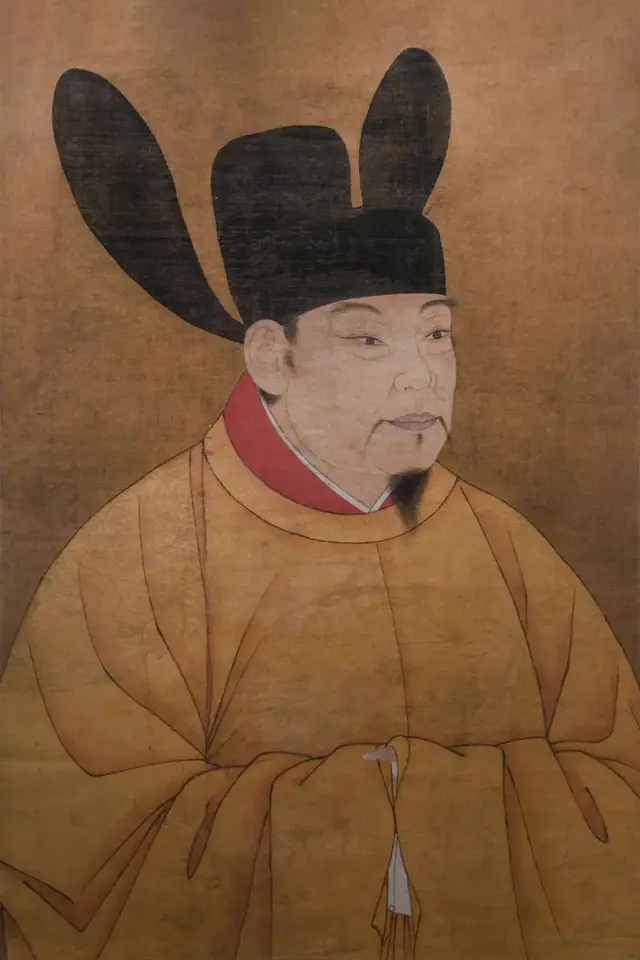
852 CE–932 CE
钱镠
Qian Liu (钱镠, 852–932), courtesy name Jumei (具美) and childhood name Poliu (婆留), was a native of Lin'an in Hangzhou and the founding sovereign of the Wuyue Kingdom during the Five Dynasties and Ten Kingdoms period. Born into humble agrarian origins, Qian Liu rose from merchant militia service through extraordinary martial prowess in archery and spearmanship. During the Qianfu era of the late Tang, he enlisted under garrison…
Qian Liu (钱镠, 852–932), courtesy name Jumei (具美) and childhood name Poliu (婆留), was a native of Lin'an in Hangzhou and the founding sovereign of the Wuyue Kingdom during the Five Dynasties and Ten Kingdoms period. Born into humble agrarian origins, Qian Liu rose from merchant militia service through extraordinary martial prowess in archery and spearmanship. During the Qianfu era of the late Tang, he enlisted under garrison commander Dong Chang and organized the elite Lin'an Eight Garrisons to defend his homeland against the devastating Huang Chao agrarian rebellions. He subsequently crushed regional warlord Liu Hanhong and executed his former mentor Dong Chang after the latter illegitimately proclaimed himself emperor, unifying all thirteen prefectures of Eastern and Western Zhejiang. Recognized for his paramount loyalty in defending the empire's southern flank, Emperor Zhaozong of Tang conferred upon him an iron certificate guaranteeing ninefold imperial pardons. Following Zhu Wen's usurpation of the Tang throne in 907, Qian Liu adopted a pragmatic state policy of safeguarding borders and pacifying the populace while acknowledging the nominal suzerainty of the Central Plains dynasties, assuming the title King of Wuyue. Throughout his four-decade administration, he maintained peace, lightened agrarian taxes, constructed the monumental Qiantang River Seawall to tame catastrophic tidal bores, expanded Hangzhou's defensive perimeter, dredged West Lake through a dedicated garrison force, developed the polder dyke irrigation networks across the Lake Tai basin, and fostered the maritime silk trade alongside Yue kiln secret-color celadon production. He passed away in 932 at the age of eighty-one, honored posthumously as King Wusu with the temple name Taizu.
Born in Shijingli, Lin'an, Hangzhou; preserved in infancy through maternal devotion and named Poliu.
Local unrest spread across Zhejiang; enlisted under Dong Chang as an auxiliary commander to protect the county.
Ambushed the vanguard of Huang Chao's rebel army at Lin'an, employing psychological deception to compel their retreat.
Recruited elite Lin'an yeomanry into the Eight Garrisons, assuming the office of Military Commissioner of Hangzhou.
Led naval and terrestrial forces across the Qiantang River, capturing Liu Hanhong and securing the prefecture of Yuezhou.
Dong Chang illegitimately declared himself emperor; Qian Liu led punitive imperial forces to crush the rebellion and unify Liangzhe.
Honored by Emperor Zhaozong with an inscribed iron certificate granting imperial pardons, elevated to Prince of Pengcheng.
Zhu Wen established Later Liang; Qian Liu accepted central suzerainty and was invested as King of Wuyue.
Personally shot arrows against the raging Qiantang bore, constructing stone seawalls and expanding Hangzhou's fortifications.
Bequeathed family precepts enjoining perpetual submission to legitimate central rule; died in Hangzhou aged eighty-one.
Qian Liu was born into a destitute farming family in Shijingli, Lin'an County, Hangzhou, in 852. Local folklore recorded an auspicious crimson glow illuminating his birth chamber, yet his father, Qian Kuan, overwhelmed by poverty, initially considered abandoning the infant. Rescued and nurtured by his paternal grandmother, he was granted the childhood moniker Poliu. These impoverished beginnings fostered his unyielding resilience, deep empathy for peasant hardships, and profound martial discipline.
As an adolescent, Qian Liu grew to an imposing physical stature, demonstrating little patience for classical rote memorization but displaying a natural genius for equestrian archery, spearmanship, and tactical maneuvers. When organizing village youths in mock military formations, he commanded with such natural authority that elder villagers frequently observed he was destined for exceptional greatness.
Driven by economic necessity, the young Qian Liu entered the private salt trade navigating the labyrinthine waterways connecting the Qiantang River with Lake Tai. Navigating commercial boats through lawless marshes populated by river bandits, he acquired an encyclopedic familiarity with Zhejiang's hydrological topography, coastal tidal rhythms, and defensive river passes. His reputation for physical courage and fair dealing earned him broad respect among regional tradesmen and boatmen.
In addition to martial prowess, Qian Liu cultivated practical literacy by consulting itinerant Buddhist monks and scholars. He absorbed classical tactical treatises by Sun Wu and Wu Qi, combining tactical agility with formidable personal combat ability. He was capable of drawing heavy recurve bows to strike small suspended targets at a hundred paces, while maneuvering heavy lances with a single arm on horseback.
During the late 870s, the agrarian rebellions led by Huang Chao and Wang Xianzhi plunged the Tang empire into profound turmoil. Corrupt imperial garrisons abandoned their posts, leaving towns and villages across Jiangnan vulnerable to pillage and devastation. When local magistrate Dong Chang raised an auxiliary force to defend Lin'an, Qian Liu enlisted and was promptly appointed vanguard lieutenant due to his military aptitude and standing among local youth.
Qian Liu instituted rigorous discipline within his detachment, prohibiting the looting of civilian crops and leading every charge in person. Within months, he transformed disorderly local volunteers into an ironclad militia. In dozens of small-scale encounters against roving bandit groups, he repeatedly ambushed hostile columns in forested ravines, neutralizing insurgent leaders and earning the enduring gratitude of the local populace.
In 879, a massive insurgent host detached from Huang Chao's main army invaded the Hangzhou basin, causing regular imperial commanders to flee in panic. Dong Chang tasked Qian Liu with anchoring the defense of Lin'an against an enemy outnumbering him twenty to one. Rather than retreating into fortifications, Qian Liu stationed elite archers along the narrow mountain passes of Mount Shijing, personally ambushing the enemy vanguard and slaying its commanding general.
Anticipating a concentrated retaliatory strike, Qian Liu withdrew his force into the dense forests of Mount Qianzheng. He instructed an elderly village woman left along the route to inform rebel scouts that General Qian of Lin'an had encamped hundreds of thousands of crack troops throughout the eight-hundred-li expanse of the mountain wilderness. Intimidated by the fictitious defensive network, the insurgent commanders hesitated to advance.
Exploiting their confusion, Qian Liu led nighttime commando squads into the insurgent perimeter, setting fires and sounding wardrums from multiple vectors. Believing themselves surrounded by a massive regular army, the rebel host panicked, trampled one another in the dark, and retreated southward toward Jiangxi. Qian Liu thus preserved Lin'an and surrounding districts from devastation, establishing his renown throughout Western Zhejiang.
Following Huang Chao's sack of Chang'an in 881 and the flight of Emperor Xizong into Sichuan, central administrative control over southeastern China disintegrated completely. When Hangzhou Prefect Lu Shenzhong abandoned his seat amidst rampant mutinies, Dong Chang and Qian Liu marched their forces into the city to restore civic order. Qian Liu immediately executed looters, established night watches, and reopened grain markets.
To neutralize external threats, Qian Liu led mobile columns across surrounding counties including Fuyang, Tonglu, and Yuhang, clearing entrenched bandit strongholds and resettling displaced refugees onto abandoned arable land. Impressed by his administrative efficiency and military competence, the Tang imperial court confirmed Dong Chang as Prefect of Hangzhou and appointed Qian Liu Military Commissioner, formalizing his authority over all defensive garrisons.
Recognizing that regional survival depended upon a permanent, highly trained standing army, Qian Liu selected thousands of resolute Lin'an yeomen to organize the Eight Garrisons of Lin'an. He placed command of each unit under trusted comrades, including Gu Quanwu, Du Leng, Shen Mo, Chen Sheng, Cheng Ji, Ruan Jie, and Zhen Gui. Bound by ties of kinship and local loyalty, this formation developed unparalleled cohesion.
Qian Liu subjected the Eight Garrisons to intensive amphibious and terrestrial tactical drills. Soldiers were trained to maneuver warships through turbulent currents, engage in boarding combat, and deploy heavy crossbows and pike phalanxes across broken terrain. Under Qian Liu's iron discipline, troops who damaged standing crops were severely punished, transforming the Eight Garrisons into the most formidable fighting force in southeastern China.
In 882, Liu Hanhong, the predatory Commissioner of Eastern Zhejiang, mobilized tens of thousands of troops to cross the Qiantang River and annex Hangzhou. Dong Chang, terrified by the impending invasion, entrusted supreme field command to Qian Liu. Knowing the enemy was numerically superior but poorly disciplined, Qian Liu resolved to deliver a decisive preemptive blow along the riverbanks.
Learning that Liu Hanhong's advance guard was encamped negligently near Xiaoshan, Qian Liu dispatched eight hundred elite swimmers across the river under cover of night. The commando force infiltrated the enemy camp, igniting supply depots and slaughtering the garrison. The invading host dissolved in panic, and the hostile general fled back to Yuezhou.
Pressing his advantage, Qian Liu crossed the river with his main army and outmaneuvered Liu Hanhong's fortified positions at Xiling, using Gu Quanwu's flanking cavalry to shatter the enemy's center. Liu Hanhong retreated behind the massive walls of Yuezhou, which Qian Liu placed under tight siege for several months while strictly prohibiting his soldiers from harming surrounding peasant homesteads.
By late 886, starved of provisions and deserted by his officers, Liu Hanhong attempted to flee in disguise but was captured at an outpost by Qian Liu's patrols. Liu Hanhong was publicly executed, bringing an end to years of devastation in Eastern Zhejiang. The Tang court subsequently appointed Dong Chang Jiedushi of Zhendong and elevated Qian Liu to Prefect of Hangzhou, consolidating Liangzhe into a stable bipartite sphere.
Following his installation at Yuezhou, Dong Chang succumbed to megalomania and superstitious delusion. Surrounded by sorcerers, Dong Chang committed high treason in March 895 by proclaiming himself Emperor of the Great Sage Yan State and establishing his own imperial reign title, dispatching envoys to demand Qian Liu's submission as supreme general of his rebel dynasty.
Qian Liu was devastated by his former patron's madness. While deeply grateful for Dong Chang's early patronage, Qian Liu recognized that an illegitimate dynastic claim over a few coastal counties was an act of suicide that would invite imperial retribution and plunge the populace into ruin. He executed the rebel envoys, burned the treasonous decree, and sent a passionate letter pleading with Dong Chang to abdicate his false title and seek imperial forgiveness.
When Dong Chang rejected his appeals with fury, Emperor Zhaozong issued an imperial edict stripping Dong Chang of all honors and appointing Qian Liu Supreme Commander of Eastern Zhejiang to crush the rebellion. Prioritizing dynastic duty and regional preservation over private sentiment, Qian Liu mobilized the Eight Garrisons for a punitive campaign against Yuezhou.
Throughout late 895 and early 896, Qian Liu's generals Gu Quanwu and Du Leng systematically captured outlying rebel garrisons at Zhuji and Xiaoshan before laying siege to Yuezhou. The city walls fell in May 896. Dong Chang was captured alive and placed aboard a boat bound for Hangzhou to face formal sentencing, but committed suicide by leaping into the river out of shame.
Qian Liu wept upon learning of Dong Chang's demise, ordering that his former patron be buried with full military honors and extending personal protection and stipends to his surviving family. The Tang court, recognizing Qian Liu's decisive loyalty, invested him as Jiedushi of both Zhenhai and Zhendong circuits. For the first time, all thirteen prefectures of Eastern and Western Zhejiang were unified under Qian Liu's sole administration.
In August 897, to commemorate his monumental service in preserving the southern flank of the empire, Emperor Zhaozong dispatched imperial envoys to Hangzhou to present Qian Liu with a golden-inscribed iron certificate. The decree guaranteed nine pardons for capital offenses committed by Qian Liu and three for his direct heirs, representing the pinnacle of imperial gratitude.
Qian Liu greeted the imperial commissioners with reverent humility, ordering citywide celebrations and building a dedicated pavilion to enshrine the artifact. He assembled his children and officers before the pavilion, enjoining them to remain humble, cultivate civic virtue, and honor their allegiance to the sovereign rather than using the certificate as a shield for lawlessness.
As Qian Liu stabilized Zhejiang, Yang Xingmi consolidated a formidable rival state in Huainan, seeking to dominate the lower Yangtze delta. Between 898 and 904, Yang Xingmi's veteran generals, including Tian Jun and Li Shenfu, mounted repeated major invasions targeting Suzhou and Hangzhou, initiating a prolonged struggle for control of Lake Tai.
Qian Liu deployed Gu Quanwu and Du Leng along the northern perimeter, leveraging the intricate canal network to fragment invading forces. At the decisive Battle of Linping, Gu Quanwu lured Tian Jun's columns into a swampy defile, executing an encirclement that crushed the Huainan army and eliminated thousands of invading troops, permanently checking their southern advance.
Recognizing that prolonged war would exhaust their respective populations, Qian Liu and Yang Xingmi engaged in diplomatic negotiations in 904. The two leaders established Lake Tai and Wangting as a neutral frontier and arranged a royal marriage between Qian Liu's son Qian Yuanliao and Yang Xingmi's daughter, securing decades of durable peace between the neighboring states.
When Zhu Wen deposed the last Tang emperor in 907 to establish the Later Liang dynasty, many southern governors urged Qian Liu to launch a coalition punitive war. However, Qian Liu recognized that Wuyue possessed fewer than one hundred thousand troops and could not wage an offensive campaign across the Central Plains without ruining its agrarian base.
Formulating his guiding principle of safeguarding borders and deferring to central authority, Qian Liu accepted the investiture of King of Wuyue from Later Liang, using central recognition to secure complete administrative and diplomatic autonomy. By paying regular tribute and refusing to declare himself an independent emperor, Qian Liu shielded his kingdom from destructive invasions, creating an oasis of stability amidst widespread northern chaos.
The lower reaches of the Qiantang River were historically plagued by fierce tidal bores that repeatedly destroyed dikes, salinized farmland, and threatened Hangzhou's municipal perimeter. In 910, Qian Liu initiated the most ambitious hydrological engineering project in medieval China: the construction of a permanent stone seawall along the estuary.
When initial earthen dikes were repeatedly swept away by turbulent tides, local superstition attributed the failures to malevolent river spirits. On the annual bore of the eighteenth day of the eighth lunar month, Qian Liu assembled five hundred master archers upon Mount Yuelun, personally drawing his bow and commanding his troops to discharge thousands of iron-tipped arrows into the surging waters.
Capitalizing on the bore's diversion, Qian Liu oversaw a revolutionary civil engineering innovation: the fabrication of immense woven bamboo caissons packed with heavy granite boulders. Sunk deep into the riverbed, anchored with ironwood pilings, and faced with cut stone blocks, this flexible gravity-wall withstood the tidal shock, reclaiming thousands of hectares of coastal land for permanent cultivation.
Following the seawall's completion, Qian Liu undertook the comprehensive redevelopment of Hangzhou's urban space. Expanding far beyond the cramped Tang-era municipal core, he directed the construction of a massive outer circuit wall measuring seventy li in circumference, incorporating modern gatehouses, canals, and defensive barbicans.
The expanded city integrated the Qiantang riverfront, the commercial canal network, and the scenic precincts of West Lake. Qian Liu laid out a grid of broad boulevards, established water brigades for fire prevention, and linked domestic canals to the Grand Canal, transforming Hangzhou into the preeminent commercial and cultural metropolis of southeastern China.
West Lake was vital to Hangzhou's municipal water supply and regional irrigation, but by the late ninth century it had become heavily silted and choked with aquatic weeds. In a pioneering environmental conservation measure, Qian Liu organized a permanent water conservancy corps of one thousand soldiers known as the Kaihu Shi, or Lake Dredgers.
Equipped with specialized cutters and dredges, this corps systematically cleared weeds and extracted accumulated silt, which was used to reinforce shorelines and landscape causeways. Qian Liu constructed sluice gates and conduits to channel pristine lake water into urban residential quarters, providing clean drinking water for hundreds of thousands of residents while eliminating chronic waterlogging.
Across the low-lying wetlands of the Lake Tai basin, Qian Liu implemented the comprehensive polder dyke system, organizing the excavation of intersecting drainage canals and river outlets. These waterways enclosed fertile agricultural plots protected by robust perimeter dikes equipped with water wheels and adjustable sluices.
To stimulate agricultural reclamation, Qian Liu decreed that peasants clearing desolate marshes would be exempt from land taxes for five years, while offering substantial bounties to communities maintaining communal dikes. Under this administration, the Lake Tai basin developed into China's most productive granary, giving rise to the historical proverb that when Suzhou and Huzhou harvest, all under heaven have enough.
Qian Liu systematically transformed Wuyue into an outward-facing maritime kingdom, establishing dedicated Bureau of Foreign Trade offices in Hangzhou, Mingzhou, and Wenzhou to regulate incoming merchant vessels, levy maritime tariffs, and secure safe harbor facilities for foreign tradesmen.
He expanded deep-sea shipyards producing ocean-going vessels that plied trade routes to Goryeo, Japan, and Southeast Asia. Wuyue exported fine silk textiles, tea, and Yue celadon in exchange for precious timber, silver, medicinal herbs, and South Seas aromatics, generating substantial state revenues while integrating Jiangnan into the global maritime economy.
Under royal patronage, the ancient Yue kiln complexes around Shanglin Lake reached unprecedented technological and aesthetic heights. Qian Liu established specialized official kilns to manufacture the celebrated secret-color celadon, utilizing enclosed ceramic saggers and precise reduction firing to achieve jade-like olive-green glazes of incomparable purity.
These exquisite vessels were employed as supreme diplomatic gifts presented to Central Plains courts and exported to overseas monarchs. Qian Liu's support for metallurgical, textile, and papermaking guilds turned Wuyue into the primary center of artisanal innovation in tenth-century East Asia.
Gravely concerned with social healing after decades of warfare, Qian Liu championed Mahayana Buddhism to foster communal tranquility. He funded the construction and renovation of hundreds of monastic sanctuaries across Hangzhou and Mount Tiantai, earning the city the enduring honorific title of Southeast Buddhist Realm.
Along the Qiantang River, he erected the predecessor of the Liuhe Pagoda to serve as a navigational beacon and spiritual guardian against tidal waters, while royal commissions financed the iconic Baochu Pagoda and the initial structures of Leifeng Pagoda. He cast eighty-four thousand miniature bronze pagodas enshrining block-printed Dharani sutras, leaving landmark treasures in Chinese printing and religious art history.
Determined to safeguard his lineage from the moral degeneration typical of chaotic warlord dynasties, Qian Liu composed the celebrated Qian Family Precepts. Structured around personal cultivation, family cohesion, social benevolence, and unyielding devotion to the public welfare, the text provided an enduring moral compass for his descendants.
In his final testament, Qian Liu commanded his heirs to never declare themselves independent emperors, ordering that whenever an enlightened sovereign arose to unify China, Wuyue should peacefully submit its registers and lands without bloodshed. This visionary policy culminated in 978 when his grandson Qian Chu surrendered Wuyue to the Song dynasty without losing a single soldier, preserving the prosperity of the southeast.
FIGURES ASSOCIATED WITH THIS DYNASTY