Born | Born in Fenyang Ward, Taiyuan, as Shi Shaoyong's second son.
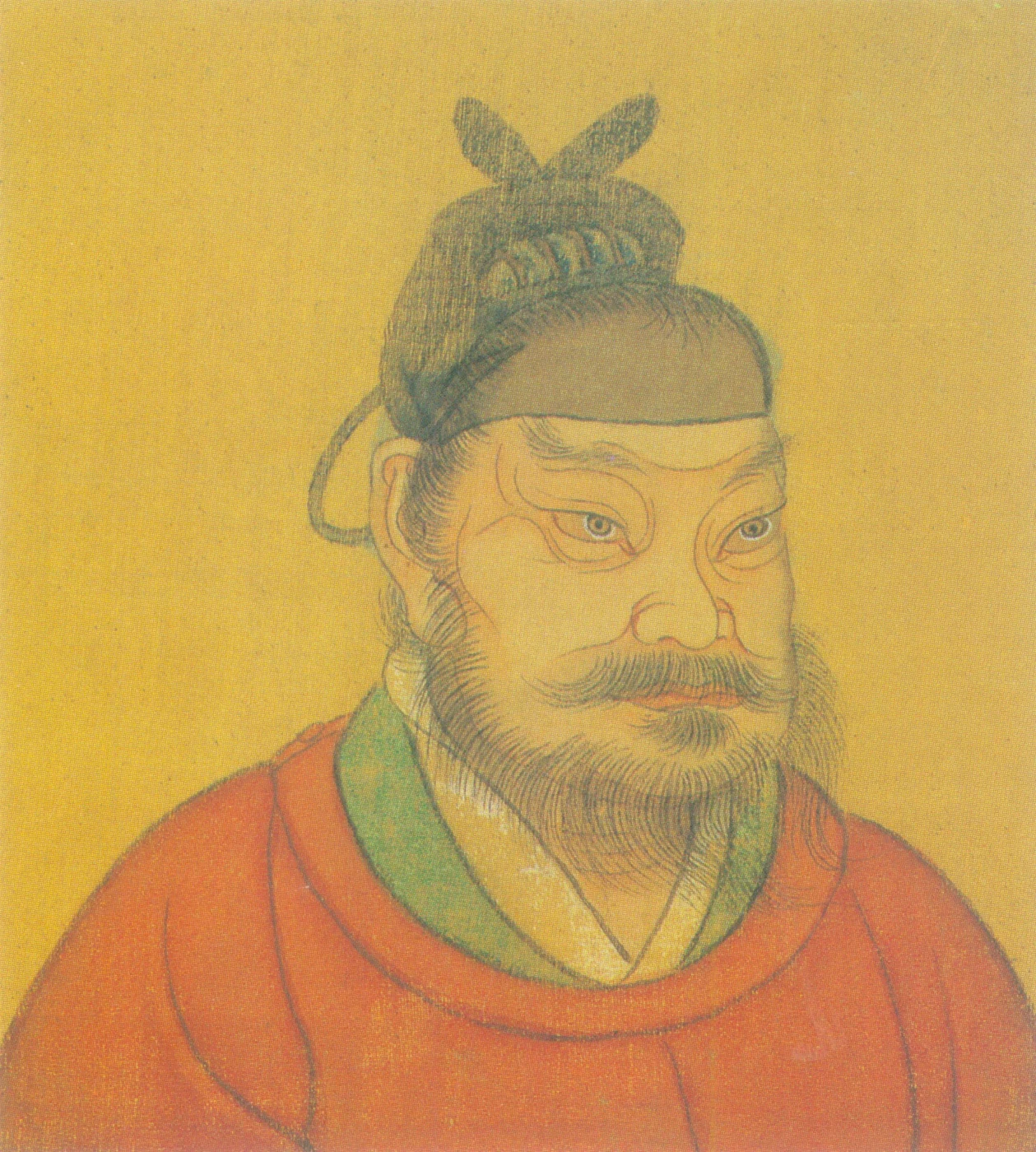
892 CE–942 CE
Emperor
Shi Jingtang
石敬瑭
Shi Jingtang (March 30, 892–July 28, 942), a Shatuo from Fenyang Ward in Taiyuan, was the founding emperor of Later Jin during the Five Dynasties and Ten Kingdoms period. His temple name was Gaozu and his posthumous title was Shengwen Zhangwu Mingde Xiao Emperor. His father Shi Shaoyong, whose non-Han name was Nielieji, served under Li Keyong and rose to become prefect of Pingzhou and Mingzhou. Shi Jingtang became the…
892 CE–942 CELater Jin
PROFILE
Shi Jingtang (March 30, 892–July 28, 942), a Shatuo from Fenyang Ward in Taiyuan, was the founding emperor of Later Jin during the Five Dynasties and Ten Kingdoms period. His temple name was Gaozu and his posthumous title was Shengwen Zhangwu Mingde Xiao Emperor. His father Shi Shaoyong, whose non-Han name was Nielieji, served under Li Keyong and rose to become prefect of Pingzhou and Mingzhou. Shi Jingtang became the son-in-law of Li Siyuan, later Emperor Mingzong of Later Tang, and gained a reputation for courage and archery through repeated military service. In 936, the third year of the Qingtai era, after becoming the object of suspicion from Li Congke, the last emperor of Later Tang, Shi rebelled at Jinyang. In exchange for territory, submission as a vassal, and recognition of himself as a “son,” he secured Khitan military aid, destroyed Later Tang, and founded Later Jin. He ceded the Sixteen Prefectures of Yanyun to the Khitan and honored Yelü Deguang, Emperor Taizong of Liao, as “Father Emperor,” calling himself “Son Emperor.” The cession deprived the Central Plains of an important northern defensive barrier and had long-lasting consequences. During his reign Shi introduced policies to reduce taxation and compile historical works, but regional military rebellions remained frequent. He ultimately fell ill and died amid anxiety and anger after the Khitan questioned him over Tuyuhun groups that had submitted to Later Jin.
- Other names
- Gaozu of Later Jin; “Son Emperor”
- Period
- Later Jin
- Dynasty / Polity
- Later Jin
- Identity
- Emperor
- Ethnicity / People
- Shatuo
- Ancestral home
- Fenyang Ward, Taiyuan
- Date of birth
- March 30, 892
- Place of birth
- Not recorded in historical sources
- Date of death
- July 28, 942
- Reign
- November 30, 936–July 28, 942
- Predecessor
- Emperor Modi of Later Tang (Li Congke)
- Successor
- Emperor Chudi of Later Jin (Shi Chonggui)
- Era name
- Tianfu
- Temple name
- Gaozu
- Posthumous name
- Shengwen Zhangwu Mingde Xiao Emperor
- Major achievement
- Founder of Later Jin; seized the throne with Khitan assistance, accepted the status of “Son Emperor,” and ceded the Sixteen Prefectures of Yanyun, earning severe condemnation from later generations.
LIFE TIMELINE
Age twenty-three | After Li Cunxu consolidated Hebei, Shi Jingtang campaigned in various regions with Li Siyuan.
Age twenty-four | At the Battle of Qingping, led more than ten cavalrymen with leveled lances to rescue Li Cunxu, gaining fame.
Age twenty-six | At the Battle of Huliupo, proposed a strategy to Li Siyuan that helped inflict a major defeat on Later Liang.
Age thirty-one | Joined Li Siyuan in a surprise attack on Yunzhou; though wounded by a blade, protected his commander. Later Liang was destroyed that same year.
Age thirty-four | Urged Li Siyuan to exploit the mutiny by advancing south and taking Bianzhou, contributing to his accession.
Age thirty-four | After Li Siyuan became emperor, appointed Military Commissioner of Baoyi Army and given the merit title “Meritorious Official Who Exhausted Loyalty, Offered Strategy, and Restored the State.”
Age thirty-five | Suppressed Zhu Shouyin's rebellion; appointed Military Commissioner of Xuanwu Army and Commander-in-Chief of the Imperial Guard Cavalry and Infantry.
Age thirty-six | Appointed Defender of Yedu and Military Commissioner of Tianxiong Army, with the additional title Imperial Son-in-Law Commandant.
Age forty | Appointed Military Commissioner of Hedong and stationed at Taiyuan.
Age forty-two | After Emperor Min Li Conghou fled to him following defeat, Shi detained him at Weizhou; Li Conghou was soon killed by Li Congke.
Age forty-four | In the fifth month, the last emperor ordered Shi transferred to Tianping Army; Shi rebelled. In the ninth month he appealed to the Khitan for aid. In the eleventh month the Khitan ruler invested him as emperor of Jin, and he adopted the Tianfu era name.
Age forty-four | In the intercalary eleventh month, the last Later Tang emperor burned himself to death and Later Tang fell. Later Jin ceded the Sixteen Prefectures of Yanyun to the Khitan.
Age forty-five | Fan Yanguang and Zhang Congbin rebelled; Shi's sons Shi Chongxin and Shi Chongyi were killed. A decision was made to move the capital to Bianliang.
Age forty-six | Formally moved the capital to Bianliang.
Age forty-seven | Lifted restrictions on private salt trade, reformed land-rent taxation, and ordered improvements in prison conditions.
Age forty-nine | Ordered compilation of a history of Tang, later known as the Old Book of Tang. An Chongrong and Liu Zhiyuan accepted the submission of Tuyuhun groups, prompting the Khitan to send envoys demanding an explanation.
Age fifty | Fell ill amid anxiety over Khitan demands and died at Bianliang on July 28.
BIOGRAPHY
Biography
Family Background and Early Life
Historical sources disagree over Shi Jingtang's ancestry. The New History of the Five Dynasties states that his father Shi Shaoyong “originally came from the western barbarians and followed the Zhuxie in submitting to Tang,” identifying the family with the Shatuo. Another genealogy made the family descendants of Shi Que, a Spring and Autumn period official of Wey, and of the Western Han chancellor Shi Fen, whose descendants allegedly moved to Ganzhou at the end of Han. A recently unearthed epitaph of Shi Chonggui instead claimed descent from Shi Le of Later Zhao. Shi Jingtang's great-great-grandfather Shi Jing reportedly entered Tang service from Ganzhou with Li Keyong's ancestors during the Yuanhe era and rose to become prefect of Shuozhou. His grandfather Shi Yi served as Defense Commissioner of Zhenwu, while his father Shi Shaoyong, non-Han name Nielieji, was a skilled horseman and archer who repeatedly distinguished himself under Li Keyong and his son and became prefect of Pingzhou and Mingzhou. After the founding of Later Jin he was posthumously honored as Emperor Xiaoyuan.
Shi Jingtang was born on the twenty-eighth day of the second month of 892, the first year of the Jingfu era, in Fenyang Ward, Taiyuan, as Shi Shaoyong's second son. The Old History of the Five Dynasties records that “white vapor filled the courtyard” at his birth. Quiet and reserved from childhood, Shi enjoyed reading military texts and admired the Warring States general Li Mu and the Western Han general Zhou Yafu. Li Siyuan, then prefect of Daizhou, valued him highly and married a daughter to him. Li Cunxu heard of Shi's skill in riding and archery and brought him into his own service; at Li Siyuan's request, he was later transferred to Li Siyuan's army to command the elite personal cavalry unit known as the Left Shooting Army, also called the “Three Campaigns Army.”
Military Career
In 915, Li Cunxu consolidated Hebei and established a headquarters at Yedu. The Later Liang general Liu Xun stationed fifty thousand troops at Shen County. In the second month of 916 Liu Xun suddenly attacked Qingping. Li Cunxu hurried into battle before his formation was ready. Shi Jingtang led more than ten cavalrymen with leveled lances deep into the enemy ranks, fought in all directions, checked the Liang advance, and covered Li Cunxu's withdrawal. Afterward Li Cunxu patted Shi on the back and praised the emergence of a strong general from a great commander's household, personally rewarding him with food. Shi's fame increased greatly.
In 917, Liu Xun formed his army northwest of Shen County. Li Siyuan followed Li Cunxu into the enemy formation and became encircled. Shi Jingtang drew his sword, repeatedly fought his way through the enemy over tens of li, and pursued Liu Xun's army east of old Yuancheng. More than half of the Liang force was killed or wounded that day. At the Battle of Huliupo in 918, one hundred thousand Later Liang troops attacked, and Zhou Dewei was killed while Li Siyuan alone preserved the right wing. Shi advised Li Siyuan to exploit the winter advantage of cavalry over infantry and use an encircling formation to wear down the Liang troops, ultimately contributing to a major victory. In 923, Shi led fifty cavalrymen with Li Siyuan across the Ji River in a surprise attack on Yunzhou. Though wounded by a blade, he protected his commander and helped take Yuncheng. In the tenth month of the same year, while Li Siyuan was inspecting Yangcun Stockade, Liang cavalry launched a sudden attack and a weapon nearly struck Li Siyuan from behind. Shi Jingtang thrust with his halberd, unhorsing several enemy riders and allowing Li Siyuan to escape.
Assisting Emperor Mingzong
In 926, a mutiny led by Zhao Zaili broke out in Weibo. The court sent Yuan Xingqin to induce a surrender, but he failed. Li Cunxu then ordered Li Siyuan to suppress the revolt. When Li Siyuan reached Weizhou, his own troops mutinied and urged him to become emperor. Li Siyuan initially wanted to return alone to court and explain himself to Emperor Zhuangzong. Shi Jingtang warned that no commander could survive unharmed when an army under him had mutinied and that hesitation was fatal in warfare. He urged Li Siyuan to seize the opportunity and move south, volunteering to lead three hundred cavalrymen in taking Bianzhou, which he called the strategic key to the empire. Li Siyuan accepted the advice and sent Shi ahead to cross the Yellow River and occupy Bianzhou. Li Cunxu soon recognized that the situation was lost and was killed in a palace uprising. Li Siyuan entered Luoyang and took the throne as Emperor Mingzong. For his service Shi Jingtang was appointed Military Commissioner of Baoyi Army and received the merit title “Meritorious Official Who Exhausted Loyalty, Offered Strategy, and Restored the State.”
In 927 Shi suppressed the rebellion of Zhu Shouyin, Military Commissioner of Bianzhou, and was promoted to Military Commissioner of Xuanwu Army and Commander-in-Chief of the Imperial Guard Cavalry and Infantry. In 928 he became Defender of Yedu and Military Commissioner of Tianxiong Army and was given the additional title Imperial Son-in-Law Commandant. In 930 he served as Chief Pacification Commissioner of the Eastern Sichuan Expeditionary Army against Dong Zhang's rebellion, but returned when supply lines failed. In 932 he became Military Commissioner of Hedong and was stationed at Taiyuan.
Rebellion and Founding Later Jin
After Emperor Mingzong died in 933, Emperor Min Li Conghou succeeded him. In 934 Li Congke, Prince of Lu, rebelled. Emperor Min fled and encountered Shi Jingtang at Weizhou. Seeking Li Congke's favor, Shi detained the fugitive emperor there; Li Conghou was soon killed by Li Congke. Li Congke then took the throne as the last emperor of Later Tang and became deeply suspicious of Shi Jingtang.
In the fifth month of 936, the third year of the Qingtai era, the emperor ordered Shi transferred to command Tianping Army, intending to weaken his military base. Shi instead conspired with Sang Weihan, Liu Zhiyuan, and others and sought Khitan aid, offering territory, vassal submission, and recognition of himself as a “son.” In the ninth month, the Khitan ruler Yelü Deguang personally led an army south and defeated the Later Tang forces outside Jinyang. In the eleventh month Yelü Deguang invested Shi as emperor of Great Jin. Shi adopted the state name Jin and the Tianfu era name. In the intercalary eleventh month the last Later Tang emperor burned himself to death and Later Tang fell. As promised, Shi ceded the Sixteen Prefectures of Yanyun to the Khitan and agreed to send three hundred thousand bolts of silk annually.
Reign
Regional rebellions continued throughout Shi's reign. In 936 Lu Wenjin, Military Commissioner of Anzhou, rebelled. From 937 to 938, Fan Yanguang, Military Commissioner of Weibo, and Zhang Congbin, Defender of the Western Capital, rebelled, and Shi's sons Shi Chongxin and Shi Chongyi were killed by Zhang. In 940 Li Jinquan, Military Commissioner of Anzhou, rebelled. In 942 An Chongrong, Military Commissioner of Chengde, and An Congjin, Military Commissioner of Shannan East Circuit, rebelled in succession. Shi combined conciliation with balancing measures, transferring, isolating, breaking up, or demoting regional commands that threatened the center.
In 937, following Sang Weihan's advice, Shi decided to move the capital to Bianliang, and in 938 the transfer became formal. Bianliang thereafter remained the capital of Central Plains dynasties until the fall of the Northern Song. In central government Shi employed civil officials such as Sang Weihan, Zhao Ying, and He Ning and sought to reduce popular burdens. Early in his reign he lifted the ban on private salt trade and divided the salt tax into five grades. In 939 he abolished the unwritten practice of confiscating a criminal's entire household property, reformed land-rent taxation, and required local governments to publish tax schedules rather than impose arbitrary additional levies. In 937 he also ordered improvements to prison conditions and required local government to pay for medical treatment of sick prisoners. In 941 Shi ordered the compilation of a history of Tang, the work later known as the Old Book of Tang, which was completed in 945 under the reign of Emperor Chu.
In 942, after An Chongrong of Chengde and Liu Zhiyuan of Hedong successively accepted the submission of Tuyuhun groups, the Khitan sent envoys to demand an explanation. Shi became ill amid anxiety and anger and died on July 28. His son Shi Chongrui was still young. Feng Dao and Jing Yanguang therefore discussed the succession and enthroned Shi Chonggui, the son of Shi Jingtang's adoptive elder brother, as Emperor Chu.
His Family, His Birth and Early Years
Shi Jingtang was of the Shatuo people and a man of Taiyuan. His father Nie Lieji was by origin of the western barbarians and, coming over to the Tang from the Zhuye, entered and settled north of the Yin mountains; and when the prince of Jin, Li Keyong, rose between Yun and Shuo, Nie Lieji, being a good horseman and archer, went over to him and often followed him on campaign with merit, rising to be prefect of Mingzhou. The family bore the surname Shi, though whence it came is not known. By the Old History of the Five Dynasties his late father, whose name was Shaoyong and whose barbarian name was Nie Lieji, was "a good horseman and archer with large and far-reaching plans," who served the military emperor of the Later Tang and Zongzhuang, accumulated merit in war comparable to Zhou Dewei's, and was prefect of Ping and of Ming, dying in office, being given the post of grand tutor and honoured as Emperor Xiaoyuan with the temple name Xianzu. Shi Jingtang was his second son, born on the twenty-eighth day of the second month of the first year of Jingfu of the Tang, 892, in Fenyang lane at Taiyuan, when "there was a white vapour filling the courtyard and men thought it very strange." By his family's account the Shi were descended from the grand master Shi Que of Wei and the Han chancellor Shi Fen; and when the Han declined and the capital region fell into disorder their descendants drifted to the western frontier, some living at Ganzhou, and his fourth-generation ancestor Shi Jing entered the fold in the Yuanhe period of the Tang with the Zhuye clan, the military governors of the Shatuo, from Lingwu, the emperor Xianzong approving and enrolling him as an officer of the Yin mountains office in Hedong, whence by frontier merit he rose to be prefect of Shuo. Shi Jingtang was a man of deep and quiet temper, and Li Siyuan loved him and gave him his daughter, the princess Yongning, so that he was ever in Mingzong's train and was called the army of the left shot.
His Campaigns under Li Cunxu and Li Siyuan
Li Cunxu, hearing that he was a good archer, brought him to his own side, and Li Siyuan asking that he be transferred to the army, Li Cunxu consented; and Li Siyuan made him commander of his own picked household cavalry, the army of the left shot, called the army of the three expeditions, and thought him a general after his own heart. In the twelfth year of Tianyou, 915, Li Cunxu having united Hebei and set up his staff at Yedu, the Later Liang sent the great general Liu Xun with fifty thousand men to camp at Shen; and in the fighting Liu Xun fell upon Li Cunxu before his ranks were formed, and the situation being desperate Shi Jingtang at once led a dozen of his household troops, spear across the saddle, deep into the enemy array, thrusting east and west and checking the Liang attack while covering Li Cunxu's withdrawal. Afterwards Li Cunxu praising his valour stroked his back and said that a general's house breeds generals and that the saying was no lie, gave him vessels and silk, and gave him butter with his own hand, butter being prized among the barbarians, so that his fame spread through the army. In the third year of Zhenming of the Later Liang, 917, Liu Xun drew up his line northwest of Shen, and Li Siyuan with Li Cunxu charging into the enemy array, the fight long and the dust closing about them, Li Siyuan and Shi Jingtang were both caught within the lines; and Shi Jingtang, drawing his sword and leaping forward, turned and fought again and again over several tens of li, pursuing Liu Xun east of the old Yuancheng, and that day more than half of Liu Xun's army was killed or wounded. Afterwards He Gui laid an ambush at Wushi mountain and Li Siyuan fell into Liu Xun's trap, and Shi Jingtang in the emergency acted as his rear guard, heavily defeating five hundred odd Liang horse and riding back slowly with a tight rein. In the twelfth month of the same year Liang and Jin fought a great battle at Hulupo with a hundred thousand men on either side; Zhou Dewei commanding the left, in which the men of Youzhou were mixed, the van was beaten and Zhou Dewei killed, and Li Cunxu held Gaoling with five thousand foot to avoid the enemy's edge, only Li Siyuan's right wing remaining whole. Li Siyuan set an ambush below the earth mound and said to Shi Jingtang that the Liang, having had the first advantage and their banners in good order, could not be beaten but by some device; and Shi Jingtang answered that after the twelfth month the cold was such that fingers dropped off at a touch, that the Liang were mostly foot and could advance easily but withdraw with difficulty, and that it was better to let the soldiers take food and water and wear them out slowly, and that horse and foot being so unequal, one blow would break them and victory was certain. Li Siyuan said that this was his own thought. Towards evening the Liang formed on the open plain in squares of fifty or sixty thousand and sent out skirmishing horse against the Tang; and Shi Jingtang, saying that the enemy general meant to flee, asked Li Siyuan to have the soldiers tighten their armour and spread a wide net, sending three hundred of the left shot to gallop with whistling arrows and so gradually draw the net tight while several thousand horse closed with them. By night the Liang banners all drooped and one corner broke first, the other three following, their standards striking one another with a sound like fire bursting, and corpses and armour lay heaped beyond counting; and so the Liang were much weakened, and Zongzhuang moved his camp to the Desheng ford. In the tenth month of the first year of Longde, 921, Shi Jingtang with Li Siyuan beat the Liang general Dai Siyuan at the Desheng ford, killing more than twenty thousand; and in the second year of Longde, when Liang and Jin fought at Hulupo and the Jin were giving way, Shi Jingtang, facing the Liang's picked troops, drew his sword and cleared a path, guarding Li Siyuan's retreat with his own body, so that the enemy looked on and none dared attack. When Li Cunxu took the throne at Yecheng and changed the era to Tongguang he sent Li Siyuan across the Yellow river on a lone deep thrust to take Yunzhou; and Shi Jingtang with fifty horse crossed with Mingzong at Jibei and burst in at the eastern gate. The Yunzhou troops resisting, Shi Jingtang was wounded by a blade but sheltered Mingzong like a wing, disposing his soldiers along the great road and standing immovable until the following cavalry came up one after another, when the central city was taken and Yunzhou held. Afterwards, pacifying the waters of Bian and destroying the house of Liang, they completed Li Cunxu's hegemony and Mingzong's imperishable merit, and of all Shi Jingtang and the last emperor of Tang had the greatest share; yet under Zongzhuang Shi Jingtang's office was not high because he did not like to boast, which only Mingzong knew. In the tenth month of the third year of Longde, 923, following Li Siyuan to view the Liang camp at Yangcun stockade, his men being all unarmoured, the Liang suddenly came upon them unawares and a blade was about to reach Li Siyuan's back, when Shi Jingtang thrust forward with his halberd and with one blow brought several fierce enemies rolling from their horses, so that Li Siyuan escaped death.
His Urging of Li Siyuan and His Employment under Mingzong
Shi Jingtang not only saved his father-in-law in battle but analysed the situation for him in political difficulties and showed him the way. In the second month of the fourth year of Tongguang, 926, Zhao Zaili rose in rebellion at Ye and the court sent Yuan Xingqin to win him over without success, the discussion being all that none but Mingzong could do it, so that Zongzhuang made Mingzong commander; and the emperor going with him, when they reached Wei the troops mutinied and, holding his bridle, begged Mingzong to take the throne in Hebei. Mingzong, advised by Huo Yanwei, meant to state his case to the emperor himself and so gave a feigned consent, and many of the troops, fearing the matter would come to nothing, dispersed, so that of Mingzong's force only the Changshan army remained whole. Halting west at Weixian, Shi Jingtang secretly told Mingzong that hesitation was the great taboo of war, and that if he must plead his case he should decide and go, offering to lead three hundred horse first to the waters of Bian to feel the tiger's mouth, that if it went well the main army should advance quickly, since Yimen was the key of the realm and holding it would clear his name; for how could a general and his army speak of mutiny and afterwards be even? The peril was of a moment and they should not be calm. Reaching Xiangzhou, Mingzong gave him three hundred picked horse and sent him across the river at Liyang to enter by the west gate of Bian and hold the city; and when Mingzong entered Bian, Zongzhuang himself came with his army to within five li northwest of the city and, climbing a height, sighed that he could not succeed. Thereupon Zongzhuang's troops broke up in great numbers and came over to Mingzong; and Mingzong soon sent Shi Jingtang with troops as van toward the Sishui pass, and presently Zongzhuang met disaster within and died. Mingzong entering Luoyang rewarded his merit, making him from commissioner of the general office acting administrator of the troops and horses of Shanzhou; and on Mingzong's accession, the era being changed to Tiancheng, in the fifth month he was given the rank of grand master of splendor, acting minister of education, and made military commissioner of Baoyi at Shanzhou, where "within a year the government of soldiers and people was greatly ordered," and was given the title of the loyal and devoted, counsels-establishing and restoration-aiding meritorious minister, with the post of vice-commissioner of the six armies and guards. At Shan his government was noted for integrity, and when the princes of that time mostly broke the law, the officers of Dengzhou and Bozhou being condemned to death for embezzlement, Mingzong issued an edict commending the honest officials An Chongruan of Puzhou, Zhang Wanjin of Mingzhou and Sun Yue of Yaozhou to admonish the realm, "with Shi Jingtang at their head." In the second month of the second year of Tiancheng, 927, he was made acting grand tutor and vice-commissioner of the six armies and guards, and raised to be an earl of the founding; in the tenth month he was made commissioner of the imperial camp and quickly put down the rebellion of the military commissioner of Bianzhou. Afterwards he was made commissioner of the eastern Sichuan expedition and put in charge of its office; and the next year, the roads of Shu being hard and the transport of grain failing, Mingzong ordered the army home. He being unwilling to be vice-commander of the guards, he asked of himself to go north; and on the fourth day of the eleventh month he was given the posts of palace attendant, governor of Taiyuan, keeper of the northern capital and commander of the Chinese and barbarian horse and foot of the armies of Datong, Zhenwu, Zhangguo and Weisa, with the title of the loyal, devoted, rectifying and state-pacifying meritorious minister, holding the military and civil power of Hedong, the region of his house's origin. The next day at a banquet in the Zhongxing hall he raised his cup to wish Mingzong long life and took the occasion to memorialise that although he was small and timid, yet with the great affairs of the frontier in view he could not but do his utmost in loyalty, though, far from the capital, he could not report in person. He bowed twice and took his leave, and Mingzong wept so that his clothes were wet, and those about him wondered at his excessive grief, as afterwards he was indeed parted from Shi Jingtang for ever.
His Mistrust of the Last Emperor Li Congke
In the twelfth month of the fourth year of Changxing, 933, Li Siyuan died, and Shi Jingtang, hearing of it, mourned as for a father. Li Conghou succeeded as Emperor Min, who gave Shi Jingtang the title of secretariat president and transferred him to Chengde, and afterwards he held Taiyuan again; the next year Li Congke rebelled and the Emperor Min fled, meeting Shi Jingtang on the road and being detained by him at Weizhou — it is said that meeting Li Conghou fleeing from Luoyang, and his attendants suspecting Shi Jingtang of not protecting him, after a skirmish Shi Jingtang killed all his attendants and shut Li Conghou up. Soon the Emperor Min was killed by Li Congke, who took the throne as the last emperor; and though Shi Jingtang had rid him of Li Conghou, he did not trust him but treated him as his greatest threat, seeking every means to move him from Hedong, the base of his power. After attending Li Siyuan's funeral at the capital, Shi Jingtang dared not ask to return, fearing Li Congke's suspicion, and so was gloomy all day, and being ill besides grew so thin as to be hardly like a man; and his wife lady Li hastened to beg her mother, the empress dowager Cao, to have him released. Li Congke, though not the empress dowager's own son, had been brought up by her as her own, and seeing Shi Jingtang so ill and thinking him no longer dangerous, let him return to Hedong as a favour. But he was the more on his guard after his return: when lady Li went back for Li Congke's birthday and wished to come away early, he said drunkenly whether she was in such haste to go back and rebel with her Shi; and she telling her husband, Shi Jingtang was the more convinced of his suspicion, since drunken men say what they otherwise keep back. From that time he prepared for the future: he put on the manner of an invalid before visitors from the capital, saying he had no strength for local government, to lull Li Congke, and on the other hand several times asked him for great quantities of military grain on the plea of Khitan raids, ostensibly to store against invasion but in truth for the future. His officers, however, saw through it, and when the court sent to encourage the troops some cried out long life and wished to set up Shi Jingtang as emperor for reward; and Shi Jingtang, fearing discovery, killed thirty-six of the ringleaders. To test Li Congke he memorialised pretending to resign the command of the horse and foot and asking to be posted elsewhere — if Li Congke agreed it would prove suspicion, and if he soothed him and kept him it would show no murderous intent; but Li Congke followed the advice of the minister Xue Wenyu, who said that a house built in the road is never finished in three years and that the state's interest must be decided by the sovereign's own judgement, and that by his reckoning Shi Jingtang would rebel whether removed or not, so that it were better to act first. In the fifth month of the third year of Qingtai, 936, Shi Jingtang was transferred to be military commissioner of Yunzhou and enfeoffed as duke of Zhao with a new title, and an edict was sent hurrying him to his post.
His Cession of Land, His Vassalage, and the Founding of the Later Jin
Shi Jingtang first feigned illness and would not go, and then demanded that Li Congke yield the throne to a son of Li Siyuan's own body, saying that Li Congke was an adopted son and should not succeed; whereupon Li Congke deprived him of all his offices and sent troops against him. To save himself Shi Jingtang asked help of the Khitan emperor, offering to be his vassal, to treat Yelü Deguang as a father, and to give the sixteen prefectures north of Yanmen to the Khitan when the thing was done; Shi Jingtang being then forty-five and Yelü Deguang only thirty-four. Sang Weihan and Liu Zhiyuan were his chief counsellors, Sang Weihan urging it most; and Liu Zhiyuan held the terms too shameful and unnecessary, saying that to be a vassal was enough, that to serve him as a father was too much, and that rich gifts of gold and silk would bring his troops without promising land, which might one day be a great calamity to China past mending. But Shi Jingtang with Sang Weihan's support would have his way. In the ninth month the Khitan Yelü Deguang came in by Yanmen and fought the Tang troops, who were heavily defeated; and Shi Jingtang went out by the north gate at night to see Yelü Deguang and swore fatherhood and sonship with him. The Khitan ruler, greatly pleased by his memorial, helped him with troops. When Shi Jingtang first took the throne at Liulin in Taiyuan, the Later Tang's Zhao Dejun also bribed the Khitan richly, meaning to use them to take the central plain while leaving Shi Jingtang at Hedong, and the Khitan ruler, being then in many difficulties, was inclined to grant Zhao Dejun's request; and Shi Jingtang in great alarm had Sang Weihan go to the Khitan ruler, who knelt before his tent from morning to night, weeping and refusing to rise, imploring him to refuse Zhao Dejun; and the Khitan ruler consented, saying that Sang Weihan was faithful to Shi Jingtang without wavering and should be chief minister, so that Shi Jingtang made him vice-president of the secretariat. On the day jihai of the eleventh month of the first year of Tianfu, 936, the emperor took his seat in the Chongyuan hall of the northern capital and decreed the change of the seventh year of Changxing to the first year of Tianfu with a general amnesty, and ceded to the Khitan the sixteen prefectures of You, Ji, Ying, Mo, Zhuo, Tan, Shun, Xin, Gui, Ru, Wu, Yun, Ying, Huan, Shuo and Wei with a great stretch of northern Shanxi. These sixteen prefectures lie almost all on the inner side of the Great Wall, that is, behind the strategic supporting points of that great military line, and Ying and Mo reach several hundred li into the heart of Hebei; and with this rugged country lost, the whole north of China lost its natural barrier against the barbarian horsemen, and for a thousand li south there was no defensible ground, the land being level to the bank of the Yellow river, so that the central plain lay open. Shi Jingtang called Yelü Deguang father emperor and sent him three hundred thousand bolts of silk a year; he was compliant in everything to the Khitan, using the form of a subject's memorial in every letter, and besides the yearly silk sent curiosities at every mourning, marriage or congratulation, so that carriages of such gifts followed one another on the road. As emperor he had often to receive the arrogant Khitan envoys who came to proclaim edicts, kneeling to receive the Khitan ruler's decrees.
His Government and His Troubles
The next year, 938, Bianzhou was raised to be the eastern capital, Kaifeng. The Jin having newly won the realm, the military commands were mostly unsubmissive, there had been much war, the treasury was empty, the people poor, and the Khitan still insatiable; and to meet the financial crisis and steady his rule Shi Jingtang took Sang Weihan's advice: to win the commands by sincerity and the laying aside of grudges, to drill troops and repair weapons, to promote farming and sericulture to fill the granaries, to let merchants trade for goods and wealth, and to serve the Khitan with humble words and rich gifts. Yet though he won the commands by sincerity they remained unsubmissive and especially ashamed to be subjects of the Khitan. In the second year of Tianfu Fan Yanguang rebelled at Weizhou, and Yang Guangyuan, whom Shi Jingtang sent, not only did not attack him but joined him in rebellion, and two of Shi Jingtang's sons were killed one after the other; and though the rebellion was put down he lost two sons, which struck him hard. In the eighth month of the third year of Tianfu Weizhou was still untaken, the troops worn and the people weary and unwilling to fight, and Shi Jingtang changed his plan, sending the eunuch Zhu Xian twice to Weizhou to offer terms to Fan Yanguang, guaranteeing his life and his men's, which he accepted; and in the fourth year of Tianfu Yang Guangyuan put Fan Yanguang to death without warrant, and Shi Jingtang, fearing Yang Guangyuan, dared not call him to account. An Chongrong also rebelled in the north, greatly displeased at Shi Jingtang's servility to the Khitan and often rebuking the Khitan envoys who passed, and he memorialised charging Shi Jingtang with serving the Khitan as a father and exhausting the central plain, declaring that he would fight the Khitan to the death; and Shi Jingtang sent troops, killed An Chongrong and sent his head to the Khitan. In his late years Shi Jingtang was especially suspicious, disliking scholars and employing only eunuchs, so that the eunuchs flourished; and with corrupt administration and disordered government the people's resentment rose. He had many cruel laws made, and the punishments applied were of the most horrible kinds, such as cutting out the tongue, dismembering the body, pouring water up the nose and boiling men in caldrons. Before he took the throne Shi Jingtang was frugal both in himself and in his government, but as emperor he grew luxurious, his palaces adorned with gold, jade and jewels, and having first fixed the capital at Luoyang he moved it to Bianzhou because he thought the former shabby. In the seventh year of Tianfu, 942, the Khitan sending an envoy to ask about the cauldron of the Tuyuhun, Shi Jingtang dared not offend Liu Zhiyuan with his great army nor yet the father emperor, and so fell ill of melancholy and died in humiliation in the sixth month at fifty-one, with the posthumous name of the sage, cultured, martial, bright, virtuous and filial emperor.
Major Activities
Military Campaigns
Shi Jingtang was famous early in life for courage in battle. At Qingping he led more than ten cavalrymen to save Li Cunxu; at Huliupo he proposed a successful strategy; at Yunzhou he continued protecting his commander despite a blade wound; and while inspecting Yangcun Stockade he used a halberd to save his father-in-law Li Siyuan. In 926 his advice that Li Siyuan exploit the mutiny and move south to seize Bianzhou became a decisive turning point in Shi's political and military career. After becoming emperor, Shi repeatedly suppressed regional military rebellions, though the source states that his military ability was no longer what it had been in earlier years.
Political Activity
Shi Jingtang's political career centered on his use of Khitan support to seize the throne. In 936 he refused the transfer to Tianping Army and rebelled at Jinyang, promising territory, vassal status, and a filial relationship in exchange for Khitan intervention. After becoming emperor, he deferentially honored Yelü Deguang as “Father Emperor” and styled himself “Son Emperor.” Domestically, Shi relied on civil officials such as Sang Weihan, pursued policies to reduce taxation and reform land rent, improved prison conditions, and ordered compilation of a history of Tang.
Travels and Areas of Activity
Shi Jingtang's career was concentrated in what are now Shanxi, Hebei, Henan, and Shaanxi. In youth he campaigned with Li Siyuan in Hebei, Shandong, and nearby regions; he later held military governorships at Shanzhou, Xuanwu, Yedu, and Hedong. After becoming emperor, he established his capital at Bianliang, present-day Kaifeng in Henan.
Relations with Contemporaries
Shi had close relations with Sang Weihan and Liu Zhiyuan. Sang was a principal strategist behind his imperial bid. Liu advised that Shi did not need to call himself a son of the Khitan ruler or cede territory, but nevertheless remained an important commander under him. Shi had a deep relationship with his father-in-law Li Siyuan, who had recognized his talent early. His relationship with Yelü Deguang combined vassal submission with a nominal father-son relationship, exchanging territory and deference for the military support that brought him to the throne.
The Consequences of Ceding the Sixteen Prefectures
Shi Jingtang asked Khitan help on terms of ceding land, vassalage and sonship, and after his success kept his word and ceded the sixteen prefectures of Yan-Yun. These sixteen, from east to west covering what is now Tianjin, Beijing, northern Hebei and northern Shanxi, lie almost all on the inner side of the Great Wall, that is, behind the strategic points of that great military line, and Ying and Mo reach several hundred li into the heart of Hebei; and with this rugged region lost, the whole north of China lost its natural barrier against the barbarian horse, and a thousand li to the south had no defensible ground, the land being level to the Yellow river, so that the central plain lay open. For four hundred years thereafter the recovery of the sixteen prefectures remained the dearest dream of every dynasty of the central plain; and the northern power, holding Yan-Yun, gained both the military convenience of a straight road into China and, through the complementary economies of the farming lands of Yan-Yun and the pastoral north, so great an impulse to its own development as to become the more formidable enemy of China. A historian summed up the evil in the words that to break the whale sea to put out a fire leaves no escape from drowning, and to drink poison to quench thirst ends in death; and Liu Zhiyuan's warning at the time was the sharpest: that to be a vassal was enough, that to serve as a father was too much, and that a rich bribe of gold and silk would bring the troops without promising land, which might one day be a calamity to China beyond remedy.
His Employment of Men, His Government and His Judgements
In employing men Shi Jingtang in his later years disliked scholars and used only eunuchs, so that the eunuchs rose again; and in government he took Sang Weihan's plan of winning the commands by sincerity and laying aside grudges, of drilling troops and repairing weapons, of promoting farming and sericulture to fill the granaries, of letting merchants trade, and of serving the Khitan with humble words and rich gifts, and raised Bianzhou to be the eastern capital at Kaifeng; but the commands remained unsubmissive and ashamed of subjection to the Khitan, and rebellion followed rebellion. He sometimes judged difficult cases himself: when a woman of a small shop and a soldier quarrelled, she saying that her grain spread outside her door had been eaten by his horse, and the soldier unable to prove his innocence, Shi Jingtang told the officer trying the case to kill the horse and see whether there was grain in its bowels, and if there were to kill the soldier and if not the woman; and no grain being found, the woman was proved to have lied to extort money and was put to death. Again, when a man would sell land to his elder brother and, the price not being agreed, wished to sell it to another, and the buyer, to guard against trouble, required a written consent from the brother which he would not give, and the younger brother brought suit, Shi Jingtang judged that the fault lay chiefly with the elder brother as the senior, and ordered him flogged, the land being sold to the highest bidder, at which all present admired the clearness of his judgement.
The Judgements of Later Ages
For a thousand years Shi Jingtang has stood as the type of the "boy emperor" and the seller of his country. A historian set out his guilt in the words that he was a western barbarian of unknown surname, whose conduct could hardly be blamed, but that a barbarian entering China and wishing to be its lord must hold himself to ritual and righteousness, since those who answered him looked for the same in him; and that he, eager for present profit, called himself the Khitan's vassal, ceded his soil and served him as a father, so that the profit could not last two generations while the harm was endless, for a state run on profit without regard to righteousness never fails to fall presently into the very calamity it sought to avoid. Another wrote that the sovereign is the head of the realm and the barbarian its feet, and asked what sort of state it was when the feet were above and the head below, hanging upside down. Others judged him from his later years, holding that though he died at fifty-one his last years could not bear the insults of the Khitan, and that had he lived longer he could not have kept faith unbroken. Later ages also attached strange tales to his accession, as that when he was military commissioner at Hedong wolves ran at night into the palace at the capital and men shot at them — "to shoot" sounding like "Shi" and "wolf" like "lord" — and that a tree felled by villagers split of itself with six characters within reading that in the fourteenth year of heaven Shi would advance; but by whatever tale it was dressed, Shi Jingtang's ill name has not been erased from history.
Personal Relations
- Shi Shaoyong (father); Lady He (mother); Shi Chongying (elder brother, died young); Shi Chongxin (son); Shi Chongyi (son); Shi Chongrui (son); Shi Chonggui (son of an adoptive elder brother and successor as Emperor Chu); Empress Li (wife and daughter of Li Siyuan); Shi Chongyin (adopted son).
- Li Siyuan (father-in-law and lord); Sang Weihan (chief strategist); Liu Zhiyuan (general, later Gaozu of Later Han); Zhao Ying (grand councilor); He Ning (grand councilor); Feng Dao (grand councilor).
- Li Cunxu (Emperor Zhuangzong of Later Tang); Li Conghou (Emperor Min of Later Tang); Li Congke (last emperor of Later Tang); Yelü Deguang (Emperor Taizong of Liao).
- Fan Yanguang; Zhang Congbin; An Chongrong; An Congjin; Li Jinquan, all regional military leaders who rebelled.
Historical Assessment
Five Dynasties / Contemporary
Liu Zhiyuan was recorded as advising Shi: “To call yourself a subject is enough; to serve him as a father goes too far. Bribe him generously with gold and silk and that will be sufficient to obtain his troops. There is no need to promise land, for I fear that one day it will become a great danger to China, and regret will then be too late.” (Comprehensive Mirror in Aid of Governance, juan 280) Sang Weihan, by contrast, strongly supported reliance on Khitan assistance and argued that “the Khitan can certainly be trusted.” Feng Dao, grand councilor under Emperor Chu of Later Jin, often defended Shi, though he offered no positive assessment of the cession of land or the “son” relationship.
Song and Yuan Periods
The Old History of the Five Dynasties described Shi before his accession as reserved and resolute. As ruler, it praised his diligence, respect for worthy men, willingness to accept remonstrance, admiration for the teachings of Huang-Lao, personal frugality, and ability to preserve his state to the end of his life. At the same time, it condemned his original decision to summon foreign military aid, arguing that this allowed northern forces to grow increasingly powerful and brought suffering to the common people.
The New History of the Five Dynasties was more critical. Ouyang Xiu, in the annals of Jin, used descriptions of officials harming the people to satisfy their ruler and of open bribery to satirize Later Jin's extraction of wealth to supply the Khitan. Sima Guang's Comprehensive Mirror in Aid of Governance records Sang Weihan's advice that Shi should “show sincerity, abandon resentment, and conciliate the regional commanders,” but also treats the cession of territory and filial submission negatively.
Ming and Qing Periods
Ming and Qing historians were even harsher. Wang Fuzhi wrote in Reflections on Reading the Comprehensive Mirror that Shi “ceded territory to bribe the barbarians and opened the precedent for selling out the state,” assigning him exceptional blame. Gu Yanwu, discussing the loss of the Sixteen Prefectures of Yanyun in Record of Daily Knowledge, argued that Shi “left disaster to China for several hundred years.”
Modern Period
Lü Simian, in History of the Sui, Tang, and Five Dynasties, argued that the cession of the Sixteen Prefectures deprived the Central Plains of the defensive barrier of the Great Wall and became one distant cause of later Song military weakness. Chen Yinke, in Draft Essay on the Origins of the Institutions of the Sui and Tang Dynasties, discussed Later Five Dynasties Shatuo regimes and treated Shi's use of Khitan aid as understandable in immediate political terms while judging the territorial cession and filial submission short-sighted. Fan Wenlan's Concise General History of China called Shi a typical case of seeking personal advancement at the expense of the state and held that his conduct deepened the disorder of the Five Dynasties. More recent scholarship has offered more varied interpretations, reconsidering Shi in light of the Sinicization of Shatuo regimes and the political structure of the Five Dynasties.
FIGURES ASSOCIATED WITH THIS DYNASTY
Bibliography
- Old History of the Five Dynasties*, “Book of Jin: Annals of Gaozu.”
- New History of the Five Dynasties*, “Annals of Jin, No. 8.”
- Lü Simian, History of the Sui, Tang, and Five Dynasties, Shanghai Classics Publishing House.