Birth in Longgang
Born on May 10 in Xingzhou to a military family; displays early strategic acumen and dignified bearing.
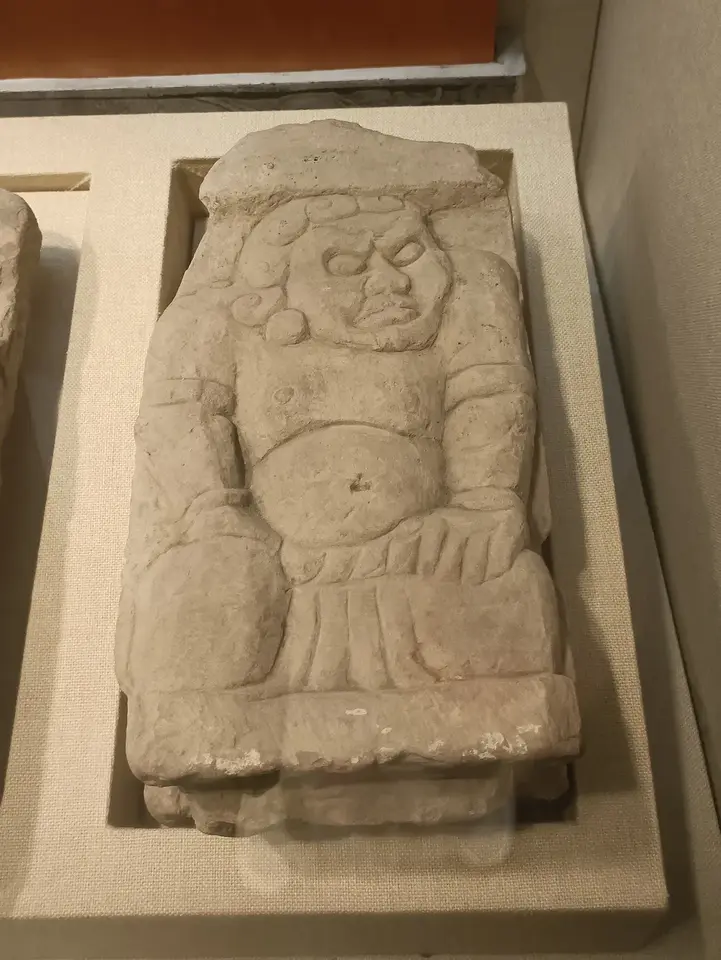
874 CE–934 CE
孟知祥
Meng Zhixiang (孟知祥, May 10, 874 – September 7, 934), courtesy name Baoyin, was the founding emperor of the Later Shu dynasty during the tumultuous Five Dynasties and Ten Kingdoms period. Born into a distinguished martial clan in Xingzhou, he entered the innermost circle of the Shatuo Turkic leadership under Li Keyong through marriage ties with the Prince of Jin's family. He rose to prominent civil and military commands within…
Meng Zhixiang (孟知祥, May 10, 874 – September 7, 934), courtesy name Baoyin, was the founding emperor of the Later Shu dynasty during the tumultuous Five Dynasties and Ten Kingdoms period. Born into a distinguished martial clan in Xingzhou, he entered the innermost circle of the Shatuo Turkic leadership under Li Keyong through marriage ties with the Prince of Jin's family. He rose to prominent civil and military commands within the Jin state and subsequent Later Tang dynasty, serving as Director of Palace Portals, Commissioner of Cavalry and Infantry, and Regent of Beijing (Taiyuan). In 925, following Later Tang's rapid conquest of Former Shu, Emperor Zhuangzong appointed Meng Zhixiang as Military Commissioner of Xichuan, dispatching him to Chengdu to pacify and administer the rich Shu basin. During his tenure in western Sichuan, Meng Zhixiang displayed remarkable statesmanship: he eliminated abusive taxes inherited from Former Shu, suppressed post-conquest mutinies, and recruited displaced farmers to restore agrarian production, while forming elite palace guard corps to secure regional autonomy. When the Later Tang court under Emperor Mingzong attempted to curtail his authority and absorb the province, Meng Zhixiang formed an alliance with Dong Zhang of Dongchuan and successfully routed the imperial punitive expedition commanded by Shi Jingtang at Jianmen Pass. In 932, he extinguished Dong Zhang's treacherous counter-attack, unifying both eastern and western Sichuan under his sole authority. In 934, amidst the terminal dynastic strife of Later Tang, Meng Zhixiang declared himself emperor in Chengdu, founding Later Shu and adopting the era name Mingde. He passed away seven months later at age sixty-one, interred at the Heling Mausoleum and bequeathing a secure, culturally thriving, and prosperous realm to his son Meng Chang.
Born on May 10 in Xingzhou to a military family; displays early strategic acumen and dignified bearing.
Marries the daughter of Li Kening, brother of Shatuo warlord Li Keyong, cementing his place in the Taiyuan leadership.
Appointed Director of Palace Portals by Li Cunxu, playing an indispensable role in foiling internal mutinies.
Promoted to Commissioner of Cavalry and Infantry and subsequent Regent of Beijing, securing logistics for yellow river offensives.
Designated Military Commissioner of Xichuan following Later Tang's conquest of Former Shu; leads elite forces into Chengdu.
Suppresses Li Shaochen's armed rebellion following the murder of Guo Chongtao; stabilizes civil order and cuts taxes.
Allying with Dong Zhang of Dongchuan, defends Jianmen Pass and decisively repulses Shi Jingtang's imperial invasion force.
Crushes Dong Zhang's surprise invasion at Mimu, annexing Dongchuan and uniting both sections of Sichuan.
Formally ascends the imperial throne on March 28 in Chengdu, adopting the dynastic name Shu and era name Mingde.
Creates Meng Chang Crown Prince; dies on September 7 at age sixty-one; interred at Heling Mausoleum.
Meng Zhixiang was born on May 10, 874, in Longgang, Xingzhou (modern Xingtai, Hebei Province). His family had served for generations in the garrisons of Youzhou, Yizhou, and Xingzhou. During the late Tang peasant rebellions and warlord conflicts, his paternal uncle Meng Fangli carved out an independent satrapy as military governor of Zhaoyi, while his paternal aunt married Li Kerang, a younger brother of the Shatuo warlord Li Keyong. Capitalizing on these intimate kinship ties, Meng Zhixiang entered the Taiyuan military headquarters in his youth. Recognizing his disciplined character and administrative competence, Li Keyong gave him the daughter of his younger brother Li Kening in marriage, firmly integrating him into the core Shatuo ruling oligarchy.
Tall and commanding in appearance, Meng Zhixiang possessed an innate talent for civil administration and military discipline. Unlike many reckless garrison commanders of the late Tang, he was fond of scholarly society and took great care to master administrative jurisprudence. Serving as Left Bureau Attendant and Officer of the Guard in Taiyuan, he managed municipal defense and military provisioning with meticulous integrity. During the protracted and grueling warfare between the Shatuo and Zhu Wen's Later Liang regime, Meng Zhixiang organized supply convoys and maintained domestic stability across the Hedong heartland, earning widespread acclaim for his steady nerves under extreme pressure.
In 908, Li Keyong died of an illness, leaving his young heir Li Cunxu to confront treacherous conspiracies among veteran Shatuo generals. The regional command was plunged into severe danger when senior officers plotted with Li Kening to overthrow the young prince. Li Cunxu appointed Meng Zhixiang as Director of Palace Portals (Zhongmenshi), placing him in absolute control over confidential edicts, garrison passes, and the prince's inner bodyguard. Meng Zhixiang aided Li Cunxu in purging the conspirators, executing the mutineers, and consolidating political power. Li Cunxu came to rely implicitly on his counsel, treating him as his primary confidential strategist.
In 919, as the Jin army prepared for decisive operational clashes along the Yellow River, Meng Zhixiang accompanied the campaign as Commissioner of Cavalry and Infantry before receiving promotion to Prefect of Taiyuan and Regent of Beijing. Entrusted with protecting the dynastic base while the main field armies campaigned hundreds of miles away, Meng managed grain transports, curbed bureaucratic corruption, and kept regional bandits in check. When Li Cunxu proclaimed the Later Tang dynasty in 923 and conquered Kaifeng, Meng Zhixiang was named Minister of Justice and Grand Chancellor, standing at the summit of northern civil and military administration.
In the autumn of 925, Emperor Zhuangzong launched a massive invasion against Former Shu, dispatching Crown Prince Li Jiji and Military Commissioner Guo Chongtao across the Qinling Mountains. Riven by administrative decadence and military incompetence, Former Shu collapsed within seventy days, and Emperor Wang Yan surrendered. The Shu basin, renowned as the "Land of Abundance" for its agricultural fertility and natural mountain fortifications, represented the most coveted regional command in the empire. Rejecting rival factions, Emperor Zhuangzong determined that only a statesman of Meng Zhixiang's stature could pacify the region, appointing him Military Commissioner of Xichuan.
In January 926, Meng Zhixiang arrived in Chengdu to assume command. The regional situation was highly volatile: victorious northern soldiers roamed the countryside plundering towns, while remnants of the Former Shu army hid in mountain hideouts. Upon taking his post, Meng Zhixiang immediately restored martial discipline, ordering the execution of rogue soldiers who assaulted civilians and issuing broad amnesties to surrendered officers. He suspended overdue land rents, dismantled extortionate commercial tolls, and retained capable local bureaucrats in administrative posts. His humane, predictable governance won the enthusiastic loyalty of the Sichuanese gentry and peasantry, stabilizing the shattered regional order.
Shortly after Meng Zhixiang's arrival, catastrophic turmoil engulfed the Later Tang court. Guo Chongtao was framed and murdered in Chengdu by imperial agents, triggering an armed revolt among thousands of former Shu soldiers led by Li Shaochen, who marched on Chengdu. Demonstrating consummate tactical composure, Meng Zhixiang mounted the city ramparts, distributed treasury silver to garrison defenders, and directed generals Hou Hongshi and Li Renhan to conduct an ambuscade that utterly destroyed the rebel force. Concurrently, Emperor Zhuangzong was slain in a palace rebellion in Luoyang, and Emperor Mingzong (Li Siyuan) ascended the northern throne.
Observing that northern dynastic rule was perpetually destabilized by mutinous troops, Meng Zhixiang resolved to build an autonomous power base insulated from northern chaos. He confiscated the abandoned latifundia of former imperial courtiers, parceling out lands to landless tenant farmers. In Chengdu, he inaugurated official mints to cast iron and copper coins, establishing arms workshops to manufacture heavy siege crossbows and armaments. Furthermore, he enrolled twenty thousand vigorous Sichuanese youths into elite personal guard divisions, building an independent military and economic apparatus that severed fiscal reliance on northern treasuries.
Emperor Mingzong and his powerful Chief of Staff An Chonghui viewed the growing independence of Meng Zhixiang and Dong Zhang of Dongchuan with intense alarm. Implementing an aggressive centralizing program, An Chonghui repeatedly dispatched imperial monitors, secret police, and treasury commissioners to Chengdu to demand provincial tax transfers. In 928, the imperial court created a new military governorship at Lizhou, stationing loyalist divisions at the northern mouth of the mountain passes to strangle Sichuan's communications with the Central Plains. Meng Zhixiang firmly rejected these impositions, expelling the court monitors from his jurisdiction.
In 930, An Chonghui mobilized northern field armies toward the mountain passes, determined to subjugate the regional governors by force. Realizing that division would lead to mutual destruction, Meng Zhixiang resolved long-standing territorial disputes with Dong Zhang, entering into a defensive pact sealed by blood oaths. Both governors pooled their field divisions, garrisoning the mountain passes and launching a joint war of resistance against the Later Tang court.
In late 930, Emperor Mingzong designated veteran general Shi Jingtang as supreme commander of an expeditionary force numbering over one hundred thousand soldiers to crush the Shu governors. Northern cavalry swept across the Qinling Mountains, capturing Jiuzhou and threatening the vital fortress of Jianmen Pass. In response, Meng Zhixiang and Dong Zhang dispatched generals Li Renhan and Zhao Tingyin with veteran infantry divisions to reinforce the mountain ramparts. Recognizing that northern cavalries were ill-equipped for mountain warfare and vulnerable to logistical interdiction, Meng ordered his defenders to remain behind fortified redoubts while guerrilla detachments ambushed northern supply trains along the narrow mountain galleries.
Protracted winter rain turned the mountain paths into muddy quagmires, stranding northern supply carts and inducing starvation and disease among imperial forces. In the spring of 931, Li Renhan launched a sudden counter-offensive from Jianmen Pass, routing the exhausted northern units. Shi Jingtang was compelled to conduct a disastrous retreat back toward the Guanzhong basin, leaving thousands of dead and abandoned supplies along the cliffs. The decisive triumph permanently shattered Later Tang's ambition to retake Sichuan. Emperor Mingzong dismissed An Chonghui and sent diplomatic envoys to Chengdu, formally confirming Meng Zhixiang's regional hegemony.
With the northern menace averted, bitter rivalry erupted between Meng Zhixiang and Dong Zhang over territorial jurisdiction and war spoils. Dong Zhang was arrogant and volatile, demanding that Meng cede Hanzhou and attempting to negotiate treacherous pacts with northern warlords. In May 932, Dong Zhang gathered his entire military force and launched an unprovoked surprise offensive against Chengdu, aiming to crush Meng Zhixiang and monopolize the entire province.
Anticipating Dong Zhang's moves, Meng Zhixiang dispatched seasoned commander Zhao Tingyin with thirty thousand troops to confront the invaders at Mimu in Hanzhou. Zhao deployed concealed cavalry squadrons, feigning an orderly retreat to lure Dong Zhang's forward units into a narrow valley before springing the trap. Encircled on both flanks, the Dongchuan army was utterly routed with thousands falling on the field. Dong Zhang fled back to Zizhou with only a handful of guards, where his mutinous subordinates decapitated him and surrendered the city. Meng Zhixiang absorbed Dongchuan without further bloodshed, subsequently expanding his control eastward through the Yangtze Gorges to encompass both sections of Sichuan.
In 933, Emperor Mingzong bowed to political realities, formally investing Meng Zhixiang as Prince of Shu and Chancellor of the Realm. Later that year, Mingzong died, triggering violent fratricidal warfare between his sons Li Conghou and Li Congke that paralyzed northern China. The civil and military officials of Sichuan petitioned Meng Zhixiang to assume the imperial dignity and preserve peace for the southwestern population.
On March 28, 934, sixty-one-year-old Meng Zhixiang held a solemn enthronement ceremony in Chengdu, proclaiming the founding of the Shu dynasty (historically known as Later Shu) and adopting the era name Mingde. He created his third son Meng Chang as Crown Prince, proclaimed an empire-wide tax forgiveness, and rewarded meritorious commanders. However, decades of unrelenting military strain had exhausted his health. In the summer of 934, he was incapacitated by a stroke. On September 7, 934, Meng Zhixiang passed away in the Mingguang Hall at the age of sixty-one. He was posthumously honored as Emperor Gaozu and interred at the Heling Mausoleum, leaving behind an exceptionally stable state that endured for over three decades.
Recognizing that the peasantry had been bled dry by decades of extortionate levies under the Former Shu dynasty and the subsequent northern conquest, Meng Zhixiang prioritized agrarian revival upon entering Chengdu. He abolished more than twenty predatory surcharges, including the hated green sprout tax and dwelling-transfer fees, explicitly prohibiting local commandery magistrates from extracting private levies. To repopulate abandoned agricultural lands, he issued decrees guaranteeing that returning refugee families would receive complete tax and corvée exemptions for three years, while distributing derelict estates to landless tenant farmers.
To safeguard harvests from flooding and drought, Meng allocated government funds to repair the Dujiangyan irrigation network, stationing water control inspectors to manage water distribution across the Chengdu plain. He actively encouraged the cultivation of mulberry trees and sericulture, spurring the resurgence of the famous Shu brocade silk industry in the midst of regional warfare. Under his enlightened governance, agricultural production surged, state granaries overflowed, and the Chengdu plain reclaimed its storied reputation as a land of peace and bounty.
He similarly safeguarded artisanal and commercial livelihoods, eliminating over one hundred toll checkpoints along mountain passes and enacting modest transit taxes for salt, tea, and medicinal herbs. To solve severe currency deflation, he overhauled provincial mints, producing well-cast iron and copper currencies that stabilized marketplace prices. These sensible economic policies transformed Sichuan into a uniquely thriving oasis amid the devastation of the Five Dynasties.
To avert the endemic mutinies that plagued contemporary warlord regimes, Meng Zhixiang instituted strict institutional discipline over his military forces. Upon entering Chengdu, he rigorously evaluated the hundred thousand surrendered soldiers of Former Shu, discharging the elderly and infirm with land grants and incorporating robust, battle-tested veterans into regular army rosters. Following the structure of the Tang imperial palace guard, he formed the crack elite "Yajun" guard corps, placing them under his immediate central command.
He prioritized predictable welfare and rigid behavioral discipline: soldiers received full, punctual monthly rations, and the families of fallen soldiers were supported by the state. Simultaneously, he made it a capital offense for troops to trample peasant crops, occupy private dwellings, or extort merchants. By establishing a centralized guard hierarchy independent of local prefects, Meng eradicated the systemic source of garrison revolts, creating an army that proved invincible during the campaigns against Later Tang and Dongchuan.
Meng also placed exceptional emphasis on selecting officers purely for capability and loyalty, elevating former Shu generals like Zhao Tingyin and Li Renhan alongside his trusted Taiyuan veterans. In Chengdu, he established formal military training grounds where he personally reviewed cavalry tactics and archery competitions twice a year. This judicious blend of generous welfare and unyielding discipline forged an obedient, combat-hardened force that anchored Later Shu's long-term independence.
In regional border fortification, Meng concentrated defenses at the two natural portals of the Shu basin: the Yangtze Gorges and Jianmen Pass. At Baidi Castle in Kuizhou, he constructed interconnected land and river barricades, installing massive iron boom chains across the river current to block enemy flotillas. Along the Jianmen mountain ramparts, he built watchtowers and beacon networks manned by elite crossbowmen. This tiered defense network secured the frontiers against northern incursions for decades.
Despite his upbringing in northern martial camps, Meng Zhixiang held a profound reverence for classical Confucian civilization. While northern China's libraries and schools were devastated by continuous warfare, Meng opened recruitment halls in Chengdu, welcoming hundreds of exiled scholars, classicists, and poets from the north, appointing them to influential secretarial and advisory posts with handsome stipends.
Meng's greatest cultural legacy was his decisive patronage of Chancellor Wu Zhaoyi's project to carve the Guangzheng Stone Classics in Chengdu. Recognizing that hand-copied Confucian manuscripts were riddled with errors, Meng allocated state revenues for scholars and master calligraphers to verify the authoritative texts of the Thirteen Classics and carve them onto monumental stone steles erected at the Chengdu Imperial Academy. This historic undertaking pioneered stone-carved classical preservation and laid the groundwork for woodblock printing in educational dissemination, ensuring that China's classical canon survived the Five Dynasties intact.
To reform the civil bureaucracy, Meng reconstructed local municipal academies and ancestral temples of Confucius, organizing civil examinations to staff prefectural administrations. He regularly participated in literary salons with prominent scholars, strictly discouraging martial officers from treating intellectuals with contempt. He also funded the collection and restoration of ancient pre-Qin and Han manuscripts from across the realm. His dedicated stewardship earned Later Shu the reputation of a sanctuary of classical culture, setting the stage for the artistic brilliance achieved under his successor Meng Chang.
Meng Zhixiang's greatest strategic accomplishment lay in ending the century-long fragmentation between eastern and western Sichuan that had plagued the region since the middle Tang. Sichuan had traditionally been divided into western Sichuan (centered at Chengdu) and eastern Sichuan (centered at Zizhou), a division historically exploited by central dynasties to keep the basin divided. Following the defeat of Dong Zhang, Meng eliminated this administrative divide, unifying the fiscal, military, and judicial administrations of both regions under the central government in Chengdu.
Recognizing the geopolitical principle that Sichuan must be actively defended along its northern mountain perimeter, Meng launched major engineering projects to reconstruct the ancient plank gallery roads across the Qinling and Daba Mountains, including the Golden Ox, Micang, and Lychee Roads. He strengthened fortifications at key mountain choke points such as Baimaguan and Zhaohua, stationing trusted generals at strategic frontier passes to form a multi-layered defense in depth.
Beyond his northern defenses, Meng maintained peaceful relations with neighboring border peoples. He pursued conciliatory policies toward the Kingdom of Dali, Tibetan tribes, and Nanzhao remnants, opening border markets for the tea-horse trade and forbidding border garrisons from raiding tribal settlements. He likewise exchanged diplomatic embassies with the Southern Han and Jingnan regimes, ensuring uninterrupted commerce along the Yangtze River. These astute geopolitical strategies neutralized external perils and bestowed decades of tranquil development upon the southwestern realm.
FIGURES ASSOCIATED WITH THIS DYNASTY