Birth in Kaifeng
Born into a commoner family in Junyi, studying military tactics from early youth.
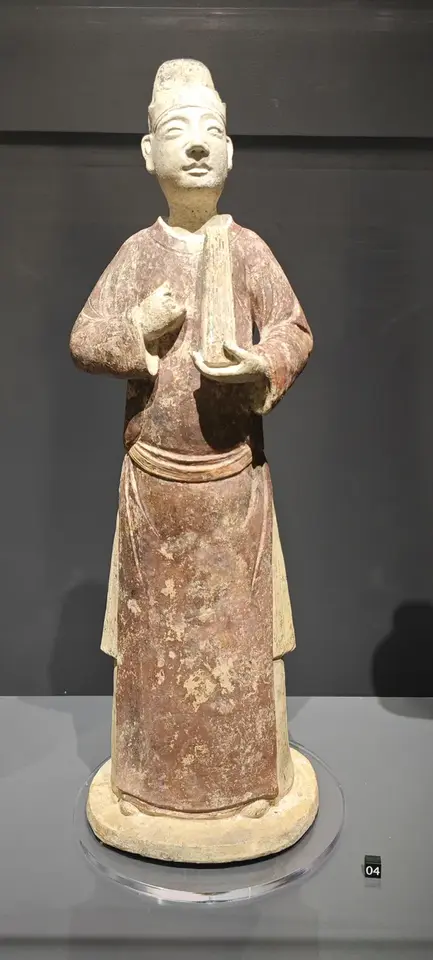
赵廷隐
Zhao Tingyin (赵廷隐, 884–948), courtesy name Chenxian (臣贤), a native of Junyi in Kaifeng, was a prominent military commander and supreme founding statesman who served across the Later Liang, Later Tang, and Later Shu dynasties during the Five Dynasties period. Rising to the exalted offices of Grand Preceptor, Director of the Secretariat, and Prince of Song, he was universally recognized as the foremost pillar of the Later Shu…
Zhao Tingyin (赵廷隐, 884–948), courtesy name Chenxian (臣贤), a native of Junyi in Kaifeng, was a prominent military commander and supreme founding statesman who served across the Later Liang, Later Tang, and Later Shu dynasties during the Five Dynasties period. Rising to the exalted offices of Grand Preceptor, Director of the Secretariat, and Prince of Song, he was universally recognized as the foremost pillar of the Later Shu dynasty. In his youth, he entered the service of Emperor Taizu of Later Liang (Zhu Wen), earning renown for his strategic insight, courage, and tactical ingenuity. He famously devised subterranean sapping tactics to reduce the fortified city of Xiangzhou within fifty days, subsequently spending years defending northern borderlands during the brutal wars between Later Liang and Jin. Following the fall of Later Liang, Zhao Tingyin submitted to the Later Tang and accompanied Guo Chongtao on the western expedition that extinguished Former Shu. Highly valued by Meng Zhixiang, Military Commissioner of Xichuan, he remained in Sichuan as a trusted commander. In the subsequent confrontations that shaped medieval Sichuan, Zhao Tingyin seized the strategic chokepoint of Jianmen Pass to repel imperial armies under Shi Jingtang, and at the climactic Battle of Baimahu, he led a decisive cavalry assault that routed the invading Eastern Shu forces under Dong Zhang, unifying the two Sichuan circuits and providing the territorial foundation for the founding of Later Shu. Following the death of Meng Zhixiang, Zhao Tingyin joined Chancellor Zhao Jili in executing the mutinous general Li Renhan, securing the throne for the youthful successor Meng Chang. In his twilight years, he cultivated a refined literary household; his son Zhao Chongzuo was inspired by this cultural atmosphere to compile the immortal poetry anthology Among the Flowers (Huajian Ji). He passed away in 948, receiving the posthumous title of Grand Commandant and the posthumous name Zhongwu.
Born into a commoner family in Junyi, studying military tactics from early youth.
Served in the Xuanwu Army under Zhu Youlun; promoted to Eastern Court Attendant after clearing suspicion.
Commanded sapping squads to dig tunnels beneath Xiangzhou, capturing the city within fifty days; named Xingzhou Military Overseer.
Held Xingzhou against a six-month siege by Chengde and Yiwu armies; falsely accused and temporarily exiled to Nanyang before reinstatement.
Joined the service of Emperor Zhuangzong following the collapse of the Later Liang dynasty.
Marched under Guo Chongtao to conquer Former Shu; retained by Meng Zhixiang as a trusted military aide.
Seized the natural fortress of Jianmen Pass to throw back the Later Tang punitive expedition led by Shi Jingtang.
Led the crushing charge against Dong Zhang at Baimahu, unifying Eastern and Western Sichuan; appointed Military Commissioner of Baoning.
Urged Meng Zhixiang to take the imperial title; appointed Joint Manager of Affairs with the Secretariat-Chancellery and suppressed the traitor Li Renhan.
Advanced to Acting Grand Commandant and Military Commissioner of Shannanxi, enfeoffed as Duke of Song.
Elevated to Grand Preceptor, Director of the Secretariat, and Prince of Song, standing at the summit of the civil and military administration.
Passed away peacefully at age sixty-five; posthumously awarded Grand Commandant and the posthumous title Zhongwu.
Zhao Tingyin was born in 884 in Junyi, Kaifeng. Arising from a modest lineage, he possessed a gallant temperament and an agile intellect from his youth, immersing himself in ancient military manuals and mastering siegecraft and battlefield concealment. He entered military service as an officer of palace orders in the Xuanwu Army, attending Zhu Youlun, the nephew of warlord Zhu Wen. In 904, Zhu Youlun was assigned to Chang'an to command imperial guards, but died suddenly from a horse-riding accident during a polo match. Suspecting foul play, Zhu Wen had Zhao Tingyin and more than a dozen attendants arrested and brought to Bianzhou for rigorous interrogation. Establishing that Zhao Tingyin had no part in the misfortune, Zhu Wen released him and, appreciating his steady poise, retained him as an Eastern Court Attendant.
In 906, Zhu Wen led the Xuanwu forces north to suppress mutinous Weibo garrison troops holding out in Xiangzhou. Behind massive ramparts and deep moats, the defenders repelled assaults for months. Serving as an operational overseer, Zhao Tingyin stepped forward to request command of five hundred volunteers to execute a subterranean tunneling plan. Digging covert tunnels day and night beneath the battlements, Zhao Tingyin breached the defenses within fifty days, enabling the army to pour into the citadel and extinguish the rebellion. Impressed by this feat, Zhu Wen elevated him to Military Overseer of Xingzhou.
With the establishment of the Later Liang dynasty in 907, northern China dissolved into widespread conflict as regional warlords from Chengde and Yiwu allied against the court to encircle Xingzhou. Alongside Military Commissioner Wang Tan, Zhao Tingyin conducted a tenacious defense, burning nearby forage, fortifying outer works, and repeatedly repulsing hostile assaults over a grueling six-month siege to preserve the fortress.
During the reign of Emperor Modi (Zhu Youzhen), Zhao Tingyin served continuously on the contested northern front against the rising kingdom of Jin. His frequent battlefield victories aroused the bitter jealousy of field commissioner Liu Chongba, who fabricated treasonous accusations claiming Zhao Tingyin intended to defect to Li Cunxu. Handcuffed and escorted to Bianzhou under armed guard, Zhao Tingyin faced mortal peril. Knowing his deep loyalty, Emperor Modi declined to execute him, choosing instead to defuse border tensions by temporarily reassigning him to Nanyang. When the falsehood of the charges became evident, the emperor swiftly restored him to his former rank, assigning him to Jiangzhou and Jinzhou, where he subsequently routed hostile Zhaoyi troops at Liugu.
In 923, King Li Cunxu of Jin eliminated the Later Liang to establish the Later Tang dynasty. Recognizing the political tide, Zhao Tingyin surrendered to the new regime. In 925, Emperor Zhuangzong launched an imperial expedition headed by Prince Li Jiji and Privy Councillor Guo Chongtao to conquer Former Shu. Zhao Tingyin took part in the campaign, distinguishing himself in difficult mountainous passes.
Following the destruction of Former Shu, the Later Tang court appointed Meng Zhixiang as Military Commissioner of Xichuan. Recognizing Zhao Tingyin's rare combination of administrative talent, strategic foresight, and personal steadfastness, Meng Zhixiang successfully petitioned the court to retain him in Chengdu as his chief military aide. Under Meng Zhixiang, Zhao Tingyin became his most trusted general. When Emperor Mingzong dispatched the eunuch Li Yan to Chengdu as an inspector to undermine Meng Zhixiang's independence, Zhao Tingyin coordinated the swift execution of Li Yan at the military gates, securing independent control over Sichuan.
In 930, Emperor Mingzong reacted to the growing defiance of Meng Zhixiang and Dong Zhang of Dongchuan by dispatching an imperial army under Shi Jingtang to subjugate the region. Confronting this existential threat, Zhao Tingyin led the western vanguard on a rapid march to seize the formidable chokepoint of Jianmen Pass. Digging entrenched redoubts across the mountain passes, he turned back repeated frontal assaults by imperial shock troops while dispatching cavalry detachments to sever the enemy's logistical supply lines, forcing Shi Jingtang into a full retreat and preserving regional autonomy.
In 932, having repelled the central government forces, Dong Zhang of Dongchuan succumbed to personal ambition, seeking to conquer Western Sichuan and dominate the entire basin. Dong Zhang mobilized his entire military apparatus and invaded western territory, quickly seizing Hanzhou and advancing menacingly toward Chengdu. Facing widespread panic in the capital, several commanders urged a passive defense behind city walls. Zhao Tingyin vehemently opposed this, arguing that Dong Zhang was fighting an unjust war of aggression and that allowing the enemy to besiege the capital would doom their cause; only an immediate, decisive field engagement could secure survival.
Meng Zhixiang concurred, entrusting Zhao Tingyin with the command of his finest strike divisions at Baimahu. In the midst of furious hand-to-hand combat, Zhao Tingyin led a flying squadron of veteran shock cavalry directly into Dong Zhang's central headquarters. The ferocious assault fractured the Eastern Shu battle lines, turning the engagement into a total rout. Dong Zhang fled in disarray back to Zitong, where his own disgruntled subordinates assassinated him and surrendered.
The crushing triumph at Baimahu definitively integrated Eastern and Western Sichuan under Meng Zhixiang's rule, ending regional division and providing the territorial and demographic foundation for the subsequent establishment of the Later Shu dynasty. In recognition of this supreme merit, Zhao Tingyin was appointed Military Commissioner of Baoning Army in Langzhou.
In 934, following the death of Emperor Mingzong and the outbreak of anarchy across northern China, Zhao Tingyin joined Chancellor Zhao Jili in formally petitioning Meng Zhixiang to assume the imperial dignity. Meng Zhixiang acceded to the throne in Chengdu, founding the Later Shu dynasty. Zhao Tingyin was rewarded with the position of Joint Manager of Affairs with the Secretariat-Chancellery and enfeoffed as an imperial count.
However, Emperor Gaozu died of illness only seven months after his coronation, leaving his sixteen-year-old son Meng Chang on the throne. Taking advantage of the dynastic crisis, the arrogant veteran general Li Renhan, Military Commissioner of Wutai, gathered armed conspirators and prepared to execute a military coup to usurp the throne.
Confronted with this perilous plot, Zhao Tingyin demonstrated consummate loyalty to the dynastic house. Recognizing that hesitation would bring disaster, he coordinated secretly with civil chancellor Zhao Jili. At a formal morning audience in the palace, Zhao Tingyin sprung an ambush with prearranged palace guards, arresting and executing Li Renhan and his co-conspirators on the spot. This decisive strike dismantled the mutinous faction and enabled the young emperor to assume personal rule without further bloodshed.
Having preserved the state, Zhao Tingyin demonstrated profound modesty by relinquishing active military command in the capital, accepting an appointment as Military Commissioner of Shannanxi in Hanzhong to guard the northern perimeter. Emperor Meng Chang treated the senior statesman with unbounded deference, elevating him to Acting Grand Commandant and Duke of Song in the early Guangzheng era, and subsequently naming him Grand Preceptor, Director of the Secretariat, and Prince of Song in 944, granting him the highest ceremonial precedence in the empire.
In his retirement in Chengdu, Zhao Tingyin was widely praised for his humane administration and passionate support for classical scholarship and literary cultivation. His eldest son, Zhao Chongzuo, immersed in this intellectual household, compiled the world-famous anthology Among the Flowers (Huajian Ji) in 940. Preserving five hundred masterpieces composed by eighteen prominent late Tang and Five Dynasties poets, this collection established the lyrical ci form as an independent literary genre of immense historical importance.
In 948, Zhao Tingyin passed away peacefully in Chengdu at the age of sixty-five. Emperor Meng Chang suspended court audiences in deep grief, posthumously conferring upon him the rank of Grand Commandant and Governor of Xu and Yan prefectures, alongside the prestigious posthumous name Zhongwu. He was interred with royal honors at Mopan Mountain north of Chengdu, where modern archaeological excavation uncovered his tomb containing exquisite painted ceramics and his monumental stone epitaph composed by Ouyang Jiong.
The Battle of Baimahu in 932 was the foundational military event that determined the geopolitical destiny of Sichuan during the Five Dynasties. Confronted with a sudden invasion by Dong Zhang that brought hostile armies to the gates of Chengdu, Zhao Tingyin exhibited supreme operational courage.
By rejecting passive siege defense in favor of an audacious counter-offensive, he personally led an armored cavalry strike into the enemy command tent, dismantling Dong Zhang's field army in a single stroke. This monumental victory eliminated the eastern rival regime, consolidated both halves of the Sichuan basin under a unified administration, and directly catalyzed the creation of the Later Shu dynasty.
The sudden death of dynastic founder Meng Zhixiang in 934 thrust the adolescent Meng Chang into acute danger from seasoned military governors. Li Renhan, backed by elite units, openly prepared to seize supreme power.
Zhao Tingyin proved to be an incorruptible pillar of dynastic legitimacy. In close concert with civilian statesmen, he orchestrated the swift arrest and execution of the rebel leadership within the palace halls. By neutralizing this existential challenge without igniting civil warfare, he preserved internal peace for Sichuan and safeguarded decades of regional stability.
Unlike the vast majority of Five Dynasties warlords who were illiterate and destructive, Zhao Tingyin fostered a distinguished tradition of literary patronage and ethical domestic education. He transformed his official residence into a sanctuary for displaced scholars, ensuring that his sons received comprehensive classical instruction.
This intellectual environment directly inspired his son Zhao Chongzuo to assemble the Huajian Ji, the earliest extant anthology of literati lyric poetry in Chinese history. By preserving the delicate compositions of Wen Tingyun, Wei Zhuang, and their contemporaries, Zhao Tingyin's family preserved one of the supreme achievements of medieval Chinese literature, leaving a cultural monument that far outlasted the dynasties he served.
FIGURES ASSOCIATED WITH THIS DYNASTY