Birth | Born in Jincheng County, Yingzhou, present-day Ying County, Shanxi
867 CE–933 CE
Emperor
Li Siyuan
李嗣源
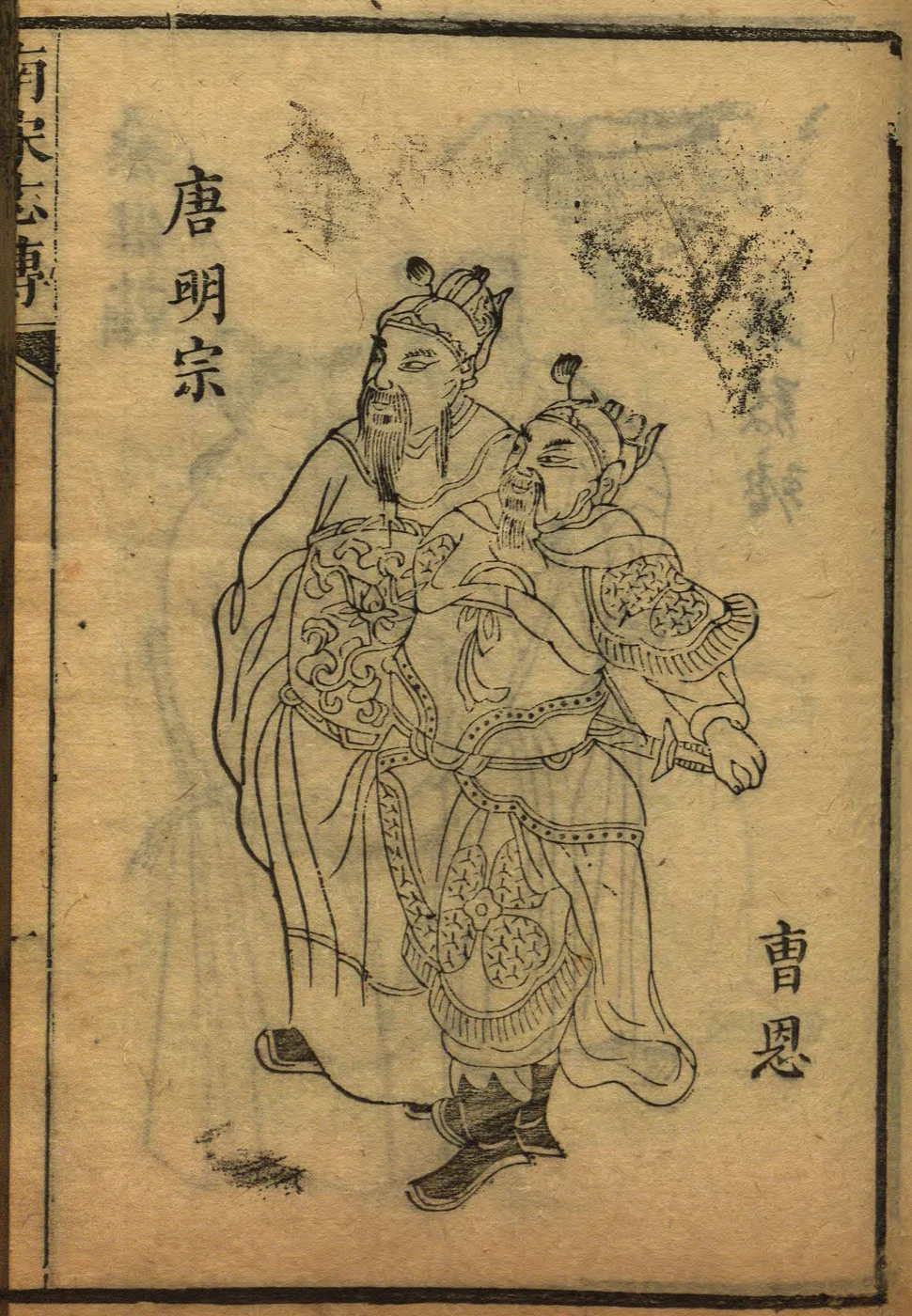
Li Siyuan (October 10, 867–December 15, 933), whose childhood name was Miao Jilie and who changed his personal name to Li Dan after becoming emperor, was a Shatuo Turk from Jincheng County in Yingzhou, present-day Ying County, Shanxi. He was the second emperor of Later Tang during the Five Dynasties and Ten Kingdoms period and an adopted son of Li Keyong, military governor of Hedong. He reigned from 926, the first year of the…
867 CE–933 CELater Tang
PROFILE
Li Siyuan (October 10, 867–December 15, 933), whose childhood name was Miao Jilie and who changed his personal name to Li Dan after becoming emperor, was a Shatuo Turk from Jincheng County in Yingzhou, present-day Ying County, Shanxi. He was the second emperor of Later Tang during the Five Dynasties and Ten Kingdoms period and an adopted son of Li Keyong, military governor of Hedong. He reigned from 926, the first year of the Tiancheng era, to 933, the fourth year of the Changxing era. His era names were Tiancheng and Changxing, his temple name was Mingzong, and his posthumous name was Emperor Shengde Hewu Qinxiao. He was buried at Huiling.
- Other names
- Mingzong; Miao Jilie
- Era
- Later Tang
- Dynasty/Regime
- Five Dynasties · Later Tang
- Identity
- Emperor
- Date of Birth
- October 10 867
- Date of Death
- December 15 933
- Ethnicity
- Shatuo Turks
- Ancestral home
- Jincheng County, Yingzhou (present-day Ying County, Shanxi)
- Place of birth
- Not recorded in historical sources
- Reign
- 926–933
- Predecessor
- Emperor Zhuangzong of Later Tang (Li Cunxu)
- Successor
- Emperor Min of Later Tang (Li Conghou)
- Era names
- Not reliably confirmed in the information field; the biography records Tiancheng and Changxing
- Temple name
- Mingzong
- Posthumous name
- Emperor Shengde Hewu Qinxiao
- Major achievements
- Emperor Mingzong of Later Tang; rose from service as a commander under Zhuangzong, took the throne after a military mutiny, reduced exactions, and pursued relatively lenient government, becoming one of the better-regarded rulers of the Five Dynasties.
LIFE TIMELINE
Age twelve | His father died, leaving him without support
Age thirteen | Entered Shatuo military service and was appreciated by Li Guochang for his skill in riding and archery
Age seventeen | Fought desperately to protect Li Keyong during the Shangyuan Posthouse Incident and thereafter received command of personal troops
Age twenty-nine | Defeated Liang troops at Rencheng and relieved Yanzhou; covered Li Cunxin's retreat at Shen County and received the title "Hengchong Command"
Age thirty-one | Wounded by four arrows at Qingshankou but repelled the Liang general Ge Congzhou, gaining wide fame
Age thirty-four | Joined Li Sizhao in launching repeated sorties and helped repel Shi Shuqong's siege of Taiyuan
Age thirty-five | Opposed Li Keyong's proposal to abandon Taiyuan; led volunteers in night attacks on the Liang army and captured the fierce general You Kunlun
Age forty-one | First to break into the Liang fortified camp in the Battle of Jiacheng and helped lift the siege of Luzhou
Age forty-four | Charged the Liang White-Horse Corps at the Battle of Baixiang, helping win a major victory; promoted to governor of Daizhou
Age forty-six | Shot Yuan Xingqin seven times in the campaign at Guangbian Army; later accepted his surrender and adopted him
Age forty-nine | Defeated Liu Xun at Old Yuancheng, captured Cizhou, Mingzhou, and Xiangzhou, and became governor of Xiangzhou; in the ninth lunar month appointed military governor of Anguo and stationed at Xingzhou
Age fifty | Led five thousand elite cavalry as vanguard to relieve Youzhou, defeated the Khitans, and was promoted to acting Grand Protector
Age fifty-four | Submitted three memorials urging Li Cunxu to proclaim himself emperor; in the tenth lunar month defeated Dai Siyuan at Qicheng and became deputy commander of the combined cavalry and infantry forces
Age fifty-six | Li Cunxu proclaimed himself emperor and founded Later Tang; Li Siyuan became acting Grand Tutor and Palace Attendant, surprised Yunzhou and became military governor of Tianping, then served as vanguard in destroying Later Liang and was promoted to Zhongshu Ling
Age fifty-nine | During the Weibo mutiny was seized and acclaimed by his troops while on a suppression mission; after Li Cunxu died in the Xingjiaomen Mutiny he stabilized the situation as regent and on the bingwu day of the fourth lunar month ascended the throne, adopting the Tiancheng era name
Age sixty | Changed his personal name to Li Dan in the first lunar month
Age sixty-one | Wang Du, military governor of Yiwu, rebelled; ordered Wang Yanqiu to suppress him, while Khitan troops sent to aid Wang Du were defeated by Fu Yanqing
Age sixty-three | An Chonghui accused his adopted son Li Congke, but Mingzong did not accept the accusation; in the eighth lunar month executed Li Xingde, Zhang Jian, and others for creating disorder at court
Age sixty-six | His second son Li Congrong launched a failed palace rebellion and was killed; Mingzong's illness worsened from the shock and he died in Yonghe Hall in the twelfth lunar month, aged sixty-seven
BIOGRAPHY
Biography
Family Background and Early Life
Li Siyuan was a member of the Shatuo Turks who originally had no Chinese surname. His childhood name was Miao Jilie. He was born in Jincheng County, Yingzhou, present-day Ying County, Shanxi. His father, Li Ni, was an officer in the Yanmen forces and died when Li Siyuan was twelve. Li Siyuan excelled at riding and archery from childhood and was known as steady, taciturn, and respectful in conduct. At thirteen he entered the army of the Shatuo leader Li Guochang. The Old History of the Five Dynasties, Annals of Emperor Mingzong of Tang, records Li Guochang as saying that the boy had heroic spirit like his father and could serve at his side. He was later adopted by Li Guochang's son Li Keyong and given the name Siyuan.
Military Career in the Jin–Liang Struggle
In 884, the fourth year of the Zhonghe era, Li Keyong was trapped by Zhu Wen, military governor of Xuanwu, at the Shangyuan Posthouse in Bianzhou, present-day Kaifeng. Many of Li Keyong's personal commanders were killed in what became known as the Shangyuan Posthouse Incident. Li Siyuan, then seventeen, fought desperately to shield Li Keyong and helped him escape through the chaotic fighting and arrows. He was thereafter highly valued and given command of personal troops. He later became deputy to Li Cunxin and campaigned effectively alongside him.
In 896, the third year of the Qianning era, Zhu Wen fought the brothers Zhu Xuan and Zhu Jin for control of Shandong and sent troops against Yanzhou and Yunzhou, whose seat was in present-day Dongping, Shandong. The Zhu brothers sought aid from Li Keyong, who sent Li Cunxin with thirty thousand troops. Li Cunxin camped at Shen County and ordered Li Siyuan to lead three hundred cavalry to assist Yanzhou. Li Siyuan defeated the Liang army at Rencheng, present-day Jining, and lifted the siege. Soon afterward Luo Hongxin, military governor of Weibo, attacked Shen County and defeated Li Cunxin. Li Siyuan personally covered the retreat. To reward him, Li Keyong designated five hundred of his cavalry as the "Hengchong Command," and from then on people north and south of the Yellow River called him "Li Hengchong."
In 898, the first year of the Guanghua era, Li Sizhao advanced through Qingshankou in an attempt to attack Xingzhou and Mingzhou, but was defeated by the Liang commander Ge Congzhou. Li Siyuan arrived with reinforcements, formed his troops on high ground, and shouted that he sought only Ge Congzhou and that the other soldiers should not move rashly. He rode into the Liang formation and fought repeatedly through it. Li Sizhao then renewed the attack, turning defeat into victory and driving the Liang troops back. Li Siyuan was struck by four arrows in the battle and gained wide renown.
In 901, the first year of the Tianfu era, the Liang commander Shi Shuqong led fifty thousand troops against Taiyuan and captured several Hedong prefectures. Li Keyong was confined within Taiyuan as heavy rain damaged sections of the city wall. Li Siyuan and Li Sizhao divided their forces and repeatedly struck the Liang camps. Unable to take Taiyuan and short of supplies, the Liang army eventually withdrew. In 902, the second year of Tianfu, Shi Shuqong again defeated Li Sizhao and Zhou Dewei at Pu County and pursued them to Jinci before once more surrounding Taiyuan. Li Keyong considered abandoning the city for Yunzhou, present-day Datong, but Li Siyuan and others firmly opposed him. Li Siyuan personally led volunteers in day-and-night sorties, captured the fierce Liang general You Kunlun, and forced the besiegers to burn their camps and retreat.
In 908, the fifth year of the Tianyou era, Li Keyong died and his heir Li Cunxu succeeded as military governor of Hedong and Prince of Jin. In the fifth lunar month, Li Cunxu personally went to relieve Luzhou, present-day Changzhi, and ordered Li Siyuan and Zhou Dewei to attack the Liang fortified encirclement from separate directions. Li Siyuan had his soldiers cut away chevaux-de-frise and fill defensive ditches with brushwood, then broke in from the northeastern corner. He was the first to enter the fortified camp and received the greatest credit for lifting the siege of Luzhou.
In 911, the eighth year of the Tianyou era, Li Siyuan fought under Li Cunxu at the Battle of Baixiang. Seeing the impressive Liang formations and fearing that Jin soldiers might lose heart, Li Cunxu deliberately provoked Li Siyuan into attacking. He offered him wine and pointed to the Liang White-Horse and Red-Horse corps as a terrifying sight. Li Siyuan laughed, dismissed the enemy as outwardly impressive, drank the wine, mounted, and charged directly into the White-Horse Corps, capturing two cavalry officers. Jin morale surged, and after fighting from early morning until afternoon the army broke the Liang forces and won a major victory. Li Siyuan was promoted to governor of Daizhou.
In 913, the tenth year of Tianyou, Zhou Dewei campaigned against Liu Shouguang, Prince of Yan, and ordered Li Siyuan to seize the eight military districts north of the mountains. At Guangbian Army, south of present-day Chicheng in Hebei, Li Siyuan fought the Yan general Yuan Xingqin. He struck Yuan with seven arrows but was himself shot in the thigh; he pulled out the arrow and continued fighting. Yuan eventually surrendered and was adopted by Li Siyuan, though Li Cunxu later took him into his own service.
In 916, the thirteenth year of Tianyou, Li Cunxu fought the Liang general Liu Xun at Old Yuancheng, east of present-day Wei County, Hebei. Li Siyuan led three thousand cavalry in a noisy assault and coordinated with Li Cunxu to crush the Liang army. He then captured Cizhou, Mingzhou, and Xiangzhou, whose seat was at present-day Anyang, and was appointed governor of Xiangzhou. In the ninth lunar month, after the Cangzhou commander Mao Zhang surrendered to Jin, Li Siyuan was ordered to pacify him and soon became military governor of Anguo, stationed at Xingzhou.
In 917, the fourteenth year of Tianyou, Khitan forces besieged Youzhou, present-day Beijing. The defender Zhou Dewei appealed for help. Li Siyuan strongly supported sending relief and asked to lead five thousand elite cavalry as the vanguard. Li Cunxu had him join Fu Cunshen and Yan Bao at Yizhou, present-day Yi County, Hebei. Li Siyuan chose a strategy of advancing secretly through valleys and striking where the enemy was unprepared. He crossed Dafangling, west of present-day Zhoukoudian in Beijing, and moved east along mountain streams. Together with his adopted son Li Congke, he fought through repeated Khitan attempts to block the route. When Khitan cavalry suddenly attacked about sixty li from Youzhou, Li Siyuan charged into their formation, struck with a mace, captured a Khitan unit commander, and helped the Jin army win a major victory and lift the siege. In the ninth lunar month he returned and was appointed acting Grand Protector.
In 921, the eighteenth year of Tianyou, Li Siyuan joined Zhu Youqian, Li Sizhao, Fu Cunshen, Wang Chuzhi, Yan Bao, Li Cunzhang, Wang Yu, Li Cunjin, and Zhu Lingde in submitting three memorials urging Li Cunxu to proclaim himself emperor. Each offered several hundred thousand units of currency to support the founding of a new state, but Li Cunxu refused. In the tenth lunar month, Li Siyuan defeated the Liang commander Dai Siyuan at Qicheng, in present-day Puyang, Henan, and was credited with twenty thousand enemy dead. He was promoted to deputy commander of the combined cavalry and infantry forces and additionally given the honorary title of Tongpingzhangshi.
Destruction of Later Liang and Growing Imperial Suspicion
In 923, the first year of the Tongguang era, Li Siyuan became military governor of Henghai. In the fourth lunar month, Li Cunxu proclaimed himself emperor at Yedu, northeast of present-day Daming, Hebei, and founded Later Tang as Emperor Zhuangzong. Li Siyuan was promoted to acting Grand Tutor while concurrently serving as Palace Attendant.
At the time the main Liang and Tang armies faced one another along the Yellow River, a Liang force was attacking Zezhou, present-day Jincheng, Shanxi, while the Later Tang commander of Luzhou, Li Jitao, had defected to Later Liang. Li Cunxu therefore consulted Li Siyuan on a surprise attack against Yunzhou to cut the Liang right wing. Li Siyuan personally led five thousand infantry and cavalry across the Ji River and seized Yunzhou before the Liang army could prepare, after which he was appointed military governor of Tianping.
In the ninth lunar month, the Liang commander Wang Yanzhang advanced on Yunzhou. Li Siyuan ordered Li Congke to meet him with cavalry and defeat the Liang vanguard at Difangzhen, capturing the Liang commander Ren Zhao and some three hundred men and forcing Wang Yanzhang to withdraw to Zhongdu, present-day Wenshang in Shandong. In the tenth lunar month, Li Cunxu crossed the Yellow River from Yangliu, north of present-day Dong'e, and advanced to Yunzhou. With Li Siyuan as vanguard, the army captured Zhongdu and Wang Yanzhang. Most Tang commanders proposed first seizing Qingzhou, Qizhou, Xuzhou, and Yanzhou and then waiting for a further opportunity. Li Siyuan rejected this cautious approach and recommended a rapid strike on Bianzhou, the Later Liang capital. He led the vanguard on forced marches and reached Bianzhou on the ninth day before attacking the city. Emperor Zhu Youzhen committed suicide, the Liang commander Wang Zan opened the Bianqiu Gate and surrendered, and Later Liang fell. Soon afterward Li Cunxu moved the capital to Luoyang and promoted Li Siyuan to Zhongshu Ling.
After the destruction of Later Liang, Li Siyuan's achievements and prestige increasingly aroused Li Cunxu's suspicion. Li Cunxu favored entertainers, neglected government, and mistrusted meritorious commanders. Although Li Siyuan held command over the combined cavalry and infantry forces, his position became increasingly precarious.
Mutiny, Accession, and Government
In 926, the fourth year of the Tongguang era, Weibo garrison troops mutinied at Beizhou, present-day Qinghe in Hebei, acclaimed the junior officer Zhao Zaili, and captured Yedu, present-day Linzhang, Hebei. Li Cunxu distrusted Li Siyuan but lacked another suitable commander and ordered him to suppress the revolt. When Li Siyuan reached Weibo, his own troops mutinied, seized him, and forced him into the city to join the rebels. His son-in-law Shi Jingtang warned that the emperor would never overlook what had happened, and Li Siyuan ultimately resolved to rebel. In the fourth lunar month he moved south to occupy Bianjing, present-day Kaifeng, and marched west toward Luoyi, present-day Luoyang, in the episode known as the Yedu Coup. At the same time Guo Congqian, an imperial guard commander of entertainer background seeking revenge, launched the Xingjiaomen Mutiny in Luoyang and attacked the imperial city. Li Cunxu was struck by an arrow and died. The officials then acclaimed Li Siyuan as regent. He killed the court entertainers, executed Kong Qian, the Revenue Commissioner notorious for aggressive extraction, abolished Kong Qian's burdensome levies, and sought to win public support. On the bingwu day of the fourth lunar month he became emperor and adopted the era name Tiancheng. In the first lunar month of 927, the second year of Tiancheng, he changed his personal name to Li Dan.
After taking the throne, Li Siyuan abolished abuses associated with palace revenue collection under Zhuangzong, repaired water-control works, released young palace women to return home, paid attention to popular hardship, and closed a number of largely nominal offices. Mingzong was illiterate and could not read documents, so memorials from throughout the realm were read aloud to him by the chief military commissioner An Chonghui. During his reign the realm was relatively peaceful, which aided economic recovery and development.
In 928, the third year of Tiancheng, Wang Du, military governor of Yiwu, rebelled. Mingzong stripped him of his offices and ordered Wang Yanqiu to suppress the revolt. Khitan troops sent to aid Wang Du were badly defeated by the Later Tang commander Fu Yanqing; only a few dozen reportedly returned, and thereafter the Khitans did not lightly raid the frontier. Wang Du's rebellion was finally suppressed in 929, the fourth year of Tiancheng.
In 930, the first year of Changxing, An Chonghui accused Mingzong's adopted son Li Congke, but the emperor did not believe the charge and also did not punish An Chonghui. In the eighth lunar month, Mingzong executed Li Xingde, commander of the Pengsheng corps, together with Zhang Jian and others, after they stirred disorder at court and impeached An Chonghui.
A major issue of Mingzong's reign was the separatist power of Dong Zhang and Meng Zhixiang in the two Sichuan circuits. As An Chonghui gradually lost favor, Mingzong ordered his son-in-law Shi Jingtang and others to campaign in Sichuan and required An to supervise grain transport to the front. Before An reached the front, Zhu Hongzhao, military governor of Fengxiang, accused him of intending to seize Shi Jingtang's military command. An was recalled, abruptly reassigned en route as military governor of Huguo, and later put to death. Shi Jingtang's campaign in Sichuan ultimately failed. When Dong Zhang later attacked Meng Zhixiang, Meng first suffered defeat but then prevailed, destroying Dong's Dongchuan regime and eventually founding Later Shu after Mingzong's death.
In 933, the fourth year of Changxing, Mingzong heard that Li Yichao, military governor of Dingnan, intended to rebel. He precipitously appointed Li Yichao as acting military governor of Zhangwu and An Congjin as military governor of Dingnan. Li Yichao refused the order. Mingzong sent troops, but the siege failed. Li Yichao submitted a memorial apologizing, and Mingzong restored him as acting Minister over the Masses and military governor of Dingnan, allowing the command to resume tribute. Because the emperor had not campaigned for many years and this operation ended without success, morale among the soldiers was low; Mingzong ordered rewards to stabilize the army.
Succession Conflict and Death
Mingzong privately intended his eldest surviving son, Li Congrong, Prince of Qin, to succeed him, but did not make him crown prince because he interpreted requests for a formal heir as an implication that he should retire. Li Congrong, for his part, feared losing military authority and also did not wish to be made crown prince. In the eleventh lunar month of 933, the fourth year of Changxing, Mingzong became gravely ill and did not meet his officials for several days. Fearing a political change, Li Congrong led troops toward the palace. The military commissioners Zhu Hongzhao and Feng Yun declared him a rebel, sent forces against him, killed Li Congrong, and then killed Li Congrong's son who had been raised near the emperor. Li Siyuan was overcome with grief on learning the news. His illness worsened and he died in Yonghe Hall at the age of sixty-seven. His temple name was Mingzong and his posthumous name Emperor Shengde Hewu Qinxiao. He was buried at Huiling. Prince of Song Li Conghou succeeded him as Emperor Min of Later Tang.
Li Siyuan, of Shatuo stock and a native of Jincheng in Yingzhou, was born without a surname: his father Ni was a general of the Yanmen garrison, and the son, at first named Miaojilie, served Li Keyong, the TaiZu, with bow and horse, being a man of solid and silent character and punctilious in duty, so that the TaiZu raised him as a son and gave him the name Siyuan. He entered the Shatuo army at thirteen and afterwards took the name Li Dan on ascending the throne; he is known to history as Emperor Mingzong, the second ruler of the Later Tang. In 884, when Li Keyong was ambushed at the Shangyuan post, most of his officers were killed; Li Siyuan, then seventeen, helped him over the wall to safety and alone came through the flying arrows unhurt. When Li Keyong held Hedong he gave Li Siyuan command of his household cavalry, and as Li Cunxin's campaigns miscarried, Li Keyong chose Li Siyuan as his second in command and thereafter met with success everywhere. In 896, when the Liang attacked Yan and Yun, Li Cunxin sent him with three hundred horse, and he beat the Bian army at Rencheng and raised the siege of Yanzhou; that same year, when Luo Hongxin broke faith and routed Li Cunxin at Shenxian, Li Siyuan fought a rearguard action and brought the army back, for which Li Keyong named his five hundred horse the "Ramming Division" and kept them about his tent, so that the Two Rivers called Li Siyuan "Li the Ram." In 898 Li SiZhao, marching out of Qingshan against the Liang at Xing and Ming, was routed by Ge Congzhou and pursued; Li Siyuan came up by a side road, unsaddled and sharpened his arrowheads, took position on high ground and waved his men about so that the pursuers could not fathom him, then shouted that he would take Lord Ge and the soldiers need not move, and charging into the Liang ranks came out and in again, beating them off, though four arrows struck his own body. Taizu took off his own robe and gave him medicine, and the name of Li the Ram grew heavy in every quarter. In the Tianfu years, when the Liang sent Shi Shucong with fifty thousand men to camp at Dongwo and the prefectures of Hedong fell, with rain for ten days ruining the walls, Li Keyong ordered Li Siyuan and Li SiZhao to break out on all sides and raid the camps; the Liang withdrew, and Li Siyuan with a detachment recovered the lost counties. When the Liang again besieged Jinyang while Emperor Zhaozong was at Fengxiang, Li Keyong thought of fleeing to Yunzhong, but Li Siyuan insisted that defence was a hundred times better than flight and that while they lived the city would hold; some days later, the stragglers having rallied, he led dare-to-die troops out of the gates day and night, took the Liang champion You Kunlun alive and drove the enemy to burn their camps and retire. In 908, when Zhuangzong came in person to raise the siege of Luzhou, Li Siyuan commanded the left and right cavalry of the flying guard. At dawn he reached the northeast corner of the double wall, had the abatis hewn down and the ditches filled with brush, and mounting the wall raised a shout, which Zhou Dewei answered from the northwest corner; Li Siyuan was first into the double wall and broke the Liang army, his service reckoned the greatest of the day. In 911 at Baixiang, Zhuangzong, fearing the army's nerve against the strong Liang array, poured wine for him in a great silver cup and asked whether he had seen the Liang White Horse and Red Horse divisions, the sight of which broke men's courage; Li Siyuan answered that they were outwardly impressive but would soon stand in his own stables, drained the cup, sprang to horse and with a hundred men charged the White Horse division, carrying off two cavalry officers, arrows sticking in his armour like a hedgehog's quills; the whole army took heart and from morning to afternoon the Liang were utterly beaten, and Li Siyuan was made prefect of Daizhou. Afterwards he subdued the eight armies behind the mountains, fighting Yuan Xingqin eight times at Guangbian, loosing seven arrows that hit their mark, and taking an arrow in his own thigh which he drew out and fought on; when Yuan Xingqin later surrendered under pressure, Mingzong, admiring his courage, adopted him as a son. In 916 he encircled Liu Xun at Guyuancheng with three thousand horse and destroyed his army, and was made military commissioner of Xingzhou. In 917, when the Khitan Anbajian brought three hundred thousand men against Youzhou and Zhou Dewei sent word of the emergency, Li Siyuan asked for five thousand of the flying guard as vanguard, and urged that the enemy, living on horseback, needed no camps, and that being outnumbered they should muffle their bells and follow the mountain streams to strike unawares. In the eighth month the army set out from Shanggu in gloomy rain, which cleared at his prayer; when the enemy blocked the valley mouths he and his eldest son Li Congke fought a bloody way through, and two stages from Youzhou, when the enemy again formed up across the pass and the Jin troops turned pale, he plunged into their ranks, whirling his mace, and came back with a troop commander, at which the army shouted and charged and the enemy broke like a swept mat, abandoning armour and horses beyond counting. The siege was raised and Zhou Dewei, greeting him, grasped his hand and sobbed. In the ninth month he returned to Weizhou, where Zhuangzong came out of the city to welcome him and advanced him to acting grand guardian. In 923, when the provinces thrice petitioned for Zhuangzong to take the Tang throne, Li Siyuan sent envoys with the others. When Li Jitao rebelled at Luzhou and went over to the Liang, Zhuangzong, troubled, asked him in his tent whether a surprise attack on Yunzhou to cut off the Liang's right arm might serve; Li Siyuan answered that the war along the river had gone on too long and that only a stroke out of the common way could decide it, and asked to undertake it alone, crossing the Ji with five thousand horse, and took Yunzhou by surprise, being made military commissioner of Tianping. In the ninth month the Liang general Wang Yanzhang pressed Yunzhou with ten thousand men, crossing the Wen at Zhongdu; Li Siyuan sent his eldest son Li Congke to meet him at Difang, capturing three hundred of the enemy including the general Ren Zhao, so that Wang Yanzhang fell back on Zhongdu, where Zhuangzong, making Li Siyuan his vanguard, routed the Liang and took Wang Yanzhang alive. When the generals proposed to move on the empty cities of Qing, Qi, Xu and Yan, Li Siyuan alone urged a direct blow at Bianzhou; he reached the city first, stormed the Fengqiu gate, and received the surrender of the Liang general Wang Zan, and learning that the Liang sovereign was dead, restored order and withdrew to the Chanfeng monastery, being shortly advanced to concurrent director of the Secretariat. In 924 Zhuangzong sacrificed at the southern suburb and gave him an iron warrant; he broke Yang Li at Luzhou, was transferred to the Xuanwu command as commander of all household and frontier horse and foot, and beat the Khitan at Zhuozhou. In 925 he was moved to the Zhenzhou command, and coming to Luoyang in the twelfth month found Zhuangzong's government failing, famine everywhere and the troops so poor that men sold their children, while he himself was the subject of rumour and, after the unaccountable deaths of Zhu Youqian and Guo Chongtao, of general suspicion. Zhu Shouyin, ordered to watch him, warned him privately that one whose merit overshadows his lord is in danger and that he should think of himself; Li Siyuan answered that his heart did not wrong Heaven and Earth, and that he would not avoid whatever fortune came but leave it to Heaven. The privy commissioner Li Shaohong shielded him from slander. In the second month of 926 Zhao Zaili rebelled at Weizhou, and Yuan Xingqin, sent against him, fared ill; on Zhang Quanyi's secret memorial the emperor sent Li Siyuan north across the river. On the sixth day of the third month he reached Yedu, where Zhao Zaili acknowledged his fault from the wall and sent out provisions; he camped southwest of the city and set the ninth for the assault. On the night of the eighth the army mutinied: the soldier Zhang Pobai of the household guard had the officers killed, the camps burned and a great clamour raised, and toward dawn the mutineers pressed on Li Siyuan's tents, where his guards fought and half were wounded. He cursed them for their madness, and they answered that the Bei garrison had been shown no mercy and that when Yedu was pacified the whole army was to be buried alive; they had no thought of rebellion, they said, but feared death, and having agreed with the city they would drive off the imperial armies, wishing the emperor to reign in Henan and Li Siyuan in Hebei. He refused them with tears, but they bared their blades about him, and An Zhonghui and Huo Yanwei, treading on his foot, begged him to go along with them in pretence, so that he was forced into Yedu, where Zhao Zaili welcomed him weeping. He mounted the south tower and told Zhao Zaili that a great design could not be carried through without troops and that he would go out of the city to rally the various commands, and so got out. He reached Weixian by night with fewer than a hundred men, but Huo Yanwei's five thousand Zhenzhou troops, who alone had not mutinied, came to him, and at dawn he wept on the wall, saying that the state's troubles had come to this and that he would return to his command and memorialise his case. An Zhonghui and Huo Yanwei urged that to return would be to hold a strong position and coerce his sovereign, playing into the slanderers' hands, and that he should travel by forced marches to the capital and appeal in person; he took their advice, and reaching Xiangzhou got two thousand government horses and formed an army. Yuan Xingqin, retiring on Weizhou, slandered him in a flying report; his memorials of explanation were all stopped, and his son Congshen, sent with an edict from Zhuangzong, was imprisoned at Weizhou, so that his pleadings never arrived. Grown fearful, he took Shi Jingtang's advice that success lay in decision and ruin in hesitation, and that having entered a rebel city with mutinous troops with a general, he could not expect to escape: Shi Jingtang asked three hundred horse to seize Daliang first, and Li Siyuan, crossing the river to Huazhou, summoned Fu Xi to meet him at Zuocheng, while An Shentong, Li Shaopian and Li Shaoying brought their troops to join him. Zhuangzong, hearing that the armies were dissolving, lost heart, and at Wansheng town turned back; of twenty-five thousand who had marched out, more than ten thousand horse were gone by Sishui. In the fourth month Guo Congqian mutinied, shooting at the Xingjiao gate; Zhuangzong, though he drove the rebels off, was struck by a stray arrow and died beneath the eaves of the Jiangxiao hall. Li Siyuan reached Luoyang and lodged in his old house, ordering the generals to stop the burning and plundering and telling Zhu Shouyin to comfort the people and await the Prince of Wei, intending to return to his command once the late emperor was buried. When the ministers and generals offered him the throne he refused them to their faces, and only on the third petition did he consent to act as regent. As regent he had the princes Cunque and Cunji killed in hiding, and Li Jifan, returning from the conquest of Shu, hanged himself at Weinan. Ren Huan brought the Shu expeditionary army of twenty-six thousand back to Luoyang and was made chancellor and put in charge of the three treasuries; being a man who took the state's business as his own, he promoted the worthy and blocked the merely fortunate, so that within a year the treasury was full, soldiers and people provided for and the government roughly re-established. When the officials debated the forms of accession and some urged a new dynastic name, Li Siyuan said that at thirteen he had served the XiAncestor, who treated him as a son, and had followed the TaiZu for nearly thirty years and the late emperor for nearly twenty, taking part in almost every campaign, so that the TaiZu's foundation was his foundation and the late emperor's realm his realm, and there could be no such thing as one house under two dynasties; and Li Qi observed that a change of name would make the late emperor a stranger and leave his coffin without a protector, so that the heir's accession before the coffin was resolved upon. He took the throne accordingly and changed the era to Tiancheng. An Zhonghui, long trusted, held the privy office as a founding minister, deciding everything great and small, his power shaking the realm, and though loyal he grew overbearing and made his own rewards and punishments. When Li Xingde, Zhang Jian and Bian Yanwen accused him of buying arms privately, Li Siyuan had the three executed but also grew suspicious, appointing Fan Yanguang joint privy commissioner to divide his authority; later, sending him to Huguo and then to retirement, he charged Zhai Guangye to see whether he harboured designs, and An Zhonghui was beaten to death with his wife in his own hall by Li Congzhang. Zhu Shouyin, uneasy at the emperor's announced visit to Bianzhou, killed his own commander and shut the city gates in revolt, but the people opened them to Fan Yanguang and Zhu Shouyin, having killed his household, bade his attendants cut off his head. In his later years the succession brought disaster: Li Congrong, Prince of Qin, was made governor of Henan and given command of the six armies and various guards, and when He Ze petitioned to make him heir apparent the emperor, already ill, was displeased, granting him only the title of grand marshal. In the eleventh month of 933, thinking his father dead, Li Congrong formed his troops across the Tianjin bridge, but the palace guards under Meng Hanqiong and Zhu Hongshi scattered them, and he was killed hiding under a bed with his consort. Mingzong, hearing of his son's death, was so shaken that he fell back on his couch twice senseless and sickened anew, dying in the Yonghe hall at the age of sixty-seven; the Prince of Song, Li Conghou, came from Yedu and took the throne before the coffin, and the following year the emperor was buried at Huiling with the temple name Mingzong.
Major Activities
Military Campaigns
Li Siyuan fought throughout his life and was one of the most effective commanders under Li Keyong and Li Cunxu during the Jin–Liang struggle. At Rencheng he relieved Yanzhou and received the title associated with the "Hengchong Command." At Qingshankou he fought on despite being struck by four arrows and repelled Ge Congzhou, earning the nickname "Li Hengchong." In the two defenses of Taiyuan he opposed abandoning the city and repeatedly struck Shi Shuqong's forces. At Jiacheng he was first into the fortified camp and received the greatest credit. At Baixiang he charged the Liang White-Horse Corps and helped break the enemy. At Youzhou he led five thousand elite cavalry, defeated the Khitans, and lifted the siege. In the final campaign against Later Liang, he surprised Yunzhou and overruled calls for a slower advance by urging a direct strike on Bianzhou, contributing decisively to Later Liang's destruction.
Government
After becoming emperor, Li Siyuan abolished abuses from Zhuangzong's reign, reorganized administration, promoted officials according to ability and character, and punished corruption. He released young palace women, paid attention to popular hardship, repaired water-control works, and closed nominal agencies. Because he was illiterate, he relied on An Chonghui to read memorials aloud, which also helped create a situation in which powerful ministers accumulated considerable authority. During his reign warfare generally subsided, harvests were frequently good, the Khitan frontier was stabilized, and the realm enjoyed a measure of peace and prosperity.
Suppression of Rebellions
In 928, the third year of Tiancheng, Wang Du, military governor of Yiwu, rebelled. Mingzong stripped him of rank and ordered Wang Yanqiu to suppress him. Khitan troops sent to aid Wang Du were defeated by Fu Yanqing, with only a few dozen said to have returned. The rebellion was finally suppressed in 929. In 933, Li Yichao of Dingnan disobeyed a transfer order. Mingzong's forces failed to take his position, and the conflict ended after Li Yichao submitted an apology and Mingzong confirmed him as acting Minister over the Masses and military governor of Dingnan.
Handling the Two Sichuan Circuits
During Mingzong's reign, Dong Zhang and Meng Zhixiang established de facto control over the two Sichuan circuits. Mingzong sent his son-in-law Shi Jingtang and others to campaign there and ordered An Chonghui to supervise grain transport. Before An reached the front, Zhu Hongzhao accused him of intending to seize Shi Jingtang's military authority. An was recalled, reassigned, and later killed. Shi Jingtang's campaign failed. Meng Zhixiang subsequently defeated Dong Zhang and destroyed the Dongchuan regime, and after Mingzong's death established Later Shu.
Li Siyuan worked hard to reform the machinery of government. He required local officials to recommend talent, fixed the numbers each rank might put forward, and made the recommender jointly liable for the conduct or record of those he named: the Ministry of Revenue proposed that officials of the fourth rank and above each recommend two county magistrates and those of the fifth rank two clerks, with reward and punishment shared by the recommender, the name of the sponsor to be entered on the patent of appointment, and the sponsor to be punished for any injustice; the Secretariat further fixed each military commissioner at two names a year, three for those with ministerial rank, and one for the training and defence commissioners. He forbade officials on mission abroad to interfere in local administration or to press their own favourites upon the prefectures, decreeing that the sponsor be demoted and the seeker exiled, and that a magistrate who yielded to personal influence be fined two months' salary while the case might be appealed to the court. In taxation he acted at once on accession: the surcharge of one pint per bushel levied with the summer and autumn taxes was abolished and only the proper amount collected; the miscellaneous taxes of the prefectures were to be itemised, merchants were not to be obstructed, and the military commissioners were forbidden to levy on the people beyond the four customary offerings of the solstices, the Dragon Boat festival and the imperial birthday. In 927, on An Zhonghui's proposal, he remitted the arrears of the prefectures from before 926, the losses on river shipping and the residual summer tax of the first year of Tiancheng, amounting with the rest to more than two million strings. He moved against the practice by which wealthy households sheltered land under false deeds of sale, ordering the registers sent up to the court so that the burden should not fall on ordinary farmers, and he limited interest: once the interest equalled the principal, no further interest might be taken and only the principal recovered, and once it had reached twice the principal neither principal nor interest might be claimed. He struck hard at the abuses of favourites and eunuchs that had marked the previous reign, keeping only thirty eunuchs in the palace, putting hundreds to flight or death and abolishing all the army inspectorates. He cut down the great retinue of consorts, players and attendants kept by his predecessor, sending the young women of the palace back to their families, and he required the Tangut and other frontier peoples, who had been sending horses of every quality to court at vast expense in gifts and lodging, to trade instead at frontier markets, thus saving much. He punished corruption without regard to persons: when the granary clerks of Bianzhou were convicted of embezzlement, among them Shi Yanxun, son of an old general and a relative of the imperial son-in-law Shi Jingtang, he refused the plea for mercy, saying the law knew no favourites, and had them all executed; and he would not spare the supply commissioner Ding Yanhui for the intercession of the guard commander. He stripped of their imperial surname and banished Duan Ning and Wen Tao, who had looted the Tang tombs, and executed the extortionate revenue commissioner Kong Qian, confiscating his property. In military and frontier affairs, since the Weizhou garrison had made and unmade emperors, he moved thirty-five hundred of them to Lutai against the Khitan, and when they mutinied their families, more than ten thousand souls, were put to the sword at the lime kilns, the Weibo arrogance of a century being thus broken. He praised Zhang Xichong for opening garrison farms at Lingwu, feeding his troops and drawing tribute missions from the Uighurs, Guazhou and Shazhou. Every night after taking the throne he burned incense and prayed that, being a barbarian raised by troubled times, he might see Heaven send a sage to rule the people; and the chancellors used the years of good harvest to counsel him, Feng Dao warning him by the parable of the Jingxing pass that in easy times one should hold the reins the tighter, and reciting the poem on the peasant's sorrows, which the emperor had written out and often read. When he received a jade cup inscribed "the timeless treasure of the succession," Feng Dao told him that the true treasure of a ruler was benevolence and righteousness, and the emperor, not understanding at once, had the words explained and accepted them. He rebuked his literary son Li Congrong, telling him that the classics taught the duties of ruler and subject, father and son, that only grave scholars and upright men should be his companions, and that for a soldier's son to write verse he had not studied was to invite ridicule.
Personal Relations
- Fathers: Li Ni, biological father and Yanmen officer; Li Keyong, adoptive father and military governor of Hedong
- Empresses: Lady Cao, Lady Wei, Lady Xia
- Shufei consort: Lady Wang, mother of Li Congyi, Prince of Xu, and Princess Yong'an
- Sons: Li Congjing, later adopted by Zhuangzong and renamed Li Jijing; Li Congrong, Prince of Qin; Li Congcan; Li Conghou, Prince of Song and later Emperor Min of Later Tang; Li Congyi, Prince of Xu; Li Congjin, Prince of Yang
- Adopted son: Li Congke, Prince of Lu and later the last emperor of Later Tang
- Daughters: Princess Yongning, wife of Shi Jingtang; Princess Xingping, wife of Zhao Yanshou; Princess Shou'an; Princess Yongle; Princess Yong'an
- Li Cunxu: adoptive brother and later Emperor Zhuangzong of Later Tang; ruler and minister relationship, with growing suspicion late in Zhuangzong's reign
- Zhou Dewei: fellow Jin commander who fought alongside him in the relief of Youzhou
- Li Sizhao: fellow Jin commander and frequent comrade in arms
- Fu Cunshen: fellow Jin commander who joined the relief of Youzhou
- Yan Bao: fellow Jin commander who joined the relief of Youzhou
- An Chonghui: chief military commissioner and powerful minister under Mingzong, later fell from favor and was killed
- Shi Jingtang: son-in-law, later founding emperor of Later Jin; urged Li Siyuan to rebel during the Yedu Coup
- Li Congke: adopted son and later last emperor of Later Tang; accused by An Chonghui but not punished
- Zhu Hongzhao: chief military commissioner who joined Feng Yun in killing Li Congrong in the fourth year of Changxing
- Feng Yun: chief military commissioner who joined Zhu Hongzhao in killing Li Congrong
- Zhu Wen: founding emperor of Later Liang and enemy in the Shangyuan Posthouse Incident
- Ge Congzhou: Later Liang general and opponent at Qingshankou
- Shi Shuqong: Later Liang general who twice besieged Taiyuan
- Liu Xun: Later Liang general and opponent at Old Yuancheng
- Wang Yanzhang: famed Later Liang general captured in the final campaign
- Li Congrong: second son who attempted to seize power and was killed after failure
- Dong Zhang: military governor of Dongchuan and separatist ruler in Sichuan
- Meng Zhixiang: military governor of Xichuan and later founder of Later Shu
Historical Assessment
Five Dynasties and Contemporary Assessments
- Emperor Zhuangzong Li Cunxu reportedly said of Li Siyuan, "You have already swallowed their spirit," praising his intimidating battlefield presence. (Old History of the Five Dynasties, Annals of Emperor Mingzong)
- Li Keyong reportedly praised the young Li Siyuan for heroic spirit like his father and said he could serve by his side. (Old History of the Five Dynasties, Annals of Emperor Mingzong)
- After the relief of Youzhou, Zhou Dewei held Li Siyuan's hand and sighed emotionally in gratitude for the rescue. (Old History of the Five Dynasties, Annals of Emperor Mingzong)
Song and Yuan Assessments
- Xue Juzheng's Old History of the Five Dynasties described him as broad-minded and benevolent and as someone who liked to discuss what benefited or harmed government, praising his lenient administration and concern for the people.
- Ouyang Xiu in the New History of the Five Dynasties wrote that although Mingzong came from the "barbarians," he was simple in character, generous, benevolent, and caring toward others.
- Sima Guang's Zizhi Tongjian described him as not suspicious, not competitive with others, already past sixty when he ascended the throne, and primarily concerned with lenience rather than harsh scrutiny.
Ming and Qing Assessments
- Wang Fuzhi in the Du Tongjian Lun observed that Mingzong obtained the realm through military mutiny but governed it through lenience and benevolence.
- Zhao Yi in the Nian'ershi Zhaji wrote that among Five Dynasties rulers, only Mingzong of Later Tang and Shizong of Later Zhou showed somewhat good government.
- The Qing historian Wang Mingsheng in Shiqishi Shangque noted that although Mingzong could not read a single character, he accepted remonstrance readily.
Modern Assessments
- Lü Simian in General History of China regarded Mingzong as one of the few relatively capable rulers of the Five Dynasties and argued that his lenient policies gave the population a chance to recover.
- Fan Wenlan in Concise History of China wrote that during Li Siyuan's eight years on the throne, warfare was relatively rare and the people were able to recuperate.
- Modern scholarship generally regards Li Siyuan as an illiterate ruler who nevertheless used capable officials and accepted advice, making him an unusually effective monarch amid Five Dynasties disorder, while also noting that he failed to resolve conflicts among powerful ministers and the succession problem, leaving dangers that contributed to Later Tang's collapse.
FIGURES ASSOCIATED WITH THIS DYNASTY
Bibliography
- Xue Juzheng, Old History of the Five Dynasties, Annals of Emperor Mingzong of Tang, Zhonghua Book Company punctuated edition
- Ouyang Xiu, New History of the Five Dynasties, Annals of Emperor Mingzong of Tang, Zhonghua Book Company punctuated edition
- Sima Guang, Zizhi Tongjian, Later Tang annals, Zhonghua Book Company punctuated edition
- Wang Fuzhi, Du Tongjian Lun, Zhonghua Book Company
- Zhao Yi, Nian'ershi Zhaji, Zhonghua Book Company
- Lü Simian, General History of China, East China Normal University Press
- Fan Wenlan, Concise History of China, People's Publishing House