Birth
Born into a frontier martial lineage in Mayi, Shuozhou
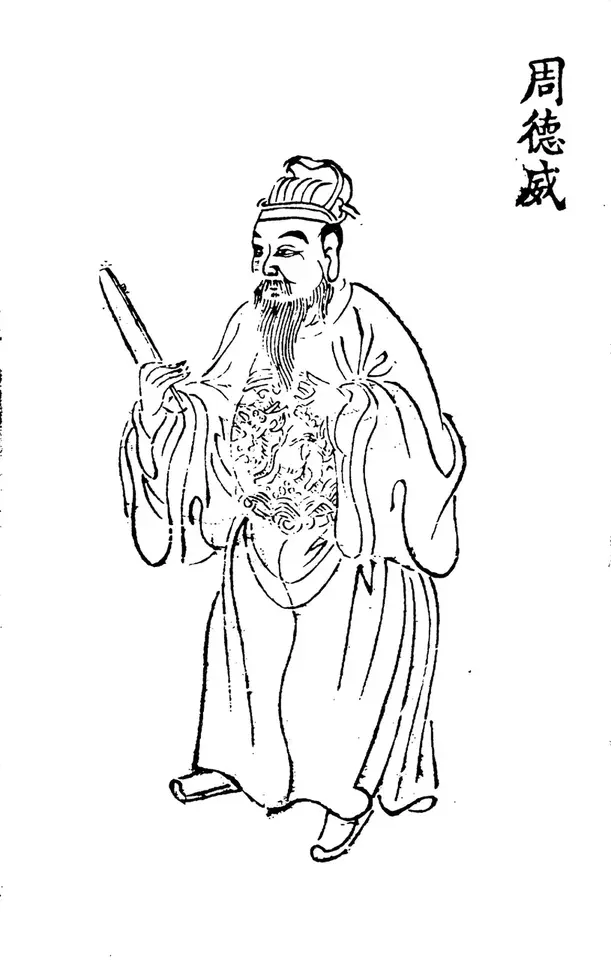
?–918 CE
周德威
Zhou Dewei (周德威, ? – December 24, 918), courtesy name Zhenyuan (镇远), was the foremost military commander and cavalry tactician of the Shatuo Jin state (later the Later Tang Dynasty) during the late Tang and Five Dynasties period. A native of Mayi in Shuozhou, he joined the Shatuo military retinue of Li Keyong in his youth. Renowned for his physical bravery, tactical acumen, and unparalleled ability to discern enemy formations…
Zhou Dewei (周德威, ? – December 24, 918), courtesy name Zhenyuan (镇远), was the foremost military commander and cavalry tactician of the Shatuo Jin state (later the Later Tang Dynasty) during the late Tang and Five Dynasties period. A native of Mayi in Shuozhou, he joined the Shatuo military retinue of Li Keyong in his youth. Renowned for his physical bravery, tactical acumen, and unparalleled ability to discern enemy formations and battlefield dust patterns, Zhou Dewei rose through fierce combat to become Li Keyong's most trusted operational commander. Following Li Keyong's death, Zhou Dewei faithfully served his heir Li Cunxu, playing a pivotal role in stabilizing the Jin succession and repelling massive assaults by the Later Liang Dynasty under Zhu Wen. At the landmark Battle of Baixiang in 911, Zhou Dewei devised brilliant cavalry harassment and tactical entrapment maneuvers, annihilating Liang's elite long-spear corps under Wang Jingren. He subsequently directed the northern offensive that destroyed the rival warlord state of Yan ruled by Liu Shouguang, earning appointment as Military Commissioner of Lulong (Lulong Jiedushi). In December 918, during the massive engagement at the Battle of Huliupo against the Later Liang army, Zhou Dewei's cavalry was cut off and overwhelmed after tactical miscalculations by the Jin center, and he fell in battle alongside his eldest son. His death was mourned bitterly by Li Cunxu as the loss of his indispensable right arm.
Born into a frontier martial lineage in Mayi, Shuozhou
Participated in the campaign against Helian Duo at Yunzhou, distinguishing himself in cavalry combat
Repulsed Later Liang general Shi Shucong's invasion of Hedong at Mount Baibi
Harassed Ding Hui's besiegers in Zhaoyi Circuit while coordinating Hedong frontier defenses
Captured Yan general Shan Tinggui in single combat outside Youzhou
Joined Li Keyong's Shatuo cavalry during campaigns against Huang Chao
Defeated Bianzhou generals Ge Congzhou and Shi Shucong in Shanxi
Zhu Wen usurped the Tang throne; Jin refused recognition and continued war
Coordinated with Li Cunxu to break the protracted Liang siege of Luzhou
Devised tactical plan routing Wang Jingren's 100,000-strong Later Liang army
Commanded expeditionary army capturing Youzhou and extinguishing Liu Shouguang's Yan regime
Appointed Military Commissioner of Lulong, stabilizing the northern frontier
Defended Youzhou against an encirclement by Yelü Abaoji for over two hundred days until relief arrived
Slain in combat along with his son Zhou Guangfu while covering the Jin retreat
Zhou Dewei demonstrated extraordinary martial aptitude from his youth. Standing tall with deep-set eyes and commanding presence, he possessed exceptional mastery over archery and mounted combat. Enlisting in Li Keyong's elite frontier guard, he participated in the suppression of the Huang Chao rebellion and the consolidation of the Hedong military base in Taiyuan.
Zhou Dewei was particularly famous for his tactical discernment. By merely observing the rising dust columns and terrain configurations miles away, he could accurately estimate the enemy's numbers, troop types, and tactical intentions. Li Keyong placed great faith in his counsel, promoting him to Commander of the Cavalry (Qidu) and subsequently General of the Combined Fan and Han Troops (Fan-Han Dujiang).
Throughout the protracted warfare between Li Keyong and Zhu Wen (Zhu Quanzhong) of Xuanwu Circuit, Zhou Dewei repeatedly engaged Later Liang's top generals. In 899, when Liang commanders Ge Congzhou and Shi Shucong attacked the strategic bastion of Luzhou, Zhou Dewei led light cavalry detachments through mountain passes to harry Liang supply lines, forcing the invaders to retreat.
Zhu Wen held profound dread of Zhou Dewei, placing an enormous bounty on his head: "Whoever captures Zhou Yangwu alive shall be granted a military prefecture." Yet in engagement after engagement along the Taihang Mountains, Zhou Dewei repeatedly frustrated Liang offensives through rapid flanking maneuvers and decisive cavalry countercharges.
Strategic Mastermind of the Jin State
In 907, Zhu Wen deposed the last Tang emperor and established the Later Liang Dynasty. Li Keyong rejected Liang's authority, maintaining the Tang calendar. In 908, Li Keyong died, and the young Li Cunxu inherited the Prince of Jin title amidst court conspiracies. Several senior officers wavered, but Zhou Dewei immediately rushed back to Taiyuan from his frontier post, declared unwavering allegiance to Li Cunxu, and silenced all conspirators.
Liang forces had constructed double siege walls around Luzhou for over a year. Li Cunxu and Zhou Dewei led a relief army that marched with astonishing secrecy through dense morning mist. Zhou Dewei breached the outer palisades and led a cavalry charge into the Liang camps, routing the siege army and securing the strategic survival of the Jin state.
In late 910, Zhu Wen dispatched his prime general Wang Jingren with an elite imperial army of one hundred thousand men to conquer the Jin allies in Zhenzhou and Zhaozhou. Li Cunxu led his forces south to Baixiang (in modern Hebei) to confront them.
Facing the heavily armored, dense spear formations of the Liang army, Li Cunxu was eager to launch an immediate frontal assault. Zhou Dewei adamantly counseled caution: "The Liang army has marched rapidly and their formations are compact and formidable. Our strength lies in cavalry mobility, while theirs lies in infantry spears. If we engage them on open flat terrain in a static collision, our cavalry cannot maneuver. We should withdraw slightly, employ skirmishers to taunt them, and lure them out of their fortified positions until they are exhausted."
On January 23, 911, Zhou Dewei dispatched several hundred light horsemen to bait the Liang line. Tricked into advancing several miles across freezing plains, the Liang infantry became exhausted by dusk. Recognizing the critical turning point, Zhou Dewei shouted to his cavalry: "The enemy is broken, charge now!" He unleashed the Shatuo heavy cavalry into the exposed Liang flanks while Li Cunxu struck their center. The Liang army collapsed in catastrophic panic, with over twenty thousand slain and their entire artillery and supply train captured. The Battle of Baixiang shattered Liang's military superiority in northern China.
Conquest of Yan and Khitan Defense
Following the triumph at Baixiang, Li Cunxu ordered Zhou Dewei to direct the conquest of the northern warlord state of Yan ruled by the tyrannical Liu Shouguang. In late 911, Zhou Dewei led thirty thousand troops across the Yanshan mountains.
At the Battle of Youzhou, Yan general Shan Tinggui led thirty thousand men to offer battle. During combat, Shan Tinggui charged directly toward Zhou Dewei, knocking him off his horse with a long lance. As Shan dismounted to take his head, Zhou Dewei vaulted up, struck Shan with his iron mace, and took him prisoner. The Yan forces fled in terror. Zhou Dewei then laid siege to Youzhou (modern Beijing), reducing the fortress in late 913 and capturing Liu Shouguang. For this feat, Li Cunxu appointed Zhou Dewei as Military Commissioner of Lulong.
In 916, Yelü Abaoji, the founding emperor of the Khitan Empire (Liao), mobilized an immense nomadic horde of several hundred thousand cavalry to invade northern China, surrounding Youzhou. Zhou Dewei, possessing only a modest garrison, organized an unyielding defense.
For over two hundred days, Zhou Dewei personally patrolled the ramparts, utilizing rolling boulders, fire oil, and crossbow batteries to repulse relentless assaults. Despite dwindling rations and severe starvation inside the walls, he kept morale steady until Li Cunxu dispatched relief forces under Li Siyuan and Yan Bao in 917, forcing the Khitans to lift the siege and retreat into the northern steppes.
In late 918, Li Cunxu launched a massive campaign southward with his entire military force, intent on crossing the Yellow River to capture Liang's northern capital at Daliang. The Liang Grand Commander He Jinsi mobilized his elite army to confront the Jin host at Huliupo (in modern Dongming, Shandong).
Zhou Dewei observed the terrain and noticed the Liang army encamped in strong positions on high ground. He urged Li Cunxu to rest his troops, send cavalry to sever Liang supply channels, and refrain from a premature general engagement. However, Li Cunxu, swayed by aggressive junior officers who argued that delayed action showed cowardice, ordered an immediate frontal attack across open sand dunes.
During the chaotic clash, the Jin infantry vanguard suffered setbacks and fell back in disorder. False rumors spread through the rear lines that Li Cunxu had been killed. Zhou Dewei, commanding the cavalry on the left wing, found his flanks completely exposed. He fought desperately to cover the retreat of the disorganized Jin infantry, holding off overwhelming waves of Liang heavy cavalry. In the furious melee, a Liang cavalryman struck Zhou Dewei down from his horse. His eldest son, Zhou Guangfu, threw himself forward to rescue his father and was also cut down. Both perished heroically on the battlefield on December 24, 918.
When Li Cunxu finally regrouped his main force and defeated the scattered Liang pursuers later that evening, he wept inconsolably over Zhou Dewei's corpse: "It was my recklessness and refusal to heed your counsel that has cost me my finest general and my indispensable right arm!" Following the founding of the Later Tang Dynasty, Li Cunxu posthumously created Zhou Dewei Prince of Yan (Yan Wang).
During the 901 Later Liang invasion of Hedong, boastingLiang vanguard general Chen Zhang ("Chen Yehu") vowed to capture "Zhou Yangwu" alive, but Zhou Dewei lured him out and struck him from his horse with an iron mace.
When Li Keyong died in 908 and powerful adoptive brothers plotted against the young successor Li Cunxu, Zhou Dewei marched his field army back to Taiyuan, dismounted outside the city gates, and bowed in fealty to stabilize the court.
In the 912 advance on Youzhou, Yan general Shan Tinggui boasted of matching "Zhou Yangwu" with his spear, only for Zhou Dewei to dodge his thrust and capture him alive on horseback.
Although Li Keyong had occasionally distrusted Zhou Dewei's independent command on the frontier, Zhou's unhesitating obedience to Li Cunxu at Jincheng and Luzhou forged an unbreakable bond between sovereign and marshal.
Appointed Military Commissioner of Lulong in 913 after the fall of Youzhou, Zhou Dewei restored border markets, disciplined frontier garrisons, and relied on his son Zhou Guangfu to hold the northern passes.
On the eve of the Huliupo clash in late 918, Zhou Dewei warned Li Cunxu that the Liang army had come in full fury and should be worn down by severing their grain routes rather than met in a hasty frontal collision.
After ascending the imperial throne as Emperor Zhuangzong of Later Tang, Li Cunxu conferred upon Zhou Dewei the posthumous rank of Grand Preceptor, enshrined him in the imperial temple of Li Keyong, and later elevated him to Prince of Yan.
Contemporary chronicles celebrated Zhou Dewei's uncanny ability to read the height and density of distant dust clouds on the northern plains to determine enemy troop numbers and march speed.
FIGURES ASSOCIATED WITH THIS DYNASTY