Birth in Jinyang
Born on the twenty-second day of the tenth month in Taiyuan as the eldest son of Li Keyong.
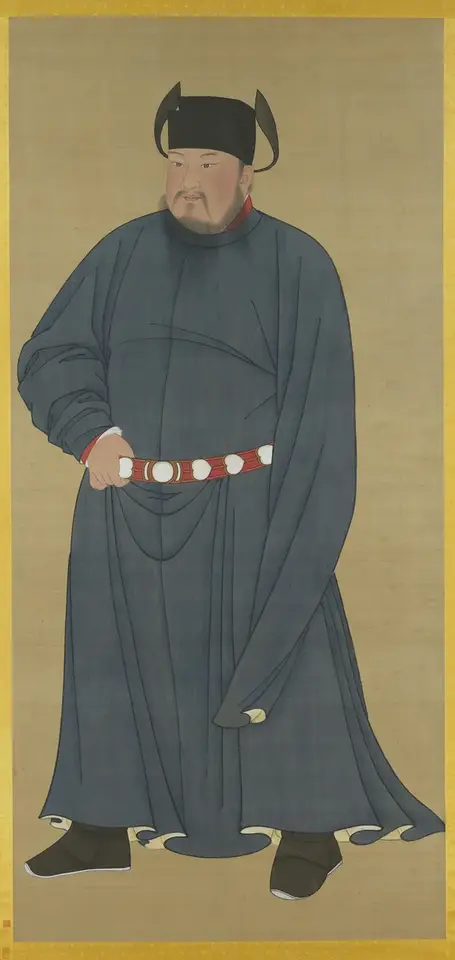
885 CE–926 CE
李存勖
Li Cunxu (李存勖, December 2, 885 – May 15, 926), childhood name Yazi, stage name Li Tianxia, native of Jincheng in Yingzhou (modern Ying County, Shanxi), born in Taiyuan, was a Shatuo Turks military leader and the founding emperor of the Later Tang dynasty (reigned 923–926). The eldest son of the legendary warlord Li Keyong, Prince of Jin, and Empress Cao, he was celebrated from his youth for his extraordinary archery, military…
Li Cunxu (李存勖, December 2, 885 – May 15, 926), childhood name Yazi, stage name Li Tianxia, native of Jincheng in Yingzhou (modern Ying County, Shanxi), born in Taiyuan, was a Shatuo Turks military leader and the founding emperor of the Later Tang dynasty (reigned 923–926). The eldest son of the legendary warlord Li Keyong, Prince of Jin, and Empress Cao, he was celebrated from his youth for his extraordinary archery, military charisma, and deep passion for musical theatre. Tang Emperor Zhaozong remarked on his exceptional countenance, and even his lifelong nemesis Zhu Wen, founder of Later Liang, famously exclaimed that having a son like Li Yazi rendered Keyong immortal. In 908, Li Keyong passed away, bequeathing his son three arrows as symbolic pledges of filial vengeance against Later Liang, Yan, and the Khitans. Assuming the title Prince of Jin, Li Cunxu swiftly purged domestic conspiracies and launched sweeping military campaigns. He broke the grueling siege of Luzhou at the Battle of Jiazhai, crushed Liang general Wang Jingren's massive army at Baixiang in 911, annihilated the Jieyan regime of Liu Shouguang in Youzhou in 913, and annexed the six prefectures of Weibo in 915, establishing total mastery over northern China. In April 923, he proclaimed himself emperor in Weizhou, declaring the restoration of the Tang dynasty. In October of that year, executing a daring cavalry strike led by Li Siyuan, he captured the Liang capital Kaifeng, prompting Emperor Mo of Later Liang to commit suicide and reunifying the Central Plains. In 925, his armies conquered Former Shu in just seventy days. However, once imperial power was secured, Li Cunxu displayed profound administrative shortcomings. He distrusted veteran generals, unjustly executing master strategist Guo Chongtao and general Zhu Youqian, while empowering palace eunuchs and theatrical performers (actors) who extorted officials and disrupted civil governance. Empress Liu's hoarding of state treasure during widespread army famine alienated frontline soldiers. In the fourth month of 926, the actor Guo Congqian instigated the Xingjiaomen mutiny in Luoyang; Li Cunxu fought valiantly but was struck down by a stray arrow at Jiangxiao Palace at age forty-two. He was given the temple name Zhuangzong and buried in Yongling Mausoleum.
Born on the twenty-second day of the tenth month in Taiyuan as the eldest son of Li Keyong.
Accompanied his father to Chang'an; praised by Emperor Zhaozong as a future pillar of the state.
Succeeded his late father, received the symbolic three arrows, and crushed internal rebel Li Cunhao.
Relieved the prolonged siege of Luzhou by executing a surprise assault on the encircling Liang entrenchments.
Joined forces with Zhou Dewei to rout Liang general Wang Jingren's elite army, securing Hebei alliances.
Marched on Youzhou, capturing warlords Liu Rengong and Liu Shouguang and securing the northern frontier.
Accepted the surrender of the elite Tianxiong army of Weibo, expanding Jin dominion to the Yellow River.
Enthroned as Tang Emperor in April; executed a swift raid on Kaifeng in October, destroying Later Liang.
Dispatched Prince Li Jiji and Guo Chongtao to conquer Sichuan, absorbing the Former Shu empire in seventy days.
Discontented troops and actors mutinied in Luoyang; struck by an arrow and perished at Jiangxiao Palace.
Li Cunxu was born in Jinyang in 885 during the twilight of the Tang dynasty. Belonging to the elite Shatuo military aristocracy that traced its descent from the Western Turkic khaganates, his grandfather Zhuye Chixin had been granted the imperial surname Li for crushing the Pang Xun rebellion. From childhood, Cunxu accompanied his father on campaigns against Huang Chao's rebels and rival warlords, demonstrating exceptional prowess in mounted archery and strategy alongside a rare talent for classical poetry and musical composition.
In 908, Li Keyong succumbed to illness at Taiyuan. According to traditional accounts, Keyong handed three arrows to Cunxu on his deathbed, charging him to avenge three historic humiliation: defeating Later Liang, subjugating the treacherous Liu family of Yan, and punishing Yelü Abaoji of the Khitans for breaking their sworn brotherhood. Faced with conspiracy from his uncle Li Cunhao and regional challengers, the twenty-three-year-old prince acted with decisive swiftness, arresting the conspirators and executing them in public to consolidate his command over the Hedong armed forces.
Immediately following his accession, Li Cunxu marched secretly to relieve Luzhou, which had been under relentless siege by Liang forces for over a year. Cloaked in morning fog, his cavalry charged into the enemy entrenchments at Jiazhai, completely routing the besieging forces and liberating the garrison. In 911, when Liang warlord Zhu Wen dispatched sixty thousand troops under Wang Jingren to subdue Hebei, Cunxu joined forces with Zhao allies at Baixiang, employing feigned retreats to lure heavily armored Liang infantry onto open terrain before obliterating them with sweeping cavalry charges.
Turning northward in 913, Cunxu launched a punitive campaign against the Jieyan regime based in Youzhou. His armies breached the walls, capturing both the tyrannical usurper Liu Shouguang and his father Liu Rengong, who were executed at Li Keyong's tomb in fulfillment of the filial vow. In 915, when the volatile Silver Spear garrison of Weibo mutinied against their commissioner, Cunxu marched south, absorbed the entire Tianxiong commandery, and incorporated their elite infantry into the core of his shock troops, gaining complete military dominance north of the Yellow River.
After years of grueling positional warfare along the Yellow River, including the bloody battle of Huliupo in 918, Cunxu formally claimed the imperial dignity on May 13, 923, at Weizhou. He designated his dynasty Great Tang to assert direct institutional continuity with the fallen dynasty, taking the era name Tongguang. In late 923, learning from defector Kang Yanxiao that Later Liang's interior was undefended, Cunxu authorized general Li Siyuan to spearhead a lightning march across flooded ditches straight toward Kaifeng. Caught completely unprepared, Liang Emperor Zhu Youzhen ordered his bodyguard to slay him, and Cunxu entered Kaifeng in triumph, officially reunifying the fragmented northern heartland.
In the autumn of 925, Li Cunxu mobilized sixty thousand troops under his eldest son Li Jiji and chief planner Guo Chongtao to conquer the affluent Former Shu kingdom in Sichuan. In an astonishing campaign lasting merely seventy days, imperial troops forced King Wang Yan to surrender, adding sixty-four wealthy prefectures and vast treasuries to the Later Tang empire.
Li Cunxu's military innovations fundamentally reversed the fragmentation of northern China that followed the collapse of the Tang dynasty. He instituted rigorous battlefield discipline, holding commanders strictly accountable for retreating without orders and enforcing coordinated tactical doctrines between Shatuo heavy cavalry and northern Chinese infantry formations.
His campaigns against the Khitan Liao empire in 921 and 922 demonstrated remarkable tactical adaptability. When Khitan nomadic cavalry raided Youzhou and Zhenzhou, Li Cunxu personally spearheaded a counterattack through snowstorms at Wangdu, capturing Khitan generals and repelling nomadic intrusions south of the Great Wall for several years.
Despite his military genius, Li Cunxu proved completely incapable of managing imperial civil governance. Passionate about theatrical arts, he gave himself the stage name Li Tianxia, performing on palace stages alongside actors and appointing entertainers such as Guo Congqian and Jing Jin to influential administrative and espionage posts. These favorites extorted provincial military governors, falsified intelligence, and actively slandered loyal commanders.
Simultaneously, the imperial treasury accumulated enormous stockpiles of silver and silks while common soldiers on frontier postings starved and went without clothing. When famine struck northern commanderies in early 926, Empress Liu stubbornly refused to release palace funds to relieve imperial guards. Factional paranoia led to the judicial murder of master strategist Guo Chongtao in Chengdu and the execution of general Zhu Youqian, triggering widespread terror among veteran officers. In April 926, mutinies erupted throughout Hebei. When imperial troops led by Li Siyuan were co-opted by rebels, actor Guo Congqian seized the opportunity to launch a palace coup in Luoyang, bringing an abrupt and tragic end to Zhuangzong's dramatic life.
FIGURES ASSOCIATED WITH THIS DYNASTY