Steppe Birth
Born in Shenwuchuan into the Shatuo Zhuye chieftain clan as the third son of Li Guochang.
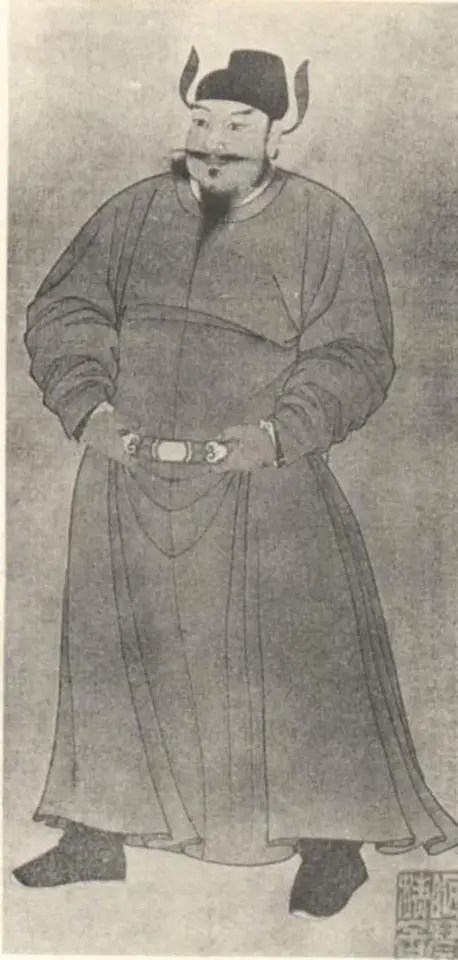
856 CE–908 CE
李克用
Li Keyong (October 24, 856 – February 23, 908), posthumously honored as Emperor Wu (武皇帝) with the temple name Taizu (太祖), was a paramount military governor of the Shatuo Turks, Prince of Jin, and the de facto founding father of the Later Tang dynasty during the late Tang and Five Dynasties period. The son of Shatuo chieftain Zhuye Chixin (who received the Tang imperial surname Li for crushing the Pang Xun rebellion), Li…
Li Keyong (October 24, 856 – February 23, 908), posthumously honored as Emperor Wu (武皇帝) with the temple name Taizu (太祖), was a paramount military governor of the Shatuo Turks, Prince of Jin, and the de facto founding father of the Later Tang dynasty during the late Tang and Five Dynasties period. The son of Shatuo chieftain Zhuye Chixin (who received the Tang imperial surname Li for crushing the Pang Xun rebellion), Li Keyong was renowned from youth for peerless equestrian archery and ferocious battlefield courage, earning the legendary sobriquet "The One-Eyed Dragon". In 881, following the capture of Chang'an by the Huang Chao peasant rebellion, the desperate Tang court pardoned Li Keyong and summoned his elite Shatuo cavalry to rescue the capital. Mobilizing forty thousand horsemen wearing terrifying black tunics, he routed Huang Chao's armies at Liangtianpo, liberated Chang'an in 883, and was invested as Military Governor of Hedong and Prince of Jin. However, during a celebration banquet at Xuanwu, warlord Zhu Wen launched a treacherous midnight arson attack at Shangyuan Post, sparking a bitter, thirty-year civil war for supremacy over North China. Operating from his mountain fortress of Taiyuan, Li Keyong expanded his power across Shanxi and Hebei through his formidable cadre of adopted warrior-sons, known as the "Thirteen Grand Protectors." Upon Zhu Wen's usurpation of the Tang throne in 907, Li Keyong refused to recognize the new Liang dynasty, retaining the Tang reign era. On his deathbed in 908 at age fifty-two, he famously handed three arrows to his brilliant son Li Cunxu, charging him to avenge his defeats against the Khitans, Youzhou, and Zhu Wen. In 923, Li Cunxu fulfilled his father's dying wish, obliterating Later Liang and establishing the Later Tang dynasty.
Born in Shenwuchuan into the Shatuo Zhuye chieftain clan as the third son of Li Guochang.
Shot two flying wild ducks with a single arrow at age thirteen, astonishing frontier commanders.
Supported his father Li Guochang in resisting transfer from Yunzhou, consolidating Shatuo autonomy.
Defeated by Tang imperial forces under Li Zhuo and retreated with his father into the Yinshan Tatar steppes.
Summoned by Emperor Xizong after Huang Chao captured Chang'an, leading Shatuo cavalry south from the Tatar steppes.
Allied with Hezhong governor Wang Chongrong to defeat Tian Lingzi's coalition, forcing Emperor Xizong to flee to Fengxiang.
Routed Chancellor Zhang Jun's hundred-thousand-strong imperial punitive army in Hedong.
Restored to all offices and ennobled as Prince of Longxi by Emperor Zhaozong.
Camped at Weibei to support the Tang court and received the honors of Acting Grand Preceptor.
Repelled a second encirclement of Taiyuan by Zhu Wen's forces with a daring night raid.
Met Khitan chieftain Yelü Abaoji at Yunzhou, swearing fraternal steppe brotherhood against Zhu Wen.
Relieved the siege of Luzhou, shattering Zhu Wen's northern offensive.
Assisted his father in crushing the Pang Xun rebellion at age fourteen, displaying miraculous archery.
Rebelled against corrupt Tang frontier officials in Daizhou; withdrew to the northern steppes.
Pardoned by the Tang court; commanded forty thousand black-robed Shatuo cavalry to march against Huang Chao.
Obliterated Huang Chao's rebel armies at Liangtianpo; triumphantly entered Chang'an, appointed Governor of Hedong.
Escaped a treacherous midnight assassination attempt by Zhu Wen at Bianzhou, sparking decades of war.
Marched south to rescue Emperor Zhaozong from warlord Li Maozhen, formally ennobled as Prince of Jin.
Defended Taiyuan against a massive combined siege by Zhu Wen's armies, turning the tide with a daring sally.
Refused to recognize Zhu Wen's usurpation, maintaining the Tang calendar and rallying loyalist resistance.
Handed three arrows to Li Cunxu on his deathbed in Jinyang on February 23, dying at age fifty-two.
Li Keyong belonged to the Shatuo branch of the Western Turkic confederation, originally centered around the Celestial Mountains before migrating eastward to the northern frontiers of Shanxi. His father, Zhuye Chixin, was a loyal military commander under the Tang dynasty who was granted the imperial surname Li and the given name Guochang for his decisive service in crushing the 869 Pang Xun rebellion. Born with a natural squint in one eye, young Li Keyong was gifted with miraculous physical strength and astonishing archery skills, capable of striking two flying birds with a single arrow. Frontier horsemen reverently referred to him as "The Flying Tiger" and "The One-Eyed Dragon." In 878, when severe famine struck Daizhou and imperial officials refused grain relief, Li Keyong's garrison killed the corrupt prefect and seized control of the city. Forced north into the Mongolian steppes following imperial counter-attacks, Li Keyong spent four years among the Yin Mountains, forging deep military alliances with the Dada and Yinshan nomadic clans.
In 880, the cataclysmic Huang Chao rebellion swept across the Central Plains, capturing the imperial capital of Chang'an and forcing Emperor Xizong to flee into Sichuan. Incapable of expelling the rebel forces, the Tang court issued a general amnesty in 882, pardoning Li Keyong and appointing him Governor of Yanmen with orders to lead his steppe cavalry south. Li Keyong marshaled forty thousand veteran horsemen, all clad in distinctive black iron armor and black tunics, earning the terrifying battlefield moniker "The Crows" (Li Ya'er). In the spring of 883, Li Keyong's black armada smashed Huang Chao's elite divisions at Liangtianpo, drove the rebels out of Chang'an, and escorted imperial officials back to the capital. For his paramount service, the grateful Tang throne appointed the twenty-eight-year-old commander Military Governor of Hedong, establishing his supreme headquarters at the impregnable fortress city of Taiyuan.
Pursuing the fleeing remnants of Huang Chao into Henan in 884, Li Keyong assisted Xuanwu Governor Zhu Wen in destroying the rebel vanguard. Following the victory, Zhu Wen invited Li Keyong to a lavish celebratory banquet inside the city of Bianzhou. After heavy drinking, Li Keyong made blunt, disdainful remarks regarding Zhu Wen's past allegiance to the rebels. Enraged, Zhu Wen covertly surrounded the Shangyuan Post with thousands of armed troops at midnight, barricaded the exits, and set the building ablaze with fire arrows. Awakened by his retainers amidst a sudden, torrential thunderstorm, Li Keyong fought his way through the flames, scaled the city wall under cover of lightning, and escaped back to Taiyuan. This treacherous betrayal ignited a titanic, thirty-year civil war between Li Keyong's Hedong military machine and Zhu Wen's Bianzhou coalition, a duel that dominated the history of early medieval China.
Operating from the mountain bastion of Shanxi, Li Keyong developed a unique military institution, adopting hundreds of exceptionally talented orphan warriors as his sons. Among them, the "Thirteen Grand Protectors" (including his brilliant eldest son Li Cunxu and future emperor Li Siyuan) formed an invincible shock-cavalry vanguard. Throughout the 890s, Li Keyong campaigned across Hebei and Shaanxi, repeatedly rescuing Emperor Zhaozong from regional warlords and earning elevation to Prince of Jin. In 901, Zhu Wen assembled over one hundred thousand troops to lay siege to Taiyuan. Surrounded by ringed earthworks, Li Keyong contemplated flight, but was stiffened by his courageous wife, Lady Liu. Launching a desperate midnight cavalry sally, Li Keyong shattered the besiegers amidst heavy seasonal rains. In 907, when Zhu Wen poisoned Emperor Aidi and proclaimed the Later Liang dynasty, Li Keyong adamantly refused to submit, defiantly preserving the Tang dynastic calendar. In early 908, suffering from a fatal respiratory illness in Jinyang, Li Keyong summoned his son Li Cunxu. Handing him three ritual arrows, he wept as he said: "The first arrow is to destroy Liu Rengong of Youzhou who betrayed me; the second is to punish the Khitans who broke their steppe oath; the third is to wipe out Zhu Wen. Only then can I rest in peace!" He died on February 23, 908, at age fifty-two. Li Cunxu subsequently accomplished all three deathbed commands, founding the Later Tang dynasty.
Li Keyong's intervention was the decisive military factor that broke the back of the Huang Chao insurrection. His capture of Chang'an preserved the Tang dynasty for an additional quarter-century, establishing the Shatuo cavalry as the most potent military strike force in East Asia.
Operating from Taiyuan, Li Keyong transformed Shanxi into an impregnable military and economic fortress. His innovative institution of adopted military sons (the Thirteen Protectors) forged an elite military meritocracy that dominated northern China and formed the ruling dynasties of the Five Dynasties era.
Surrounded by opportunistic warlords who submitted to Zhu Wen's usurping regime, Li Keyong stood as the sole grand prince who maintained unwavering allegiance to the Tang dynasty. His resistance preserved the political legitimacy that enabled his son to restore the empire as Later Tang.
After killing Datong commissioner Duan Wenchu in 878 and suffering defeat in 880, Li Keyong and Li Guochang took refuge among the Tatar tribes of Yinshan until Li Youjin secured their imperial pardon in 881.
After liberating Chang'an in 883, Li Keyong led elite cavalry in a relentless pursuit of Huang Chao across Henan and Shandong in 884, shattering the rebel main force at Wangkugu.
Narrowly escaping Zhu Wen's midnight fire attack at Shangyuan Post in Bianzhou during a thunderstorm in May 884, Li Keyong petitioned the Tang court for justice, beginning the forty-year Jin-Liang war.
When Chancellor Zhang Jun and Zhu Wen persuaded Emperor Zhaozong to launch a punitive campaign against Hedong in 890, Li Keyong's adopted sons Li Cunxiao and Li Cunxin crushed the imperial armies at Yindiguan.
In 895, Li Keyong marched across the Yellow River to crush Wang Xingyu and restrain Li Maozhen, earning investiture as Prince of Jin from Emperor Zhaozong.
Between 898 and 902, as Zhu Wen subdued Hebei and besieged Taiyuan twice, Li Keyong followed Lady Liu's counsel and Li Cunxu's advice to hold Jinyang and rebuild his forces.
In 905, Li Keyong forged a steppe alliance with Khitan leader Yelü Abaoji at Yunzhou, and in 907 he retained the Tang Tianyou reign title in defiance of Zhu Wen's Later Liang.
Over four decades of warfare, Li Keyong's "Black Crow Army" fought from the Yin Mountains to Chang'an, Bianzhou, and Youzhou.
By consistently framing his campaigns as loyalist expeditions to protect the Tang house, Li Keyong secured moral legitimacy among northern elites.
Although outnumbered and economically outmatched by Zhu Wen's control of the Central Plains, Li Keyong held the Shanxi plateau unbroken until his death.
His complex interactions with Wang Chongrong, Li Maozhen, Liu Rengong, and Yelü Abaoji shaped the multipolar geopolitics of the Tang-Five Dynasties transition.
Combining Shatuo heavy cavalry charges with the "Thirteen Protectors" adoptive officer corps, Li Keyong forged the military machine that founded the Later Tang, Later Jin, and Later Han dynasties.
Evaluated in the Old History of the Five Dynasties, Ouyang Xiu's New History, Sima Guang's Zizhi Tongjian, and modern scholarship, Li Keyong is celebrated for his martial valor and loyalty to the Tang banner.
FIGURES ASSOCIATED WITH THIS DYNASTY