Xu Zhigao received Yang Pu’s abdication, proclaimed himself emperor, and established the state of Qi; the Southern Tang polity began from this point.
937 CE–975 CE
Southern Tang
Regional polity南唐
The Southern Tang (937–975) was a polity in Jiangnan during the Five Dynasties and Ten Kingdoms period. Its capital was Jinling Prefecture (present-day Nanjing, Jiangsu). It was ruled by three monarchs—Li Bian, the founding ruler; Li Jing, the middle ruler; and Li Yu, the last ruler—for a total of thirty-eight years. It was among the Ten Kingdoms with the broadest territory and one of the most culturally flourishing. Li Bian, originally named Xu Zhigao, was the adopted son of Xu Wen, a powerful…
937 CE–975 CECapital · See entry
ERA OVERVIEW
The Southern Tang (937–975) was a polity in Jiangnan during the Five Dynasties and Ten Kingdoms period. Its capital was Jinling Prefecture (present-day Nanjing, Jiangsu). It was ruled by three monarchs—Li Bian, the founding ruler; Li Jing, the middle ruler; and Li Yu, the last ruler—for a total of thirty-eight years. It was among the Ten Kingdoms with the broadest territory and one of the most culturally flourishing. Li Bian, originally named Xu Zhigao, was the adopted son of Xu Wen, a powerful minister of Yang Wu. In 937 he replaced Wu and proclaimed himself emperor, initially taking the state name “Qi.” In 939 he restored the surname Li and changed the state name to “Tang,” the polity thereafter being known as Southern Tang. Southern Tang was noted for its highly developed literary culture, with Li Yu especially renowned as a ci poet. In 975 (Kaibao 8), it was destroyed by the Northern Song.
Time span937 CE–975 CE
CapitalSee entry
ERA TIMELINE
Xu Zhigao restored the surname Li, changed his name to Li Bian, and changed the state name to Tang.
Southern Tang took advantage of internal conflict in Min and destroyed the Min state.
Southern Tang destroyed Ma Chu, but the newly occupied territory soon experienced resistance.
The Later Zhou campaign succeeded; Southern Tang ceded its territories north of the Yangtze and renounced the imperial title.
Li Jing died and Li Yu succeeded him.
Li Yu removed “Tang” from the state name and adopted the title Lord of Jiangnan.
The Northern Song launched the campaign to destroy Southern Tang on the grounds that Li Yu had refused to appear at court.
(Kaibao 8 of the Northern Song; Ka
975 (Kaibao 8 of the Northern Song; Kaibao 8 of Southern Tang): Song forces captured Jinling, Li Yu surrendered, and Southern Tang ended.
FULL ENTRY
Overview
The Southern Tang (937–975) was a polity in Jiangnan during the Five Dynasties and Ten Kingdoms period. Its capital was Jinling Prefecture (present-day Nanjing, Jiangsu). It was ruled by three monarchs—Li Bian, the founding ruler; Li Jing, the middle ruler; and Li Yu, the last ruler—for a total of thirty-eight years. It was among the Ten Kingdoms with the broadest territory and one of the most culturally flourishing. Li Bian, originally named Xu Zhigao, was the adopted son of Xu Wen, a powerful minister of Yang Wu. In 937 he replaced Wu and proclaimed himself emperor, initially taking the state name “Qi.” In 939 he restored the surname Li and changed the state name to “Tang,” the polity thereafter being known as Southern Tang. Southern Tang was noted for its highly developed literary culture, with Li Yu especially renowned as a ci poet. In 975 (Kaibao 8), it was destroyed by the Northern Song.
Historical Development
Establishment: Southern Tang grew out of Yang Wu. Yang Xingmi, Military Commissioner of Huainan, controlled the Jiang-Huai region and established Wu (Yang Wu). His senior minister Xu Wen gradually monopolized power and controlled state affairs for more than a decade. Xu Wen’s adopted son Xu Zhigao, later Li Bian, governed at Guangling, cultivated support, and reduced punishments and taxes. After Xu Wen’s death, Xu Zhigao ultimately secured supreme power. In 937 (Tianzuo 3 of Wu), Emperor Rui of Wu, Yang Pu, abdicated in his favor. Xu Zhigao proclaimed himself emperor, took the state name “Qi,” made Jinling the capital under the designation Jiangning Prefecture, and adopted the Shengyuan era name; this regime is sometimes called Xu Qi. In 939 (Shengyuan 3), at the request of his officials, Xu Zhigao restored the surname Li and changed his name to Li Bian. Claiming descent as the fourth-generation descendant of Li Ke, Prince of Jian and son of Emperor Xianzong of Tang, he honored the Tang ancestors and changed the state name to “Tang.” Because the polity was located in Jiangnan, it became known in historiography as Southern Tang. This marked the beginning of Li Bian’s replacement of Wu. Li Bian pursued a policy of “resting the troops and pacifying the people,” reduced labor and taxes, developed irrigation, and attracted displaced people. Southern Tang society became stable and the treasury well supplied. Before his death, he continued to warn his successors against unnecessary warfare.
Height: After Li Jing, known as Yuanzong or the middle ruler, succeeded to the throne, he repeatedly used military force during crises in neighboring states. In 945 (Baoda 3), he took advantage of internal conflict in Min, destroyed Min, and captured its last ruler Wang Yanzheng. In 951 (Baoda 9), he again exploited internal conflict in Ma Chu and seized Chu territory. The newly occupied Chu lands were soon retaken by Liu Yan and others of the Wuping Military Commission, while Southern Tang retained only part of the territory acquired from Min. During this period, Southern Tang’s territory briefly extended across much of Jiangnan and into Fujian and was among the largest of the Ten Kingdoms.
Turning point: Li Jing’s repeated campaigns exhausted state finances, and conflict also arose with the Later Zhou. In the winter of 955 (Xiande 2 of the Later Zhou), Emperor Shizong Chai Rong launched a southern campaign and successively captured prefectures north of the Yangtze. In Xiande 5 (958; Zhongxing 1 of Southern Tang), Southern Tang suffered a major defeat and was forced to cede fourteen prefectures north of the Yangtze to the Later Zhou, renounce the imperial title, adopt the title “Lord of the State,” recognize the Yangtze as the boundary, and follow the Later Zhou calendar. This campaign, often summarized as Emperor Shizong’s southern campaign, marked the key turning point in Southern Tang’s decline amid the trend toward northern reunification.
Decline: After Li Yu succeeded to the throne, Southern Tang had lost territory and resources and retained only its lands south of the Yangtze. In 961 (Jianlong 2 of the Northern Song), a move of the capital to Nanchang Prefecture was discussed but not carried out. In 971 (Kaibao 4), Li Yu dropped the state name “Tang,” styled himself “Lord of Jiangnan,” removed ornamental roof figures from palace buildings, and reduced ritual display to demonstrate submission to the Song.
Fall: In the ninth month of 974 (Kaibao 7), Emperor Taizu of Song used Li Yu’s refusal to appear at court as grounds for sending Cao Bin to lead land and naval forces south. Song troops used a floating bridge at Caishiji, following a proposal attributed to Fan Ruoshui, also called Fan Ruobing, to cross the Yangtze and attack Jinling. In the eleventh month of 975 (Kaibao 8), Song forces captured Jinling and Li Yu surrendered. Southern Tang fell. The year 976 was Kaibao 9, when Emperor Taizu of Song died and Emperor Taizong succeeded him; Southern Tang had in fact fallen in the eleventh month of 975 (Kaibao 8). Early in 976, Li Yu was taken as a captive to Bianjing. Generals including Lu Jiang and Hu Ze continued resistance in some places but were soon suppressed, and the Jiang-Huai and Jiangnan regions were incorporated into the Song.
Politics and Institutions
Southern Tang’s central institutions broadly imitated those of the Tang dynasty and Yang Wu. It maintained the Three Departments—Department of State Affairs, Secretariat, and Chancellery—and various administrative offices. Because it was a regional state in Jiangnan, the system was less complete than that of the high Tang, and historical accounts often describe its institutions as largely preserving Tang precedents. Li Bian emphasized frugality, disciplined the bureaucracy, and punished corruption. He also used the imperial examination system to promote education. In the later period, as Song pressure increased, Li Yu relied on ministers including Feng Yansi, and policy often emerged from multiple competing centers. Southern Tang rulers generally valued literature and treated scholars favorably, leading to a concentration of prominent literati sometimes described as a “Jiangzuo literary gathering.”
Military and Diplomacy
Southern Tang possessed riverine forces in the Jiang-Huai region and was skilled in naval warfare, while also maintaining land armies. Li Jing’s destruction of Min and seizure of Chu territory briefly enhanced its power, but repeated campaigns exhausted troops and finances, and the gains proved difficult to hold. Diplomatically, Southern Tang repeatedly attempted to cooperate with the Khitans against northern Central Plains regimes and later acknowledged Song suzerainty. Its two major military setbacks were the Later Zhou southern campaign and the Northern Song conquest of Southern Tang: the first cost it fourteen prefectures north of the Yangtze, while the second destroyed the state. Fan Ruoshui, originally a failed Southern Tang examination candidate and later associated with the name Fan Ruobing after entering Song service, offered the floating-bridge plan for crossing the Yangtze and was important to the Song conquest.
Economy and Commerce
Southern Tang occupied the prosperous Jiangnan region and inherited the economic foundations of Yang Wu. Li Bian encouraged agriculture and sericulture, reduced taxation, repaired polders and irrigation works, and promoted cultivation of rice, wheat, mulberry, and tea. Tea and mulberry products were important commercial goods. Salt production in Huainan and convenient water transport supported salt and tea markets. Jinling, Yangzhou, and other cities had active commerce, shipbuilding was developed, and both riverine and maritime trade prospered. Southern Tang also traded with northern regions. A well-supplied treasury provided an economic basis for its literary and cultural development.
Culture and Society
Southern Tang was one of the leading cultural centers of the Five Dynasties and Ten Kingdoms. Ma Ling’s History of Southern Tang states that amid the disorder of the Five Dynasties, “Confucian robes and books flourished most in Southern Tang.” Li Jing and Li Yu were both accomplished ci poets, and Li Yu in particular was later praised as an “emperor of ci.” Literary figures included Han Xizai, Feng Yansi, Xu Xuan, Xu Kai, Pan You, and others. Calligraphy, painting—including Gu Hongzhong’s Night Revels of Han Xizai—and lyric poetry all flourished. Southern Tang also promoted schools and Confucian learning, creating a strong literary culture that contributed to the continuation of Jiangnan education.
Rulers and Governing Core
Li Bian, Li Jing, Li Yu.
> This section describes the rulers’ positions in the evolution of the polity; full individual biographies are carried by the corresponding person entities.
Historical Assessment and Legacy
Contemporary assessment: Early Song literati remembered Southern Tang with the saying that “during thirty years in Jiangzuo, its cultural institutions had the air of the Yuanhe era.” The Central Plains and neighboring Shu also regarded Southern Tang as a culturally refined state of Jiangzuo and praised its flourishing literary life. Some accounts praised its support for scholars and noted the loyalty of officials such as Lu Jiang and Hu Ze who resisted to the end.
Later assessment: Later historians often ranked Southern Tang together with Western Shu among the most culturally developed of the Ten Kingdoms, praising its preservation of Tang ritual, music, and literary traditions during an age of disorder. Later ci criticism also praised Li Yu as an “emperor of ci,” crediting his work with transforming the genre from entertainers’ lyrics into a vehicle for scholar-official expression. At the same time, later commentators often regretted Li Yu’s political weakness and indulgence in literary life as factors in the state’s fall. In terms of legacy, Southern Tang carried forward Tang cultural traditions and helped prepare the way for Song civil culture. The recovery policies of Li Bian and the poetry of Li Yu remained important historical memories, while the Jiangsu-Zhejiang-Anhui-Jiangxi region developed further as a major economic and cultural center.
Rulers
Li Bian, Li Jing, Li Yu.
Southern Tang
Emperor
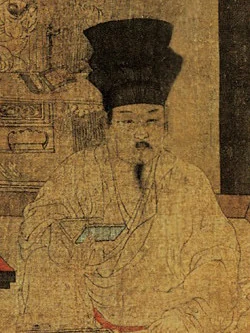
Li Bian
Li Bian (January 7, 889–March 30, 943), courtesy name Zhenglun and childhood name Pengnu, was the founding emperor of Southern Tang during the Five Dynasties and Ten Kingdoms period. He was from Xuzhou, although one account places his origin in Haizhou. Orphaned during warfare, he was first adopted by Emperor Taizu of Wu, Yang Xingmi, and was later adopted by Yang Xingmi's general Xu Wen, receiving the name Xu Zhigao
 Southern Tang
Historical figure
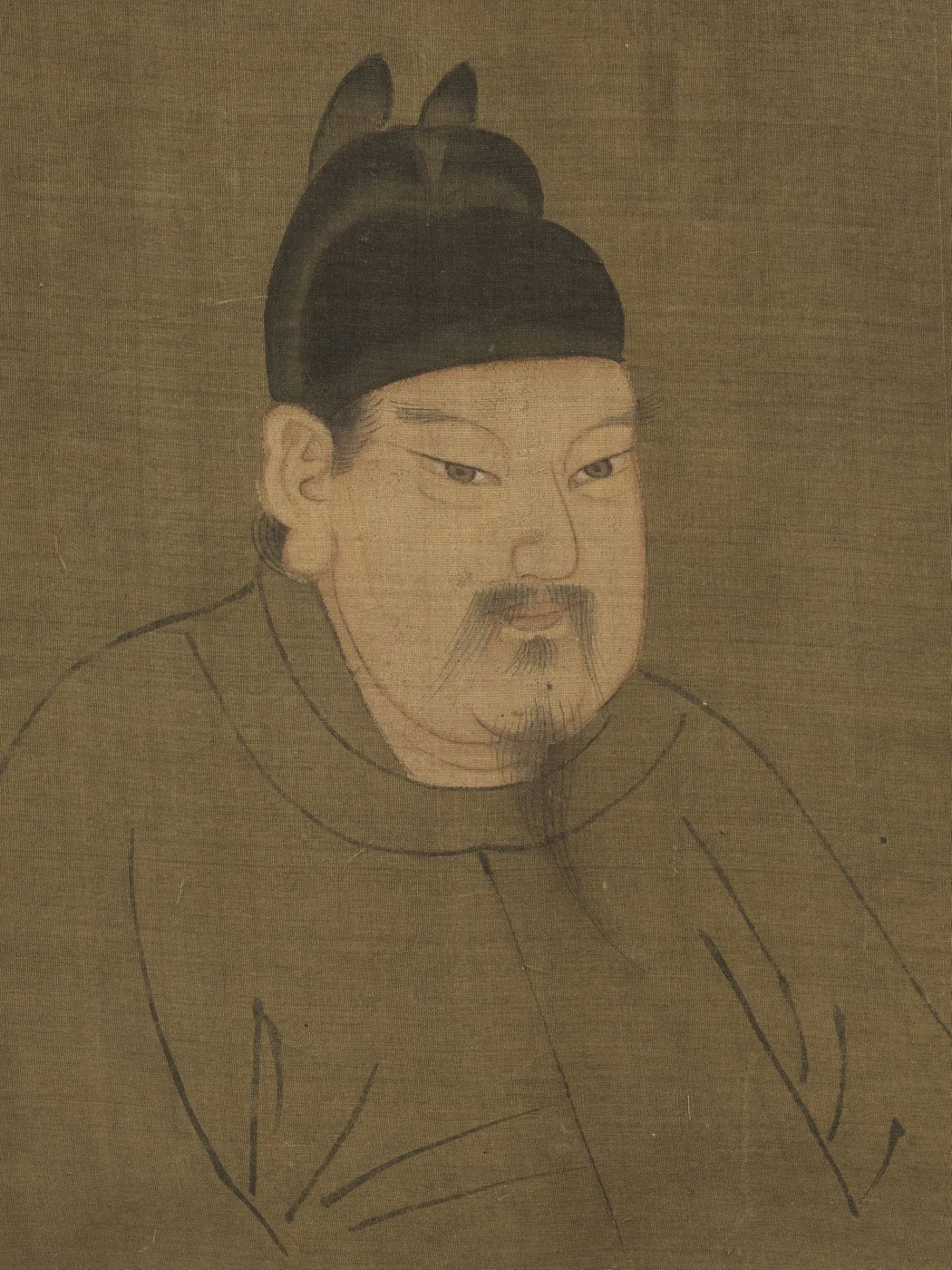
Li Jing
Li Jing (916–961), courtesy name Boyu, was the eldest son of Li Bian, founder of Southern Tang, and its second ruler. He is later known as the “Middle Ruler.” He succeeded his father in 943 (Shengyuan year 7, Southern Tang) and adopted the Baoda era name. Early in his reign, Southern Tang intervened in the turmoil of Min and Ma Chu and briefly held Jianzhou and parts of Hunan. Its attempt to take Fuzhou failed, howev
 Southern Tang
Historical figure
Li Yu
Li Yu, originally named Li Congjia, was the sixth son of Li Jing, the middle ruler of Southern Tang. After the death of his elder brother Li Hongji, he became crown prince and succeeded his father in 961 (second year of the Northern Song Jianlong era). Southern Tang had already acknowledged the Song dynasty's superior position. Li Yu repeatedly sent tribute and, in 971 (fourth year of the Northern Song Kaibao era), d
KEY PEOPLE
Later Zhou
Noted general of Southern Tang in the Five Dynasties and Ten Kingdoms
Liu Renshan
Liu Renshan (900–957), courtesy name Shouhui, was an illustrious general and loyalist martyr of Southern Tang during the Five Dynasties and Ten Kingdoms period. Born in Hongze, Huaiyin, he was the son of Liu Jin, one of the 'Thirty-Six Heroes' who founded Yang Wu. Literate in Confucian scholarship and well-versed in classical military doctrine, Liu governed Huangzhou and Yuanzhou with distinction before becoming Jied
Southern Tang
Chancellor of Southern Tang
Feng Yansi
Feng Yansi (903–960), courtesy name Zhengzhong, native to Guangling (modern Yangzhou), was a preeminent chancellor and towering poet of the Southern Tang during the Five Dynasties and Ten Kingdoms period. The son of Minister of Personnel Feng Lingyun, Feng Yansi possessed brilliant literary talent, entering official service under Emperor Liezu (Li Bian) as a confidential secretary and forming a deep friendship with C
Related entries
Bibliography
- 《新五代史》
- 《旧五代史》
- 《资治通鉴》
- 《南唐书》
- 《十国春秋》