August 15, 937 CE(1st year of the Shengyuan era, Southern Tang, 7th month, 7th day) | Birth |
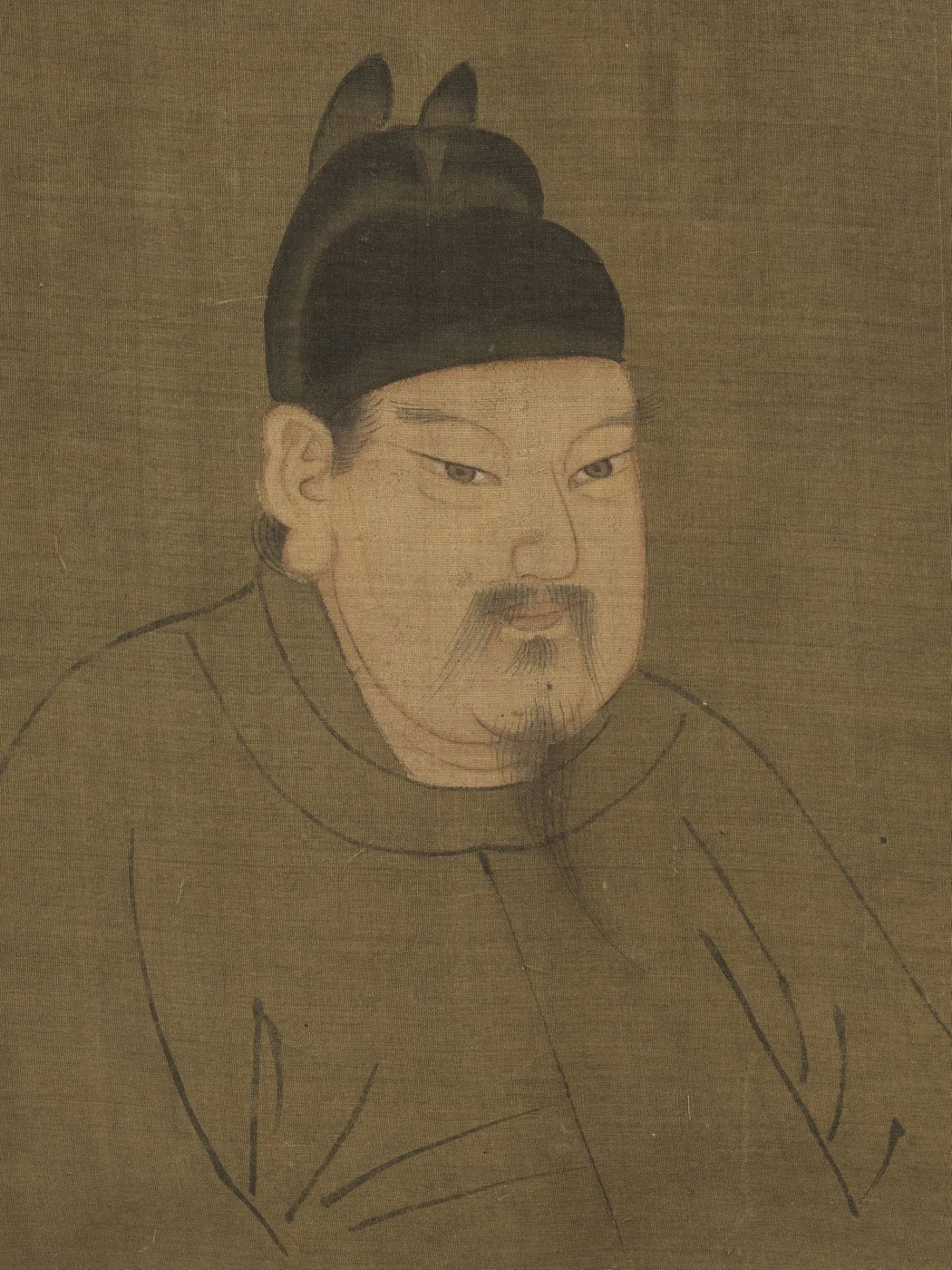
937 CE–978 CE
Last ruler of Southern Tang and lyric poet
Li Yu
李煜
Li Yu, originally named Li Congjia, was the sixth son of Li Jing, the middle ruler of Southern Tang. After the death of his elder brother Li Hongji, he became crown prince and succeeded his father in 961 (second year of the Northern Song Jianlong era). Southern Tang had already acknowledged the Song dynasty's superior position. Li Yu repeatedly sent tribute and, in 971 (fourth year of the Northern Song Kaibao era), dropped…
937 CE–978 CESouthern Tang
PROFILE
Li Yu, originally named Li Congjia, was the sixth son of Li Jing, the middle ruler of Southern Tang. After the death of his elder brother Li Hongji, he became crown prince and succeeded his father in 961 (second year of the Northern Song Jianlong era). Southern Tang had already acknowledged the Song dynasty's superior position. Li Yu repeatedly sent tribute and, in 971 (fourth year of the Northern Song Kaibao era), dropped the dynastic name Tang and styled himself Ruler of Jiangnan in an effort to preserve his state. Song forces invaded in 974 (seventh year of Kaibao), captured Jinling the following year, and took him to Bianjing. Several of his best-known lyrics expressing longing for his former state belong to his years in captivity. He died in 978 (third year of Taiping Xingguo). A later account says that he was poisoned with qianji medicine, but major dynastic histories do not establish poisoning as his cause of death.
- Original name and other names
- Li Congjia; the Last Ruler of Southern Tang, or Li Houzhu
- Courtesy name and styles
- Chongguang; Zhongyin and Lianfeng Jushi
- Period
- Southern Tang
- State
- Southern Tang
- Role
- Last ruler of Southern Tang and lyric poet
- Ancestral home
- Pengcheng, Xuzhou; accounts of the family's earlier lineage vary
- Born
- August 15, 937
- Died
- August 13, 978 (seventh day of the seventh lunar month, third year of the Northern Song Taiping Xingguo era); another account instead gives August 15
- Predecessor
- Li Jing, Yuanzong of Southern Tang
- Successor
- Not applicable (Southern Tang fell to Song)
- Predecessor and successor
- Li Jing; no successor, as Southern Tang ended
- Principal achievement
- Lyrics including Yu Meiren and Langtaosha Ling; historical sources also record his calligraphy, painting, and musical ability
LIFE TIMELINE
Death of the crown prince |
Li Jing's death |
Re-examination of candidates |
Night duty at Guangzheng Hall |
After Song's conquest of Southern Han |
Reduction of court protocol |
The Pan You affair |
Song's invasion of Southern Tang |
Fall of Jinling |
August 13, 978 CE(seventh day of the seventh lunar month, third year of the Northern Song Taiping Xingguo era) | Death |
BIOGRAPHY
Biography
Heir and accession
Li Yu was born into the Southern Tang ruling house. His father was Li Jing and his mother was Lady Zhong. Originally named Congjia, he studied the classics and practiced writing, calligraphy, painting, and music. The old histories' report that one eye had a double pupil belongs to traditional descriptions of exceptional rulers; it cannot explain his accession. While Li Hongji was crown prince, Li Yu presented himself as devoted to books and seclusion. Following Li Hongji's death in 959, he was made Prince of Wu. In 961 (second year of the Northern Song Jianlong era), Li Jing moved to Hongzhou and left Li Congjia in charge at Jinling as crown prince. When Li Jing died, he succeeded him there and adopted the name Yu.
Relations with Song and domestic government
Li Yu inherited a state already subordinate to Song. He sent tribute, accepted Song dates, and received Song envoys with the ceremony of a subordinate ruler. His own court continued to operate. In 964 (second year of the Northern Song Qiande era), he put Han Xizai in charge of the examinations and then had Xu Xuan re-examine candidates; civil recruitment had therefore continued under pressure from Song. In 967 (fifth year of Qiande), he established night duty at Guangzheng Hall to consult officials. The sources also describe his personal attention to judicial cases and the easing of some burdens, but do not establish the overall effect of each measure. Iron coin circulation, financial pressure, and private minting occurred during his reign; a single coinage measure cannot by itself account for the state's later collapse.
Song's conquest of Southern Han in 971 (fourth year of the Northern Song Kaibao era) intensified the pressure. Li Yu dropped the Tang title and, in the following year, renamed offices and removed decorative fittings from palace roofs to signal deference. Li Congshan was retained in Bianjing after a mission to Song. In 973 (sixth year of Kaibao), Pan You submitted a forceful remonstrance that implicated Li Ping. The Shiguo Chunqiu says Pan took his own life and Li died in custody. The affair shows that policy remained contested within the court even after ceremonial concessions.
Invasion and surrender
Song launched its invasion in 974 (seventh year of the Northern Song Kaibao era). Cao Bin and Pan Mei advanced along the Yangtze, while Wuyue joined from the east. Li Yu repaired defenses and recruited soldiers. He wrote to Wuyue ruler Qian Chu seeking to prevent Wuyue from aiding Song, but Qian forwarded the letter to the Song court. A floating bridge enabled Song troops to cross at Caishi, and Southern Tang's outlying positions fell. During the siege of Jinling in 975 (eighth year of Kaibao), Li Yu sent Xu Xuan and others to seek a halt to the campaign, without success. A relief force led by Zhu Lingyun was defeated on the river, and Li Yu surrendered after the city fell. Reports of supernatural signs and dramatic wartime declarations occur alongside the historical narrative and are not secure evidence for the course of the war.
Captivity and death
Li Yu and his household were taken to Bianjing and given Song titles. In captivity he wrote lyrics including Pozhenzi (“Forty Years of Home and State”) and Langtaosha Ling (“Rain Murmurs Beyond the Curtain”), recalling the world he had lost. He died on August 13, 978 (seventh day of the seventh lunar month, third year of the Northern Song Taiping Xingguo era). Song posthumously granted him high rank and the title Prince of Wu. Historical accounts place his burial in the Beimang area near Luoyang, but the precise tomb has not been identified. The poisoning story associated with Moji is a later account, not an established cause of death.
Foreign Relations and the Stepwise Reduction of Rites
Li Yu inherited a Southern Tang that already acknowledged Song overlordship. When Li Jing died in the sixth month of 961 (the second year of Jianlong), Li Yu ascended in Jinling, changed his name to Yu, and honoured his mother, Lady Zhong, as Holy Empress Dowager; Emperor Taizu of Song returned an edict and sent envoys to offer condolences and congratulate his succession, while Southern Tang sent tribute. In the seventh month of 963 (first year of Qiande) Li Yu went to the capital to meet Emperor Taizu, and in the twelfth month submitted a memorial asking to abolish the "no-name" protocol under which Song edicts avoided his personal name; the request was refused. Concessions accumulated year by year: in 966 he sent an envoy to persuade Southern Han to submit jointly to Song, but the envoy Gong Shenyi was detained by Southern Han; in 968 a drought struck and Emperor Taizu granted one hundred thousand dan of grain. After Song destroyed Southern Han in 971 and stationed troops at Hanyang, a frightened Li Yu dropped the Tang dynastic title and styled himself "Ruler of Jiangnan", sending his brother Li Congshan to pay tribute; Emperor Taizu granted the abolition of the no-name protocol but kept Li Congshan in Bianjing. In the first month of 972 Li Yu ordered a lowering of ceremonial: his "edicts" became "instructions"; the Chancellery and Secretariat were renamed the Left and Right Domestic Affairs Offices; the Department of State Affairs became the Office of Accounting; the Censorate became the Office of Discipline; the Hanlin Academy became the Institute of Letters; the Bureau of Military Affairs became the Guangzheng Institute; and all "princes" were demoted to "dukes". Earlier, in Li Jing's time, although Southern Tang submitted to the Later Zhou, dragon-figured roof ornaments had still adorned the Jinling palace halls and were removed only while Song envoys were present; now Li Yu did away with such fittings altogether. Emperor Taizu in turn enfeoffed Li Congshan and gave him a residence in Bianyang Ward, an implicit hint that Li Yu should come to the capital and submit. In the summer of 973 Song sent a Hanlin academician as envoy; Li Yu memorialised his willingness to accept a Song title, and was again refused. These successive retreats failed to preserve the realm.
Central Government and Appointments
When Li Yu took the throne the factional strife of Southern Tang had not ended with the deaths of Song Qiqiu, Zhong Mo and Zhang Luan. To prevent a few powerful ministers from monopolising the government, he established the Chengxin Tang system: the old post of Chengxin Tang attendant, akin to a summonable retainer, was converted into a policy-making body whose participants, besides members of the royal house, were mostly low-ranking officials, so that the power of the chancellors was dispersed and "the Chancellery and the Bureau of Military Affairs were alike" subject to his judgment. The arrangement drew on the precedent of Emperor Wu of Han's inner court and the early Tang central organs; afterwards Southern Tang saw no further violent factional struggle and its administration began to improve. In appointments Li Yu promoted talent without regard to convention, employing Xu Xuan, Xu Kai, Han Xizai, Zhang Ji, Pan You, Wu Qiao and Gao Yue among others, and treated veteran ministers generously: Feng Yanlu, once captured by the Later Zhou, was employed again, and a retired general was kept on full salary with halberds at his gate, with court suspended for three days at his death. In the spring of 967 (fifth year of Qiande) he ordered the two assistant directors, supervising secretaries, drafters and the academicians of the Jixian and Qinzheng halls to keep night watch in rotation at the Guangzheng Hall, ready for consultation and often talking until late, so that affairs and emergencies could be handled promptly; this "Guangzheng Hall system" became permanent rather than a passing arrangement.
Taxes, Land and Currency
At the outset Li Yu reduced taxes and corvee to give the people rest, abolished the various military-agriculture commissioners set up under Li Jing, placed the colonies under prefectural administration, and assigned one tenth of the colony rents as officials' stipends, called the "share"; revenue rose while peasants were spared extortion. He once employed Pan You and Li Ping to reform the land system, seeking to check land concentration and restore older arrangements, but the reform was too hasty and offended vested interests, and failed; even so, Southern Tang thereafter suffered no great land or economic crisis, and social tensions eased compared with Li Jing's time. On currency, Han Xizai asked to cast coin in 963, and in the following year, with Li Yu's consent, took charge of the matter, fixing that each ten coins should comprise six iron and four copper. Copper was hoarded and merchants routinely carried it abroad at ten iron coins to one copper, which the court could not stop. To save the iron coin Li Yu ordered it to pass at ten times its value and abolished copper; the bad money drove out the good, prices soared, illicit casting spread and debased coin flooded the market. As tribute to Song continued, the treasury grew ever tighter and the court turned to miscellaneous levies; because monastery lands were tax-exempt and monks exempt from corvee, many commoners shaved their heads, draining the state of labour and revenue. These measures were largely improvised remedies of limited effect.
Buddhism and Government
Li Yu was a devout Buddhist, the most conspicuous patron of the faith among Southern Tang rulers. In 969 the court paid commoners and Daoists to become monks, rewarding Daoists who converted with two pieces of gold, and the number of monks and nuns in Jinling quickly rose to ten thousand. Alongside ordinations he built temples on a great scale: he "ordered temples repaired throughout the realm" and built new ones inside the palace, so that by the fall of the state the palace contained more than ten temples, rare even among Buddhist emperors. Among the noted masters he supported, the Ten States Spring and Autumn Record lists Yuande, Qingbing, Xingyan, Zhijun, Kuangyi and Yuanji, while lamp histories add Qinghu of the Bao'en Monastery, Jingde Chongxu, Daoquan of the Guizong Monastery and Qingjiao of the Four Patriarchs Mountain in Qizhou. Ministers vied in devotion; many courtiers took vegetarian fare and kept precepts, and the Secretariat drafter Zhang Ji, skilled at reading Li Yu's mind, spoke of Buddhist doctrine at every audience and so won special favour. Once the Chengxin Tang became the central organ, some who approached Li Yu through religion entered the government, one reason later critics blamed his Buddhism for the fall of the state. According to the Jiangnan Yeshi, Song secretly sent eloquent agents south; unaware of the deception, Li Yu took one for a living Buddha, called him "Little Elder", and discussed karma with him daily. The "Little Elder" urged him to build pagodas and gather a thousand people to expound the dharma at great expense, yet when Song troops besieged Jinling he pleaded illness and did not appear, and Li Yu, realising he had been deceived, had him poisoned. Such accounts come from unofficial histories and their details need not be exact, but they show how thoroughly Buddhist enthusiasm had become entangled with Southern Tang politics.
Collections and Afterlife
Li Yu and his father Li Jing were both connoisseurs; the palace acquired tens of thousands of scrolls of books and paintings with many originals, and Li Yu's own library was said to number over a hundred thousand juan. He lavished money on rewards for genuine calligraphy by Zhong You and Wang Xizhi and assembled a large corps of craftsmen and artists. He had the Hanlin academician Xu Xuan gather and reproduce the palace's masterworks as the Shengyuan Model Letters, the ancestor of the model-letter compendia and an innovation in copying and preserving ancient calligraphy. As Jinling was about to fall Li Yu told the keeper of regalia, Lady Huang, that these were his treasures and were to be burned should the city not hold, so they would not be scattered; after the city fell she did burn the palace collection. The modern scholar Shi Qin, however, argues in Li Yu and Southern Tang Documents that the claim that all was burned is doubtful, since after pacifying Jiangnan the Song general Cao Bin carried off much of the Southern Tang library by boat, and Emperor Taizong of Song afterwards showed Li Yu the Chongwen Academy collection, remarking that he had heard Li Yu loved books in Jiangnan and that these volumes were mostly his former possessions. After Li Yu died in Bianjing the Song court granted him the title Grand Preceptor and posthumously enfeoffed him Prince of Wu; histories generally place his grave in the Beimang hills near Luoyang, and the epitaph by Xu Xuan records burial in a village of Henan Prefecture and "gazing toward the numinous trees of Beimang". The precise site has never been settled, and later gazetteers and recent reports of discovery conflict. As to his death, the Song History compiled under the Yuan and Ming histories do not state that he was poisoned, and Bi Yuan's Continued Comprehensive Mirror notes the variant that "most other books say he was given poison rather than dying a natural death"; the poison account is fullest in the Song writer's Mo Ji, which says Emperor Taizong sent him the "pull-cord" drug because of the lyric Yu Meiren and because Li Yu had wept before the old minister Xu Xuan. That belongs to anecdote and cannot be treated as established fact.
Court Life and the Empresses
Li Yu grew up within the deep palace and carried much of its peacetime habit. He decorated a wall with red silk gauze woven with gold thread, set emerald into the window lattice, pasted the windows with crimson gauze, and planted plum trees outside, among which he placed a small painted pavilion seating only two, where he drank and admired flowers with his favourite consort. When spring flowers were at their height he arranged them in segmented tubes placed on beams, windows, walls and steps, calling it the "Brocade Grotto of Heaven"; on his birthday each Qixi he had servants make a moon-palace and heavenly-river scene from more than a hundred bolts of red and white silk, singing and revelling all night until dawn. Though he had many consorts, he was deeply attached to his two empresses. Empress Zhou the Elder knew books and history and excelled in music, especially the pipa; when Li Yu composed "Remembering the Home Mountain" she played its melody and wrote "Invitation to Dance"; he wrote many poems for her recording their private life. When she fell ill he visited her morning and evening, tasting her medicine first and not undressing for days, and after her death wrote a eulogy of deep grief. The Younger Empress Zhou was her sister; after the fall of Southern Tang the two were taken captive together to Bianjing and shared three years of imprisonment and humiliation, and when Li Yu died abroad she grieved to distraction and soon followed him.
Benevolent Government
Li Yu was by nature dutiful and reluctant to take life; after acceding he served Song abroad without shunning humiliation, and at home lightened corvee to strengthen the people, so that Southern Tang enjoyed fifteen years of relative peace. He governed with kindness and lenient punishment: at every memorial for a death sentence he wept, and when a censor's document contained an error he could not eat or sleep, on several occasions entering the prison himself to review cases and release prisoners. When the Secretariat assistant director Han Xizai memorialised that prisons were the business of the judicial officers and no place for a ruler, and asked that three million cash from the privy purse be fined toward state use, Li Yu did not agree but did not resent it. After entering Song he was despondent, often writing lyrics with former palace women, unable to master his grief. When news of his death spread, many of the elders of Jiangnan gathered weeping in the lanes. These accounts mostly come from former Southern Tang officials and Song writers who were inclined to excuse him, and must be weighed together with his failures in armaments and finance.
The Court Debate over the Succession
Li Yu did not accede as eldest son by the principal wife. While his elder brother Li Hongji was heir apparent he was wary of Li Yu, who to avoid trouble devoted himself to books and avoided affairs of state, styling himself "Zhongyin", "Recluse of Zhong Peak" and "Lotus Peak Layman" to show that his heart lay with hills and streams and not the throne. When the heir Li Hongji died in 959 (sixth year of Xiande of the Later Zhou), Zhong Mo, arguing that Li Congjia was a credulous Buddhist, weak and lacking in virtue, memorialised that Li Congshan, Duke of Jiguo, be made heir; but Li Jing's mind was already made up, Zhong Mo's plea went against his will, and Zhong was demoted to the office of Guozi Assistant Director, then to Assistant Author, and posted to Raozhou. Li Jing accordingly enfeoffed Li Congjia as Prince of Wu, gave him the post of Director of the Secretariat and a share in government, and installed him in the Eastern Palace. In 961 (second year of Jianlong) the reigning sovereign moved to the southern capital, leaving Li Congjia as heir to hold Jinling and oversee the state, with Yan Xu and Yin Chongyi as assistants and Zhang Ji drafting memorials; in the sixth month Li Jing died, and Li Yu took the throne in Jinling, changed his name, mourned so intensely that he could scarcely bear it, proclaimed an amnesty, and honoured his mother, Lady Zhong, as Holy Empress Dowager.
Major Activities
Lyrics and the arts
His early lyrics frequently depict courtly entertainment and intimate feeling; those written after the loss of his state center on captivity and remembrance. Yu Meiren (“Spring Flowers and Autumn Moon”) and Xiangjianhuan (“Alone I Climb the Western Tower”) show how he gave personal experience a place in the lyric form. The exact dates of many works cannot be established, so they do not belong in the event timeline. He also practiced calligraphy, painting, and music; later writers called one of his calligraphic techniques jincuodao. Nantang Erzhu Ci preserves lyrics by him and Li Jing, although attribution of some surviving poems remains disputed. The sources do not establish that he alone founded any later school of lyric writing.
Books, examinations, and Buddhist practice
Li Yu collected and had works of literature and art edited and collated, while maintaining examinations and re-examinations. Southern Tang still held examinations shortly before its fall. He also funded temples, ordained monks, and took part in frequent Buddhist rites at court. In the Southern Tang History, Lu You argued that Li Yu's compassion for his people coexisted with a devotion to Buddhism that distracted him from government. That is an attributed historical judgment, not a complete explanation for Southern Tang's defeat.
The Two Periods of His Lyrics
Some thirty of Li Yu's lyrics survive, broadly divisible into two periods. The earlier period mostly treats palace banquets and romantic feeling, as in "Silk-Washing Stream: The Red Sun Already High", "Bodhisattva Barbarian: Flowers Bright, Moon Dim, Light Mist" and "Jade Tower Spring: Evening Toilet Done, Bright Skin Like Snow"; it also includes parting sorrow and, in "Fisherman's Song: Waves Intent, a Thousand Layers of Snow", a longing for reclusion. These early works still show imitation, yet their technique and vision already differ from the Huaijian poets. After his captivity his lyrics turn to the lost realm and his own fate, producing "Yu Meiren: When Will the Spring Flowers and Autumn Moon End", "Waves Washing Sand: Outside the Curtain the Rain Murmurs", "Xiang Jian Huan: Speechless, Alone I Mount the West Tower", "Po Zhen Zi: Forty Years of Country and Home" and "Gazing South of the River". One quality runs through both periods: truthfulness. In method he often writes the reverse of the matter at hand, as in "Gazing South of the River", which does not depict captivity directly but recalls past splendour through a dream, setting grief against joy. His language is natural and spare, combining sombre depth with delicate grace, and his influence on later lyric poetry was lasting. His surviving poems are about as numerous as his lyrics but differ in subject: elegies for the dead and reflections on history go mainly into poems, personal life into lyrics. Bereaved of wife and child at twenty-eight, he wrote elegies amounting to more than half his extant poems, mourning Empress Zhaohui and a young son in bitter terms, while the historical poem "After Inscribing the Golden Tower Master" uses the old theme of a city sacked and its books burned to voice his judgment. His poems often employ alliterative and rhyming compounds, as in "Seeing Off My Twenty-Eighth Brother Congyi to Govern Xuancheng", where "dangyang", "luanshan" and "langan" give the lines a musical ring.
Calligraphy and Painting
Li Yu was a skilled calligrapher. Beginning with the Tang masters, he traced back to the Wei and Jin, and admired Lady Wei above all, claiming to have grasped the essence of her brush method. He inherited the two Wangs' "lamp-trimming" grip and, to its five elements, added two more, "leading" and "sending"; he also made his strokes quiver through posture and wrist, producing the twisting, vigorous style known as the "golden wrong-knife", of which it was said that large characters looked like cut bamboo and small ones like gathered iron nails. He could also write large characters by dipping rolled silk in ink, a method called "gathered-lapel script" with the vigour of Tang wild cursive. His calligraphy was once much sought after; the Xuanhe Catalogue of Calligraphy still records twenty-four of his running-script pieces in the Northern Song palace, and the Southern Song poet Lu You, passing through Jinling, saw a stone engraving in gathered-lapel script near the Deqing Hall of Guanghui Monastery on Qingliang Mountain. Li Yu was also a theorist of calligraphy, authoring "On Calligraphy" and "Calligraphy Criticism"; the former holds that the writing is the person and details the lamp-trimming method, the latter appraises Ouyang Xun, Chu Suiliang, Yan Zhenqing, Liu Gongquan and Zhang Xu one by one, noting each one's strengths and defects. In painting he touched on figures, landscape and bird-and-flower, excelling in ink bamboo with a sharp, forceful brush that later generations called the "iron hook-and-lock"; by the end of the Northern Song the palace still held nine of his works, including the "Self-Existing Guanyin" and the "Double Birds on a Cudrania Bamboo".
Music and Dance
Li Yu was proficient in music and once wrote on music to continue the "Discourse on Music"; his own "Record of Music" circulated widely in Jiangnan. With Empress Zhou the Elder he restored and arranged the lost Tang grand composition "Song of Rainbow Garments and Feathered Dress", bringing the old piece back to Jiangnan. Passionate about music, he honoured the musicians of the palace conservatory and was himself a dancer, composing a new dance called the "Golden Lotus Dance"; the fashion spread downward, and music and dance flourished at his court. These pursuits answered to his lyrics and painting and formed one side of his courtly culture.
Examinations, Education and Letters
Well versed in the classics and histories, Li Yu further refined the Southern Tang examination system and never suspended it even as the state declined. In 964 he had Han Xizai preside over the prefectural examination, admitting nine presented scholars, and had Xu Xuan re-examine and set questions in person; in 972 Zhang Bi presided over the Ministry of Rites examination and admitted three, whereupon Zhang Ji complained that talent had been missed and Li Yu had him re-examine those who failed, admitting Wang Lun and four others. In 975, with a strong enemy at the gates, he still appointed someone to preside, the last examination of Southern Tang. In education the state was Confucian in orientation, and Li Yu, himself fond of Confucian learning, allotted official land rents to support the Lushan National Academy even amid constant tribute and straitened finances. He loved learning and urged his ministers to study and write in their spare time, and under his patronage the realm's letters briefly flourished.
Defence and Wu-Yue
In foreign relations Li Yu memorialised Emperor Taizu on accession, disclaiming any wish for the throne in the most humble terms; he sent tribute yearly and sometimes several times a year, and "whenever an envoy of the court arrived, the ruler wore purple robes and observed the rites of a vassal", even sending men with heavy gold to bribe senior Song ministers in order to influence Song policy. With Wu-Yue, no direct war occurred in his reign, but in the Song conquest Wu-Yue served as Song's spearhead: before Cao Bin crossed the Yangtze against Chizhou in 974, Song had already agreed with Wu-Yue on a converging attack, and Li Yu wrote personally to Qian Chu that they shared a common fate, only for Qian Chu to forward the letter to Song; the next year Wu-Yue and Song forces fought together at Xuanzhou, Jiangzhou and Ezhou, routed Southern Tang armies, and took Changzhou, Jiangyin and Runzhou, reaching the walls of Jinling. On defence, Li Yu had set up the Dragon-Soaring Army at the end of 961 to train for river warfare in case of need, and when Song attacked he built walls, stored grain and recruited soldiers. The war shows a measure of method: from Song's advance in the tenth month of 974 to the fall of Jinling in the twelfth month of 975 the campaign lasted over a year, and Song forces lay before Jinling for a full year, during which repeated fighting in the provinces tied down Song troops and once made Emperor Taizu waver and consider withdrawing to regroup. Southern Tang fell through sheer disparity of strength, and the merits of its defence should be weighed together with the overall balance of power.
The War and the Defence
In 974 (seventh year of Kaibao) Emperor Taizu of Song sent envoys with an edict summoning Li Yu to the capital on the pretext of a sacrifice to Heaven; Li Yu pleaded illness and declined, replying that he had served the great court in the hope of preserving his ancestral temple, that he had not expected this, and that matters having come to such a pass he had only death left. On receiving the letter, Emperor Taizu sent Cao Han, the commander of Yingzhou, to march from Jiangling and then Cao Bin, the Southern Xuanhui commissioner, with orders to follow, advancing by land and water. In the intercalary tenth month Song took Chizhou, and Li Yu put the whole city under martial law and stopped using the Song reign titles in favour of the sexagenary cycle. In the second month of 975 Song stormed the outer works of Jinling; in the third month Wu-Yue pressed on Changzhou and killed Huangfu Jixun; in the sixth month Song and Wu-Yue joined forces against Runzhou, whose rear commissioner Liu Cheng surrendered. Zhu Lingyun, the military commissioner of Hongzhou, brought 150,000 troops to the rescue and met Song forces at Wankou; he ordered the Song ships burned, but a north wind blew up and scorched his own, and he and the fleet guards were defeated. With outside help gone, Song encircled Jinling entirely and attacked day and night; grain ran short within the city and the dead could not be counted. Li Yu twice sent Xu Xuan to Song with large sums, asking that the attack be stayed, and Emperor Taizu answered that "beside the sleeping mat of a man, how can another snore". The palace messenger Xu Yuanyu even blocked news of defeat, so that with Song troops camped five kilometres south of Jinling Li Yu still did not know. In the twelfth month Jinling fell; the defenders Wu Yan, Ma Chengxin and Ma Chengjun died fighting, the Right Domestic Affairs attendant Chen Qiao hanged himself, and Li Yu submitted, ending Southern Tang. The next year he was taken captive to Bianjing, where Emperor Taizu made him the Humiliation Marquis and gave him the post of left colonel of the Thousand Oxen Guard; Emperor Taizong, on succeeding, changed his title to Duke of Longxi.
Pan You's Remonstrance and Court Strife
In 973, the Domestic Affairs drafter Pan You, distressed at the decline of the state, memorialised in the strongest terms; Zhang Ji reported that "Li Ping spreads monstrous words and incites Pan You to defy his sovereign", whereupon Li Yu had them arrested, Pan You killing himself at home and Li Ping hanging himself in prison. The affair shows that after the reduction of titles the court still disputed policy, and it also reflects Li Yu's failure in his later years to judge men and his willingness to listen only to favourites. Occurring on the eve of the state's fall, it belongs with the last examination and the lowering of ceremonial in the record of his final years in power.
The Financial Cost of Buddhist Patronage
Buddhism in Southern Tang enjoyed special treatment: monastery lands were exempt from tax and monks from corvee. With Li Yu's patronage, many commoners crushed by burdens shaved their heads and entered the clergy, draining the state of labour and revenue; though the court eventually taxed some monasteries as finances tightened, the sums were a drop beside its vast outlays. There were more than ten temples within the palace grounds and countless ones in Jinling, each new temple receiving allotted land; the monks numbered ten thousand and were provided with food and clothing by the court. Such excessive patronage consumed great financial and human resources and scarce land, leaving an already poor treasury worse off, and as monasteries and clergy multiplied the swelling monastic economy in turn encroached on the state's meagre sources of revenue.
The Collection and Attribution of His Lyrics
Li Yu's lyrics were gathered into collections by later hands. The Mohua Studio edition of the Lyrics of the Two Southern Tang Lords, printed in 1620 (the forty-eighth year of Wanli), contains thirty-four of his lyrics, one of which, "Gazing South of the River", can be divided into two; the Qing scholar Shao Changguang recovered one more, and modern editors added nine, several of them doubtful. According to the majority of modern scholars, no more than thirty-two can be confirmed as Li Yu's, and annotated editions also survive from the Qing. These records show that although his surviving lyrics are few, they were established only after later editing and textual criticism, and, as with the lyrics of the Five Dynasties generally, questions of edition and authenticity have drawn much discussion.
Personal Relations
- Li Jing and Lady Zhong: His parents. Li Yu succeeded Li Jing as ruler.
- Li Hongji and Li Congshan: His elder and younger brothers. Li Hongji's death changed the succession; Li Congshan was kept in Bianjing after a mission to Song.
- The elder and younger Ladies Zhou: Sisters who successively became his wives. The elder Lady Zhou took part in literary and musical activities with Li Yu.
- Li Zhongyu and Li Zhongxuan: His sons by the elder Lady Zhou; Li Zhongxuan died young.
- Han Xizai, Xu Xuan, and Pan You: Southern Tang officials involved respectively in the examinations, diplomacy, and remonstrance.
- Zhao Kuangyin and Qian Chu: The Song founder and the Wuyue ruler. Zhao ordered the invasion of Southern Tang; Qian participated in Song's attack.
Historical Assessment
Ouyang Xiu's New History of the Five Dynasties praised Li Yu's filial conduct, writing, and painting but criticized his interest in pleasure and Buddhism and his neglect of government. Lu You noted his efforts to ease taxes and labor obligations, yet likewise argued that Buddhist activity drew him away from state affairs. These accounts show why his political conduct and responsibility for defeat resist a single character-based explanation. Wang Guowei's Renjian Cihua saw the lyric's vision and depth of feeling expand with Li Yu. That literary assessment concerns the expressive force of his writing, rather than his effectiveness as a ruler.
FIGURES ASSOCIATED WITH THIS DYNASTY
Bibliography
Bibliographic information is not yet available for this entry.