Birth
Born into aneminent scholarly family in Gushi County, Henan, studying classical statecraft and natural studies under his father Wu Xuan and uncle Wu Bangqing.
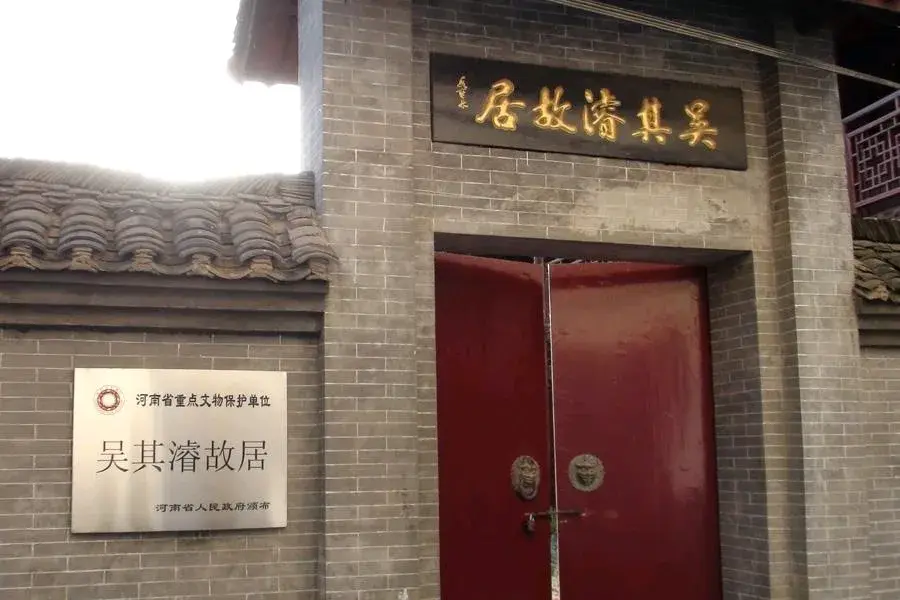
1789 CE–1847 CE
吴其濬
Wu Qijun (吴其濬, 1789–1847), courtesy names Yuezai and Jilan, literary name Yulounong, a native of Gushi County in Runing Prefecture, Henan (modern Gushi County, Xinyang, Henan Province), was an eminent nineteenth-century Chinese botanist, mineralogist, and provincial governor, as well as the only Zhuangyuan (first-place palace graduate) from Henan Province throughout the entire Qing dynasty. Born into a distinguished…
Wu Qijun (吴其濬, 1789–1847), courtesy names Yuezai and Jilan, literary name Yulounong, a native of Gushi County in Runing Prefecture, Henan (modern Gushi County, Xinyang, Henan Province), was an eminent nineteenth-century Chinese botanist, mineralogist, and provincial governor, as well as the only Zhuangyuan (first-place palace graduate) from Henan Province throughout the entire Qing dynasty. Born into a distinguished scholarly family—his father Wu Xuan served as Vice Minister of Rites and his uncle Wu Bangqing as Director-General of the Grand Canal—Wu Qijun placed first in the palace examination of 1817 and was appointed Senior Compiler in the Hanlin Academy, subsequently serving in the Southern Study, as Educational Commissioner of Hubei and Jiangxi, Academician of the Grand Secretariat, and Vice Minister of Rites and War. Between 1840 and 1846, he governed five provinces in rapid succession as Governor of Hunan (and Acting Governor-General of Huguang), Governor of Zhejiang, Governor of Yunnan (and Acting Governor-General of Yungui), Governor of Fujian, and Governor of Shanxi, suppressing rebellions in Hunan and Hubei, reorganizing Yunnan copper mining, and reforming Hedong salt administration. Over thirty years of official travel across nineteen provinces, he personally collected plant specimens, interviewed peasant farmers and herbalists, and drew lifelike botanical illustrations, completing the monumental thirty-eight-fascicle Illustrated Investigation of the Names and Realities of Plants (Zhiwu Mingshi Tukao), the twenty-two-fascicle Extended Compilation (Zhiwu Mingshi Tukao Changbian), and the two-fascicle mining treatise Illustrated Account of the Mines and Smelteries of Yunnan (Diannan Kuangchang Tulüe). Retiring due to illness in late 1846, he died at his home in Gushi in the first month of 1847 at the age of fifty-nine.
Born into aneminent scholarly family in Gushi County, Henan, studying classical statecraft and natural studies under his father Wu Xuan and uncle Wu Bangqing.
Passed the Shuntian provincial examination as a juren and subsequently served as a Secretary in the Grand Secretariat.
Ranked first of the first class (Zhuangyuan) in the Dingsi palace examination and appointed Senior Compiler of the Hanlin Academy.
Returned to Gushi for five years to observe mourning for his mother Lady Zhang and father Wu Xuan, surveying flora across the Dabie Mountains and Huai River basin.
Appointed Educational Commissioner of Hubei, and in 1837 Educational Commissioner of Jiangxi, rising to Academician of the Grand Secretariat and Vice Minister of War while collecting specimens across central China.
Appointed Governor of Hunan in the ninth month and Acting Governor-General of Huguang in 1841, suppressing Yao uprisings in Guidong and Zhong Renjie's rebellion in Chongyang while enforcing opium prohibition.
Transferred to Governor of Zhejiang in the third month to rebuild coastal defenses, and in the fifth month to Governor of Yunnan and Acting Governor-General of Yungui, revitalizing copper mines and writing Diannan Kuangchang Tulüe.
Transferred to Governor of Fujian in the second month and Governor of Shanxi in the tenth month, reforming Hedong salt administration and finalizing the manuscripts of Zhiwu Mingshi Tukao.
Granted sick leave in the winter of 1846 and died at his home in Gushi on the eighth day of the first month of 1847 at age fifty-nine.
Wu Qijun was born in the fifty-fourth year of the Qianlong era (1789) into a prestigious degree-holding family in Gushi County, Runing Prefecture, Henan. His grandfather Wu Yanrui was a Qianlong-era juren, his uncle Wu Bangqing earned the jinshi degree in 1796 and rose to Director-General of the Eastern Grand Canal, his father Wu Xuan earned the jinshi degree in 1787 and served as Left Vice Minister of Rites and Vice Minister of Granaries, and his elder brother Wu Qiyan obtained the jinshi degree in 1799 and also rose to Vice Minister. Growing up in his father's residence in Beijing, Wu Qijun received a rigorous classical education while being deeply influenced by his uncle Wu Bangqing's practical hydraulic writings (Jifu Shuili Congshu), developing a lifelong passion for botany, agriculture, hydraulic engineering, and mineralogy.
In the fifteenth year of the Jiaqing era (1810), the twenty-two-year-old Wu Qijun passed the Shuntian provincial examination as a juren and entered service as a Secretary in the Grand Secretariat. In the twenty-second year of Jiaqing (1817), his palace examination essay won first place (Zhuangyuan), making him the only Zhuangyuan from Henan Province during the entire 268 years of the Qing dynasty. Appointed Senior Compiler (Xiuzhuan) in the Hanlin Academy, he served from 1819 as Associate Examiner for the Shuntian provincial examination, Reviewer of the Wenyuange Imperial Library, and Compiler in the Wuyingdian Imperial Printing Office and State Historiography Institute.
When his birth mother Lady Zhang died in 1821 and his father Wu Xuan died in 1822, Wu Qijun returned to Gushi County to observe two consecutive mourning periods totaling five years. During these years at home, he roamed the Dabie Mountains and the Huai River valley, interviewing farmers, woodcutters, and herbalists about the morphology, habitats, and medicinal uses of wild and cultivated plants and sketching detailed field drawings. Returning to Beijing in 1826, he was appointed to the Southern Study (Nanshufang) in 1828, served as Chief Examiner for the Guangdong provincial examination, and rose through the Household Administration of the Heir Apparent and Diary Office.
In 1832, Wu Qijun was appointed Educational Commissioner of Hubei, using his inspection tours across the Jianghan Plain and the mountains of western Hubei to collect regional plant specimens. Recalled to Beijing in 1835 as Expositor-in-Waiting in the Hanlin Academy, he was sent out again in 1837 as Educational Commissioner of Jiangxi, rising concurrently to Academician of the Grand Secretariat and Right Vice Minister of Rites while botanizing around Mount Lu and the Gan River basin, before becoming Right Vice Minister of War in 1839.
Following the outbreak of the First Opium War in the twentieth year of the Daoguang era (1840), the Daoguang Emperor appointed Wu Qijun as Governor of Hunan in the ninth month. In Hunan, Wu Qijun set up checkpoints along the Guangdong border to intercept opium smugglers and confiscate smoking apparatus. In the spring of 1841, when Yao villagers and Heaven and Earth Society (Tiandihui) insurgents rose in Guidong and Leiyang, he swiftly pacified the unrest; appointed Acting Governor-General of Huguang at the end of 1841, he marched into Hubei in early 1842 to recapture Chongyang County and capture the rebel leader Zhong Renjie, restoring stability across Hubei and Hunan.
In the third month of 1843, Wu Qijun was transferred to serve as Governor of Zhejiang, where he inspected coastal batteries around Ningbo and Dinghai in the aftermath of the Opium War, reorganized Green Standard naval and land forces, and resettled displaced coastal residents. Just two months later, in the fifth month of 1843, the Daoguang Emperor reassigned him as Governor of Yunnan, where he also served as Acting Governor-General of Yungui. Yunnan was the empire's primary source of copper for minting imperial coinage ("Metropolitan Copper"), but flooded shafts and rising costs had caused severe production shortfalls while ethnic tensions simmered in Yongchang Prefecture (modern Baoshan). Wu Qijun personally inspected the mining districts of Dongchuan, Zhaotong, and Qujing, remitted uncollectible arrears, improved working conditions for miners, and restored the annual quota of more than six million catties of copper shipped to Beijing, while justly resolving the Yongchang disturbances. Based on his field investigations, he wrote the two-fascicle Illustrated Account of the Mines and Smelteries of Yunnan (Diannan Kuangchang Tulüe), documenting geological prospecting, shaft ventilation, smelting furnaces, transport routes, and mining regulations in southwest China.
In the second month of 1845, Wu Qijun was transferred to Governor of Fujian, and in the tenth month of the same year was reassigned as Governor of Shanxi with concurrent oversight of the Hedong Salt Administration. In Shanxi, he audited treasury deficits, reformed salt tax collection at the Yuncheng salt lake, prohibited county magistrates from levying unauthorized surcharges, and inspected the Great Wall garrisons at Yanmen Pass and Shahukou.
Over six years between 1840 and 1846, Wu Qijun traversed tens of thousands of miles across Hunan, Hubei, Zhejiang, Yunnan, Guizhou, Fujian, and Shanxi. Remarkably, despite heavy administrative and military responsibilities, he never ceased collecting plant specimens along post roads and mountain trails. Whenever he encountered a plant omitted from or misidentified in traditional Bencao (materia medica) texts, he examined its roots, stems, leaves, flowers, and fruits firsthand, questioned local peasants and folk healers about its vernacular names and uses, and had skilled artists sketch accurate life-size illustrations from fresh specimens.
During his tenure in Shanxi in 1846, Wu Qijun finalized his life's work: the thirty-eight-fascicle Illustrated Investigation of the Names and Realities of Plants (Zhiwu Mingshi Tukao) and its companion, the twenty-two-fascicle Extended Compilation (Zhiwu Mingshi Tukao Changbian). The Extended Compilation assembled textual excerpts from more than eight hundred classical works—ranging from the Book of Odes, Erya, and Shennong Bencao Jing to Li Shizhen's Compendium of Materia Medica and Zhu Su's Famine Relief Herbal—covering 838 plant species. The main treatise, Zhiwu Mingshi Tukao, classified 1,714 plant species (surpassing the Compendium of Materia Medica by more than five hundred species) into twelve categories—grains, vegetables, mountain herbs, marsh herbs, rock herbs, water herbs, vines, aromatic herbs, poisonous herbs, flowers, fruits, and trees—accompanied by over 1,800 finely detailed illustrations. By correcting centuries of terminological confusion between regional synonyms and shifting the focus from purely medicinal prescriptions to empirical morphology, ecology, and economic botany, Wu Qijun's work bridged traditional Chinese herbal studies and modern botanical science.
Exhausted by decades of arduous travel and overwork, Wu Qijun suffered a severe relapse of hemoptysis in Taiyuan in the winter of 1846 and received imperial permission to retire to his native place for recuperation. Shortly after reaching his family home in Gushi County, Henan, he died on the eighth day of the first month of the twenty-seventh year of Daoguang (1847) at the age of fifty-nine. The following year (1848), his successor as Governor of Shanxi, Lu Yinggu, funded and supervised the woodblock publication of both the Zhiwu Mingshi Tukao and the Extended Compilation in Taiyuan.
FIGURES ASSOCIATED WITH THIS DYNASTY