Sixth day of the sixth lunar month, seventeenth year of Jiaqing (July 14, 1812) | Age one | Born at Hujiawan, Changgang Village, Yiyang County, Hunan
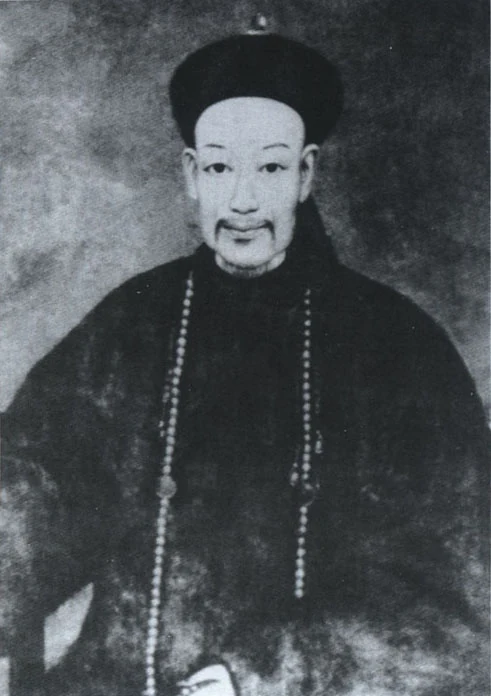
1812 CE–1861 CE
Statesman
Hu Linyi
胡林翼
Hu Linyi (July 14, 1812–September 30, 1861), courtesy name Kuangsheng and art name Runzhi, also written Runzhi or Yongzhi in some sources, was from Quanjiaohe in Yiyang County, Hunan, now part of Quanjiaohe Town in Heshan District, Yiyang. He was a major late-Qing military and political official and an important leader of the Xiang Army. Together with Zeng Guofan, Zuo Zongtang, and Peng Yulin, he was later grouped among the…
1812 CE–1861 CEQing Dynasty
PROFILE
Hu Linyi (July 14, 1812–September 30, 1861), courtesy name Kuangsheng and art name Runzhi, also written Runzhi or Yongzhi in some sources, was from Quanjiaohe in Yiyang County, Hunan, now part of Quanjiaohe Town in Heshan District, Yiyang. He was a major late-Qing military and political official and an important leader of the Xiang Army. Together with Zeng Guofan, Zuo Zongtang, and Peng Yulin, he was later grouped among the “Four Great Ministers of the Qing Revival.”
- Alternative name
- Courtesy name Kuangsheng
- Courtesy name
- Kuangsheng
- Art name
- Runzhi
- Period
- Qing Dynasty
- Dynasty / polity
- Qing Dynasty
- Identity
- Statesman
- Ethnicity / ethnic affiliation
- Not reliably confirmed in surviving historical sources
- Native place
- Quanjiaohe, Yiyang County, Hunan (present-day Quanjiaohe Town, Heshan District, Yiyang)
- Date of birth
- July 14, 1812
- Place of birth
- Hujiawan, Changgang Village, Yiyang County, Hunan (present-day Yiyang)
- Date of death
- September 30, 1861
- Place of death
- Unknown in the summary field
- Highest office
- See Biography and Major Activities
- Major achievements
- Major Xiang Army commander and Governor of Hubei; grouped with Zeng Guofan, Zuo Zongtang, and Peng Yulin among the “Four Great Ministers of the Qing Revival”
LIFE TIMELINE
Age nine | Learned to read under his grandfather, studied the Analects, and accompanied him in a local gazetteer office; Tao Shu was impressed by him and arranged a childhood betrothal
Age 20 | Married Tao Xiuzi, daughter of Tao Shu; during major flooding along the Yuan and Xiang rivers, helped organize disaster relief
Age 21 | Accompanied his wife in escorting his mother-in-law to Nanjing, where Tao Shu was serving as Governor-General of Liangjiang; stayed for a year and was deeply influenced by Tao's statecraft learning
Age 25 | Passed the jinshi examination, selected as a Hanlin bachelor, and after academy examination was appointed editor
Age 28 | After Tao Shu's death, helped manage the Tao family and took the lead in employing Zuo Zongtang to teach Tao's son
Age 29 | Served as deputy examiner for the Jiangnan provincial examination; demoted one rank for failing to detect that chief examiner Wenqing had brought degree-holder Xiong Shaomu into the examination compound
Age 30 | Left the capital and returned home for mourning after his father's death
Age 35 | After completing mourning, purchased qualification as a Secretary of the Grand Secretariat and was assigned to Guizhou with prefectural rank
Age 36 | Arrived in Guiyang to await appointment; in the eleventh lunar month became acting prefect of Anshun
Ages 36–42 | Served successively as prefect of Anshun, Zhenyuan, Sinan, and Liping; suppressed Miao uprisings and the Li Yuanfa uprising, organized local militia, and received the peacock feather distinction
Age 42 | Ordered to lead six hundred Guizhou braves to reinforce Hubei, beginning his sustained involvement in suppressing the Taiping Rebellion
Age 43 | Reached Hubei after Wu Wenrong had already been defeated and killed; transferred to Hunan at Zeng Guofan's order and attached to Zeng's forces
Age 44 | Promoted to Provincial Administration Commissioner of Hubei and acting Governor of Hubei; Taiping forces had again retaken Wuchang, leaving him in an extremely difficult position
Age 45 | Recovered Wuchang, formally appointed Governor of Hubei, and awarded the privilege of wearing a first-rank official's hat button
Age 46 | Defeated forces under Chen Yucheng
Age 47 | Hubei forces captured Jiujiang; granted the title Junior Guardian of the Crown Prince; in autumn returned home with his mother's coffin; in the eleventh lunar month Li Xubin was killed in defeat at Sanhe Town
Age 48 | Joined Zeng Guofan in a four-pronged offensive into Anhui
Age 49 | Captured Taihu and Qianshan and assisted Zeng Guoquan in the siege of Anqing
Age 50 | Returned with troops to defend Hubei after Taiping forces entered the province; Zeng Guoquan captured Anqing in the eighth lunar month; Hu died of illness in Wuchang at the hour of the boar on September 30, 1861
BIOGRAPHY
Biography
Family Background and Early Life
Hu Linyi was born at Hujiawan in Changgang Village, Yiyang County of Changsha Prefecture, Hunan, in present-day Heshan District of Yiyang. He belonged to the Maitian branch of the Hu clan of Hunan. His grandfather Hu Xianshao was a licentiate. His father Hu Dayuan placed third in the first class of the 1819 jinshi examination, the twenty-fourth year of the Jiaqing era, and rose to become Junior Vice Supervisor of the Household of the Heir Apparent, a fourth-rank metropolitan official. Hu Dayuan followed the learning of Song Neo-Confucianism and introduced Hu Linyi at an early age to works on moral principle and human nature.
At six, Hu Linyi learned characters from his grandfather and read the Analects. At eight, he accompanied his grandfather while the latter worked in a local gazetteer office in Yiyang. Tao Shu, then on his way to take office as military circuit intendant of eastern Sichuan and passing through Yiyang to visit relatives, saw Hu and reportedly declared him an extraordinary talent, saying that he had already found an excellent son-in-law. He therefore betrothed his five-year-old daughter Tao Xiuzi to Hu. Hu Linyi married her at nineteen and afterward studied under Cai Yongxi, a scholar from the same locality.
At twenty-one, Hu and his wife accompanied his mother-in-law, Lady He, to Nanjing, where Tao Shu was serving as Governor-General of Liangjiang. Tao was a representative figure in the revival of statecraft learning during the Jiaqing and Daoguang eras and was known for administrative ability and a strong official reputation. During a year in the governor-general's establishment, Hu personally observed Tao's measures to promote benefits and eliminate abuses. The experience, he later said, changed his outlook profoundly. After returning from Jiangnan, he read widely without limiting himself to philological or examination-style study. He especially favored the Zuo Zhuan, Records of the Grand Historian, Book of Han, Comprehensive Mirror in Aid of Governance, and Chinese and foreign maps and geographical works, devoting particular effort to strategic terrain, military administration, and the practical requirements of government.
Disaster Relief and Examinations
In the fifth lunar month of 1831, severe flooding along the Yuan and Xiang rivers devastated Yiyang and displaced many hungry people. Hu, then studying at home, feared that starvation would turn victims into rebels. Saying that a scholar should take responsibility for the realm, he approached the county magistrate and proposed registering households in the disaster zone and persuading wealthy families to contribute money and grain. He recommended classifying households into upper, middle, and lower levels: the upper households would receive no aid, middle households could purchase rice at reduced prices, and lower households would receive rice free of charge for one month. To prevent corruption by the local baojia organization, he proposed selecting local gentry to assist in supervision.
When wealthy households resisted the donation campaign, Hu first asked his father-in-law's family to contribute two thousand taels of silver as an example. He then repeatedly appealed to other wealthy residents, attempting to move them with sincerity, moral obligation, warnings of danger, and the inducement of honors. The source states that contributions quickly reached tens of thousands in value and saved many famine victims.
In 1836, Hu passed the jinshi examination and was selected as a bachelor of the Hanlin Academy. After completing the academy's probationary period, he was appointed editor and soon became an assistant compiler in the Historiography Office. In 1839, after Tao Shu died, Hu frequently went to the Tao household to manage family affairs and took the lead in hiring Zuo Zongtang to tutor Tao's son. The Hu and Zuo families had long-standing ties, and Hu and Zuo had also studied under the Hunan scholar He Xiling. The source says that the two could now share a bed during storms and discuss great political matters through the night. Lin Zexu, Wang Zhi, Lu Jianying, Dan Minglun, and other senior officials and notable men encouraged and assisted Hu in entering public life.
In 1840, Hu served as deputy examiner for the Jiangnan provincial examination. He failed to detect that chief examiner Wenqing had brought the degree-holder Xiong Shaomu into the examination compound to read papers and was demoted one rank for negligence. Wenqing was a powerful Manchu official. Hu was closely associated with him, gained his appreciation, and later benefited from his support. In 1842, Hu left the capital and returned home to observe mourning for his father.
Administrative Experience in Guizhou
In 1846, after completing the mourning period, Hu obtained office through the Shaanxi contribution system, becoming a Secretary of the Grand Secretariat and receiving a prefectural appointment in Guizhou. Under the rules governing purchased office, candidates could often choose more favorable regions. Guizhou was remote and poor, and Hu's friends therefore found his choice surprising. Hu replied that the province was impoverished but could allow him to preserve a clean official reputation. Before leaving, he reportedly visited the ancestral graves and swore never to take a single coin from public office for private enrichment and thereby disgrace his forebears.
Hu arrived in Guiyang in the sixth lunar month of 1847 to await appointment. In the eleventh lunar month he became acting prefect of Anshun, beginning his career as a local official. From then until the winter of 1853 he successively served as acting prefect of Zhenyuan and Sinan and substantive prefect of Liping, and for a time handled military affairs directly. He worked to suppress what the source calls bandits, formulated rules for local militia, and sought to restore public order. He personally led troops against forces of Li Yuanfa entering Guizhou from Hunan and suppressed local Miao and Lang Army uprisings. While acting prefect of Anshun, he also advocated dredging combined waterways, opening springs, and building embankments so residents would no longer have to travel more than ten li for drinking water. He received the peacock feather distinction for his service.
The Draft History of Qing records that, while acting in Anshun and Zhenyuan, both described as regions plagued by banditry, Hu trained brave troops using methods associated with the Ming general Qi Jiguang, searched mountain forests, shared hardships with his men, repeatedly captured major bandits, and suppressed Miao disturbances, receiving a peacock feather for his accomplishments. As the Taiping Rebellion advanced rapidly, Hu became deeply dissatisfied with the Qing regular forces, which he regarded as useless. He advocated relying on gentry and commoners and personally recruited and trained brave troops, adapting the methods of Qi Jiguang. He repeatedly insisted on the importance of military preparation, saying that a single day without attention to military affairs could be fatal and that anyone holding military authority should keep the character “death” before his bed day and night.
Even while in Guizhou, Hu followed affairs in Hubei, maintained contact with provincial governors and governors-general there, offered strategic advice, and recommended talent. After first recommending Zuo Zongtang to Lin Zexu, then Governor-General of Yunnan and Guizhou, he repeatedly recommended Zuo to Hubei officials, helping bring him into active service.
Reinforcing Hubei and Building a Hubei Base
During his service in Guizhou, Hu was recommended by several high provincial officials. His political reputation became widely known and reached the court, though he also faced suspicion and obstruction from some officials in the province. With the Taiping movement expanding, he decided to leave Guizhou and return toward Hubei. Following a memorial recommendation by Censor Wang Fagui and a request for his transfer from Wu Wenrong, Governor-General of Huguang, Hu received imperial orders in the winter of 1853 to reinforce Hubei. He departed at year's end, beginning the central phase of his career in the suppression of the Taiping Rebellion.
After being promoted to circuit intendant of Guidong, Hu led six hundred Guizhou braves into Hubei in the first lunar month of 1854. Wu Wenrong, who had requested his transfer, had already been defeated and killed, leaving Hu's troops without a direct commander. Zeng Guofan was then raising the Xiang Army for an eastward campaign. Zeng consulted Hunan Governor Luo Bingzhang, transferred Hu to Hunan, and memorialized the court recommending him, writing that “Hu Linyi's talent exceeds mine tenfold.” Soon after arriving in Hunan, Hu entered Zeng Guofan's command and fought successively in Hubei and Jiangxi.
At the beginning of 1855, Taiping forces returning from their western campaign again attacked Hubei, and the Qing court repeatedly urged Zeng Guofan to detach troops from Jiangxi for reinforcement. Hu was then serving as Provincial Surveillance Commissioner of Hubei and, because he bore territorial responsibility, volunteered to go. Zeng sent him with 2,500 troops and added another 4,000 under Vice General Wang Guocai and Commandant Shi Qingji. From that point Hu operated independently of Zeng and began building his own power base in Hubei. In the second lunar month he became Provincial Administration Commissioner, and in the third lunar month acting Governor of Hubei. By then Taiping troops had badly defeated Huguang Governor-General Yang Pei at De'an, retaken Hanyang and Hankou for a fourth time, and retaken Wuchang for a third time.
The situation was extremely difficult. The Taiping army controlled the upper and lower reaches of the Jiang and Han rivers. The source states that the Governor of Hubei's orders carried no more than thirty li and that military funding depended on Hunan, was chronically insufficient, and often left troops unpaid for months, while requests for aid from other provinces went unanswered. Hu even distributed grain from his private stores to his soldiers. Military and administrative authority in Hubei was also divided: Hu handled military and fiscal affairs in Wuchang, Hanyang, Huangzhou, De'an, and other lower-river areas, while Governor-General Guanwen controlled Jingzhou, Yichang, Xiangyang, Yunyang, and the upper region. Their officers answered to separate chains of command and the two sides often disagreed.
Frustrated by repeated failures, Hu pressed for stronger attacks. In the eighth lunar month, while supervising battle from Zimeng Mountain, soldiers demanding overdue pay refused orders and mutinied without fighting. Hu was furious and at one point considered riding directly into battle to die. He reorganized the broken units, strictly dismissed exhausted and ineffective troops, recruited new soldiers, and memorialized for Luo Zenan's force to come from Jiangxi, partially restoring the army's strength.
Seeking to take Wuhan quickly, Hu continued hard assaults while also sending detachments to assist Jiangxi. Between the twelfth lunar month of 1855 and the third lunar month of 1856 alone, his force suffered more than three thousand casualties, while Luo Zenan and more than one hundred officers of various ranks were killed. After these severe losses, Hu gradually changed tactics and began constructing long encircling lines to isolate cities. The military situation then improved. In the eleventh lunar month of 1856 his forces recovered Wuhan. The Qing court formally appointed him Governor of Hubei and granted him the first-rank hat button.
Reconciling Governors and Governors-General and Shaping Strategy
Before and after the recovery of Wuchang, Hu Linyi and Guanwen each concentrated on their own districts and repeatedly clashed over recruitment and funding. After Wuchang was retaken, both moved to the city. Guanwen visited Hu three times, and Hu declined to receive him on each occasion. Guanwen delegated nearly all large and small matters to secretaries and household retainers, paid little attention to public affairs, and lived extravagantly. Hu became so frustrated that he discussed impeaching Guanwen with his aides.
Yan Jingming persuaded Hu of the importance of establishing a workable relationship with the governor-general. Hu immediately paid Guanwen a visit, began sending him three thousand taels of silver each month, and became his sworn brother. He even arranged for Guanwen's favored concubine to recognize Hu's own mother as an adoptive mother. The source says that relations between the households then became very close and that gifts passed between them almost every day.
Thereafter, whenever Hu formed judgments about the ability, promotion, removal, or strategic deployment of provincial officials and generals throughout the southeast, he and Guanwen commonly submitted joint memorials. When Hu believed that his own position made it awkward to state a matter directly to the court, he would persuade Guanwen to memorialize separately, thereby obtaining the desired result. Victories, recoveries of cities, and recommendations of talented men were in practice largely managed by Hu, while Guanwen appeared first in the formal lists of names. In this way, the long-standing pattern of hostility and frequent turnover between governor and governor-general in Hubei was reduced.
After Taiping forces lost Wuhan, their other positions in Hubei also fell one after another and they withdrew eastward. Hu formulated the strategic principle that an eastern expedition depended on Wuhan as its base and that the first requirement for pacifying the lower Yangzi was to secure Hubei. Looking across the larger Wu-Chu theater, he aimed to preserve and consolidate Hubei as the fundamental base of the Xiang Army and to retain what he saw as the strategic advantage of controlling downstream regions from upstream positions.
To this end, he expanded the Qing recovery of territory, worked to clear the whole of Hubei, and for the time being remained personally in the provincial capital to direct government. At the same time, he rapidly shifted the main Hubei field army toward Jiujiang in order to hold the eastern gateway of Hubei, prevent Taiping forces from returning west, and strengthen the defense of the province. In the fourth lunar month of 1858, Hubei forces captured Jiujiang, which became another major turning point in the Xiang Army's campaign. Hu received the additional honorary title Junior Guardian of the Crown Prince for his successful coordination.
Final Years and Death
In the autumn of 1858, Hu's mother died in Wuchang, and he escorted her coffin home for burial. Soon afterward, Li Xubin, a leading commander of the Hubei army, suffered a catastrophic defeat at the Battle of Sanhe Town and was killed, with nearly his entire force destroyed. Some contemporaries believed that the defeat reflected the temporary absence of Hu's coordinating leadership.
In 1859, Hu Linyi and Zeng Guofan divided their forces into four columns to attack Anhui. In 1860, they captured Taihu and Qianshan, and Hu assisted Zeng Guoquan's siege of Anqing. In the spring of 1861, Taiping forces entered Hubei and Hu returned with troops to reinforce the province. Zeng Guoquan captured Anqing in the eighth lunar month. At about the same time Emperor Xianfeng died, and the source states that Hu was overwhelmed with grief on hearing the news, worsening his illness.
One later account says that Hu once rode to a hill beside the Yangzi at Anqing and surveyed the terrain, confidently remarking that the city lay below them like the bottom of a cauldron and that the rebels would not be difficult to defeat. While riding down toward the river, he suddenly saw two new-style Western warships moving rapidly upstream under steam power, beyond the capacity of Chinese vessels to match. Alarmed by the growing power of foreigners, Hu reportedly changed expression, said nothing, turned his horse back toward camp, suddenly vomited blood, and nearly fell from the saddle. Thereafter, whenever people discussed foreign affairs and Western-style matters with him, he would wave them away, close his eyes, and say sadly that such things were beyond the understanding of men of his generation.
Hu Linyi died of illness in Wuchang Prefecture at the hour of the boar on the twenty-sixth day of the eighth lunar month in the eleventh year of Xianfeng, September 30, 1861. He was fifty by the age reckoning used in the source. The Qing court posthumously granted him the rank of governor-general and the posthumous name Wenzhong.
Major Activities
Military Contributions
Hu Linyi was a major leader of the Xiang Army and was widely recognized by contemporaries for military ability. Zeng Guofan wrote that “Hu Linyi's talent exceeds mine tenfold” and also praised Hu's perseverance, his ability to reconcile commanders, his administrative talent, and the rapidity of his moral self-improvement.
While serving in Guizhou, Hu trained brave troops according to methods associated with Qi Jiguang, searched mountain forests, shared hardships with his men, repeatedly captured major bandits, and suppressed Miao disturbances. Facing the Taiping Rebellion, he argued for mobilizing both gentry and common people, personally recruited troops, adapted Qi Jiguang's methods, and repeatedly warned that failing to study military affairs even for a single day could be fatal.
On the Hubei front, Hu endured severe difficulties after becoming acting governor in 1855 and eventually recovered Wuchang in the eleventh lunar month of 1856. He subsequently emphasized long encircling lines and gradually extended Qing control across Hubei. Hubei troops captured Jiujiang in the fourth lunar month of 1858. In 1860 they captured Taihu and Qianshan and supported Zeng Guoquan's siege of Anqing. In the eighth lunar month of 1861, Zeng Guoquan captured Anqing.
Hu's strategic core was summarized in the proposition that the eastern expedition must rely on Wuhan as its base and that any plan to pacify the lower Yangzi must first secure Hubei. He sought to preserve and consolidate the province as the Xiang Army's fundamental base and thereby maintain what he regarded as the strategic advantage of controlling downstream regions from upstream positions.
Political Activity
As Governor of Hubei, Hu worked to improve official administration, recommend talented men, and coordinate competing authorities. He built a close working relationship with Huguang Governor-General Guanwen. A later account summarized the resulting arrangement by saying that official administration, finance, and military affairs all came to be directed by Hu, while Guanwen merely approved the decisions. Within a few years, Hubei accumulated sufficient food and troops and became a major pivot of the overall southeastern war effort.
Hu worked to secure military funds for Zeng Guofan and recommended men including Zuo Zongtang, Li Hongzhang, and Yan Jingming. Zuo's eventual emergence into high office was closely connected with Hu's repeated recommendations.
During his earlier service in Guizhou, Hu had sought to suppress banditry, create regulations for local militia, and restore order. As acting prefect of Anshun he also advocated dredging waterways, opening springs, and constructing embankments, reducing the long distances local residents had to travel for drinking water.
Scholarly Works
Hu Linyi wrote the forty-six-juan Dushi Binglüe and ten juan of memorials and correspondence, and his writings were later collected as Hu Wenzhong Gong Yiji. He also produced the Unified Map of the Great Qing Realm, described in the source as one of the relatively complete early nationwide maps produced in China.
Relations with Contemporaries
Hu Linyi and Zeng Guofan were collectively called “Hu and Zeng,” and both served as leading commanders of the Xiang Army. Zeng was known for a strong and uncompromising manner, often clashing with colleagues and even confronting the Xianfeng Emperor. Hu was known for a more flexible style, for yielding credit to others, and for managing bureaucratic relationships. The source argues that the combination of these contrasting temperaments—hard and soft—helped the Xiang Army expand.
Hu and Zuo Zongtang came from families with long-standing ties and had both studied under the Hunan scholar He Xiling. Hu repeatedly recommended Zuo to Lin Zexu and to Hubei officials, helping bring him into service.
Hu knew Li Hongzhang for a shorter period but treated him favorably after Li joined the Xiang Army. When Zeng Guofan instructed Li to return home and organize Huai-region braves, the source suggests that Hu Linyi's recommendation may have played an important role.
Personal Relations
Family
- Grandfather: Hu Xianshao, licentiate
- Father: Hu Dayuan, third place in the first class of the 1819 jinshi examination; rose to Junior Vice Supervisor of the Household of the Heir Apparent
- Father-in-law: Tao Shu, Governor-General of Liangjiang and representative figure of Jiaqing-Daoguang statecraft learning
- Wife: Tao Xiuzi, also called Tao Jingjuan, daughter of Tao Shu
- Daughter: Hu Duanyi, who married Censor Zhou Kaiming in the fifth lunar month of 1853
Teachers and Associates
- Cai Yongxi: Scholar from Hu's home locality; Hu studied under him after marriage
- He Xiling: Hunan scholar under whom both Hu and Zuo Zongtang studied
- Lin Zexu: Governor-General of Yunnan and Guizhou; encouraged Hu's career and was the first senior official to whom Hu recommended Zuo Zongtang
- Wang Zhi, Lu Jianying, and Dan Minglun: Senior officials and notables who encouraged and assisted Hu's entry into public life
Ruler and Senior Official
- Xianfeng Emperor: Hu was deeply attached to the emperor and reportedly became more seriously ill after grieving over his death
- Guanwen: Governor-General of Huguang; Hu became his sworn brother and turned him into a major source of support at court
Colleagues and Close Associates
- Zeng Guofan: Xiang Army commander; paired with Hu as “Hu and Zeng”; their contrasting styles jointly contributed to the army's development
- Zuo Zongtang: Long-standing family associate; repeatedly recommended by Hu, who helped bring him into active service
- Li Hongzhang: Hu treated him favorably and may have influenced the decision to send him home to train Huai-region troops
- Yan Jingming: Assisted with Hubei military finance and persuaded Hu to cultivate Guanwen
- Luo Zenan: Xiang Army commander transferred to reinforce Hubei; later killed in battle
- Li Xubin: Senior Hubei army commander killed at the Battle of Sanhe Town
- Wenqing: Powerful Manchu official and chief examiner in the Jiangnan provincial examination; closely associated with Hu and later supported him
Historical Assessment
Qing and Contemporary Assessments
- Zeng Guofan wrote, “Hu Linyi's talent exceeds mine tenfold,” and also stated that Hu's perseverance, reconciliation of generals, administrative ability, and rapid moral progress all surpassed his own. The statement is cited in juan 406 of the Draft History of Qing.
- The Draft History of Qing states that as Hu's prestige rose, Guanwen recognized his own inferiority and relied on Hu's weight. Hu in turn dealt sincerely with Guanwen, and official administration, finance, and military affairs came to be directed by Hu while Guanwen merely approved them. Within a few years, food and troops were sufficient and Hubei had quietly become the pivot of the southeastern situation.
- Guo Songtao wrote in a biographical account honoring Hu that Hu was born on the sixth day of the sixth lunar month in the renshen year, the seventeenth year of Jiaqing, and died at the age of fifty.
Late Qing and Republican Period
- Cai E greatly admired Hu Linyi's military ability and compiled the methods of troop management and warfare associated with Zeng Guofan and Hu Linyi into the Recorded Sayings of Zeng and Hu on Military Administration. Chiang Kai-shek later made the work required reading for cadets at the Whampoa Military Academy.
- As a young man, Mao Zedong read the collected works of Hu Wenzhong and greatly admired Hu Linyi's military, literary, and administrative abilities; the source states that Mao consequently changed his own courtesy name to Runzhi or Runzhi in imitation of Hu.
Modern Assessments
- Wang Guoping's “On the Relationship between Hu Linyi and Guanwen and Its Influence,” published in the Journal of Soochow University in 1987, examines their relationship and its impact on late-Qing politics.
- Scholars generally regard Hu as a key coordinating figure in the Xiang Army, particularly effective at balancing competing interests, integrating overall strategy, yielding credit, and reconciling generals. The source concludes that these abilities helped create favorable conditions for the Qing campaign against the Taiping Rebellion.
FIGURES ASSOCIATED WITH THIS DYNASTY
Bibliography
- Draft History of Qing, juan 406, “Biography of Hu Linyi”
- Guo Songtao, ed. Yang Jian, Collected Poetry and Prose of Guo Songtao, Yuelu Press, 1984
- Wang Guoping, “On the Relationship between Hu Linyi and Guanwen and Its Influence,” Journal of Soochow University (Philosophy and Social Sciences Edition), no. 4 (1987)