舒穆禄·扬古利
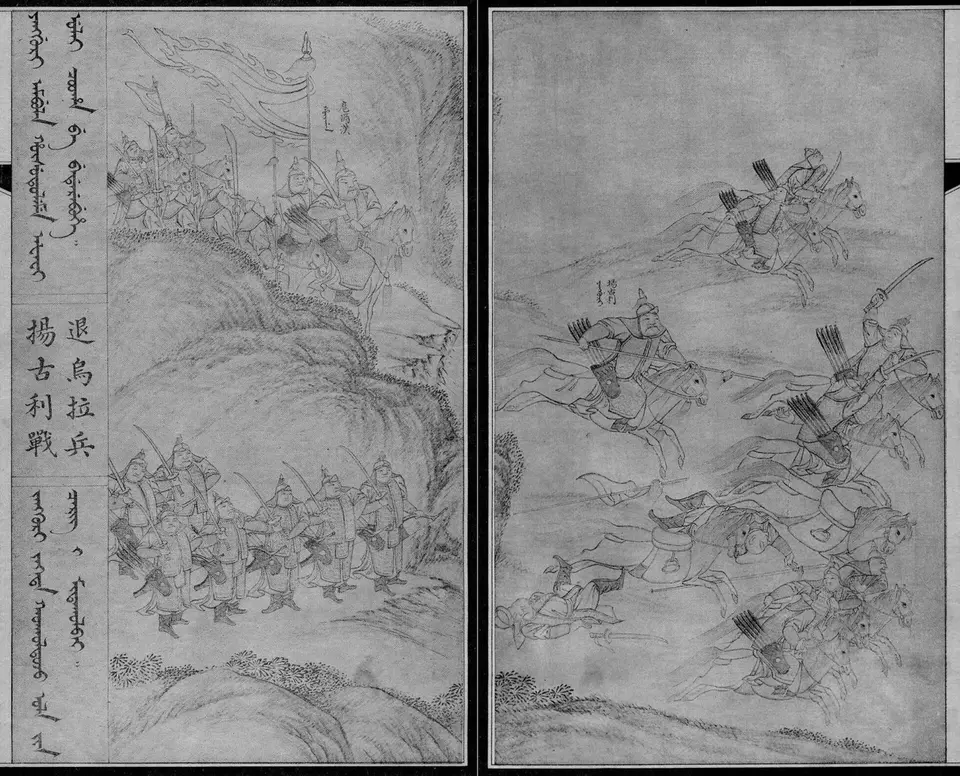
Related historical visual for Yangguri
Image creditsSKM T KHR · CC BY-SA 4.0Image source

1572 CE–1637 CE

Founding statesman of the Later Jin and early Qing dynastyCommander of the Manchu Plain Yellow Banner

Shumulu Yangguli (舒穆禄·扬古利)

舒穆禄·扬古利

Shumulu Yangguli (舒穆禄·扬古利, 1572–1637), of the Shumulu clan, whose family resided in Hunchun and who was the son of the Kûrka tribe chieftain Langju, belonged to the Manchu Plain Yellow Banner and was a renowned founding statesman and military commander of the Later Jin and early Qing dynasty. In his youth, after his father Langju was murdered, Yangguli accompanied his mother in submitting to Nurhaci of the Jianzhou Jurchens,…

1572 CE–1637 CEQing Dynasty (清朝)

PROFILE

Shumulu Yangguli (舒穆禄·扬古利, 1572–1637), of the Shumulu clan, whose family resided in Hunchun and who was the son of the Kûrka tribe chieftain Langju, belonged to the Manchu Plain Yellow Banner and was a renowned founding statesman and military commander of the Later Jin and early Qing dynasty. In his youth, after his father Langju was murdered, Yangguli accompanied his mother in submitting to Nurhaci of the Jianzhou Jurchens, personally slew his father's killer, won Nurhaci's deep favor, and married a princess to become an efu. Serving in the field for over forty years, he campaigned against the Jušeri, Neyen, Hada, Hoifa, Ula, and Warka tribes, and during the capture of Hada City was the first to scale the walls and capture the Beile Menggebulu alive. In the Battle of Sarhu and the Liaoyang-Shenyang Campaign, he charged while wounded and scaled the battlements first, for which he was ranked immediately below the Eight Great Beiles, given command of the left-wing forces, and appointed First-Class Brigade General. After Hong Taiji ascended the throne, Yangguli repeatedly defeated Ming armies at Ningyuan, Zunhua, Jizhou, Dalinghe, Jinzhou, and the metropolitan region, proposed the strategy of annual raids into the Ming heartland, and was promoted to Duke of the Supremely Exalted Rank, ranking just below the Beiles with a pearl-inlaid hat finial. In the first month of 1637 (2nd year of the Chongde era), while accompanying Hong Taiji on the expedition against Joseon Korea, he was fatally shot by Joseon ambushers with a musket at the Battle of Gwanggyosan in Suwon at the age of sixty-six. He was posthumously enfeoffed as Prince Wuxun, buried as an attendant at the Fuling Mausoleum, and enshrined in the Imperial Ancestral Temple during the Shunzhi reign.

Identity
Founding statesman of the Later Jin and early Qing dynasty, Commander of the Manchu Plain Yellow Banner
Era
Late Ming / Later Jin to early Qing dynasty
Dynasty
Qing dynasty (清朝)
Native Place
Hunchun, Jilin (hereditary residence in the Kûrka tribe, enrolled in the Manchu Plain Yellow Banner)
Date of Birth
1572 (6th year of the Longqing era, Ming dynasty)
Date of Death
1637 (2nd year of the Chongde era, Qing dynasty)
Age at Death
66
Highest Office
Banner Commander of the Manchu Plain Yellow Banner (满洲正黄旗固山额真), Left-Wing Brigade General (左翼总兵官)
Principal Offices
Senior Minister of the Manchu Plain Yellow Banner, First-Class Brigade General, Left-Wing Commander-in-Chief
Noble Title
Duke of the Supremely Exalted Rank (超品公), posthumously Prince Wuxun (武勋王), hereditary First-Class Duke Yingcheng (一等英诚公)
Honorific Title
efu (额驸)

LIFE TIMELINE

Relationship graph

BIOGRAPHY

Chronology

  • 1572 (6th year of the Longqing era, Ming) | Born in the Kûrka Tribe | Yangguli was born into the family of Langju, chieftain of the Kûrka tribe in Hunchun, who was among the first to submit to Nurhaci.
  • 1586 (14th year of the Wanli era, Ming) | Submits with His Mother and Avenges His Father | After his father Langju was lured and killed by the Uje chieftain Dawu, Yangguli broke out with his mother to join Jianzhou, personally slew Dawu in revenge, won Nurhaci's deep trust, and married his daughter with the title of efu.
  • 1593 (21st year of the Wanli era, Ming) | Campaigns Against Jušeri and Neyen | Joined Nurhaci in the Battle of Mount Gure and subsequently campaigned against the Jušeri, Neyen, and the fortress of Duobi in Hoifa, wading across moats to storm enemy lines.
  • 1599 (27th year of the Wanli era, Ming) | Scales Hada First and Captures Menggebulu | Accompanied Nurhaci against the Hada tribe, leading five hundred men to storm the southeastern corner of the walls first and capturing the Hada Beile Menggebulu alive.
  • 1607 (35th year of the Wanli era, Ming) | Escorts Fifeo Populace and Captures Hoifa | In the first month, led three hundred men with Hurhan to escort the Fifeo populace and repulsed ten thousand intercepting Ula troops; in the fifth month served as vanguard against the Hesihê route of the Weji tribe, and in the ninth month scaled two palisades first to capture Hoifa City.
  • 1613 (41st year of the Wanli era, Ming) | Captures Qinghe Against Odds | Joined Nurhaci's final campaign against the Ula tribe; when Nurhaci sent an arrow ordering withdrawal at Qinghe, Yangguli insisted on pressing the attack, concentrating forces against a weak point to take Qinghe and destroy Ula.
  • 1619 (4th year of the Tianming era, Later Jin) | Fights Wounded at Sarhu | In the third month, joined Abatai at Mount Sarhu to rout the Ming general Du Song, and the next morning bound his wounded arm to lead ten niru down from Shangjian Cliff to crush Ma Lin's army; in the seventh month defeated and captured the Mongol Beile Jaisai at Tieling.
  • 1621 (6th year of the Tianming era, Later Jin) | Scales Shenyang and Liaoyang First | In the third month, drew his saber to lead his banner troops in scaling Shenyang's walls first and routing Ming forces at Liaoyang and Shaling; ranked immediately below the Eight Beiles, he was placed in command of the left-wing army as First-Class Brigade General.
  • 1627 (1st year of the Tiancong era, Later Jin) | Fierce Combat at Ningyuan and Promotion to Duke | In the fifth month, accompanied Hong Taiji against Jinzhou and Ningyuan, charging through heavy cannon fire to defeat the Ming Brigade General Man Gui outside Ningyuan and rising to Third-Class Duke.
  • 1629 (3rd year of the Tiancong era, Later Jin) | Jisi Campaign and Charge at Jizhou | In the ninth month slew ninety-six ginseng-gathering soldiers of Mao Wenlong's command at Yargu; in the tenth month accompanied Hong Taiji through the Great Wall to Beijing, rescued trapped artillerymen, burned over a thousand warships at Tongzhou, and led the Plain Yellow Banner to rout Ming relief forces at Jizhou.
  • 1633 (7th year of the Tiancong era, Later Jin) | Proposes Strategy of Annual Expeditions Against Ming | In the sixth month advised Hong Taiji to conduct annual raids deep into the Ming heartland so that Joseon and Chahar would submit of their own accord; promoted in the fifth month of the next year to Duke of the Supremely Exalted Rank with a pearl-inlaid hat finial.
  • 1636 (1st year of the Chongde era, Qing) | Fifty-Eight Victories in the Metropolitan Region | In the fifth month jointly commanded an expedition with Ajige and Abatai into the Ming metropolitan region, capturing twelve cities, winning all fifty-eight engagements, and taking over 100,000 captives, receiving a personal welcome ten li outside Shengjing from Hong Taiji.
  • 1637 (2nd year of the Chongde era, Qing) | Falls at the Battle of Gwanggyosan | In the first month accompanied Hong Taiji against Joseon and died after being hit by a Joseon ambusher's musket shot while supervising combat at the Battle of Gwanggyosan in Suwon at age sixty-six; buried at the Fuling Mausoleum and posthumously created Prince Wuxun in the eleventh month.

Biography

Youthful Vengeance and Imperial Marriage in Jianzhou

Shumulu Yangguli traced his ancestral home to Hunchun in Jilin and came from a noble lineage of the Jurchen Kûrka tribe; his father Langju served as chieftain of the Kûrka tribe and was among the very first tribal leaders to lead his people in submitting to Nurhaci of the Jianzhou Jurchens. At that time, warfare raged among the Jurchen tribes, and Dawu, chieftain of the Uje tribe, devised a plot that lured and murdered Langju before joining forces with the Niutou and Langya stockades to besiege the Kûrka stronghold. Langju's wife, Lady Nara, led her household and followers in a nighttime breakout, escorting the young Yangguli to seek refuge with Nurhaci in Jianzhou. Upon learning the truth of his father's murder, Yangguli was overcome with grief and fury and vowed to slay the killer with his own hands.

Before long, Yangguli learned that his father's murderer Dawu had also come to Jianzhou. Recognizing that Dawu was attended by more than a dozen guards and could not easily be overcome in a frontal clash, the young Yangguli took three trusted followers and lay in wait outside Dawu's quarters for an entire night. At dawn the next morning, seizing the moment when Dawu stepped out alone to the latrine, Yangguli sprang forward and slew him on the spot, shouted down the Uje followers who rushed out at the noise, and escorted them before Nurhaci to await punishment. Moved by his filial piety and fearlessness, Nurhaci not only pardoned him but kept him at his side as a personal bodyguard, placing ever greater trust in him and giving him one of his daughters in marriage with the title of efu; when the Eight Banners system was established, Yangguli was enrolled in the Manchu Plain Yellow Banner.

Campaigns Against the Jurchen Tribes and Unification of the Northeast

In his early years, Yangguli was ordered by Nurhaci to guard the frontier posts along the Yalu River, where he maintained such strict vigilance that Ming border troops dared not encroach. When Nurhaci attacked the fortress of Duobi in the Hoifa tribe, deep waters outside the walls blocked the Jianzhou troops from advancing; disregarding his own safety, Yangguli plunged into the current to cross first, inspiring the entire army to follow him across the river, press close to the walls, and take numerous captives. In 1593 (21st year of the Wanli era), he fought in the Battle of Mount Gure and subsequently campaigned against the Jušeri and Neyen tribes, followed in 1598 (26th year of the Wanli era) by the expedition against the Anculakû route, distinguishing himself at the forefront of every engagement. In the autumn of 1599 (27th year of the Wanli era), when Nurhaci attacked the Hada tribe and failed to take the strongly fortified city after three days of fighting in which the senior generals Eidu and Gagai were wounded, Yangguli was ordered at the fifth watch on the fourth day to lead five hundred elite soldiers in a fierce assault against the southeastern corner of Hada City; scaling the battlements ahead of his men, he personally captured the Hada Beile Menggebulu alive, bringing about the fall of Hada.

In the first month of 1607 (35th year of the Wanli era), when Nurhaci dispatched troops to relocate the populace of Fifeo City, Yangguli and Hurhan commanded three hundred men as the rearguard. Along the march, the Ula tribe deployed over ten thousand troops to block the roads. Rallying his soldiers by asking whether it was not better to die fighting the enemy than to die of illness at home, Yangguli charged into the enemy ranks spear in hand, slaying seven Ula soldiers and forcing the enemy back to hold the opposite bank of the river until the main forces under the Jianzhou Beiles arrived to rout the Ula army. In the fifth month of that year, he served as vanguard under Beile Bayara against the Hesihê route of the Weji tribe, seizing the summit above Marguri Village and charging downhill to annihilate its fighting men; in the ninth month, campaigning again against Hoifa, he vaulted over two layers of wooden palisades to enter the fortress first and capture Hoifa City. In the seventh month of 1610 (38th year of the Wanli era), he accompanied Taiji Abatai against the Mulun route of the Weji tribe, taking Wurhuma Village and charging three times into the forest to capture numerous enemies; in the ninth month of 1612, he braved a hail of arrows to storm Jinzhou City in Ula; and in the first month of 1613 (41st year of the Wanli era), during the final campaign against the Ula chieftain Bujantai at Qinghe, when Nurhaci sent a signal arrow ordering the generals to withdraw before the fierce Ula defense, Yangguli firmly opposed retreating, massed his troops against a single corner of the walls, and took Qinghe by storm, completing the conquest of Ula.

Bloody Combat at Sarhu and Triumphs at Shenyang and Liaoyang

In the third month of 1619 (4th year of the Tianming era of Later Jin), the Ming Liaodong Supreme Commander Yang Hao launched a four-pronged invasion of the Later Jin. As the Ming Brigade General Du Song led the western column to Mount Sarhu and assaulted Jaifiyan, the Later Jin Senior Beile Daišan deployed at Jilin Cliff to meet him. Once battle was joined, Yangguli and Beile Abatai vied to charge first into the Ming lines, shattering the Sarhu encampment in an engagement where Du Song and his fellow commanders fell in action. That evening, the northern Ming Brigade General Ma Lin encamped at Shangjian Cliff. The next morning, as Later Jin forces moved to attack Shangjian Cliff, Nurhaci ordered all officers and men wounded the previous day to remain behind. Instead, Yangguli wrapped his wounds in cloth, bound his injured arm to his wrist and neck, and led the troops of ten niru in a fierce downhill charge from high ground that utterly routed Ma Lin's army. In the seventh month of the same year, while attacking Tieling, he encountered and defeated a Mongol force under the Khalkha Beile Jaisai, capturing Jaisai alive.

In the third month of 1621 (6th year of the Tianming era), Yangguli accompanied Nurhaci in besieging the strategic stronghold of Shenyang. Faced with deep moats and bamboo spikes planted outside the walls that daunted the other commanders, Yangguli drew his saber, led the soldiers of the Manchu Plain Yellow Banner to pull up the spikes and scale the battlements first, shot dead the fleeing Ming Brigade General He Shixian, and captured Shenyang. Marching south against Liaoyang, Yangguli again led the assault, helping drain the deep moat waters, routing the Ming infantry outside the walls, seizing the river bridge, and defeating Ming relief forces at the Battle of Shaling. Following the fall of Liaoyang, Nurhaci praised Yangguli for his countless battle scars and meritorious deeds, elevating his rank immediately below the Eight Great Beiles, placing him in command of the left-wing army as First-Class Brigade General, and admonishing him never again to charge personally in the front ranks. In 1625 (10th year of the Tianming era), while garrisoning Yaozhou, Yangguli pursued and annihilated three hundred Ming soldiers sent by Mao Wenlong to raid Qiaomaichong south of the city, and was soon promoted to Third-Class Duke.

Expeditions Inside the Great Wall and Strategic Counsel at Court

In the fifth month of 1627 (1st year of the Tiancong era), Yangguli accompanied Hong Taiji against Jinzhou and Ningyuan, charging through heavy cannon fire outside Ningyuan to defeat the Ming forces arrayed by Brigade General Man Gui. In the ninth month of 1629 (3rd year of the Tiancong era), while hunting down fugitives with Asan at Yargu, he encountered Ming soldiers of Mao Wenlong's command who had crossed the frontier to gather ginseng, slaying ninety-six men and capturing three Company Commanders along with sixteen attendants. In the tenth month of that year, he accompanied Hong Taiji through Mongolia to breach the Great Wall and march on Beijing; during the victory over Man Gui north of the capital, when Later Jin artillerymen fell into a Ming ambush, Yangguli led more than ten personal guards into the encirclement and rescued all of them. On the return march, he joined Abatai in raiding Tongzhou, burning over a thousand Ming vessels; at Jizhou, when Ming relief forces attacked and the two Red Banners on the right wing wavered slightly, Yangguli led the Plain Yellow Banner straight into the enemy formation and routed them. When Hong Taiji fined the officers of the two Red Banners and awarded the silver to Yangguli, Yangguli distributed every tael among his officers and soldiers without keeping anything for himself.

In 1632 (6th year of the Tiancong era), while Hong Taiji campaigned against Ligdan Khan of the Chahar Mongols, Abatai and Yangguli were left to guard Shengjing; when Ming troops attacked at Jinzhou and drove back six banners, Yangguli flew into a rage and led his own banner in a fierce counterattack that shattered the Ming force, shortly thereafter accompanying Hong Taiji across the Ming frontier at Datong and Xuanfu to capture Lingqiu and raze Wangjiazhuang. In the sixth month of 1633 (7th year of the Tiancong era), when Hong Taiji consulted his generals on military strategy, Yangguli argued that military campaigns must never be suspended for a full year lest the enemy repair their defenses; instead, they should raid deep into the Ming heartland once or twice every year, stationing officers who had already survived smallpox in captured forts while allowing soldiers to keep their spoils so that everyone would eagerly buy horses and fight. He advised setting aside Joseon, Chahar, and the fortified cities of Ningyuan and Jinzhou outside Shanhaiguan, noting that once the Ming heartland was taken, Joseon and Chahar would submit of their own accord. Agreeing with this counsel, Hong Taiji resolved on his strategy against the Ming, and in the fifth month of 1634 (8th year of the Tiancong era) promoted Yangguli to Duke of the Supremely Exalted Rank, ranking just below the Beiles with a pearl-inlaid hat finial.

Metropolitan Victories and Death at the Battle of Gwanggyosan

In the fifth month of 1636 (1st year of the Chongde era), after proclaiming the Qing Empire, Hong Taiji appointed Ajige, Prince Wuying of the Second Rank, Abatai, Beile Raoyu, and Yangguli to lead a grand expedition across the frontier against the Ming. Sweeping through the metropolitan region around Beijing, they captured twelve prefectural and county cities, won all fifty-eight engagements, captured the Ming Brigade General Chao Pichang and over 100,000 people, and defeated Ming relief troops from Santunying and Shanhaiguan as they exited the passes. When the army returned in the ninth month, Hong Taiji rode ten li outside Shengjing to welcome them and personally poured wine for the three commanders at the victory banquet; in the eleventh month, when Ajige was censured for failing to command the rearguard in person while exiting the frontier, Yangguli was fined a Salary Fine (tuhule weile) for failing to remonstrate with him.

In the twelfth month of that year, Hong Taiji personally led an expedition against Joseon Korea, and the sixty-five-year-old Yangguli accompanied the campaign. In the first month of 1637 (2nd year of the Chongde era), after the Qing army crossed the Han River and camped on its bank, Joseon relief forces from Jeolla and Chungcheong provinces advanced south of Hanseong and arrayed at the foot of Mount Gwanggyosan in Suwon, and Hong Taiji ordered Dodo, Prince Yu of the First Rank, and Yangguli to attack them. On the dingwei day of that month, amid falling snow and overcast skies, Qing troops charged from the foot of the mountain to its summit; from the peak, Dodo sounded his horn to summon Yangguli up the mountain to supervise the battle. As Yangguli galloped up the slope, defeated Joseon soldiers under the Jeolla Provincial Army Commander Kim Jun-ryong's subordinate officer Pak Ui, who were lying in ambush along the cliffside, fired a musket at close range (Joseon records such as the Gochang County Gazetteer and Yu Deuk-gong's Goyundang Pilgi also record Pak Ui fatally shooting Yangguli in combat), striking Yangguli and inflicting a mortal wound from which he died at the age of sixty-six.

The next morning, after the Joseon troops stationed at Gwanggyosan slipped away by night, Dodo advanced on the enemy camp, recovered Yangguli's body, and brought it back to the main camp. Hong Taiji wept bitterly in person at his bier, bestowed imperial robes for his encoffining, welcomed the cortege in the suburbs of Shengjing, ordered him buried as an attendant at the Fuling Mausoleum, and posthumously created him Prince Wuxun in the eleventh month with a monument stele erected along his spirit way. Enshrined in the Imperial Ancestral Temple during the Shunzhi reign, his tomb was personally visited by the Kangxi Emperor during his eastern tour in 1698 (37th year of the Kangxi era) and honored with a newly erected imperial stele in 1700 (39th year of the Kangxi era), while in 1731 (9th year of the Yongzheng era) his hereditary title was fixed as First-Class Duke Yingcheng, passed down through his descendants Ahadan, Tajan, Aixing'a, Fushan, and later generations.
Key Achievements

Fighting with Bound Wounds at Sarhu and Scaling Shenyang First

Yangguli was famed throughout the army for his fearlessness and his habit of scaling enemy walls ahead of all others. During the Battle of Sarhu in the third month of 1619 (4th year of the Tianming era), after being wounded while storming Du Song's camp on the first day, he defied Nurhaci's order excusing wounded men from combat the next morning; binding his wounded arm to his wrist with cloth, he led ten niru in a downhill charge from Shangjian Cliff that shattered Ma Lin's northern column. Two years later, in the third month of 1621 (6th year of the Tianming era) at the siege of Shenyang, when the deep moats and dense bamboo spikes deterred the other commanders, Yangguli drew his saber and led his Plain Yellow Banner soldiers to pull up the spikes and scale the walls first, repeating the feat days later by storming the river bridge at Liaoyang and earning status immediately below the Eight Great Beiles.

Rescuing the Artillery at Beijing and Sharing Rewards at Jizhou

During the Jisi Campaign in the tenth month of 1629 (3rd year of the Tiancong era), the nearly sixty-year-old Yangguli displayed undiminished valor in crisis. When Later Jin artillerymen fell into a Ming ambush north of Beijing during the battle against Man Gui, Yangguli led a dozen personal guards into the fray and brought every artilleryman out safely. Shortly afterward at Jizhou, when Ming relief forces pressed the right wing and caused the two Red Banners to fall back slightly, Yangguli led the Manchu Plain Yellow Banner straight into the Ming line and routed the enemy. When Hong Taiji awarded him the redemption fines levied on the officers of the two Red Banners, Yangguli distributed the entire sum to his soldiers without keeping a single coin for himself.

Formulating the Strategy of Annual Expeditions Against the Ming

Beyond his battlefield prowess, Yangguli possessed keen strategic insight. In the sixth month of 1633 (7th year of the Tiancong era), in response to Hong Taiji's inquiry on military strategy, Yangguli submitted a comprehensive proposal advocating uninterrupted annual or semi-annual expeditions deep into the Ming heartland rather than expending strength against heavily fortified cities outside Shanhaiguan or against Joseon and Chahar. He pointed out that continuous raids into the Ming interior, combined with allowing troops to retain their plunder, would both heighten Manchu morale and exhaust Ming resources, after which Joseon and Chahar would submit naturally. Adopted by Hong Taiji, this strategy guided the major Qing campaigns into North China in 1634 and 1636.

Personal Relationships

  • Father: Langju, chieftain of the Jurchen Kûrka tribe residing in Hunchun, who was among the first to submit to Nurhaci and was later lured and murdered by the Uje chieftain Dawu.
  • Mother: Lady Nara, wife of Langju, who broke out by night after her husband's murder and escorted the young Yangguli to join Nurhaci in Jianzhou.
  • Sovereign and Father-in-Law: Nurhaci (Emperor Taizu of Qing), founder of the Later Jin, who cherished Yangguli, gave him a daughter in marriage as an efu, and ranked him immediately below the Eight Beiles after the capture of Liaoyang.
  • Sovereign: Hong Taiji (Emperor Taizong of Qing), founder of the Qing dynasty, who adopted Yangguli's strategy against the Ming, promoted him to Duke of the Supremely Exalted Rank, wept at his bier after the Battle of Gwanggyosan, and posthumously created him Prince Wuxun.
  • Eldest Son: Ahadan, who earned the hereditary rank of Tuoshala Hafan (Commandant of Fleet-as-Clouds Cavalry) for military merit.
  • Second Son: Tajan, who inherited the title of Duke of the Supremely Exalted Rank and rose to Senior Assistant Chamberlain of the Imperial Bodyguard, later reduced to First-Class Duke during the Battle of Song-Jin in 1641 after failing to block a night raid on the imperial camp by the Ming general Cao Bianjiao.
  • Grandson: Aixing'a, son of Tajan, who inherited the dukedom in 1647, commanded the expedition into Burma that captured the Southern Ming Yongli Emperor Zhu Youlang, and received the posthumous name Jingkang.
  • Adversary: Kim Jun-ryong, Joseon Provincial Army Commander of Jeolla Province, who arrayed his forces at the Battle of Gwanggyosan in Suwon in the first month of 1637, where his subordinate officer Pak Ui fatally shot Yangguli from ambush.

Historical Evaluations

  • Emperor Taizong Hong Taiji lamented and praised him: "The efu Yangguli was a minister nurtured by the grace of my late Imperial Father Emperor Taizu; following campaigns from youth, he charged and shattered enemy formations, achieving illustrious military merit and crowning the age in loyalty and righteousness." (Veritable Records of Emperor Taizong of Qing, Scroll 33)
  • The Kangxi Emperor wrote on his imperial monument stele: "You, Prince Wuxun Yangguli, at the very beginning of Emperor Taizu's founding enterprise, entrusted yourself to his cause and married a princess as an efu. Serving in the ranks for more than forty years through over a hundred battles large and small, you never suffered a setback. In conquering Hada, taking Hoifa, pacifying Ula, shattering the Ming armies at Sarhu, and storming Shenyang and Liaoyang, your merit was always first. Serving Emperor Taizong, you entered the passes to press the Ming capital and twice captured prefectures and counties in the metropolitan region; your awe-inspiring renown truly makes you the foremost of founding statesmen." (Qingchao Wenxian Tongkao, Scroll 247)
  • The Qing official Draft History of Qing commented: "From the time Yangguli first served Taizu, whenever in the ranks he was always the first to break the enemy, blunting their keenest edge and sweeping all before him. Though Taizong admonished him not to go into battle, whenever he encountered the enemy he forgot his own person and roused himself irrepressibly. Campaigning for over forty years in more than a hundred battles large and small, his achievements were extraordinary, yet he conducted himself with the utmost reverence and prudence." (Draft History of Qing, Scroll 226, Biography of Yangguli)

Related Entries

  • Nurhaci
  • Hong Taiji
  • Kûrka tribe
  • Manchu Plain Yellow Banner
  • Battle of Sarhu
  • Liaoyang-Shenyang Campaign
  • Qing invasion of Joseon
  • Battle of Gwanggyosan
  • Tajan
  • Aixing'a

FIGURES ASSOCIATED WITH THIS DYNASTY

Bibliography

  • Veritable Records of Emperor Taizu of Qing (Qing Taizu Wu Huangdi Shilu), officially compiled in the Qing Dynasty
  • Veritable Records of Emperor Taizong of Qing (Qing Taizong Wen Huangdi Shilu), officially compiled in the Qing Dynasty
  • Old Manchu Chronicles (Manwen Laodang), translated and edited by the First Historical Archives of China, Beijing: Zhonghua Book Company, 1990
  • Draft History of Qing (Qing Shi Gao), Scroll 226, "Biography of Yangguli", compiled by Zhao Erxun et al., Beijing: Zhonghua Book Company