Birth in Renhe | Born in Linping, Renhe County; studied classics diligently from childhood.
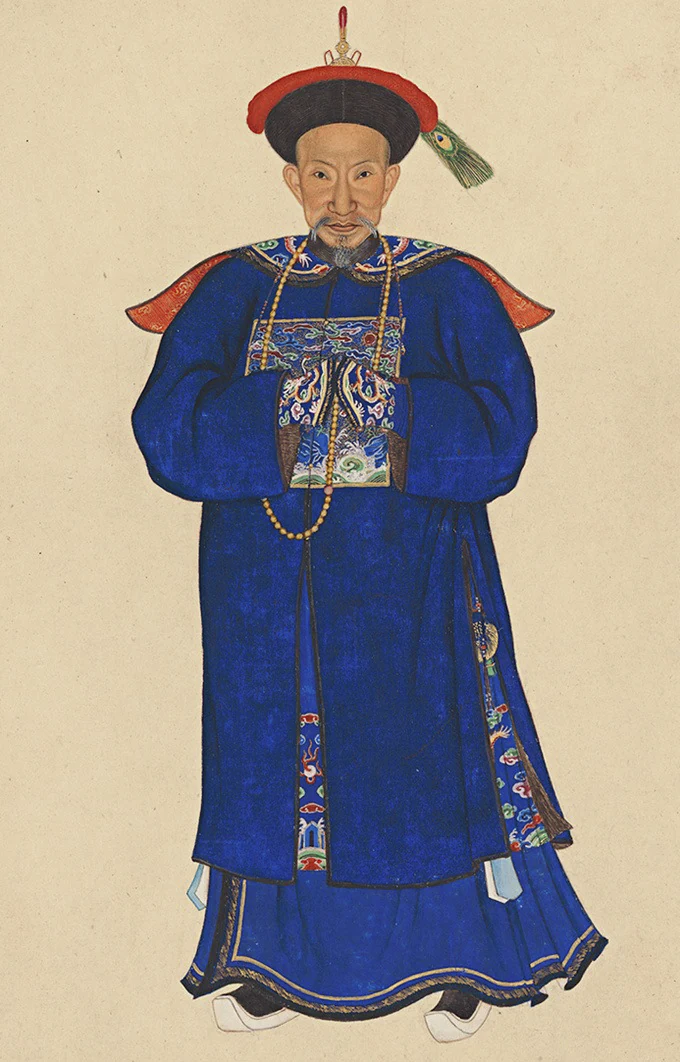
1720 CE–1796 CE
Grand SecretaryGrand CouncilorViceroyStatesman
Sun Shiyi
孙士毅
Birthplace qualification: locations retained below as native place, ancestral origin, or family background do not establish a confirmed birthplace. Sun Shiyi (1720–1796 AD), courtesy name Zhiye, art name Bushan, hailing from Linping in Renhe (modern Hangzhou, Zhejiang Province), was an eminent grandee, Grand Secretary, and military commissioner of the Qing dynasty during the Qianlong and Jiaqing reigns, reaching the pinnacle…
1720 CE–1796 CEQing Dynasty
PROFILE
Birthplace qualification: locations retained below as native place, ancestral origin, or family background do not establish a confirmed birthplace. Sun Shiyi (1720–1796 AD), courtesy name Zhiye, art name Bushan, hailing from Linping in Renhe (modern Hangzhou, Zhejiang Province), was an eminent grandee, Grand Secretary, and military commissioner of the Qing dynasty during the Qianlong and Jiaqing reigns, reaching the pinnacle of Grand Secretary of the Wenhua Throne and Grand Councilor. Attaining the Jinshi degree in 1761 AD, he entered the Grand Council as a secretary following an imperial poetry audition during Qianlong's southern tour. After managing army communications under Grand Secretary Fuheng in Burma, he governed Yunnan and Guangdong as Governor and Viceroy. In 1788 AD, he spearheaded the Qing invasion of Annam (Vietnam) to reinstate the Le dynasty, capturing Thang Long (Hanoi) and receiving the title Duke of Mouyong; however, a catastrophic counter-offensive by Nguyen Hue routed his forces at the Red River, resulting in his disgrace and dismissal. Rapidly restored to favor, he orchestrated flawless trans-Himalayan logistical supply lines during the Sino-Nepalese War, securing enshrinement in the Ziguangge Hall of Fame. He passed away on active campaign against the White Lotus rebels in 1796 AD, posthumously honored as Duke of the First Class with the posthumous name Wenjing.
- Courtesy / Art Name
- Courtesy name Zhiye, art name Bushan
- Historical Era
- Mid-Qing dynasty (Qianlong and Jiaqing reigns)
- Dynasty / Regime
- Qing dynasty
- Identity
- Grand Secretary, Grand Councilor, Viceroy, Statesman
- Date of Birth
- 1720 CE(59th year of the Kangxi era, Qing)
- Ethnicity
- Han (elevated to Han Plain White Banner in his twilight years)
- Native Place
- Linping, Renhe County (present-day Linping District, Hangzhou, Zhejiang Province)
- Place of Birth
- Unconfirmed; native place or family origin is not treated as an explicitly recorded birthplace
- Place of Death
- Laifeng military headquarters, Hubei Province
- Age at Death
- 77
- Highest Office
- Grand Secretary of the Wenhua Throne, Minister of Rites, Grand Councilor, Viceroy of Liangguang, Viceroy of Sichuan
- Major Offices
- Secretary of the Grand Secretariat, Secretary of the Grand Council, Director in Ministry of Revenue, Vice Director of Court of Judicature, Financial Commissioner of Guangxi, Governor of Yunnan, Senior Compiler of Hanlin Academy, Governor of Guangdong, Viceroy of Liangguang, Minister of War, Viceroy of Sichuan, Viceroy of Liangjiang, Minister of Personnel, Grand Secretary of Wenyuan Pavilion, Grand Secretary of Wenhua Throne
- Noble Title
- Duke of Mouyong (revoked after Annam defeat); Baron of the Third Class; posthumously Duke of the First Class
- Posthumous Name
- Wenjing
- Major Achievements
- 1761 AD Jinshi; managed army communications in Burmese campaigns; reformed Guangdong maritime governance; organized munitions for suppressing the Lin Shuangwen rebellion in Taiwan, enshrined in Ziguangge Hall; led 1788 AD expedition capturing Hanoi; orchestrated Himalayan supply lines in Sino-Nepalese War, re-enshrined in Ziguangge; participated in Siku Quanshu compilation; author of Baiyishanfang Collection
LIFE TIMELINE
Jinshi Degree | Passed the metropolitan civil examination, allocated as a magistrate awaiting appointment.
Imperial Selection | Auditioned before Emperor Qianlong during the southern inspection; appointed Secretary of the Grand Secretariat and Secretary of the Grand Council.
Burmese Campaign | Accompanied Grand Secretary Fuheng on the Burmese expedition to manage confidential military despatches; promoted to Director in the Ministry of Revenue.
Provincial Transfers | Elevated to Vice Director of Court of Judicature, dispatched as Financial Commissioner of Guangxi and subsequently Governor of Yunnan.
Dismissal in Graft Scandal | Implicated in Viceroy Li Shiyao's bribery case for failure to impeach; stripped of office and sentenced to Ili; found completely penniless upon confiscation of property.
Siku Quanshu Compilation | Emperor Qianlong, moved by his financial incorruptibility, pardoned him and assigned him as an editor on the Siku Quanshu, appointing him Hanlin Compiler.
Return to Southern Governorships | Reassigned as Financial Commissioner of Shandong, Governor of Guangxi, and Governor of Guangdong, cleansing maritime corruption.
Viceroy of Liangguang | Impeached corrupt Viceroy Fulehun and succeeded him as Viceroy of Liangguang.
Supplying Taiwan Expeditions | Managed munitions and logistics from Chaozhou during the Lin Shuangwen rebellion in Taiwan, awarded double-eyed peacock feather and hereditary light chariot commander.
Invasion of Annam | Led Qing armies across Zhennanguan into Annam, capturing Hanoi and reinstalling King Le Chieu Thong; created Duke of Mouyong.
Disaster at Red River | Crushed by Nguyen Hue's sudden Tet counter-offensive at the Red River; fled back across the border; stripped of dukedom and viceroyalty; recalled as Minister of War and Grand Councilor.
Himalayan Logistics | During the Sino-Nepalese War, appointed Acting Viceroy of Sichuan, managing supply lines into Tibet through Kangding and Lhasa without logistical failure.
Second Ziguangge Honor | Enshrined in Ziguangge Hall for the second time; elevated to Grand Secretary of the Wenhua Throne and Minister of Rites.
Viceroyalty of Liangguang and the Taiwan Crisis In 1784 AD | ### Viceroyalty of Liangguang and the Taiwan Crisis In 1784 AD, Sun returned to regional governance as Financial Commissioner of Shandong and Governor of Guangxi, soon transferring to Governor of Guangdong.
Age 65 | ### Viceroyalty of Liangguang and the Taiwan Crisis In 1784 AD, Sun returned to regional governance as Financial Commissioner of Shandong and Governor of Guangxi, soon transferring to Governor of Guangdong.
Only through absolute personal probity and rigorous surveillance of subordinates can we cl | Only through absolute personal probity and rigorous surveillance of subordinates can we cleanse corruption." When Viceroy Fulehun condoned systemic extortion by domestic staff, Sun prosecuted the case fearlessly; Fulehun was disgraced, and in 1786 AD, Emperor Qianlong elevated Sun to Viceroy of Liangguang.
Transport for the Taiwan campaign | When Lin Shuangwen rose in Taiwan he went in person to Chaozhou to procure arms and supplies and was granted the double-eyed peacock feather and the hereditary title of first-class light chariot commandant.
Aged sixty-eight #2 | When Lin Shuangwen rose in Taiwan he went to Chaozhou to prepare the defences and was granted the title of Junior Guardian of the Heir Apparent, the double-eyed peacock feather and the hereditary title of first-class light chariot commandant.
In 1788 AD | In 1788 AD, he spearheaded the Qing invasion of Annam (Vietnam) to reinstate the Le dynasty, capturing Thang Long (Hanoi) and receiving the title Duke of Mouyong; however, a catastrophic counter-offensive by Nguyen Hue routed his forces at the Red River, resulting in his disgrace and dismissal.
Age 69 | In 1788 AD, his portrait was officially enshrined in the Ziguangge Hall of Fame as a meritorious contributor to the pacification of Taiwan.
On the night of Tet (February 1789 AD) | On the night of Tet (February 1789 AD), Nguyen Hue unleashed a colossal assault spearheaded by war elephants and heavy artillery.
Age 70 | On the night of Tet (February 1789 AD), Nguyen Hue unleashed a colossal assault spearheaded by war elephants and heavy artillery.
Aged seventy-one #2 | He acted as governor-general of Sichuan and then of Liangjiang, and his river works and famine relief met with approval.
In 1791 AD | In 1791 AD, the Gurkhas of Nepal invaded southern Tibet, sacking the holy seat of Tashilhunpo at Shigatse.
Age 72 | In 1791 AD, the Gurkhas of Nepal invaded southern Tibet, sacking the holy seat of Tashilhunpo at Shigatse.
Trans-Himalayan Supply Network in Sino-Nepalese War Supervised the complex logistics t | ### Trans-Himalayan Supply Network in Sino-Nepalese War Supervised the complex logistics traversing the Tibetan plateau during the 1791–1792 Gurkha expedition, enabling imperial forces to cross the Himalayas and earning his second induction into the Ziguangge Hall of Fame.
Age 73 | ### Trans-Himalayan Supply Network in Sino-Nepalese War Supervised the complex logistics traversing the Tibetan plateau during the 1791–1792 Gurkha expedition, enabling imperial forces to cross the Himalayas and earning his second induction into the Ziguangge Hall of Fame.
Age 76 | ### Final Campaigns against the White Lotus and Death In 1795 AD, the Miao rebellion spilled into Sichuan.
In 1796 AD | In 1796 AD, the White Lotus rebellion erupted in Hubei and Sichuan.
Age 77 | In 1796 AD, the White Lotus rebellion erupted in Hubei and Sichuan.
BIOGRAPHY
Biography
Classical Training and the Southern Tour Audition Sun Shiyi was a native of Linping in Renhe County (modern Linping District, Hangzhou, Zhejiang Province). His ancestral lineage originated in Yuyao before settling in Hangzhou. Though his household was not of high official lineage, Sun displayed exceptional dedication to classical literature from childhood. Despite profound erudition, his early civil examination career was fraught with delays. In 1761 AD, at the age of forty-two, Sun finally succeeded in passing the metropolitan and palace examinations as a Jinshi. According to bureaucratic regulations, third-class graduates were placed on the waiting roster for county magistrate appointments. In the spring of 1762 AD, Emperor Qianlong undertook his third imperial tour of the Jiangnan provinces. Halting at Hangzhou, the sovereign held an imperial competitive audition for expectant local scholars. Sun composed impromptu poetry with fluid grace and delivered insightful discourses on statecraft. Deeply impressed by his talent, Emperor Qianlong circumvented ordinary seniority rules, directly commissioning Sun as a Secretary of the Grand Secretariat and assigning him as an intake secretary (Zhongshu) in the Grand Council. Stationed inside the inner sanctum of the empire, Sun mastered confidential imperial correspondence and political policy. ### The Burmese Expedition and Frontier Administration In 1769 AD, as the Sino-Burmese War reached an arduous stalemate, Grand Secretary Fuheng was dispatched as commander-in-chief to crush Burmese forces. Seeking an adept civilian secretary to oversee military documentation in the field, Fuheng petitioned for Sun's appointment. Enduring malaria-infested tropical jungles, Sun drafted urgent war despatches with speed and analytical clarity, winning Fuheng's enduring respect. Upon the conclusion of hostilities, Sun was promoted to Department Director in the Ministry of Revenue and subsequently Vice Director of the Court of Judicature. In 1770 AD, Sun was appointed Financial Commissioner of Guangxi, auditing tax registers and calming tribal populations. In 1779 AD, he was promoted to Governor of Yunnan, joining the highest echelon of provincial leadership. However, in 1780 AD, Grand Councilor Heshen exposed the flagrant extortion network of Viceroy Li Shiyao. Although Sun had not accepted bribes, he was convicted of having failed to denounce his superior and was sentenced to penal labor at Ili in Xinjiang. When imperial commissioners inventoried Sun's estate, they discovered only boxes of threadbare books and plain cotton robes—he was completely destitute. Deeply affected by Sun's genuine incorruptibility, Emperor Qianlong rescinded the banishment decree, recalling him to Beijing to serve as an editor for the imperial encyclopedia Siku Quanshu as a Senior Compiler in the Hanlin Academy. Sun worked untiringly collationing rare ancient texts, earning promotion to Director of the Court of Sacrificial Worship upon the project's completion. ### Viceroyalty of Liangguang and the Taiwan Crisis In 1784 AD, Sun returned to regional governance as Financial Commissioner of Shandong and Governor of Guangxi, soon transferring to Governor of Guangdong. Facing rampant piracy along the South China coast, Sun declared: "Guangdong's waterways are labyrinthine and easily harbor outlaws. Only through absolute personal probity and rigorous surveillance of subordinates can we cleanse corruption." When Viceroy Fulehun condoned systemic extortion by domestic staff, Sun prosecuted the case fearlessly; Fulehun was disgraced, and in 1786 AD, Emperor Qianlong elevated Sun to Viceroy of Liangguang. In late 1786 AD, the monumental Lin Shuangwen rebellion erupted in Taiwan, swiftly overrunning central and northern settlements. As the supreme commander of the southern mainland flank, Sun rushed to Chaozhou, establishing a nonstop logistical pipeline. He mobilized thousands of Guangdong troops, casting cannons, manufacturing gunpowder, and gathering fleets of shallow-draft transports to supply General Fuk'anggan's cross-strait expedition. Sun's logistical efficiency was critical to the swift pacification of Taiwan. Emperor Qianlong conferred upon him the title of Grand Preceptor to the Crown Prince, the double-eyed peacock feather, and the hereditary rank of Light Chariot Commander. In 1788 AD, his portrait was officially enshrined in the Ziguangge Hall of Fame as a meritorious contributor to the pacification of Taiwan. ### The Vietnamese Expedition and the Red River Catastrophe In the summer of 1788 AD, civil war engulfed Annam. Nguyen Hue of the Tay Son movement conquered Thang Long (Hanoi), forcing King Le Chieu Thong to flee to the Chinese frontier with his family. Surveying the frontier at Zhennanguan, Sun memorialized the throne, urging imperial intervention to restore a loyal vassal dynasty. Emperor Qianlong enthusiastically approved, naming Sun commander-in-chief of an eight-thousand-man expeditionary army. Crossing into Annam, Sun executed brilliant initial maneuvers. At the Shouchang and Shiqiu rivers, he outflanked enemy positions using diversionary pontoon bridges while sending shock troops upstream to encircle the defenders. Advancing to the Red River, clearing vanguard units under Xu Shiheng seized boats by night, allowing the main army to storm Hanoi without siege warfare. Sun formally invested Le Chieu Thong as King of Annam on behalf of the Qing Empire. Delighted by the rapid triumph, Emperor Qianlong conferred upon Sun the title Duke of Mouyong of the First Class and the precious ruby hat insignia. However, Sun fell prey to catastrophic complacency. Distrusting the local population and refusing to heed Qianlong's secret instruction to withdraw once the king was crowned, Sun garrisoned his troops outside Hanoi behind a single pontoon bridge across the Red River to celebrate the Lunar New Year. On the night of Tet (February 1789 AD), Nguyen Hue unleashed a colossal assault spearheaded by war elephants and heavy artillery. Caught off guard in their barracks, the Qing lines collapsed. Generals Xu Shiheng and Zhang Chaolong fell fighting desperately. In the panic of the midnight retreat, thousands of soldiers and civilians rushed onto the single bridge; fearing pursuit, Sun ordered the pontoon severed, drowning thousands in the churning waters. Enraged by the humiliating disaster, Emperor Qianlong stripped Sun of his dukedom, ruby cap, and viceroyalty, replacing him with Fuk'anggan to negotiate a face-saving settlement. ### Himalayan Supply Lines and the Sino-Nepalese War Though punished, Sun's administrative genius remained indispensable. Within months, Qianlong summoned him back to the Grand Council as Minister of War. He subsequently served as Acting Viceroy of Sichuan and Liangjiang, supervising crucial Yellow River embankment repairs. In 1791 AD, the Gurkhas of Nepal invaded southern Tibet, sacking the holy seat of Tashilhunpo at Shigatse. Qianlong appointed Fuk'anggan as generalissimo and named Sun as Acting Viceroy of Sichuan to manage the expedition's entire logistical lifeline across the Himalayas. Confronting perilous mountain passes across thousands of miles, Sun established relay depots from Kangding to Chamdo and Lhasa, personally supervising procurement in high-altitude terrain. Throughout the brutal campaign, the imperial armies never ran short of munitions or grain. In 1792 AD, the Qing forces crossed the Himalayas to threaten Kathmandu, compelling the Gurkhas to sue for peace. Qianlong hailed this as the final campaign of the 'Ten Great Military Campaigns', rewarding Sun with the double-eyed peacock feather and commissioning his portrait for the Ziguangge Hall a second time. Sun was subsequently elevated to Grand Secretary of the Wenhua Throne and Minister of Rites. ### Final Campaigns against the White Lotus and Death In 1795 AD, the Miao rebellion spilled into Sichuan. Sun was dispatched to coordinate defensive lines. In 1796 AD, the White Lotus rebellion erupted in Hubei and Sichuan. Despite advancing age and deteriorating health, seventy-six-year-old Sun marched his headquarters to the front line at Laifeng. Directing operations personally, Sun shattered multiple rebel units and was created Baron of the Third Class. However, the arduous climate undermined his health. In July 1796 AD, Sun passed away in his military tent at age seventy-seven. Emperor Jiaqing mourned his passing, posthumously creating him Duke of the First Class and granting the posthumous title Wenjing. At Sun's dying request, his grandson Sun Jun was enrolled into the Han Plain White Banner, perpetuating the family's aristocratic status.
Sun Shiyi passed the metropolitan examination in 1761 and waited his turn for a magistracy. In 1762, when the Qianlong emperor toured the south, he was summoned to a special examination and made a secretary of the grand secretariat and then a secretary of the grand council, rising to reader. In 1769, when the grand secretary Fuheng commanded the expedition against Burma, Sun Shiyi was put in charge of the memorials, and on the reckoning of merit he was promoted to a directorship in the board of revenue, then to the assistant ministership of the court of judicial review, going out as provincial treasurer of Guangxi and soon being raised to governor of Yunnan.
In 1780, when the governor-general of Yunnan and Guizhou, Li Shiyao, was dismissed for corruption, Sun Shiyi was implicated for not having impeached him in time: he was stripped of office and sent to Ili, and when his property was seized not a coin was found. The emperor, praising his honesty, set him to collate the Complete Library of the Four Treasuries and made him a Hanlin compiler; when the work was done he was promoted to assistant minister of the court of state ceremonial. He afterward went out again as provincial treasurer of Shandong, was raised to governor of Guangxi and transferred to Guangdong. On first taking up his post there he memorialized that Guangdong, cut up by sea inlets, gave ready shelter to malefactors, and that he would keep himself clean, watch his subordinates strictly, and not gloss over matters in the old routine way; the emperor charged him to emulate the style of Li Hu, late governor of Guangdong, who was renowned for his vigour and much esteemed.
Sun Shiyi at one time acted as governor-general of the two Guang. When the governor-general of Shaanxi and Gansu, Fukang'an, proposed a programme of military training, and the court ordered Yunnan, Guizhou, Sichuan, the two Guang and Fujian to follow it, Sun Shiyi asked that Guangdong train twenty-eight thousand five hundred and thirty-two men of the sea and land forces and Guangxi eleven thousand two hundred and ninety-six, choosing those of strong body and practised skill and holding the governors, commanders and brigadiers to train them in earnest, with strict regulations to end old abuses; the emperor replied that it might be done by degrees, but must be done in earnest. Guangdong's people were fierce and much in arrears with their taxes, the local officials some reporting the facts and some making up the sums from their own purses, while the people grew bolder in refusing payment. Sun Shiyi examined the arrears thoroughly, sent able men to the counties most in debt and had the accounts pursued from the registers, reimbursing from the recoveries those officials who had paid out of their own funds and were found to have done nothing dishonest. At Jiaotang, a haunt of bandits who had resisted arrest and injured officers, he took their chief, put him to death and exposed his head, and the emperor again praised his ability and gave him the peacock feather.
When the governor-general of the two Guang, Fulehun, was found to have connived at his servant's taking of bribes, the court ordered Sun Shiyi to try the case, and he established the facts and had Fulehun punished. The emperor, deeming Sun Shiyi upright, made him governor-general of the two Guang in his place. On the Guangdong salt administration he memorialized for more transport vessels, the quarterly collection of the salt dues and the restoration of the thirty-nine salt port licences, proposing to end the sealing and detaining of boats, restore the year-end accounting, restore first the four ports of Zhongqianshan, Nankang, Shangyou and Yingde, and begin the clearing of arrears with the thirty-nine ports; the proposals were referred to the boards and carried out.
In 1787, when Lin Shuangwen rose in rebellion in Taiwan, Sun Shiyi went in person to Chaozhou to stand guard, and after the army set out he sent troops to help in the suppression, with forage and equipment provided at once; he was made grand guardian of the heir apparent and given the double-eyed peacock feather and a hereditary rank of light chariot commandant of the first class. When Taiwan was pacified in 1788 his portrait was hung in the Ziguang pavilion. It happened that the king of Annam, Li Weiqi, had been driven out by his subject Ruan Hui, and his mother, wife and some two hundred of his clan fled to the frontier at Longzhou in Taiping prefecture, Guangxi, to beg for help; Sun Shiyi, learning of it, led troops to Longzhou to guard the Zhennan pass, and the emperor, praising his sense of proportion and of the greater interest, ordered him to enter Annam from Guangxi, sending the Yunnan commander Wu Dajing in by Mengzi as well. Ruan Hui posted troops to hold the Shouchang river and divided others at Jiaguan; Sun Shiyi came up with the main army, broke them, crossed the Shouchang river and advanced to the Shiqui river. There he had a pontoon bridge built downstream as if to cross, while secretly sending the brigade general Zhang Chaolong upstream to cross and fall on the Annamese rear, throwing them into disorder; the Qing troops crossed on rafts, many of the Annamese drowning in the river, while the guerrilla Zhang Chun and others broke Ruan Hui's troops at Jiaguan and the deputy general Qingcheng took his officers by ambush.
Major Activities
Military Logistics in Burma and the Siku Quanshu Served in the Grand Council as secretary during early career, managing army correspondence in the Burmese war under Fuheng; later collated the Siku Quanshu imperial library. ### Maritime Governance and Taiwan Logistics Reformed coastal defense in Guangdong as Viceroy; coordinated maritime supply networks that enabled Fuk'anggan's amphibious forces to crush the Lin Shuangwen insurrection in Taiwan. ### The Annam Expedition of 1788–1789 Commanded the expedition into Vietnam, capturing Hanoi and reinstalling the Le dynasty, winning a dukedom before suffering a devastating defeat on the Red River against Nguyen Hue. ### Trans-Himalayan Supply Network in Sino-Nepalese War Supervised the complex logistics traversing the Tibetan plateau during the 1791–1792 Gurkha expedition, enabling imperial forces to cross the Himalayas and earning his second induction into the Ziguangge Hall of Fame.
Personal Relations
- Brothers: Sun Shida, Sun Shilun.
- Wife: Lady Zhang, First-Rank Peeress.
- Sons: Sun Yu (Director in Ministry of Justice), Sun Heng (died young).
- Grandsons: Sun Jun (Prefect, inherited Baron title), Sun Yu, Sun Zeng, Sun Yu. ### Patrons and Allies - Fuheng: Senior Grand Councilor who mentored Sun during the Burmese war.
- Heshen and Helin: Imperial favorites with whom Sun maintained friendly relations.
- Fuk'anggan: Imperial generalissimo who collaborated with Sun across Taiwan, Annam, and Nepal. ### Imperial Sovereigns - Emperor Qianlong: Promoted, favored, punished, and rehabilitated Sun, immortalizing him twice in the Ziguangge Hall.
- Emperor Jiaqing: Bestowed the posthumous name Wenjing, though later stripping honors from his heirs.
Historical Assessment
Dynastic Historiographical Perspectives - Emperor Qianlong: "Sun Shiyi was astute and talented, executing state affairs without hesitation. Though he suffered a reverse through overconfidence in Annam, his provisioning of the Gurkha campaign was entirely flawless."
- Zhao Erxun et al. (Draft History of Qing): "Sun Shiyi was upright and gifted with exceptional administrative capacity. His supply lines in Annam and Nepal were never exhausted, marking him as an outstanding statesman of his era. Yet in Annam, his lingering for glory brought ruin to the army."
- Emperor Jiaqing: "Sun Shiyi was versed in military administration, laboring tirelessly for the dynasty to the very end of his life in the field." ### Modern Scholarship - Xiao Yishan (General History of the Qing Dynasty): "Sun Shiyi was among the most brilliant Han civil ministers of the late Qianlong era. His genius lay in governance and military supply. His reversal in Annam was due to entanglement in foreign civil warfare and underestimating local resistance."
- Guo Tingyi (Outline of Modern Chinese History): "The expedition into Annam exposed the systemic military decay of the Green Standard Army, marking the structural turning point of Qianlong's twilight years."
FIGURES ASSOCIATED WITH THIS DYNASTY
Bibliography
- Zhao Erxun et al., Draft History of Qing, Vol. 330, "Biographies 117: Sun Shiyi", Beijing: Zhonghua Book Company, 1977.
- Veritable Records of Emperor Gaozong of Qing*, Beijing: Zhonghua Book Company, 1964.
- Xiao Yishan, General History of the Qing Dynasty, Vol. 2, Beijing: Zhonghua Book Company, 1986.
- Wei Yuan, Military Records of the Sacred Dynasty (Shengwu Ji), Vol. 6, Beijing: Zhonghua Book Company, 1984.