Birth | Born in Beijing as the sixth son of the Daoguang Emperor
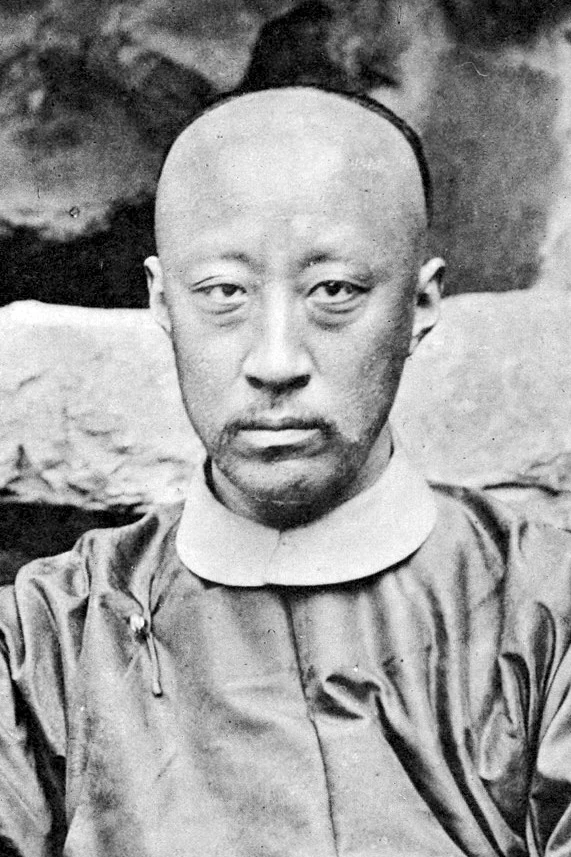
1833 CE–1898 CE
Late Qing imperial clansmanprinceand statesman
Aisin Gioro Yixin
爱新觉罗·奕訢
Aisin Gioro Yixin (11 January 1833–29 May 1898) was a Qing imperial clansman, the sixth son of the Daoguang Emperor and a younger half-brother of the Xianfeng Emperor. He held the title Prince Gong of the First Rank and received the posthumous title Zhong. From the final years of the Xianfeng reign into the early Guangxu period, he participated for long periods in central Qing decision-making and served successively as Chief…
1833 CE–1898 CEQing Dynasty
PROFILE
Aisin Gioro Yixin (11 January 1833–29 May 1898) was a Qing imperial clansman, the sixth son of the Daoguang Emperor and a younger half-brother of the Xianfeng Emperor. He held the title Prince Gong of the First Rank and received the posthumous title Zhong. From the final years of the Xianfeng reign into the early Guangxu period, he participated for long periods in central Qing decision-making and served successively as Chief Grand Councillor, minister of the Zongli Yamen, and in other senior posts. During the Second Opium War, he was ordered to remain in Beijing and conduct peace negotiations. After the Xianfeng Emperor's death, he cooperated with Empress Dowagers Ci'an and Cixi in launching the Xinyou Coup, after which he directed the Zongli Yamen and became an important supporter of Self-Strengthening activities. His political career also included repeated dismissals and restorations under the Tongzhi and Guangxu emperors. Yixin supported the introduction of Western technology and the construction of modern military, educational, and diplomatic institutions, while in his later years he opposed the Hundred Days' Reform. His political positions and practical activity were constrained by the Qing power structure and by changing domestic and international conditions.
- Other Name
- Aisin Gioro Yixin
- Era
- Qing
- Dynasty/Regime
- Qing
- Identity
- Late Qing imperial clansman, prince, and statesman
- Highest office
- Chief Grand Councillor; Minister of the Zongli Yamen (Foreign Office)
- Ethnicity
- Manchu
- Ancestral Home
- Not reliably confirmed in historical sources
- Place of Birth
- Place of birth unknown
- Place of Death
- Place of death unknown
- Highest Office
- See Biography and Major Activities
- Major Achievement
- Directed the Zongli Yamen and the Self-Strengthening Movement after the Xinyou Coup; a central figure in late Qing diplomacy
- Art name
- Master of Ledaotang;Late Qing Dynasty
- Dynasty / regime
- Qing Dynasty;Qing imperial clansman; Prince Gong of the First Rank; political figure
- Ethnicity / affiliation
- Manchus;No reliable record has been found in the two available sources
- Reign
- Not applicable; Yixin was not an emperor;Chief Grand Councillor; minister of the Zongli Yamen; Director of the Imperial Clan Court, among others
- Peerage
- Prince Gong of the First Rank; the princely title was made hereditary without diminution;Zhong; therefore known as Prince Gongzhong
- Major achievements
- Participated in establishing the Zongli Yamen; directed central Qing diplomacy in the late nineteenth century; promoted the Self-Strengthening Movement and the development of modern military industry and education; participated in decisions concerning coastal defence and the settlement of Xinjiang affairs
LIFE TIMELINE
Youth | The Daoguang Emperor decided that his fourth son Yizhu would inherit the throne and left arrangements for the succession; Yixin was not designated heir
Beginning of his period as prince | The Daoguang Emperor died and Yizhu ascended the throne as the Xianfeng Emperor; Yixin was granted the title Prince Gong
Entry into government | With the Taiping northern expedition threatening the capital region, Yixin was ordered to act as commander of the imperial guards, manage capital defence, and serve in the Grand Council
First loss of power | After the death of his biological mother, Empress Dowager Kangci, Yixin was removed from the Grand Council, the directorship of the Imperial Clan Court, and other posts because of issues connected with the funeral arrangements, and returned to study in the Upper Study
Restoration to office | Reappointed to offices including commander of the Bordered Red Mongol Banner
Participation in war-and-peace decisions | As Anglo-French forces approached Tianjin, Yixin memorialized the throne with proposals on defence, resistance, and negotiation
Ordered to negotiate peace | After Anglo-French forces approached Beijing and the Xianfeng Emperor fled to Rehe, Yixin remained in the capital to direct negotiations and, on behalf of the Qing court, concluded the Convention of Peking and other agreements with Britain, France, and Russia
Planning diplomatic and Self-Strengthening institutions | Yixin, Guiliang, Wen Xiang, and others proposed establishment of the Zongli Yamen, promoting creation of a central institution specifically responsible for diplomacy and related foreign affairs
Xinyou Coup | After the Xianfeng Emperor died, Yixin cooperated with the two empress dowagers to arrest Zaiyuan, Duan Hua, Sushun, and other regents; afterward he received the title Deliberative Prince and participated in central government during the period of regency behind the curtain
Dismissal again | Following an impeachment by Cai Shouqi and disciplinary action by the two empress dowagers, Yixin lost the title Deliberative Prince and several other offices; after officials petitioned on his behalf, he continued to serve in the Grand Council and manage Zongli Yamen affairs
Promotion of Western learning | Supported the addition of Western natural-science courses and the hiring of foreign teachers at the Tongwen Guan, provoking debate inside and outside the court
Military command and diplomacy | When the Western Nian Army approached the capital region, Yixin was ordered to coordinate the various field commanders; in the same year he took part in negotiations over revision of the British treaty
Handling of the Tianjin Massacre | Participated in determining the Qing negotiating and settlement policy toward France and supported an approach centered on compromise to end the crisis
Promotion of modern enterprises | Directed court debate on shipbuilding and arms manufacture and approved the memorial concerning the China Merchants' Steam Navigation Company
Conflict with the Tongzhi Emperor | Yixin and other officials advised against rebuilding the Old Summer Palace and against the emperor's incognito excursions; the Tongzhi Emperor temporarily stripped him of rank and office, but intervention by the two empress dowagers restored his princely title
Participation in the succession arrangement | After the Tongzhi Emperor died, Yixin took part in selecting Zaitian as emperor; Zaitian became the Guangxu Emperor
Ryukyu diplomacy | Met former U.S. president Ulysses S. Grant and asked him to assist in mediating the Sino-Japanese dispute over the Ryukyu Islands
Weakening of political support | Empress Dowager Ci'an died and Yixin's political position at court became less favorable
Cabinet Change of Jiashen | During the Sino-French War, Empress Dowager Cixi dismissed Yixin and a group of Grand Councillors on the grounds of mishandling affairs, removing him from the center of power
Recalled to service | During the First Sino-Japanese War, Yixin was recalled to manage Zongli Yamen and naval affairs and to participate in wartime and postwar decisions
Postwar government | Helped advance proposals for "vigorously carrying out practical policies"; his positions on Russia and reform differed from those of the Guangxu Emperor and other officials
Death | Died in Beijing; the Qing court granted the posthumous title Zhong, and the Prince Gong peerage was inherited by his grandson-generation descendant Puwei
After the First Sino-Japanese War broke out in 1894(Guangxu 20) | After the First Sino-Japanese War broke out in 1894(Guangxu 20), the Qing court recalled Yixin.
Post-war statecraft | Yixin helped put forward the call to "earnestly carry out practical government"; his positions on relations with Russia and on reform differed from those of the Guangxu Emperor and other ministers.
Death | Yixin died in Beijing on 29 May 1898(10th day of the fourth lunar month, Guangxu 24).
BIOGRAPHY
Biography
Imperial-Clan Background and Early Offices Yixin was born on 11 January 1833(21st day of the 11th lunar month, Daoguang 12), the sixth son of the Daoguang Emperor. His biological mother was Noble Consort Jing of the Borjigit clan, later posthumously honored as Empress Xiaojingcheng. His elder half-brother Yizhu later became the Xianfeng Emperor. The two were educated together in childhood. In the Upper Study, Yixin studied Manchu, Mongolian, Chinese, the classics and history, poetry and prose, riding, and archery, with teachers including Weng Xincun and Jia Zhen. Late in his reign, the Daoguang Emperor considered both Yizhu and Yixin as possible successors but ultimately decided to transmit the throne to Yizhu. When the Daoguang Emperor died in 1850(Daoguang 30), Yizhu ascended the throne and Yixin was granted the title Prince Gong of the First Rank. During the early Xianfeng years, Yixin gradually assumed responsibilities involving palace affairs, banner affairs, and imperial-clan administration. In 1853(Xianfeng 3), when the Taiping northern expedition threatened the capital region, the court ordered him to act as commander of the imperial guards and manage local defence, then instructed him to serve in the Grand Council. In 1854(Xianfeng 4), he also served as banner commander and held offices in the Imperial Clan Court, including Right Director and Director. In 1855(Xianfeng 5), Yixin requested that the biological mother who had raised the Xianfeng Emperor be honored as empress dowager. Although the request was granted, issues involving mother-son terminology and ritual caused tension between the brothers. After their mother died, the Xianfeng Emperor removed Yixin from the Grand Council, the directorship of the Imperial Clan Court, and some other posts on the grounds that he had mishandled the funeral rites. In 1857(Xianfeng 7), Yixin was restored to offices including commander of the Bordered Red Mongol Banner. This period shows Yixin’s gradual move from palace, banner, and imperial-clan duties into central government, followed by punishment and later restoration. After his 1855 dismissal from the Grand Council and Imperial Clan Court, he remained in the inner court and continued to manage some palace affairs. he oversaw Zhongzheng Hall and Wuying Hall in 1853 and undertook military-review duties in 1854; his responsibilities spanned palace, military, and imperial-clan administration, but do not show that he already controlled court politics. ### The Second Opium War and Peace Negotiations In 1858(Xianfeng 8), Anglo-French forces advanced toward Tianjin. Yixin and other imperial-clan officials submitted memorials proposing stronger defences at Tongzhou and opposing a hasty acceptance of commercial demands. In 1860(Xianfeng 10), after Qing forces were defeated at Baliqiao and Anglo-French forces approached Beijing, the Xianfeng Emperor fled to Rehe and appointed Yixin an imperial commissioner with full discretionary powers to remain in Beijing and conduct negotiations with the foreign powers. With the military crisis coinciding with the Taiping Rebellion, Yixin's foreign policy shifted from a relatively hard line toward making peace first and concentrating strength against internal rebellion. He subsequently exchanged ratifications of the Treaty of Tientsin with Britain and France and concluded the Convention of Peking, while also signing the Sino-Russian Convention of Peking with Russia. These agreements were reached under conditions of Qing military defeat and pressure from the foreign powers and were clearly unequal in character; Yixin's role was to carry out the negotiations and settlement tasks assigned by the Qing court. Before the military situation deteriorated, Yixin had already opposed sending Keying to Tianjin for peace talks in 1858(Xianfeng 8) and had proposed strengthening the defences of Tongzhou and resisting the Anglo-French landing forces. After Qing military defeat left Beijing in danger, he concluded that continued resistance was not viable and accepted responsibility for peace negotiations. This shift from advocating resistance to managing postwar negotiations cannot be reduced to a claim that he always favored war or always favored peace. After the treaties were signed, he was also responsible for ratification exchanges, troop withdrawal, and commercial settlements. one account, citing the Draft History of Qing, records that the Xianfeng Emperor acknowledged the difficulty of the negotiating position and did not impose the punishment that Yixin himself requested. During the negotiations, Yixin developed working political relationships with Guiliang, Wen Xiang, Baojun, Shengbao, and other officials. The Qing court subsequently established the Zongli Yamen, with Yixin and others directing it. Initially concerned mainly with diplomatic affairs, the institution later became an important body for coordinating Qing foreign relations and related Self-Strengthening matters. Yixin also supported purchases of firearms, the hiring of foreign technical personnel, military-industrial projects, and efforts to use foreign military assistance against the Taiping Heavenly Kingdom. Questions of authority, command, and consequences in the use of foreign troops and arms purchases generated controversy both inside and outside the court. The proposal to establish the Zongli Yamen was not merely a plan for a ceremonial foreign-affairs office. The scheme advanced by Yixin, Guiliang, and Wen Xiang also concerned administration of treaty ports and customs, coordination of provincial dealings with foreign powers, and translation and collection of foreign newspapers and information so as to reduce conflicts caused by provincial officials handling foreign affairs independently. The Zongli Yamen later became increasingly involved in education, military affairs, mining, transport, and other Self-Strengthening matters. Yixin played a leading and coordinating role, but individual projects were often implemented by provincial officials such as Zeng Guofan, Li Hongzhang, and Zuo Zongtang; these local undertakings cannot all be treated as enterprises personally founded by Yixin. ### Xinyou Coup and Central Government Leadership In 1861(Xianfeng 11), the Xianfeng Emperor died at Rehe, leaving a testamentary order appointing Zaiyuan, Duan Hua, Sushun, and five others as regents to assist with government; Yixin was not among them. Yixin contacted the two empress dowagers and sought support from officials in Beijing and commanders controlling the Beijing-Tianjin military area. After the two empress dowagers returned to the capital, Yixin participated in the arrest of Zaiyuan, Duan Hua, Sushun, and others in what became known as the Xinyou Coup. Thereafter the two empress dowagers ruled from behind the curtain, while Yixin, holding the title Deliberative Prince, served as Chief Grand Councillor and directed the Zongli Yamen. He also concurrently served as Director of the Imperial Clan Court and as a senior official of the Imperial Household Department, becoming one of the central participants in domestic and foreign-policy decision-making. Before the coup, Yixin contacted court officials in Beijing and, through Wen Xiang, maintained communication with foreign envoys. Under the pretext of attending the imperial funeral, he went to Rehe and agreed on a course of action with the two empress dowagers, then hurried back to Beijing to secure support from ministry officials and the military forces in the Beijing-Tianjin region. After the two empress dowagers returned to Beijing, Zaiyuan, Duan Hua, and Sushun were arrested and the other regents were also punished. The result was the collapse of the regency arrangement established by the Xianfeng Emperor. The child emperor Zaichun came to the throne, Empress Dowagers Ci'an and Cixi ruled from behind the curtain, and Yixin gained important authority in the Grand Council and Zongli Yamen. The coup changed the distribution of power and tied Yixin's subsequent political standing closely to his cooperative relationship with the two empress dowagers. From the final Xianfeng years through the Tongzhi period, Yixin argued that the Qing court should first deal with the Taiping Heavenly Kingdom and the Nian Army and then pursue "self-strengthening." He supported provincial officials such as Zeng Guofan and Li Hongzhang in establishing military industries and importing weapons and at times approved the use of foreign military power to assist Qing forces. Self-Strengthening activity was not limited to weapons. Yixin supported the introduction of Western science courses and foreign instructors at the Tongwen Guan, participated in sending Binchun abroad and later supported the Burlingame Mission, and took part in discussions of shipbuilding, machinery production, coastal defence, mining, and transport. After the Tianjin Massacre in 1870(Tongzhi 9), he supported a compromise-based settlement with France, drawing criticism that included opposition from his younger brother Yixuan. At the same time, he did not favor unconditional concessions in every issue. one account quotes his views in favor of military training, domestic weapons manufacture, and restrictions on foreign overreach, and records that in some matters involving foreign troops and fleets he demanded restoration of Qing control. His policy centered on balancing regime stability and military strengthening under conditions of domestic rebellion, diplomatic pressure, and limited Qing finances, but implementation was repeatedly constrained by foreign demands and by divisions within the court. The early fleet purchase illustrated this tension in concentrated form. Yixin approved entrusting Horatio Nelson Lay with the purchase of ships in Britain. After the vessels arrived in China, British officer Sherard Osborn attempted to secure independent command, producing a dispute with the Qing court. The crew was ultimately discharged, the ships were returned, and the court bore the diplomatic consequences. Yixin was criticized for the affair. He later supported training Chinese naval forces and building ships domestically, showing a gradual policy shift from rapid emergency reliance on foreign assistance toward self-management and control. Naval construction nevertheless remained constrained by finance and disagreements within the court and failed to develop as planned into a force capable of resisting the maritime powers. In education and foreign contact, Yixin supported the Tongwen Guan's introduction of natural-science courses and foreign instructors, sent Binchun to Europe for observation, and later backed the Burlingame Mission, expanding the Qing court's direct knowledge of foreign institutions and diplomatic practice. During negotiations over revision of the British treaty in 1868(Tongzhi 7), he participated in opposing demands for expansion of British privileges. In debates on shipbuilding and arms manufacture in 1872(Tongzhi 11), he supported continued technology imports and manufacturing improvements and approved the memorial for the China Merchants' Steam Navigation Company. These measures were concrete Qing projects for technological and administrative adjustment. Their scale and effects were limited, however, and they did not eliminate the military and fiscal difficulties of the period. one account divides Yixin's experience in central government into four stages. The first began after the Xinyou Coup, when he reorganized court personnel, supported Han Chinese regional forces, helped establish the Tongwen Guan, and sought to limit foreign authority even while using foreign assistance. The second began after he lost the title Deliberative Prince in 1865(Tongzhi 4); he continued participating in Grand Council and foreign-affairs work and supported military industry, scientific education, overseas observation, and the China Merchants' Steam Navigation Company. The third unfolded in the early Guangxu period, when he participated in allocation of resources between coastal and northwestern defence, modern mining, and development in Taiwan. The fourth followed his recall during the First Sino-Japanese War, when age, poor health, and his long period out of power reduced his practical influence. He continued to take part in discussions of postwar measures, but his political approach became more cautious. These four stages did not constitute one continuous period of stable personal rule. They were periods of office shaped by the two empress dowagers, other Grand Councillors, provincial governors-general and governors, and changing palace politics. Self-Strengthening projects were not carried out by Yixin alone. His role chiefly consisted of proposing or supporting policy and coordinating central approval, while provincial officials raised funds, built factories, trained troops, and carried out construction. one account lists his participation in defence, industry, Taiwan, and telegraph matters and also makes clear that finance and other constraints prevented a number of projects from being implemented as planned. In 1865(Tongzhi 4), Yixin was stripped of the title Deliberative Prince and some other offices after an impeachment by Cai Shouqi. Following petitions from officials, he continued serving in the Grand Council and managing the Zongli Yamen. In 1868(Tongzhi 7), when the Western Nian Army approached the capital region, he was ordered to coordinate the various field commanders. In 1869(Tongzhi 8), Shandong governor Ding Baozhen executed the eunuch An Dehai, who had left the capital without authorization; Yixin supported the action, further deepening his conflict with Empress Dowager Cixi. In 1872(Tongzhi 11), he directed court debate on shipbuilding and arms manufacture and approved the memorial for the China Merchants' Steam Navigation Company. In 1874(Tongzhi 13), Yixin and other officials advised the Tongzhi Emperor against rebuilding the Old Summer Palace and making incognito excursions. The emperor rebuked him and temporarily removed his rank and office, but intervention by the two empress dowagers restored his princely title. ### Early Guangxu Period, Cabinet Change of Jiashen, and Recall to Service After the Tongzhi Emperor died in 1874(Tongzhi 13), Yixin participated in selecting Zaitian as emperor. In the early Guangxu period he continued to direct the Grand Council and Zongli Yamen and took part in coastal defence, northwestern defence, frontier diplomacy, and Self-Strengthening affairs. the section on his "major influence" divides his governing career into several stages and records his support for raising funds for Zuo Zongtang's western campaign, construction of Beiyang and Nanyang coastal defences, machine industry, and development in Taiwan. It also records that coastal-defence plans were constrained by finance and other conditions and achieved limited results. In foreign policy, Yixin tended to preserve relations with the foreign powers while opposing overreach; in dealings with Russia, Japan, and Britain, he generally relied on negotiation to manage crises. These matters included competing needs for maritime and northwestern defence. In central deliberations, Yixin supported foreign loans and provincial remittances to fund Zuo Zongtang's western campaign. For coastal defence, he authorized Li Hongzhang and Shen Baozhen to manage the northern and southern naval defences respectively and approved plans involving ships, forts, and naval mines. Because of limited finance, uneven provincial implementation, and other constraints, naval construction did not reach its intended goals. For frontier and transport development, he supported roads, mining, cultivation, and defence in Taiwan and at one point promoted a telegraph line between Fujian and Taiwan, but that plan was shelved because of resistance from various parties. In negotiations with Russia, the court sent Zeng Jize to revise the treaty previously concluded by Chonghou, eventually recovering Ili; Yixin participated in the central decision-making. one account presents these policies alongside his desire to maintain foreign relations while preventing foreign overreach. In 1881(Guangxu 7), Empress Dowager Ci'an died and Yixin lost an important source of political support. As Empress Dowager Cixi increased her control over central government, Yixin became more cautious in Self-Strengthening and other major affairs. In 1884(Guangxu 10), during the Sino-French War, Qing military setbacks led Cixi to dismiss Yixin together with Baojun, Li Hong Zao, Jinglian, Weng Tonghe, and other Grand Councillors on the grounds that the Grand Council had mishandled affairs. The political change of the Jiashen year became known as the Cabinet Change of Jiashen. Yixin thereafter remained at home because of illness. Although his double princely stipend was restored in 1886(Guangxu 12), he did not return to the center of power. After the First Sino-Japanese War broke out in 1894(Guangxu 20), the Qing court recalled Yixin. He initially served in the inner court and managed Zongli Yamen affairs, then reentered the Grand Council and took part in naval and military matters. Although old and frequently ill, he sought mediation by Britain, the United States, Germany, Russia, and France and considered sending representatives to negotiate with Japan; none of these efforts changed the course of the war, and the Qing court ultimately sent Li Hongzhang to sign the Treaty of Shimonoseki. After the war, Yixin supported “vigorously carrying out practical policies,” including railways, machinery, postal services, schools, and military training. He opposed Kang Youwei’s institutional reforms and prevented the Guangxu Emperor from receiving him, showing that the reforms Yixin supported remained within the Qing court’s Self-Strengthening framework. one account also records purported last words but says the accounts are difficult to verify; they are not treated here as established fact. Yixin died in Beijing on 29 May 1898(10th day of the fourth lunar month, Guangxu 24). The Guangxu Emperor and Empress Dowager Cixi personally paid respects, and the Qing court granted him the posthumous title Zhong and ordered his enshrinement in the Temple of Worthies and the Imperial Ancestral Temple. Because his eldest son Zaicheng had died earlier, the Prince Gong peerage was inherited by Puwei, the son originally born to Yixin's second son Zaiying but adopted into Zaicheng's line. Yixin's tomb is in the Changping area of Beijing. most above-ground structures of the cemetery have been destroyed and that a stone memorial archway survives.
His Family, His Birth and His Education
Yixin, who styled himself the Master of the Hall of the Joyous Way, was the sixth son of the Daoguang emperor and half-brother of the Xianfeng emperor, his mother the empress Xiaojing, lady Borjigit. He was born in Beijing on the twenty-first day of the eleventh month of the twelfth year of Daoguang, 11 January 1833; and the Xianfeng emperor's own mother, lady Niohuru, having died early, it was Yixin's mother, lady Borjigit, who by the late empress's testamentary charge brought up the fourth son, so that Yixin and Yizhu were under the care of one mother and of like age, no different from brothers. Yixin received an extremely strict and peculiar education, entering the upper study at six and going to and fro with Yizhu on close terms, his lessons being Manchu, Mongol and Chinese writing, the classics of the hundred schools, poetry and prose, and the martial arts of riding and archery. He was naturally clever and full of talent, studying under a veteran scholar; and when Weng Xincun asked leave to go home to care for his aged mother, Yixin studied under another, learning the Confucian classics for more than ten years, so that he was well versed in the Confucian doctrine. In the twenty-eighth year of Daoguang, 1848, he was ordered by the emperor to marry the daughter of the military governor of Rehe, which has often been taken as a sign that Daoguang favoured him, though in truth the betrothal came after Daoguang had resolved and written his testament, and can at most be seen as a compensation to him.
The Contest for the Succession and His Enfeoffment as Prince Gong
Daoguang had wavered between the fourth son Yizhu and the sixth son Yixin, but in the twenty-sixth year of Daoguang, 1846, he resolved that the fourth son should succeed and wrote his testament. Yixin's literary talent and martial skill were both above Yizhu's and Daoguang loved this son most; and by the Qing tradition, which gave the throne to the most able and virtuous of the princes, Yixin had a chance of it. The Xianfeng emperor's teacher, knowing that Yizhu's understanding and capacity were not one ten-thousandth of Yixin's and that he could not win by memorials on the affairs of the time or by riding and archery, coached him to win Daoguang by the heart of benevolence and filial piety, and so to have every advantage: one day when Daoguang took the princes hunting and Yixin shot the most game while Yizhu deliberately loosed no arrow, and Daoguang asking why, Yizhu answered that it being spring, the season when birds and beasts breed, he could not bear to take life against the harmony of heaven, at which Daoguang rejoiced and said that these were indeed the words of a king. In Daoguang's last years, when he lay long ill and Yizhu prostrated himself weeping in a grief beyond measure, "the emperor was greatly pleased and said that the fourth son was benevolent and filial," and from this the succession was settled and Yixin lost his claim. In the twenty-ninth year of Daoguang, 1849, the emperor ordered a tomb built for Yixin's mother, the noble consort Jing, within the concubines' burial ground and commanded that after her death she must be buried there and that it must not be changed, obliquely signifying that Yixin had lost the contest. On the fourteenth day of the first month of the thirtieth year of Daoguang, 1850, the gravely ill emperor summoned ten great ministers to open the brocade casket together, in which were two autograph edicts, one making the fourth son Yizhu heir apparent and one enfeoffing the sixth son Yixin as a prince of the first rank; and two edicts in one casket was a thing without precedent since the Qing had adopted the practice of naming the heir in a sealed casket, so that the emperor's favour to Yixin may indeed be seen. Daoguang then died and Yizhu took the throne as the Xianfeng emperor; and since Xianfeng had come by the throne somewhat by artifice, the clever Yixin was not necessarily reconciled, so that the brothers grew suspicious and estranged, nursing their grudges and, held back only by the proprieties of sovereign and subject, drifting ever further apart.
His Employment under Xianfeng and the Breach between the Brothers
In the fourth month of the first year of Xianfeng, 1851, Yixin was made a minister of the fifteen good archers; in the fourth month of the next year an edict gave him the former mansion of the prince of Qing as his residence while he still walked in the inner court. In the first month of the third year, Yixin being ordered to take charge while the northern expeditionary army came near Tianjin and Beijing was alarmed, Xianfeng made him act in the defence and gave him back the sword the late emperor had given him, thus breaking the ancestral rule that princes of the blood might not meddle in government. In the second month of the fourth year he was given charge of the three treasuries and made a Mongol lieutenant-general, in the fourth month lieutenant-general of the Chinese banners, and in the ninth month raised in the imperial clan court and made inspector of reviews and transferred to lieutenant-general of the Plain Yellow Banner. In the fifth year he was put in charge of the travelling court and in the second month given the right to wear the yellow jacket. At this time his mother, the noble consort dowager Kangci, being gravely ill, Yixin asked that she be honoured as empress dowager; and Xianfeng, held by her fostering care, had no choice but to consent, raising her on the first day of the seventh month. But Yixin in asking had been impetuous and as good as coercive, and Xianfeng's heart remained sore; and after her death, though he mourned a hundred days by the rule, he gave her posthumous honours not by the house's own law but by Ming precedent, deliberately diminishing the mourning for an empress dowager, and her name was not attached to that of the Daoguang emperor nor was she placed in the ancestral temple, showing that principal and secondary wife were after all distinguished. At this Yixin was deeply grieved and vexed, and the breach between the brothers became open; and at the very moment of his excessive grief Xianfeng blamed him for carelessness in the mourning rites and stripped him of his offices in the grand council and the imperial clan court, ordering him back to the upper study to read. In the fifth month of the seventh year, 1857, Yixin rose again and was made lieutenant-general of the Bordered Red Banner Mongols and given charge of the old and new barracks of that banner.
His Advocacy of War and His Conduct of the Peace
In a time when the Qing was beset within and without, Yixin, young and ardent, urged action on both fronts to remove the threat of the two enemies, internal and external, but Xianfeng's attitude to the foreigners wavered, his warlike temper rising and falling. In the eighth year of Xianfeng, when the English and French seized Guangzhou, in the fourth month Yixin with the prince of Hui posted heavy troops and drained the canal to keep the foreign gunboats from coming up, and proposed secretly ordering the governor-general of the two Guangs to recover Guangzhou and strike at Hong Kong to threaten the allied rear; on the twenty-fifth day of the fourth month he memorialised alone against sending Qiying to Tianjin to negotiate, holding that the talks there should not be all weakness, that if the allies dared to land the troops and braves should attack together, and proposing to have the Guangdong gentry attack Hong Kong. On the thirteenth he submitted a memorial against signing, opposing the clauses on opening the ports of the Yangzi in the treaty negotiated by the imperial commissioner Guiliang with the English and French, and setting out measures against the enemy. With the war party loud at court, Yixin too argued that if the court would only stand firm and resist resolutely it could indeed put the invaders in deadly straits, hoping that Xianfeng would hold to war. In the latter part of the ninth month of the tenth year of Xianfeng, 1860, the English and French defeating the Qing troops west of Tongzhou and pressing on Beijing, Xianfeng in great alarm appointed Yixin imperial commissioner with full discretionary powers to conduct the negotiations and settle the peace, while he himself fled in panic to Rehe with his consorts and a body of princes and ministers. The Qing troops falling back everywhere so that neither battle nor defence could be relied on, Yixin's warlike ardour cooled and he inclined to peace; and above all the rapid growth of the Taiping in the south made him feel that internal trouble and external danger had reached their extreme, so that weighing the matter he concluded that to repel the foreigner one must first pacify the interior, and conducted hard negotiations with the English and French over the release of Parkes, the cessation of arms and the terms of peace. In the latter part of the tenth month he accepted in full, by Xianfeng's will, the harsh demands of the allies, exchanged the ratifications of the treaty of Tianjin with the English and French representatives and concluded the treaties of Beijing with England and with France. His conduct of the negotiations and the great deal of business afterwards won him the goodwill of the West and prepared the way for his later diplomacy; and during the negotiations he drew Weng Xiang and others to him, forming a new political group, which was the political capital he gained from the settlement.
The Office for Foreign Affairs, the Borrowing of Foreign Troops, and the Beginning of the Self-Strengthening Movement
After the treaties of Beijing, Yixin held that the outer barbarians still stood by the treaties and that the war had only taken indemnities and privileges, "not being covetous of our land and people, and so seeming somewhat different from the affairs of former dynasties," and conceived the idea that the foreigners "might yet be bound and tamed by good faith." England, France and Russia, each for its own advantage, had offered to "attack and suppress the rebels for China" and repeatedly told Yixin so; and weighing the two evils and choosing the lighter, he grew the firmer in the resolve first to crush the risings. In the twelfth month of the tenth year of Xianfeng he with Guiliang and Wenxiang memorialised the six articles on the general arrangement of foreign affairs, saying that the Taipings and the Nian were the disease of the heart, that Russia, whose land touched theirs and who had designs of eating up the realm, was the trouble at the elbow, and that England, whose aim was trade and who was violent beyond reason and must be restrained if China were to stand, was the trouble of the limbs; and that therefore to destroy the Taipings and the Nian came first, to govern Russia next, and England after. In the first month of the eleventh year he further urged that the situation required the stratagem of the Three Kingdoms, of joining Wu against Wei, proposing that the court ally with the Western powers to crush the Taipings and the Nian. In the same memorial he proposed to establish an office for the general management of foreign affairs, to appoint ministers for the northern and southern ports, to add officers at the ports, to require the generals and governors to keep one another informed in foreign business lest they err, to have Guangdong and Shanghai each send two men who knew foreign languages to the capital for consultation, and to collect the commercial news and newspapers of all countries at the general office; and on the tenth day of the twelfth month the office for the general management of foreign affairs was established, a second central organ beside the grand council. In the first month of the eleventh year of Xianfeng, Yixin, Guiliang and Wenxiang were made ministers of that office to conduct foreign business; it was a small body with great power, and its functions, besides the conduct of foreign affairs, gradually took in finance, military affairs, education, mining and communications, so that it became in effect the general office deciding and managing everything to do with foreign matters. Once it was established Yixin, in the name of self-strengthening, actively promoted the purchase of foreign rifles and cannon and the founding of modern military industry, saying in his memorial that in the way of governing a state self-strengthening was the thing, and that, weighing the times, self-strengthening required first the training of troops, and that required first the making of weapons; and so he proposed buying French guns and cannon, with artisans sent to teach their manufacture, and hiring foreign workmen to make them at Shanghai for the destruction of the Taipings, and the emperor again agreed. The purchase of foreign arms went forward at once and Zeng Guofan soon founded a modern arsenal, and thereupon modern military industry, producing new weapons and "learning the barbarians' skill to make cannon and ships," came into being in China. By his position and influence Yixin began the self-strengthening movement and spread his ideas among the officials; most of the great policies of the movement were framed or directed by him and the work in the provinces was much supported by him, so that he was rightly its leader. In the eleventh year of Xianfeng he agreed to appoint Lay and then Hart as inspector-general of the Chinese customs, putting the customs in English hands; and in the same year he entrusted Lay with a great sum to buy ships and build a navy. In the second year of Tongzhi, 1863, this fleet reached China, but its commander was the British captain Osborn, and Lay had privately allowed Osborn complete command, so that it was a fleet paid for by the Qing but commanded and controlled by Englishmen; and Yixin not only did not resist but was ready to accept this unreasonable demand, conduct so compliant that even Zeng Guofan and Li Hongzhang were displeased, so that in the end he had to give way, return the ships and apologise and pay compensation to England.
The Coup of Xinyou
In the seventh month of the eleventh year of Xianfeng, 1861, the emperor died at Rehe and the heir apparent Zaichun took the throne as Emperor Tongzhi. The sovereign being a child, Xianfeng's testament charged Zaiyuan, Duanhua, Sushun and five others, eight in all, to assist in the government as ministers of the testament; and since the ancestral rule gave weight to the testamentary charge, Yixin should by nearness of kin have stood first, but Xianfeng, his grudge unappeased, shut Yixin out of the list, which deepened his quarrel with Zaiyuan, Sushun and the rest. After Xianfeng's death Yixin and the emperor's mother, the empress dowager Cixi, whom Sushun had kept down, came to an understanding and prepared to seize the highest power. At Cixi's prompting the censor Gao Yanyou first asked for the empress dowager to hold court behind the curtain, and then the censor Dong Yuanshun memorialised that the empresses dowager be asked for the time being to decide matters behind the curtain and that one or two princes of the near branch be appointed to assist, which Zaiyuan and Sushun opposed flatly; and soon after, at Yixin's instance, the grand secretary Jia Zhen and the imperial commissioner Shengbao and others asked that the empress dowager take personal charge of government and appoint a prince of the near branch to assist. Cixi and Yixin outwardly "showed the world that they did nothing" while secretly pressing their preparations. On the first day of the eighth month Yixin, on the pretext of mourning, went to Rehe to bow at the coffin; and to win the support of the powers he had first sent Wenxiang to call on the English and French ministers to explain his purpose, and the powers approved and supported the seizure of power by Yixin's party. Sushun and the rest had long been on their guard against Yixin and by various pretexts had kept him from Chengde; and when he reached Rehe, Sushun, on the ground that an empress dowager might not summon an outer minister and that brother-in-law and sister-in-law should avoid suspicion, kept him from seeing Cixi. She contrived to win over and persuade Xianfeng's empress to come forward, and the two empresses dowager, on the pretext of asking about family matters and talking of kindred, summoned Yixin twice and at last reached an understanding. Yixin held that for a coup they must return to the capital early, but Cixi still feared and suspected the foreigners and was afraid for her safety on returning, until Yixin assured her that the foreigners had no objection and that if there were any difficulty he alone would answer for it; and Cixi, freed of this care, secretly planned with him the coup to be made on their return. On the seventh day of the eighth month Yixin hurried back to Beijing, winning the support of the grand secretary Jia Zhen and other ministers of the boards, of Shengbao, vice-minister of war, who controlled the defence of the capital region, and of a Mongol prince of great military strength, so that he controlled the troops about Beijing and held the armed force necessary for a coup. On the twenty-eighth day of the ninth month Cixi with Emperor Tongzhi arrived first at Beijing from Rehe and that day summoned Yixin and other trusted ministers to concert measures; and at dawn the next day Yixin by "special decree" arrested Zaiyuan, Duanhua and the rest with a thunderbolt, sending men to Miyun to seize Sushun, who was bearing the late emperor's coffin. The eight ministers of the testament were taken helplessly, some killed, some ordered to take their own lives, some dismissed and exiled; and the reign name Qixiang was abolished and changed to Tongzhi. On the first day of the eleventh month of the eleventh year of Xianfeng the great ceremony of the curtain was held in the Forbidden City and the two empresses dowager held court behind it; and Yixin, having taken part in the coup and "sustained the falling and settled the peril," was exceptionally granted a princedom of the first rank hereditary without reduction and double princely stipend, with the right of audience at the hours and exemption from writing his name on memorials, and Cixi further allowed him to give his eldest daughter the title that only the eldest daughter of a principal empress might bear, in token of special favour. So the two empresses dowager reigned above and Yixin directed the civil and foreign affairs of the Qing; Cixi grasped the highest power and Yixin's influence reached its height. The success of the coup greatly pleased the powers: the British minister afterwards said that by supporting Yixin's rise England had "established a satisfactory relation" at Beijing and claimed to have become in some degree "the adviser of this government," while the French minister wrote in his diary that the palace revolution had ended without disturbance and that with Prince Gong in power future negotiations would be easier.
The Self-Strengthening Work under Tongzhi and His Two Blows
In the seventh month of the third year of Tongzhi, 1864, the court, rewarding the suppression of the Taipings, gave Yixin the first merit as director of the grand council with three grades of military merit, and his son was irregularly given the rank of beile. On the fifth day of the third month of the fourth year of Tongzhi the compiler Cai Shouqi first attacked Yixin, charging him with grasping power and taking bribes, with favouritism and arrogance; and two days later the two empresses dowager in the emperor's name decreed that, for showing no regard for his sovereign, he be deprived of the title of prince-consultant and all his offices. At the intercession of the ministers Cixi allowed him to walk in the inner court and to manage the office for foreign affairs, but took away the title of prince-consultant: this was the first blow. In the seventh year of Tongzhi, Yixin and the empress dowager Ci'an supported the killing of Cixi's confidant, the eunuch An Dehai; and in the eleventh year he presided over the great debate on shipbuilding, and against the objections of the opposition concluded through the grand council that shipbuilding and the making of weapons must be continued and that they should "cast aside our shortcomings, take their strengths, and refine them further in hope of gradual advance," not to be "misled by idle talk into stopping halfway," insisting on the introduction of foreign technique. On the eighteenth day of the seventh month of the thirteenth year of Tongzhi, 1874, Yixin with ten great ministers remonstrated with the emperor in person, asking him to stop the rebuilding of the Yuanming park; and the emperor in a rage asked him how it would be if the throne were given to him, declared that Prince Gong had shown no sense of a subject's duty, stripped him of all his offices, reduced him to a duke of the eighth rank and referred him to the imperial clan court; and on the twenty-ninth, Yixin remonstrating again, the emperor by autograph edict took away the hereditary princedom and reduced him to a commandery prince, restoring it on the first day of the eighth month after the empresses dowager intervened. In the twelfth month of that year, the emperor being gravely ill, Yixin was ordered to approve memorials in his stead; and the emperor dying that month, Yixin with Cixi and the rest took counsel and set up Zaitian, son of the prince of Chun, Yixuan, as the Guangxu emperor.
The Coastal and Frontier Defence under Guangxu and the Change of the Grand Council in 1884
In the early Guangxu years a dispute arose at court between coastal and frontier defence, and Yixin, presiding over the grand council, decided that both should be given equal weight. On this decision he borrowed five million taels abroad, added two million from the revenue ministry and ordered the provinces to pay three million of the western expedition's funds in advance, securing the pay of the army that recovered the whole of Xinjiang, a loan that did not impair sovereignty and was on the whole beneficial. He also supervised the southern coastal defence, repeatedly instructing the governors of Yunnan, Sichuan, Guangxi, Guangdong and Fujian to attend to administration, arms and foreign affairs for the security of the frontier, and approving purchases and constructions of gunboats, mines and torpedoes, under which the Beiyang, Nanyang, Fujian and Guangdong fleets began to be built. He approved the opening of modern coal and iron mines, supported Li Hongzhang and others in importing foreign machinery and employing foreign technicians for civil industry, while insisting that "the power must remain in our hands"; he adopted Shen Baozhen's proposal and ordered Fujian at once to lay the Fujian-Taiwan telegraph, the first instruction in China for the modernisation of communications; and he sent Shen Baozhen and others to Taiwan, abolishing the prohibitions of the early Qing and beginning the development of its communications, mines, plantations and defence. In foreign affairs he revised the humiliating treaty negotiated by Chonghou and recovered Ili from Russian occupation, lessening the loss of territory and sovereignty. Yet his guiding idea was to preserve calm within and without, so that he pursued a foreign policy of compromise on the ground that China's strength and resources both fell short and the foreigners had long since seen it, and even where he opposed the invaders he strove to keep the breach from becoming open. In the third month of the seventh year of Guangxu, 1881, the empress dowager Ci'an died and Yixin was the more isolated, and feeling constantly the pressure both of Cixi and of the pure discussion party he grew ever more hesitant about industrial modernisation: when Li Hongzhang asked him to urge the empresses dowager to build railways he answered that the two palaces could not decide so great a matter, and Li complained privately that there was no one in the grand council able to take charge of great affairs. Yet in other matters Yixin still stood in the way of Cixi's extravagance: when she wished to build a garden for her pleasure he time and again refused to act; and in the sixth year of Guangxu, 1880, when Cixi, listening to a eunuch's false charge against the gate guards, wished to put them to death, Yixin led all the grand councillors in refusing to obey the decree. When the war with France broke out the grand council under Yixin could not decide for war or peace and the armies fell back, and Yixin and his council not daring to speak of war were impeached by the whole body of the pure discussion party; and the Chinese troops being defeated at the front, Cixi, on the charge of slackness and inefficiency, on the thirteenth day of the third month of the tenth year of Guangxu, 1884, dismissed Yixin and the whole grand council, setting up another in which Yixuan, her sister's husband, pulled the strings from behind: the affair known as the change of the grand council in the year jiashen. The edict dismissing them said that Prince Gong and the grand secretary Baojun, having been longest in office, were to be blamed the more strictly, but that in consideration of their years and former services their old age should be spared; and he lost the double stipend and thereafter nursed his health at home. In the tenth month of the twelfth year of Guangxu, 1886, the double stipend was restored to him; in the first month of the fifteenth year he was given one guard of the first and second class and two of the third; and in the eleventh month of the seventeenth year he celebrated his sixtieth birthday in the mansion of Prince Gong.
His Recall in 1894, His Resistance to Reform, and His Death
After the war with Japan broke out the Qing armies were beaten again and again; in the third month of that year the prince of Qing, Yikuang, asked on Yixin's behalf that he be allowed to take part in the celebrations of Cixi's sixtieth birthday, and Cixi said that the very mention of his name gave her a headache and would not allow it; and on the twenty-eighth day of the eighth month, when Cixi and the Guangxu emperor held court at the Hall of Prolonged Years in the central and southern lakes, the emperor's tutor Weng Tonghe, minister of revenue, and Li Hongzao, minister of rites, urged his recall again, and Cixi was still decided in refusal. But to end the war quickly and to use his former prestige to reconcile the factions and strike at the emperor's party, she soon changed her mind and on the first day of the ninth month, 29 September, formally received Yixin, afterwards issuing a decree that Prince Gong, "though not yet recovered in body, showed no decline in spirit," should walk in the inner court, manage the office for foreign affairs, and be added to the direction of the navy and joined to the conduct of military affairs. On the fifth day of the tenth month, 2 November, an edict ordered that Prince Gong should supervise military affairs and that all commanders of troops in every quarter should be under his command, on pain of military law for disobedience. Only more than a month later, when the Japanese took Fengcheng and pressed on from behind, did Cixi make him a grand councillor again, restoring the office he had held ten years before with the power of decision. Yixin was then sick and old and could do nothing, and gave his chief energy to inviting the powers to mediate: first seeking joint intervention by England, America, Germany, Russia and France, then sending the Tianjin customs commissioner to sue for peace in Japan and asking the American minister Denby to mediate, all in vain; whereupon he turned to sending his own envoys to negotiate directly, and in the end, with the envoys' cause lost and the armies beaten, he had to recall and urge Li Hongzhang to go to Japan and sign the treaty of Shimonoseki. After the war the ruling group, shocked at the emptiness of the state's strength, thought China needed a strong ally, and two parties appeared, one for joining England against Japan and one for joining Russia; Yixin favoured Russia, but when the Russian minister Cassini proposed a railway in the northeast he feared Russian control of Manchuria and firmly opposed it, instructing the minister at St Petersburg to inform Russia that the Manchurian railway would be built by China herself. In internal affairs, feeling that China's work of thirty years had the name of self-strengthening without the substance, he helped the Guangxu emperor in the twenty-first year of Guangxu, 1895, to put forward the new watchword of "putting real measures into practice," under which the government began in greater strides to build railways, make machines, found a post, establish schools, reform the military examinations and train a new army. After the war a vigorous movement of reform arose in the country and the young Guangxu emperor took it up, and Yixin resisted it strongly: he not only used his position constantly to restrain the emperor but came into sharp opposition with his tutor Weng Tonghe, who was all for change. As early as the beginning of the twenty-second year of Guangxu Weng Tonghe, taking Kang Youwei's advice, had his subordinates draft twelve edicts of reform for the emperor to issue one by one, and bringing them to Prince Gong for his opinion met with his flat opposition; and Yixin further memorialised Cixi to abolish the Manchu study and drive Weng Tonghe out, so that he lost his private access to the emperor. In the first month of the twenty-fourth year of Guangxu, 1898, Yixin was again made head of the imperial clan court; and when the emperor summoned the princes and ministers, speaking of the danger of the times and making reform the urgent business, Yixin was silent; and when Kang Youwei memorialised for a bureau of institutions and a settling of the state's course, he opposed it too. In the second month his asthma troubled him and in the intercalary third month he was gravely ill, and the emperor and Cixi came three times to see him, and though his breath was faint he still grieved over the affairs of the state. On the tenth day of the fourth month of the twenty-fourth year of Guangxu, 29 May 1898, Yixin died in Beijing at sixty-seven. The emperor on hearing of it came with Cixi to sacrifice again, granted fifteen days of mourning and sent the minister of the household to arrange the funeral; and the day after his death Cixi came in person to the mansion of Prince Gong to pour libation, recalling his labours of several decades and above all the careful assistance of his last years in which he had never once crossed her, and by decree gave him the posthumous name of Loyal, which in the whole Qing only he and the prince Rui of the first rank received among the imperial kin. It is recorded that on his deathbed he warned the Guangxu emperor that there was a Guangdong graduate advocating reform and that he should be careful not to entrust weight lightly to petty men; and by a report in the Shenbao, when the emperor visited him in his illness and asked which men at court might be greatly employed, Yixin named Li Hongzhang first, but Li being too much blamed after the defeat of 1895 could not at once be used, and held that in the central government only three men could bear hard times. Asked in particular what he thought of his own tutor, the minister of revenue Weng Tonghe, he answered without hesitation that Weng Tonghe was the state's criminal, one whose error no forging of the iron of the nine provinces could repair; and shortly after Yixin's death Weng Tonghe was dismissed and never employed again.
Major Activities
Diplomatic Center and Peace Negotiations After the Second Opium War, Yixin directed Qing negotiations and settlements with Britain, France, Russia, and other powers and participated in creating the Zongli Yamen. The institution became an important Qing body for foreign affairs, and its later responsibilities expanded into matters connected with the Self-Strengthening Movement. The institutional proposal also included coordinating provincial foreign affairs, gathering information from abroad, and training personnel with foreign-language skills. Yixin participated in sending Binchun abroad and in the Burlingame Mission and also took part in treaty-revision negotiations with Britain and in diplomatic matters concerning the Ryukyu Islands and Ili. His foreign policy attempted, on one hand, to maintain relations within the treaty framework and, on the other, was constrained by military pressure from the foreign powers and limited Qing resources. The Tianjin Massacre and various boundary and commercial negotiations show that he often used compromise to avoid conflict, an approach that also drew criticism from contemporaries. ### Self-Strengthening, Military Industry, and Education Yixin was an important imperial-clan supporter of the Self-Strengthening Movement in the Qing central government. He promoted the purchase of firearms, employment of foreign technicians, and establishment of military factories, and supported provincial officials in developing modern military industry. He also supported the introduction of Western science courses at the Tongwen Guan, dispatched personnel abroad for observation, and helped bring shipbuilding, coastal defence, mining, railways, and telegraphy into court decision-making. His approval of the memorial for the China Merchants' Steam Navigation Company in 1872(Tongzhi 11) was one record of his participation in the development of civilian enterprises. In the early Guangxu period, he participated in approving modern coal, iron, and machine-industry projects and supported importing equipment and technical personnel while insisting that the Qing court retain control. These measures primarily served the strengthening of Qing military and administrative capacity and were not equivalent to a comprehensive modern institutional reform; their effects were limited by finance, bureaucratic resistance, and relations with the foreign powers. ### Internal Rebellion, Frontier Affairs, and Coastal Defence Yixin favored first suppressing the Taiping Heavenly Kingdom and the Nian Army. He at times supported using foreign forces to assist Qing armies and backed military-industrial work by Zeng Guofan, Li Hongzhang, and others. In 1868(Tongzhi 7), after the Western Nian Army entered the capital region, he was ordered to coordinate the field commanders. In the early Guangxu period, he took part in decisions concerning coastal and northwestern defence, supported financing for Zuo Zongtang's western expedition, construction of Beiyang and Nanyang coastal defences, and decisions involving Xinjiang, Ili, Taiwan, and the Ryukyu Islands. Yixin supported a telegraph line between Fujian and Taiwan and development of transport and mining on Taiwan, although the telegraph plan was not implemented. He also participated in support for the purchase or domestic construction of ironclads, cruisers, and other naval measures. The encyclopedia simultaneously notes that coastal-defence construction was constrained by shortages of funding and other factors and could not effectively resist maritime aggression by the foreign powers; these policies therefore should not be described as a completed military modernization. ### Central Power and Later Political Position After the Xinyou Coup, Yixin and the two empress dowagers formed part of the Qing central power structure. During the Tongzhi and Guangxu reigns, cooperation and conflict between Yixin and Empress Dowager Cixi alternated. His loss of the Deliberative Prince title in 1865(Tongzhi 4), punishment by the Tongzhi Emperor in 1874(Tongzhi 13), dismissal in 1884(Guangxu 10), and recall in 1894(Guangxu 20) marked the principal rises and falls of his political career. In his later years he supported some practical construction measures but opposed the Hundred Days' Reform, showing that his reform orientation remained focused on military, diplomatic, and technological development within the existing Qing political system.
The Coup of Xinyou and His Direction of the Government
Yixin was the sixth son of the Daoguang emperor, known in the palace as the sixth lord; and being enfeoffed as Prince Gong he was called by his title, and after his death, with the posthumous name Loyal, he was known as Prince Gong the Loyal. When Xianfeng fled to Rehe in the tenth year of his reign, Yixin remained in Beijing as imperial commissioner with full powers, and the next year joined the two empresses dowager in the coup of Xinyou, seizing power and being made prince-consultant, so establishing the system of two empresses dowager behind the curtain and a prince assisting the government; and from then until the tenth year of Guangxu he was long the senior grand councillor and senior minister of the office for foreign affairs, in the centre of power for most of the time. Having punished with measure the partisans of Zaiyuan, Duanhua and Sushun, he continued Sushun's policy of employing Chinese scholar-officials, restored to office the ministers of the boards whom Sushun had driven out, and steadied men's minds, so that the court passed its crisis and, by the cooperation of Yixin and the rest, the government was quickly settled.
The Self-Strengthening Work and Foreign Affairs
Yixin began the self-strengthening movement: in the name of self-strengthening he promoted the purchase of foreign rifles and cannon and the founding of modern military industry, and by his great influence supported Zeng Guofan, Li Hongzhang and others in founding modern arsenals; he directed the office for foreign affairs and carried out the plan of borrowing foreign troops to crush the rebels, memorialising that the officials of the southeast should have whatever they asked and not be controlled from afar, so as to destroy the Taipings utterly. He also conducted foreign negotiations: he revised the treaty made by Chonghou and recovered Ili, and in the Margary case, though ill, attended to business and carried a compromise by his firmness, and in the negotiation of the Anglo-Chinese treaty revision held to the protection of rights and resisted England's new demands. On the decision to give equal weight to coastal and frontier defence he supervised the southern fleet and approved the purchase and building of gunboats, mines and torpedoes, so that the four fleets began to be built, and supported the import of foreign machinery for civil industry while insisting that the power must remain in China's hands.
His Library, His Writings and the Mansion of Prince Gong
Yixin had several library buildings, chiefly the Hall of Many Blessings, the Hall of the Joyous Way, the Studio of Straight Discourse and the Hall of Celebrated Suitability, holding nearly a hundred fine Song and Yuan editions and nearly two thousand titles in all; and his paintings and calligraphy were of the finest, with dozens of genuine works of famous men of Tang, Song, Yuan and Ming. After the coming of the Republic the books and paintings were dispersed, and as the prices asked were high and Chinese buyers could not take them all, some went to Japanese purchasers; several of his seals read for the library of Prince Gong, the seal of the Hall of Bestowed Jin, the treasured paintings of the mansion of Prince Gong, and the like. His collected works are said to include several volumes of verse, and thirteen of his poems are separately recorded in the Late Qing Anthology of Poetry; he was also a skilled calligrapher in every script, especially the running and regular, his characters strong and at the same time plain and spare. The mansion of Prince Gong stands north of the three bridges in the western street of the Front Sea in Beijing, formerly the residence of a favourite of the Qianlong emperor, and was given to Yixin in the first year of Xianfeng, 1851; it is the largest princely mansion of the Qing, bearing a rich store of historical and cultural information, so that it is said that one mansion of Prince Gong is half the history of the Qing, and in 1982 it was listed among the nationally protected sites.
Personal Relations
- Aisin Gioro Minning (Daoguang Emperor): father.
- Empress Xiaojingcheng of the Borjigit clan: biological mother.
- Aisin Gioro Yizhu (Xianfeng Emperor): elder half-brother; they studied together in childhood, and their relationship later deteriorated over the imperial succession and ritual questions concerning their mother.
- Aisin Gioro Yixuan (Prince Chun): younger half-brother; participated in late-Qing government and disagreed with Yixin on foreign relations and policy questions.
- Aisin Gioro Zaichun (Tongzhi Emperor): nephew; Yixin assisted government during his reign and later clashed with him over rebuilding the Old Summer Palace and imperial excursions.
- Aisin Gioro Zaitian (Guangxu Emperor): nephew; Yixin participated in the arrangement for his accession and later differed from him over personal rule and reform.
- Empress Dowager Ci'an: political collaborator after the Xinyou Coup and an important supporter of Yixin within the palace power structure.
- Empress Dowager Cixi: political collaborator during the Xinyou Coup; the two later clashed repeatedly over central power and personnel appointments.
- Lady Guwalgiya: principal consort; daughter of Grand Secretary Guiliang.
- Aisin Gioro Zaicheng: eldest son; Puwei was adopted into his line to inherit the Prince Gong peerage.
- Aisin Gioro Zaiying: second son; Puwei was originally his son before being adopted into Zaicheng's line.
- Aisin Gioro Puwei: grandson-generation descendant who inherited the Prince Gong peerage.
- Guiliang: father-in-law; worked with Yixin in peace negotiations during the Second Opium War and in the early affairs of the Zongli Yamen.
- Wen Xiang: colleague; worked with Yixin for many years in the Zongli Yamen and Self-Strengthening matters.
- Zeng Guofan: provincial governor-general and participant in Self-Strengthening activities; Yixin supported his military-industrial work and cooperated with him on the suppression of the Taiping Heavenly Kingdom and other matters.
- Li Hongzhang: provincial governor-general and participant in Self-Strengthening activities; Yixin supported his military industry and Beiyang coastal-defence construction.
- Zuo Zongtang: provincial governor-general and participant in Self-Strengthening activities; Yixin participated in raising military funds for his western expedition.
- Zaiyuan: regent appointed by the Xianfeng Emperor; arrested and punished by the Qing court during the Xinyou Coup.
- Duan Hua: regent appointed by the Xianfeng Emperor; arrested and punished by the Qing court during the Xinyou Coup.
- Sushun: regent appointed by the Xianfeng Emperor; arrested and punished by the Qing court during the Xinyou Coup.
- Ding Baozhen: governor of Shandong; executed the eunuch An Dehai under imperial orders, an action supported by Yixin.
- An Dehai: close attendant of Empress Dowager Cixi; executed by Ding Baozhen in 1869, an affair that deepened the conflict between Yixin and Cixi.
Representative Works
Both list collections of Yixin's poetry and prose, including Gengxian Ji, Huqi Huaiyin, Ledaotang Gujin Tishi, and Cuijin Yin. one account additionally records surviving letters by Yixin concerning late-Qing diplomacy, military industry, and civil and educational affairs.
Historical Assessment
Assessments of Yixin need to be understood in relation to the position of the evaluator and the particular period concerned. After the Taiping war was suppressed, the Qing court, in the name of the Tongzhi Emperor, praised Yixin for raising troops and funds and participating in central decision-making. After Yixin's death, commendatory edicts issued by the Guangxu Emperor and Empress Dowager Cixi emphasized his long service in assisting government and carrying out official duties. These were official Qing memorial evaluations of a senior imperial prince and cannot by themselves serve as neutral conclusions on all of his political activity. Contemporary opinions were not uniform. one account quotes the complex assessments of Yixin's ability, bearing, and capacity to command long-term support made by Zeng Guofan and his staff member Zhao Liewen. He Gangde, in Chunming Menglu, described him as perceptive and intelligent and regarded him as one of the more capable princes of the Qing imperial house. Disagreements between Yixin and Yixuan over foreign relations and military preparation reflected different judgments within the same ruling group over reliance on the foreign powers and preservation of a negotiated peace. The Tianjin Massacre, control of the foreign-purchased fleet, and several treaty negotiations also drew criticism from officials. The late-Qing conservative nickname "Devil Six" reflected a political label attached to him because of his support for Self-Strengthening and negotiations with foreign states and should not be used as a neutral designation. Foreign observers' accounts likewise reflected their own perspectives. one account quotes the French L'Illustration reporter H. Vernoy on Yixin's intelligence and the photographer John Thomson on his conduct and openness of thought, and it also records recollections by American diplomats and journalists concerning his negotiating style. Such accounts help illustrate Yixin's image in foreign relations but cannot substitute for examination of policy outcomes. The diplomacy he directed produced institutional and personnel development, yet it also repeatedly involved acceptance of unequal treaties or compromise settlements under military pressure. The "Biographies of the Princes, VII" in the Draft History of Qing summarizes Yixin's appointments, dismissals, and restorations with the phrase that he "planned carefully for court and palace, settled disorder and secured the frontiers, bore dismissal without resentment, and never shrank from labor when employed." Later research commonly treats Yixin as an important figure in late-Qing Self-Strengthening and central diplomacy while also discussing the compromising character of his policies, his maintenance of the Qing power structure, and the limitations revealed by his opposition to reform in his later years. The available materials do not support reducing him simply to either a "reformer" or a "conservative."
FIGURES ASSOCIATED WITH THIS DYNASTY
Bibliography
- Zhao Erxun et al., Draft History of Qing, vol. 221, "Biographies of the Princes, VII" (local full-text source; used to check Prince Gong's principal offices, peace negotiations, coup activity, dismissals, and restorations).