Birth in the Old Summer Palace
Born on July 17 in the Zhanjingzhai of the Old Summer Palace, fourth son of Daoguang and Lady Niohuru.
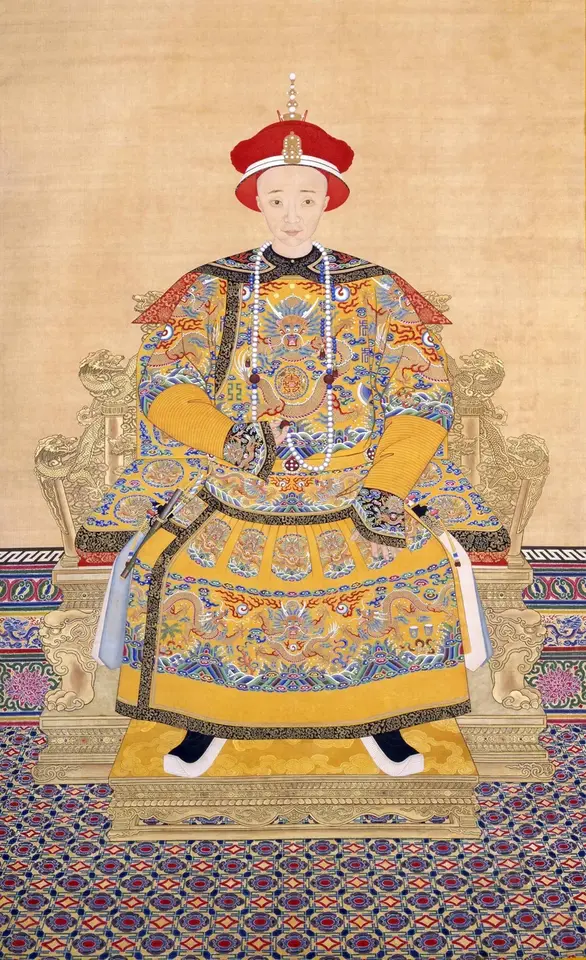
1831 CE–1861 CE
爱新觉罗·奕詝
Aisin Gioro Yizhu (爱新觉罗·奕詝, July 17, 1831 – August 22, 1861), historically known by his era name the Xianfeng Emperor, was the ninth sovereign of the Qing dynasty and the seventh Qing emperor to rule China proper, recognized by historians as the last Qing monarch to exercise real, unfettered imperial autocracy. The fourth son of the Daoguang Emperor and Empress Xiaoquan Cheng, Yizhu was chosen as imperial heir over his…
Aisin Gioro Yizhu (爱新觉罗·奕詝, July 17, 1831 – August 22, 1861), historically known by his era name the Xianfeng Emperor, was the ninth sovereign of the Qing dynasty and the seventh Qing emperor to rule China proper, recognized by historians as the last Qing monarch to exercise real, unfettered imperial autocracy. The fourth son of the Daoguang Emperor and Empress Xiaoquan Cheng, Yizhu was chosen as imperial heir over his intellectually gifted younger brother Prince Gong (Yixin) by deliberately emphasizing filial piety and moral benevolence during dynastic evaluations. Ascending the throne at age nineteen in 1850, Yizhu initially demonstrated ambitious reforming zeal, expelling corrupt councilor Muzhang'a, rehabilitating anti-opium patriots like Lin Zexu, and issuing decrees soliciting candid remonstrance. However, Xianfeng's eleven-year reign witnessed the most violent convergence of domestic revolution and foreign imperialist aggression in modern Chinese history. Within months of his accession, the Taiping Rebellion erupted in Guangxi under Hong Xiuquan, rapidly conquering the southern provinces, capturing Nanjing in 1853 to establish the Heavenly Capital, and dispatching northern expeditions that threatened Beijing. To survive, Xianfeng broke centuries of dynastic taboo by appointing Han scholar-statesmen like Zeng Guofan and Zuo Zongtang to command regional armies and instituting the transit commercial tax (lijin). Concurrently, Britain and France launched the Second Opium War (1856–1860). Following the catastrophic defeat of Qing forces at the Battle of Baliqiao in 1860, Xianfeng abandoned the capital and fled to the Rehe Mountain Resort in Chengde. British and French expeditionary forces subsequently looted and burned the Old Summer Palace, forcing the court to sign the humiliating Convention of Beijing and surrender vast northern territories to Tsarist Russia. Broken in spirit and health, Xianfeng died at Chengde in August 1861 at age thirty-one, bequeathing a divided regency that directly triggered the Xinyou Coup and the rise of Empress Dowager Cixi.
Born on July 17 in the Zhanjingzhai of the Old Summer Palace, fourth son of Daoguang and Lady Niohuru.
Empress Xiaoquan Cheng dies mysteriously at age thirty-three; Yizhu is entrusted to Consort Jing for upbringing.
Displays filial humility during the Nanyuan hunt under tutor Du Shotian's guidance; secretly designated crown prince.
Enthroned on March 9 at age nineteen, adopting the era name Xianfeng; dismisses Muzhang'a and rehabilitates Lin Zexu.
Hong Xiuquan launches the Jintian Uprising in Guangxi, establishing the Taiping Heavenly Kingdom.
Taiping forces capture Nanjing and rename it Tianjing; Xianfeng commissions Zeng Guofan to raise the Xiang Army and authorizes lijin.
Noble Consort Yi gives birth to Zaichun (Emperor Tongzhi); Anglo-French forces initiate hostilities following the Arrow incident.
Anglo-French fleets seize Dagu; court signs Treaty of Tianjin; Yishan signs Treaty of Aigun ceding land north of Amur to Russia.
Sengge Rinchen repulses the Anglo-French fleet at Dagu, sinking multiple gunboats in a rare defensive triumph.
Anglo-French forces defeat Qing armies at Baliqiao; Xianfeng flees Beijing for Chengde; allies burn the Old Summer Palace.
Prince Gong signs the Conventions of Beijing with Britain, France, and Russia, ceding Kowloon and Maritime Manchuria.
Xianfeng appoints eight co-regents and bestows two imperial seals; dies on August 22 at Chengde at age thirty-one.
Yizhu was born on July 17, 1831, in the Zhanjingzhai studio within the Jiuzhou Qingyan palace quarter of the Old Summer Palace. His father was the Daoguang Emperor and his mother was Lady Niohuru (Empress Xiaoquan Cheng), the daughter of a banner officer stationed in Suzhou. Lady Niohuru was renowned for her refined beauty, intelligence, and poetic talent, earning Daoguang's passionate devotion. She was rapidly elevated to Noble Consort and Imperial Noble Consort, eventually being installed as Empress in 1834 following the death of Empress Xiaoshen.
Because Daoguang's three older sons had died in childhood, Yizhu was recognized as the eldest surviving imperial prince. However, tragedy struck in January 1840 when Empress Xiaoquan died abruptly at age thirty-three. Palace rumors attributed her sudden death to court intrigue and maternal conflict with Empress Dowager Xiaohe Rui. The sudden loss of his mother left a lasting emotional scar on the nine-year-old prince, making him sensitive, melancholic, and deeply anxious about security.
Following his mother's demise, Yizhu was placed under the guardianship of Noble Consort Jing (Empress Xiaojing Cheng). Consort Jing was the mother of Prince Yixin (Prince Gong), who was only one year younger than Yizhu. The two princes shared quarters in the Palace School, studying and practicing archery together in close fraternity. However, as they entered adolescence, the competition for the imperial succession inevitably pitted the brothers against each other.
In dynastic evaluations, Prince Yixin displayed superior talent. Yixin was intellectually gifted, eloquent, articulate, and highly skilled in mounted archery and swordsmanship. In contrast, Yizhu suffered from physical limitations: a bout of childhood smallpox had left faint scars on his face, and a horse-riding accident had injured his leg, leaving him with a slight limp. Recognizing his pupil's weaknesses, Yizhu's tutor, Grand Secretary Du Shotian, devised a brilliant psychological strategy tailored to Daoguang's deeply conservative, Neo-Confucian mindset.
Du Shotian instructed Yizhu to emphasize moral virtue and filial benevolence rather than competing in skill. In the spring of 1846, Daoguang took the princes to the Nanyuan hunting park to test their martial abilities. While Yixin shot numerous game animals, Yizhu did not fire a single arrow. When Daoguang questioned him, Yizhu knelt and wept, stating that in spring when beasts nurtured their young, he could not bear to take life, nor did he wish to vie against his brothers in killing. Deeply moved, Daoguang praised Yizhu for possessing the humane heart of a true sage sovereign.
During Daoguang's final illness in 1850, when the emperor questioned his sons about statecraft, Yixin offered elaborate policy proposals, whereas Yizhu wept beside the bed, expressing only devotion to his father's health. Convinced that Yizhu possessed superior filial virtue, Daoguang secretly designated him as crown prince in 1846. On March 9, 1850, following Daoguang's demise, Yizhu ascended the throne at age nineteen, adopting the era name Xianfeng.
Assuming power with youth and determination, Xianfeng sought to arrest dynastic decline. In October 1850, he dismissed the entrenched Grand Councilor Muzhang'a, condemned appeaser Qishan, and posthumously rehabilitated Lin Zexu, dispatching him to quell banditry in southern China. He issued imperial proclamations encouraging outspoken remonstrance from censors, signaling an intention to restore court prestige.
However, the dynastic crisis was far worse than the young emperor anticipated. In January 1851, the Taiping Rebellion erupted in Jintian, Guangxi. Led by Hong Xiuquan and military commander Yang Xiuqing, the Taiping forces swept across Hunan and Hubei with religious fervor and anti-Manchu zeal. Imperial banner garrisons and Green Standard armies disintegrated before them. In March 1853, the Taipings captured Nanjing, slaughtering the Manchu garrison and renaming the city Tianjing. A northern expeditionary force marched within miles of Tianjin, throwing Beijing into terror.
Faced with fiscal bankruptcy and military collapse, Xianfeng took unprecedented measures. He authorized regional Han elites to create provincial armies, appointing Zeng Guofan to organize the Xiang Army. In the autumn of 1853, he approved the introduction of the lijin transit tax on internal commerce, providing crucial provincial funding for anti-rebel operations. Although these policies preserved the dynasty, they irrevocably shifted military and fiscal autonomy to provincial Han governors, permanently decentralizing imperial authority.
While the interior burned, Western powers sought to expand treaty privileges. In October 1856, British authorities utilized the Arrow incident in Guangzhou as a pretext for war, allied with France following the execution of missionary Auguste Chapdelaine. In late 1857, Anglo-French forces bombarded and seized Guangzhou, capturing Viceroy Ye Mingchen.
In May 1858, an allied fleet navigated north and stormed the Dagu forts outside Tianjin. Paralyzed by the threat to Beijing, Xianfeng dispatched negotiators to sign the Treaty of Tianjin, conceding foreign embassies in Beijing, travel rights in the interior, ten new treaty ports, and heavy indemnities. However, Xianfeng considered permanent foreign embassies in Beijing an unacceptable degradation of imperial prestige, ordering diplomats to secretly offer tariff exemptions in exchange for revoking embassy rights.
When Western envoys refused, Xianfeng prepared for armed resistance, appointing Mongol Prince Sengge Rinchen to rebuild the Dagu fortifications. In June 1859, British and French warships attempted to force the river barriers at Dagu. Sengge Rinchen's artillery opened fire, sinking three gunboats, severely damaging several others, and inflicting over four hundred casualties. The victory at Dagu was hailed as China's first modern defensive triumph over Western forces, reinforcing Xianfeng's resolve to resist foreign demands.
The allied powers retaliated decisively. In the summer of 1860, Britain and France dispatched an expeditionary force of over two hundred vessels and twenty thousand seasoned troops under Sir James Hope Grant and General Cousin-Montauban. Bypassing the frontal defenses, allied troops landed at Beitang, outflanked the Dagu forts, and captured Tianjin.
Xianfeng sent Prince Zaiyuan to negotiate at Tongzhou. During talks, British interpreter Harry Parkes behaved belligerently and insisted on presenting diplomatic letters directly to the emperor without the kowtow. In an emotional fury, Xianfeng ordered the arrest of Parkes and his entourage, holding thirty-nine British and French envoys as hostages in the Board of Punishments prison, effectively destroying diplomatic avenues.
On September 21, 1860, Sengge Rinchen's thirty thousand Mongolian cavalry and banner infantry clashed with allied forces at the Battle of Baliqiao outside Tongzhou. The elite cavalry charged bravely across open ground, but were devastated by British Armstrong artillery, naval rockets, and Enfield rifled muskets. The Qing army was annihilated, leaving Beijing completely undefended.
Overcome by panic, Xianfeng abandoned the Forbidden City before dawn on September 22, fleeing through the northern passes with his wives, son, and key ministers under the guise of an imperial hunting tour to Rehe. He left Prince Gong in the capital to manage the disaster, becoming the first Qing emperor to flee his capital in the face of foreign invasion.
On October 6, 1860, French and British troops occupied the northwestern suburbs of Beijing and entered the Old Summer Palace. The magnificent complex, accumulated over a century and a half by five emperors, was pillaged by foreign soldiers. Upon discovering that several British captives had died from torture in prison, British High Commissioner Lord Elgin ordered the total destruction of the palace as retribution. From October 18 to 19, British troops torched the grounds, reducing the palaces to blackened ruins and killing over three hundred palace servants.
Confronted with the destruction of Beijing, Prince Gong signed the Conventions of Beijing on October 24 and 25, 1860. The treaties confirmed the Treaty of Tianjin, ceded the southern tip of Kowloon Peninsula to Britain, opened Tianjin as a treaty port, and increased war indemnities to sixteen million taels. Simultaneously, Russian envoy Nikolai Ignatiev coerced the court into signing the Treaty of Beijing, ceding four hundred thousand square kilometers of territory east of the Ussuri River to Russia.
Learning of the destruction of the Old Summer Palace and the humiliation of the treaties in Rehe, Xianfeng suffered a complete nervous breakdown. He refused to return to Beijing, spending his days in the Yanbo Zhishuang Hall drinking wine, watching theatrical troupes, and avoiding administrative affairs. Suffering from advanced tuberculosis, his health deteriorated rapidly. On August 22, 1861, Xianfeng died at the Mountain Resort at age thirty-one. He was interred in the Dingling Mausoleum at the Eastern Qing Tombs, leaving a legacy defined by national humiliation, civil war, and the institutional breakdown of late imperial China.
Confronted with the severance of the Grand Canal, loss of southern revenue, and crushing military expenses of over three million taels per month during the Taiping crisis, the Xianfeng court faced catastrophic bankruptcy. In 1853, the Board of Revenue treasury held less than two hundred thousand taels of silver. In desperation, Xianfeng authorized a radical restructuring of the traditional monetary system, breaking dynastic precedent by issuing high-denomination cast bronze coins, iron cash, and fiat paper money.
The government minted coins with nominal values of 10, 50, 100, 500, and 1,000 cash, while creating the Board of Revenue Silver Notes and Great Qing Cash Notes backed only by imperial fiat. However, lacking adequate metallic reserves and administrative controls, the currency collapsed into hyperinflation. Merchants shuttered shops, foreign trading houses rejected official notes, and market exchange ground to a halt in northern cities. While the emergency currency provided temporary liquidity to pay garrison troops, it devastated municipal commerce and exposed the structural limits of traditional imperial fiscal policy.
Traditional and modern historians view the Xianfeng Emperor as an earnest but deeply tragic sovereign who lacked the intellectual fortitude, emotional resilience, and geopolitical acumen required to guide China through its greatest modern crisis. The official Draft History of Qing (Qing Shi Gao) concluded: "Emperor Wenzong met with heaven's abandonment and encountered immense hardships. Domestically, fierce rebels ravaged the rivers and valleys; internationally, powerful enemies invaded the frontiers and breached the seas. Though he worked day and night, eager to govern, expelling treacherous sycophants and promoting worthy talents, the confluence of historical fate surpassed human effort. He fled the capital for Rehe and ceded territories to foreign powers. In the end, he passed away at thirty-one, leaving behind profound remorse. Yet his decision to dismantle ethnic boundaries and employ the heroes of Xiang and Huai established the foundation for the late Qing revival."
Historian Xiao Yishan wrote in his General History of the Qing Dynasty: "Xianfeng was not a wicked tyrant, but rather a mediocre ruler of average abilities. His desire for dynastic salvation was genuine, but his perspective was narrow, his capacity inadequate, and his judgment erratic. Confronted with modern Western firepower, he reacted with impulsive bluster, followed by panicked surrender. Fleeing the capital and indulging in debauchery at Rehe, he embodied the inevitable collapse of traditional imperial authority."
Marxist historian Fan Wenlan observed: "Xianfeng was the quintessential ruler of the late feudal period as China descended into semi-colonial and semi-feudal subjugation. Domestically, he ruthlessly suppressed the Taiping peasant revolution through predatory taxation and collusion with foreign powers. Internationally, he displayed cowardice before Britain, France, and Tsarist Russia, ceding vast ancestral territories. His eleven-year reign marked one of the darkest eras of Chinese sovereignty loss and societal suffering."
FIGURES ASSOCIATED WITH THIS DYNASTY