The Three Kingdoms period, in the narrow sense from 220 to 280, was the era in Chinese history when the three regimes of Cao Wei, Shu Han, and Sun Wu stood in tripartite balance. It also marked the beginning of the broader Wei, Jin, and Northern and Southern Dynasties era. In the narrow definition, the period began in 220 when Cao Pi accepted the abdication of the Han emperor, replaced the Han with Cao Wei, and brought the Eastern Han to an end; it concluded in 280 when the Western Jin…
220 CE–280 CECapital · Luoyang / Chengdu / Jianye
ERA OVERVIEW
The Three Kingdoms period, in the narrow sense from 220 to 280, was the era in Chinese history when the three regimes of Cao Wei, Shu Han, and Sun Wu stood in tripartite balance. It also marked the beginning of the broader Wei, Jin, and Northern and Southern Dynasties era. In the narrow definition, the period began in 220 when Cao Pi accepted the abdication of the Han emperor, replaced the Han with Cao Wei, and brought the Eastern Han to an end; it concluded in 280 when the Western Jin conquered Sun Wu and reunified the realm. Broader definitions sometimes begin with the Yellow Turban Rebellion of 184, the coalition campaign against Dong Zhuo around 190, or the Battle of Red Cliffs in 208. The three regimes occupied distinct regions: Cao Wei controlled the north and had its capital at Luoyang; Shu Han controlled the southwest and had its capital at Chengdu; and Sun Wu held Jiangdong together with Jingzhou, Jiaozhou, and other areas, with its capital at Jianye. In 220 Cao Pi replaced the Han and proclaimed himself emperor, founding Cao Wei. Liu Bei proclaimed himself emperor at Chengdu in 221. Sun Quan first accepted the title Prince of Wu from Wei in 222 and proclaimed himself emperor in 229, elevating Wu to imperial status. Wei conquered Shu Han in 263; Sima Yan replaced Wei and established Jin in 265; and the Western Jin conquered Wu in 280, ending the tripartite division and restoring political unity.
Time span220 CE–280 CE
CapitalLuoyang / Chengdu / Jianye
ERA TIMELINE
Cao Pi replaced the Han and establisheOpen
Cao Pi replaced the Han and established Wei, marking the beginning of the period.
Liu Bei proclaimed himself emperor at Open
Liu Bei proclaimed himself emperor at Chengdu and established Shu Han.
(third year of Huangchu under Wei;Open
222 (third year of Huangchu under Wei; first year of Huangwu under Wu): The Battle of Yiling altered the balance of power between Wu and Shu.
Sun Quan proclaimed himself emperor, fOpen
Sun Quan proclaimed himself emperor, formally completing the Three Kingdoms division.
Zhuge Liang's Northern Expeditions endOpen
Zhuge Liang's Northern Expeditions ended, and Shu Han shifted toward a more defensive posture.
After the Incident at the Gaoping TombOpen
After the Incident at the Gaoping Tombs, the Sima family gained control of Cao Wei.
Cao Wei conquered Shu Han.Open
Cao Wei conquered Shu Han.
Sima Yan replaced Wei and established Open
Sima Yan replaced Wei and established Jin.
The Western Jin conquered Sun Wu, endiOpen
The Western Jin conquered Sun Wu, ending the Three Kingdoms period.
FULL ENTRY
Historical Development
The political configuration of the Three Kingdoms emerged from the turmoil of the late Eastern Han. After the Yellow Turban Rebellion of 184, the court lost effective control, provinces and commanderies became increasingly autonomous, and rival warlords rose throughout the empire. Around 190, Dong Zhuo's domination of the court and the relocation of the capital destroyed much of the central government's remaining authority, and regional military leaders fought among themselves. Cao Cao defeated Yuan Shao at the Battle of Guandu in 200 and gradually unified the north. The Sun family established control in Jiangdong, while Liu Bei moved among Jingzhou and Yizhou. At the Battle of Red Cliffs in 208, the allied forces of Sun and Liu defeated Cao Cao, laying the foundations for a tripartite political order. Cao Cao died in 220, and his son Cao Pi accepted the abdication of Emperor Xian of Han, proclaimed himself emperor, and named his state Wei. The Eastern Han thereby ended and the establishment of the Three Kingdoms regimes began with the founding of Cao Wei. Liu Bei in 221 and Sun Quan, who proclaimed himself emperor in 229, subsequently assumed sovereign status, completing the three-way division.
After Wei, Shu, and Wu established their respective regimes, each worked to consolidate internal administration. Cao Wei benefited from control of the Central Plains, with the largest population and fiscal resources, and used agricultural colonies to secure military supplies. Shu Han controlled the fertile Sichuan Basin, where Zhuge Liang directed government, maintained the alliance with Wu, and stabilized the south. Sun Wu relied on Jiangdong's waterways and controlled Jingzhou, Yangzhou, Jiaozhou, and other regions. The relatively balanced tripartite order lasted for several decades. Warfare was frequent, but territorial boundaries remained broadly stable, forming the mature phase of the Three Kingdoms division. During this period Zhuge Liang repeatedly launched northern expeditions between the sixth and twelfth years of the Jianxing era: two campaigns in 228, followed by campaigns in 229, 231, and 234, for a total of five. Shu and Wu remained allied against Cao Wei, producing a prolonged military stalemate.
The turning point in the tripartite balance came from internal political change and military exhaustion in Wei and Shu. In Shu Han, after Zhuge Liang died in 234, Jiang Wei continued the northern campaigns. Repeated warfare gradually weakened state resources, while the later political influence of the eunuch Huang Hao further worsened government. In Cao Wei, after Emperor Ming, Cao Rui, a succession of young rulers came to the throne. During the Incident at the Gaoping Tombs in 249, Sima Yi eliminated Cao Shuang, and the Sima family gradually took control of the court, leaving the Cao imperial house without effective power. The earlier balance among the three states thus gave way to internal decline and accelerating political consolidation.
After the Sima family monopolized power in Wei, Shu Han declined further under the combined effects of sustained warfare and internal weakness. In 263, the fourth year of the Jingyuan era, Sima Zhao sent forces to conquer Shu. Zhong Hui, Deng Ai, and other commanders took Chengdu, and Liu Chan surrendered, ending Shu Han. In 265 Sima Yan replaced Wei and established Jin, bringing Cao Wei to an end as well. Of the three original regimes, only Sun Wu remained.
In 280, the sixth year of Xianning under Jin, the Western Jin launched a large-scale campaign across the Yangtze and conquered Wu. Sun Hao surrendered, and Sun Wu came to an end. Cao Wei (220–265), Shu Han (221–263, ending in the fourth year of Jingyuan), and Sun Wu (Sun Quan held the princely title from 222 and imperial status from 229 until the regime's fall in 280) had thus all ended. The Three Kingdoms period concluded, and the realm was again unified under the Western Jin.
Politics and Institutions
The institutions of the Three Kingdoms largely inherited Han models, though each regime modified them. Cao Wei's central government used the Imperial Secretariat to coordinate administration, while the Central Secretariat and the Menxia apparatus helped divide the authority traditionally associated with the Grand Councilor. Local government followed the three-tier system of province, commandery, and county. Agricultural colonies and the rent-and-tax system were also used to stabilize public finance. In Shu Han, Grand Councilor Zhuge Liang directed both civil and military government, established administrative discipline, and revised the Shu legal code. After his era, the office of Grand Councilor gradually disappeared and major state affairs were divided among offices such as General-in-Chief and Director of the Imperial Secretariat. Sun Wu relied heavily on prominent Jiangdong families and members of the ruling clan, while northern émigré scholars living south of the Yangtze and local elite families both participated in politics. All three states valued agricultural colonies and policies to encourage farming, while the use of military organization and kinship to sustain political rule reflected the conditions of a divided age.
Military and Diplomacy
Warfare was frequent throughout the Three Kingdoms era. The Battle of Guandu in 200 established Cao Cao's foundation in the north; the Battle of Red Cliffs in 208 created the basis for the tripartite order; and the Battle of Yiling in 222 settled the struggle over Jingzhou. Zhuge Liang's Northern Expeditions and Jiang Wei's repeated campaigns formed the principal Shu-Wei front. The Conquest of Shu by Wei in 263 and Jin's conquest of Wu in 280 were wars of political unification. Cao Wei also had to defend its northern frontier against Xianbei, Wuhuan, and other pastoral groups, requiring sustained frontier defense and administration. Diplomatically, Sun Wu and Shu Han rebuilt their alliance after the Battle of Yiling and jointly opposed Cao Wei. Cao Wei combined military defense and conciliation in dealing with different fronts. Relations among the three states alternated between war and peace, but the long-term strategic pattern remained the Shu-Wu alliance against the superior power of Cao Wei.
Economy and Commerce
All three states treated the restoration of production as a priority. Cao Wei implemented large-scale agricultural colonies, both civilian and military, and established the rent-and-tax system, helping restore the economy of the Central Plains. Shu Han relied on the Chengdu Plain, promoted agriculture, managed iron production, and developed silk weaving; Shu brocade circulated widely. Sun Wu used the resources of Jiangdong, encouraged farming, developed irrigation, and emphasized maritime transport and commerce. Although trade routes and monetary circulation had been damaged by warfare, they gradually recovered and developed, laying an economic bridge between the Han and Jin periods.
Culture and Society
Although the Three Kingdoms period was relatively short, it was culturally influential. During the Jian'an era, Cao Cao, his sons, and the Seven Masters of Jian'an created a major literary style later known as the Jian'an Literary Style. During the Zhengshi era of Cao Wei, xuanxue philosophical thought developed, and figures such as He Yan and Wang Bi debated questions of names, principles, and metaphysics. The style of "pure conversation" associated with the Seven Sages of the Bamboo Grove had a lasting influence. In historiography, Chen Shou compiled the *Records of the Three Kingdoms*, later annotated by Pei Songzhi; the work became one of the "First Four Histories." Socially, warfare sharply reduced the population and produced large numbers of displaced people. Dependency relations involving military retainers and tenant households expanded, great-family estates developed, and the early form of the aristocratic clan order began to take shape.
Key Figures
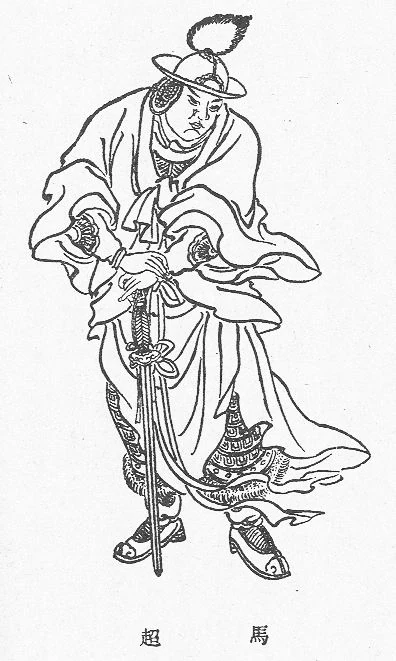
Cao Cao—founder of Cao Wei's power base and the leader who unified most of the north after the Battle of Guandu; Cao Pi—founding ruler of Wei, who replaced the Han and proclaimed himself emperor in 220; Cao Rui (Emperor Ming)—a comparatively capable ruler of mid-period Wei; Cao Huan—last emperor of Wei, replaced by Sima Yan in 265; Sima Yi, Sima Zhao, and Sima Yan—three generations of the Sima family who took control of late Wei and eventually replaced it with Jin; Liu Bei—founding ruler of Shu Han; Liu Chan—Later Ruler of Shu Han, who surrendered in 263, the fourth year of Jingyuan; Zhuge Liang—Grand Councilor of Shu Han and leader of Zhuge Liang's Northern Expeditions; Jiang Wei—principal commander of the later Shu Han northern campaigns; Guan Yu, Zhang Fei, Zhao Yun, Ma Chao, Huang Zhong, and Wei Yan—prominent Shu Han generals, although Ma Chao and Huang Zhong died not long after the regime was established; Sun Quan—founder of Sun Wu, who proclaimed himself emperor in 229; Sun Hao—last emperor of Wu, who surrendered in 280; Zhou Yu and Lu Xun—major Wu commanders; Lu Su and Lv Meng—important Wu strategists and ministers.
Contemporary views: Historians close to the period, such as Chen Shou, evaluated the major figures of the Three Kingdoms individually. Chen Shou characterized Cao Cao as "an extraordinary man and a transcendent hero," while describing Zhuge Liang as strong in the management of armies but comparatively weaker in ingenious strategy. The intellectual climate of the age often celebrated exceptional talent and political or military skill.
Later views: Chen Shou's *Records of the Three Kingdoms*, together with Pei Songzhi's annotations, became a foundational text for the study of the period and was counted among the "First Four Histories." Later historians have viewed the Three Kingdoms as a crucial transitional period between the Han and Jin, during which the foundations of aristocratic clan politics and later north-south division began to emerge from prolonged disorder. The stories of the Three Kingdoms were later transformed by *Romance of the Three Kingdoms*, whose heroes, themes of loyalty, and strategic narratives became deeply rooted in popular culture across East Asia. Zhuge Liang's diligence and loyalty, Guan Yu's righteousness, and Cao Cao's ambition and statecraft remain widely remembered. In politics, warfare, institutions—including agricultural colonies and the rent-and-tax system—and literature and thought, including the Jian'an Literary Style and xuanxue, the Three Kingdoms left a substantial legacy for later Chinese history.