Birth in Yiyang
Born into poverty in Jiyang, Yiyang; relocated as a refugee to Runan, herding cattle while studying military texts.
197 CE–264 CE
邓艾
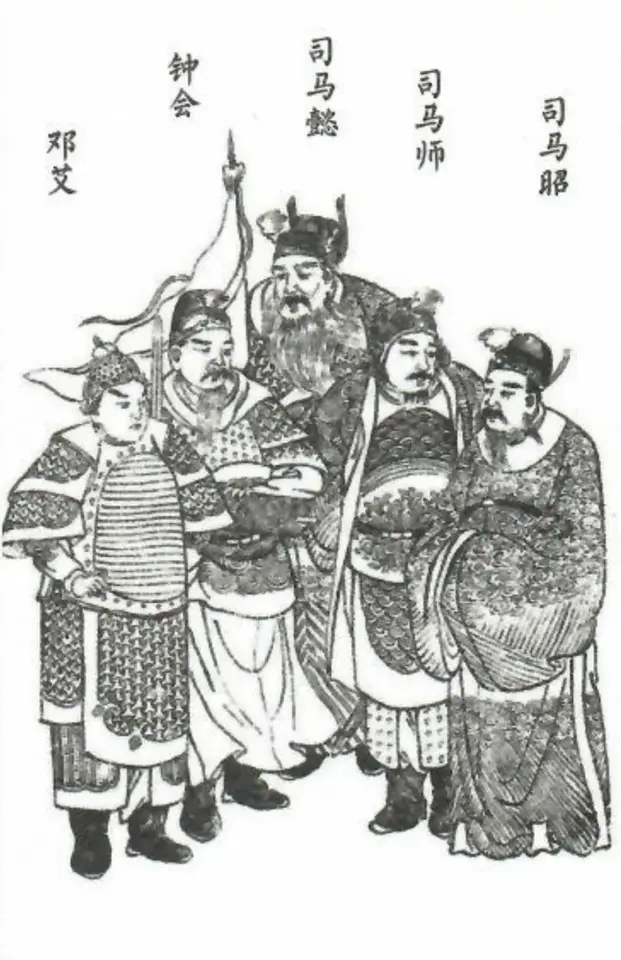
Deng Ai (c. 197–264 CE), courtesy name Shizai, was a native of Jiyang in Yiyang (modern Xinye, Henan). He was a brilliant military strategist, grand commander, and agricultural reformer of the Cao Wei state during the Three Kingdoms period, celebrated as the conqueror who orchestrated the collapse of Shu Han. He attained the supreme offices of Grand Commandant, General Who Conquers the West, and Marquis of Deng with a fief of…
Deng Ai (c. 197–264 CE), courtesy name Shizai, was a native of Jiyang in Yiyang (modern Xinye, Henan). He was a brilliant military strategist, grand commander, and agricultural reformer of the Cao Wei state during the Three Kingdoms period, celebrated as the conqueror who orchestrated the collapse of Shu Han. He attained the supreme offices of Grand Commandant, General Who Conquers the West, and Marquis of Deng with a fief of 6,600 households. Born into poverty and afflicted by a severe speech impediment, Deng Ai labored as a minor agricultural clerk while secretly mastering classical strategy. Recognized by Grand Commandant Sima Yi, Deng Ai composed the seminal Treatise on the Ji River, designing the vast military farming and irrigation networks across the Huai River basin that permanently solved Cao Wei's eastern supply bottlenecks. Transferring to the western frontier, Deng Ai directed northern defenses against Shu Han, anticipating Jiang Wei's offensives and inflicting a crushing defeat upon him at the Battle of Duangu in 256 CE. In 263 CE, during the tripartite invasion of Shu Han, while Zhong Hui's main army of one hundred thousand was deadlocked at the mountain defiles of Jiange Pass, Deng Ai executed an unprecedented gamble. Leading an elite detachment through seven hundred li of trackless alpine wilderness via the Yinping pass, Deng Ai wrapped himself in felt blankets to roll down sheer cliffs, taking the key fortress of Jiangyou by complete surprise. After storming Mianzhu and slaying Zhuge Zhan, he marched upon Chengdu, forcing the surrender of Emperor Liu Shan and terminating the forty-three-year history of Shu Han. Tragically, his independent administrative actions aroused the jealousy of Zhong Hui and Wei Guan, who framed him for treason. Deng Ai and his son Deng Zhong were assassinated in February 264 CE, though later posthumously rehabilitated by Emperor Wu of Jin. His crossing of Yinping remains immortalized as one of the supreme feats of mountain warfare in world military history.
Born into poverty in Jiyang, Yiyang; relocated as a refugee to Runan, herding cattle while studying military texts.
Ridiculed for his stutter while serving as a humble rice-paddy clerk, remaining resolute in his martial ambitions.
Elevated by Sima Yi; authored the Treatise on the Ji River, establishing extensive military farming in the Huai basin.
Anticipated Jiang Wei's maneuver toward Baishui, establishing fortified stockades to secure Longyou.
Promoted to General Who Pacifies the West and Inspector of Yongzhou following the defeat at the Tao River.
Outmaneuvered Jiang Wei at Duangu, routing the Shu vanguard and receiving the title Marquis of Deng.
Inflicted another defeat on Jiang Wei at Houhe, compelling the Shu commander to retreat into Tazhong.
Scaled the cliffs of Motian Ridge wrapped in felt blankets, captured Jiangyou and Mianzhu, and forced the surrender of Shu.
Falsely accused of treason by Zhong Hui; murdered at Mianzhu by Tian Xu under orders from Wei Guan (posthumously rehabilitated by Emperor Wu of Jin in 273 CE).
Deng Ai was born into an impoverished peasant family in Jiyang Commandery in modern southern Henan. His father died during his early childhood. Following Cao Cao's pacification of Jing Province, civilian populations were forcibly relocated northward, and Deng Ai migrated with his mother to Runan. As a youth, he earned his living herding cattle for the commandery. When staying in Chenliu at twelve years of age, he read the stele inscription for the legendary magistrate Chen Shi, which declared: "His writings serve as a model for the world; his actions serve as a standard for gentlemen." Inspired by these words, he resolved to educate himself. However, Deng Ai suffered from a severe stutter that made vocal communication arduous. Mocked by village elders, the local magistracy assigned him to the humble post of Guard of the Rice Paddies, measuring grain and watching straw storage.
Despite his lowly station, Deng Ai spent his days contemplating grand strategy. Whenever he traversed towering peaks or marshy valleys, he stood on heights, pointing his fingers across the horizon and drafting military layouts: where garrisons should be entrenched, where grain could be stored, and where ambushes could be prepared. Passersby laughed at his eccentricities, but Deng Ai remained entirely unperturbed.
During the Zhengshi era, Grand Commandant Sima Yi toured the Huai River basin to inspect agricultural conditions and summoned local agrarian overseers. Though speaking with difficulty, Deng Ai presented strategic assessments of such profound geographic clarity that Sima Yi was stunned. Sima Yi immediately elevated him to Attendant in the Grand Commandant's Office, promoting him soon after to Gentleman of the Masters of Writing.
Having inspected the southeastern borders, Deng Ai submitted his celebrated Treatise on the Ji River (Ji Shui Lun). He noted that while agricultural colonies had existed since Cao Cao's era, grain production remained fragmented, and river transport was severely obstructed, with armies losing half their provisions during transit. Deng Ai designed a comprehensive hydrological program: excavating over a hundred li of deep canal networks east of Chenliu and Xiangcheng, linking the Huai River with the Ying River, and establishing massive state-run farming colonies along both banks. He wrote: "When fields are fertile and water transport is unimpeded, armies can advance smoothly downriver by boat, while if enemies arrive, we can lock our fortifications with abundant stores. With plentiful grain and rested soldiers, the realm can be unified!" Sima Yi embraced the design. Upon completion, over five million bushels of grain were stored along the Huai River, creating the indispensable logistical foundation that enabled the conquest of southern China.
In 249 CE, Deng Ai was transferred to the western frontier, serving as army major under General Who Pacifies the West Guo Huai. When Shu Han general Jiang Wei invaded Longyou and built fortified citadels at Mount Qu, Guo Huai and Deng Ai cut off their water supplies, forcing the Shu garrison to surrender. When Jiang Wei advanced along the Tao River to rescue them, Guo Huai prepared to withdraw. Deng Ai intervened, warning: "Jiang Wei intends to circle behind us to strike Baishui! If Baishui is lost, our southern supply line is severed and Longyou is endangered!" Deng Ai led an elite force by forced night march, fortifying the northern bank of Baishui hours before Jiang Wei arrived. Finding the pass occupied, Jiang Wei withdrew in frustration.
In 255 CE, following Jiang Wei's victory over Wang Jing at the Tao River, the imperial court appointed Deng Ai General Who Pacifies the West and Inspector of Yongzhou. Working with General Who Conquers the West Chen Tai, Deng Ai relieved the siege of Didao. Afterward, when Wei officers assumed Jiang Wei would not return, Deng Ai warned of five strategic vulnerabilities: "Following our defeat at the Tao River, our magazines are depleted while the enemy rides a wave of momentum. The enemy possesses five advantages: martial morale, refined weapons, river transport, ripe grain, and tribal alliances. Jiang Wei will strike again without delay!" Deng Ai immediately fortified Mount Qi and repositioned his forces at Baishui.
In the autumn of 256 CE, Jiang Wei launched another offensive, advancing toward Dongting and Mount Wucheng. Deng Ai outraced him to secure the high ground. Outmaneuvered, Jiang Wei attempted a nocturnal crossing of the Tao River toward Duangu. Deng Ai had anticipated the exact crossing point, concealing legions of heavy crossbowmen along the defile. As the Shu vanguard crossed, Deng Ai's ambuscades sprang their trap, cutting the column in two and inflicting thousands of casualties. For this victory, the court created Deng Ai Marquis of Deng with a fief of 6,600 households. In subsequent battles at Mount Houhe, Deng Ai repeatedly repelled Jiang Wei's incursions, breaking the momentum of Shu Han's northern expeditions.
In 263 CE, Wei regent Sima Zhao launched the final conquest of Shu Han with eighteen legions. Zhong Hui commanded one hundred thousand troops to capture Hanzhong, while Deng Ai pinned down Jiang Wei at Tazhong with thirty thousand men. Slipping past the encirclement, Jiang Wei fell back to the natural fortress of Jiange Pass. Confronted by vertical limestone defiles, Zhong Hui's massive army was halted for months, suffering severe supply shortages and contemplating an ignominious retreat.
At this critical juncture, Deng Ai conceived a stratagem of breathtaking audacity. He submitted a memorial proposing an end-run around the front lines: "The enemy's main army is locked at Jiange. If an elite strike force advances through the trackless wilderness of Yinping, striking directly at Jiangyou, we will pierce the enemy's heartland. The enemy must either abandon Jiange to save their capital, allowing Zhong Hui to advance, or lose their capital entirely!"
In October 263 CE, Deng Ai selected ten thousand elite infantry and cavalry, departing from Didao into the vertical wilderness. Between Yinping and Jiangyou lay seven hundred li of uninhabited, alpine peaks and primeval forests without roads or trails. Deng Ai personally strapped picks to his waist and ropes to his shoulders, hacking paths along cliffs. When horses and pack mules plummeted into deep ravines, the men lived on wild roots and bark. Upon reaching the precipice of Motian Ridge (Mount Mogao), the army confronted a sheer vertical rock face hundreds of feet high, with no path forward and supplies exhausted.
The sixty-six-year-old commander ordered his troops to bind their wool felt blankets around their bodies. Curling into a ball, Deng Ai threw himself off the cliff, tumbling down the vertical chasm! Astonished by their commander's fearless daring, officers and men followed, rappelling with tree ropes or rolling down the forested precipice. Emerging like ghosts from the mountain mists, Deng Ai's force appeared before Jiangyou. Believing that a celestial army had descended from heaven, garrison commander Ma Miao surrendered the fortress without firing an arrow.
Securing food and fresh horses, Deng Ai pressed forward to Fucheng. Zhuge Liang's son, Zhuge Zhan, rallied the last imperial guards of Shu Han at Mianzhu. Deng Ai dispatched his son Deng Zhong and officer Shi Zuan to conduct a double envelopment, but they were initially thrown back. Deng Ai drew his sword, declaring: "Our survival and the fate of the state depend on this single day; there can be no retreat!" Deng Zhong and Shi Zuan mounted a furious renewed assault while Deng Ai drove his central infantry through the enemy lines, slaying Zhuge Zhan, his son Zhuge Shang, and secretary Zhang Zun. The imperial army was annihilated. Deng Ai marched upon the suburbs of Chengdu. Deprived of armed defense, Emperor Liu Shan bound his hands and surrendered, extinguishing the Shu Han dynasty.
Following his triumph, Deng Ai sealed the state treasuries, strictly forbade looting, and distributed relief to the civilian populace. However, Deng Ai was a soldier devoid of political subtlety. Invoking emergency imperial authority, he unilaterally appointed Liu Shan as General of Chariots and Cavalry, distributed titles to hundreds of surrendered ministers, and forwarded a plan to build warships to conquer Eastern Wu without waiting for court approval, declaring that "in antiquity, ministers on distant campaigns had the right to act independently to preserve the state."
His actions aroused Sima Zhao's deepest suspicions. Zhong Hui, who had entered Chengdu with superior forces and was intensely jealous of Deng Ai's solitary glory, conspired with army supervisor Wei Guan. They intercepted Deng Ai's letters, forged treasonous correspondence, and submitted reports alleging that Deng Ai intended to establish an independent kingdom in the southwest.
In January 264 CE, Sima Zhao ordered Deng Ai and his son Deng Zhong arrested and transported to Luoyang in prisoner cages. As he was led away in irons, Deng Ai gazed toward heaven and wept: "Bai Qi was executed at Duyou, and Han Xin was murdered in the bell tower; from ancient times to this day, faithful ministers have met this bitter end! Am I to be the latest?"
Shortly thereafter, Zhong Hui rebelled in Chengdu and was killed in a military mutiny. Deng Ai's former subordinates rushed to overtake the prisoner convoy, freeing Deng Ai and his son to escort them back to Sichuan. Panicking that Deng Ai would return to clear his name and expose his complicity in the conspiracy, Wei Guan ordered officer Tian Xu, who harbored a personal grievance against Deng Ai, to hunt down the convoy. Tian Xu overtook the party west of Mianzhu, executing Deng Ai and his son Deng Zhong. Deng Ai's remaining sons in Luoyang were executed, and his wife and grandsons were exiled to the western borderlands.
In 273 CE, Emperor Wu of Jin (Sima Yan) issued an imperial edict formally rehabilitating Deng Ai, declaring: "Deng Ai was loyal in strategy and possessed merit that towered above his age. Though he committed minor indiscretions in exercising independent command, he harbored no rebellious mind." His surviving grandson Deng Lang was appointed to the imperial court, ensuring that the memory of the heroic climber of Yinping was preserved for eternity.
In 240 CE, Deng Ai designed the vast agricultural irrigation and canal networks across the Huai River basin, resolving military supply deficits and laying the economic foundation for the unification of China.
In 256 CE, Deng Ai anticipated Jiang Wei's offensive movements, organizing a devastating counter-ambush at Duangu that shattered the Shu Han expeditionary army and secured the western borders of Cao Wei.
In 263 CE, Deng Ai led ten thousand troops across seven hundred li of vertical alpine wilderness, wrapping himself in felt blankets to roll down the cliffs of Motian Ridge, achieving one of the greatest tactical surprise maneuvers in military history.
Through the victory at Mianzhu and the bloodless capture of Chengdu, Deng Ai forced the unconditional surrender of Emperor Liu Shan, terminating forty-three years of regional division and delivering the first kingdom of the Three Kingdoms era into the hands of the central dynasty.
FIGURES ASSOCIATED WITH THIS DYNASTY