Birth | His mother, Beauty Wang, was poisoned by Empress He; he was raised by Empress Dowager Dong and became known as the “Marquis of Dong.”
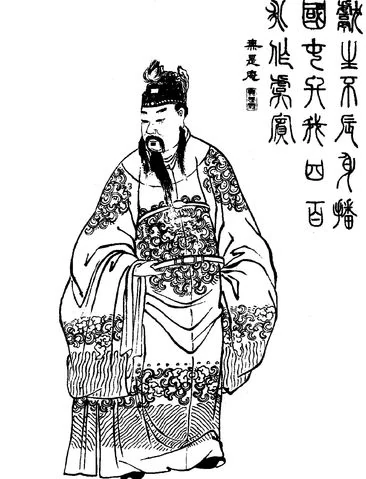
189 CE–220 CE
Emperor
Liu Xie
刘协
Liu Xie (April 2, 181–April 21, 234), courtesy name Bohe, was the last emperor of the Eastern Han. He was the second son of Emperor Ling Liu Hong, the younger half-brother of Emperor Shao Liu Bian, and the son of Empress Linghuai Wang Rong. In 189, the sixth year of the Zhongping era, Dong Zhuo deposed Liu Bian and placed the nine-year-old Liu Xie on the throne. Liu Xie was thereafter controlled in turn by powerful figures…
189 CE–220 CEEastern Han
PROFILE
Liu Xie (April 2, 181–April 21, 234), courtesy name Bohe, was the last emperor of the Eastern Han. He was the second son of Emperor Ling Liu Hong, the younger half-brother of Emperor Shao Liu Bian, and the son of Empress Linghuai Wang Rong. In 189, the sixth year of the Zhongping era, Dong Zhuo deposed Liu Bian and placed the nine-year-old Liu Xie on the throne. Liu Xie was thereafter controlled in turn by powerful figures including Dong Zhuo, Li Jue, Guo Si, and Cao Cao. In 220, the twenty-fifth year of Jian'an, he abdicated in favor of Cao Pi, formally bringing the Eastern Han to an end. Cao Wei granted him the title Duke of Shanyang. He died in 234, the second year of the Qinglong era, and received the posthumous title Emperor Xiaoxian.
- Alternative names
- Emperor Xian of Han Liu Xie; second son of Emperor Ling
- Courtesy name
- Bohe
- Style/Designation
- Known as the “Marquis of Dong”
- Period
- Eastern Han
- Dynasty/Regime
- Eastern Han
- Identity
- Emperor
- Ethnicity
- Not recorded in historical sources
- Ancestral origin
- Not recorded in historical sources
- Date of birth
- April 2, 181
- Place of birth
- Not recorded in historical sources
- Date of death
- April 21, 234
- Reign
- 189–220
- Predecessor
- Emperor Shao of Han (Liu Bian)
- Successor
- Not applicable (Han fell to Wei)
- Posthumous title
- Emperor Xiaoxian
- Main achievements
- Last emperor of the Eastern Han; installed by Dong Zhuo, subsequently controlled by the Cao family, and abdicated in favor of Cao Pi, formally ending the Eastern Han.
LIFE TIMELINE
Age 9 | Emperor Ling died; Liu Xie's elder brother Liu Bian became emperor. Liu Xie was first made Prince of Bohai and later Prince of Chenliu.
Age 9 | During the eunuch upheaval, Liu Xie and the young emperor were abducted. At Mount Beimang he encountered Dong Zhuo and answered his questions fluently.
Age 9 | Dong Zhuo deposed Emperor Shao and installed Liu Xie as emperor, changing the era name to Yonghan.
Age 10 | Dong Zhuo had Liu Bian poisoned and moved the capital to Chang'an.
Age 12 | Wang Yun and Lü Bu killed Dong Zhuo, but Li Jue and Guo Si counterattacked Chang'an and again seized control of the court.
Age 15 | Fled Chang'an and attempted to return east; along the way he was repeatedly seized and constrained by warlords including Li Jue and Guo Si.
Age 16 | Reached Luoyang. Cao Cao received the emperor and moved the court to Xu County, beginning his policy of controlling the emperor in order to command the regional lords.
Age 20 | Dong Cheng and others failed in a plot against Cao Cao; Consort Dong was killed.
Age 34 | Empress Fu was deposed and killed; the Fu clan was exterminated.
Age 35 | Cao Cao's daughter Cao Jie was made empress.
Age 40 | Abdicated in favor of Cao Pi; the Eastern Han ended and Liu Xie was made Duke of Shanyang.
Age 54 | Died, received the posthumous title Emperor Xiaoxian, and was buried at Chan Mausoleum.
BIOGRAPHY
Biography
Family Background and Early Years
Liu Xie was born in 181, the fourth year of the Guanghe era. His father was Emperor Ling Liu Hong and his mother was Beauty Wang, Wang Rong, later posthumously honored as Empress Linghuai. Wang Rong was a granddaughter of Wang Bao, formerly General of the Household of the Five Offices, and a daughter of Wang Zhang. She was described as full-figured and beautiful, intelligent and capable, literate and skilled in accounting. Chosen from a respectable family for service in the imperial women's quarters, she became an imperial consort.
At the time, Empress He dominated Emperor Ling's inner palace. She came from a butcher's family and was intensely jealous, inspiring fear among the other palace women. When Wang Rong became pregnant with Liu Xie, she feared disaster and secretly took abortifacients, but the pregnancy continued. She repeatedly dreamed that she was carrying the sun and interpreted this as an auspicious sign, so she abandoned the attempt. On the guisi day of the third month of 181, Wang Rong gave birth to Liu Xie. Empress He soon had her poisoned. The Continuation of the Book of Han states that Wang Rong died after drinking rice gruel when thirsty on the eighth day of the third month, while the Spring and Autumn Annals of Emperor Xian of Han says that Empress He killed her out of jealousy more than ten days after Liu Xie's birth. Emperor Ling was furious and considered deposing Empress He, but relented after the eunuchs collectively pleaded on her behalf.
Liu Xie was born prematurely and placed in the palace women's quarters, where Zhu Zhi, an official of the prison workshop, oversaw his care and selected a wet nurse. More than a year later, Emperor Ling's mother, Empress Dowager Dong, took personal charge of his upbringing. Emperor Ling believed the child strongly resembled himself and named him Xie. Because the Dong clan thereafter functioned as his maternal household, Liu Xie became known as the “Marquis of Dong.” When he was three, Emperor Ling, grieving that his young son had lost his mother and still mourning Wang Rong, composed the Rhapsody on Remembering Virtue and the Eulogy on Exemplary Conduct. By age eight, Liu Xie was already able to read the classics and other texts.
Accession in an Age of Disorder
Emperor Ling lost several sons and was left with only Liu Bian, born to Empress He, and Liu Xie, born to Wang Rong. Liu Bian, who was older, had been raised from childhood in the household of a Daoist surnamed Shi. Officials petitioned Emperor Ling to name a crown prince. The emperor considered Liu Bian frivolous and lacking imperial dignity, but because Empress He was favored and her brother He Jin held great power as General-in-Chief, he remained hesitant. Empress Dowager Dong repeatedly urged him to make Liu Xie crown prince, which caused Empress He to resent her.
In 189, the sixth year of Zhongping, Emperor Ling became gravely ill and entrusted Liu Xie by testamentary order to the eunuch Jian Shuo, Colonel of the Upper Army. Emperor Ling died in the fourth month. Jian Shuo attempted to install Liu Xie first and kill General-in-Chief He Jin, but Pan Yin, a subordinate officer, exposed the plan and it failed. Liu Bian became emperor, known as Emperor Shao of Han. Empress He became empress dowager and handled court affairs, while He Jin and Grand Tutor Yuan Wei jointly assisted the government. Liu Xie was made Prince of Bohai in the fourth month and transferred to the title Prince of Chenliu in the seventh month.
After Emperor Ling's death, conflict between the eunuchs and court officials intensified. In the eighth month of 189, during the first year of the Guangxi era, He Jin's attempt to eliminate the eunuchs failed and Zhang Rang, Duan Gui, and others killed him. Yuan Shao, Yuan Shu, and He Jin's former subordinates counterattacked with troops and killed more than two thousand people. Zhang Rang and Duan Gui abducted Liu Xie and Emperor Shao and fled the palace. When Minister Lu Zhi and Min Gong, an official of Henan, arrived, Zhang Rang and Duan Gui threw themselves into the Yellow River. Min Gong supported Liu Bian and Liu Xie as they traveled south, while high officials came to receive them below Mount Beimang. On the return journey they met Dong Zhuo and his infantry and cavalry. Emperor Shao was unable to explain the upheaval coherently, but when Dong Zhuo questioned Liu Xie, Liu Xie recounted the origins and course of the crisis clearly and without omission. Dong Zhuo judged him more capable than Liu Bian and, also imagining a kinship connection with Empress Dowager Dong, began to consider replacing the emperor.
Years as a Puppet Emperor
In the ninth month of 189, Dong Zhuo, then Minister of Works, summoned the officials to discuss replacing Liu Bian with Liu Xie, Prince of Chenliu. Intimidated by his military power, no one dared openly oppose him. On the first day of the ninth month, Dong Zhuo announced Liu Bian's deposition and installed Liu Xie as emperor, known as Emperor Xian, changing the era name to Yonghan. Liu Xie was nine years old and began a long period as a puppet ruler. Dong Zhuo made himself Chancellor of State and completely controlled the central government. In the first month of 190, governors and administrators east of the passes raised armies in the name of attacking Dong Zhuo and selected Yuan Shao, Administrator of Bohai, as their alliance leader. Dong Zhuo then ordered Li Ru, an official serving the Prince of Hongnong, to poison Liu Bian. When Liu Xie learned that his brother had died from poison, he mourned him at court. In the second month, Dong Zhuo ordered the capital moved to Chang'an and burned Luoyang.
In 192, the third year of Chuping, Minister over the Masses Wang Yun and Lü Bu assassinated Dong Zhuo. Shortly afterward, Dong Zhuo's former commanders Li Jue and Guo Si counterattacked Chang'an, killed Wang Yun and many other officials, and again took control of the court. In 195, the second year of Xingping, Li Jue and Guo Si fell into open warfare and the population suffered severely. Liu Xie and a group of officials used the chaos to escape Chang'an, but on the journey east he was repeatedly fought over and constrained by Li Jue, Guo Si, Zhang Ji, Yang Feng, and other warlords.
Return East and Cao Cao's Domination
In 196, the first year of Jian'an, Liu Xie and the remaining court officials reached Hedong Commandery and made peace with the pursuing forces of Li Jue and Guo Si. Anyi became a temporary capital and the era name was changed to Jian'an. The court then moved east to the old capital, Luoyang. Generals Dong Cheng, Han Xian, Yang Feng, and Zhang Yang jointly guarded the emperor there. Luoyang, however, had been devastated repeatedly since Dong Zhuo's occupation and lay largely in ruins. Within the small court, Dong Cheng and Han Xian struggled for power. Dong Cheng therefore decided to bring the powerful regional commander Cao Cao into the situation. After entering Luoyang, Cao Cao quickly expelled Han Xian. Citing food shortages, he persuaded Emperor Xian and Empress Fu to move to Xu County, which lay under his control, and began implementing a strategy of upholding the emperor while commanding disobedient lords.
After taking control of the Han court, Cao Cao appointed himself Colonel Director of Retainers and used rewards and punishments to divide and neutralize the remaining Han loyalists. Figures on whom the emperor might have relied, including Zhang Yang, Yang Biao, Dong Cheng, Kong Rong, and Xun Yu, were successively marginalized or killed. In 200, the fifth year of Jian'an, Dong Cheng, Wang Zifu, Zhong Ji, Liu Bei, and others plotted against Cao Cao. The conspiracy failed and Dong Cheng and the others were killed. Cao Cao also sought to execute Dong Cheng's daughter, Consort Dong. Emperor Xian pleaded for her life because she was pregnant with an imperial child, but Cao Cao had her killed nonetheless.
In 208, the thirteenth year of Jian'an, Liu Xie abolished the Three Excellencies and appointed Cao Cao chancellor. In 214, the nineteenth year of Jian'an, Cao Cao forced the emperor to depose Empress Fu and ordered Imperial Secretariat Director Hua Xin to lead troops into the palace to seize her. Fu hid inside a wall but Hua Xin found and dragged her out. As she passed the outer hall, she saw the emperor and cried out, asking whether he could save her. Liu Xie replied that he did not even know when he himself might die. Fu was confined until death. Her two sons were poisoned and more than one hundred members of the Fu clan were executed. In 215, the twentieth year of Jian'an, Liu Xie made Cao Cao's daughter Cao Jie empress.
Abdication and Later Life
Cao Cao died in the first month of 220, the twenty-fifth year of Jian'an. In the third month Emperor Xian changed the era name to Yankang. On the yimao day of the tenth month, November 25, he formally transferred the throne to Cao Pi at the abdication terrace in Fanyang, ending the Eastern Han. Cao Pi made Liu Xie Duke of Shanyang with a fief of ten thousand households. His rank stood above the princes; when submitting memorials he did not call himself a subject, and when receiving edicts he was not required to bow. He retained the imperial carriage and ceremonial dress for sacrifices to Heaven and Earth, and his ancestral rites and seasonal sacrifices followed Han practice. His seat was at Zhuolu City in Shanyang.
On the gengyin day of the third month of 234, April 21, during the second year of the Qinglong era of Cao Wei, Liu Xie died at age fifty-four. Cao Rui donned plain mourning dress on hearing the news, sent an envoy bearing the imperial tally to oversee the funeral, and posthumously honored the Duke of Shanyang as Emperor Xiaoxian. The standards, dress, and funerary ceremonies followed former Han regulations. On the renshen day of the eighth month, September 30, Liu Xie was buried in Shanyang at Chan Mausoleum.
Liu Xie was a son of Emperor Ling of the Later Han; his mother was the consort Wang, whose own name is not recorded. Her grandfather Wang Bao rose to be a general of the household guards, and she, a daughter of Wang Zhang, was of full and handsome figure, clever and quick, able to write and to keep accounts, and was chosen for the palace as a woman of good family whose appearance met the standard, becoming an honored consort. In mid-summer of 180 the emperor favored her and she conceived. The empress He, who then ruled the inner palace, came of a butcher's family, had been chosen into the palace and made empress, and was jealous and harsh by nature, so that none in the palace but feared her. Knowing this, the consort Wang, when pregnant, secretly took drugs to destroy the child, but the fetus lay quiet; and she dreamed several times that she was carrying the sun on her back, so that she no longer thought of ending the pregnancy. In the third month of 181 she gave birth to Liu Xie; by the Continuation of the Han History she bore him on the guisi day and died suddenly on the gengzi day after drinking rice gruel when thirsty, while the Spring and Autumn of Emperor Xian records that some ten days after the birth the empress He in jealousy had her poisoned. The emperor was furious and meant to depose the empress, and only the eunuchs' united pleading stopped him.
Not yet a month old, Liu Xie was sent to the palace laundry, where the granary officer Zhu Zhi raised him and a wet nurse was specially chosen; after more than a year he was taken in hand by the emperor's mother, the dowager Dong, and the emperor, finding the boy like himself, named him Xie. From then on his mother's family was accounted the Dong and he was called the marquis of Dong; at three, the emperor, pitying his early loss of his mother and thinking of the consort Wang, wrote a poem of commemorating virtue and a eulogy of her bearing. The emperor had lost several sons and had only Liu Bian by the empress He and Liu Xie by the consort Wang: Liu Bian, the elder, had been raised in the household of a Daoist named Shi and was called the marquis of Shi; and when the ministers memorialized for the appointment of an heir, the emperor thought Liu Bian frivolous and without dignity, unfit to be a ruler, but his mother was in favor and his uncle the general-in-chief He Jin held great power, so that the matter hung undecided and no heir was named. Liu Xie grew up in the Yongle palace under the dowager Dong's care, and she urged the emperor repeatedly to make him heir, for which the empress He bore her a grudge.
In 189, gravely ill, the emperor left a testament entrusting Liu Xie to the eunuch colonel of the upper army, Jian Shuo. In the fourth month the emperor died, and Jian Shuo meant to forestall events by setting Liu Xie on the throne and killing the general-in-chief He Jin; but his marshal Pan Yin, an old friend of He Jin, signaled to him with his eyes, and He Jin got back to camp by a side road and pleaded illness, so the plot failed and Liu Bian became emperor as the young emperor. The empress He took the title of empress dowager and held court, with He Jin and the grand tutor Yuan Wei as regents and directors of the secretariat, so that power lay in He Jin's hands. Liu Xie, still a small child in mourning, moved the assembled officials to grief, and all who saw him were touched.
In the fourth month of 189 Liu Xie was made prince of Bohai and in the seventh month prince of Chenliu. That month Jian Shuo tried to join the eunuch Zhao Zhong and others in killing He Jin, but Zhao Zhong and his fellows helped He Jin instead, who had Jian Shuo arrested and killed and took over his troops; then He Jin fell out with the Dong family, in the fifth month arresting the general of the agile cavalry and forcing the dowager Dong back to Hejian, where she died of grief and fear. In the eighth month He Jin's plan against the eunuchs failed and he was killed; his officers turned on the palace and killed more than two thousand men, and Zhang Rang and Duan Gui, unable to resist, seized Liu Xie and the young emperor Liu Bian and fled the palace, until the secretary Lu Zhi and the Henan aide Min Gong came up and Zhang Rang and Duan Gui drowned themselves in the Yellow River. Min Gong brought the two princes to Luoshe, after which Liu Bian rode a horse alone and Liu Xie rode behind Min Gong, going south from Luoshe, where the officials met them below the Mang hills.
Dong Zhuo came up with several thousand horse and foot. He first spoke with the young emperor, and could make nothing of his answers; then he spoke with the prince of Chenliu and asked about the causes of the disorders, and Liu Xie answered fluently, omitting nothing from beginning to end; Dong Zhuo therefore judged him the abler, and claiming kinship with the dowager Dong who had raised him, conceived from that moment the design of deposing the young emperor. Back in the capital the court proclaimed an amnesty and changed the era name to Zhaoning; Dong Zhuo's troops now controlled the situation, and he forced the young emperor to dismiss the minister of works and took the office himself, then summoned the officials as minister of works to propose putting the prince of Chenliu on the throne. The officials were aghast but, overawed, none dared oppose. On the first day of the ninth month Dong Zhuo deposed Liu Bian and made Liu Xie emperor as Emperor Xian, changing the era name to Yonghan; he was nine years old, and from then on began his long career as a puppet sovereign. Dong Zhuo made himself chancellor, entering court without hurrying and wearing his sword and shoes in the hall, and controlled the government absolutely: his troops plundered and raped in Luoyang, and he himself let his soldiers break into the mansions of the great to violate women and seize property in what he called the "search of the prisons", opened the Wenling tomb to take its treasures, violated princesses, used cruel punishments at will, so that no official within or without the court felt safe. In the twelfth month the court abolished the three era names and restored that of Zhongping.
In the first month of 190 the governors and commandery administrators rose everywhere in the name of punishing Dong Zhuo; as their territories lay east of the passes they were called the eastern armies, and they chose the governor of Bohai, Yuan Shao, as their chief. To avoid their attack Dong Zhuo in the second month forced the emperor to move the capital to Chang'an: he had the palaces, offices and houses of Luoyang burned, the imperial tombs opened, and drove several million people west, the soldiers and horsemen harrying them so that they trampled one another, and hunger and pillage left the dead along the roads; the rich were killed and their goods taken, and the Luoyang built up over nearly two centuries since the restoration was left in ruins. Dong Zhuo stayed to hold the passes against the eastern armies, which each had their own aims and would not advance, and soon turned to devouring one another. In the fourth month of 192 Wang Yun, with Dong Zhuo's own officer Lü Bu, had him assassinated at Chang'an; not long after his officers Li Jue and Guo Si broke into Chang'an, killed Wang Yun, and the emperor passed into their hands. For years the Guanzhong was in chaos and grain at a ruinous price; in 195, when Li Jue and Guo Si fell out, the emperor used the confusion to go east, harried on the way and wandering, and only in 196 reached the ruined Luoyang.
After the move to Chang'an the court's position only worsened. In the first month of 190 Dong Zhuo had the deposed emperor Liu Bian poisoned: he set wine on a terrace and sent Li Ru with the cup; Liu Bian said he was not ill and that it was meant to kill him, refused to drink and was forced, then took leave of his wife the lady Tang and his attendants with a song on the overturning of the way of heaven and the bitterness of giving up the ten thousand chariots, and the lady Tang danced and sang of heaven falling and earth crumbling, of being an emperor whose life was cut short; those present wept, and he drank and died at eighteen. Liu Xie, hearing that his brother had taken poison, mourned in his seat. On the seventeenth day of the second month Dong Zhuo ordered the move of the capital, burned the palaces and temples of Luoyang and drove the whole population of the capital into the passes, while he himself remained at Luoyang to direct affairs; and men who outwardly served him while secretly favoring the Han gathered about him, Wang Yun among them. In the third month the carriage reached Chang'an, where the palaces had been burnt in the Red Eyebrows' rising, so that the emperor lodged first in the ancestral temple and the prefectural office and only later entered the Weiyang palace.
The eastern armies' doings bore directly on the emperor's position. Some held that Emperor Ling had ruined the world, that Liu Xie was a child set up by Dong Zhuo and of unknown maternal descent, and so Yuan Shao and Han Fu proposed the governor of Youzhou, Liu Yu, a kinsman of repute, as emperor, declaring that the western court had only a child with no blood claim, and invoking the precedent of the Han ministers who deposed a young ruler and brought in a prince of Dai. Yuan Shu refused, and Liu Yu himself would not hear of it, rebuking the envoys and saying that with the empire fallen and the sovereign in the dust he had received great favor and had not wiped out the state's shame; the governors should each exert themselves for the imperial house rather than devise treason. Liu Yu afterward sent envoys to Chang'an, and his son Liu He, then an attendant gentleman, being there, the emperor rejoiced and hoped through Liu Yu's strength to return to Luoyang, sending Liu He out through the Wu pass for aid; but Liu He fell into the hands of Yuan Shu and then of Yuan Shao, and the plan failed. Meanwhile Sun Jian took Luoyang and beat Lü Bu, swept the ancestral temple and closed the tombs, and Dong Zhuo withdrew to Chang'an, where he assumed imperial carriages and trappings, riding in a covered carriage with golden splendor called the "pole-touching carriage" for its nearness to the emperor's, and enfeoffed his kin within and without the clan so that even his infant grandsons were marquises and his daughters city ladies. The other governors, intent on swallowing one another, would not march west, and so the court turned to forces within Chang'an to destroy him.
In 192 Wang Yun with the commandant of the capital planned Dong Zhuo's death. Lü Bu had been his trusted man and his sworn son, but Dong Zhuo was violent: on one occasion, crossed in a trifle, he threw a halberd at Lü Bu, who dodged it and made his apologies, and from then on there was a rift. In the fourth month, the emperor having just recovered from illness, held a great assembly of officials in the Weiyang palace; Dong Zhuo came in court dress and by carriage, with guards thick along the road, infantry on the left and cavalry on the right, Lü Bu among his escort, and Wang Yun had the edict written out and given to Lü Bu, who posted more than ten men dressed as guards at the north gate. As Dong Zhuo entered, Li Su thrust at him with a halberd; the armor beneath his robes turned the point, wounding only his arm, and as he fell from the carriage and called Lü Bu, Lü Bu killed him. His kin to the third degree were destroyed, and Wang Yun became director of the secretariat and head of the government, sending envoys to reassure the east. But when he meant to take the Liangzhou commanders' troops from them, Li Jue and Guo Si and the rest, fearing for their lives, rose and attacked the capital; on the first day of the sixth month Chang'an fell, the grand master of ceremonies died, more than ten thousand officials and people were killed, and Lü Bu fled in defeat.
When Chang'an fell Wang Yun took the emperor to hold the Xuanping gate tower. By one account the emperor himself asked Li Jue what his followers meant by acting as they did and letting their troops loose in every direction; Li Jue bowed to the ground and answered that Dong Zhuo had been loyal to the emperor and had been killed by Lü Bu for no cause, that they sought revenge and meant no treason, and would surrender at the court of justice when the business was done. An amnesty was then proclaimed and Li Jue made a general and the others established in rank. They at once surrounded the gate tower, memorialized that Wang Yun should come out, and asked what crime the grand preceptor had committed; at the end of his resources he came down and was killed a few days later. He was fifty-six, and with his sons and more than ten of his clan perished; only two of his brother's sons got home, and though the emperor grieved, no one among the people dared bury him, until an old subordinate abandoned his office to arrange the funeral. One small matter under Wang Yun's government shows the emperor's own judgment: when Wang Yun proposed that the astrologer Wang Li recite the six hidden matters of the Classic of Filial Piety to avert evil, the emperor answered that he had heard that a king should cultivate virtue and never that Confucius had composed the classic as a means to drive off evil, and only upon insistence consented; the recitations ceased when Wang Yun was killed.
Thereafter Li Jue, Guo Si and Fan Chou held the government with Zhang Ji at Hongnong: Li Jue became general of chariots and cavalry with his own staff, command of the capital region and the staff of authority, Guo Si general of the rear and Fan Chou of the right, the three directing affairs together, while Jia Xu, refusing a fief on the ground that what he had done was no more than a plan to save lives, was made secretary for selection. In the first month of 193 there was an eclipse: the astrologer reported that the sun had passed its mark without change, the court congratulated the emperor, and the eclipse came a moment later; when Jia Xu asked that the astrologer and the grand commandant be punished, the emperor replied that heaven's way is distant and its proof hard to know, that calamities answer to government, and that to blame the historians would only make his own want of virtue the greater, and he refused, then vacated the main hall, suspended military business and held no audience for five days. That summer, after more than twenty days of rain, he had the censorate commissioner review the prison and release more than two hundred minor offenders, among them men imprisoned by Li Jue's injustice; when Li Jue memorialized that the commissioner had exceeded his authority, the emperor refused to hear it, saying that if disaster came again and again the envoy had only carried out his commission to proclaim grace, and that it would be strange to blame him for loosening the bonds of the wronged. In the seventh month, when the palace women lacked clothes and the emperor wished to have silk issued for them, Li Jue objected, a secretary who flattered him agreed, and when another impeached that secretary, the emperor let the matter drop because the man was Li Jue's favorite.
In his years at Chang'an the emperor was not wholly passive, and the records set down a number of matters he handled himself. According to the Record of Emperor Xian, when the palace women lacked clothes after the move, and Li Jue objected that there were clothes in the palace and no need for more, the emperor had more than a hundred horses from the stables sold and twenty thousand bolts of coarse silk issued from the treasury to be given with the proceeds to officials and to the poor who could not keep themselves alive; but Li Jue, saying his own stores were small, had the whole consignment carried into his camp, and though Jia Xu told him it was the emperor's will and not to be refused, he would not listen. In the ninth month of that year the court examined some forty scholars, appointing the best as palace gentlemen, the next as attendants of the heir and dismissing the rest, and the emperor issued an edict on the decay of learning, saying that since Confucius lamented that learning was not discoursed, and that what is not discoursed is daily forgotten, he pitied those aged scholars over sixty who had left their homes, seen their studies fall away and returned white-haired to the fields with no hope of office, and that those dismissed under the rule should be made attendants of the heir; on which a rhyme went about Chang'an that the white-haired, who had not grain enough to eat, were all being made palace gentlemen. In the tenth month the academy held its ceremonies and the emperor watched them from the Yongfu gate, rewarding the academicians and the rest by rank.
In the first month of 194 he proclaimed an amnesty, changed the era name to Xingping and assumed the cap of manhood. In the second month, when the officials proposed the appointment of an empress, he asked how, with his mother's grave not yet settled and the three years' mourning in force, he could speak of choosing consorts; and the three excellencies having cited the principle that the mother is ennobled by her son, he gave his mother the posthumous name Linghuai and had her reburied at the Wenzhao tomb. In the third month Han Sui and Ma Teng fought Guo Si and Fan Chou at the Changping temple and were beaten, two generals dying; afterward Li Jue had Guo Si and Fan Chou established with their own staffs, making six offices with the three excellencies to share in appointments, and as each wanted his own men chosen and grew angry at any refusal, the clerks simply took them in turn from Li Jue, then Guo Si, then Fan Chou, while the three excellencies' nominees were never employed.
Most telling of his position and his efforts was the relief during the drought from the fourth to the seventh month, when grain rose to half a million a picul and twenty thousand for beans and wheat, men ate one another in the city and bones lay in heaps: the emperor ordered horses sold and silk issued for the officials and the poor, Li Jue again seized it all for his own residence, and when the emperor had the censor's commissioner boil gruel from the granary for the starving and the deaths did not diminish, he suspected the relief was fraudulent, had his attendant measure out five pints each of rice and beans and boil them before his own seat, producing two basins of gruel, and so proved the fraud. He sent the attendant out to rebuke the secretariat, asking how five pints could yield two basins while the people still went hungry, and whether the commissioner's want of pity was to be borne; the president of the secretariat and those below came to apologize and proposed the commissioner's arrest, and the emperor, unwilling to hand him to the judges, had him given fifty strokes, after which many of the starving in Chang'an were saved.
In the second month of 195 Li Jue killed Fan Chou and fought Guo Si within Chang'an, each with his own troops. In the third month the general Yang Ding and Guo Si plotted to seize the emperor; the plan leaked, and Li Jue sent his nephew Li Xian with several thousand men to surround the palace and bring the emperor out in three carriages — the emperor in one, the lady Fu in another, Jia Xu and Zuo Ling in the third, the rest on foot. The grand commandant Yang Biao protested at once that no emperor since antiquity had lodged in a subject's house and that an enterprise should accord with the hearts of the realm, but Li Xian answered only that the general's plan was settled; the minister Zhao Wen and the minister of works Zhang Xi left their residences to follow. After the carriage left, Li Jue's soldiers plundered the palace of its women and treasures, and Li Jue had the gold, silks, carriages and robes of the imperial household moved into his camp, then burned the palaces, offices and houses of the city to the ground. More than ten ministers went to Guo Si's camp to make peace and were all detained. In the fourth month the emperor made the lady Fu Shou empress and her father a commandant of the capital guard.
In the fighting between Li Jue and Guo Si arrows reached the emperor's own curtain, and Yang Feng drove Guo Si off from without. Li Jue then moved the emperor to the northern fort with only the empress and the lady Song and a few others: he set a barrier at the gate and posted a commander to watch, cutting off all communication; in the heat of summer the palace people and attendants, who had not been allowed to bring grain and could not go out to buy, went hungry and thirsty. When the emperor asked Li Jue for five piculs of rice and five joints of beef for those about him, Li Jue answered that meals had already been served morning and evening and asked what the rice was for, sending instead joints of long-kept beef that stank and could not be eaten; the emperor in fury would have rebuked him, and the attendant Yang Qi dissuaded him by memorial, saying that Li Jue was a man of the frontier used to barbarian ways and, knowing his own treason, was sullen and ready to carry the emperor off to Huangbai city to vent his anger, so that the emperor should bear with him and not openly charge him — advice the emperor took. In the fifth month Li Jue wished to move him to Huangbai; the minister Zhao Wen, confined in the fort on suspicion, wrote to Li Jue that he had pretended to avenge Dong Zhuo but had in fact slaughtered the king's city and its ministers, and that now, quarreling over a trifle with Guo Si, he meant to move the imperial carriage to an improper place, and urged peace and the withdrawal of his troops for the safety of the throne and the people. Li Jue in a rage would have killed him, and only the pleading of his cousin Li Ying, once Zhao Wen's subordinate, saved him after several days; the emperor, hearing of the letter, told the attendant Chang Qia that Li Jue did not know good from evil and that Zhao Wen spoke too sharply for comfort, and was reassured only when told that Li Ying had settled the matter.
According to the Record of Emperor Xian, Li Jue was fond of spirits and occult arts, keeping Daoists and sorceresses who sang, beat drums and called down gods, sacrificed to the six ding and used every kind of charm and counter-charm, and he set up a shrine to Dong Zhuo outside the gates of the secretariat, sacrificing cattle and sheep to it repeatedly. Coming to audience he carried three knives and a whip-blade besides, so that the attendants about the emperor, alarmed, took up swords and knives and came in before him to stand at the emperor's side. Li Jue addressed the emperor as "bright majesty" or "bright emperor", spoke constantly against Guo Si, and the emperor humored him, so that Li Jue went out delighted, saying that his bright majesty was a truly worthy ruler. Yet he would not have the close ministers stand armed beside the emperor, asking whether they meant to murder him; and the attendant Li Zhen, a fellow provincial and an old acquaintance, told him that they bore arms because in camp they must, by the old practice of the state, and Li Jue's suspicion was allayed. In the intercalary fifth month the emperor sent an officer to reconcile Li Jue and Guo Si; Guo Si accepted the edict and Li Jue would not, and the emperor, learning that the envoy had spoken too sharply to Li Jue, feared for his life and sent him out of Chang'an.
In his last years at Chang'an the emperor tried repeatedly to go east. He sent an officer to reconcile Li Jue and Guo Si: Guo Si obeyed, Li Jue would not, declaring that he had killed Lü Bu and had propped up the state for four years with the three metropolitan commanderies at peace, that Guo Si was a horse-thief and must die, and rejecting the envoy's argument that Li Jue now coerced the emperor while Guo Si held the ministers hostage, so it was hard to say which was the worse; the attendant Hu Miao, Li Jue's own nominee, reproached the envoy, who answered that he had received favor for generations and stood always in the inmost counsels, and that when his lord was shamed the subject should die, and he would not care if Li Jue killed him. The emperor, fearing Li Jue would hear of it, sent him away, and Li Jue's man sent after him to kill him let him escape, reporting that he could not catch him. In the intercalary fifth month the emperor had Li Jue made grand marshal above the three excellencies, and Li Jue, thinking himself favored by the spirits, richly rewarded his sorcerers.
Afterward Li Jue's own officer Yang Feng plotted his death with the attendants Yang Qi, Ding Chong, Zhong You and others, and when Li Jue killed another officer on a different matter Yang Feng took his troops over to Guo Si; the general Zhang Ji came from Shan county to reconcile them and to move the court to another county. Li Jue had summoned several thousand Qiang and Hu, giving them imperial silks and promising them palace women, to attack Guo Si, and these came repeatedly to peer into the secretariat asking whether the emperor was within and where the women promised them were; the emperor, greatly troubled, told Jia Xu that he had served loyally and been honored, and should now devise a plan, and Jia Xu entertained the Qiang and Hu chiefs, promised them titles and treasures, and they went away, leaving Li Jue weak enough to agree to peace. The peace was to be sealed with the parties' sons as hostages; Li Jue's wife loved her son and would not, and in the end daughters were given instead, made ladies with fiefs. The emperor, longing for the old capital, sent ten times to ask Li Jue's leave to go east before it was granted.
In the seventh month of 195 the carriage left Chang'an; at the Xuanping gate, as it was about to cross the bridge, Guo Si's soldiers blocked the way asking whether the emperor was within, while Li Jue's men stood with halberds about the carriage; the attendant Liu Ai shouted that it was indeed the emperor and had the curtain raised, and the emperor asked the soldiers how they dared press so near the throne, whereupon they gave way and the people shouted ten thousand years. At night at Baling Zhang Ji fed the officials, and the emperor made him general of the agile cavalry and marquis of Pingyang, with Guo Si general of chariots and cavalry, Yang Ding general of the rear and Dong Cheng a general of settlement, and gave his own wet nurse a title. Guo Si wished to take him to Gaoling, the ministers and Zhang Ji preferred Hongnong, and the council could not decide; the emperor sent to urge Guo Si, saying that the ancestral tombs were at Luoyang and that he had not once visited his mother's grave since it was made, that he dreamed of going east day and night, and asking whether Guo Si meant to take him west again — and when he would not eat for a whole day Guo Si gave way.
In the eighth month the carriage reached Xinfeng. When Zhang Ji had a secretary summon the governor of Hexi to court to be replaced by his own man, the emperor answered that the governor had served for years, that if he had done well he should be promoted and if not punished, and asked why he should be summoned without cause; the secretaries apologized, and the emperor, having blamed Zhang Ji for the scheme, decreed that Zhang Ji's merit in extricating the carriage should excuse a private request and that the matter was to be dropped, at which Zhang Ji came barefoot and bareheaded to apologize. When the general Yang Ding asked that an attendant gentleman be made his chief of staff, the emperor said that an attendant was a close servant of the throne and such a post was unfit and would make the east laugh, that Li Jue's domination at Chang'an had been one thing, but that now he held all the threads himself and would not again hand out offices at random — and the histories note that he was then fifteen and that his answers were of this kind.
Judgments of Emperor Xian have followed two lines since the History of the Later Han. One dwells on his circumstances: made emperor at nine by Dong Zhuo, he spent more than thirty years always in the hands of a powerful minister — Dong Zhuo, then Li Jue and Guo Si, then Cao Cao — the name of "son of heaven" being the credential every faction wanted; and within his limits he showed judgment of his own, refusing an edict for the attack on Duan Wei, insisting that grain be given to palace people and attendants before soldiers, proving the fraud in the gruel and having the officer beaten, and refusing to hand offices to Zhang Ji's and Yang Ding's private candidates — all of which historians have used to argue that he was no weakling. The other line looks at the outcome: whatever his personal quality, the Han ended in his hands, central authority survived in name only and the empire fell apart, so that some writers fault him for failing to rouse himself and rank him with the rulers who presided over the loss of their dynasties. The two views are not really in conflict: the first concerns his character and effort, the second the very small effect character and effort can have against a structural collapse.
Other records concern his daily life and the rites. According to the court diaries and chronicles, the palace at Xu kept the seasonal audiences and sacrifices of the Han in the old forms, with the ancestral offerings, the calendar and era names, and the amnesties and edicts all maintained in outward form; his empress Fu Shou, her plot against Cao Cao discovered, was deposed and killed, after which Cao Jie became empress, and when Cao Pi sought the seals of office for his abdication she denounced the envoys and refused to give them up, until they were taken by force — a scene preserved in the biographies of the empresses. After the abdication the dukedom of Shanyang kept the Han ancestral temple and its sacrifices, with the express terms that its ruler need not style himself a subject in memorials nor bow in receiving edicts, with ten thousand households and precedence above the princes; the arrangement was continued into the Wei and Jin and became a model for the treatment of abdicating sovereigns thereafter. The former emperor died in 234, aged fifty-four, and was buried by the Wei court with imperial rites at the Chan tomb as Emperor Xiaoxian — fourteen years after his abdication.
Major Activities
The Encounter at Mount Beimang
In the eighth month of 189, during the eunuch upheaval, Liu Xie and Emperor Shao Liu Bian were abducted from the palace by Zhang Rang and Duan Gui. When they encountered Dong Zhuo at Mount Beimang north of Luoyang, Liu Bian was unable to explain events coherently, whereas Liu Xie recounted the entire course of the turmoil without omission. Dong Zhuo therefore considered Liu Xie more capable and began contemplating a change of emperor. This was one of the few moments in Liu Xie's life in which the source emphasizes his personal intelligence, and it directly changed his fate.
The Journey East
In 195, the second year of Xingping, civil war broke out between Li Jue and Guo Si, and Liu Xie and his officials escaped Chang'an. They endured repeated danger and became the object of struggles among Li Jue, Guo Si, Zhang Ji, Yang Feng, and other commanders. According to the Book of the Later Han, Shang Hong, who held the post of Acting Colonel of the Marching Army, was exceptionally strong and carried the emperor on his back while boarding a boat to cross the river. Liu Xie underwent his capping ceremony and assumed personal rule amid the warfare. He reached Luoyang in 196 and was soon received by Cao Cao and moved to Xu County.
The Girdle Edict Affair
In 200, the fifth year of Jian'an, General of Chariots and Cavalry Dong Cheng claimed to have received a secret edict hidden in the emperor's girdle. Together with Wang Zifu, Zhong Ji, Wu Zilan, Liu Bei, and others, he plotted to kill Cao Cao. Liu Bei found an opportunity to leave, while Dong Cheng and the others were exposed and executed. Cao Cao then sought to kill Dong Cheng's daughter, Consort Dong. Emperor Xian pleaded that she was pregnant, but she was killed. Cao Cao subsequently tightened his control over the emperor.
Death of Empress Fu
Empress Fu Shou wrote to her father, Colonel of Garrison Cavalry Fu Wan, seeking a plan to eliminate Cao Cao. Fu Wan showed the letter to Xun Yu to test his attitude, which angered Xun Yu. Fu Wan never dared act and died in frustration in 209. In 214, the affair came to light. Cao Cao forced Emperor Xian to depose the empress, drafted the edict on the emperor's behalf, sent Xi Lü with a tally to receive her seal and ribbon, and ordered Imperial Secretariat Director Hua Xin to lead troops into the palace and arrest her. Fu Shou was confined until death. Her two sons were poisoned and more than one hundred members of the Fu clan were executed.
Abdication of the Throne
After Cao Cao's death in the first month of 220, Cao Pi inherited the title King of Wei. In the tenth month, Emperor Xian transferred the throne to Cao Pi at the abdication terrace in Fanyang, ending the Eastern Han. Cao Pi made Liu Xie Duke of Shanyang and granted him unusually high ceremonial privileges. Liu Xie lived the remainder of his life in his fief and died in 234, the second year of Qinglong.
From Dong Zhuo onward the government of the reign lay always with a powerful minister, the "son of heaven" passing from captor to captor. Dong Zhuo made himself chancellor, wore sword and shoes in the hall and made and unmade emperors; after Wang Yun killed him the attempt to restore the court's authority was quickly broken by Li Jue and Guo Si, whose troops were mostly the old Liangzhou commands, and the Guanzhong under them was left desolate, with grain at half a million a picul and men eating one another, the emperor himself at one point seized and cut off from food. In 196 the general Cao Cao received the emperor at Luoyang and at once moved the capital to Xu county, changing the era name to Jian'an, and the pattern of "holding the son of heaven to command the lords" was fixed: the court remained nominally the Han, the power lay with Cao Cao's headquarters. In the emperor's name Cao Cao destroyed Lü Bu, broke Yuan Shao, campaigned against the Wuhuan and took Jingzhou, unifying the north step by step, while the palace at Xu saw first the plot of Dong Cheng and then that of Fu Wan against him.
In 200 Dong Cheng and others, holding a secret edict said to have been sewn into the emperor's belt, plotted to kill Cao Cao; the plot was discovered and their families destroyed, Cao Cao killing Dong Cheng, his daughter the consort Dong, and their kin. In 214 letters between the empress Fu and her father were found, the empress was deposed and killed with more than a hundred of her clan, and Cao Cao made his own daughter Cao Jie empress. In the first month of 220 Cao Cao died, his son Cao Pi succeeded as king of Wei, and in the tenth month of that year forced the emperor to abdicate and founded the Wei dynasty with the era name Huangchu; the emperor was made duke of Shanyang with ten thousand households and precedence above the princes, not required to style himself a subject in memorials nor to bow in receiving edicts, and lived in his fief another fourteen years, dying in 234 at fifty-four, buried by the Wei court with imperial rites at the Chan tomb and given the posthumous name Xiaoxian, the "Xian" of "wise and penetrating". Institutionally the court of Emperor Xian, puppet though it was, remained the nominal continuation of the Eastern Han: the routine business of the secretariat and the three excellencies, the sacrifices of the imperial ancestral temple, the promulgation of the calendar and era names, the recommendations and edicts all went on in form until the abdication was complete; and the abdication itself, so often invoked afterward from Wei onward, took this surrender of Emperor Xian as its model.
With Chang'an fallen the emperor and court became counters in the hands of the Liangzhou commanders. Li Jue, Guo Si and Fan Chou held the government and fell out among themselves, Fan Chou being killed by Li Jue, and Li Jue then fighting Guo Si within the city with ten thousand dead; the emperor was carried off to Li Jue's camp with the officials in train, and the palace and treasuries were plundered again and again. Famine in Guanzhong was extreme, grain at half a million a picul and men eating one another; when the emperor asked Li Jue for five piculs of rice and five joints of beef for the palace people he received only rotten flesh and bones. He wished to return east, and Li Jue and Guo Si first blocked him and then pursued each other, until under the escort of Yang Feng, Dong Cheng and Zhang Yang he crossed the Yellow River in the winter of 195 and reached Hedong, returning to Luoyang only in the seventh month of 196 — where the palaces had long since been burnt by Dong Zhuo, and the officials had to pick greens among the ruins, some starving to death by the walls.
In the eighth month of 196 the general Cao Cao came to Luoyang with his army and, on the ground that the city was ruined and grain hard to transport, moved the emperor to Xu county, changed the era name to Jian'an, took the offices of minister of works and acting general of chariots and cavalry, and had the routine business of the secretariat run from his own headquarters. For the next twenty years the court kept its forms and its officials while the orders came from Cao Cao: in the emperor's name he appointed and dismissed governors, and destroyed Lü Bu, Yuan Shu, Yuan Shao, the Wuhuan and Jingzhou, unifying the north. Resistance within the court appeared twice: in 200 Dong Cheng claimed a secret edict sewn into the emperor's belt and plotted Cao Cao's death, and the plot discovered, he and his kin to the third degree were destroyed and the consort Dong killed; in 214 letters between the empress Fu and her father were found, the empress was deposed and killed with more than a hundred of her clan, and Cao Cao's daughter Cao Jie became empress. In the first month of 220 Cao Cao died, his son Cao Pi succeeded as king of Wei and in the tenth month received the emperor's abdication, founding Wei with the era name Huangchu; the emperor was made duke of Shanyang with ten thousand households and precedence above the princes, exempt from styling himself a subject and from bowing to edicts, and lived in his fief another fourteen years, dying in 234 at fifty-four and buried with imperial rites at the Chan tomb as Emperor Xiaoxian.
These small quarrels show the real position of the court: edicts could still issue, but their execution depended on whoever held the troops. In 195, when Li Jue killed Fan Chou and fell out with Guo Si, the emperor used the confusion to go east; the officials and soldiers with him were overtaken near Shan county and many killed, and only the coming of Yang Feng's and Dong Cheng's forces, with the White Wave chiefs and the Xiongnu prince, got him across the Yellow River into Hedong, where the court improvised its offices and lived on what the localities and local chiefs could spare. In the seventh month of 196 he reached Luoyang, and Dong Cheng, on the ground that the city was ruined and food short, opened contact with Cao Cao, who entered with his army, proposed the move to Xu county, took the offices of commandant of the capital and director of the secretariat, and summoned the governors in the emperor's name, so that the Yingchuan and Runan area became the seat of government.
After Cao Cao received him the forms of the Han court were maintained while the structure of power changed utterly: Cao Cao ruled through his own headquarters beside the secretariat, had officers appointed by his own call, restored farming by military colonies and reformed the registers and taxes so that his territory recovered in wealth and strength, and gathered such advisers as Xun Yu, Xun You, Guo Jia and Cheng Yu into a new political group, while the emperor exercised his nominal authority in amnesties, rites and the sacrifices of the ancestral temple in his name. Cao Cao was then advanced to duke of Wei in 213 and king of Wei in 216 with the nine bestowals and imperial banners, so that every ceremony of the court moved toward a change of dynasty; he died in the first month of 220, his son Cao Pi succeeded as king of Wei and in the tenth month received the abdication, and the Eastern Han ended. As duke of Shanyang the former emperor kept the ancestral temple and sacrifices of the Han in his fief, dying fourteen years later, his tomb called the Chan tomb and his posthumous name Xiaoxian. From Dong Zhuo's entry into Luoyang to Cao Pi's acceptance of the abdication, thirty-one years passed in which the emperor was always the object of contending forces; and Cao Cao's use of the throne to command the lords, with the abdication that followed, supplied the model that the Wei, Jin and Northern and Southern Dynasties would imitate.
From these matters it appears that at Chang'an, though in the hands of Li Jue and Guo Si, the emperor kept the court going in the fields still open to him — rites, learning, relief and justice: he examined the scholars himself, watched the academy's ceremonies, honored his mother, proved the fraud of the gruel, and held his own judgment in matters of eclipse, amnesty and the clothing of the palace women, standing repeatedly against those who held the troops. That these records survive in the annals and in the court diaries and chronicles shows that the daily records and the audiences were still functioning, and that the name and ceremonies of the Han were still a resource all parties wished to use.
At the same time he tried more than once to escape his captors. In 195, when Li Jue and Guo Si fought each other, he went east to Hedong, improvising offices with such ministers as came, reached Luoyang in 196 and then, at Cao Cao's proposal, moved to Xu. The nominal authority of the court went on: rites, amnesties and the ancestral sacrifices were held, and orders still issued to the provinces in the emperor's name; but the military and civil power lay wholly with Cao Cao, and the emperor's two attempts to free himself — the secret edict of 200 and the letters of the empress Fu in 214 — ended with Dong Cheng's family destroyed and the empress deposed and killed. In 213 Cao Cao became duke of Wei, in 216 king, and in the first month of 220 he died; his son Cao Pi succeeded and in the tenth month received the abdication, and the Eastern Han ended. Institutionally, the double structure of the headquarters and the secretariat, and the procedure of abdication, became the model for changes of dynasty under Wei, Jin and the Northern and Southern Dynasties; culturally, the poetry and prose of the Jian'an years, centered on Cao Cao and his sons and the seven masters, took shape at Xu, the political center of the time.
The journey east of 195 was the most wretched passage of the reign. In the seventh month the emperor left Chang'an; at Xinfeng and Baling the officers of Guo Si's following wavered, and the ministers came and went; at Huayin one general supplied grain, and between Hongnong and Shan county Li Jue and Guo Si came up together, fought the escorting forces under Yang Feng, Dong Cheng and the White Wave chiefs at the eastern stream and Caoyang, and broke them badly, with officials and soldiers killed beyond counting and tallies, seals, documents and palace people lost. Yang Feng and Dong Cheng then brought in the Xiongnu prince and the White Wave chiefs, crossed the Yellow River by night with the carriage wrapped in felt and lowered by ropes, and so got the emperor, empress and some dozens of ministers into Hedong; those who could not cross were plundered and killed in numbers. In Hedong the emperor improvised a court at Anyi with the ministers who were left, supplied by the governors of Henei and Hedong, and so had a brief peace. In the seventh month of 196 he reached Luoyang, where Dong Cheng and Han Xian did as they pleased, the grain ran out, the officials picked greens and some starved to death by the walls; and Cao Cao at once brought his army in, and in the eighth month, on the ground that Luoyang was ruined, asked to move the capital to Xu, which the emperor granted.
At Xu the court resumed its normal forms: palaces and the ancestral temple were built, audiences, sacrifices and rites restored, and edicts still appointed officials, proclaimed amnesties and exercised a nominal administration. Cao Cao held the offices of minister of works, acting general of chariots and cavalry and director of the secretariat, while his own headquarters beside them issued the orders of military and civil government; he introduced military colonies and reformed taxes and registers, greatly strengthening the Xu regime, and gathered Xun Yu, Xun You, Guo Jia, Cheng Yu and others as his advisers. Over the following decade he used the emperor's name to destroy Lü Bu, Yuan Shu and Yuan Shao and to unify the north step by step, the court's orders following his conquests, while the emperor's life at Xu was comparatively quiet and his nominal authority showed chiefly in amnesties, rites, the ancestral sacrifices and the appointment of ministers in name. After the two failed plots of 200 and 214 the conflict between the palace and Cao Cao's party was never again open, until the abdication was completed in the tenth month of 220.
From the tenth month of 195 the homeward journey was twice more endangered: Guo Si and his partisans rose and set officers to block the road, and only hard fighting by Yang Ding and Yang Feng got the court through; at Hongnong Li Jue and Guo Si joined again, the escort was broken with officials and soldiers killed beyond counting, and tallies, documents and palace people were lost. Yang Feng and Dong Cheng brought in the Xiongnu prince and the White Wave chiefs, crossed the Yellow River by night with the carriage wrapped in felt, and got the emperor, empress and some dozens of ministers into Hedong, where those left behind were plundered and killed in numbers. At Anyi the emperor improvised a court, supplied by the governors of Henei and Hedong, and had a brief peace.
In the seventh month of 196 he reached Luoyang, where Dong Cheng and Han Xian each did as he pleased and the grain failed, so that the officials picked greens and some starved to death by the walls. In the eighth month Cao Cao entered the city and, on the ground of its ruin and the difficulty of transport, asked to move the capital to Xu; the emperor agreed, and Cao Cao took the offices of commandant of the capital and director of the secretariat and summoned the governors in the emperor's name, the center of government moving to the Yingchuan and Runan region. For twenty years the court at Xu restored palaces, ancestral temple, audiences and sacrifices, and amnesties, rites and nominal appointments issued in the emperor's name, while military and civil power came from Cao Cao's headquarters; military colonies and reforms of tax and registers strengthened the Xu regime, and Xun Yu, Xun You, Guo Jia and Cheng Yu became its advisers. In 213 Cao Cao was made duke of Wei and in 216 king, with the nine bestowals and imperial banners, every ceremony turning toward a change of dynasty; he died in the first month of 220, his son Cao Pi succeeded, and in the tenth month the emperor abdicated and Wei was founded, ending the Eastern Han. As duke of Shanyang he kept the Han ancestral temple and sacrifices in his fief, dying fourteen years later and buried at the Chan tomb as Emperor Xiaoxian; from Dong Zhuo's entry to Cao Pi's acceptance, thirty-one years passed in which the emperor was always the prize of contending forces, and Cao Cao's use of the throne to command the lords, with the abdication that followed, became the model for the dynastic changes of the Wei, Jin and Northern and Southern Dynasties.
On the road east the emperor made decisions himself on several occasions, and the records show them in detail. Reaching Huayin in the tenth month, when the general Duan Wei brought supplies and asked him to enter his camp, but, being at odds with Yang Ding, greeted the carriage with a bow on horseback instead of dismounting, the attendant Zhong Ji, a friend of Yang Ding, called him a rebel; the emperor asked why a man who had come to welcome him should be called a rebel, and was told that he had not come to the frontier to greet the carriage, had not dismounted to bow and had changed color, and must have designs. The grand commandant Yang Biao, the minister Zhao Wen and others answered that Duan Wei was loyal and they would stake their lives on it, and that the carriage might safely enter his camp; but Dong Cheng and Yang Ding said that Guo Si was in his camp, and when the emperor asked how they knew, the only answer was a postal officer of Hongnong, and on that he believed them and halted the carriage by the roadside. Afterward, when Yang Ding, Yang Feng and Dong Cheng wished to attack Duan Wei and had Zhong Ji ask for an edict, the emperor said that a king's wars must accord with heaven above and the people's hearts below, and that when the minister of justice carried out an execution the king gave up music and food — and would they have him issue an edict for this? The request was pressed until midnight and refused; the attack was made without permission, lasted more than ten days without success, and Duan Wei went on feeding the emperor and the officials without the least disloyalty. When a commandant argued that Duan Wei should not be attacked and the court should hurry to Luoyang, Yang Ding, resenting him, tried to have him killed through Yang Feng, and the emperor, knowing the design, forbade it, finally sending attendants and secretaries to recall them, at which they obeyed.
In the eleventh month, at the eastern stream of Hongnong, Li Jue and Guo Si, regretting that they had let the emperor go, came up in the name of relieving Duan Wei but in fact to seize him, and Zhang Ji, at odds with Yang Feng and Dong Cheng, joined them; the imperial army was routed with officials and soldiers killed beyond counting, the women, the baggage and the imperial vessels, tallies and books all abandoned, and the colonel Ju Jun, thrown from his horse and asked by Li Jue whether he might yet live, answered that they were rebels who coerced their sovereign and that no wicked minister had ever matched them, and was killed. At Caoyang Yang Feng and Dong Cheng made a false truce while sending secretly to Hedong for the White Wave chiefs and the Xiongnu prince with several thousand horse, who broke Li Jue with thousands killed, and the carriage went on. In the twelfth month Li Jue attacked again and routed the imperial army at Caoyang, killing a minister; Li Le urged the emperor to mount and fly, and he refused, saying that he would not abandon the officials, and asking what fault of theirs deserved it. With fewer than a hundred guards left and Li Jue's men shouting around the camp so that all thought of scattering, Li Le proposed taking ship down to Mengjin; the emperor answered that the son of a rich house does not sit under his own eaves, and that Confucius himself feared the peril of facing a tiger or crossing a river on foot, which was no way to be safe, and Yang Biao, a man of Hongnong, said that eastward from there were thirty-six rapids not to be attempted by the imperial person, and Liu Ai agreed from his own knowledge as a former magistrate of Shan, so that it was resolved to cross the Yellow River northward into Hedong.
The crossing itself shows the straits of court and emperor: Dong Cheng had Li Le cross by night to prepare boats and show a fire as a signal, and when they were ready the emperor and the ministers walked out of the camp to the river bank, where the bank rose more than ten fathoms so that they could not get down, and the ministers agreed to lower the emperor by a rope about his waist, the empress's brother and others holding him, before he reached the boat; those of the palace people and common folk who could not cross were plundered and killed in numbers. At Anyi the emperor improvised a court with such ministers as were left, kept alive by supplies from the governors of Henei and Hedong, and in the seventh month of 196 reached the ruined Luoyang, moving to Xu at Cao Cao's request in the eighth month.
Set in the wider trends of the end of the Eastern Han, the reign's place becomes clearer. The structure of secretariat and three excellencies established since the founder had become unworkable under Emperors Ling and Xian: governors and inspectors grew strong in the provinces, local and private troops merged, and the court's hold on the country rested chiefly on title and appointment. The thirty years of this reign are exactly the separation of title from power — edicts still issued and officials were still appointed, but anything touching troops or revenue depended on the commanders and the powerful minister of the day. Cao Cao's government from his own headquarters, under the title of minister of works and director of the secretariat, was that trend made institutional: he moved military and civil business from the secretariat to his own office and, through military colonies and reformed taxes, controlled the resources, so forming the prototype of the headquarters-and-secretariat arrangement of Wei and Jin. In this light the weak court of Emperor Xian still mattered for its forms: the procedure of abdication, the ceremonial of the three excellencies and the secretariat, and the ordering of the ancestral sacrifices supplied precedents later dynasties could use.
Culturally, the poetry and prose of the Jian'an years, centered on Ye and Xu, stand in an indirect relation to this court: the writing of Cao Cao and his sons and the seven masters had the court at Xu and Cao Cao's establishment at Ye as its setting. The small matters of palace life recorded in the annals and in the court diaries and chronicles — the examination of the scholars, the visit to the academy, the honoring of his mother, the test of the gruel, the review of prisoners — show what the court actually did in rites and instruction, and remain important material for the study of politics and culture at the turn from Han to Wei. The emperor left no collection of writings; what can be traced of his own words are edicts and replies. His life is best read not as the failure of a statesman but as a concrete cross-section of the changing relation between the throne, the scholar-officials and the regional powers at the end of the Eastern Han.
Personal Relations
- Father: Emperor Ling Liu Hong of Han
- Mother: Empress Linghuai Wang Rong
- Principal mother: Empress Lingsi He
- Grandmother: Empress Dowager Dong
- Elder half-brother: Emperor Shao Liu Bian of Han
- Empress: Fu Shou
- Later empress: Cao Jie
- Consorts: Cao Xian, Cao Hua, Consort Dong, Song Du
- Sons: Liu Feng, Liu Xi, Liu Yi, Liu Miao, Liu Dun
- Daughter: Liu Man
- Dong Zhuo
- Li Jue
- Guo Si
- Cao Cao
- Cao Pi
- Wang Yun
- Yang Biao
- Dong Cheng
- Fu Wan
- Xun Yu
- Kong Rong
- Lu Zhi
- Min Gong
- He Jin: indirect conflict
- Jian Shuo: sought to install Liu Xie as emperor
- Zhang Rang
- Duan Gui
Historical Assessment
Eastern Han / Contemporary Views
- Yuan Shu praised him as a sagacious ruler of unusual intelligence and compared his qualities to those of King Cheng of Zhou. This assessment is recorded in the Records of the Three Kingdoms.
- Yuan Shansong described Emperor Xian as having endured dangers and displacements unparalleled among earlier emperors, while characterizing him as naturally benevolent, intelligent despite weakness, and potentially a capable conservative ruler had he been assisted by virtuous ministers. The passage is preserved in annotations to the Book of the Later Han.
Wei, Jin, and Northern and Southern Dynasties
- Fan Ye's judgment in the Book of the Later Han treated Liu Xie as a ruler born in an inauspicious age, displaced amid the collapse of the Han, and argued that the dynasty's fate rather than Liu Xie's personal guilt accounted for the end of the four-hundred-year imperial house.
Song and Yuan Periods
Sima Guang's Comprehensive Mirror in Aid of Governance recounts Liu Xie's experiences with evident sympathy. The source summary presented here treats the Han collapse as the product of accumulated structural problems rather than as Liu Xie's personal fault.
Modern Period
Modern historians commonly regard Liu Xie as a tragic figure in the political turmoil of the late Eastern Han. He spent much of his life under the control of powerful ministers and, although he had some desire to restore imperial authority, lacked the power to do so. His abdication marked the end of more than four centuries of Han rule and constituted a major turning point in Chinese history.
FIGURES ASSOCIATED WITH THIS DYNASTY
Bibliography
- Fan Ye, Book of the Later Han, vol. 9, “Annals of Emperor Xian”
- Chen Shou, Records of the Three Kingdoms, vol. 1, “Annals of Emperor Wu”
- Yuan Hong, Annals of the Later Han, vols. 26–30