Imperial Birth
Born in the Southern Palace of Luoyang as eldest son of Emperor Ling; fostered in priest Shi Zimiao's household as "Marquis Shi."
189 CE
刘辩
Liu Bian (刘辩, 176–190), known posthumously as Emperor Shao of Han and Prince Huai of Hongnong, was a native of Caiyang in Nanyang Commandery (southwest of modern Zaoyang, Hubei Province) and the thirteenth emperor of the Eastern Han Dynasty (reigned May–September 189). He was the eldest surviving son of Emperor Ling (Liu Hong) and Empress He. Because Emperor Ling's earlier sons had died in infancy, Liu Bian was fostered…
Liu Bian (刘辩, 176–190), known posthumously as Emperor Shao of Han and Prince Huai of Hongnong, was a native of Caiyang in Nanyang Commandery (southwest of modern Zaoyang, Hubei Province) and the thirteenth emperor of the Eastern Han Dynasty (reigned May–September 189). He was the eldest surviving son of Emperor Ling (Liu Hong) and Empress He. Because Emperor Ling's earlier sons had died in infancy, Liu Bian was fostered outside the palace within the household of the Daoist priest Shi Zimiao and referred to as "Marquis Shi." In May 189, following Emperor Ling's demise, General-in-Chief He Jin crushed a coup by eunuch Jian Shuo and enthroned fourteen-year-old Liu Bian under the era name Guangxi, with Empress Dowager He presiding as regent. Following his accession, deadly factional conflict erupted between General-in-Chief He Jin and the powerful eunuch faction known as the Ten Attendants. In September 189, He Jin was assassinated, prompting Yuan Shao and imperial officers to storm the palace and slaughter the eunuchs. Eunuch leader Zhang Rang abducted Liu Bian and his younger half-brother, Prince of Chenliu Liu Xie, fleeing toward the Yellow River, where they were rescued by Minister Lu Zhi and Min Gong. Shortly thereafter, warlord Dong Zhuo entered Luoyang, deemed young Liu Bian weak and unsuited for rule, and forced Empress Dowager He to depose him as Prince of Hongnong, enthroning Liu Xie as Emperor Xian. In March 190, terrified that regional coalition armies led by Yuan Shao would restore the deposed emperor, Dong Zhuo dispatched Li Ru to poison Liu Bian. The prince composed a tragic farewell poem before drinking the poison at age fifteen. He was posthumously honored as Prince Huai by Emperor Xian and interred within the tomb of eunuch Zhao Zhong.
Born in the Southern Palace of Luoyang as eldest son of Emperor Ling; fostered in priest Shi Zimiao's household as "Marquis Shi."
Enthroned on May 15 following Emperor Ling's death and He Jin's suppression of Jian Shuo; adopted era name Guangxi.
He Jin was assassinated on September 22; eunuchs were massacred and Zhang Rang abducted the young emperor toward the Yellow River.
Rescued at Mount Beimang by Lu Zhi; Dong Zhuo seized Luoyang and forcibly deposed Liu Bian as Prince of Hongnong on September 28.
Coalition armies rose against Dong Zhuo; Dong Zhuo dispatched Li Ru to force Liu Bian to drink poison on March 6 at age fifteen.
Emperor Xian granted him the posthumous title Prince Huai and interred him within the tomb of former eunuch Zhao Zhong.
Liu Bian was born in 176 in the Southern Palace of Luoyang, the eldest surviving son of Emperor Ling and Lady He (later Empress Lingsi). Prior to his birth, several imperial princes had died in infancy, convincing the Han imperial household that malevolent palace spirits were destroying the royal bloodline. To safeguard the boy's survival, Emperor Ling dared not raise him within the inner palace, sending him to be fostered in the household of prominent local Daoist priest Shi Zimiao. To evade misfortune, he was forbidden from using his personal name and addressed solely as "Marquis Shi."
As he grew older, Liu Bian enjoyed sound physical health, yet his upbringing in a civilian Daoist household deprived him of formal classical education and courtly decorum. His demeanor was perceived as timid and frivolous, lacking the majestic presence expected of an imperial sovereign. Emperor Ling was disappointed in his deportment, regarding him as unsuited to sustain the dynastic ancestral sacrifices. Instead, the emperor favored his younger son, Prince Liu Xie (the future Emperor Xian), who was articulate, composed, and studious, repeatedly contemplating designating Liu Xie as heir. However, because Liu Bian's maternal uncle He Jin was General-in-Chief holding military authority, and Confucian ministers strictly defended agnatic primogeniture, the imperial succession remained undecided until Emperor Ling's death.
In May 189, Emperor Ling lay dying in the Jiade Hall of Luoyang. On his deathbed, the sovereign entrusted eight-year-old Prince Liu Xie to his confidant, Supreme Army Colonel Jian Shuo, instructing him to eliminate He Jin and enthrone Liu Xie. On May 13, Emperor Ling passed away. Jian Shuo attempted to assassinate He Jin when the general entered the palace for the mourning ceremonies, but He Jin was alerted by military officer Pan Yin and retreated to his camp. Mobilizing the Western Garden forces alongside Yuan Shao and Cao Cao, He Jin suppressed Jian Shuo. On May 15, fourteen-year-old Liu Bian was enthroned before his father's coffin, adopting the era name Guangxi, with Empress Dowager He presiding over the court.
Emperor Shao Liu Bian ascended the throne at a moment when the Eastern Han Dynasty was collapsing into terminal crisis. Although the Yellow Turban Rebellion had been suppressed, regional governors had amassed private armies, establishing de facto warlord regimes. Within the capital, deadly rivalry between the consort clan and the powerful palace eunuchs escalated into a violent confrontation. To eradicate the Ten Attendants led by Zhang Rang and Duan Gui, General-in-Chief He Jin disregarded Empress Dowager He's objections, secretly summoning regional warlords including Dong Zhuo of Bingzhou to bring veteran cavalry toward the capital to coerce the regent.
On September 22, 189, this dangerous gamble spun out of control. When He Jin entered the Changle Palace to demand the execution of the eunuchs, Zhang Rang and Duan Gui ambushed him outside the Jiade Hall, beheading the general. Outraged, He Jin's subordinates Yuan Shao and Yuan Shu led thousands of armored guards into the palace, executing every eunuch on sight and setting the compound ablaze. On the morning of September 23, the surviving eunuchs abducted Emperor Shao Liu Bian and his younger half-brother, Prince of Chenliu Liu Xie, fleeing through the northern gates toward the Yellow River.
On the night of September 24, along the barren slopes of Mount Beimang near the Yellow River, the fleeing eunuchs were intercepted by cavalry led by Min Gong, Assistant Magistrate of Henan. Min Gong denounced the eunuchs and executed several conspirators. Realizing that escape was impossible, Zhang Rang and Duan Gui bowed before Emperor Shao in tears and drowned themselves in the Yellow River. Minister Lu Zhi and Min Gong located the trembling young emperor and his brother in the dark undergrowth. Min Gong slaughtered a sheep to feed the starving sovereign, guiding them southward through the pitch-black night by following the faint light of fireflies.
At dawn on September 25, Min Gong secured a civilian handcart and two horses, allowing Emperor Shao to ride one mount while Prince Liu Xie rode with Min Gong toward Luoyang, where court officials gradually joined the procession. However, upon reaching the northern slopes outside the capital, the imperial entourage was halted by the warlord Dong Zhuo, who had marched his battle-hardened cavalry to the outskirts. Dong Zhuo rode forward to interrogate the sovereign. Overcome by terror, Emperor Shao wept and spoke incoherently, whereas nine-year-old Prince Liu Xie answered each inquiry with calm precision, recounting the palace rebellion in flawless detail.
Dong Zhuo felt utter contempt for the timid Emperor Shao while admiring Prince Liu Xie's composure; furthermore, claiming ancestral ties with Empress Dowager Dong who had raised Liu Xie, Dong Zhuo resolved to depose the sovereign and enthrone the prince to secure supreme personal authority. On September 25, Liu Bian returned to the palace, declaring an amnesty and adopting the era name Zhaoning. However, Luoyang was occupied by Liangzhou cavalry, and Dong Zhuo appointed himself Minister of Works, dominating the court while officials stood silenced by fear.
On September 28, 189, Dong Zhuo assembled the civil and military bureaucracy in the Chongde Hall, surrounding the hall with armored soldiers and forcing Empress Dowager He to issue a decree deposing Liu Bian on grounds of incompetence. Grand Tutor Yuan Wei stripped the imperial seals from the young sovereign, presenting them to Prince Liu Xie (Emperor Xian), and forced Liu Bian to kneel facing north as a subject with the title Prince of Hongnong. As Empress Dowager He and the court wept, Liu Bian was led away after reigning merely four months, being placed under house arrest in the Yong'an Palace.
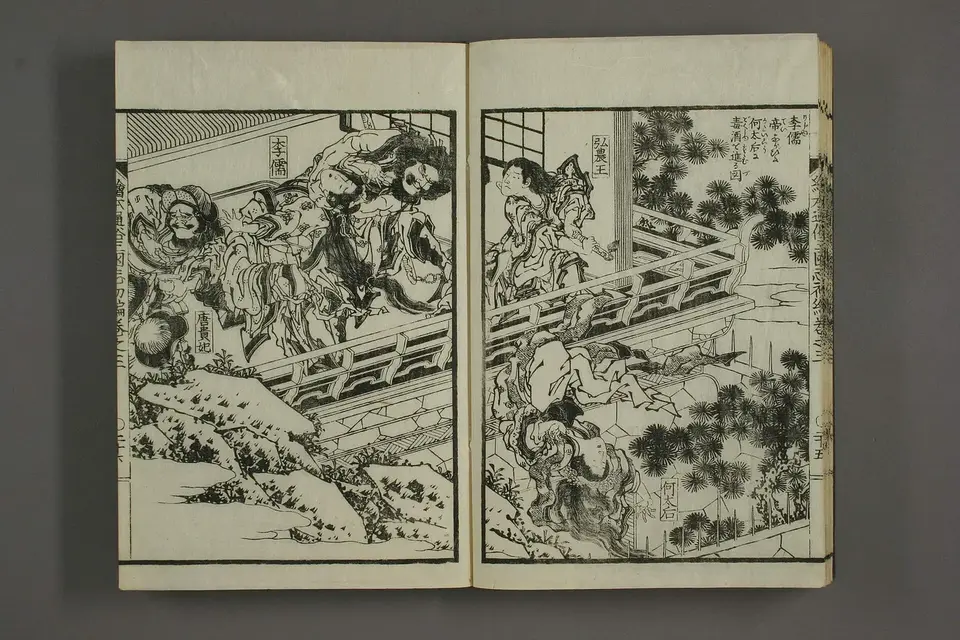
In February 190, regional governors and warlords across eastern China formed a grand coalition led by Yuan Shao to destroy Dong Zhuo. Fearing that the coalition would march on Luoyang under the banner of restoring the deposed monarch, Dong Zhuo resolved to eliminate Liu Bian before relocating the capital to Chang'an. On March 6, 190, Dong Zhuo dispatched his confidant, Court Attendant Li Ru, to the Yong'an Palace with poisoned wine, deceptively presenting it as medicinal liquor to ward off evil spirits. Liu Bian smiled bitterly and refused, declaring that he was in perfect health and that the draft was meant to murder him.
Cornered by armed guards, fifteen-year-old Liu Bian realized that death was unavoidable. He hosted a final parting banquet with his consort, Lady Tang, and attendant ladies. Weeping bitterly, the young prince sang his famous farewell lament: "Heaven's path changes, how cruel my fate; stripping my sovereign carriage to dwell in a frontier state. Pressured by rebellious subjects, my life cannot extend; departing from you now, toward the dark abyss I descend!" He urged Lady Tang to dance and sang together with her. Finishing his song, Liu Bian told her: "You are the consort of a king; do not lower yourself to become the wife of an ordinary commoner. Guard your honor well, for here we bid eternal farewell!" He then drank the poison and expired, ending the tragic reign of the Eastern Han's boy emperor.
Following Liu Bian's demise, Emperor Xian mourned his elder brother, issuing a decree in 190 to bury him inside the subterranean tomb chamber originally constructed for the deceased eunuch Zhao Zhong, granting him the posthumous title Prince Huai. Lady Tang returned to her native Yingchuan, living in seclusion and fiercely rejecting all marriage proposals. Years later, following the suppression of Li Jue and Guo Si, Emperor Xian learned that his sister-in-law was alive, issuing an imperial decree welcoming her to the capital and investing her as Consort of Hongnong, granting her stipends to tend Prince Huai's ancestral park in peace.
The brief and tragic life of Emperor Shao Liu Bian was a mirror reflecting the terminal collapse of the Eastern Han dynasty. Born amid palace intrigues and infant mortalities, raised in a civilian Daoist home, enthroned during the bloody annihilation of the consort and eunuch factions, and butchered by a predatory warlord, his downfall shattered the divine aura of imperial Han authority and triggered the violent division of the Three Kingdoms.
FIGURES ASSOCIATED WITH THIS DYNASTY