Birth in Luoyang
Born in the imperial palace to Emperor Ming and Consort Jia; entrusted to Lady Ma for upbringing.
75 CE–88 CE
刘炟
Emperor Zhang of Han (汉章帝, 56 – April 9, 88), personal name Liu Da (刘炟), was the third sovereign of the Eastern Han dynasty, reigning from 75 to 88. He was the grandson of Emperor Guangwu and the fifth son of Emperor Ming. Reared from infancy by Empress Mingde (Lady Ma), Liu Da displayed exceptional filial devotion, intellectual brilliance, and Confucian benevolence. Appointed crown prince in 60 at age five, he frequently…
Emperor Zhang of Han (汉章帝, 56 – April 9, 88), personal name Liu Da (刘炟), was the third sovereign of the Eastern Han dynasty, reigning from 75 to 88. He was the grandson of Emperor Guangwu and the fifth son of Emperor Ming. Reared from infancy by Empress Mingde (Lady Ma), Liu Da displayed exceptional filial devotion, intellectual brilliance, and Confucian benevolence. Appointed crown prince in 60 at age five, he frequently interceded on behalf of courtiers and imperial relatives facing his father's rigorous judicial punishments. Ascending the throne in 75 at age nineteen, he inaugurated a celebrated era of humane governance and economic expansion that, combined with his father's reign, is remembered as the Rule of Ming and Zhang. During his thirteen-year reign, Emperor Zhang decisively corrected the harsh legalism of the preceding court, repealing draconian penal codes, granting broad amnesties, and issuing the Imperial Decree on Childbearing Subsidies to provide public grain and tax relief to nursing mothers. In 83, he dismantled the centuries-old state monopoly on salt and iron, allowing private enterprise to revitalize agriculture and commerce. In 79, he presided over the White Tiger Hall Conference, commissioning Ban Gu to compile the Comprehensive Meaning of the White Tiger Hall to synthesize Confucian canonical orthodoxy. In foreign affairs, he provided steadfast support to the intrepid commander Ban Chao, who recovered the oasis kingdoms of the Western Regions and restored the Silk Road. An accomplished master of cursive calligraphy, he popularized using cursive script in imperial memorials, giving rise to the celebrated Zhang cursive style. Passing away in 88 at age thirty-three, he was interred at Jingling.
Born in the imperial palace to Emperor Ming and Consort Jia; entrusted to Lady Ma for upbringing.
Formally invested as heir apparent; studies the classics under palace tutors, earning renown for benevolence.
Succeeds Emperor Ming at age nineteen; honors Lady Ma as Empress Dowager and proclaims an empire-wide amnesty.
Abolishes harsh penal statutes; dispatches reinforcements to rescue the heroic thirteen soldiers at Yumen Pass.
Invests Lady Dou as empress; the Dou consort lineage begins accumulating military and bureaucratic influence.
Convenes the foremost Confucian classicists in Luoyang to standardize canonical interpretations; commissions Ban Gu.
Endorses Ban Chao's strategy to sever the northern Xiongnu flank, dispatching Xu Gan with elite troops to pacify the Tarim Basin.
Demotes Crown Prince Liu Qing to Prince of Qinghe following slanders from Empress Dou; designates Liu Zhao as heir.
Decrees the complete abolition of government monopolies on salt and iron, encouraging private mining and trade.
Conducts solemn ceremonies at Mount Tai, inspecting regional governance and rewarding long-lived elders.
Issues an imperial edict granting grain and labor exemptions to nursing mothers, spurring massive population growth.
Passes away in Luoyang at age thirty-three; interred under frugal burial rites at Jingling.
Emperor Zhang was born in 56 in the imperial palace of Luoyang during the final regnal year of Emperor Guangwu. His father was the Crown Prince Liu Zhuang (subsequently Emperor Ming), and his biological mother was Consort Jia. Because the emperor's principal consort, Lady Ma (daughter of the renowned founding general Ma Yuan), was virtuous yet childless, Emperor Ming entrusted the newborn infant to her care. Lady Ma lavished extraordinary affection upon Liu Da, attending to his nursery, dietary health, and foundational education with unceasing diligence. Liu Da responded with profound filial reverence; their mutual devotion was widely admired across the imperial household as surpassing natural biological kinship.
In March 60, Emperor Ming formally elevated Lady Ma as Empress and invested the five-year-old Liu Da as Crown Prince. Liu Da exhibited extraordinary precocity, studying the Classic of Poetry, the Book of Documents, the Classic of Rites, and the Zuo Zhuan under eminent palace tutors. Possessing a naturally gentle and humane disposition, he treated court attendants, scholars, and officials with gracious dignity, never indulging in arrogant displays of royal privilege. Emperor Ming governed through rigorous legal supervision, frequently imposing severe punishments upon officials and imperial princes. During his tenure in the Eastern Palace, Crown Prince Liu Da repeatedly submitted tactful remonstrances, pleading for mercy on behalf of fallen ministers and preventing numerous capital executions. Emperor Ming deeply respected his son's moral integrity and judged him uniquely qualified to rule the empire.
On September 5, 75, Emperor Ming succumbed to illness in the Eastern Palace. The nineteen-year-old crown prince ascended the imperial throne as Emperor Zhang. In accordance with canonical propriety, he honored his adoptive mother Empress Ma as Empress Dowager and interred Emperor Ming at the Xianjie Mausoleum. In October, he issued an empire-wide amnesty and announced tax remissions for disaster-stricken commanderies, signaling a transformative shift toward lenient governance.
Conscious that his father's intense supervision had paralyzed the bureaucracy with dread, Emperor Zhang initiated fundamental judicial reforms. In 76, he decreed the abolition of numerous draconian statutes inherited from the previous reign, strictly forbidding the use of physical torture to extract confessions during interrogations. Addressing major political purges, such as the treason trial of Liu Ying, Prince of Chu, Emperor Zhang personally reviewed historical records, pardoning thousands of officials and commoners who had been exiled to frontier commanderies and restoring their ancestral household registrations. By replacing judicial severity with Confucian benevolence, Emperor Zhang dissolved pervasive political anxiety, winning enthusiastic loyalty across the gentry and common populace.
Upon his accession, Emperor Zhang confronted a perilous crisis along the northwestern frontier. In 74, Eastern Han had re-established the Protectorate of the Western Regions. However, taking advantage of Emperor Ming's death in 75, the Northern Xiongnu mobilized tens of thousands of horsemen, laying siege to Jinpu and Liuzhong in the Cheshi kingdom. Han garrison commanders Geng Gong and Guan Chong were trapped with a handful of troops, facing overwhelming numerical odds. The Xiongnu severed Liuzhong's water supply, forcing Geng Gong's men to dig fifteen paces into the rocky ground to find water. When provisions were exhausted, the defenders boiled their leather armor and bowstrings to survive, remaining defiantly loyal to the Han court.
In early 76, desperate memorials from the frontier reached Luoyang. Observing that central provinces were plagued by severe drought and depleted treasuries, most senior ministers advocated abandoning the remote Western Regions. However, Minister of Works Bao Yu argued passionately before the throne that abandoning loyal soldiers who were dying for the state in distant deserts would destroy the trust of all frontier garrisons. Moved by Bao Yu's appeal, Emperor Zhang overruled the majority and dispatched Administrator Duan Peng with seven thousand veteran cavalry. The relief column routed the Xiongnu and rescued the survivors at Liuzhong. After a harrowing midwinter march across the snowy Tianshan ranges, only thirteen frostbitten soldiers led by Geng Gong reached Yumen Pass in March 76. Emperor Zhang rewarded these courageous defenders with honors and promotions, demonstrating an unyielding commitment to frontier security.
In the cultural sphere, Emperor Zhang orchestrated the defining ideological synthesis of the Han dynasty. Although Confucianism had been recognized as state orthodoxy since Emperor Wu, divergent interpretations between the Old Text and New Text traditions had spawned bitter scholastic rivalries. Teachers and students argued over abstruse passages, obstructing uniform state rituals and administrative legal judgments.
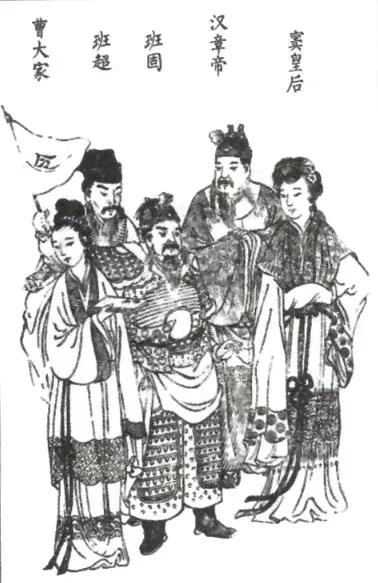
To resolve these enduring disputes, Emperor Zhang promulgated an edict in December 79 summoning the foremost scholars, academicians, and executive ministers to the White Tiger Hall in northern Luoyang. Modeled upon the Shiqu Pavilion conference of Western Han, the assembly convened for several months. Emperor Zhang attended the sessions in person, listening to debates and resolving contested points regarding the Five Classics, ancestral rites, bureaucratic ranks, and the cosmic resonance between heaven and sovereign. Following the debates, the emperor commissioned the eminent historian Ban Gu to compile the official proceedings into the forty-four chapters of the Comprehensive Meaning of the White Tiger Hall. This treatise systematically codified the Three Cardinal Principles and Five Constant Virtues within an overarching cosmological framework, elevating Confucian classical scholarship into the paramount constitutional ideology of the imperial state.
In frontier strategy, Emperor Zhang exhibited visionary geopolitical judgment. Following the rescue of Geng Gong, the court initially decreed the withdrawal of Han personnel from the Western Regions, recalling Acting Major Ban Chao. However, when Ban Chao prepared to depart Shule, the local kings and populace wept bitterly, clutching his horse's stirrups, with an officer committing suicide rather than see the Han representatives withdraw. Realizing that the oasis kingdoms genuinely looked to Han for protection against Xiongnu depredations, Ban Chao petitioned the throne, arguing that maintaining a presence in the Western Regions was essential to cutting off the right arm of the Northern Xiongnu through regional alliances.
Emperor Zhang recognized the brilliance of Ban Chao's strategic vision. In 81, defying court skeptics, he dispatched Xu Gan with one thousand elite troops to reinforce Ban Chao. Backed by the emperor's unwavering trust and logistical patronage, Ban Chao operated across the Tarim Basin for decades, mobilizing allied armies from Yutian, Shule, and neighboring states to defeat pro-Xiongnu coalitions. Through dynamic diplomacy and bold operational maneuvers, Ban Chao pacified over fifty oasis states, repelled an invading Kushan army, and re-established undisputed Han suzerainty from the Hexi corridor to the Pamir Mountains. This triumph reopened the Silk Road trade arteries, ensuring that Han prestige resonated across Inner Asia.
In domestic economic management, Emperor Zhang enacted bold liberalization policies designed to leave wealth in the hands of the populace. Since the reign of Emperor Wu of Western Han, state monopolies on salt and iron had generated colossal revenues but crippled private commerce and yielded brittle, low-quality agricultural implements at exorbitant prices. Recognizing that state monopolization stifled economic productivity, Emperor Zhang decreed the total abolition of government salt and iron monopolies in 83, dismantling state administrative bureaus and permitting private merchants and artisans to mine, smelt, and market iron and salt freely subject only to standard commercial taxes. This landmark reform stimulated private metallurgy, leading to the widespread adoption of superior iron plows and harvesting tools that dramatically enhanced agrarian yields.
In social welfare, Emperor Zhang promulgated the historic Imperial Decree on Childbearing Subsidies in 87, establishing state-funded financial assistance for newborn infants. The decree provided three bushels of grain to every family upon childbirth and granted the father a three-year exemption from corvee labor and poll taxes, aiming to eradicate the tragic practice of infanticide caused by rural poverty. Furthermore, Emperor Zhang organized the resettlement of displaced populations onto state-owned arable land, providing oxen, seed, and tools. Under these enlightened policies, registered households throughout Eastern Han increased to over fifty-three million people, marking the material zenith of the Rule of Ming and Zhang.
Despite his administrative brilliance, Emperor Zhang's accommodating disposition proved vulnerable to inner-palace intrigues, establishing a perilous precedent of consort clan domination. In 77, he married Lady Dou, a great-granddaughter of the founding grandee Dou Rong. Empress Dou possessed beauty and cunning but bore no sons, whereas Consort Song gave birth to the eldest son Liu Qing, and Consort Liang bore Liu Zhao. Driven by a determination to secure her lineage's supremacy, Empress Dou launched ruthless palace machinations, falsely accusing Consort Song of practicing witchcraft to curse the sovereign.
Deceived by Empress Dou's fabrications, Emperor Zhang demoted Crown Prince Liu Qing to Prince of Qinghe in 82, forcing Consort Song and her sister to commit suicide in the palace prison. He subsequently invested the infant Liu Zhao as heir apparent, entrusting him to Empress Dou's custody. To eliminate rival maternal influences, the empress and her brother Dou Xian fabricated treason charges against Liang Song, the maternal grandfather of the new heir, starving him to death in prison and exiling his entire clan to Rinan. Emperor Zhang failed to restrain the Dou brothers, showering Dou Xian and Dou Du with high commands over the palace guards. When Dou Xian forcibly seized the rural estate of Princess Qinshui, Emperor Zhang reprimanded him but ultimately forgave his misconduct, permitting the Dou clan to entrench their grip over the court.
In the spring of 85, Emperor Zhang led the civil and military bureaucracy on a progress to Mount Tai, conducting imperial sacrifices to commemorate peace and prosperity. Beyond his administrative achievements, Emperor Zhang was a master of calligraphy, particularly excelling in cursive script inspired by Du Du. He broke court precedent by permitting officials to submit emergency administrative memorials in cursive script, standardizing the style into the disciplined, elegant Zhang cursive that earned accolades as a divine art. On April 9, 88, Emperor Zhang passed away in Zhangde Palace at age thirty-three. He left a frugal testament prohibiting expensive mausoleum construction and commanding an unadorned burial at Jingling. His ten-year-old son Liu Zhao succeeded him as Emperor He, leaving Empress Dowager Dou to preside over the court and ushering in an era of deep political transformation.
Emperor Zhang's primary administrative triumph was the systematic humanization of Eastern Han governance. Reversing the rigid, suspicious penal policies of Emperor Ming, he curtailed bureaucratic surveillance, prohibited physical torture during judicial inquests, and pardoned thousands of citizens ensnared in historical political trials. By governing through Confucian benevolence, he lowered agrarian taxes, remitted debts during natural disasters, and established an open, trusting relationship with the scholar-official class, restoring social harmony and securing genuine popular affection throughout the realm.
The White Tiger Hall Conference of 79 stands as a monumental landmark in Chinese intellectual history. By personally arbitrating complex debates among the leading New Text and Old Text classicists, Emperor Zhang harmonized fragmented scholastic traditions into a unified imperial canon. The resulting compilation, the Comprehensive Meaning of the White Tiger Hall, systematically wove the Three Cardinal Principles and Five Constant Virtues into an overarching cosmic order, establishing Confucianism as the unshakeable constitutional and moral foundation of imperial governance for two millennia.
In frontier defense, Emperor Zhang displayed exceptional geopolitical tenacity. While the majority of his court advocated withdrawing behind the Great Wall, Emperor Zhang recognized the strategic imperative of securing the Western Regions to sever the northern Xiongnu's diplomatic and economic reach. By dispatching reinforcements to rescue the heroic defenders at Liuzhong and providing sustained patronage to Ban Chao, he enabled the pacification of over fifty kingdoms across Central Asia, re-establishing Han authority over the Silk Road and securing East-West cultural and commercial interchange.
Emperor Zhang's abolition of state salt and iron monopolies in 83 was a transformative structural reform that liberated productive forces across China. By dismantling state administrative bureaus and permitting private enterprise in mining, smelting, and marketing, he stimulated private technological innovation in metallurgy. High-quality iron agricultural implements became abundantly available at competitive prices, sparking technological advancements in farming, boosting agricultural yields, and establishing a prosperous domestic economy that sustained rapid population growth.
The promulgation of the Imperial Decree on Childbearing Subsidies in 87 was an unprecedented humanitarian innovation in ancient social welfare. By allocating three bushels of public grain to mothers upon childbirth and granting a three-year corvee exemption to their husbands, Emperor Zhang established state protection for newborns and combated female infanticide. Coupled with state-sponsored agrarian resettlement programs for displaced farmers, this policy fostered sustained demographic expansion, with the empire's registered population exceeding fifty-three million people by the conclusion of his reign.
Emperor Zhang holds a distinguished position in the history of Chinese art as an imperial innovator of calligraphy. Developing the cursive techniques of Du Du, he combined the disciplined brushstrokes of clerical script with the dynamic, rhythmic flow of cursive writing, creating a balanced and expressive calligraphy. By issuing imperial decrees that permitted official memorials to be submitted in cursive script, he elevated the style from a rustic shorthand into an esteemed artistic medium, formally establishing the Zhang cursive style and earning acclaim as an artistic pioneer in ancient Chinese calligraphy.
| Relationship Type | Name | Title / Role | Historical Interactions and Key Facts |
|---|---|---|---|
| Empress | Lady Dou | Empress Zhangde | Great-granddaughter of Dou Rong; wielded immense palace influence; orchestrated purges of rival consorts. |
| Demoted Crown Prince | Liu Qing | Prince Xiao of Qinghe | Eldest son of Emperor Zhang; demoted to prince following slanders from Empress Dou; father of Emperor An. |
| Imperial Successor | Liu Zhao | Emperor He | Fourth son, born to Consort Liang; reared by Empress Dou and succeeded to the throne in 88 at age ten. |
| Imperial Historian | Ban Gu | Senior Palace Gentleman | Eminent historian; commissioned by Emperor Zhang to compile the Comprehensive Meaning of the White Tiger Hall. |
| Frontier Commander | Ban Chao | Chief Clerk of the Western Regions | Younger brother of Ban Gu; operated in the Western Regions for decades with Emperor Zhang's resolute backing. |
| Heroic Defender | Geng Gong | Garrison Commandant | Defended Liuzhong citadel against desperate odds; relieved by imperial armies dispatched by Emperor Zhang. |
| Consort Grandee | Dou Xian | Palace Attendant / General | Elder brother of Empress Dou; accumulated immense power and initiated the era of consort domination. |
| Classical Master | Ding Hong | Minister of Works | Renowned Confucian classicist; prominent debater at the White Tiger Hall Conference, praised for profound eloquence. |
Fan Ye, the Southern Dynasties historian and author of the Book of the Later Han, recorded in Basic Annals of Emperor Xiaozhang: "Emperor Suzong deeply examined Confucian scholarship, explored ancient rituals, convened the White Tiger Hall conference, and reconciled canonical divergences, continuing the illustrious heritage of Emperors Wu and Xuan. He relaxed penal codes, abolished monopolies on salt and iron, instituted childbearing subsidies, and reduced labor levies, bringing contentment to the populace and flourishing to households. He was truly a humane, respectful, and enlightened monarch. Yet Empress Dou was jealous and cruel, destroying Consorts Song and Liang, while Dou Xian grew arrogant and planted the seeds of future calamity; this was the tragic cost of the emperor's excessive benevolence."
Ban Gu observed in his panegyrics of the Eastern Han Golden Age: "Since the Jianchu and Yuanhe eras, the world has been transformed by moral governance; penal laws are rarely invoked, customs are purified, and the common people dwell in peace. Barbarians from the four quarters traverse mountains and oceans to pay homage. Truly, since the rise of Han, no era has surpassed the Rule of Ming and Zhang!"
Cao Pi, Emperor Wen of Wei, evaluated Han rulers in his Normative Discourse: "Emperor Xiaozhang cultivated classical scholarship, comprehended rituals and music, and governed with broad benevolence, exhibiting the noble spirit of Emperor Wen of Western Han. His cursive calligraphy was sublime, unmatched across the ages, combining both civilian and martial genius."
Emperor Taizong of Tang (Li Shimin) observed during statecraft discussions with Fang Xuanling: "Emperor Ming of the Later Han was discerning yet excessively severe, whereas Emperor Zhang was benevolent and capable of balancing governance with moderation. During Emperor Zhang's reign, the penal system was clear and the state was tranquil, with the populace cherishing imperial virtue. The splendor of the Rule of Ming and Zhang represents a celebrated model across thousands of years."
Sima Guang wrote in the Zizhi Tongjian: "Emperor Zhang was inherently kind, compassionate, and generous, loving his relatives and maintaining profound personal caution. Ascending the throne, he governed through benevolence, relaxing laws to succor the people, so that all within the four seas rejoiced. Yet he was overly soft, permitting the empress to meddle in court affairs and allowing the Dou clan to usurp authority. Liang Song died under false charges, and the crown prince was wrongfully demoted. Benevolence is not a fault, but excessive indulgence breeds catastrophic ruin."
Wang Fuzhi analyzed Emperor Zhang in On the Comprehensive Mirror for Aid in Government: "Among the enlightened sovereigns of Han, none surpassed Emperor Zhang. Repealing monopolies on salt and iron, introducing childbearing subsidies, patronizing Confucian learning, and reconnecting with the Western Regions—these all echoed the benevolent governance of the Three Dynasties. Yet the flaw of Emperor Zhang arose from the cruelty of Empress Dou and culminated in the arrogance of Dou Xian. Observing Emperor Zhang, the wise recognize that the seeds of consort and eunuch domination must never be tolerated in the slightest degree. A moment of sovereign indulgence condemned multiple generations to blood and ruin; though his benevolent policies were profound, they could not prevent the ultimate fall of Eastern Han."
Liu Zhuang, Ban Chao, Ban Gu, Geng Gong, White Tiger Hall Conference, Rule of Ming and Zhang
FIGURES ASSOCIATED WITH THIS DYNASTY