Birth | Born in Yingyin County, Yingchuan Commandery
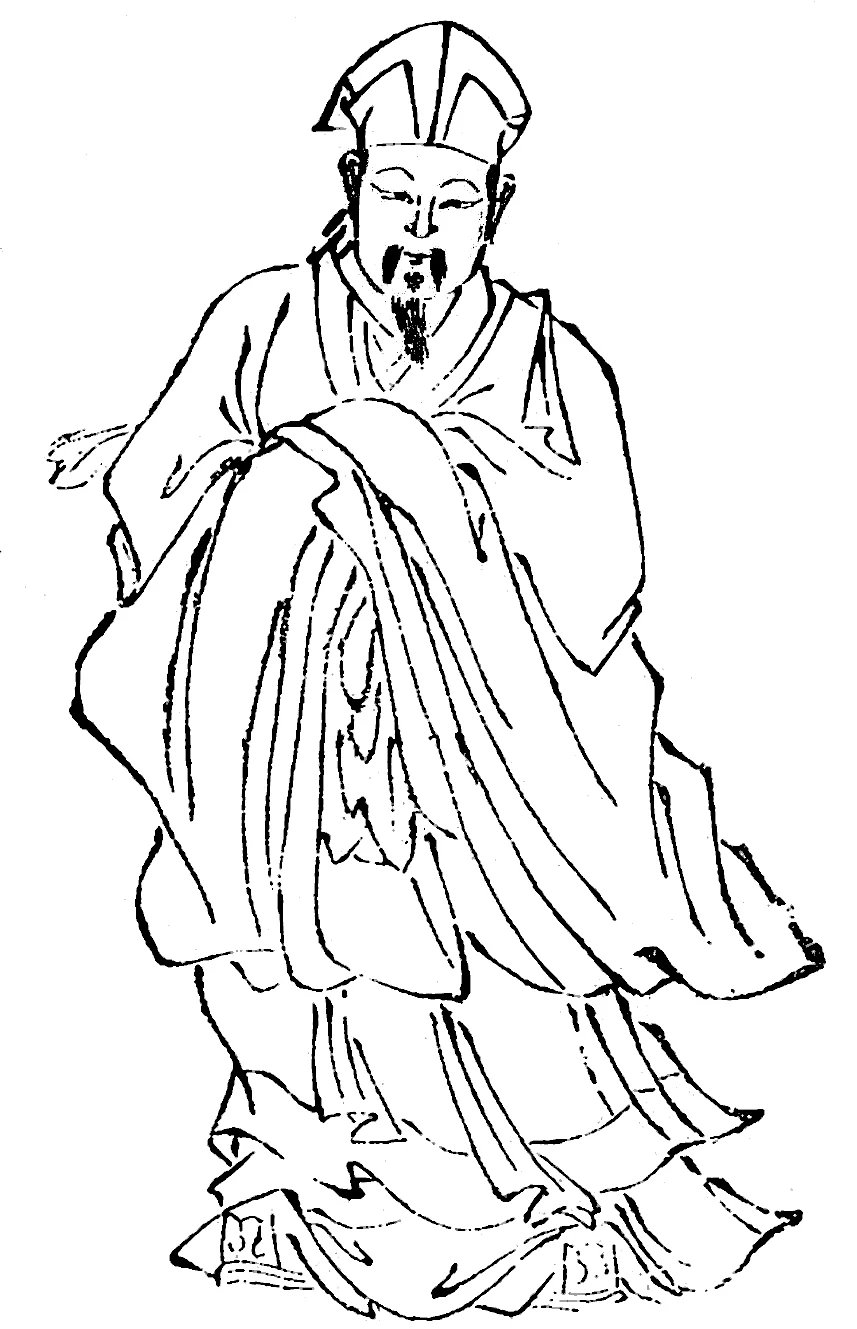
163 CE–212 CE
Statesmanstrategist
Xun Yu
荀彧
Xun Yu (163–212), courtesy name Wenruo, was a native of Yingyin County, Yingchuan Commandery, in present-day Xuchang, Henan. A late Eastern Han statesman and strategist, he became Cao Cao's principal civil adviser, rose to Palace Attendant and acting Prefect of the Masters of Writing, and was enfeoffed as Marquis of Wansui Village. Because he served for many years as Prefect of the Masters of Writing, later generations often…
163 CE–212 CECao Wei
PROFILE
Xun Yu (163–212), courtesy name Wenruo, was a native of Yingyin County, Yingchuan Commandery, in present-day Xuchang, Henan. A late Eastern Han statesman and strategist, he became Cao Cao's principal civil adviser, rose to Palace Attendant and acting Prefect of the Masters of Writing, and was enfeoffed as Marquis of Wansui Village. Because he served for many years as Prefect of the Masters of Writing, later generations often called him “Lord Xun of the Secretariat.” A member of the Yingchuan Xun clan and a descendant of Xunzi, he was praised in youth as having “the talent of one who can assist a king.” He left Yuan Shao for Cao Cao, who compared him to Zhang Liang, and played a central role in Cao's unification of northern China. He urged Cao to receive Emperor Xian, managed rear-area administration, recommended many talented officials, and helped sustain Cao during such decisive contests as the Battle of Guandu. Yet although Xun helped build Cao Cao's power, the source presents him as remaining fundamentally loyal to the Han house. In 212, the seventeenth year of Jian'an, he opposed Cao Cao's proposed elevation to Duke of Wei, creating a fundamental rupture with Cao; he died soon afterward at the age of fifty under circumstances that remain disputed.
- Other Names
- Xun Wenruo; Lord Xun, Prefect of the Masters of Writing
- Courtesy Name
- Wenruo
- Period
- Cao Wei / late Eastern Han
- Date of Birth
- 163
- Date of Death
- 212
- Dynasty/Regime
- Cao Wei
- Identity
- Statesman, strategist
- Ethnicity
- Not recorded in historical sources
- Native Place
- Yingyin County, Yingchuan Commandery (present-day Xuchang, Henan)
- Place of Birth
- Yingyin County, Yingchuan Commandery (present-day Xuchang, Henan)
- Place of Death
- Not recorded in historical sources
- Highest Office
- See Biography and Major Activities
- Major Achievements
- Cao Cao's leading civil strategist; coordinated government from the center, advocated receiving the Han emperor and using imperial legitimacy to command the regional lords, and played a foundational role in the rise of Cao Wei.
LIFE TIMELINE
Age 27 | Recommended as a Filial and Incorrupt candidate and appointed Director of the Palace Guard Stores; resigned and returned home after the upheaval caused by Dong Zhuo
Age 28 | Led his clan to seek refuge in Jizhou and was received as an honored guest by Yuan Shao
Age 29 | Left Yuan Shao for Cao Cao, was appointed Army Major, and was called by Cao “my Zifang,” a comparison with Zhang Liang
Age 32 | When Lü Bu attacked Yanzhou, Xun Yu and Cheng Yu held Juancheng and two other cities, preserving Cao Cao's remaining base
Age 33 | Dissuaded Cao Cao from attacking Xuzhou and urged him to “deepen the roots and strengthen the foundation in order to control the realm,” helping secure Yanzhou
Age 34 | Strongly urged Cao Cao to receive Emperor Xian and relocate the imperial court to Xu; appointed Palace Attendant and acting Prefect of the Masters of Writing
Age 38 | During the Battle of Guandu, persuaded Cao Cao not to withdraw and strengthened his determination to continue the decisive struggle
Age 41 | Enfeoffed at Cao Cao's recommendation as Marquis of Wansui Village with a revenue of one thousand households
Age 45 | Fief increased to two thousand households
Age 46 | Proposed a rapid, indirect advance toward Jing Province, helping Cao Cao seize the region
Age 50 | Opposed Cao Cao's elevation to Duke of Wei, was removed from the central court, and died at Shouchun in the same year
BIOGRAPHY
Biography
Family Background and Early Life
Xun Yu belonged to the Yingchuan Xun clan and was a descendant of the Warring States thinker Xunzi. His grandfather Xun Shu, courtesy name Jihe, had served as magistrate of Langling and enjoyed a great reputation under Emperors Shun and Huan of Han, earning the sobriquet “Divine Lord.” Xun Shu's eight sons were all known for talent and were collectively called the “Eight Dragons.” Xun Yu's father Xun Gun served as Chancellor of Jinan, while his uncle Xun Shuang later reached the office of Minister of Works. According to the source, Xun Gun, fearing the power of the eunuchs, arranged for Xun Yu to marry the daughter of the palace eunuch Tang Heng, a match criticized at the time. Pei Songzhi's commentary to the Records of the Three Kingdoms, however, quotes the Dianlüe to note that Tang Heng died in 164, when Xun Yu was only two, making the accusation that the marriage was sought for political advantage doubtful and suggesting that it may instead have resulted from coercion by powerful eunuchs.
Xun Yu was famous for talent from an early age. He Ying, a noted man of Nanyang known for judging character, reportedly declared him to possess “the talent of one who can assist a king.” When Yin Xiu of Nanyang served as Administrator of Yingchuan, he made a point of promoting worthy men and appointed Xun as a local clerk. In 189 Xun was recommended as a Filial and Incorrupt candidate and entered court service. That same year Dong Zhuo deposed the young emperor Liu Bian, enthroned Liu Xie as Emperor Xian, made himself Chancellor of State, and dominated the court. Xun judged that Dong's violence could not last, requested an outside posting as magistrate of Kangfu County, and soon abandoned office and returned home.
Choosing a Lord
Back in Yingchuan, Xun urged local people to leave quickly because the region was exposed on every side to military conflict. Many refused to abandon their homes. Han Fu, a fellow native then serving as Governor of Jizhou, sent people to welcome refugees from his home commandery, and Xun led members of his clan north. Yingchuan was later plundered by Dong Zhuo's followers such as Li Jue, and many who remained were killed, appearing to vindicate Xun's judgment.
By the time Xun reached Jizhou, Yuan Shao had displaced Han Fu. Yuan treated Xun with the courtesies due an honored guest; Xun's younger brother Xun Chen and fellow commandery men Xin Ping and Guo Tu were already serving Yuan. Xun nevertheless judged that Yuan would ultimately fail to accomplish great affairs. In 191, when Cao Cao was General Who Inspires Might and Administrator of Dong Commandery, Xun left Yuan and joined Cao. After speaking with him, Cao reportedly exclaimed that Xun was “my Zifang,” comparing him to Zhang Liang, and appointed him Army Major. Xun was then twenty-nine.
Preserving Yanzhou
In 194 Cao Cao marched east against Tao Qian, Governor of Xuzhou, leaving Xun Yu and Cheng Yu to defend Juancheng. Chen Gong and Zhang Miao, Administrator of Chenliu, took advantage of Cao's absence and secretly welcomed Lü Bu into Yanzhou; many cities changed sides. Lü Bu sent Liu Yi to tell Xun that he had come to assist Cao against Tao Qian and requested provisions. While others were uncertain, Xun recognized the deception, immediately prepared the defenses, and urgently summoned Xiahou Dun from Dong Commandery. Xiahou arrived and executed several dozen men suspected of colluding with Zhang Miao and Chen Gong, stabilizing the garrison.
Guo Gong, Inspector of Yuzhou, encouraged by Lü Bu, led tens of thousands of troops toward Juancheng and asked to meet Xun. Xiahou Dun and others urged Xun not to risk himself. Xun reasoned that Guo had no deep ties to Zhang Miao, had arrived hastily, and had probably not fixed his plan. If approached while still wavering, he might at least be kept neutral; showing distrust could instead drive him into open attack. Xun therefore went out calmly to meet him. Seeing no fear, Guo concluded that Juancheng would be difficult to take and withdrew. Xun also coordinated with Cheng Yu to persuade Fan and Dong'e to hold firm. Thus, despite Cao Cao's main army being absent, Juancheng, Fan, and Dong'e survived, preserving Cao's final base. Cao returned, defeated Lü Bu, and recovered Yanzhou.
In 195, after Tao Qian died, Cao wanted to seize Xuzhou before finishing Lü Bu. Xun opposed the plan and put forward the strategic principle of “deepening the roots and strengthening the foundation in order to control the realm.” Citing Emperor Gaozu of Han's preservation of Guanzhong and Emperor Guangwu's reliance on Henei, he argued that Yanzhou was Cao Cao's equivalent of those essential bases and had to be secured first. If Cao marched east while Lü Bu remained, leaving a large garrison behind would weaken the field army, while leaving too few men would force civilians to defend walls instead of farming and gathering fuel. Because Cao's previous campaign in Xuzhou had involved severe killing, the people there would also prepare scorched earth defenses and resist to the death, making the territory difficult to hold even if conquered. Cao accepted the advice, concentrated on securing the harvest and supplies, defeated Lü Bu, and restored Yanzhou.
Receiving the Son of Heaven
In 196 Emperor Xian returned from Chang'an to Luoyang under the protection of Yang Feng and others. Cao's camp was divided over whether to receive the emperor. Many commanders argued that Xuzhou remained unsettled and that Han Xian, Yang Feng, and other forces around the court made intervention dangerous. Xun strongly disagreed. He reminded Cao that Duke Wen of Jin had received King Xiang of Zhou and thereby won the allegiance of the feudal lords, while Emperor Gaozu of Han had mourned Emperor Yi and thereby gained support across the realm. Since the emperor's misfortune, Xun argued, Cao had been among the first to raise loyal forces; now he should “receive the sovereign in accordance with popular expectation,” “uphold the greatest public principle to win outstanding men,” and “support great righteousness to attract talent.” If the opportunity to restore the court were lost, he warned, the political consequences could not later be reversed.
Cao adopted this strategy, marched to Luoyang, and escorted Emperor Xian to Xu County. Cao was appointed General-in-Chief and Marquis of Wuping, while Xun became a Han Palace Attendant and acting Prefect of the Masters of Writing. Cao thereby gained the political advantage of acting under the emperor's authority. Xun remained in the center, supervising court affairs and becoming Cao's most trusted civil minister. For more than a decade thereafter, Cao campaigned outside while Xun coordinated government and logistics at the center, contributing to the foundations of Cao Wei.
Central Coordination and the Guandu Strategy
As Prefect of the Masters of Writing, Xun handled regular court administration and recommended many men of talent, including Xun You, Zhong Yao, Chen Qun, Sima Yi, Xi Lü, Hua Xin, Wang Lang, Guo Jia, Du Ji, Yan Xiang, Wei Kang, Sun Zi, and Zhongchang Tong. Many later became central officials of Cao Wei, making Xun a model of discernment in selecting personnel.
In 197, after Cao's defeat by Zhang Xiu, Yuan Shao sent him an arrogant letter. Cao consulted Xun, who argued that Yuan possessed “four defeats” while Cao possessed “four victories”: Yuan favored relatives while Cao used talent, giving Cao the advantage in judgment; Yuan hesitated while Cao decided quickly, giving Cao the advantage in planning; Yuan's discipline was lax while Cao's regulations were strict, giving Cao the advantage in military administration; and Yuan was extravagant while Cao was personally frugal, giving Cao the advantage in moral authority. This analysis strengthened Cao's resolve to confront Yuan.
During the Battle of Guandu in 200, Cao and Yuan Shao remained locked in stalemate for months. Supplies dwindled and Cao considered retreat. Xun wrote to dissuade him, comparing the situation to the Chu-Han struggles at Xingyang and Chenggao and insisting that “the side that withdraws first loses its position.” After six months of deadlock, he argued, Yuan's initial force had already been exhausted and a sudden opportunity for an extraordinary victory was likely. Cao held firm. Xu You then defected and supplied information that led to the burning of Yuan's stores at Wuchao and a decisive Cao victory. Although Xun was not present at the battlefield, his advice was an important element in the decision to persist.
Final Years and Disputed Death
In 203 Cao petitioned to enfeoff Xun as Marquis of Wansui Village with one thousand households. Xun declined on the ground that he had won no battlefield merit, but Cao responded that his contribution exceeded battlefield service. Xun accepted. In 207 his fief was increased to two thousand households, and Cao considered recommending him for one of the Three Excellencies, but Xun declined through Xun You.
In 208, when Cao prepared to attack Liu Biao, Xun proposed a plan of making a visible move from Wan and Ye while advancing quickly by a concealed route. Cao followed the plan and took Jing Province with little initial resistance.
In 212 Dong Zhao and others proposed that Cao Cao be elevated to Duke of Wei and receive the Nine Bestowments, and secretly asked Xun's opinion. Xun opposed the proposal, arguing that Cao's declared purpose had been to support the Han house and that he should not pursue honors beyond proper bounds. Cao, the source says, was displeased. In the tenth month Cao marched south against Sun Quan and submitted a memorial asking Xun to come to Qiao to meet the army, thereby removing him from the central court. Xun was then appointed Palace Attendant, Grand Master for Splendid Happiness, Bearer of Credentials, and participant in the military affairs of the Grand Councilor. As Cao's army proceeded toward Ruxu, Xun stayed behind at Shouchun because of illness.
Accounts of Xun's death differ. The Records of the Three Kingdoms says only that he “died from worry.” The Book of the Later Han and Pei Songzhi's quotation of Sun Sheng's Spring and Autumn of the Wei Clan relate that Cao sent him a food container which proved empty; Xun then took poison. Sima Guang believed Cao concealed the event and that Chen Shou therefore did not write it directly. Another work, the Spring and Autumn of Emperor Xian, claimed that Xun had seen a letter from Empress Fu expressing dissatisfaction with Cao, initially concealed it, and later reported it out of fear, only to be killed because Cao already knew of the concealment. Pei Songzhi rejected that story as absurd.
The source states that Xun burned all of his memorials before his death. Emperor Xian was deeply grieved and suspended music during an ancestral sacrifice. Xun received the posthumous title Marquis Jing. Cao Zhi composed a lament for him, Pan Xu wrote an inscription, and Zhong Yao compared him to Yan Hui. The next year Cao became Duke of Wei. In 265, the second year of Xianxi, when Cao Huan abdicated as the last emperor of Cao Wei, Xun Yu was posthumously appointed Defender-in-chief.
His Family, Early Years, and His Flight to Jizhou
Xun Yu, courtesy name Wenruo, was a man of Yingyin in Yingchuan. His grandfather Xun Shu, courtesy name Jihe, was magistrate of Langling and was known to his age in the reigns of Shun and Huan of Han, and had eight sons, called the eight dragons; his father Xun Gun was chancellor of Jinan and his uncle Xun Shuang minister of works. In his youth He Yong of Nanyang thought him remarkable and called him a talent fit to assist a king. In the first year of Yonghan, 189, he was made a filial and incorrupt and appointed keeper of the palace, and when the disorder of Dong Zhuo came he asked to be sent out as an officer, was made magistrate of Kangfu, and then resigned and went home, telling the elders that Yingchuan was a land of four war-roads where, when the realm changed, the armies would always pass, and that they should leave it quickly and not linger. Most of the people clung to their homes and hesitated; but when Han Fu, governor of Jizhou and of the same commandery, sent riders to welcome them, none went with him, and Xun Yu alone took his clan to Jizhou, and those who remained were afterwards mostly killed or carried off by Li Jue, a general of Dong Zhuo. As to his early marriage, Pei Songzhi argued the case at length: by the Dianlue the palace attendant Tang Heng wished to marry his daughter to Fu Gongming of Runan, who refused her, and she was then offered to Xun Yu, whose father Xun Gun, coveting Tang Heng's power, married him to her, for which Xun Yu was censured by talkers; but Pei Songzhi, reckoning from the Hanji that Tang Heng died in the seventh year of Yanxi of Emperor Huan, found that Xun Yu was then but two years old, so that Tang Heng had long been dead at the time of the marriage and the talk of coveting power could not be true; and he held that Xun Gun, being one of the eight dragons, was certainly no man to take anything improperly, and must have been constrained, and he cited that when the eunuchs held power the four seas held their breath and Zuo Guan and Tang Heng "had life and death in their mouths," so that the proverb ran that Zuo turned back heaven and Tang sat alone, meaning that their authority had no equal, and that to comply kept a man's kin safe while to offend brought ruin at once, and that Jiang Xu's marriage into the Wang family had not hurt his lofty conduct, so that Xun Gun's marriage could do him no harm.
Leaving Yuan Shao for Cao Cao
By the time Xun Yu reached Jizhou, Yuan Shao had taken Han Fu's place and received Xun Yu with the courtesy due to a distinguished guest; and Xun Yu's younger brother Xun Chen and his fellow provincials Xin Ping and Guo Tu were all employed by Yuan Shao. Xun Yu, clear-sighted in his plans and grieved at the collapse of the Han house, cherished always the will to uphold it, and judging that Yuan Shao could never accomplish the great work, and hearing that Cao Cao, then general of the fierce warriors, had a hero's design, he left Yuan Shao for Cao Cao in the second year of Chuping, 191. Cao Cao, much pleased at speaking with him, said that he was his Zhang Liang, and made him master of horse at twenty-nine. At that time Dong Zhuo awed the realm, and Cao Cao asking Xun Yu about him, he said that Dong Zhuo's cruelty was excessive and he must end in ruin and could do nothing. Dong Zhuo afterwards sent Li Jue and others east of the pass, and wherever they passed they plundered, as far as Yingchuan and Chenliu and back, and those of the neighbourhood who remained were mostly killed or carried off.
His Defence of Yanzhou and His Persuasion of Guo Gong
In the first year of Xingping, 194, Cao Cao went against Tao Qian and left Xun Yu in charge; and Zhang Miao and Chen Gong rebelled in Yanzhou and secretly brought in Lü Bu. Lü Bu arriving, Zhang Miao sent Liu Yi to tell Xun Yu that General Lü had come to help Lord Cao against Tao Qian and that his army should at once be supplied with food; and the officers doubting, Xun Yu, knowing that Zhang Miao was in revolt, at once put his troops in order and sent urgently for the governor of Dongjun, Xiahou Dun, while all the cities of Yanzhou answered Lü Bu. Cao Cao having taken his whole army against Tao Qian, the garrison was small and most of the commanders and senior officers were in league with Zhang Miao and Chen Gong; and Xiahou Dun arriving, that night he executed several dozen of the conspirators and the men were steadied. The inspector of Yuzhou, Guo Gong, bringing several tens of thousands to the walls, some said he was in league with Lü Bu and the men were much afraid; and Guo Gong asking to see Xun Yu, Xun Yu was about to go, and Xiahou Dun and the others said that he was the bulwark of the province and would surely be in danger if he went and must not. Xun Yu said that Guo Gong and Zhang Miao were not of old confederates, that he had come in haste and his plan could not yet be fixed, and that if they worked on him before it was fixed, even if he would not be used he could be kept neutral, whereas to suspect him first would anger him and fix his plan. Guo Gong, seeing Xun Yu without fear, judged Juancheng not easy to take and led his troops away; and Xun Yu with Cheng Yu contrived to have Fan and Dong'e persuaded, and in the end kept the three cities whole for Cao Cao.
His Counsel to Deepen the Roots and Firm the Base
When Tao Qian died, Cao Cao wished to take Xuzhou first and settle Lü Bu afterwards, and Xun Yu remonstrated, saying that the founder of Han had held Guanzhong and Guangwu had held Henei, both deepening their roots and firming their base in order to control the realm, so that advancing they could beat the enemy and retiring they could hold fast, and so though they met defeats they at last accomplished the great work; that the general had begun his enterprise from Yanzhou and had pacified the troubles of Shandong, so that the people all turned to him and submitted; and that Yanzhou, straddling the Yellow river and the Ji water, was a key ground of the realm and, ruined though it was, easy to hold, so that it was "the general's Guanzhong and Henei and must not but be settled first." He advised breaking Li Feng and Xue Lan, then dividing the troops east against Chen Gong, who would not dare look west, and in the interval reaping the ripe wheat, stinting food and storing grain, so that Lü Bu could be broken at one blow; after which they might join Yangzhou in the south against Yuan Shu and come upon the Huai and Si. And he set out the harm of leaving Lü Bu and going east to Xuzhou: that to leave many troops would be to have too few for the attack, and to leave few would be to set the people all to guarding the walls with none to cut wood or gather grass, so that Lü Bu, taking advantage of the emptiness, would ravage them, the people's hearts would grow the more fearful, and only Juancheng, Fan and Wei could be kept whole, all else being lost, which would be to lose Yanzhou; that Tao Qian being dead, Xuzhou was not easy to destroy, for its people, warned by their former defeat, would fear and draw together within and without; that the east having now reaped its wheat, they would strengthen their walls and clear the fields against the general; and that attacking without taking and plundering without gain, within ten days a hundred thousand men would be spent before a battle was fought. He added that in the former attack on Xuzhou harsh punishment had been carried out, so that the sons of Xuzhou, remembering the shame of their fathers and brothers, would each fight to the death with no thought of surrender, and that even if it were taken it could not be held; that there were indeed matters in which one thing must be given up for another, exchanging the great for the small, or safety for danger, or weighing a moment's advantage without fear for an unsteady base, but that here none of the three was profitable, and he begged the general to weigh it well. Cao Cao therefore desisted, reaped the wheat in great measure, fought Lü Bu again and sent troops to settle the counties, so that Lü Bu fled and Yanzhou was pacified.
His Counsel to Receive the Emperor and Fix the Capital at Xu
In the first year of Jian'an, 196, Cao Cao having beaten the Yellow Turbans and Emperor Xian having come back from Hedong to Luoyang, Cao Cao took counsel to receive the emperor and fix his capital at Xu, but some held that Shandong was not yet pacified and that Han Xian and Yang Feng, having newly brought the emperor to Luoyang and joined with Zhang Yang in the north, could not be dealt with at once. Xun Yu urged him on, saying that the founder of Han had gone east against his enemies and put on plain mourning for Emperor Yi, so that the realm turned to him; that since the emperor's wanderings the general had been the first to raise the righteous host, and though because of the troubles of Shandong he could not go far to the west of the pass, he had sent out generals and envoys at risk to keep in touch with the court, so that though he warded off trouble from without, his heart was never away from the royal house, which was the general's constant purpose of upholding the realm; and that now the imperial carriage was returning and righteous men thought of preserving their root while the people, remembering the past, grieved the more, so that "to take this occasion to honour the sovereign and follow the people's hope is the great compliance; to hold to the utmost impartiality to win the heroes is the great strategy; to uphold the great righteousness to draw in the able is the great virtue," and that though there were disloyal ones in the realm they could not harm him, and Han Xian and Yang Feng would never dare to do him hurt. If this were not settled in time, he said, the four quarters would conceive their own designs, and afterwards it would be too late to think of it. Cao Cao therefore went to Luoyang, received the emperor, and fixed the capital at Xu; and the emperor made Cao Cao general-in-chief and advanced Xun Yu to be palace attendant of Han and acting president of the secretariat.
The Four Victories, and the Time before and after Guandu
After Cao Cao received the emperor, Yuan Shao was inwardly disaffected; and having united the north of the river and made the realm fear his strength, while Cao Cao was anxious about Lü Bu in the east and holding off Zhang Xiu in the south, and Zhang Xiu had beaten his army at Wan, Yuan Shao grew the prouder and wrote him a letter whose words were insolent, at which Cao Cao in great anger changed his usual bearing, and all thought it was because of the loss to Zhang Xiu. Zhong You asking Xun Yu about it, Xun Yu said that the lord was too clear-sighted to blame bygones and must have something else on his mind, and going to ask him, Cao Cao showed him Yuan Shao's letter and asked what was to be done, since he was about to punish an unjust man and his strength was unequal. Xun Yu answered that in ancient times the successful had truly had the talent, so that though weak they became strong, while without the man though strong they soon grew weak, as the fate of Liu and Xiang showed; and he set out the four victories: Yuan Shao outwardly tolerant but inwardly jealous, employing men and doubting their hearts, whereas Cao Cao was open and unconstrained and put each man where his talent fitted, which was the victory in measure; Yuan Shao slow and irresolute, losing the moment afterwards, whereas Cao Cao could decide great matters and meet change without rule, which was the victory in strategy; Yuan Shao governed his army loosely and set up no law, so that his soldiers, many though they were, were hard to use, whereas Cao Cao's laws were clear and rewards and punishments certain, so that his few fought to the death, which was the victory in arms; and Yuan Shao, relying on his hereditary standing, composedly made a show of wisdom to win reputation, so that scholars of little ability and much love of talk went over to him, whereas Cao Cao treated men with perfect kindness and opened his heart without vain display, ordered himself strictly and frugally yet was unstinting to the deserving, so that the loyal, upright and practical of the realm all wished to serve him, which was the victory in virtue. With these four victories to assist the emperor and, upholding righteousness, to punish the rebellious, who would dare not to obey, and what could Yuan Shao's strength avail? He added that without first taking Lü Bu the north of the river would not easily be won; and that the commanders in Guanzhong were a dozen or more and could not unite, only Han Sui and Ma Teng being the strongest, and that seeing Shandong in dispute they would each hold his own, so that if the general dealt with them by kindness and sent envoys to make peace, they would not move until Shandong was settled; and he recommended Zhong You for the western business. Cao Cao therefore memorialised that Zhong You be made palace attendant and acting colonel of the capital province with the tally to command the troops of Guanzhong, and Zhong You reaching Chang'an wrote to Ma Teng and Han Sui setting out their gain and loss, and both sent their sons to court as hostages. In the third year of Jian'an Cao Cao having broken Zhang Xiu, taken Lü Bu in the east and settled Xuzhou, faced Yuan Shao; and Kong Rong telling Xun Yu that Yuan Shao's land was wide and his army strong, with Tian Feng and Xu You to plan for him, Shen Pei and Feng Ji as loyal ministers for his business, and Yan Liang and Wen Chou, whose courage was first in the army, commanding his troops, he would be hard to overcome. Xun Yu answered that Yuan Shao's troops were many but his laws ill ordered, that Tian Feng was stubborn and offended his superiors, Xu You greedy and ungoverned, Shen Pei arbitrary without strategy and Feng Ji decisive but self-willed, and that these two being left in charge of affairs at home, if Xu You's household broke the law they could not let it pass and Xu You would surely turn; while as for Yan Liang and Wen Chou they had but the courage of a single man and could be taken in a single battle. In the fifth year of Jian'an Cao Cao fought Yuan Shao repeatedly and held Guandu while Yuan Shao besieged it; and his grain being nearly exhausted, he wrote to Xun Yu of his wish to go back to Xu to draw Yuan Shao off, and Xun Yu answered that though their food was now scanty it was not so bad as when Chu and Han faced each other between Xingyang and Chenggao, when neither Liu nor Xiang would withdraw first because the one who withdrew first lost the advantage; that Cao Cao with one man in ten held his ground, gripping the enemy's throat so that he could not advance, and this for half a year, so that "the truth is out and the force is spent and there must be a change, and this is the hour for a stratagem, which must not be missed." Cao Cao therefore stayed, and sent a surprise force against Yuan Shao's detached camp, beheaded his general Chunyu Qiong and others, and Yuan Shao withdrew. Afterwards Shen Pei, for the lawlessness of Xu You's household, seized his wife and children, and Xu You in anger rebelled against Yuan Shao; Yan Liang and Wen Chou gave up their heads in battle; and Tian Feng was put to death for his remonstrance — all as Xun Yu had predicted.
The Fief of Wansui Pavilion, the Question of the Nine Provinces, and His Last Years
In the sixth year of Jian'an, Cao Cao, being at Anmin in Dongping for grain and having too little to sustain the struggle with the north of the river, wished to take advantage of Yuan Shao's recent defeat to strike at Liu Biao in the interval; and Xun Yu said that now that Yuan Shao was defeated his men were of divided hearts and that the general should take the occasion of his distress to settle him, for if he turned his back on Yan and Yu and took his army far to the Jiang and Han, then if Yuan Shao gathered his embers and came out in the void behind him the general's work would be lost. Cao Cao therefore camped again by the river, and Yuan Shao died of illness; and Cao Cao crossing the river struck at Yuan Tan and Yuan Shang while Gao Gan and Guo Yuan raided Hedong and shook the west of the pass, and Zhong You with Ma Teng broke them. In the eighth year of Jian'an Cao Cao, recording Xun Yu's merits, memorialised that he be enfeoffed as marquis of Wansui pavilion, saying that counsel is the head of merit and plan the root of reward, that the merit of the field does not surpass that of the court and much fighting does not exceed service to the state; and he cited that the grant to Qufu came not after that to Yingqiu and that Xiao He's land was above that of the marquis of Pingyang, and said that the settling of the realm was Xun Yu's merit and that he should enjoy high rank to display his signal service. Xun Yu firmly declining on the ground that he had no merit of the field, Cao Cao wrote to him that in all their time together he had helped to correct and support the government, to raise men, to frame plans and to contrive in secret, and that merit need not always be of the field, begging him not to decline; and Xun Yu accepted. In the twelfth year a thousand households were added to his fief, making two thousand; and Cao Cao memorialised again that at Guandu Xun Yu had not listened to him and had set out the advantage of standing fast, changing his foolish thought, and that when afterwards he wished to go south against Liu Biao Xun Yu had stopped him again, so that "Xun Yu's two counsels turned ruin into preservation and disaster into blessing, and his plans and merits are beyond my reach," and asked that the matter be weighed afresh and his households increased; and Xun Yu declined deeply. Cao Cao then wishing to memorialise him for one of the three excellencies, Xun Yu had Xun You decline most earnestly, a dozen times and more, and Cao Cao desisted. In the ninth year of Jian'an Cao Cao took Ye and became governor of Jizhou, and Xun Yu first advised him that it would be well to restore the ancient nine provinces, whereby Jizhou would govern widely and the realm would submit, and Cao Cao was about to do so; but Xun Yu said further that in that case Jizhou would take in Hedong, Fengyi, Fufeng, Xihe, You and Bing, despoiling many, and that after the recent destruction of Yuan Shang and the taking of Shen Pei the realm was shaken and every man would fear he could not keep his land or his troops, and that to attach them now to Jizhou would unsettle them all, and that many were advising the commanders west of the pass to close the passes, and that hearing this they would think they were to be despoiled in turn, and that once change came, though there were good defenders, they would be coerced into rebellion, so that Yuan Shang would be spared, Yuan Tan would hold back and Liu Biao would keep the region of the Jiang and Han, and the realm would be hard to win; and he begged Cao Cao to lead his troops at once to settle the north of the river and then restore the old capital, come south to Jingzhou and reproach it for not sending tribute, so that all would know his mind and each man be at peace, and that only when the realm was greatly settled should the ancient system be discussed, this being the lasting good of the altars. Cao Cao therefore dropped the plan and answered that but for his remonstrance his loss would have been great. Afterwards Cao Cao gave his daughter to Xun Yu's eldest son Xun Yun, who was later styled the princess of Anyang; and Xun Yu and Xun You, both honoured, were modest and frugal, giving their stipends and gifts to their clansmen and old friends, so that they had no surplus wealth at home. When Cao Cao was about to attack Liu Biao he asked Xun Yu for a plan, and Xun Yu said that with China now settled the south knew its difficulty, and that he should march openly to Wan and Ye and advance lightly by side roads to fall on them unawares; and Cao Cao setting out, Liu Biao happened to die, and Cao Cao going straight to Wan and Ye as Xun Yu had planned, Liu Biao's son Liu Zong surrendered his province to him. And when Gao Gan raised Bingzhou in rebellion, the men of Hedong, Wei Gu and Fan Xian, professing to petition for the governor, were in truth in league with him, and Cao Cao told Xun Yu that the commanders west of the pass, relying on their defiles and their horses, would surely rebel if attacked, and that Hedong, backed by mountains and girt by the river with restless neighbours, was the key ground of the realm, and asked him to name a Xiao He or a Kou Xun to hold it; and Xun Yu named Du Ji, who was accordingly made governor of Hedong. In the seventeenth year of Jian'an, 212, Dong Zhao and others holding that Cao Cao should be advanced to duke of a state with the nine bestowals in full array to display his signal service, consulted Xun Yu in secret; and Xun Yu held that Cao Cao had raised the righteous host to uphold the court and quiet the state, holding to the sincerity of loyalty and the substance of yielding, and that "a gentleman loves a man with virtue" and that it should not be so, at which Cao Cao's heart was not at ease. He was then about to go against Sun Quan and memorialised that Xun Yu be asked to review the troops at Qiao, and took the occasion to keep him with the army as palace attendant and master of ceremony with the tally to take part in the business of the chancellor; and Cao Cao reaching Ruxu, Xun Yu stayed behind at Shouchun in illness and died of grief at fifty, with the posthumous name marquis of Jing. The next year Cao Cao became duke of Wei. By the Annals of Emperor Xian, after the execution of Dong Cheng the empress Fu wrote to her father Fu Wan that the minister of works had killed Dong Cheng and the emperor meant to avenge him; and Fu Wan showing the letter to Xun Yu, Xun Yu disliked it and concealed it long without speaking, until Fu Wan showed it to his wife's brother Fan Pu, who sealed it and presented it to Cao Cao, who made secret preparation. Xun Yu afterwards, fearing discovery, wished to disclose it himself, and so asked to be sent to Ye and urged Cao Cao to give his daughter to the emperor; but it came to nothing, and Cao Cao hated him for it while outwardly indulging him, so that the world did not know. And when Xun Yu died at Shouchun a fugitive of that place told Sun Quan that Cao Cao had ordered Xun Yu to kill the empress Fu and that he had refused and so killed himself, and Sun Quan published it openly to Shu, and Liu Bei hearing it said that the old traitor would not die and the troubles would not end. Pei Songzhi, however, argued strongly that this was false, saying that the words had no evidence and that to fall back on the fears of the Guandu time, changing the story in a breath, was what not even a common man would do, and asking how it could be allowed to defame a wise man; and he held that all such talk came from the vulgar and that of Yuan Wei's empty falsehoods this was the worst.
His Advancement of Worthies and His Views on Government
By the separate tradition of Xun Yu quoted by Pei Songzhi, Xun Yu as president of the secretariat was wont to set out business in letters, and at his death burned them all, so that his secret counsels were not fully known. In those times of improvised conscription and of much restoration of institutions, Xun Yu once told Cao Cao that Shun had appointed Yu, Ji, Xie and Gaoyao to order all the works, so that teaching and war were used together; that at the beginning of the Han, with war still heavy, men able to teach were still promoted, and Shusun Tong practised the rites amid the camps; and that the founder of the Later Han "laid down his arms to speak of the arts and rested his horses to discourse of the way, and a gentleman never for the space of a meal departs from benevolence." He said further that now the lord settled arms abroad and promoted letters within, so that weapons were laid by, the great way prevailed, the state's troubles were ended and the six rites all ordered, which was how the Duke of Zhou's government of Zhou had so quickly brought peace; and that to establish both merit and virtue and also words was truly Confucius's meaning in transmitting and composing, so that to display institutions in the present and spread a name to later ages would be a great thing indeed. The great talents and learned scholars of the realm should therefore be gathered to examine the six classics, determine the traditions and commentaries, preserve the learning of all ages, cut away what was burdensome and reduce it to one true standard, and with learning honoured and teaching gradually furthered, the kingly way would be served on both sides. Cao Cao often approved and accepted his words. Xun Yu's virtue and conduct were complete and he set his mind on nothing but the right way, so that his name was heavy in the realm and all took him for a model, and the worthies of the world honoured him. Sima Yi was wont to say that of the remote matters of the books and traditions he could not speak, but that in all he had seen and heard within a hundred and more years no talent had equalled Lord Xun the president. Those he promoted were all talents of the age: in his own region Xun You, Zhong You and Chen Qun, and in the realm Sima Yi; and he drew in also such known men of the time as Xi Lü, Hua Xin, Wang Lang, Xun Yue, Du Xi, Xin Pi and Zhao Yan, who came to be ministers and chancellors by the dozen. He did not take men by one measure: Xi Zhicai, Guo Jia and others were censured by the vulgar, and Du Ji was stiff and unlettered, yet all were promoted for their wise counsel and in the end each made his name. Xun You afterwards being president of the secretariat of Wei also advanced worthies, and Cao Cao said that the judgement of the two Lords Xun on men grew the more trustworthy with time and he would not forget it while he lived. Zhong You held that since the death of Yan Hui the man able to possess the nine virtues and not repeat a fault was Xun Yu alone; and being asked how he could so honour him, he said that a wise lord has his ministers as teachers and next as friends, and that with Cao Cao's intelligence, whenever there was a great matter he always first consulted Lord Xun, which was the ancient sense of teacher and friend, whereas he and the rest only carried out orders and often imperfectly, so that they were far behind him.
Major Activities
Political Strategy
Xun Yu's most important political contribution in the source was advocating that Cao Cao receive Emperor Xian and act under the authority of the Han court. In 196, against the objections of many in Cao's camp, he urged the move to Xu, which gave Cao a powerful claim to political legitimacy and transformed him from one regional lord among many into the principal protector and representative of the imperial government.
Xun also articulated the strategy of “deepening the roots and strengthening the foundation.” In 195 he dissuaded Cao from attacking Xuzhou before consolidating Yanzhou, using the precedents of Guanzhong under Emperor Gaozu and Henei under Emperor Guangwu to show that a secure territorial base was indispensable to wider conquest.
Central Administration
From 196 until his death in 212, Xun served for roughly sixteen years as Prefect of the Masters of Writing. Cao Cao spent much of this period on campaign, while Xun managed court and rear-area affairs. The source describes him as fair and upright in administration and as maintaining the stability of the Xu court during Cao's repeated absences. Cao continued to write to him frequently for advice on major military and political matters.
Recommendation of Talent
Xun recommended a large group of men who later became important figures under Cao Wei, including Xun You, Zhong Yao, Chen Qun, Sima Yi, Xi Lü, Hua Xin, Wang Lang, Guo Jia, Du Ji, Yan Xiang, Wei Kang, Sun Zi, and Zhongchang Tong. The source presents his ability to identify and use talent as one of his most enduring contributions to the Cao regime.
Guandu Strategy
When Cao's army was exhausted during the 200 Battle of Guandu and Cao considered withdrawal, Xun's letter insisted that the side that withdrew first would lose strategic initiative. He judged that Yuan Shao's momentum had already been spent and that an opening would emerge. Cao remained, and Xu You's defection and the attack on Wuchao then transformed the battle. Xun's advice, though given from the rear, became one of the celebrated elements in later narratives of the victory.
Opposition to Cao Cao's Ducal Elevation
In 212 Xun opposed the proposal to make Cao Duke of Wei and grant him the Nine Bestowments. He argued that Cao should maintain sincere loyalty and genuine self-restraint. This position directly conflicted with the political direction Cao's regime was taking and led to Xun's loss of favor and, according to several later accounts, to his death. The episode became a symbol of the tension faced by late Han scholar-officials between service to Cao Cao and loyalty to the Han dynasty.
His Strategic Counsel and Decisive Judgements
Xun Yu long directed the rear and took part in the great plans of Cao Cao's group. Before Cao Cao received the emperor, he urged the reception of Emperor Xian and the fixing of the capital at Xu with the three arguments that to honour the sovereign and follow the people's hope was the great compliance, to hold to the utmost impartiality to win the heroes the great strategy, and to uphold the great righteousness to draw in the able the great virtue, so that Cao Cao held the emperor and commanded the lords in his name; at the revolt in Yanzhou he put his troops in order, executed the conspirators, persuaded Guo Gong to withdraw and kept three cities whole for Cao Cao with Cheng Yu; and after Tao Qian's death he urged the counsel of deepening the root and firming the base, with the examples of the founder of Han in Guanzhong and Guangwu in Henei, so that Cao Cao gave up Xuzhou and settled Yanzhou first. Against Yuan Shao he set out the victories of measure, strategy, arms and virtue, and foretold the fates of Tian Feng, Xu You, Shen Pei, Feng Ji, Yan Liang and Wen Chou; when the grain was spent at Guandu he stopped Cao Cao's withdrawal with the words that the one who withdraws first loses the advantage and that this was the hour for a stratagem not to be missed, turning the battle into a victory; after the battle he pressed for the northern campaign to settle Jizhou and prevented the southern attack on Liu Biao; and he planned the open march to Wan and Ye with a light advance by side roads to fall on the enemy unawares, so that Liu Zong surrendered his province. Cao Cao himself said that Xun Yu's two counsels had turned ruin into preservation and disaster into blessing, and that his plans and merits were beyond his own reach.
His Promotion of Talent and His Institutional Views
Those he promoted were all talents of the age: in his own region Xun You, Zhong You and Chen Qun, and in the realm Sima Yi, besides drawing in Xi Lü, Hua Xin, Wang Lang, Xun Yue, Du Xi, Xin Pi and Zhao Yan, who came to be ministers and chancellors by the dozen; he did not take men by one measure, and Xi Zhicai and Guo Jia, censured by the vulgar, and the stiff and unlettered Du Ji were all promoted for their wise counsel and each made his name. He recommended Du Ji for Hedong and Zhong You to command the troops of Guanzhong. In institutions he held that arms should be settled abroad while letters were promoted within, and asked that the great talents and learned scholars of the realm be gathered to examine the six classics, determine the traditions, cut away what was burdensome and reduce them to one true standard, with learning honoured and teaching gradually furthered, so that the kingly way would be served on both sides.
His Loyalty to Han and the Question of the Nine Bestowals
In the seventeenth year of Jian'an, when Dong Zhao and others proposed that Cao Cao be advanced to duke of a state with the nine bestowals in full array, Xun Yu answered that a gentleman loves a man with virtue and that it should not be so, at which Cao Cao's heart was not at ease; and afterwards, when Cao Cao memorialised that he review the troops at Qiao and kept him with the army, Xun Yu stayed behind at Shouchun in illness and died of grief at fifty, with the posthumous name marquis of Jing, and the next year Cao Cao became duke of Wei. As president of the secretariat he was wont to set out business in letters, and at his death burned them all, so that his secret counsels were not fully known.
Personal Relations
- Xunzi: ancestor, Warring States thinker
- Xun Shu: grandfather, magistrate of Langling, known as the “Divine Lord”
- Xun Gun: father, Chancellor of Jinan and one of the “Eight Dragons”
- Xun Shuang: uncle, Minister of Works
- Xun Yan: brother, military officer at Ye and later a marquis
- Xun Chen: brother, adviser to Yuan Shao
- Xun You: younger clansman, important strategist under Cao Cao
- Xun Yun: son, successor as Marquis of Wansui Village
- He Ying: Nanyang notable who praised Xun as possessing the talent to assist a king
- Yin Xiu: Administrator of Yingchuan who appointed him to a local post
- Zhong Yao: recommended by Xun and later a major Cao Wei official; compared Xun to Yan Hui
- Chen Qun: recommended by Xun and later an important Cao Wei minister
- Sima Yi: recommended by Xun and later a dominant Cao Wei statesman
- Cao Cao: principal lord; called Xun “my Zifang”
- Emperor Xian of Han, Liu Xie: nominal sovereign; the source presents Xun as inwardly loyal to the Han, and the emperor mourned him after his death
- Yuan Shao: early lord who treated Xun as an honored guest, but whom Xun judged incapable of great achievement
- Cheng Yu: helped defend the three Yanzhou cities
- Xiahou Dun: hurried to reinforce the defense during the Yanzhou crisis
- Guo Jia: recommended by Xun and fellow adviser to Cao Cao
- Dong Zhao: promoted the plan to elevate Cao as duke and opposed Xun's position
- Cao Cao: fundamental disagreement over the proposed title Duke of Wei, followed by Xun's loss of influence and death
- Dong Zhao: leading advocate of the ducal elevation that Xun opposed
Historical Assessment
Wei and Jin Periods
- Cao Cao: “He is my Zifang.” (Records of the Three Kingdoms)
- Zhong Yao praised Xun as uniquely able, after Yan Hui, to embody multiple virtues and avoid repeating faults.
- Cao Zhi's lament described him as pure as ice and clean as jade.
- Chen Shou placed Xun first among Cao Wei's civil ministers and described him as refined, cultivated, and possessing the bearing of one who could assist a king.
Northern and Southern Dynasties through Tang and Song
- Fan Ye's Book of the Later Han placed Xun among Han ministers and emphasized his loyalty to the Han house.
- Pei Songzhi's commentary quoted the Spring and Autumn of the Wei Clan on his opposition to the ducal elevation and the story of suicide after receiving an empty container, strengthening the later image of Xun as a Han loyalist who died for principle.
- Sima Guang's Comprehensive Mirror in Aid of Governance regarded Xun as having a humane heart but criticized the contradiction between helping Cao Cao's rise and later attempting to preserve personal integrity.
Ming and Qing Periods
- Wang Fuzhi's Du Tongjian Lun criticized Xun for using his intelligence to help undermine the Han, arguing that later opposition to Cao's ducal title could not erase responsibility for Cao's ascent.
- Lu Bi's Collected Annotations on the Records of the Three Kingdoms interpreted Chen Shou's wording “promoted Xun to Han Palace Attendant” as a deliberate sign that Xun was not simply a Cao Wei minister.
- Li Zhi's Cangshu praised Xun's talent but treated with sympathy the contradiction between serving Cao and remaining loyal to Han.
Modern Scholarship
- Lü Simian's Stories of the Three Kingdoms called Xun a first-rate figure of the late Han and treated his death as evidence that Cao Cao could no longer tolerate him.
- Tian Yuqing's Aristocratic Politics of the Eastern Jin used Xun as a representative example of the double orientation of late Han scholar-officials toward both Han loyalty and service to Cao.
- Modern scholarship widely interprets Xun's death as marking a transition in Cao Cao's political course from publicly supporting the Han toward establishing a separate dynastic power base.
FIGURES ASSOCIATED WITH THIS DYNASTY
Bibliography
- Chen Shou, Records of the Three Kingdoms, Book of Wei, Biographies of Xun Yu, Xun You and Jia Xu
- Fan Ye, Book of the Later Han, Biographies of Zheng, Kong and Xun
- Pei Songzhi, Annotated Records of the Three Kingdoms, Records of the Three Kingdoms, Wei Shi Chun Qiu, XianDiChun Qiu, YuBie Zhuan, et al.
- LuBi, Records of the Three Kingdoms
- Lü Simian, Stories of Three Kingdoms History