Abdication of Wei and Jin Founding
Sima Yan compels Emperor Yuan of Wei to abdicate, founding the Great Jin at Luoyang and establishing the Taishi reign.
266 CE–316 CE
西晋
The Western Jin Dynasty (西晋, 265–316 CE) was a unified imperial dynasty of China founded by Sima Yan (Emperor Wu of Jin), grandson of Sima Yi and son of Sima Zhao, who forced the abdication of Emperor Yuan of Cao Wei. Establishing its imperial capital at Luoyang, the state was officially titled Jin and is historically designated as the Western Jin to distinguish it from the subsequent southern dynastic regime founded at Jiankang, known as the Eastern Jin. In 280 CE, the Western Jin…
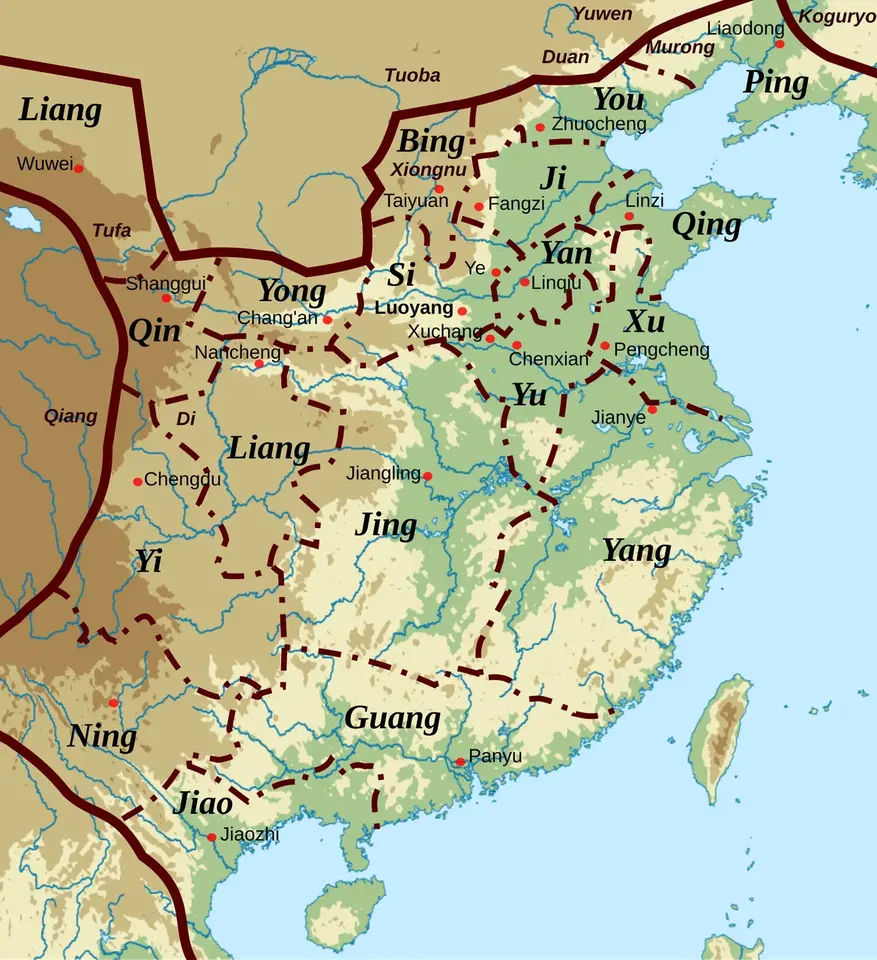
The Western Jin Dynasty (西晋, 265–316 CE) was a unified imperial dynasty of China founded by Sima Yan (Emperor Wu of Jin), grandson of Sima Yi and son of Sima Zhao, who forced the abdication of Emperor Yuan of Cao Wei. Establishing its imperial capital at Luoyang, the state was officially titled Jin and is historically designated as the Western Jin to distinguish it from the subsequent southern dynastic regime founded at Jiankang, known as the Eastern Jin. In 280 CE, the Western Jin conquered Eastern Wu, concluding nearly a century of Three Kingdoms division and reunifying China, while enacting the Land Allocation System and ushering in the brief economic prosperity celebrated as the Rule of Taikang. However, the dynastic ruling elite rapidly succumbed to extravagant luxury and factional corruption, while the Nine-Rank System institutionalized aristocratic monopoly over state governance. Emperor Wu's extensive enfeoffment of imperial princes combined with the demobilization of local commandery militias precipitated the disastrous sixteen-year War of the Eight Princes following the accession of the cognitively impaired Emperor Hui. Exploiting the devastating civil war, resettled non-Han confederations rose in open revolt across the northern frontiers. In 311 CE, Han-Zhao forces sacked Luoyang and captured Emperor Huai in the Disaster of Yongjia; in 316 CE, Liu Yao captured Chang'an, forcing the surrender of Emperor Min. The Western Jin fell after fifty-two years and four imperial reigns, plunging northern China into the Sixteen Kingdoms era while imperial survivors established the Eastern Jin south of the Yangtze River.
Sima Yan compels Emperor Yuan of Wei to abdicate, founding the Great Jin at Luoyang and establishing the Taishi reign.
Jia Chong and Du Yu complete the Taishi Law Code, incorporating Confucian mourning degrees into statutory penalties.
Admiral Wang Jun fleet captures Jianye, compelling Sun Hao to surrender and concluding nearly a century of Three Kingdoms division.
Emperor Wu promulgates the Land Allocation System, Land Quota System, and Household Tribute levy, while demobilizing commandery and county militias.
Emperor Wu dies, and the cognitively impaired Sima Zhong succeeds as Emperor Hui; Grand Tutor Yang Jun assumes the regency.
Empress Jia summons Sima Wei to execute Yang Jun, initiating the cycle of princely military intervention in court politics.
Empress Jia poisons Crown Prince Sima Yu; Sima Lun executes Empress Jia and usurps the throne, igniting the War of the Eight Princes.
While Jin princes fight across the central plains, Liu Yuan establishes Han-Zhao in Shanxi and Li Xiong founds Cheng-Han in Sichuan.
Sima Yue defeats rival princes and escorts Emperor Hui to Luoyang, subsequently poisoning him and installing Emperor Huai.
Shi Le annihilates the Jin army at Ku County; Han-Zhao armies sack Luoyang, burning palaces and capturing Emperor Huai.
Liu Yao captures Chang'an after an extended siege; Emperor Min surrenders, concluding the fifty-two-year Western Jin Dynasty.
In 249 CE (the tenth year of the Zhengshi era), Grand Tutor Sima Yi exploited the absence of Cao Wei sovereign Cao Fang and Grand General Cao Shuang during their pilgrimage to the Gaoping Tomb to launch a palace coup in Luoyang, executing Cao Shuang and seizing paramount political and military control over the Cao Wei empire. Following Sima Yi's death, his eldest son Sima Shi took charge of state administration as regent, deposing Cao Fang in favor of Cao Mao and ruthlessly crushing the armed uprisings of Guanqiu Jian and other loyalist factions in Huainan, thereby firmly consolidating the absolute authoritarian dominance of the Sima lineage over the imperial court.
Following Sima Shi's demise, his younger brother Sima Zhao inherited supreme ministerial authority. In 260 CE (the first year of the Jingyuan era), Emperor Cao Mao refused to remain a helpless figurehead and led palace retainers in a desperate armed attempt to overthrow the regent, whereupon Sima Zhao permitted his subordinates to openly assassinate the reigning monarch, installing Cao Huan as Emperor Yuan. In 263 CE, Sima Zhao dispatched Zhong Hui and Deng Ai at the head of convergent armies to conquer Shu Han, with Deng Ai executing a daring mountain crossing at Yinping to force the surrender of Liu Shan. Rewarded for this conquest, Sima Zhao was enfeoffed as King of Jin and created the Five-Rank aristocratic order.
In September 265 CE (the second year of the Xianxi era), Sima Zhao passed away, and his heir Sima Yan inherited the titles of King of Jin and Chancellor of State. In December of the same year, Sima Yan coerced Emperor Yuan of Wei into issuing an imperial decree of abdication, formally ascending the imperial altar south of Luoyang to proclaim the founding of the Great Jin Dynasty under the reign title Taishi. As Emperor Wu of Jin, Sima Yan established the imperial capital at Luoyang and posthumously elevated Sima Yi as Emperor Xuan, Sima Shi as Emperor Jing, and Sima Zhao as Emperor Wen, establishing dynastic legitimacy over northern China.
During the early years of his reign, Emperor Wu displayed energetic political administration, issuing decrees to solicit candid counsel, abolishing burdensome penal codes, and promoting capable civil and military ministers such as Jia Chong, Yang Hu, Du Yu, and Zhang Hua to reorganize state governance. In 268 CE (the fourth year of the Taishi era), the court promulgated the Taishi Law Code, establishing the principle of determining penalties according to the Five Mourning Degrees and reforming statutory jurisprudence. Concurrently, the central government dismantled the Cao Wei military colonization system, restoring public lands to displaced peasants and promoting agricultural recovery.
Achieving continental unification stood as the foremost strategic priority for the Western Jin court. In 269 CE (the fifth year of the Taishi era), Emperor Wu appointed Yang Hu as Area Commander-in-Chief of Jingzhou, stationing him at Xiangyang to oversee military preparations along the southern frontier. Yang Hu implemented benevolent policies and agricultural development to erode Eastern Wu morale while strongly advocating an amphibious invasion down the Yangtze River. Meanwhile, the emperor commissioned Wang Jun, Inspector of Yizhou, to secretly construct a colossal fleet in Ba-Shu and train naval forces, laying the strategic foundation for a coordinated land-and-water assault against Jianye.
In the winter of 279 CE (the fifth year of the Xianning era), Emperor Wu adopted the strategic counsel left by Yang Hu alongside memorials from Du Yu and Zhang Hua, appointing Jia Chong as Grand Commander and deploying over 200,000 soldiers along six converging corridors against Eastern Wu. In the spring of 280 CE, Du Yu swept through strategic strongholds across Jingzhou while Wang Jun sailed his massive fleet downstream from Sichuan, demolishing river barriers and capturing key riverine fortresses before arriving outside Jianye. Realizing resistance was futile, Sun Hao surrendered with bound hands, ending nearly a century of division and reunifying China under Jin rule.
Following continental unification, Emperor Wu declared a general amnesty, changed the reign era to Taikang, and issued an edict demobilizing local commandery and county militias to signify an era of peace, while enacting the Land Allocation System, Land Quota System, and Household Tribute levies. Peasant households gained recognized cultivation rights, stimulating agricultural labor and encouraging displaced refugees to return to their native fields. Registered households nationwide expanded beyond 3.77 million, encompassing an officially counted population exceeding sixteen million individuals, filling state granaries and inaugurating the prosperous era historically known as the Rule of Taikang.
Yet the prosperity of the Taikang era failed to conceal profound underlying governance crises. After conquering Eastern Wu, Emperor Wu gradually neglected state administration, expanding his imperial harem to over ten thousand concubines while court ministers competed in ostentatious displays of extravagance. High officials such as Jia Chong, Wang Xiang, Shi Chong, and Wang Kai accumulated immense personal fortunes, publicly competing in lavish displays such as burning candles for firewood, smashing precious coral trees, and erecting miles of luxurious silk windbreaks. Aristocratic lineages monopolized bureaucratic recruitment, cultivating a culture of frivolous decadence that eroded the foundations of imperial rule.
Drawing lessons from the fall of Cao Wei, Emperor Wu erroneously concluded that the Wei dynasty had collapsed because its imperial clan lacked military power to defend the throne. Consequently, he enfeoffed twenty-seven Sima imperial princes as regional kings, granting them personal guard regiments, fiscal revenues, and strategic military commands. Following the conquest of Wu in 280 CE, the emperor simultaneously disbanded regular commandery militias, leaving local magistrates with minimal police forces. This inverted institutional design left interior commanderies defenseless while concentrating armed forces in the hands of regional princes, creating the preconditions for catastrophic civil war.
Emperor Wu committed an irremediable error in imperial succession by designating his intellectually disabled second son, Sima Zhong, as crown prince and selecting the ruthless and domineering Jia Nanfeng, daughter of Jia Chong, as crown princess. In May 290 CE (the first year of the Taixi era), Emperor Wu passed away in Luoyang, and the cognitively impaired Sima Zhong ascended the throne as Emperor Hui. Grand Tutor Yang Jun, the emperor's maternal relative, seized supreme control over state administration and purged imperial clan rivals, triggering acute political confrontations between the maternal clan and Empress Jia that shattered central political stability.
In March 291 CE (the first year of the Yuankang era), Empress Jia forged secret imperial decrees commanding Sima Wei, Prince of Chu, to bring troops to Luoyang and execute Grand Tutor Yang Jun, exterminating his lineage and executing thousands of associates. Empress Jia subsequently manipulated Sima Wei into assassinating co-regent Sima Liang, Prince of Runan, and senior statesman Wei Guan, before immediately executing Sima Wei for unauthorized killing. Through these violent palace coups, Empress Jia eliminated all political rivals to establish personal control over the imperial government, appointing clan members such as Jia Mo and Jia Mi to entrench her faction for nearly a decade.
Although Empress Jia patronized prominent scholar-statesmen such as Zhang Hua and Pei Wei to preserve surface administrative order, her tyrannical conduct and subversion of imperial dynastic succession sparked irrepressible conflict within the ruling elite. In 299 CE (the ninth year of the Yuankang era), Empress Jia fabricated treasonous charges against Crown Prince Sima Yu, deposing him from his title before dispatching assassins to murder him in confinement the following year. This outrageous murder incited widespread fury throughout the Sima imperial clan, and in April 300 CE, Sima Lun, Prince of Zhao, led troops into the palace, executed Empress Jia and her faction, and usurped the throne.
Sima Lun's usurpation triggered widespread armed retaliation across the imperial lineage. Sima Jiong (Prince of Qi), Sima Yong (Prince of Hejian), and Sima Ying (Prince of Chengdu) formed an allied coalition that defeated and executed Sima Lun, restoring Emperor Hui to the throne. However, the victorious princes immediately descended into brutal civil warfare over supreme regency powers. Sima Ai (Prince of Changsha) and Sima Yue (Prince of Donghai) were subsequently drawn into the bloodshed, with rival princes enlisting Xiongnu, Xianbei, and other nomadic cavalries to reinforce their armies. The sixteen-year War of the Eight Princes ravaged the central plains and destroyed the demographic heartland of northern China.
In 306 CE (the first year of the Guangxi era), Sima Yue defeated his rival princely factions and escorted Emperor Hui back to the scorched ruins of Luoyang, subsequently poisoning the emperor and elevating Emperor Wu's twenty-fifth son, Sima Chi, to the throne as Emperor Huai under the Yongjia reign title. While the War of the Eight Princes drew to an end, the Western Jin imperial palace guards had been obliterated, the central plains and Guanzhong lay devastated with corpses filling riverbanks, and both centralized administrative control and national frontier defenses had completely disintegrated, leaving the imperial state an empty shell.
Since the Eastern Han and Wei-Jin periods, vast numbers of Xiongnu, Jie, Xianbei, Di, and Qiang pastoralists had migrated into the northern interior and settled alongside Han populations, suffering unrelenting economic exploitation, exorbitant taxation, and enslavement by corrupt Jin officials and powerful landholding clans. The total collapse of imperial defense forces during the War of the Eight Princes provided the non-Han peoples with an unprecedented opportunity to rise in armed revolt. In 304 CE, the Xiongnu aristocrat Liu Yuan declared himself King of Han at Zuoguocheng, while the Di leader Li Xiong established Cheng-Han in Chengdu, triggering the onset of the Sixteen Kingdoms.
During the Yongjia reign, Han-Zhao armies mounted relentless invasions against the central plains. In April 311 CE, Sima Yue died of illness while on campaign; Grand Situ Wang Yan subsequently attempted to escort more than 100,000 imperial troops, ministers, and court officials toward Donghai, only to be surrounded and annihilated by Shi Le's cavalry at Ningping City in Ku County, resulting in the death of virtually the entire civil and military leadership. In June 311 CE, Han-Zhao commanders Liu Yao, Wang Mi, and Huyan Yan captured Luoyang, burning down imperial palaces and ancestral temples, slaughtering over thirty thousand residents, and capturing Emperor Huai in the Disaster of Yongjia.
Following the fall of Luoyang, Emperor Huai was transported to Pingyang, subjected to public indignities, and poisoned by Han-Zhao ruler Liu Cong in 313 CE. Loyal ministers Xun Fan and Yan Ding escorted Emperor Wu's grandson Sima Ye to Chang'an, enthroning him as Emperor Min under the Jianxing reign title. Isolated in Guanzhong without grain, military reinforcements, or effective administrative reach beyond the immediate capital area, the regime was indefensible. In August 316 CE, Han-Zhao general Liu Yao placed Chang'an under total siege; after months of famine and cannibalism, Emperor Min surrendered in November, bringing the fifty-two-year Western Jin Dynasty to an end.
The extinction of the Western Jin inflicted an immense catastrophe upon northern Chinese civilization, plunging the northern heartland into more than 130 years of fragmented warfare during the Sixteen Kingdoms era. Prominent aristocratic clans such as the Langya Wang and Chenjun Xie lineages, alongside millions of displaced northern refugees, migrated southward across the Yangtze River in the historic movement known as the Crossing of the Robes and Caps. In 317 CE, Sima Rui, Prince of Langya, ascended the throne at Jiankang with the backing of southern and northern emigre elites, establishing the Eastern Jin and shifting China's economic and cultural center permanently toward the south.
Surveying the historical trajectory of the Western Jin, the dynasty achieved complete continental unification within fifteen years of founding, yet collapsed into total extinction just thirty-six years after conquering Eastern Wu. The Sima lineage ascended the imperial throne through aristocratic palace coups, lacking broad popular legitimacy and moral authority. Emperor Wu sought to safeguard his dynasty through extensive princely enfeoffments and universal militia disarmament, an institutional miscalculation that shattered the balance of power between court and provinces. Imperial incompetence and factional greed at the dynastic core plunged the reunited empire into centuries of division.
The downfall of the Western Jin marked the collapse of aristocratic-imperial co-governance while accelerating unprecedented ethnic and cultural integration across China. The massive southward migration of northern populations transformed the vast wilderness of the Yangtze river basin, stimulating rapid advances in southern agriculture and commercial exchange. Meanwhile, prolonged coexistence, conflict, and cultural exchange among diverse northern nationalities gradually eroded ethnic barriers, generating the transformative historical momentum that culminated in the Northern Wei Sinicization reforms and the eventual grand reunification of the Sui and Tang dynasties.
The central administrative apparatus of the Western Jin inherited the institutional framework of Cao Wei while establishing the developmental prototype for the tripartite secretarial system of later imperial dynasties. The Department of State Affairs functioned as the supreme executive organ of national administration, directing judicial affairs, state revenue, and routine military governance under the leadership of the Director and Vice Directors of State Affairs, who coordinated six executive sections including Personnel, Civil Affairs, and Treasury. The Secretariat, headed by the Supervisor and Director of the Secretariat, took charge of drafting imperial decrees and managing sensitive state papers, while the Chancellery, staffed by Palace Attendants and Cavalier Attendants, provided confidential counsel to the sovereign.
To honor senior founding statesmen and imperial elders, the Western Jin instituted the titular supreme dignities of Grand Tutor, Grand Guardian, Grand Commandant, Minister over the Masses, Minister of Works, Grand Marshal, and Grand General, collectively designated as the Eight Dukes, which carried supreme prestige but typically lacked specific departmental portfolios. In practical court politics, however, powerful imperial princes or maternal relatives frequently held concurrent commands as Area Commander-in-Chief of Central and Outer Military Affairs and General of the Imperial Guards, securing direct control over the palace garrison. When these co-regents came into political conflict, they exploited their military authority to execute bloody palace purges, destabilizing dynastic governance.
The Nine-Rank System created by Emperor Wen of Cao Wei underwent profound structural degeneration under the Western Jin, transforming into a closed institutional instrument for aristocratic clans to monopolize state power. Regional recruitments across provinces and commanderies were thoroughly captured by elite lineages, whose adjudicators abandoned the original criteria of talent, moral virtue, and administrative capability in favor of ancestral lineage and pedigree. Sons of eminent aristocratic clans were routinely assigned superior ranks regardless of personal incompetence, while talented scholars from humble backgrounds were permanently relegated to subordinate clerical positions without opportunity for advancement.
This institutional degeneration solidified a rigid aristocratic oligarchy dominated by prominent northern lineages such as the Xun of Yingchuan, Yang of Taishan, Pei of Hedong, Wang of Taiyuan, and Jia of Pingyang. These aristocratic families intermarried, formed factional alliances, and monopolized prime secretarial and advisory offices throughout the bureaucracy. Jin statesman Duan Zhuo submitted impassioned memorials protesting these institutional inequities, while poet Zuo Si lamented in his famous verses that 'vigorous pines languish in valley bottoms, while tender seedlings flourish atop mountain summits,' capturing the reality that high offices held no humble scholars while lower offices held no eminent clans.
Reflecting on the fall of Cao Wei due to the isolation of its imperial lineage, Emperor Wu revived the feudal enfeoffment system upon establishing the Western Jin. Based on institutional blueprints submitted by founding minister Pei Xiu, the emperor established the Five-Rank aristocratic hierarchy of Duke, Marquis, Count, Viscount, and Baron to reward founding merit, while simultaneously enfeoffing twenty-seven Sima imperial clan members as regional kings over substantial territories. Emperor Wu intended for these imperial princes to serve as protective shields for the dynastic house, yet this institutional structure inadvertently cultivated rival power centers that would eventually dismantle the empire.
Western Jin princely kingdoms enjoyed extensive territorial autonomy and authorized military establishments. Imperial regulations stipulated that first-class kingdoms maintain three regiments totaling 5,000 troops, second-class kingdoms maintain two regiments totaling 3,000 troops, and small kingdoms maintain 1,500 troops under the command of kingdom military aides. Upon reaching adulthood, imperial princes took up provincial posts as regional inspectors while receiving credentials as Area Commanders-in-Chief over multiple provinces, securing absolute authority over military mobilization, official appointments, and local taxation, thereby evolving into semi-independent warlords capable of challenging the imperial center.
In 280 CE, following the conquest of Eastern Wu, Emperor Wu proclaimed universal disarmament and officially promulgated the demobilization of provincial militias. Central decrees ordered all regional inspectors and commandery administrators to disband their regular standing garrisons, allowing large commanderies to retain merely one hundred armed bailiffs and small commanderies only fifty to maintain local public order. Emperor Wu sought to eliminate local armed rebellions by stripping magistrates of military power while redirecting financial resources toward civil reconstruction, yet in practice this policy produced disastrous defensive consequences.
Universal disarmament failed to curb the private military forces of imperial princes while completely destroying the defensive capabilities of interior commanderies. When peasant uprisings or non-Han nomadic incursions broke out, civil magistrates possessed no military means to defend their walls, forcing the central court to rely on princely armies or foreign mercenaries. This policy created an extreme strategic imbalance characterized by a defenseless interior and heavily armed regional princes, clearing the path for the War of the Eight Princes and enabling foreign cavalries to sweep through the central plains without facing organized resistance.
Statutory codification represented a major institutional achievement of the Western Jin. In 268 CE, Emperor Wu promulgated the Taishi Law Code (also known as the Jin Code), compiled by an expert commission led by Jia Chong, Du Yu, and Zhang Fei. The codification streamlined the cumbersome legal statutes inherited from the Han and Wei dynasties, expelling redundant and excessively cruel provisions. Comprising twenty fascicles, 620 articles, and over 27,000 characters, the code was celebrated for its logical clarity, systematic structure, and moderate penalties, standing as the culminating legal achievement of the Wei-Jin period.
The Taishi Law Code marked an epochal milestone in Chinese legal history by formally establishing the statutory principle of determining penalties according to the Five Mourning Degrees. The code systematically integrated the Confucian kinship hierarchy—comprising five grades of mourning attire based on degree of blood relationship—into criminal jurisprudence as the statutory standard for measuring criminal liability and punitive severity. Offences committed against senior kin were penalized more severely while offences against junior kin received leniency, completing the process of Confucianizing statutory law and directly inspiring the legal architecture of the Sui and Tang codes.
Regional civil administration maintained the traditional three-tier administrative hierarchy of provinces, commanderies, and counties. Following continental unification, Emperor Wu adjusted regional administrative boundaries, establishing Yizhou, Liangzhou, Qinzhou, Ningzhou, and Pingzhou, while carving Jiangzhou out of Jingzhou and Yangzhou, expanding the total number of provinces to nineteen. Regional inspectors oversaw provincial civil and judicial surveillance, commandery governors managed fiscal revenue and local judiciary, and county magistrates supervised agricultural cultivation and household registration, maintaining a comprehensive imperial bureaucratic apparatus.
The central surveillance apparatus of the Western Jin comprised the Censorate and the Colonel Director of Retainers. The Censorate, headed by the Palace Assistant Censor, was tasked with monitoring bureaucratic integrity and impeaching delinquent officials, while the Colonel Director of Retainers possessed judicial rank equivalent to the Nine Ministers, exercising direct investigatory and arrest authority over seven commanderies surrounding the capital. However, amid widespread aristocratic factionalism and imperial kinship meddling, surveillance organs were co-opted into factional political struggles, rendering them powerless to curb aristocratic corruption and abuse of office.
The Western Jin official ranking system established nine formal bureaucratic grades as the statutory basis for official salaries, promotions, and tax exemptions. Although regular bureaucratic performance evaluations were nominally retained, administrative assessments under aristocratic domination degenerated into nepotistic rubber-stamping. In the later decades of the dynasty, the open sale of public offices became widespread, administrative discipline collapsed, and bureaucratic elites pursued private enrichment at the expense of national welfare, depriving the imperial state of structural resilience when confronted with existential domestic and foreign crises.
Beyond regular bureaucratic offices, the ruling elite extensively maintained private administrative staffs within princely and military headquarters. High dignitaries, regional inspectors, and princely commanders were legally authorized to recruit private secretaries, registrars, and advisors, assembling personal retinues beholden to their patrons rather than the imperial state. These clientelist loyalties superseded public administrative obligations, causing regional subordinates to serve their immediate lords rather than the imperial throne, fragmenting dynastic authority and providing regional warlords with organized political networks.
In summary, the political institutions of the Western Jin exhibited pronounced aristocratic and oligarchic characteristics. Although the dynasty refined administrative structures and achieved statutory milestones inherited from earlier eras, its institutional operations were fundamentally oriented toward preserving the monopolistic privileges of a small circle of aristocratic lineages. In the absence of institutional checks and imperial moral authority, aristocratic factionalism and princely militarism devoured each other, turning the very mechanisms intended to safeguard dynastic rule into the agents of its destruction.
The Western Jin military system inherited the hereditary military household system from the Three Kingdoms, maintaining registered soldiers and their families on distinct military rolls that bound them to hereditary service across generations. The imperial armed forces were bifurcated into Central Troops and regional Outer Troops. The Central Troops served as the elite palace guard and strategic reserve around Luoyang, comprising inner palace units under the Left and Right Wing Guards as well as metropolitan garrison forces outside the palace walls, directed by the Central Army Commander and Central Army Protector.
The provincial Outer Troops operated under regional military commands across vital strategic theaters. The court created overarching military jurisdictions in Jingzhou, Yuzhou, Yangzhou, Youzhou, Bingzhou, and Guanzhong, commanded by senior generals bearing credentials as Area Commanders-in-Chief based at strategic hubs such as Xiangyang, Xuchang, Shouchun, Yecheng, and Chang'an. These regional commanders held discretionary authority to execute capital penalties and mobilize armies to suppress local insurrections and guard the frontiers, but during the War of the Eight Princes, these commands devolved into private armies of rival princes.
The strategic campaign to conquer Eastern Wu demonstrated superior multi-pronged planning and combined land-and-naval warfare. Prior to the invasion, Yang Hu and Du Yu fortified the Xiangyang front, implementing agricultural reserves and formulating a coordinated pincer strategy down the Yangtze River, while Wang Jun constructed colossal multideck warships in Sichuan capable of carrying over two thousand soldiers. In November 279 CE, 200,000 Jin troops mobilized along six corridors: Du Yu advanced on Jiangling, Wang Hun marched toward Huainan, Sima Zhou pushed through Tuzhong, and Wang Jun sailed downriver from Ba-Shu in a coordinated offensive.
Once the campaign commenced, the converging Jin armies coordinated their advances with overwhelming momentum. Wang Jun's naval flotilla swept downstream, clearing the iron chains and submerged stakes deployed across the Yangtze gorges before capturing the riverine strongholds of Danyang and Xiling. Simultaneously, Du Yu captured Jiangling and annihilated the Wu defending armies under Chancellor Zhang Ti, while northern columns crossed the river into Wu territory. Wang Jun's naval vanguard reached Stone City at Jianye in March 280 CE, compelling the Wu court to surrender and concluding the continental campaign in merely four months.
Since the Eastern Han and Cao Wei periods, imperial authorities had encouraged nomadic tribes to resettle within the northern interior to supply agricultural labor and military recruits. Under the Western Jin, resettled non-Han populations expanded dramatically across northern commanderies: hundreds of thousands of Southern Xiongnu occupied central Shanxi, the Jie settled in Shangdang, millions of Di and Qiang pastoralists inhabited Guanzhong and Longyou, and Xianbei federations spanned Liaodong and northern frontiers. In Guanzhong, non-Han groups accounted for approximately half the registered local population.
Western Jin aristocratic landholders and local magistrates subjected these resettled populations to ruthless exploitation and ethnic oppression. The imperial government subjected non-Han communities to crushing taxes and corvee duties, while provincial officials and landowning magnates seized their livestock and abducted tribal youths to serve as bonded agricultural laborers or domestic slaves. This severe exploitation generated intense resentment and vengeful hostility across northern tribal communities, cultivating an explosive revolutionary potential that simmered beneath the surface of Western Jin society.
In 296 CE (the sixth year of the Yuankang era), Hao Duyuan and Qi Wannian rallied Di and Qiang tribesmen in a sweeping armed rebellion across Guanzhong, repeatedly defeating Jin armies and slaying frontline commander Zhou Chu before the revolt was suppressed after years of fighting. Alarmed by the crisis, Censor Jiang Tong submitted his celebrated memorial, Discourse on Relocating the Barbarians, in 299 CE. Jiang Tong astutely analyzed the perils of ethnic friction, urging the imperial court to take advantage of internal peace to relocate northern tribal populations back to their frontier homelands.
However, the Western Jin court disregarded Jiang Tong's foresighted counsel, taking no concrete measures to relocate the tribes. In the subsequent War of the Eight Princes, rival imperial contenders openly conscripted Southern Xiongnu cavalry and Xianbei warriors to serve as strike forces in their factional civil wars, exposing the defensive vacuum of the central plains. Tribal leaders astutely recognized the military vulnerability and moral bankruptcy of the Jin dynasty, exploiting the imperial collapse to consolidate independent armies and proclaim sovereign dynasties across northern China.
In frontier governance and international diplomacy, the Western Jin effectively maintained the Western Regions administrative framework inherited from previous dynasties. The court established the Western Regions Colonel at Gaochang west of Dunhuang and the Western Regions Chief Commandant at Haitou, overseeing state agricultural colonies and safeguarding trade routes along both northern and southern Silk Roads. Central Asian oasis kingdoms—including the Kushan, Kangju, Kucha, Khotan, and Shanshan—regularly sent tribute embassies to Luoyang, maintaining commercial and cultural exchange across Eurasia.
Along the northeastern and southern frontiers, the Western Jin established Pingzhou to govern Liaodong, Lelang, and Daifang, conferring titles on Murong Xianbei leaders and receiving tribute from Korean kingdoms including Goguryeo and Baekje. In the southern frontier, following the fall of Wu, the Jin reasserted authority over Jiaozhi, Jiuzhen, and Rinan while repelling incursions from Linyi, securing maritime Silk Road trade across the South China Sea. However, as civil war tore through the central plains, tribute relations broke down and frontier administrative structures disintegrated completely.
The rapid disintegration of the Western Jin defense system offered profound historical lessons. The hereditary military household system degraded combat morale, universal militia disarmament hollowed out local self-defense, and the privatization of provincial armies transformed public defense forces into instruments of fratricidal slaughter. The imperial center failed both to integrate resettled non-Han populations and to maintain strategic vigilance on its borders, leaving the empire without functional defensive shields when external invasions struck and ensuring its catastrophic demise.
Beyond defensive collapse, the Western Jin suffered total breakdown in military logistics and fiscal maintenance. Aristocratic corruption caused imperial armories to decay, while warhorses and military grain were embezzled to supply private estates. When prolonged warfare erupted, the depleted state treasury could not furnish regular pay, reducing imperial forces to roving bands that pillaged local commanderies more ruthlessly than external enemies, alienating civilian populations and producing widespread battlefield desertion and organizational paralysis.
The military and diplomatic trajectory of the Western Jin captured the extreme contrast of a unified empire plummeting from peak triumph to sudden ruin. It accomplished the continental unification of China through brilliant strategic coordination, only to forfeit its entire defense capabilities within decades through institutional decay, ethnic oppression, and strategic myopia. This military tragedy demonstrated that military grandeur without domestic political integrity is a fragile illusion, and an empire devoid of public cohesion cannot withstand systemic domestic and foreign crises.
The core transformation of Western Jin economic policy lay in the abolition of Cao Wei military agricultural colonies and the reform of land tenure. By the late Cao Wei period, state agricultural colonies had become inefficient, with corrupt colony officials ruthlessly exploiting tenant farmers and sparking widespread desertions. In 280 CE, following the conquest of Eastern Wu, Emperor Wu formally abolished the agricultural colony administration, restoring colony lands to peasant cultivators and promulgating the Land Allocation System and Land Quota System to provide statutory protection for agricultural restoration.
The Land Allocation System formally recognized peasant land tenure and cultivation rights. Imperial statutes decreed that adult male commoners were entitled to occupy seventy mu of land and adult females thirty mu, while minor males (aged eleven to fifteen and sixty-one to sixty-five) were allocated thirty-five mu and minor females fifteen mu. Rather than distributing state land outright, the system legally validated and protected smallholder claims to newly cleared land within statutory limits, providing powerful incentives for displaced refugees to reclaim fallow fields and resume agricultural production.
Operating in close conjunction with land allocation, the Land Quota System served as the statutory mechanism for collecting agricultural grain rent. The law stipulated that adult males were assessed grain tax on fifty mu of land and adult females on twenty mu, while minor males were assessed on twenty-five mu and minor females were exempted. The statutory tax rate was set at eight sheng of grain per mu, yielding four dan annually from each adult male. This compulsory tax assessment applied regardless of actual cultivated acreage, forcing peasants to farm diligently to meet statutory tax obligations.
Alongside agricultural land taxes, Emperor Wu instituted the Household Tribute levy to collect silk and hemp textiles from registered households. The tribute statute mandated that households headed by an adult male pay an annual levy of three bolts of silk and three pounds of silk floss, while households headed by females or minor males paid half that amount. In peripheral frontier commanderies and non-Han tribal districts, levies were adjusted to local products such as cloth or animal pelts, establishing the foundational institutional framework for China's household-based tribute taxation.
While regulating commoner levies, the Western Jin codified the economic privileges of the aristocracy through the Official Landholding and Client Exemption System. The statute established statutory landholding quotas based on bureaucratic rank from the first to ninth grades: first-rank officials were legally entitled to hold fifty qing of land, decreasing by five qing for each subsequent grade down to ten qing for ninth-rank officials. This legislation legitimized the unchecked land acquisitions of aristocratic clans, allowing high officials to amass thousands of mu of fertile farmland under the protection of statutory law.
High-ranking officials enjoyed both massive land allotments and statutory exemptions for extended kin and client retainers. Depending on official rank, dignitaries were entitled to exempt kin within three to nine degrees of relationship from corvee duties, while retaining one to fifteen households of tenant clients and one to three personal retainers free of state obligations. These dependent retainers were legally removed from state household registers, paying rent exclusively to their aristocratic masters and providing private manorial estates with an abundant, loyal labor force.
The institutionalization of aristocratic landholding spurred the rapid expansion of private manorial estates across northern China and the Yangtze basin. Senior aristocrats such as Jia Chong, Wang Kai, and Shi Chong exploited their political privileges to enclose fertile lands along vital transportation arteries, developing sprawling manors combining agriculture, forestry, animal husbandry, and commerce. Within these estates, magnates constructed dozens of water mills to mill grain for massive profits, employing legions of client tenants, enslaved servants, and private retainers within self-sufficient manorial domains.
The unchecked expansion of aristocratic manorialism inflicted severe damage on state finances. Powerful clans used legal privileges to swallow peasant lands and enclose mountain pastures, forcing dispossessed smallholders to surrender their autonomy and seek protection on aristocratic estates as dependent tenants. Consequently, registered taxpaying households and taxable farmland contracted precipitously, steadily eroding imperial tax revenues and laying the economic foundation for state financial insolvency and political collapse.
During the initial implementation of the Land Allocation System, northern agriculture experienced notable recovery. Emperor Wu prioritized water conservancy, commissioning the repair of massive irrigation networks such as the Baimapo Reservoir developed by Deng Ai in the Huai River basin and dredging grain canals connecting to imperial granaries in Luoyang. Throughout the Taikang reign, northern China enjoyed consecutive abundant harvests, grain prices dropped to tens of copper cash per bushel, and state granaries overflowed with reserve grain, establishing the material prosperity of the Taikang era.
Accompanied by postwar stability and economic recovery, registered population figures expanded markedly. In 280 CE, following the conquest of Wu, the Western Jin incorporated 520,000 Wu households and 2.3 million individuals; by the official census of 282 CE (the third year of the Taikang era), registered households nationwide reached 3.77 million, encompassing over 16.16 million individuals. If unregistered tenant clients on private manorial estates and unassimilated non-Han populations are included, the actual population exceeded twenty million, representing the demographic peak of the Wei-Jin period.
In stark contrast to agrarian recovery, commercial trade and monetary circulation suffered severe stagnation. Over its fifty-two-year rule, the Western Jin never cast large-scale bronze coinage, relying on pre-existing Cao Wei five-zhu coins and ancient Han currencies. Due to severe currency shortages and debased coins, commercial exchange rapidly reverted to barter following the outbreak of the War of the Eight Princes, with bolts of silk and measures of grain replacing metallic currency as medium of exchange and standard of value, causing commercial markets to wither.
Commercial stagnation did not prevent the ruling nobility from amassing enormous personal fortunes through extortion and commercial monopolies. Shi Chong, while serving as Inspector of Jingzhou, openly plundered passing merchant caravans to rival royal wealth, staging extravagant banquets at his Jingu Garden, while Wang Kai relied on imperial maternal kinship to accumulate rare treasures. The two engaged in competitive displays of wealth: Shi Chong fueled cooking fires with wax candles and smashed precious coral trees, while Wang Kai washed vessels with syrup and erected miles of purple silk windbreaks, signaling the moral bankruptcy of the regime.
Viewed from the long-term evolution of Chinese economic institutions, the Western Jin land and tax reforms served as an essential historical bridge. Linking the Cao Wei colonization system with the Northern Wei Equal-Field System and the Tang Dynasty's grain-and-cloth tax structure, its principles of per-capita land allocation and household cloth levies profoundly influenced imperial tax law for centuries. Yet because the system compromised completely with aristocratic privilege, it failed to curb land monopolization, ultimately undermining the economic foundations of the empire.
Western Jin intellectual discourse was defined by the deepening evolution and contentious debates of Xuanxue metaphysics. The doctrine of 'valuing nothingness' pioneered during the Zhengshi period by He Yan and Wang Bi remained influential, asserting that nothingness formed the fundamental ontological root of heaven and earth. However, in response to the cynical manipulation of Confucian moral codes by the Sima house to legitimize bloody usurpation, statesman Pei Wei composed the Treatise on Exalting Being, arguing that all entities exist in their own right and urging a return to institutional rites and moral order.
Amid the ongoing debates between valuing nothingness and exalting being, Guo Xiang composed his monumental commentary on the Zhuangzi, formulating the doctrine of self-transformation that represented the philosophical culmination of Xuanxue metaphysics. Guo Xiang argued that all things arise spontaneously and transform autonomously without reliance on a transcendent creator or primordial nothingness. By harmonizing Confucian moral codes with Daoist natural spontaneity, Guo Xiang proclaimed that 'moral teaching is identical with nature,' profoundly influencing the trajectory of Chinese philosophy.
Alongside the proliferation of metaphysical speculation, the scholar-gentry indulged in the fashionable practice of pure conversation. Grandees such as Grand Situ Wang Yan and Yue Guang occupied premier ministerial offices while neglecting practical governance, gathering companions to debate Laozi and Zhuangzi while wielding white-tailed whisks in pursuit of conversational virtuosity. Intellectuals affected eccentric detachment, imitating the Seven Sages of the Bamboo Grove by spurning social conventions, fostering a culture of detachment that later historians lamented as 'pure conversation ruining the state.'
Accompanied by aristocratic extravagance, society descended into an obsessive pursuit of material wealth. Confronted with the open sale of offices and moral decay, hermit scholar Lu Bao composed the satirical masterpiece Discourse on the Money God. Employing biting wit, Lu Bao attacked a venal society where 'money, having no ears, can summon ghosts and spirits' and where 'wealth without virtue commands honor while power without merit draws adoration,' unmasking how commercialized corruption had destroyed the moral and institutional integrity of the Western Jin state.
In literary composition, the Taikang era attained a radiant peak in the history of classical poetry and prose, celebrated as Taikang Literature. Writers of this era emphasized ornate diction, parallel syntactic balance, and euphonic rhythm, establishing the refined Taikang poetic style. The literary world was dominated by the celebrated group known as the 'Three Zhangs, Two Lus, Two Pans, and One Zuo'—comprising brothers Zhang Zai, Zhang Xie, and Zhang Kang, brothers Lu Ji and Lu Yun, uncle and nephew Pan Yue and Pan Ni, alongside the commoner genius Zuo Si.
Taikang literature excelled not only in prolific output but also in groundbreaking theoretical and poetic achievements. Lu Ji authored the Poetic Exposition on Literature (Wen Fu), the earliest systematic treatise in Chinese literary criticism examining artistic psychology, inspiration, and creative composition. Zuo Si dedicated ten years of labor to crafting the Poetic Expositions on the Three Capitals (Sandu Fu), an extraordinary descriptive masterpiece that caused paper prices in Luoyang to soar, while his Eight Poems on History boldly criticized aristocratic injustice.
The fields of historiography and natural science witnessed the creation of milestone scholarly works. Former Shu Han official Chen Shou compiled the sixty-five-fascicle Records of the Three Kingdoms, offering a rigorous, concise historical record that secured its status among the Four Great Ancient Histories. Eminent cartographer Pei Xiu formulated the 'Six Principles of Cartography,' producing the monumental Map of Regional Lands across the Tribute of Yu and laying the scientific foundation for classical Chinese cartography.
In ancient medicine and healthcare, Western Jin physicians bequeathed epoch-making classics to posterity. Imperial Physician Wang Shuhe compiled and organized the surviving fragments of Zhang Zhongjing's Treatise on Cold Pathogenic and Miscellaneous Diseases while authoring the Pulse Classic, the earliest specialized Chinese medical work establishing twenty-four diagnostic pulse categories. Scholar Huangfu Mi, while battling chronic paralysis, systematically compiled the Systematic Classic of Acupuncture and Moxibustion in twelve fascicles, establishing the foundational treatise of traditional acupuncture.
Mathematical sciences achieved revolutionary theoretical breakthroughs during this period through the work of Liu Hui. In his commentary on the Nine Chapters on the Mathematical Art, Liu Hui created the 'Circle-Cutting Method' based on mathematical limit concepts approximating modern calculus. By inscribing polygons with ever-increasing numbers of sides within a circle, he calculated pi accurately to 3.1416, transforming traditional empirical calculations into rigorous geometric and theoretical demonstrations.
The Western Jin represented a foundational era for the spread and acculturation of Mahayana Buddhism in northern China. Eminent monk Dharmaraksa, born of a Yuezhi lineage, traveled between Dunhuang, Chang'an, and Luoyang, mastering thirty-six Central Asian languages to translate over 150 Buddhist scriptures, including the Radiant Prajnaparamita Sutra and the Lotus Sutra. Mahayana teachings on emptiness engaged in dialogue with Xuanxue metaphysics, laying the intellectual groundwork for the flourishing of Buddhism during the Eastern Jin and Southern Dynasties.
In Daoist religion and classical calligraphy, Western Jin society displayed diverse cultural accomplishments. Daoist scholar Ge Hong traveled extensively across northern China collecting alchemical formulas and esoteric lore, gathering the source material for his Daoist compendium The Master Embracing Simplicity. In calligraphy, Wei Heng composed the earliest theoretical study on script evolution, Treatise on the Four Calligraphic Scripts, while Suo Jing achieved fame for his dynamic cursive calligraphy, marking the transition from clerical script to regular and running hands.
Ceramic manufacture and handicraft production achieved major breakthroughs during the Western Jin. The Yue kilns of Zhejiang perfected high-fired celadon technology, producing durable stoneware with lustrous green glazes and crafting vessels such as granary jars, tiger-shaped vessels, and chicken-head ewers inspired by bronze ritual shapes. Northern papermaking and early woodblock carving techniques also spread widely through Luoyang, providing the material foundation for the rapid circulation of literary and scientific texts.
Western Jin cultural production manifested a stark polarity between profound intellectual insight and moral decadence. On the one hand, philosophers, poets, physicians, and scientists created brilliant intellectual achievements that enriched classical Chinese civilization; on the other hand, the ruling elite's embrace of nihilistic hedonism and ostentatious wealth reflected a profound collapse of moral purpose under autocratic corruption, serving as a melancholy cultural prelude to the devastating fall of the empire.
Sima Yan, Sima Zhong, Sima Chi, Sima Ye.
| Sovereign | Reign Dates | Temple / Posthumous Name | Major Governance Achievements and Historical Stature |
|---|---|---|---|
| Sima Yan | 265–290 CE | Shizu / Emperor Wu | Founding emperor of the Western Jin. Coerced the abdication of Cao Wei, promulgated the Taishi Law Code, enacted the Land Allocation System, and conquered Eastern Wu to unify China; in his later years, extensive princely enfeoffments and militia disarmament laid the groundwork for civil war. |
| Sima Zhong | 290–307 CE | — / Emperor Hui | Second son of Emperor Wu. Cognitively impaired; his consort Empress Jia monopolized court authority and murdered the crown prince, triggering the sixteen-year War of the Eight Princes; the central plains were devastated, non-Han groups revolted, and he was poisoned by Sima Yue in 307 CE. |
| Sima Chi | 307–313 CE | — / Emperor Huai | Twenty-fifth son of Emperor Wu; elevated by Sima Yue following Emperor Hui's death; attempted administrative reforms but remained constrained by factional commanders; captured by Han-Zhao forces when Luoyang fell in 311 CE and poisoned in Pingyang in 313 CE. |
| Sima Ye | 313–316 CE | — / Emperor Min | Grandson of Emperor Wu, enthroned in Chang'an following Emperor Huai's capture; held an isolated capital without military resources; surrendered when Chang'an was besieged by Liu Yao in 316 CE; executed in 318 CE, concluding the Western Jin. |
Emperor Taizong of Tang evaluated Emperor Wu in the Book of Jin:
"Emperor Wu inherited the accumulated foundations of successive generations; according with heavenly timing, he accepted the abdication of Cao Wei, assuming the imperial throne... Unifying the four seas, his prestige resounded across distant realms. Yet while his martial achievements were established, his virtuous governance showed deficiencies. Replacing the weak with the strong, one must discern the principles of order and disorder... His enfeoffment of imperial princes was excessively broad, leading kin to slaughter one another and the dynasty to collapse; tragic indeed!"
Gan Bao, Eastern Jin official and historian, analyzed the causes of the Western Jin collapse in his General Treatise on the Annals of Jin:
"In former days, Emperor Xuan planned the dynastic mandate with grand strategic intellect, and Emperor Wen completed its foundation... In the reign of Emperor Wu, the six directions were unified, and the populace enjoyed harmony. Yet from the Yuankang era onward, the sons of nobility and royal princes regarded unrestrained indulgence as nobility and moral standards as vulgarity, creating a pervasive social fashion. By the close of Emperor Hui reign, the imperial house slaughtered one another and commoners suffered devastation; never in history has a dynasty decline occurred with such rapid speed."
Philosopher Wang Fuzhi reflected on the fall of the Western Jin in Reading the Comprehensive Mirror for Aid in Governance:
"The fall of the Western Jin was not caused by the ferocity of external nomadic groups, but by the fratricidal slaughter among the Sima clan itself; it was not caused by the arrogance of the Eight Princes, but by Emperor Wu unmeasured enfeoffments, which set the precedent for kin to destroy kin."
Although the unification achieved by the Western Jin was short-lived, the Taishi Law Code established a milestone in the Confucianization of Chinese statutory jurisprudence, while the Land Allocation and Land Quota systems directly influenced the Equal-Field System of Northern Wei and the Tang Dynasty tax structure. Furthermore, the literary achievements of the Taikang era and the evolution of cursive calligraphy remain significant cultural landmarks. At the same time, the rapid collapse of the Western Jin served as an enduring historical lesson for subsequent dynasties regarding the dangers of aristocratic factionalism, princely enfeoffments, frontier administrative neglect, and succession crises.
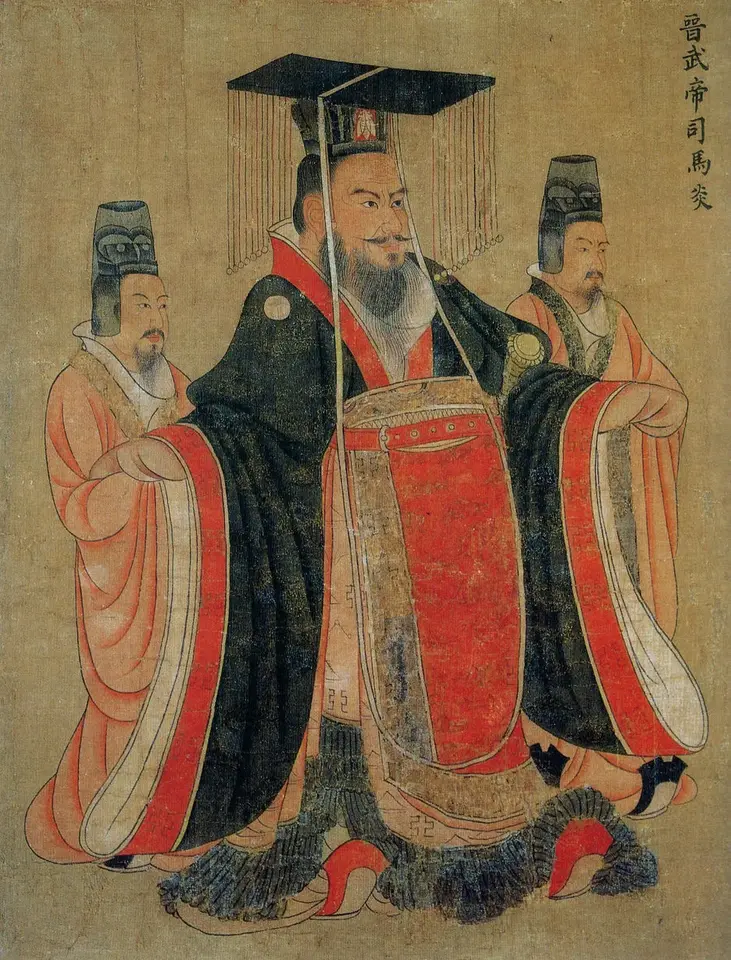 Western Jin Dynasty (西晋)
Historical figure
Emperor Wu of Jin (晋武帝司马炎, 236 – May 16, 290), personal name Sima Yan (司马炎), courtesy name Anshi, was the founding emperor of the Western Jin dynasty, whose historic reign brought a decisive conclusion to the century-long fragmentation of the Three Kingdoms and temporarily unified China under a centralized monarchy. The grandson of Cao Wei grand strategist Sima Yi and the eldest son of Sima Zhao and Empress Wenming (Wang Yuanji), he inherited the rank of King of Jin and Chancellor of the State in September 265. In February 266, he formally accepted the abdication of Emperor Yuan of Wei (Cao Huan), establishing the Jin dynasty with its imperial capital at Luoyang. During the first half of his reign, Emperor Wu displayed energetic statecraft and admirable moderation. He promulgated the monumental Taishi Code, which harmonized Confucian ethical norms with statutory criminal law, founded the National University (Guozi Xue) to educate talented scholars, and rehabilitated the war-shattered economy through tax relief and extensive irrigation projects. In 279–280, overriding vocal opposition from conservative ministers, he orchestrated a masterly amphibious offensive of two hundred thousand troops along the Yangtze River, rapidly forcing Sun Hao of Eastern Wu to surrender and reuniting China for the first time since the fall of the Han dynasty. Following reunification, he promulgated the landmark Land Allotment System (Zhan Tian Zhi) and Household Levy System (Hu Diao Zhi), inaugurating the era of agrarian abundance known as the Rule of Taikang. However, total military victory catalyzed rapid political decay in his later years. Seeking to prevent the dynastic isolation that had crippled Cao Wei, Emperor Wu dissolved provincial garrison forces while enfeoffing twenty-seven imperial Sima princes with independent armed commands, destabilizing regional defenses. Simultaneously, the court succumbed to grotesque extravagance; the emperor expanded his inner palace to house over ten thousand consorts, using a goat-drawn carriage to select nightly partners while actively subsidizing opulent displays between favorites Shi Chong and Wang Kai. Most disastrously, he designated his mentally deficient son Sima Zhong as Crown Prince and betrothed him to the ruthless Lady Jia Nanfeng. This failure of succession triggered the catastrophic War of the Eight Princes immediately following his death in 290, plunging northern China into centuries of devastating foreign invasion and political fragmentation.
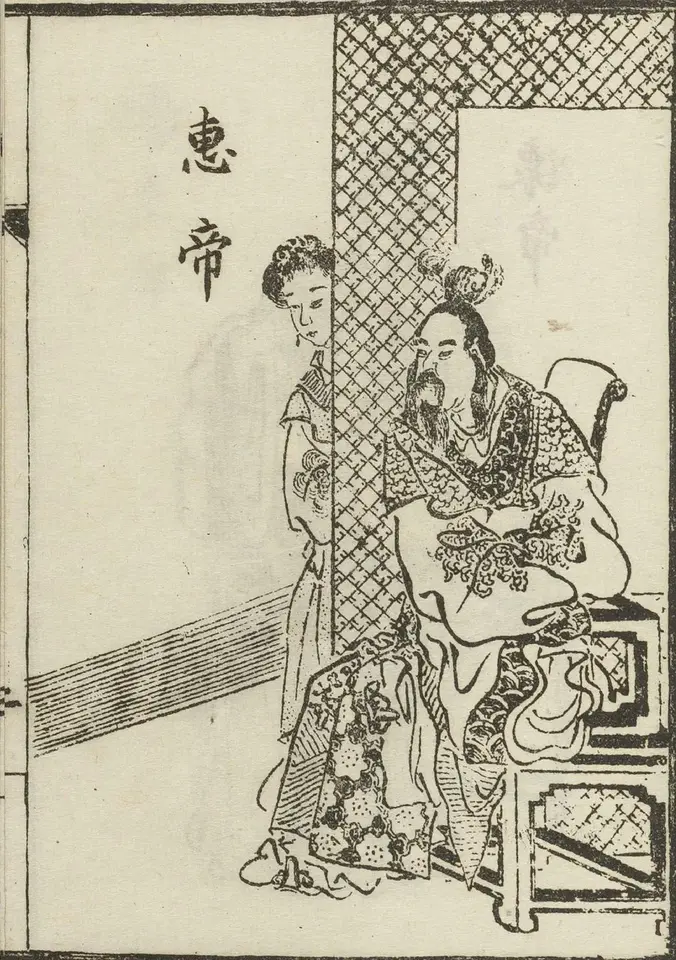 Western Jin Dynasty (西晋)
Second Emperor of Western Jin
Sima Zhong (司马衷, 259 – January 8, 307), courtesy name Zhengdu, was a native of Wen County in Henei. He was the second emperor of the Western Jin dynasty (reigned 290–307), the second son of founding emperor Sima Yan (Emperor Wu), and born to Empress Wuyuan Yang Yan. Created Crown Prince in early childhood, Sima Zhong possessed a simple, severely limited intellect, lacking the capacity for independent political judgment. In 290, Emperor Wu passed away and Sima Zhong ascended the imperial throne, adopting the era title Yongxi. Early in his reign, supreme executive authority was monopolized by his maternal relative Regent Yang Jun, initiating violent court intrigues that quickly plunged the Western Jin dynasty into internal turmoil. Throughout his seventeen-year reign, Sima Zhong served as a helpless puppet manipulated by ambitious empresses, regents, and royal princes. Empress Jia Nanfeng orchestrated a bloody palace coup to exterminate the Yang clan and starved Empress Dowager Yang to death, unleashing the catastrophic War of the Eight Princes. In 299, Empress Jia deposed and murdered Crown Prince Sima Yu, prompting Prince of Zhao Sima Lun to execute Jia Nanfeng and usurp the imperial throne in 301, demoting Sima Zhong to Retired Emperor. Although loyalist coalitions led by Prince of Qi Sima Jiong restored Sima Zhong, violent civil wars among the imperial princes escalated, allowing northern nomadic groups and western Di and Qiang tribes to establish independent regimes and dismantle Jin authority. In 304, during the Battle of Dangyin, Sima Zhong was wounded in the face by three arrows while his imperial entourage fled in terror; only Attendant Gentleman Ji Shao stood before the imperial chariot to shield the emperor with his body before being slain, his blood splattering the sovereign's robes. Moved by this ultimate sacrifice, Sima Zhong steadfastly refused to have the bloodstains washed away. Sima Zhong was subsequently abducted to Chang'an by general Zhang Fang, enduring severe deprivation before being returned to Luoyang by Prince of Donghai Sima Yue. In January 307, Sima Zhong died suddenly in Xianyang Hall at age forty-eight, widely believed to have been poisoned by Sima Yue. He was posthumously honored as Emperor Xiaohui and buried at Taiyang Mausoleum.
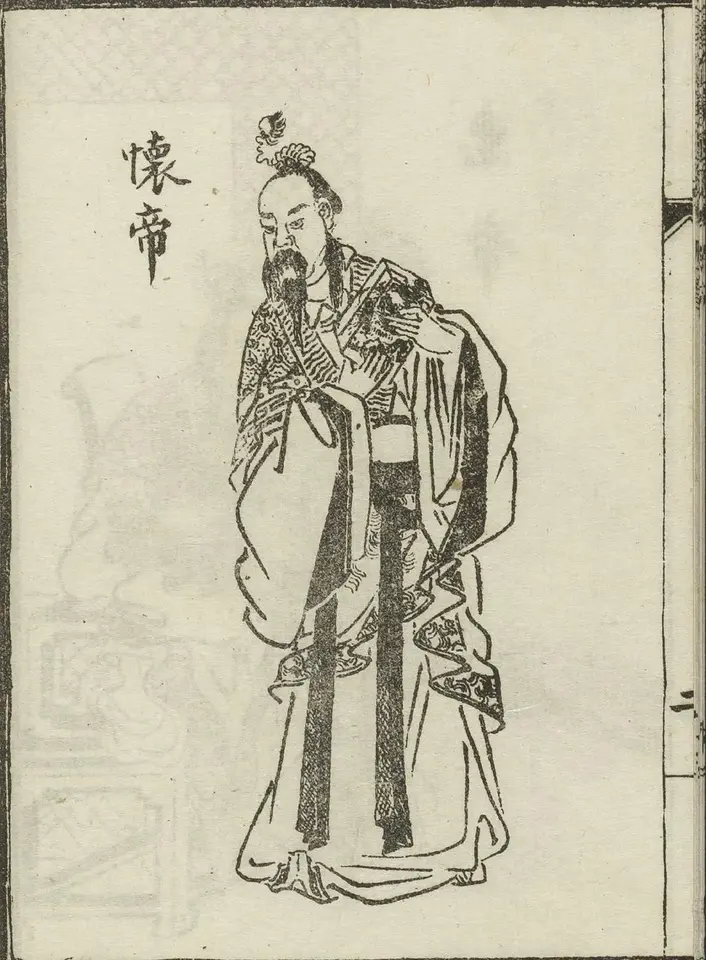 Western Jin Dynasty (西晋)
Historical figure
Sima Chi (284 – March 14, 313), courtesy name Fengdu, was a native of Wen County in Henei. He was the twenty-fifth son of Emperor Wu (Sima Yan) and younger half-brother to Emperor Hui (Sima Zhong), reigning as the third emperor of the Western Jin dynasty from 307 to 311, known posthumously as Emperor Huai of Jin. Enfeoffed early as Prince of Yuzhang, Sima Chi maintained a modest and reserved demeanor, dedicating himself to classical historical studies. Amidst the ferocious palace bloodshed of the War of the Eight Princes, he shut his doors against factional intrigue, earning widespread moral acclaim. In late 304, following compromises among regional princely warlords, he was designated Imperial Younger Brother, formally ascending the imperial throne upon Emperor Hui death in early 307 and adopting the era title Yongjia. Upon accession, Emperor Huai pursued conscientious and benevolent governance. He abolished the cruel ancestral legal statute of three-clan extermination, reestablished regular imperial court sessions at the Eastern Hall to scrutinize administrative precedents, and sought earnestly to revitalize central imperial authority. However, actual political and military hegemony was monopolized by Grand Tutor Sima Yue, while the empire suffered devastating northern famines, locust plagues, and uprisings by non-Han tribal confederations. Following Sima Yue sudden death in early 311, the main imperial field army was annihilated by Later Zhao warlord Shi Le at Ningpingcheng. Han Zhao forces subsequently stormed Luoyang, capturing Emperor Huai. In March 313, Han Zhao ruler Liu Cong had him secretly poisoned in Pingyang at the age of thirty, according him the posthumous title Emperor Xiaohuai.
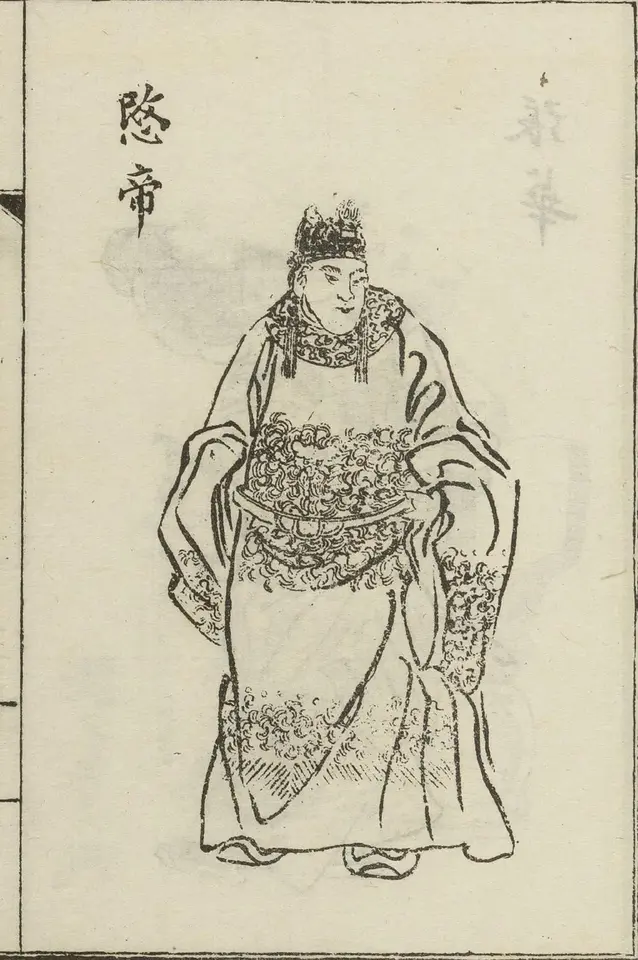 Western Jin Dynasty (西晋)
Fifth and Final Emperor of Western Jin
Sima Ye (司马邺, 300–318), courtesy name Yanqi, alternative personal name Ye (业), was the fifth and final emperor of the Western Jin dynasty, reigning as Emperor Min. The grandson of founding Emperor Wu (Sima Yan) and son of Prince Xiao of Wu (Sima Yan), he was adopted into the lineage of his late uncle, Prince Xian of Qin (Sima Jian), inheriting the title Prince of Qin. Following the sack of Luoyang during the Disaster of Yongjia in 311, which saw the capture of Emperor Huai and the slaughter of his father, eleven-year-old Sima Ye disguised himself and fled on foot south to Mixian before seeking sanctuary in the Guanzhong region. In 312, loyalist commanders led by Jia Pi, Qu Yun, and Suo Chen welcomed him to Chang'an, investing him as Crown Prince. Upon receiving confirmation of Emperor Huai's execution in 313, he formally mounted the imperial throne at age fourteen, adopting the reign era Jianxing. His rump court operated in extreme destitution amidst a devastated Guanzhong basin, with civil ministers lacking official robes and regional warlords withholding grain and reinforcements. In 316, Han Zhao commander Liu Yao encircled Chang'an with nomadic cavalry; with city granaries exhausted and cannibalism rampant, Sima Ye rode a humble sheep cart with bared torso and jade tally in his mouth to surrender to spare the populace from slaughter, extinguishing the fifty-two-year Western Jin dynasty. Escorted captive to Pingyang as Marquis of Huai'an, he endured systematic degradation under Liu Cong, forced to act as a spear-bearing vanguard during imperial hunts, pour wine and wash drinking vessels at state banquets, and hold chamber pot covers, moving captive Jin ministers to bitter tears. In February 318, he was secretly murdered by Liu Cong at the age of eighteen, receiving the posthumous title Emperor Xiaomin following the establishment of the Eastern Jin in Jiankang.
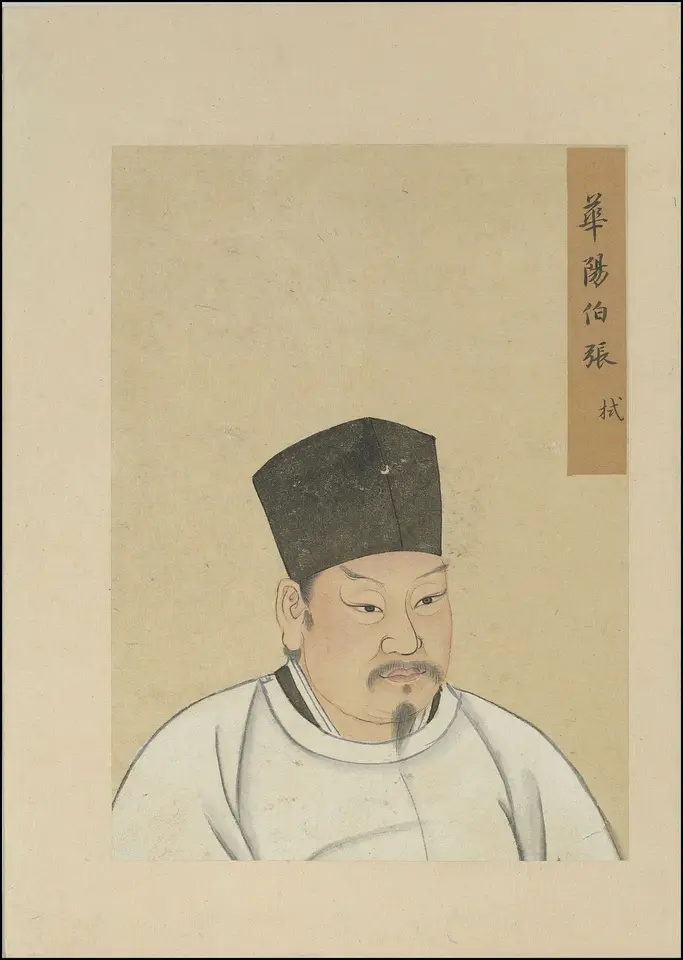 Former Liang Dynasty (前凉)
Second Ruler of Former Liang
Zhang Shi (张寔, 271–320), courtesy name Anxun (安逊), was a native of Wushi County, Anding Commandery (modern northwest of Pingliang, Gansu Province). He served as the second ruler of the Former Liang regime during the Sixteen Kingdoms period and was the eldest son of Former Liang's founding patriarch Zhang Gui. In his youth, Zhang Shi was renowned for his profound scholarship, keen perception, and genuine reverence for talented scholars. During the early Yongjia era of Western Jin, as the Central Plains fell into catastrophic turmoil, Zhang Shi resigned from his prestigious imperial post as General of the Agile Cavalry in Luoyang and returned to Liangzhou. He assisted his father in pacifying the rebellion of Cao Qu and administering the Hexi Corridor, progressively rising to Gentleman Consultant, General of the West Center, Colonel Who Protects the Qiang, and Marquis of Fulu County. In 314, upon Zhang Gui's death, Zhang Shi succeeded to the governance of Liangzhou and received official appointment from Emperor Min of Western Jin as Commander-in-Chief of Liangzhou Military Affairs, Inspector of Liangzhou, and Duke of Xiping. Facing the collapse of the Western Jin dynasty and the fragmentation of northern China, Zhang Shi upheld the Jianxing era name of Emperor Min, repeatedly dispatching relief armies eastward to aid Chang'an and Guanlong, while sheltering refugees, encouraging honest counsel, and preserving peace and classical civilization in the Hexi Corridor. In 318, Emperor Yuan of Eastern Jin ascended the imperial throne in Jiankang. Zhang Shi dispatched envoys with congratulatory memorials, yet internally continued to observe the Western Jin Jianxing calendar, establishing a de facto autonomous regional state. In 320, Liu Hong, a sorcerer from Mount Tianti, plotted rebellion and corrupted Zhang Shi's trusted palace guards. In May, guards Yan She and Zhao Yang assassinated Zhang Shi in his sleeping pavilion at the age of fifty. His brother Zhang Mao suppressed the rebellion and succeeded him. Zhang Shi was initially honored with the posthumous title Duke Zhao, received the imperial posthumous title Duke Yuan from Eastern Jin, and was later elevated to Gaozu King Ming by his grandson Zhang Zuo.
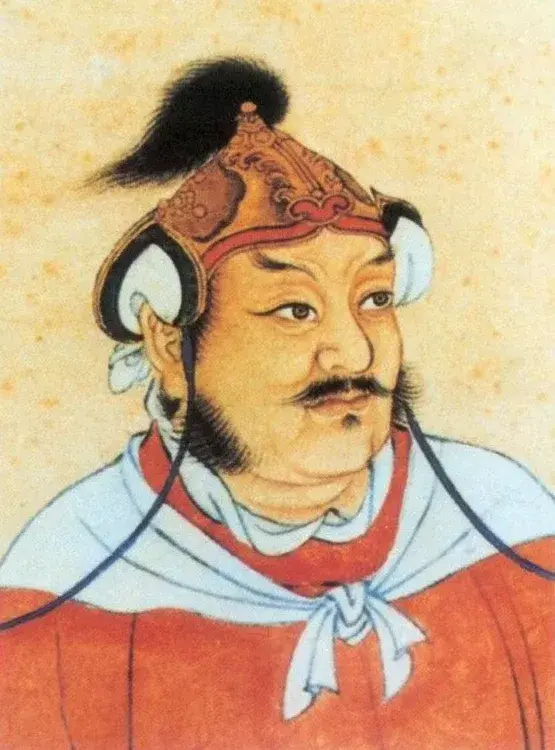 Western Jin Dynasty (西晋)
Founding Statesman
Yang Hu (221 – December 27, 278), courtesy name Shuzi, was a native of Pingyang in Taishan Commandery. He was a prominent military commander, grand strategist, and statesman of the Western Jin Dynasty, respectfully revered by posterity as "Grand Preceptor Yang." Born into the prestigious Taishan Yang aristocratic lineage celebrated for generations of upright officials, he was the maternal grandson of the Eastern Han scholar Cai Yong and the younger brother of Empress Jingxian (Yang Huiyu), wife of Sima Shi. During the late Cao Wei period, he held posts as Palace Attendant, Cavalier Attendant, and Director of the Palace Secretariat, cautiously preserving moral independence during political crises such as the Gaoping Tombs Incident. Following the establishment of the Western Jin Dynasty, he was created Marquis of Juping and appointed Right Vice Director of the Department of State Affairs and General of the Guard. In 269, Yang Hu was appointed Commander of Military Affairs in Jingzhou, stationed at the strategic bastion of Xiangyang. Over seven years, he instituted agricultural military colonies that expanded frontline grain stores from less than a hundred days to ten full years. Facing the renowned Eastern Wu general Lu Kang across the frontier, he practiced deep moral benevolence, winning the admiration of southern soldiers and civilians who affectionately referred to him as "Lord Yang." Following the tactical setback at Xiling, he reorganized imperial strategy, successfully memorializing the court to construct a powerful naval fleet in the upper reaches of the Yangtze under Wang Jun and formulating the multi-pronged conquest blueprint. Falling gravely ill in 278, he traveled to Luoyang to present his final battle plans, recommending Du Yu as his successor before passing away. Following the fall of Wu, Emperor Wu wept during the victory feast, attributing the conquest to Yang Hu. Mourning his passing, the citizens of Xiangyang erected a commemorative stele atop Mount Xian, celebrated historically as the "Stele of Falling Tears."
 Western Jin, Eastern Jin
Supreme Warlord
Wang Dun (266 – July 324), courtesy name Chuzhong, was a paramount aristocratic warlord, grand general, and de facto co-founder of the Eastern Jin dynasty. Belonging to the supreme Langya Wang clan, he married Princess Xiangcheng, daughter of Emperor Wu of Jin, and demonstrated striking personal charisma, literary distinction, and military boldness from youth. Following the catastrophic collapse of Western Jin during the Disaster of Yongjia in 311, Wang Dun collaborated closely with his cousin Wang Dao to escort Prince Sima Rui across the Yangtze River. While Wang Dao orchestrated civilian gentry alliances at Jiankang, Wang Dun commanded the military legions in the middle Yangtze as Regional Inspector of Jingzhou and Grand General, establishing the historic dynastic condominium celebrated as "The Wangs and the Simas share the empire". However, when Emperor Yuan sought to curb the Wang family's overweening power by patronizing confidants Liu Wei and Diao Xie, Wang Dun launched an armed rebellion from his headquarters at Wuchang in 322. Proclaiming to "cleanse the court of treacherous sycophants," his armies swept into Jiankang, routing imperial loyalists and forcing the humiliated Emperor Yuan to succumb to grief. When Emperor Ming ascended the throne and prepared imperial counter-offensives, an ailing Wang Dun launched a second assault on the capital in 324. He died of illness in camp amidst military defeats at age fifty-eight, whereupon imperial forces exhumed and desecrated his corpse.
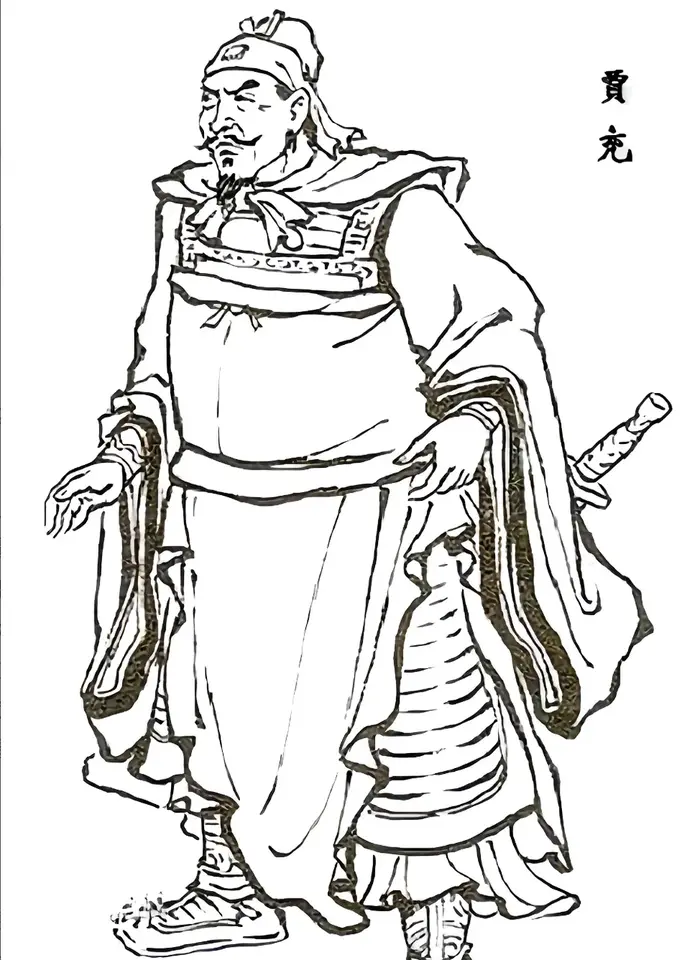 Cao Wei, Western Jin
Founding statesman
Jia Chong (贾充, 217 – May 19, 282), courtesy name Gonglü (公闾), was a foundational statesman, legal codifier, and dominant political grandee of the Western Jin Dynasty. The son of the celebrated Cao Wei loyalist general Jia Kui, Jia Chong early on allied himself intimately with the ascendant Sima clan against the imperial Cao house. Serving as the primary political confidant of Sima Zhao, Jia Chong achieved historical notoriety in June 260 during Emperor Cao Mao's desperate armed sortie against Sima Zhao's regency; commanding the palace troops at the South Stop Gate, Jia Chong ordered his officer Cheng Ji to spearhead the imperial chariot and slay the emperor, clearing the bloody path for the Sima usurpation. Following the formal founding of the Western Jin Dynasty in 265 by Emperor Wu (Sima Yan), Jia Chong was showered with paramount honors, being elevated to General of Chariots and Cavalry, Director of the Department of State Affairs (Shangshu Ling), and created Duke of Lu (Lu Jun Gong). Recognized for his meticulous administrative intellect, he supervised the compilation of the landmark Jin Code (Taishi Lü), which established the legal foundation of early medieval Chinese jurisprudence. Jia Chong cemented his imperial influence through ruthless matrimonial alliances: his daughter, the fierce and domineering Jia Nanfeng, was married to the intellectually disabled Crown Prince Sima Zhong (the future Emperor Hui of Jin). In 279, despite his personal reluctance, Jia Chong was appointed Supreme Commander-in-Chief (Da Dudu) overseeing the six-pronged amphibious invasion that conquered Eastern Wu in 280, completing the reunification of China. Elevated to Grand Commandant (Taiwei), Jia Chong passed away in 282 at the age of sixty-six and was posthumously honored as Duke Wu of Lu.
Historical figure
Zhou Qi (周玘, 258–313), courtesy name Xuanpei, a native of Yangxian County in Yixing Commandery (modern-day Yixing, Jiangsu Province), was the grandson of Zhou Fang, Grand Administrator of Poyang under Eastern Wu, and the son of Zhou Chu, General Who Pacifies the West under the Western Jin. A prominent aristocratic leader and military commander of Jiangdong during the late Western Jin, he was resolute, composed, and decisive in his youth after the manner of his father Zhou Chu, living in strict self-restraint and commanding deep respect among southern scholars. Amid the upheavals at the end of the Western Jin, Zhou Qi raised local volunteer forces three times to suppress rebellions in the lower Yangtze region: from 303 to 304, he rallied southern gentry to defeat Zhang Chang's general Shi Bing; in 307, he suborned Qian Guang and joined Gu Rong and Gan Zhuo in destroying Chen Min, who had seized Jiangdong; and in 310, he raised volunteer troops again to slay the rebel general Qian Hui. For his meritorious service in "pacifying Jiangnan three times," Sima Rui, Prince of Langya, appointed him Grand Administrator of Wuxing, enfeoffed him as Marquis of Wucheng County, and created Yixing Commandery in his honor. Resentful that northern émigré aristocrats monopolized power in Sima Rui's administration and marginalized southern gentry, Zhou Qi conspired with Wang Hui in 313 to eliminate the northern ministers; when the plot leaked and Sima Rui repeatedly reassigned his post, he died of a back carbuncle in anger and humiliation at the age of fifty-six, receiving the posthumous office of General Who Supports the State and the posthumous title Zhonglie.
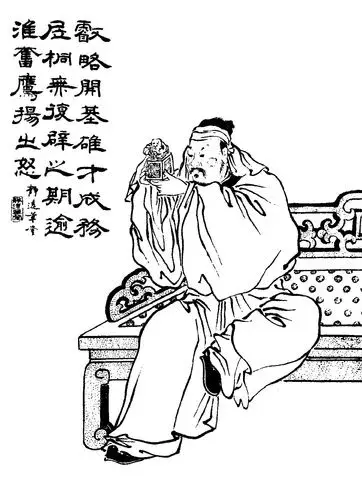 Western Jin Dynasty (西晋)
Historical figure
Sima Shi (司马师, 208–255), courtesy name Ziyuan, a native of Wen County, Henei Commandery (modern Wen County, Jiaozuo, Henan), was a paramount regent, statesman, and military strategist of Cao Wei during the Three Kingdoms period and one of the principal founders of the Western Jin Dynasty. The eldest son of Grand Tutor Sima Yi and his principal wife Zhang Chunhua, and the older full brother of Sima Zhao, he won early fame in Luoyang alongside Xiahou Xuan and He Yan, rose to Central Protector of the Army (zhong hujun) in charge of the imperial guards and military appointments, and secretly maintained 3,000 sworn warriors. In the first month of the 1st year of the Jiaping era (249), he acted as his father's chief operational commander in the Incident at the Gaoping Tombs, assembling his 3,000 men overnight to seize the Sima Gate, secure Luoyang, and eliminate the regent Cao Shuang. Following Sima Yi's death in 251, Sima Shi assumed supreme authority over Cao Wei as General Pacifying the Army and later General-in-Chief (da jiangjun). He stabilized morale after the setback at Dongxing, routed Eastern Wu regent Zhuge Ke's 200,000-strong invasion force at the Battle of Xincheng in 253, crushed the coup plot of Li Feng, Xiahou Xuan, and Zhang Ji in 254, and deposed the Wei emperor Cao Fang in favor of Cao Mao (Duke of Gaogui District). In the first month of the 2nd year of the Zhengyuan era (255), despite having just undergone surgery to remove a facial tumor on his eye, Sima Shi personally led 100,000 troops eastward to suppress Guanqiu Jian and Wen Qin's Rebellion in Huainan; during a fierce night raid on his camp led by Wen Qin's eighteen-year-old son Wen Yang, the shock ruptured Sima Shi's operated eye from its socket, leading to his death at Xuchang in the intercalary first month of 255 at the age of forty-eight. After his nephew Sima Yan founded the Western Jin in 265, Sima Shi was posthumously honored as Emperor Jing of Jin with the temple name Shizong.
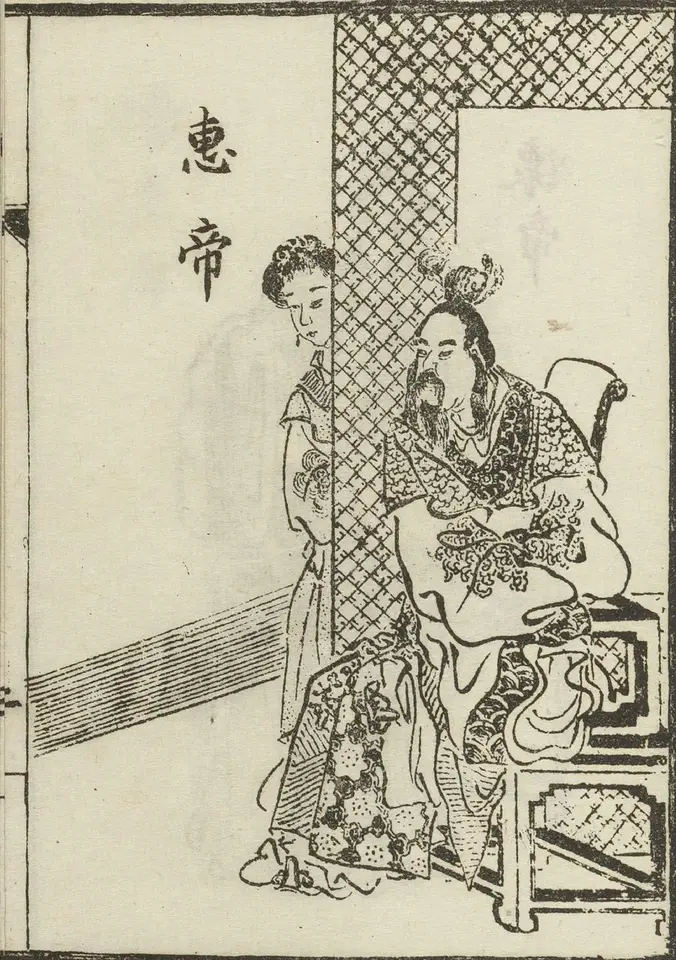 Western Jin Dynasty (西晋)
Empress of the Western Jin Dynasty
Jia Nanfeng (贾南风, 257 – May 13, 300), child name Jia Shi (贾旹), from Xiangling County in Pingyang Commandery (平阳郡襄陵县, modern Xiangfen County, Linfen, Shanxi), was the granddaughter of Cao Wei general Jia Kui, the eldest daughter of Western Jin (西晋) founding grandee Jia Chong (贾充) and Guo Huai, and the empress consort of Emperor Hui (Sima Zhong, 司马衷), the second emperor of the Western Jin Dynasty. Historical records describe her as short in stature, dark-complexioned, and bearing a noticeable blemish behind her eyebrow, yet exceptionally shrewd, calculating, and ruthless. In 272, because her younger sister Jia Wu was too small to fit the imperial wedding gown, the sixteen-year-old Jia Nanfeng took her place and was married to Crown Prince Sima Zhong as Crown Princess. In 290 Emperor Wu (Sima Yan) passed away and the intellectually disabled Sima Zhong ascended the throne, making Jia Nanfeng empress. Facing the domination of Regent Yang Jun and Empress Dowager Yang Zhi, Empress Jia orchestrated a swift palace coup in March 291 with palace officers Li Zhao, Meng Guan, and Prince of Chu Sima Wei, annihilating Yang Jun and his entire clan while stripping Yang Zhi of her title and starving her to death in Jinyong Castle. In June of the same year Jia forged imperial edicts ordering Sima Wei to attack and murder Co-Regents Sima Liang (Prince of Runan) and Wei Guan, before promptly executing Sima Wei for treasonous murder, thereby eliminating all political rivals and seizing unchallenged personal control of the imperial government. During her nearly ten years of de facto rule, Jia Nanfeng appointed upright ministers, placing commoner scholar Zhang Hua and aristocrat Pei Wei in charge of central governance, maintaining domestic peace and implementing fiscal and personnel reforms such as the Nine Rank personnel system and official salary land allocations. However, lacking a biological male heir, Jia grew intensely paranoid of Crown Prince Sima Yu, the talented son of imperial concubine Lady Xie. In December 299 she framed the crown prince by forcing him while drunk to copy treasonous verses, successfully having him deposed to commoner status. In March 300 she ordered court attendants to murder Sima Yu with a pestle in Xuchang. The murder of the heir apparent ignited nationwide outrage, prompting Prince of Zhao Sima Lun to launch a counter-coup in April 300 that captured Jia Nanfeng, imprisoned her in Jinyong Castle, and executed her by poisoned wine on May 13, 300, at age forty-four. Her reign and murder of the crown prince directly unleashed the catastrophic sixteen-year War of the Eight Princes, plunging the Western Jin into total collapse.
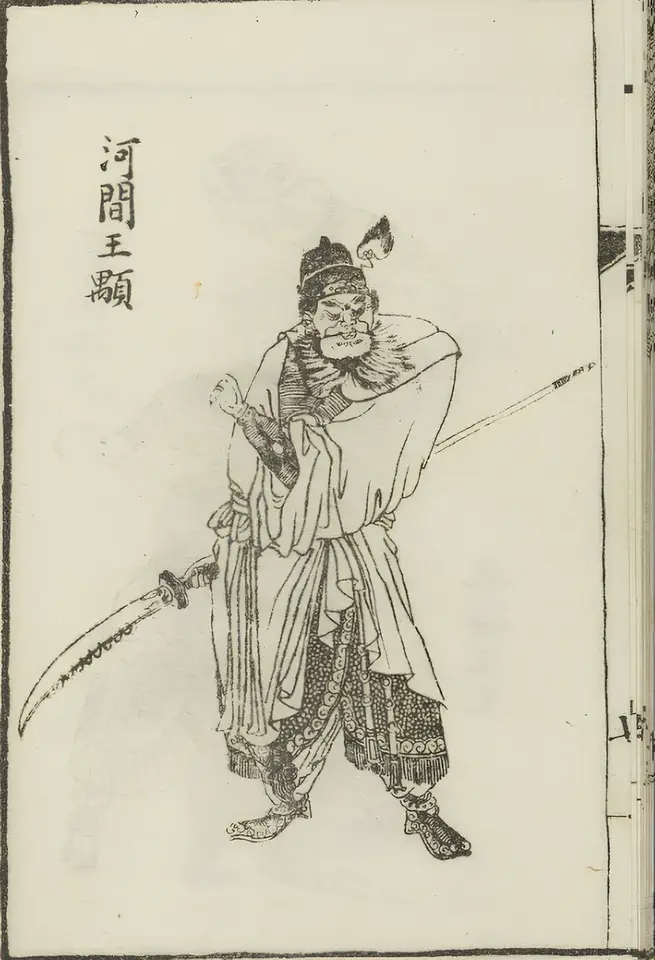 Western Jin Dynasty (西晋)
Imperial Prince of Western Jin
Sima Yong (司马颙, ?–306), courtesy name Wendu (文度) or Wenzai (文载), was an imperial prince and one of the pivotal warlords during the closing stages of the War of the Eight Princes in the Western Jin dynasty. The grandson of Sima Fu (Prince Xian of Anping, younger brother of Sima Yi) and son of Sima Gui (Prince of Taiyuan), he initially inherited the peerage of Taiyuan before being transferred as Prince of Hejian. In his youth, he gained wide renown for his modesty, generosity, and patronage of scholars, prompting Emperor Wu of Jin to praise him as a model for all feudatory princes. During the Yuankang era, he broke ancestral taboos restricting Guanzhong command to close imperial kin, ascending to Commander-in-Chief of Guanzhong and establishing a formidable regional power base. During the catastrophic fratricidal conflicts of the Eight Princes, Sima Yong exhibited ruthless opportunism. Initially siding with the usurper Sima Lun, he defected to Sima Jiong when the loyalist tide turned. He later conspired to eliminate Prince of Changsha Sima Yi, joining forces with Prince of Chengdu Sima Ying to besiege Luoyang. Following their victory, his general Zhang Fang pillaged the capital and forcibly abducted Emperor Hui to Chang'an, where Sima Yong seized supreme dictatorial authority as Grand Tutor and Grand Commander. Confronted by a massive punitive coalition led by Prince of Donghai Sima Yue, Sima Yong executed his most capable general, Zhang Fang, in a desperate bid for appeasement, causing his defenses to collapse. While traveling to the capital under an imperial amnesty, he was intercepted and strangled to death inside his carriage near Xin'an by order of Prince of Nanyang Sima Mo, leaving no surviving male heirs.
 Western Jin Dynasty (西晋)
Celebrated Western Jin scholar
Yue Guang (乐广, d. 304), courtesy name Yanfu (彦辅, also known as Yue Yanfu), was a native of Yuyang in Nanyang (南阳淯阳, present-day Nanyang, Henan), and a renowned statesman, Xuanxue philosopher, and supreme master of pure talk in the Western Jin (西晋) dynasty. Born into a modest family and orphaned at an early age, Yue Guang resided in Shanyang, gaining early acclaim for serene poverty and scholarly devotion. At age eight, he encountered the renowned Wei scholar Xiahou Xuan, who praised him as possessing clear intellect destined to become a leading intellectual. As an adult, he thoroughly grasped the Laozi, Zhuangzi, and Book of Changes, becoming renowned for his extraordinary ability to articulate profound philosophical principles in concise, penetrating language. Senior statesmen including Pei Kai, Wei Guan, Wang Rong, and Wang Yan universally venerated him as an unmatched master of metaphysical discourse. During the Taishi era, recommended by Wang Rong as a Flourishing Talent and introduced to Grand Marshal Jia Chong by Pei Kai, Yue Guang entered imperial service. He successively served as Magistrate of Yuancheng, Palace Attendant in the Imperial Secretariat, Mentor to the Crown Prince, Cavalier Attendant-in-Ordinary, and Intendant of Henan. As Intendant of Henan during the turbulent deposition of Crown Prince Minhuai by Empress Jia Nanfeng, Yue Guang secretly released the Crown Prince's loyal subordinates who defied imperial bans to bid farewell, demonstrating profound moral rectitude. He was subsequently elevated to Minister of Personnel and Left Vice Director of the Imperial Secretariat, eventually succeeding Wang Rong as Director of the Imperial Secretariat, assuming the headship of the central administration. In the chaotic twilight of the Western Jin, the War of the Eight Princes erupted, with Prince of Chengdu Sima Ying and Prince of Changsha Sima Ai engaging in civil warfare before the capital Luoyang. Because Sima Ying was Yue Guang's son-in-law, Sima Ai harbored intense suspicions regarding Yue Guang's loyalty. Although Yue Guang maintained dignified composure, he succumbed to illness amidst the grave political peril, passing away in Luoyang on February 29, 304. Revered for his modesty, detachment from material pursuits, and unmatched empathy, his analytical wisdom inspired the famous idiom Mistaking a Bow's Reflection for a Snake, while his sublime character alongside his son-in-law Wei Jie produced the enduring praise Pure as Ice and Lustrous as Jade.
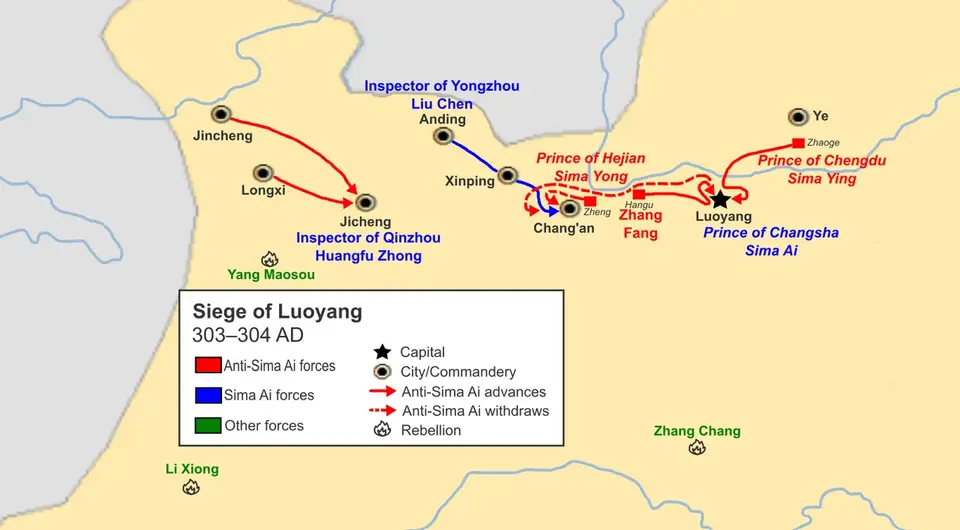 Western Jin Dynasty (西晋)
Western Jin Imperial Prince
Sima Ai (司马乂, 277–304), courtesy name Shidu (士度), was an imperial prince, prominent military commander, and key figure of the Western Jin dynasty during the War of the Eight Princes. He was the sixth son of Emperor Wu of Jin (Sima Yan) and a younger half-brother of Emperor Hui (Sima Zhong). Initially enfeoffed as Prince of Changsha, Sima Ai was demoted to Prince of Changshan following the execution of his full brother Sima Wei, Prince of Chu. Standing seven chi five cun tall, Sima Ai possessed a resolute, discerning intellect, exceptional physical valor, and a modest, courteous demeanor toward scholar-officials, enjoying wide renown among the imperial clan. In 301, Sima Ai raised loyalist troops from Changshan to defeat the usurper Sima Lun, earning reinstatement as Prince of Changsha and promotion to General-in-Chief Pacifying the Army. In 302, when the regent Sima Jiong (Prince of Qi) grew autocratic and corrupt, Sima Ai led a daring detachment of one hundred cavalry into the imperial palace, sheltering Emperor Hui and capturing Sima Jiong after three days of ferocious street fighting. Assuming the regency as Grand Commandant, Sima Ai scrupulously respected the imperial court, referring all administrative matters to Emperor Hui. In late 303, a joint coalition of 300,000 troops led by Sima Ying (Prince of Chengdu) and Sima Yong (Prince of Hejian) besieged Luoyang. Sima Ai commanded the outnumbered garrison with remarkable tactical skill, repeatedly shattering rebel armies and decapitating tens of thousands. However, in early 304, Sima Yue (Prince of Donghai) orchestrated a treasonous palace mutiny, imprisoning Sima Ai and surrendering him to rebel general Zhang Fang, who brutally burned Sima Ai to death over a slow fire at the age of twenty-eight. Following his death, Emperor Huai posthumously conferred upon him the title Prince Li.
 Western Jin Dynasty (西晋)
Famous military general and founding meritorious minister of Cao Wei and Western Jin
Shi Bao (石苞, c. 195–273), courtesy name Zhongrong (仲容), was a native of Nanpi of Bohai (modern northeast of Nanpi, Hebei). He was a distinguished general of Cao Wei and a founding meritorious statesman of the Western Jin dynasty. Born into humble poverty, he earned a living managing agricultural transport as an Agricultural Sub-Officer and working as an iron vendor in local markets. Possessing an elegant demeanor, handsome appearance, and remarkable strategic vision, he inspired the popular contemporary adage: "Shi Zhongrong has no match in beauty." Throughout his early career, Shi Bao was successively recognized by prominent talent-spotters including Guo Xuanxin, Zhao Yuanru, Xu Yun, and Sima Yi. During the Zhengshi era, he served as Marshal to Sima Shi and later as Agricultural Internuncio at Yecheng, where he fearlessly impeached corrupt imperial princes and powerful minister Ding Mi. In the Battle of Dongxing, his command was the sole division to retreat with its ranks completely intact. During the Shouchun rebellion, he commanded rapid-response cavalry that repeatedly shattered the southern relief forces of Eastern Jin general Zhu Yi and destroyed enemy supplies, helping Sima Zhao extinguish the insurrection. With the establishment of the Western Jin dynasty, Shi Bao advocated the peaceful dynastic transition, was appointed Grand Marshal, and was created Duke of Leling Commandery. For over a decade he commanded the Huainan defense theater, earning immense prestige. When falsely accused of rebellion by Army Supervisor Wang Chen, Shi Bao willingly relinquished his command and reported to Duting as a gesture of absolute loyalty, completely dispelling Emperor Wu's suspicions and later being elevated to Minister over the Masses. He passed away in 273 at the age of seventy-nine, receiving the posthumous title Wu.
 Western Jin Dynasty (西晋)
Eminent Statesman
Zheng Chong (郑冲) (died 274), courtesy name Wenhe, was a native of Kaifeng, Xingyang (present-day Kaifeng, Henan), and an eminent Confucian preceptor and founding statesman spanning the late Cao Wei and early Western Jin dynasties. Originating from a humble and obscure household, Zheng Chong maintained exceptional personal integrity and simplicity, immersing himself in the Confucian classics and the literature of the Hundred Schools. When Cao Pi was Crown Prince of Cao Wei, he sought out talented men of humble birth and appointed Zheng Chong as a Literary Scholar. Over subsequent decades, Zheng Chong served as Gentleman of the Masters of Writing, Governor of Chenliu, and Minister of the Imperial Household. In 254, upon the accession of the Duke of Gaoguixiang Cao Mao, Zheng Chong was appointed imperial preceptor to deliver palace lectures on the Classic of Filial Piety and the Analects, earning profound reverence across the imperial court. He subsequently attained the premier ministerial positions of Minister of Works and Minister over the Masses. During the dynastic transition to the Sima house, Zheng Chong was twice commissioned to convey imperial mandates and seals, leading the assembly of officials to confer the royal title upon Sima Zhao and later presenting the imperial seal during the abdication ceremony to Emperor Wu of Jin (Sima Yan). Following the founding of Western Jin, Sima Yan appointed Zheng Chong as Grand Tutor, ennobled him as Duke of Shouguang, and placed him at the pinnacle of the Eight Dukes of Western Jin. He oversaw the compilation of the Jin Code (Taishi Code) and the establishment of imperial rituals. Throughout his long career, Zheng Chong remained completely detached from factional intrigue and material wealth, dying at an advanced age with the posthumous title Cheng.
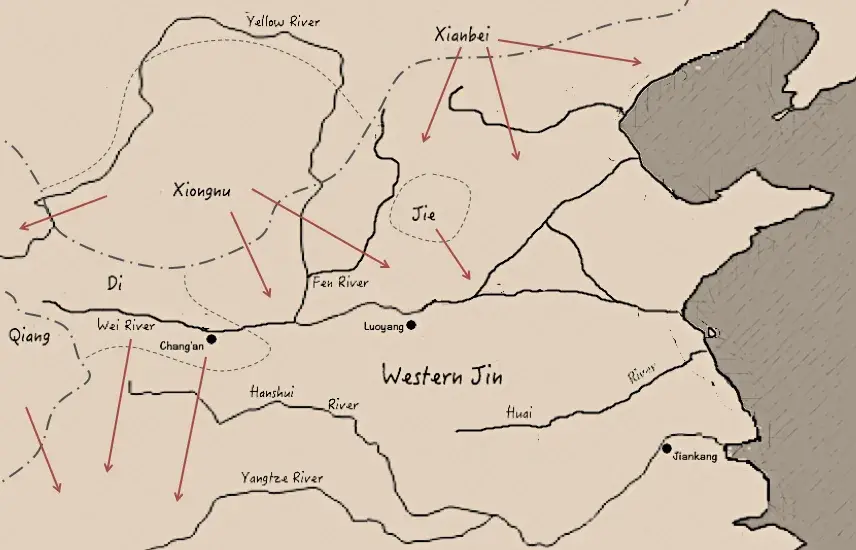
The Uprising of the Five Barbarians (五胡乱华) refers to the epochal historical period from 304 (first year of Yongxing) to 439 (fifth year of Taiyan), marked by massive inward migrations of northern ethnic nomadic tribes, the collapse of the Western Jin dynasty, and more than a century of severe sociopolitical division across China. Since the Eastern Han and Cao Wei dynasties, millions of nomadic peoples, primarily the Xiongnu, Jie, Xianbei, Di, and Qiang, migrated south of the Great Wall, creating an intricate pattern of cohabitation in Guanzhong and the Central Plains. The Western Jin court was plagued by systemic corruption, and the sixteen-year War of the Eight Princes utterly depleted the empire's treasury and imperial guards. In 304, Xiongnu chieftain Liu Yuan and Di leader Li Xiong established independent realms, inaugurating the turbulent Sixteen Kingdoms era. The fall of Luoyang in the Disaster of Yongjia in 311 and the capture of Chang'an in 316 extinguished the Western Jin. The Jin court and aristocratic families fled across the Yangtze River to found the Eastern Jin, spearheading comprehensive economic growth in the south. The north witnessed fierce warfare among nomadic regimes until Emperor Taiwu of Northern Wei unified northern China in 439. This prolonged upheaval reshaped East Asian geopolitics and stimulated an unprecedented synthesis of nomadic and agrarian civilizations.
Yellow River Basin, Huai River Basin, Guanzhong-Longyou, Bashu, and Middle-Lower Yangtze River Basin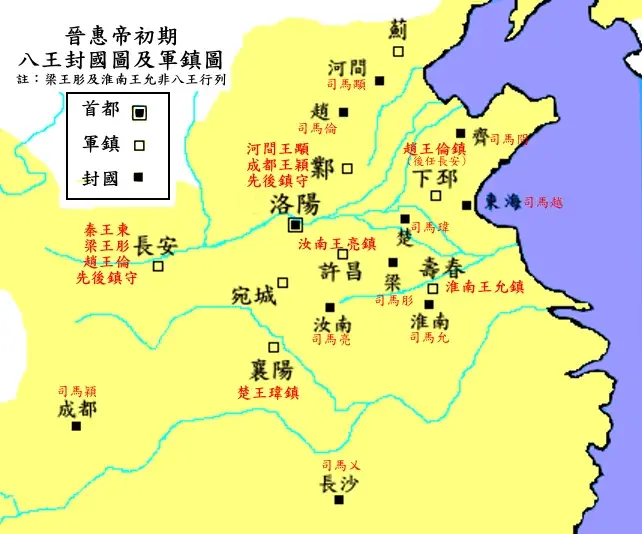
The War of the Eight Princes (八王之乱) was a catastrophic sixteen-year civil war of imperial succession that devastated the Western Jin Empire from 291 to 306 CE. Having overthrown the Cao Wei dynasty, Emperor Wu of Jin (Sima Yan) attributed Wei's collapse to its failure to enfeoff the imperial clan. To insulate his house, Emperor Wu granted sweeping territorial fiefs, personal armies, administrative autonomy, and provincial military commands to Sima imperial princes, inadvertently institutionalizing autonomous warlord kingdoms. Following Emperor Wu's demise, his mentally challenged son Emperor Hui (Sima Zhong) ascended the throne, allowing the ambitious and ruthless Empress Jia Nanfeng to seize court authority. Empress Jia launched bloody purges against consort regent Yang Jun, leveraging Prince of Runan Sima Liang and Prince of Chu Sima Wei before liquidating them in turn. When Empress Jia murdered Crown Prince Sima Yu in 300, Prince of Zhao Sima Lun staged a coup, executed the empress, and usurped the imperial throne. This blatant usurpation ignited an all-out civil war among imperial princes across China. Rival coalitions led by Prince of Qi Sima Jiong, Prince of Chengdu Sima Ying, Prince of Hejian Sima Yong, Prince of Changsha Sima Ai, and Prince of Donghai Sima Yue repeatedly besieged the capitals of Luoyang and Chang'an, recklessly enlisting northern nomadic cavalry from the Xiongnu, Xianbei, and Wuhuan. The protracted fratricide depopulated the Central Plains, slaughtered civil elites, and reduced both imperial capitals to ashes. Although Sima Yue ultimately secured hegemony, the devastation obliterated Western Jin's military resilience, directly provoking the Disaster of Yongjia and centuries of partition during the Sixteen Kingdoms era.
Luoyang, Chang'an, Ye, Dangyin, Xuchang, and Central Plains Commanderies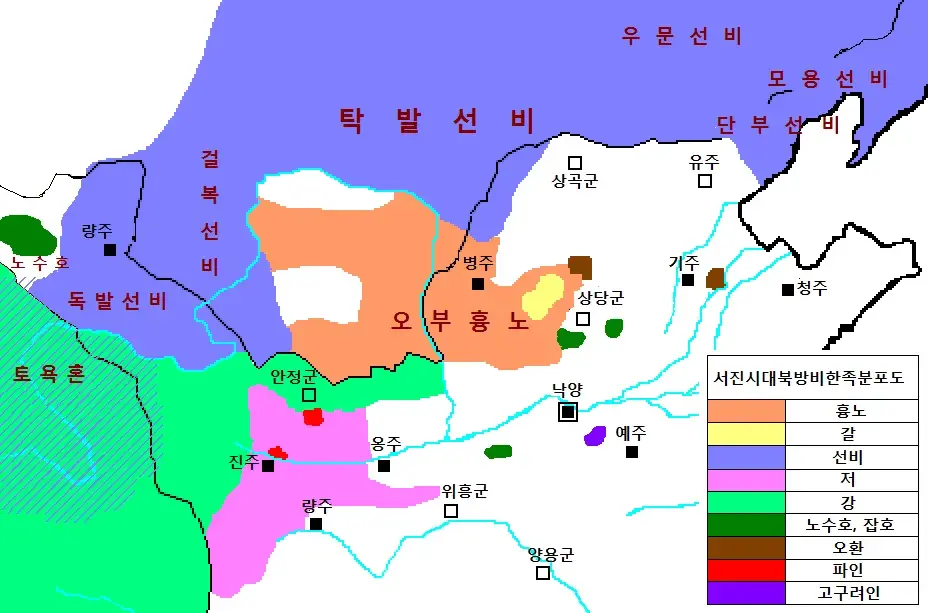
Liu Yao's Destruction of the Western Jin (刘曜灭西晋) was a catastrophic dynastic transition war between 304 and 316 CE, in which the Han Zhao regime led by the Xiongnu aristocracy overthrew and completely annihilated the Western Jin dynasty. Following the disastrous sixteen-year War of the Eight Princes, the Western Jin imperial armed forces were decimated, the economy was ruined, and deep ethnic and social fractures erupted across the northern plains. The Xiongnu leader Liu Yuan established the Han dynasty, whose armies campaigned relentlessly southward under commanders such as Liu Yao, Shi Le, and Wang Mi. In 311 CE, Shi Le annihilated the Western Jin court's last field army at Ningping City, after which Liu Yao and Huyan Yan captured the imperial capital of Luoyang and took Emperor Huai captive, an event known as the Disaster of Yongjia. In 316 CE, Liu Yao marched into Guanzhong and laid siege to Chang'an, where the youthful Emperor Min had maintained a desperate remnant court. Starved into submission, Emperor Min surrendered in humiliation, marking the formal collapse of the Western Jin. The catastrophe prompted the southward migration of the Chinese elite to establish the Eastern Jin in Jiangnan, while northern China entered more than a century of violent division during the Sixteen Kingdoms era.
Luoyang, Chang'an, Pingyang, Ningping City, and Guanzhong commanderies (modern Luoyang, Xi'an, Linfen, etc.)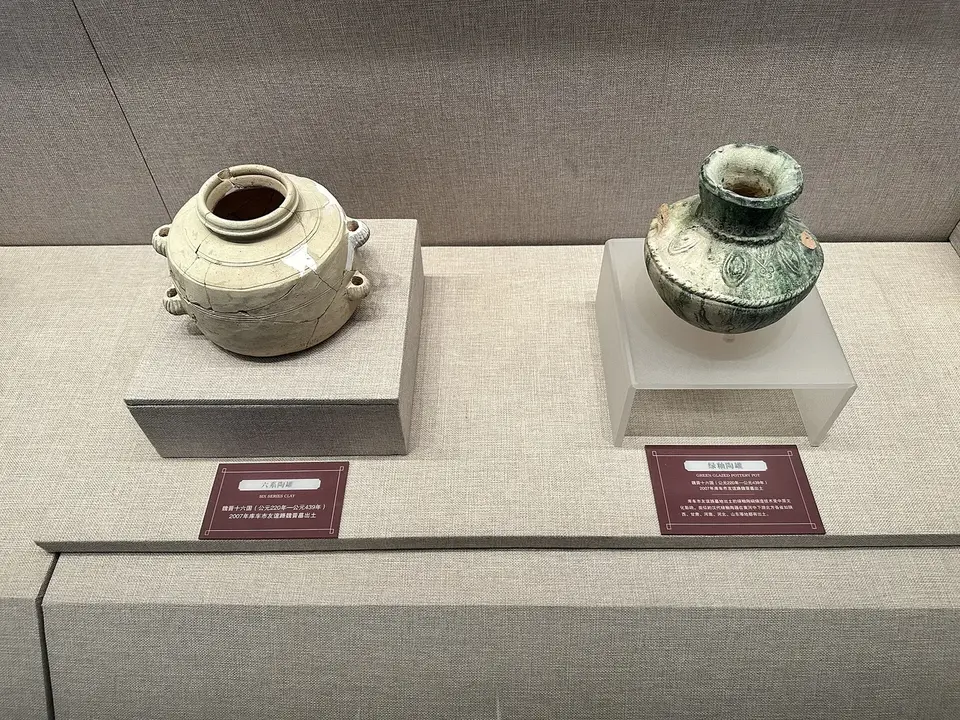
The Sixteen Kingdoms Period (304–439 CE), historically termed the Five Barbarians and Sixteen Kingdoms, was a pivotal era of prolonged political fragmentation and intense multi-ethnic fusion in northern and southwestern China, spanning from the collapse of the Western Jin dynasty to the unification of northern China by the Northern Wei. Beginning in the late Eastern Han dynasty, extensive frontier populations including the Xiongnu, Xianbei, Jie, Di, and Qiang migrated into northern commanderies. When the Western Jin dynasty collapsed amid the catastrophic War of the Eight Princes, Di leader Li Xiong established Cheng-Han in Sichuan, and Xiongnu leader Liu Yuan founded Han-Zhao in Shanxi in 304 CE, inaugurating more than a century of regional conflict. Over twenty independent kingdoms emerged across the north, sixteen of which were chronicled by Northern Wei historian Cui Hong in the *Spring and Autumn Annals of the Sixteen Kingdoms*. The era witnessed dramatic imperial expansions, including the unification of the Central Plains under Shi Le's Later Zhao, the total northern hegemony of Fu Jian's Former Qin, and the subsequent imperial fragmentation following the Battle of the Fei River. In 439 CE, Emperor Taiwu of Northern Wei conquered Northern Liang, concluding the Sixteen Kingdoms era and ushering China into the Northern and Southern Dynasties period. Despite immense devastation, this transformative epoch forged enduring multi-ethnic integration and stimulated nationwide economic reorganization.
Northern China, Central Plains, Guanzhong, Hexi Corridor, Sichuan Basin, and regions north of the Huai River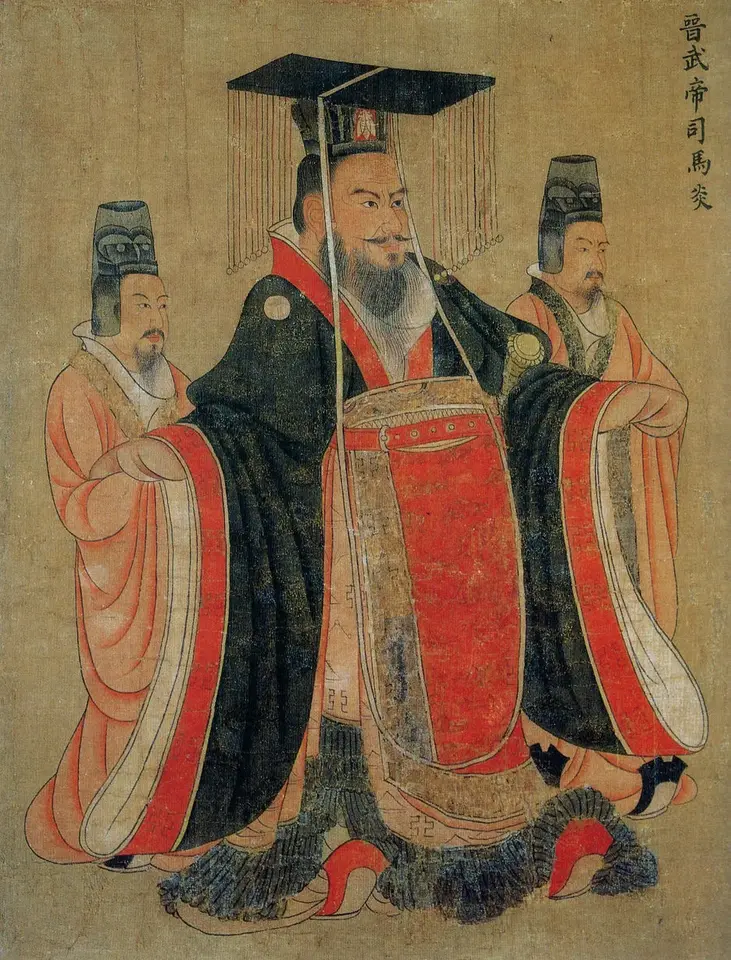
The Land-Allotment System (占田制, *Zhantianzhi*), fully designated as the Land-Allotment and Taxation System (*Zhantian Ketian Zhi*), was a fundamental state agrarian and fiscal reform promulgated by Emperor Wu of Jin (Sima Yan) in 280 CE (the first year of the Taikang era) following the conquest of Eastern Wu and the reunification of China. Under this statutory code, adult male peasants were legally permitted to hold up to seventy *mu* of agricultural land, while adult females could hold thirty *mu*. Concurrently, the state enforced mandatory taxation (*ketian*) on fifty *mu* for adult males and twenty *mu* for adult females at an annual rate of eight *sheng* of grain per *mu*. For imperial officials, the system allocated land allotments ranging from ten to fifty *qing* based on the Nine-Rank bureaucratic hierarchy, alongside legal tax exemptions for personal kin and tenant retainers. The system recognized peasant landholding rights, curbed arbitrary aristocratic land seizures, stimulated extensive land reclamation, and established the fiscal foundation for the prosperity of the "Rule of Taikang." Furthermore, it institutionalized the economic privileges of aristocratic clans, serving as an indispensable precursor to the later Equal-Field System of the Northern Dynasties and Tang.
Throughout all commanderies and principalities across the Western Jin empire (principally the Yellow River basin and Huai-Yangtze regions)
The Battle of Ningping was a catastrophic engagement of total annihilation fought in the fourth month of 311 during the fifth year of the Yongjia era near Ningpingcheng (present-day Dancheng County, Henan). On the eve of the battle, the Western Jin Dynasty stood on the brink of ruin following the devastation of the War of the Eight Princes. To evade raiding barbarian forces and neutralize Emperor Huai, Grand Tutor Sima Yue (Prince of Donghai) withdrew the entire imperial guard and civil bureaucracy—numbering over two hundred thousand soldiers, courtiers, and dependents—from the capital Luoyang to Xiangxian. In the third month of 311, Sima Yue died of illness amidst deepening despair. Concealing his death, Grand Defender Wang Yan and the high command escorted Sima Yue's funeral cortege on a retreat eastward toward his princely fief in Donghai. Alerted to the retreat, Han-Zhao general Shi Le led tens of thousands of elite light cavalry on a relentless pursuit, surrounding the disorganized Jin column along the Ku River at Ningpingcheng. Bereft of unified command after Vanguard Commander Qian Duan was killed in action, the Jin army shattered under intense horse archery. Over one hundred thousand soldiers were trampled to death in panic, leaving virtually no survivors. Following the massacre, Shi Le burned Sima Yue's remains to appease heaven and executed Wang Yan along with dozens of Jin princes by crushing them beneath a collapsed earthen wall. The battle wiped out the last regular field army and administrative elite of the Western Jin, leaving Luoyang entirely defenseless and directly precipitating the fall of the capital and the capture of Emperor Huai two months later during the Disaster of Yongjia.
Ningpingcheng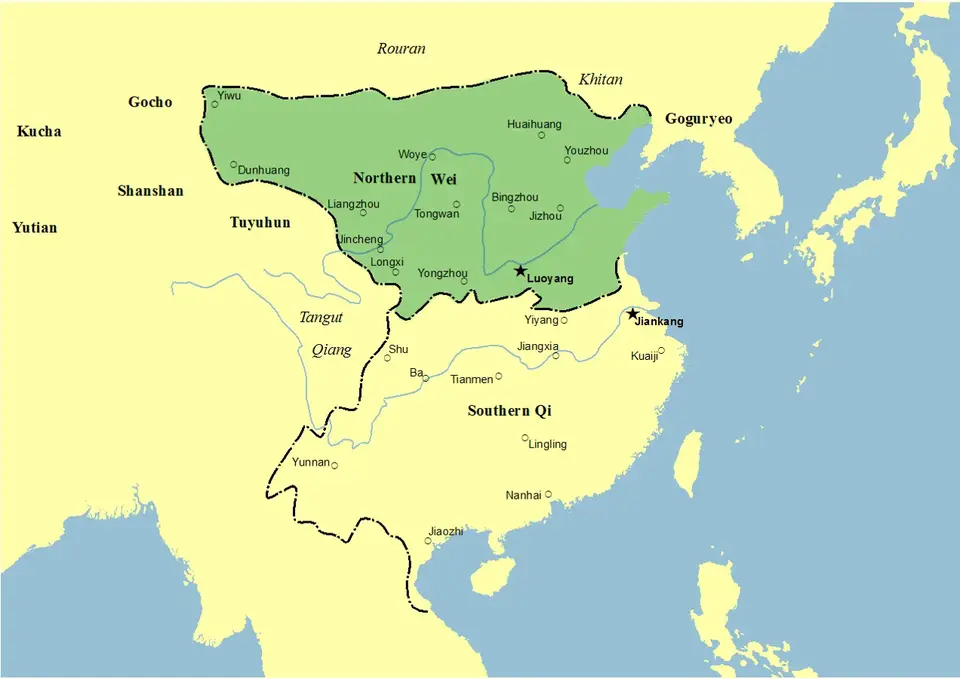
The Jin Usurpation of Wei (晋代魏), historically designated as the Taishi Usurpation of Wei (泰始代魏), took place in the twelfth month of 265 CE (the second year of the Xianxi era), when King of Jin Sima Yan compelled the final monarch of Cao Wei, Emperor Yuan (Cao Huan), to formally abdicate the throne, establishing the Western Jin Dynasty. Following the Gaoping Tombs Incident in 249 CE wherein Sima Yi executed regent Cao Shuang, the Sima family monopolized supreme political authority. Sima Shi and Sima Zhao ruthlessly crushed the Three Rebellions in Shouchun and assassinated Emperor Cao Mao, systematically dismantling royalist opposition. In 263 CE, Sima Zhao directed the conquest of Shu Han, receiving the title King of Jin alongside the Nine Bestowals. Following Sima Zhao's demise in August 265 CE, his eldest son Sima Yan inherited the chancellorship and princely title. Guided by prominent aristocratic statesmen including Jia Chong and Pei Xiu, Cao Huan was forced to abdicate on February 4, 266 CE. Sima Yan mounted the suburban altar in southern Luoyang, ascended the imperial throne, proclaimed the Western Jin dynasty, adopted the era title Taishi, and demoted Cao Huan to Prince of Chenliu. This dynastic transition formally concluded forty-five years of Cao Wei rule, paving the way for the eventual subjugation of Eastern Wu and the brief reunification of imperial China.
Luoyang (Southern Suburb Abdication Altar)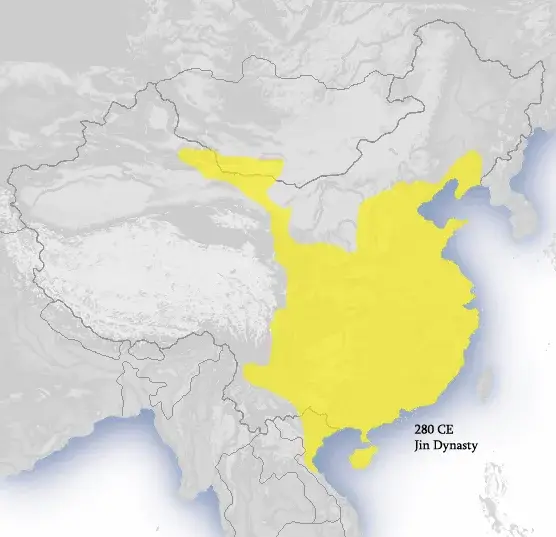
The Disaster of Yongjia and Southward Migration (永嘉) was a catastrophic political and military collapse of the Western Jin dynasty accompanied by a colossal exodus of northern elites and commoners to the Yangtze River basin. Following the devastating sixteen-year War of the Eight Princes during the reign of Emperor Hui, the military might of the Central Plains was depleted, while inner frontier nomadic groups such as the Xiongnu and Jie rose in widespread rebellion. In 306, Emperor Huai (Sima Chi) ascended the throne and adopted the Yongjia era title, yet intense power struggles between the emperor and Grand Tutor Sima Yue paralyzed the central government. In 311, Sima Yue died of illness while on campaign. Jie general Shi Le pursued and encircled the retreating Jin army at Ku County, slaughtering over 100,000 elite troops and capturing Chancellor Wang Yan. Two months later, Han Zhao commanders Liu Yao and Huyan Yan stormed the capital Luoyang, torching imperial palaces, taking Emperor Huai captive, and slaughtering more than 30,000 residents. The fall of Luoyang triggered the first mass migration in Chinese history, known as the "Southward Migration of the Robes and Caps," which laid the foundation for the Eastern Jin dynasty and permanently shifted the cultural and economic landscape of southern China.
Luoyang (modern Luoyang, Henan), Ku County and Zhecheng (modern Luyi, Henan), Jiankang (modern Nanjing, Jiangsu)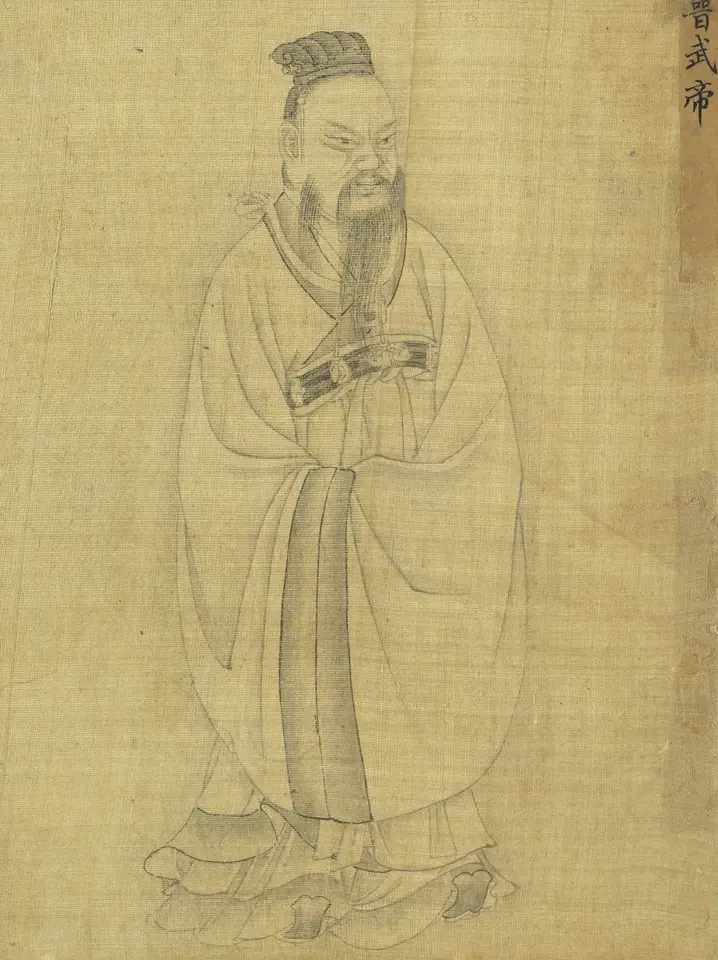
The Governance of the Taishi Era (泰始之治) refers to the comprehensive series of political, legal, and economic reforms enacted by Emperor Wu of Jin (Sima Yan) during the Taishi reign period (265–274) at the inception of the Western Jin dynasty. Decades of destructive conflict during the Three Kingdoms Period had decimated the agrarian population of the Central Plains, leaving vast tracts of fertile land abandoned and the populace exhausted. Upon ascending the throne through dynastic abdication, Sima Yan faced the dual imperatives of legitimizing the new dynasty and rejuvenating societal productivity. Throughout the ten years of the Taishi era, Emperor Wu governed with notable diligence. He commissioned senior ministers Jia Chong and Du Yu to compile and promulgate the landmark Taishi Code, which swept away harsh Cao Wei criminal statutes and instituted principles of legal leniency and systematic codification. Economically, the imperial court phased out rigid state agricultural colonies, reduced land taxes and corvée obligations, provided relief to displaced peasants, and restored major hydraulic infrastructure. Politically, Emperor Wu embraced a policy of conciliation, integrating surrendered Shu Han elites and former Cao Wei courtiers while advocating administrative frugality and checking bureaucratic corruption. These restorative measures fostered substantial economic revival across the Central Plains, expanding tax-paying households, filling imperial granaries, and stabilizing the realm. The Governance of the Taishi Era served as the vital institutional and material springboard that enabled Western Jin to launch its triumphant campaign to conquer Eastern Wu and usher in the celebrated Prosperity of Taikang.
Luoyang (Capital of Western Jin) and the Central Plains
Rising at Cockcrow to Practice the Sword (祖逖闻鸡起舞) is a legendary historical episode during the Western Jin Dynasty embodying youthful resolve and patriotic self-discipline. During the turbulent Yuankang era (291–299 CE), young scholars Zu Ti and Liu Kun served together as masters of records in Shizhou. Distressed by aristocratic corruption and the impending catastrophe of the War of the Eight Princes, the two companions shared living quarters and pledged to dedicate their lives to restoring imperial order. When a rooster crowed in the dead of night—traditionally feared as an ill omen—Zu Ti dismissed superstition, kicking Liu Kun awake and declaring it a heaven-sent summons to rise. Leaping out of bed, they drew their swords to practice martial arts and military strategy under the moonlight. Their unrelenting dedication transformed them into premier commanders who later spearheaded northern resistance against nomadic invasions.
Administrative Residence of Shizhou (Modern Luoyang and Central Henan)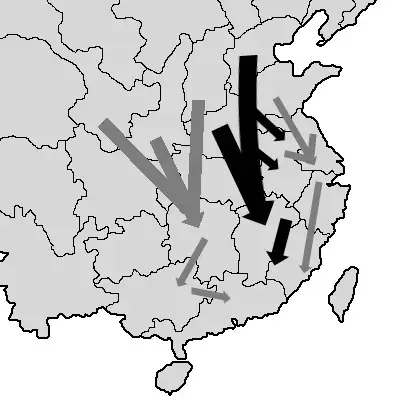
Southward Migration of the Nobility (衣冠南渡) was a monumental historical migration during the transition between the Western and Eastern Jin dynasties (307–318), wherein the imperial family, prominent aristocratic clans, and millions of northern civilians fled the Yellow River basin across the Yangtze River to escape devastation following the War of the Eight Princes and the Disaster of Yongjia. The term refers metaphorically to the scholar-gentry elite and the ceremonial heritage of classical civilization. The conquest of Luoyang and Chang'an by the Xiongnu Han Zhao state terminated the Western Jin Dynasty, leaving northern China a war-torn frontier. Guided by the prominent statesman Wang Dao and military marshal Wang Dun, the Prince of Langya (Sima Rui) established his government at Jiankang (modern Nanjing), forging a coalition with indigenous Jiangnan gentry to found the Eastern Jin Dynasty and inaugurating the aristocratic governance model known as the joint rule of Wang and Sima. The court introduced emigrant commanderies and counties to administer displaced populations. This relocation not only preserved Chinese cultural and dynastic continuity in the south, but also transferred advanced metallurgy, ox-plowing, and hydraulic methods alongside millions of laborers, providing the institutional foundation for the economic and cultural flourishing of Jiangnan and the southward shift of China's economic center.
Originating in the Yellow River basin (Luoyang, Chang'an, and northern commanderies) and terminating in the Middle and Lower Yangtze River basins (Jiankang, Jingkou, Gushu, Kuaiji, and Jingzhou)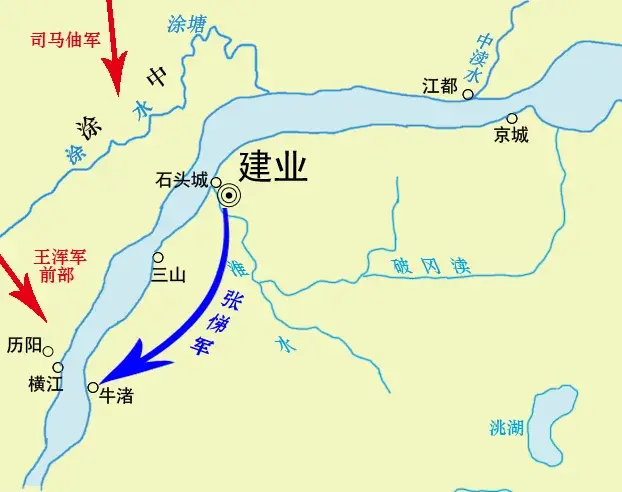
The Western Jin's Conquest of Eastern Wu and Unification (西晋灭吴统一) was the decisive strategic campaign from late 279 to early 280 that eliminated the last rival regime of the Three Kingdoms and reunified China under the Western Jin Dynasty. Following the fall of Shu Han in 263 and Sima Yan's ascension in 265, Western Jin held the northern heartland and Sichuan basin, while Eastern Wu relied upon the natural barrier of the Yangtze River to sustain its southern autonomy. Orchestrated by strategist Yang Hu and continued by Du Yu, Western Jin secretly constructed a colossal riverine armada under Wang Jun in Yizhou. In the winter of 279, Emperor Wu of Jin seized the opportunity of Sun Hao's tyrannical rule and demoralized forces, deploying more than two hundred thousand troops along six coordinated amphibious axes. Jin forces advanced with swift synchronization; Wang Jun's naval vanguard descended the Yangtze, melting iron chain barrages with oiled torches to take Danyang and Xiling, while Du Yu surprised Jiangling and Wang Hun secured the northern riverbanks. A desperate counteroffensive led by Wu Chancellor Zhang Ti was crushed at the Battle of Banchao, obliterating Wu's imperial guards. On April 30, 280 (the fifteenth day of the third month), Jin warships arrived at the Stone Fortress in Jianye, prompting Sun Hao to surrender with bound hands, marking the formal downfall of Eastern Wu. This campaign unified the realm and stood as a celebrated milestone in ancient Chinese amphibious warfare.
Middle and Lower Reaches of Yangtze River, Yizhou Waterway, and Jianye (modern Nanjing, Jiangsu)