Comrades in Shizhou
War of the Eight Princes begins; Zu Ti and Liu Kun serve together as masters of records.
Western Jin Dynasty (西晋) · HISTORICAL EVENT
祖逖闻鸡起舞
Rising at Cockcrow to Practice the Sword (祖逖闻鸡起舞) is a legendary historical episode during the Western Jin Dynasty embodying youthful resolve and patriotic self-discipline. During the turbulent Yuankang era (291–299 CE), young scholars Zu Ti and Liu Kun served together as masters of records in Shizhou. Distressed by aristocratic corruption and the impending catastrophe of the War of the Eight Princes, the two companions shared living quarters and pledged…
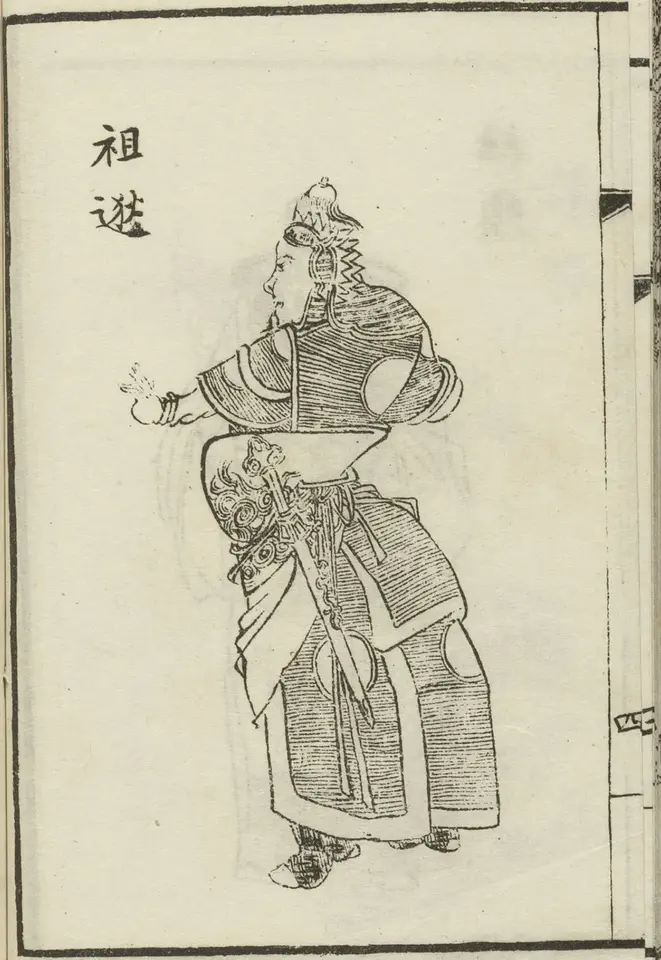
Rising at Cockcrow to Practice the Sword (祖逖闻鸡起舞) is a legendary historical episode during the Western Jin Dynasty embodying youthful resolve and patriotic self-discipline. During the turbulent Yuankang era (291–299 CE), young scholars Zu Ti and Liu Kun served together as masters of records in Shizhou. Distressed by aristocratic corruption and the impending catastrophe of the War of the Eight Princes, the two companions shared living quarters and pledged to dedicate their lives to restoring imperial order. When a rooster crowed in the dead of night—traditionally feared as an ill omen—Zu Ti dismissed superstition, kicking Liu Kun awake and declaring it a heaven-sent summons to rise. Leaping out of bed, they drew their swords to practice martial arts and military strategy under the moonlight. Their unrelenting dedication transformed them into premier commanders who later spearheaded northern resistance against nomadic invasions.
War of the Eight Princes begins; Zu Ti and Liu Kun serve together as masters of records.
An isolated cock crows at midnight; Zu Ti rejects superstitious fear, kicking Liu Kun awake to train.
The two scholars practice swordsmanship and military strategy nightly, becoming accomplished military commanders.
Civil war intensifies; Zu Ti and Liu Kun depart Shizhou to take up field commands in defense of the dynasty.
Liu Kun is appointed Governor of Bingzhou, holding the northern frontier fortress of Jinyang with indomitable valor.
Western Jin collapses; Zu Ti vows to liberate the Central Plains, striking his oar in midstream as he crosses the Yangtze.
Zu Ti dies on the northern front; the memory of the two companions practicing at cockcrow becomes an immortal legend.
Following the unification of China under the Western Jin Dynasty, the imperial ruling elite succumbed to unprecedented luxury and moral dissolution. The nine-rank system entrenched aristocratic privilege, fostering a culture where noblemen competed in ostentatious displays of wealth while scholars abandoned practical statecraft in favor of nihilistic "pure conversation" (Qingtan).
The accession of the intellectually disabled Emperor Hui in 290 CE ignited intense palace intrigues between Empress Jia Nanfeng and imperial regents. This instability erupted into the catastrophic War of the Eight Princes, a sixteen-year fratricidal civil war among Sima imperial clansmen that devastated the Yellow River basin, decimated imperial garrisons, and left the northern frontiers defenseless against encroaching nomad confederacies.
In this atmosphere of impending collapse, Zu Ti and Liu Kun stood out for their patriotic integrity and martial vigor. Zu Ti, from Fanyang, was renowned for generosity, frequently distributing grain to destitute travelers. Liu Kun, a descendant of the Han imperial house from Zhongshan, was gifted in literary composition, military arts, and music.
During the early Yuankang era, both young men were appointed masters of records in Shizhou. Rejecting the prevailing fashion of indolent discourse, they formed an intimate bond of brotherhood, sharing duties by day and sleeping under the same quilt by night. Pondering the worsening fate of the empire, they resolved to master the arts of war and governance, promising one another: "When the realm boils in chaos and heroes arise, let us avoid turning our blades against each other on the battlefield!"
Around 295 CE, on a freezing midnight in Luoyang, the administrative quarters of Shizhou lay in profound silence. Suddenly, the sharp, piercing crow of an isolated rooster echoed across the frozen desolate countryside.
In ancient Chinese folklore, roosters were expected to crow only at dawn. A rooster crowing in the middle of the night was considered an abnormal omen signifying demonic disorder, chaos, or impending war.
Awakened by the crow, Zu Ti felt no superstitious dread. Instead, he recognized an urgent call to action. Leaping up, he kicked his sleeping companion Liu Kun and called out excitedly: "Yueshi (Liu Kun's courtesy name), do you hear that rooster calling in the wilderness?"
Rubbing his eyes, Liu Kun listened and remarked with concern: "Indeed, a rooster crows at midnight. But ancient custom warns that midnight crowing portends disaster for the realm!"
Zu Ti stepped onto the floor, declaring with conviction: "This is no evil sound! It is heaven reminding us not to waste our precious youth in sleep! With the empire sliding into ruin, how can we linger in bed? From this day forward, let us rise whenever the cock crows to duel with swords and master statecraft. What say you?"
Electrified by Zu Ti's fervor, Liu Kun threw off his blankets and leaped up, shouting: "Your words ring true! When the nation faces peril, every man bears responsibility. I shall rise with you!"
The two youths threw on their robes, grasped their steel blades, and hurried out into the courtyard. Under the starry sky and the pale moonlight, Zu Ti and Liu Kun faced each other, drew their three-foot swords, and commenced their nocturnal duel.
The courtyard echoed with the clash of steel and the rustle of robes as their silhouettes leaped, parried, and thrust in the midnight breeze. Between bouts of swordplay, they discussed the tactical treatises of Sun Tzu and Wu Qi, analyzing troop formations and supply logistics. They continued their rigorous drills until the eastern sky grew pale and dawn broke, returning to their chambers drenched in sweat.
From that night forward, through freezing winter snows and humid summer nights, Zu Ti and Liu Kun never wavered. Whenever the rooster crowed, they sprang from bed to duel in the courtyard and study classical histories. This relentless training stripped away scholarly frailty, forging them into disciplined commanders possessing physical stamina and strategic vision.
The patriotic vows forged during those midnight duels were tested when the Western Jin collapsed in the Disaster of Yongjia in 311 CE.
Liu Kun was appointed Governor of Bingzhou and rode alone into the ruined fortress of Jinyang (modern Taiyuan). Facing starvation and relentless sieges by Xiongnu and Xianbei cavalry, Liu Kun held the northern redoubt for a decade, sleeping with his head on his spear (Zhen Ge Dai Dan).
Meanwhile, Zu Ti led hundreds of refugee families across the Yangtze River. Refusing to settle into southern complacency, he petitioned for an army, struck his oar in midstream, and launched an expedition that recaptured the territories south of the Yellow River.
The youthful determination born in that midnight courtyard matured into heroic military service that preserved the flame of Chinese civilization during one of its darkest eras.
The discipline forged through midnight swordplay transformed Zu Ti and Liu Kun into two of the most capable military leaders of the Jin Dynasty. While the bulk of the northern aristocracy perished or fled, Liu Kun defended Jinyang for years and Zu Ti liberated territories south of the Yellow River, directly translating their youthful vows into historic deeds.
First, the episode established a cultural counterweight against elite decadence, demonstrating that true Confucian patriotism demanded physical vigor, martial proficiency, and practical action. Second, "Rising at Cockcrow to Practice the Sword" (Wen Ji Qi Wu) entered the Chinese language as an iconic four-character idiom celebrating early rising, tireless self-improvement, and proactive dedication. Third, the story inspired generations of Chinese patriots—from Tang poets like Li Bai to Song commanders like Yue Fei and Xin Qiji—who invoked the image of midnight swordplay as a sacred symbol of national devotion.
In the Book of Jin (Jinshu), Fang Xuanling recorded: "(Zu Ti) served alongside Liu Kun as Master of Records in Shizhou, sharing deep affection and sleeping under the same quilt. Hearing a rooster crow at midnight, he kicked Kun awake, saying: 'This is no evil sound!' and rose to dance with swords. Crossing the Yangtze, he struck the oar in midstream, his spirit transcendent and unyielding! The aura of these heroes shines across millennia."
Philosopher Wang Fuzi observed: "Zu Ti and Liu Kun rose to dedicate their lives to the realm. Rising at cockcrow and moving with the wind, their courage sprang from deep devotion, unmatched by those who merely sought self-preservation."