Foundations of Cheng-Han and Han-Zhao
Li Xiong took Chengdu to establish Cheng-Han, and Liu Yuan rose at Lishi to establish Han-Zhao, beginning the Sixteen Kingdoms period.
Northern Wei Dynasty (北魏) · HISTORICAL EVENT
十六国时期
The Sixteen Kingdoms Period (304–439 CE), historically termed the Five Barbarians and Sixteen Kingdoms, was a pivotal era of prolonged political fragmentation and intense multi-ethnic fusion in northern and southwestern China, spanning from the collapse of the Western Jin dynasty to the unification of northern China by the Northern Wei. Beginning in the late Eastern Han dynasty, extensive frontier populations including the Xiongnu, Xianbei, Jie, Di, and…
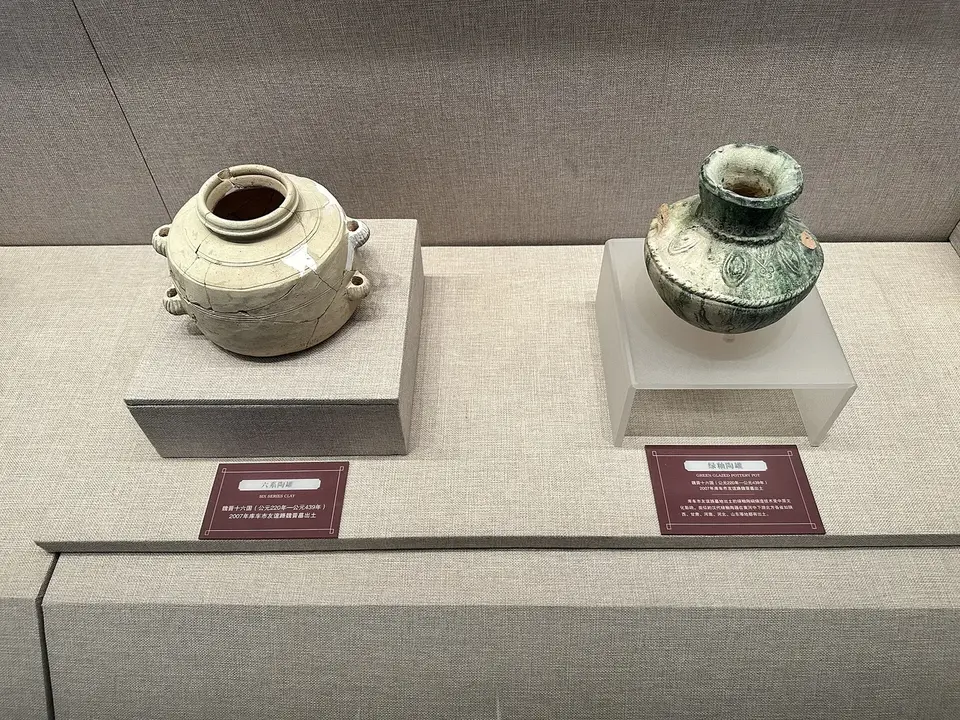
The Sixteen Kingdoms Period (304–439 CE), historically termed the Five Barbarians and Sixteen Kingdoms, was a pivotal era of prolonged political fragmentation and intense multi-ethnic fusion in northern and southwestern China, spanning from the collapse of the Western Jin dynasty to the unification of northern China by the Northern Wei. Beginning in the late Eastern Han dynasty, extensive frontier populations including the Xiongnu, Xianbei, Jie, Di, and Qiang migrated into northern commanderies. When the Western Jin dynasty collapsed amid the catastrophic War of the Eight Princes, Di leader Li Xiong established Cheng-Han in Sichuan, and Xiongnu leader Liu Yuan founded Han-Zhao in Shanxi in 304 CE, inaugurating more than a century of regional conflict. Over twenty independent kingdoms emerged across the north, sixteen of which were chronicled by Northern Wei historian Cui Hong in the Spring and Autumn Annals of the Sixteen Kingdoms. The era witnessed dramatic imperial expansions, including the unification of the Central Plains under Shi Le's Later Zhao, the total northern hegemony of Fu Jian's Former Qin, and the subsequent imperial fragmentation following the Battle of the Fei River. In 439 CE, Emperor Taiwu of Northern Wei conquered Northern Liang, concluding the Sixteen Kingdoms era and ushering China into the Northern and Southern Dynasties period. Despite immense devastation, this transformative epoch forged enduring multi-ethnic integration and stimulated nationwide economic reorganization.
Li Xiong took Chengdu to establish Cheng-Han, and Liu Yuan rose at Lishi to establish Han-Zhao, beginning the Sixteen Kingdoms period.
Shi Le slaughtered the Jin army at Ningpingcheng; Liu Yao and Shi Le sacked Luoyang and captured Emperor Huai.
Liu Yao captured Chang'an and forced Emperor Min to surrender, terminating the Western Jin dynasty.
Following the Jin Zhun coup, Liu Yao moved to Chang'an as Former Zhao, while Shi Le proclaimed Later Zhao at Xiangguo.
Shi Le crushed Liu Yao's army outside Luoyang and captured him, subsequently conquering Chang'an and ending Former Zhao.
Ran Min overthrew the Shi clan at Ye, founded Ran Wei, and issued decrees leading to the massacre of two hundred thousand Jie.
Murong Ke defeated and captured Ran Min at Liantai; Murong Jun took Ye and established Former Yan hegemony in northern China.
Prime Minister Wang Meng routed Murong Ping's army at Luchuan, captured Ye, and annexed Former Yan into Former Qin.
Former Qin armies conquered Former Liang in Hexi and Dai in the northern steppe, completing the unification of northern China.
Fu Jian's massive southern army was shattered by Xie Xuan's Beifu troops along the Fei River, triggering immediate northern fragmentation.
Tuoba Gui convened a tribal council at Niuchuan, restored Dai, renamed it Wei, and initiated northern state-building.
Tuoba Gui ambushed and crushed the Later Yan army at Canhebei, permanently shifting northern military hegemony to Northern Wei.
Emperor Taiwu captured Guzang and forced Juqu Mujian to surrender, ending the Sixteen Kingdoms period and unifying northern China.
From the mid-to-late Eastern Han dynasty onward, the imperial court regularly employed diplomatic pacification and coercive relocation to settle frontier nomadic and tribal populations within interior northern commanderies. This policy was intended to bolster border defenses against external steppe confederations, alleviate severe agricultural labor shortages, and expand imperial military recruitment.
During the Cao Wei and early Western Jin periods, inward migration accelerated significantly. The five divisions of the Southern Xiongnu settled across Bing Province; Jie tribes clustered in Shangdang; Di and Qiang populations dispersed extensively across the Guanzhong plains and the mountainous margins of Sichuan; while diverse Xianbei branches dominated Liaoxi, the northern frontier, and the Hexi Corridor. Historical annals recorded that among the more than one million residents of Guanzhong, non-Han peoples constituted fully half the population. Although these inward-migrating communities adopted agricultural techniques and aspects of Han culture, they maintained formidable cavalry traditions and tribal military structures.
Concurrently, Western Jin imperial officials and local gentry routinely subjected these migrant groups to severe economic extortion, high tribute levies, and even chattel enslavement, fostering bitter ethnic and social grievances that turned northern China into an unstable powder keg.
Following the reunification of the Three Kingdoms, Emperor Wu of Jin instituted extensive princely appanages, granting imperial clan princes autonomous authority to maintain private armies, levy taxes, and govern regional strongholds to safeguard the Sima family dynasty. However, upon Emperor Wu's death, the succession of the cognitively impaired Emperor Hui sparked violent factional intrigue between Empress Jia Nanfeng and consort relatives, triggering the devastating sixteen-year conflict known as the War of the Eight Princes.
Successive imperial princes, including Sima Liang, Sima Wei, Sima Lun, Sima Jiong, Sima Ai, Sima Ying, Sima Yong, and Sima Yue, mobilized massive private armies across the Central Plains in ruthless struggles for supreme court power. In their desperation for military advantage, rival princes recruited inward-settled Xiongnu, Xianbei, Di, and Qiang tribal cavalry as auxiliary forces, introducing armed tribal contingents into the core imperial capital.
Sixteen years of merciless civil warfare devastated the agricultural economy of Guanzhong and Henan, causing widespread famine, pestilence, and depopulation. The Western Jin military garrison network dissolved, imperial authority collapsed across provincial commanderies, and the political legitimacy of the dynastic court vanished.
During the Yuankang era, widespread revolts led by Qiang and Di confederacies under Qi Wan'nian swept across Guanzhong, requiring several years of strenuous campaigning to suppress. Recognizing the grave perils of internal ethnic tension, Palace Attendant Jiang Tong submitted his celebrated memorial, Treatise on Relocating the Barbarians, in 299 CE. Jiang Tong astutely argued that nomadic customs fundamentally differed from Chinese institutions, warning that unless the central government capitalized on remaining peace to relocate inward-migrating tribes back to their frontier homelands, catastrophic rebellions would engulf the capital.
Preoccupied with decadent luxuries and factional court intrigue, the Western Jin aristocracy ignored Jiang Tong's prescient counsel. Meanwhile, recurring droughts and war-induced devastation displaced hundreds of thousands of impoverished Han peasants across Shaanxi and Shanxi. These desperate migrants organized armed self-defense enclaves and chose charismatic leaders, awaiting only an opportunity to overthrow the oppressive administrative apparatus of the empire.
During the Tai'an era of Western Jin, catastrophic famine struck Guanzhong, driving hundreds of thousands of displaced refugees south into the fertile Sichuan Basin. Governor Luo Shang of Yi Province treated these refugees with extreme hostility, attempting to expel and slaughter them. In response, refugee leaders Li Te and his brother Li Xiang gathered their followers into armed defensive stockades at Mianzhu and launched an armed rebellion against Jin provincial authorities. Following Li Te's death in battle at Pingyang, his younger brother Li Liu and son Li Xiong continued the struggle. Demonstrating remarkable military skill and benevolence toward the local population, Li Xiong routed Luo Shang's provincial garrisons and seized Chengdu. In 306 CE, Li Xiong proclaimed himself Emperor of Cheng (later renamed Han, historically known as Cheng-Han), adopting the era title Jianxing. Li Xiong lowered agricultural taxes, patronized local Confucian scholars, and restored civil order, transforming Sichuan into an autonomous kingdom independent of Jin authority.
Simultaneously in Bing Province, Governor Sima Teng clashed violently with Prince of Chengdu Sima Ying. Seeking auxiliary cavalry, Sima Ying appointed Liu Yuan, Chief Commandant of the Five Divisions of the Southern Xiongnu, as Northern Commandant. Liu Yuan had received an elite classical education in Luoyang during his youth, excelling in the Spring and Autumn Annals and classical military treatises. In 304 CE, when Sima Teng and Prince Sima Yue besieged Sima Ying at Ye, Liu Yuan was dispatched back to Shanxi to mobilize Xiongnu contingents.
Upon arriving at Lishi, Liu Yuan realized that the Sima imperial clan was exhausted by mutual fratricide. Declaring that his royal lineage traced descent from Han imperial princesses and asserting the mantle of legitimate dynastic restoration, Liu Yuan erected a sacred sacrificial altar at Zuoguocheng in October 304 CE. Proclaiming himself King of Han, he offered ancestral sacrifices to Emperor Gaozu, Emperor Wu, and Liu Bei, establishing the kingdom of Han (later Han-Zhao).
Liu Yuan organized central administrative ministries, employed prominent Han scholars such as Cui You and Lu Chen to codify legal statutes, and appointed his sons Liu He and Liu Cong to lead imperial guards. In 308 CE, Liu Yuan assumed the imperial title and relocated his capital to Pingyang. Disaffected refugees, local warlords, and tribal commanders, including the brilliant Jie general Shi Le and Shandong rebel leader Wang Mi, pledged allegiance, establishing Han-Zhao as the dominant military power in the north.
Following the establishment of Han-Zhao, Liu Yuan dispatched his formidable son Liu Cong alongside generals Shi Le, Wang Mi, and Liu Yao to launch sweeping campaigns across Bing, Ji, and Si provinces, tightening the encirclement around the Western Jin capital of Luoyang. In 310 CE, Liu Yuan passed away. When newly enthroned crown prince Liu He plotted against his imperial brothers, Liu Cong executed an armed palace coup, eliminated Liu He, and assumed the throne, accelerating the final offensive against Luoyang.
By early 311 CE, Luoyang was paralyzed by catastrophic famine and severe locust plagues, with widespread starvation reducing the population to desperation. Grand Tutor Sima Yue, Prince of Donghai, paralyzed by fear of imminent siege, abandoned Emperor Huai and fled eastward toward Shandong with over one hundred thousand elite guards and top court ministers. In April 311 CE, Sima Yue died of illness at Xiang County. Grand Commandant Wang Yan and senior ministers escorted his funeral cortege eastward.
Shi Le pursued the retreating column with several tens of thousands of elite cavalry. At Ningpingcheng in Ku County, Shi Le's cavalry surrounded the immense, disorganized procession, unleashing concentrated crossbow fire and mounted charges that annihilated the entire Jin army. Shi Le executed Wang Yan and dozens of top imperial ministers by toppling a wall over them, obliterating the last remaining field army of the Western Jin court.
In June 311 CE, Liu Cong's marshals Liu Yao, Wang Mi, and Shi Le breached the passes and stormed Luoyang's Xuanyang Gate. The invading forces systematically plundered the imperial metropole, burning royal palaces, ancestral temples, and governmental archives. Over thirty thousand aristocrats and civilians were massacred, royal tombs were looted for gold, and Emperor Huai was captured alive and transported to Pingyang, an epochal catastrophe known as the Disaster of Yongjia.
Following the fall of Luoyang, Prince Sima Ye was proclaimed Emperor Min in Chang'an, attempting to maintain an imperial government amidst desolate ruins. However, Guanzhong lacked provisions and reinforcements. In November 316 CE, Liu Yao laid siege to Chang'an, forcing Emperor Min to surrender unconditionally in a goat cart. The Western Jin dynasty, which had reunited China half a century earlier, was completely extinguished.
Following the extinction of the Western Jin, severe internal turbulence erupted within Han-Zhao at Pingyang. In 318 CE, Emperor Liu Cong passed away and was succeeded by his debauched son Liu Can. Palace minister Jin Zhun initiated a bloody coup d'état, slaughtering several hundred members of the imperial Liu clan in Pingyang and exhuming the tombs of Liu Yuan and Liu Cong.
Senior generals Liu Yao in Chang'an and Shi Le in Xiangguo immediately marched their respective field armies to suppress the rebellion. En route, Liu Yao assumed the imperial throne at Chibi and changed the dynastic name to Zhao (Former Zhao); concurrently, Shi Le declared himself King of Zhao at Xiangguo, establishing Later Zhao. Jin Zhun was assassinated by his own subordinates, who surrendered Pingyang to Liu Yao. Liu Yao awarded Shi Le the title of Grand General and Prince of Zhao.
However, this temporary alliance collapsed almost immediately. Shi Le believed his battlefield contributions entitled him to imperial status rather than subordinate rank, tore up Liu Yao's edict, and executed imperial envoys, initiating a decadelong civil war for northern supremacy.
In Guanzhong, Liu Yao established a dual administrative apparatus, governing nomadic tribes through a Grand Chanyu bureau while directing Han populations through classical civil offices. Liu Yao campaigned vigorously across the northwest, subjugating Xiutu Xiongnu, Wudu Di, and Chouzhi forces, and compelling Zhang Mao of Former Liang in Hexi to render tribute, thereby consolidating dominion over Shaanxi and eastern Gansu.
In eastern China, Shi Le consolidated his regime around Xiangguo with the indispensable strategic guidance of his chief Han advisor, Zhang Bin. Zhang Bin instituted the Nine-Rank system to recruit talented scholar-officials, fostered sericulture and agriculture, and reduced arbitrary taxation. Shi Le dispatched his adopted nephew Shi Hu to conquer regional rivals, annihilating Wang Jun in You Province, smashing Duan Xianbei tribes, and conquering Cao Yi in Qing Province. Although Eastern Jin general Zu Ti launched a spirited northern expedition recovering lands south of the Yellow River, Zu Ti's premature death allowed Shi Le to reassert total dominance over Henan.
In 328 CE, Liu Yao led over one hundred thousand troops eastward to besiege Shi Hu at Luoyang. Recognizing the existential stakes, Shi Le personally marshaled one hundred thousand elite cavalry and infantry from Xiangguo to relieve the fortress. In December 328 CE, the decisive Battle of the Luo River unfolded outside Luoyang. Liu Yao, heavily intoxicated before the engagement, failed to maintain coherent defensive lines. Shi Le's armored cavalry launched a shattering assault, routing Former Zhao's army and capturing Liu Yao after his horse stumbled into an icy ditch. Shi Hu subsequently captured Chang'an, executed the remaining Liu princes, and eradicated Former Zhao.
Following the conquest of Former Zhao, Shi Le formally ascended the imperial throne at Xiangguo in 330 CE, adopting the title of Heavenly King of Later Zhao. Shi Le governed with pragmatic statesmanship, heavily relying on Zhang Bin. He enforced dual administrative oversight, appointing a Grand Chanyu to oversee nomadic peoples while maintaining standard civil courts for Han citizens, strictly prohibiting nomadic soldiers from abusing Han gentry and establishing imperial academies to train administrative cadres. Later Zhao's territory stretched from the Bohai Sea to the Long Mountains and from the Huai River to the Yan Mountains, representing the foremost power of the era.
In 333 CE, Shi Le passed away. His ruthless nephew Shi Hu launched a swift military coup, deposing and murdering Crown Prince Shi Hong, declaring himself Heavenly King, and moving the imperial capital to Ye. Shi Hu's reign was characterized by extreme militarism and personal cruelty. He conscripted over four hundred thousand male and female laborers to construct opulent palaces and towers at Ye and cordoned off immense tracts of farmland across northern China into private imperial hunting reserves, decreeing death for any commoner who entered.
Shi Hu instituted mandatory military drafts conscripting youths as young as thirteen, seizing over ten thousand riverboats and leaving fields uncultivated, which resulted in catastrophic nationwide famines. Family relations within Shi Hu's palace were horrific. When Crown Prince Shi Sui plotted to assassinate his father, Shi Hu executed Shi Sui and his entire household. Later, when second son Shi Xuan murdered his younger brother Shi Tao over succession rivalries, Shi Hu personally tortured Shi Xuan with iron hooks, pulled out his hair and teeth, incinerated him alive, and executed several hundred members of his clan.
In 349 CE, Shi Hu died of illness shortly after formally assuming the imperial title. His surviving sons immediately waged savage civil wars for the throne, causing massive bloodshed in Ye. Taking advantage of the turmoil, Qiang chieftain Yao Yizhong and Di leader Fu Hong expanded their private armies in western China, precipitating the total collapse of Later Zhao.
Amid the collapse of Later Zhao, Shi Hu's adopted Han grandson, Shi Min (Ran Min), capitalized on his command of the imperial guard to stage a decisive coup. Cooperating with Han general Li Nong, Ran Min slaughtered rival princes, deposed Emperor Shi Jian, and in January 350 CE ascended the imperial throne in Ye, establishing the Great Wei dynasty (Ran Wei).
Confronted by hostile coalitions of Xiongnu and Jie princes led by Shi Zhi in Xiangguo, Ran Min issued his famous decrees ordering the extermination of non-Han peoples. Seeking to mobilize northern Han populations behind his new regime, Ran Min proclaimed that all non-Han warriors bearing arms should be executed and closed the gates of Ye. Over two hundred thousand Jie, Xiongnu, and other non-Han residents were massacred in a single day, their bodies discarded outside the city walls. This triggered uncontrolled inter-ethnic slaughter across northern China, as migrating refugees massacred one another along the roads and agricultural production ceased entirely.
While Ran Min was bogged down besieging Shi Zhi at Xiangguo, the Xianbei Murong leadership of Former Yan in Liaodong seized the opportunity to invade the central plains. Murong Jun, son of Former Yan's founder Murong Huang, led one hundred thousand Xianbei troops across the Yan Mountains, rapidly overrunning You and Ji provinces.
In April 352 CE, Ran Min engaged Former Yan's foremost commander, Murong Ke, at the Battle of Liantai near Anxi. Wielding a double-bladed lance in his left hand and a hooked halberd in his right, Ran Min mounted his prized steed Zhu Long and led his infantry in desperate charges, repelling the Xianbei vanguard in ten consecutive engagements. However, Murong Ke deployed five thousand elite armored cavalry bound together in chained formations to encircle Ran Min's force. Exhausted after hours of combat, Ran Min's mount collapsed, leading to his capture and subsequent execution at Longcheng. Former Yan captured Ye in August 352 CE, terminating Ran Wei after barely two years of existence.
Originating from western Liaoning, the Murong Xianbei had initiated extensive Sinicization policies under Murong Hui, welcoming displaced northern scholars and establishing bureaucratic institutions. Murong Huang subsequently consolidated Liaodong and Liaoxi by eradicating the Duan Xianbei, subjugating the Yuwen Xianbei, and extracting submission from Goguryeo and Buyeo.
Following the conquest of Ran Wei, Murong Jun formally assumed the imperial title at Jicheng (modern Beijing) in 352 CE, severed relations with Eastern Jin, and transferred his imperial capital to Ye. Former Yan expanded aggressively, conquering Duan Kan in Qing Province, subjugating regional strongholds across Henan, and incorporating Hebei, Shandong, Henan, and Shanxi into a vast, prosperous empire.
Upon Murong Jun's death, his eleven-year-old son Murong Wei inherited the throne, with imperial governance entrusted to Grand Marshal Murong Ke. Murong Ke governed with exceptional modesty, strategic wisdom, and administrative integrity. He appointed capable Han ministers Yue Wan and Shen Shao to reform land registries, uncovering over two hundred thousand individuals illegally sheltered on aristocratic estates to enrich the imperial treasury. In 365 CE, Murong Ke captured the vital Jin bastion of Luoyang, elevating Former Yan to its historical zenith.
Following Murong Ke's death in 367 CE, corrupt Regent Murong Ping and Empress Dowager Kezuhun marginalized Murong Ke's recommended successor, Prince of Wu Murong Chui. When Eastern Jin Grand Marshal Huan Wen launched his third northern expedition in 369 CE, advancing to Fangtou near Ye, Murong Chui took command and decisively routed Huan Wen, slaying thirty thousand Jin soldiers. Threatened by Murong Ping's jealous plots to murder him after this victory, Murong Chui fled westward to seek refuge under Former Qin, depriving Former Yan of its greatest military commander.
While Former Yan flourished in the east, Former Qin was ascending in Guanzhong. Following the disintegration of Later Zhao, Di leader Fu Hong led his followers westward, and his son Fu Jian (Jian) proclaimed himself Emperor of Former Qin at Chang'an in 352 CE. In 357 CE, his nephew Fu Jian (Jian) allied with general Deng Qiang to execute an armed coup against the tyrannical ruler Fu Sheng, proclaiming himself Heavenly King of Great Qin.
Fu Jian displayed extraordinary political vision by disregarding ethnic distinctions and appointing commoner Han scholar Wang Meng as his Prime Minister. Wang Meng enforced strict legal discipline, curtailed imperial relatives and noble cliques, eradicated administrative corruption, patronized Confucian academies, built irrigation canals across Guanzhong, and organized efficient agricultural colonies and well-trained militia divisions, propelling Former Qin far ahead of neighboring states in governance and economic wealth.
In 370 CE, recognizing the decay of Former Yan under Murong Ping's corrupt regency, Fu Jian dispatched Wang Meng with sixty thousand troops to strike Huguan and Jinyang. Murong Ping confronted him at Luchuan with three hundred thousand troops. Wang Meng attacked at dawn, routing Former Yan's massive army, slaying and capturing over fifty thousand soldiers. Former Qin forces swiftly besieged Ye, captured Murong Wei, and annexed Former Yan's one hundred and fifty-seven commanderies and nearly ten million subjects.
Following this triumph, Former Qin's military momentum proved irresistible. In 376 CE, Fu Jian dispatched general Gou Chang to conquer Former Liang in the Hexi Corridor, compelling Zhang Tianxi to surrender. In the same year, Deng Qiang advanced into the northern steppe and extinguished the Tuoba Xianbei state of Dai. For the first time since the Disaster of Yongjia, all of northern China, Guanzhong, the Hexi Corridor, Sichuan, and parts of the Western Regions were united under a single centralized imperial government.
Having unified northern China, Fu Jian resolved to cross the Yangtze River, conquer the Eastern Jin dynasty, and unite all of China under a single universal empire. On his deathbed in 375 CE, Prime Minister Wang Meng had earnestly warned him: Although Eastern Jin is relegated to the south, it maintains legitimate dynastic succession and popular loyalty. After my death, do not attempt to conquer Jin. The Xianbei and Qiang leaders within our empire are our true adversaries, constantly waiting for an opportunity to rebel; they must be gradually suppressed to secure our dynastic house. However, Fu Jian, enamored with ideals of universal benevolence, harbored the exiled chiefs Murong Chui and Yao Chang in high military positions, disregarding Wang Meng's warning.
In August 383 CE, Fu Jian mobilized an immense multi-ethnic expeditionary force of eight hundred and seventy thousand infantry and cavalry, boasting that his soldiers could stem the flow of the Yangtze simply by throwing their horsewhips into the river. Fu Jian assigned his younger brother Fu Rong as vanguard commander, advancing with two hundred and fifty thousand troops toward Shouyang along the Fei River.
In Jiankang, Prime Minister Xie An directed imperial defense, dispatching his nephew Xie Xuan and eight thousand veteran Beifu shock troops to Henan. In November 383 CE, the opposing armies faced each other across the Fei River. Xie Xuan requested Former Qin forces to pull back slightly from the riverbank to permit a fair pitched battle. Fu Jian, intending to crush the Jin troops as they crossed, ordered his massive lines to withdraw.
However, Former Qin's army comprised diverse ethnic levies lacking coherent communication and common discipline. The tactical withdrawal triggered widespread panic, as soldiers in the rear mistook the movement for a catastrophic rout. Captured Jin officer Zhu Xu shouted from within Qin lines that the army was defeated, causing the entire formation to disintegrate into an uncontrollable stampede. Xie Xuan's Beifu infantry crossed the river and mercilessly cut down the fleeing masses. Fu Rong was trampled to death, while Fu Jian was wounded by a stray arrow and fled on horseback. The massive army disintegrated overnight, and the Battle of the Fei River shattered the foundations of Former Qin.
The catastrophe at the Fei River triggered instant uprisings by non-Han leaders across the empire. Escorting Fu Jian back to Luoyang, Murong Chui requested permission to pacify the northeast, returned to Hebei, and in 386 CE proclaimed himself Emperor of Later Yan at Zhongshan, rapidly reconquering Hebei, Shanxi, and Shandong.
Simultaneously in Guanzhong, Qiang leader Yao Chang revolted in Weibei, declared himself King of Qin, and founded Later Qin. In 385 CE, Yao Chang captured Chang'an and seized Fu Jian at Wujiang Mountain. When Fu Jian refused to surrender the Imperial Seal, Yao Chang had him strangled inside Xinping Monastery. Remaining Former Qin loyalists under Fu Deng waged bitter guerrilla warfare across Shaanxi before being eradicated.
In Shanxi, Murong Chong established Western Yan before his followers were absorbed by Later Yan; in eastern Gansu, Qifu Guoren founded Western Qin; in Shandong, Murong De founded Southern Yan; and in the Ordos Loop, Xiongnu Tiefu chieftain Helian Bobo established the kingdom of Xia in 407 CE. Helian Bobo mobilized one hundred thousand laborers to construct the indestructible white-walled fortress of Tongwan by steaming earth, subsequently storming Chang'an and establishing fierce dominion over northern Shaanxi. Northern China fractured once again into violent regional conflicts among competitive warlords.
While the central plains experienced perpetual war, the Hexi Corridor developed a dynamic constellation of independent regional regimes. In 383 CE, Fu Jian had dispatched general Lu Guang with seventy thousand troops to conquer the Western Regions, subjugating Kucha and thirty-six city-states. Upon learning of Former Qin's collapse during his return march, Lu Guang occupied Liangzhou and in 389 CE declared himself King of Sanhe at Guzang, establishing Later Liang.
Later Liang struggled with intense internal ethnic tensions. In 397 CE, Duan Ye, supported by Lushuihu chieftain Juqu Mengxun, revolted at Zhangye to establish Northern Liang. In the same year, Xianbei chieftain Tufa Wugu founded Southern Liang at Ledu, while in 400 CE Han gentry leader Li Hao established Western Liang at Dunhuang, founding classical academies and preserving ancient ritual traditions.
Juqu Mengxun subsequently seized supreme power in Northern Liang, annexing Western Liang and Southern Liang remnants to dominate the Hexi Corridor. Despite recurring localized warfare, the Hexi regimes protected the oasis trade routes of the Silk Road from total destruction. Renowned Buddhist master Kumarajiva translated foundational Mahayana scriptures at Guzang and Chang'an, while monumental Buddhist cave excavation commenced at Mogao and Maijishan, anchoring enduring cultural treasures in the northwestern desert.
Amid the relentless exhaustion of Later Yan, Later Qin, and Xia, the Tuoba Xianbei emerged from the northern steppe to deliver the definitive resolution to the era of fragmentation. Following the fall of Dai to Former Qin, Tuoba Gui, grandson of the last Dai king, was sheltered by tribal kin. In January 386 CE, sixteen-year-old Tuoba Gui convened a tribal council at Niuchuan, restored Dai, quickly changed the dynastic name to Wei (Northern Wei), and transferred his capital to Pingcheng.
Tuoba Gui implemented radical structural reforms, breaking tribal clan organization, settling nomadic herders onto agricultural lands, and recruiting Northern Han gentry such as Cui Hong to design administrative institutions. In 395 CE, Emperor Murong Chui of Later Yan dispatched Crown Prince Murong Bao with eighty thousand troops to invade Northern Wei. Tuoba Gui executed an ambush at Canhebei, trapping and capturing over forty thousand elite Yan soldiers. Canhebei completely reversed the balance of power; Murong Chui died of grief the following year upon beholding the mountain of unburied bones, and Northern Wei cavalry crossed the Taihang Mountains, overrunning Hebei and seizing Zhongshan and Ye.
Under Emperor Mingyuan Tuoba Si, Northern Wei expanded southward against Liu Song. Emperor Taiwu Tuoba Tao, a military genius of exceptional daring, ascended the throne in 423 CE and launched a relentless campaign of total northern unification. In 431 CE, Northern Wei destroyed the Xia kingdom; in 436 CE, imperial forces captured Helong, annihilating Northern Yan; and in August 439 CE, Emperor Taiwu led tens of thousands of elite cavalry across Mount Helan in a rapid march, besieging Guzang and forcing King Juqu Mujian of Northern Liang to surrender.
With the fall of Northern Liang, the one hundred and thirty-five-year period of the Sixteen Kingdoms concluded. The vast territory of northern China was unified under the centralized rule of the Xianbei Northern Wei dynasty, inaugurating the historic era of the Northern and Southern Dynasties.
The Sixteen Kingdoms era permanently shattered the political structure inherited from the Qin and Han empires. Following the collapse of the Western Jin, northern China endured one hundred and thirty-five years of continuous war and state formation.
The conquest of Northern Liang by Northern Wei in 439 CE firmly established a unified Xianbei regime across northern China that coexisted alongside the Liu Song dynasty in the south. This institutionalized the division between northern and southern dynasties, transforming Chinese political culture into a competitive dual-court environment where both sides contested legitimate succession to the classical dynastic mantle.
The Sixteen Kingdoms represented a profound demographic and cultural crucible. Millions of Xiongnu, Xianbei, Jie, Di, and Qiang individuals settled permanently throughout the Central Plains, living in close proximity to indigenous Han populations. To establish legitimate rule, non-Han monarchs adopted classical Chinese bureaucratic systems, patronized Confucian academies, and enrolled subjects into universal household registries.
Simultaneously, Han scholar-gentry actively staffed barbarian chancelleries and directed imperial policymaking. Massive intermarriage, bilingualism, shared culinary customs, and military integration across both cultures dismantled rigid tribal barriers, forging a dynamic, hybrid northern society that infused traditional Han civilization with steppe vigor, directly fostering the cultural synthesis that defined the Sui and Tang empires.
The catastrophic turmoil of the Yongjia disaster compelled over one million northern aristocrats, scholars, and farmers to migrate south of the Yangtze River in the historic movement termed the Southward Migration of the Gentry. This migration provided southern dynasties with immense skilled labor and advanced agricultural techniques, catalyzing the reclamation of the Yangtze and Huai river valleys and permanently elevating southern China's economic significance.
Concurrently, regional regimes in the Hexi Corridor sheltered thousands of displaced scholar-officials, preserving classical Han-Wei commentaries, legal texts, and administrative traditions. The convergence of Central Asian trade along the Silk Road facilitated the introduction of Mahayana Buddhism, culminating in Kumarajiva's landmark translation bureaus and the excavation of monumental Buddhist caves at Dunhuang and Maijishan.