Dynastic Abdication and Founding
Sima Yan receives the abdication of Emperor Yuan of Wei, inaugurating the Western Jin dynasty and issuing a general amnesty
Western Jin Dynasty (西晋) · HISTORICAL EVENT
泰始之治
The Governance of the Taishi Era (泰始之治) refers to the comprehensive series of political, legal, and economic reforms enacted by Emperor Wu of Jin (Sima Yan) during the Taishi reign period (265–274) at the inception of the Western Jin dynasty. Decades of destructive conflict during the Three Kingdoms Period had decimated the agrarian population of the Central Plains, leaving vast tracts of fertile land abandoned and the populace exhausted. Upon ascending…
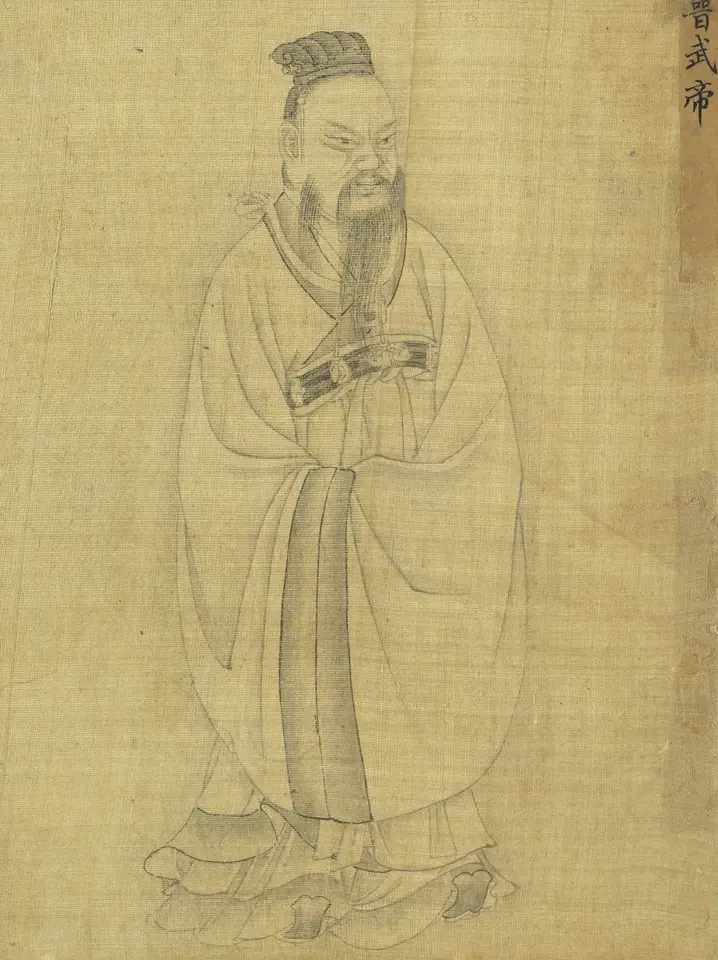
The Governance of the Taishi Era (泰始之治) refers to the comprehensive series of political, legal, and economic reforms enacted by Emperor Wu of Jin (Sima Yan) during the Taishi reign period (265–274) at the inception of the Western Jin dynasty. Decades of destructive conflict during the Three Kingdoms Period had decimated the agrarian population of the Central Plains, leaving vast tracts of fertile land abandoned and the populace exhausted. Upon ascending the throne through dynastic abdication, Sima Yan faced the dual imperatives of legitimizing the new dynasty and rejuvenating societal productivity. Throughout the ten years of the Taishi era, Emperor Wu governed with notable diligence. He commissioned senior ministers Jia Chong and Du Yu to compile and promulgate the landmark Taishi Code, which swept away harsh Cao Wei criminal statutes and instituted principles of legal leniency and systematic codification. Economically, the imperial court phased out rigid state agricultural colonies, reduced land taxes and corvée obligations, provided relief to displaced peasants, and restored major hydraulic infrastructure. Politically, Emperor Wu embraced a policy of conciliation, integrating surrendered Shu Han elites and former Cao Wei courtiers while advocating administrative frugality and checking bureaucratic corruption. These restorative measures fostered substantial economic revival across the Central Plains, expanding tax-paying households, filling imperial granaries, and stabilizing the realm. The Governance of the Taishi Era served as the vital institutional and material springboard that enabled Western Jin to launch its triumphant campaign to conquer Eastern Wu and usher in the celebrated Prosperity of Taikang.
Sima Yan receives the abdication of Emperor Yuan of Wei, inaugurating the Western Jin dynasty and issuing a general amnesty
Emperor Wu enfeoffs imperial princes to create protective frontier bastions and commissions Jia Chong, Pei Xiu, and Du Yu to draft a unified legal code
Drafting of the monumental twenty-volume legal code is finalized, codifying Confucian family hierarchy into criminal culpability
The imperial court officially promulgates the Taishi Code, and Emperor Wu burns the lavish pheasant-feather robe to advocate administrative thrift
Emperor Wu appoints Yang Hu to command the Jingzhou frontier and orders Wang Jun to construct a grand armada in Yizhou to prepare for the invasion of Wu
The foundational decade of restorative rule concludes successfully, restoring agrarian prosperity and accumulating state revenues for imperial reunification
Since the outbreak of the Yellow Turban Rebellion and the subsequent collapse of the Eastern Han dynasty, northern China had endured nearly a century of relentless military conflicts. The Central Plains, historically the core agricultural heartland of the realm, suffered immense destruction, with entire commanderies depopulated and agricultural life disrupted. Massive numbers of independent peasants fled their homesteads to escape conscription and extortionate levies, either wandering as destitute refugees or seeking asylum under powerful aristocratic clans as disenfranchised tenant laborers. Consequently, the fiscal revenues and registered census registers of the central government were depleted to perilous levels.
Although the Cao Wei regime had instituted state agricultural colonies to secure frontier provisions, colonist families were subjected to semi-servile bondage and confiscatory grain deliveries that consumed up to fifty or sixty percent of their harvest, breeding acute social unrest. Furthermore, persistent border warfare along the Huai River, Han River, and Jingzhou frontier corridors turned vast fertile agricultural zones into untamed wastelands, making economic restoration the primary existential challenge for the incoming dynasty.
On the political level, the implementation of the Nine-Rank System under Cao Wei had consolidated the bureaucratic monopoly of aristocratic lineages over state offices. The Sima family consolidated sovereign power through the Gaoping Tombs Incident and the violent suppression of regional uprisings, culminating in December 265 when Sima Yan forced the abdication of Emperor Yuan of Wei and founded the Western Jin dynasty.
As a regime established through court intrigue and usurpation, Western Jin faced latent skepticism from traditional scholar-officials and supporters of the former ruling house. Moreover, the recently annexed territory of Shu Han remained politically volatile, while the rival state of Eastern Wu retained naval dominance over the Yangtze River. Sima Yan recognized that draconian coercion would not secure long-term stability; the new court had to discard the rigid legalist methods of Cao Wei in favor of Confucian benevolence and administrative moderation to win broad loyalty from the gentry and general populace.
Upon assuming the imperial throne, Emperor Wu prioritized the systematic restructuring of the imperial legal apparatus. The inherited legal framework from Han and Wei was overly complex, harsh, and plagued by arbitrary interpretations by judicial clerks. In December 265, Emperor Wu established a dedicated legislative commission headed by Grand General of Chariots and Cavalry Jia Chong, appointing eminent scholars and statesmen including Pei Xiu, Du Yu, and judicial specialist Zhang Fei to draft a unified legal code.
Following intensive scholarly deliberation, the comprehensive codex was completed and officially promulgated in early 268 as the Taishi Code (also known as the Jin Code). Comprising twenty volumes, 620 articles, and approximately 27,000 characters, it pioneered placing General Principles at the beginning of the text to establish an overarching conceptual framework.
Crucially, the Taishi Code formally incorporated Confucian ethical hierarchy into imperial law through the principle of determining culpability according to the Five Mourning Degrees. It abolished excessive collective punishments and mutilation penalties, restricted capital crimes, and established standardized rules of judicial evidence. Authoritative legal commentaries prepared by Du Yu and Zhang Fei were granted binding statutory authority by imperial decree. The code settled judicial ambiguity and stood as a towering milestone in the Confucianization of Chinese jurisprudence.
In the economic sphere, Emperor Wu initiated substantial reforms aimed at peasant rehabilitation. To rectify the severe grievances associated with the Cao Wei military and civilian agricultural colonies, the Western Jin court dissolved the specialized colonial directorates, releasing colonial tenants from hereditary bondage and reclassifying them as regular registered subjects of imperial commanderies and counties. The state encouraged free cultivation of fallow fields, exempting newly cleared lands from taxation and apportioning farming acreage based on household labor capacity, which induced displaced refugees to emerge from fortified manors and re-enter agrarian society.
Emperor Wu promulgated recurrent edicts urging provincial inspectors and commandery administrators to prioritize land reclamation and population repatriation as their foremost criteria for bureaucratic promotion. Households reclaiming untilled terrain received tax exemptions for up to three years, and disaster-stricken counties were promptly granted grain relief and tax remissions. The emperor periodically reduced palace staff and distributed draft oxen and seed grain to indigent farmers, revitalizing the abandoned fields of the northern valleys.
Concurrently, Emperor Wu directed major hydraulic rehabilitation projects across Henan, Huaibei, and the Guanzhong basin. Minister Du Yu oversaw the dredging of the Yellow River crossings at Mengjin, constructed advanced water-powered mills near Luoyang, and cleared vital transport canals, restoring irrigation to extensive tracts of drought-prone farmland. Commandery administrations instituted ever-normal granary reserves to stabilize grain prices during bountiful harvests and mitigate famine, overcoming the chronic food shortages that had crippled northern China since the late Han.
To alleviate political hostility stemming from the dynastic transition, Emperor Wu pursued broad political reconciliation. He abolished the intrusive imperial secret inspectorate inherited from Cao Wei, which had spied upon imperial princes and court officials, replacing covert surveillance with transparent governance. Toward the surrendered populace and nobility of the vanquished Shu Han state, Emperor Wu extended remarkable leniency; he ennobled the former monarch Liu Shan as Duke of Anle with generous stipends, while recruiting competent Shu statesmen such as Luo Xian, Huo Yi, and Shou Liang into influential military and civil offices, swiftly pacifying the southwestern frontier.
To counter the growing tendencies toward ostentation among the high aristocracy, Emperor Wu repeatedly issued imperial sumptuary edicts enforcing moderation. In 268, the court strictly prohibited officials from donning extravagant attire or commissioning precious curiosities. Emperor Wu exemplified frugality in his personal conduct; when an imperial physician presented a lavish cloak crafted from rare pheasant-head plumage, the emperor ordered it publicly incinerated before the imperial hall to demonstrate his resolve against aristocratic decadence.
Additionally, the emperor dispatched imperial censors to inspect provincial administrations, dismiss corrupt and tyrannical magistrates, and trim redundant bureaucratic offices, sustaining an atmosphere of administrative integrity throughout the opening decade of the dynasty.
Regarding external strategy, Emperor Wu consistently upheld the reunification of China and the destruction of the rival state of Eastern Wu as the supreme imperial objective. In 269, he enacted a pivotal military deployment by assigning the venerated general Yang Hu to oversee military affairs in Jingzhou from the strategic base of Xiangyang, while stationing Wei Guan in the north and consolidating southwestern forces in Sichuan.
Stationed along the Yangtze frontier for years, Yang Hu implemented a farsighted policy of psychological warfare and strategic benevolence. He established border markets, lowered commercial taxes, cultivated extensive military farms, and maintained courteous diplomacy with Eastern Wu commanders such as Lu Kang. When hunting parties gathered crops near the border, Yang Hu compensated the owners with silk bolts, and wounded enemy soldiers were treated by imperial physicians before being repatriated, winning the hearts of border garrisons.
Simultaneously, Emperor Wu elevated Wang Jun to Governor of Yizhou, instructing him to establish naval shipyards along the Min River in Sichuan. Wang Jun directed the construction of immense multi-decked warships capable of transporting more than two thousand troops each, equipped with defensive battlements and boarding bridges. Years of rigorous naval drilling and logistical stockpiling throughout the Taishi period granted Western Jin unassailable strategic superiority, paving the path for the rapid and decisive conquest of Eastern Wu in 280.
The Governance of the Taishi Era effectively healed the deep socio-economic scars left by the prolonged turbulence of the Three Kingdoms Period. The dismantling of coercive state agricultural colonies, combined with substantial tax relief and hydraulic rehabilitation, enabled millions of displaced refugees to re-establish themselves as productive, registered agrarian households. The number of taxable households recorded in imperial registers grew rapidly, filling state granaries and bringing price stability to northern markets. This economic resurgence generated the vast material surplus necessary to finance the military unification of China.
In terms of institutional development, the Taishi Code represented a landmark achievement in the Confucianization of imperial Chinese law, establishing legal principles that profoundly shaped the legal traditions of the Southern Dynasties, Sui, and Tang. Furthermore, the decade of state-building under the Taishi reign culminated directly in the triumphant southern offensive of 280, which toppled Eastern Wu and realized the long-awaited unification of China under the Prosperity of Taikang.
Nevertheless, the era also introduced severe structural flaws into the fabric of the Western Jin polity. Anxious to avoid the vulnerability of Cao Wei, which had lacked an armed royal clan to resist Sima usurpation, Emperor Wu lavishly enfeoffed his brothers and uncles with autonomous princedoms endowed with private armies and regional tax rights. Concurrently, the state accommodated the economic privileges and illicit tenant hoarding of major aristocratic clans. These structural concessions led to an unchecked expansion of princely militarism and elite corruption, which erupted into the devastating War of the Eight Princes and the subsequent fall of Western Jin only decades later.
The Book of Jin records in the Annals of Emperor Wu: "The Emperor possessed broad magnanimity and upright virtue, appointing worthy talents to their proper offices. Upon ascending the sovereign throne, he made benevolence and leniency his guiding principle. At the dawn of the Taishi reign, he renewed the kingly way, mitigating harsh penalties and enriching the livelihood of commoners."
Sima Guang records in the Comprehensive Mirror in Aid of Governance: "When the Jin sovereign Yan ascended the imperial seat, he established noble ranks, revised the statutes, and simplified the laws, removing oppressive and complex penalties. He soothed distant regions in Ba and Shu, cultivated farming and sericulture within, and enriched the state and strengthened the army, causing all under Heaven to look toward him."
Qing historian Zhao Yi observes in Notes on the Twenty-Two Dynastic Histories: "At the beginning of the Taishi era, the realm was newly established. Chafing at the severity of the Wei house, Emperor Wu sought to win hearts through leniency. Therefore, he revised the legal codes, eliminated oppressive prohibitions, encouraged agriculture, and rested the people. His ultimate triumph in pacifying Wu was entirely founded upon the patient accumulation of state strength throughout the Taishi period."