Birth
Born into a prominent bureaucratic lineage in Xiangling, Pingyang
217 CE–282 CE
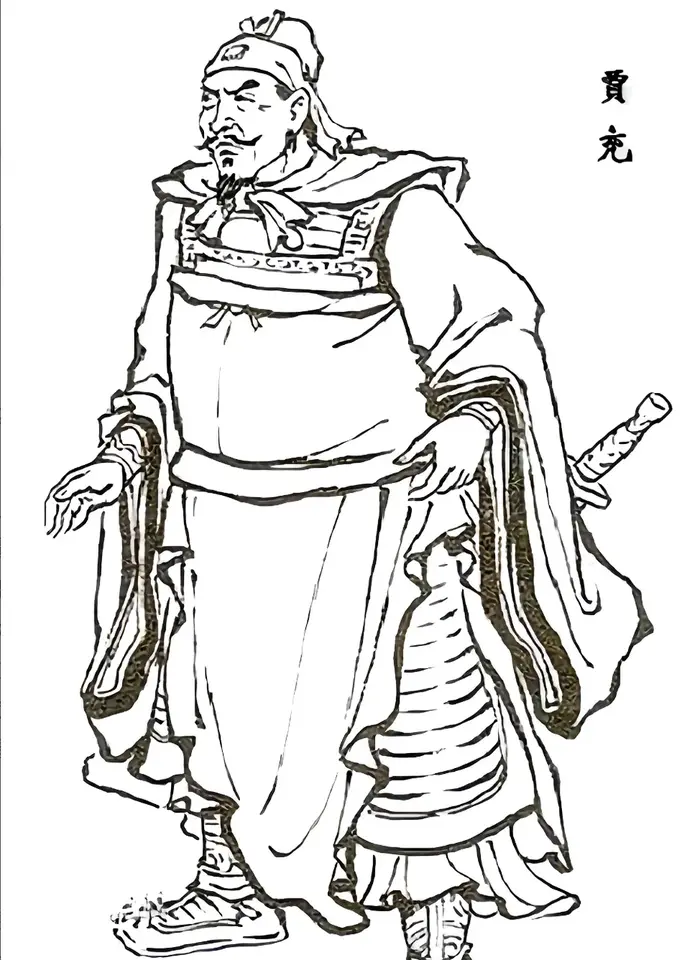
贾充
Jia Chong (贾充, 217 – May 19, 282), courtesy name Gonglü (公闾), was a foundational statesman, legal codifier, and dominant political grandee of the Western Jin Dynasty. The son of the celebrated Cao Wei loyalist general Jia Kui, Jia Chong early on allied himself intimately with the ascendant Sima clan against the imperial Cao house. Serving as the primary political confidant of Sima Zhao, Jia Chong achieved historical notoriety…
Jia Chong (贾充, 217 – May 19, 282), courtesy name Gonglü (公闾), was a foundational statesman, legal codifier, and dominant political grandee of the Western Jin Dynasty. The son of the celebrated Cao Wei loyalist general Jia Kui, Jia Chong early on allied himself intimately with the ascendant Sima clan against the imperial Cao house. Serving as the primary political confidant of Sima Zhao, Jia Chong achieved historical notoriety in June 260 during Emperor Cao Mao's desperate armed sortie against Sima Zhao's regency; commanding the palace troops at the South Stop Gate, Jia Chong ordered his officer Cheng Ji to spearhead the imperial chariot and slay the emperor, clearing the bloody path for the Sima usurpation. Following the formal founding of the Western Jin Dynasty in 265 by Emperor Wu (Sima Yan), Jia Chong was showered with paramount honors, being elevated to General of Chariots and Cavalry, Director of the Department of State Affairs (Shangshu Ling), and created Duke of Lu (Lu Jun Gong). Recognized for his meticulous administrative intellect, he supervised the compilation of the landmark Jin Code (Taishi Lü), which established the legal foundation of early medieval Chinese jurisprudence. Jia Chong cemented his imperial influence through ruthless matrimonial alliances: his daughter, the fierce and domineering Jia Nanfeng, was married to the intellectually disabled Crown Prince Sima Zhong (the future Emperor Hui of Jin). In 279, despite his personal reluctance, Jia Chong was appointed Supreme Commander-in-Chief (Da Dudu) overseeing the six-pronged amphibious invasion that conquered Eastern Wu in 280, completing the reunification of China. Elevated to Grand Commandant (Taiwei), Jia Chong passed away in 282 at the age of sixty-six and was posthumously honored as Duke Wu of Lu.
Born into a prominent bureaucratic lineage in Xiangling, Pingyang
Father Jia Kui died; inherited the ancestral title of Marquis of Yangli at age twelve
Participated in suppressing the rebellion of Guanqiu Jian and Wen Qin in Huainan
Dispatched to Shouchun to gauge Zhuge Dan's loyalty to Sima Zhao, precipitating the third Huainan rebellion
Commanded troops to intercept Emperor Cao Mao; ordered Cheng Ji to assassinate the emperor
Commissioned by Sima Zhao to draft the official legal codes of the Jin principality
Sima Yan usurped the throne; appointed General of Chariots and Cavalry and Duke of Lu
The landmark 20-volume Jin Code (Taishi Lu) was formally promulgated nationwide
Avoided military exile to the northwest by arranging the marriage of daughter Jia Nanfeng to the Crown Prince
Appointed Supreme Commander-in-Chief over the grand campaign to conquer Eastern Wu
Surrender of Sun Hao completed reunification; elevated to Grand Commandant (Taiwei)
Died in Luoyang at the age of sixty-six; conferred the posthumous title Duke Wu
Jia Chong came from an elite scholar-official lineage in Shanxi. His father, Jia Kui, was one of the most revered and incorruptible civilian-military governors of Cao Wei, famously honored by Cao Cao and Cao Pi for pacifying Yuzhou. When Jia Kui died in 228, the court showered him with posthumous honors.
Unlike his father, who had been passionately loyal to the Cao lineage, Jia Chong recognized early in the 250s that political momentum had shifted irreversibly toward the Sima clan under Sima Yi, Sima Shi, and Sima Zhao. Joining Sima Shi's inner staff, Jia Chong displayed acute political calculation, rapid crisis response, and an unswerving willingness to execute ruthless measures.
In 257, Sima Zhao sought to eliminate the last potential military challenger to his authority: General-in-Chief Zhuge Dan, who commanded a massive army in Huainan. Sima Zhao dispatched Jia Chong to Shouchun under the guise of an imperial inspection.
During a private banquet, Jia Chong tested Zhuge Dan by declaring: "Prominent ministers in the capital all believe that the Wei dynasty has lost its mandate and that the House of Sima should receive the imperial abdication; what is your honorable view?"
Zhuge Dan leaped up furiously, shouting: "You are the son of the loyalist Jia Kui! How dare you speak treason? I will die for the House of Cao before I permit such usurpation!" Realizing that Zhuge Dan would never submit, Jia Chong rushed back to Luoyang and urged Sima Zhao to launch an immediate preemptive strike, culminating in the total destruction of Zhuge Dan at the Siege of Shouchun.
By 260, the young Cao Wei emperor, Cao Mao (Duke of Gaoguixiang), was consumed by fury over Sima Zhao's open usurpation, famously proclaiming: "The heart of Sima Zhao is known to every passerby in the street!" (Sima Zhao zhi xin, lu ren jie zhi ye).
On June 2, 260, the twenty-year-old Emperor Cao Mao drew his imperial sword, mobilized several hundred palace guards and attendants, and rode out of the palace gates in an imperial carriage to assault Sima Zhao's private residence.
Sima Zhao's younger brother, Sima Zhou, attempted to block the emperor at the Dongzhi Gate, but his troops fled in terror when the emperor shouted at them. Hearing of the crisis, Jia Chong rushed forward from the central military barracks with several thousand heavily armored guard cavalry, intercepting the emperor's carriage at the South Stop Gate (Nanzhize).
Emperor Cao Mao stood upright in his chariot, brandishing his imperial blade and shouting: "Whoever dares to confront the Son of Heaven shall be executed to the third degree of kinship!" Jia Chong's cavalry wavered, preparing to scatter.
At that critical second, the captain of the guard, Cheng Ji, turned to Jia Chong in panic: "The situation is desperate; what should we do?"
Jia Chong bellowed back: "Why has Duke Sima nurtured and rewarded you men for all these years? It was precisely for an hour like this! Whatever you do today, Duke Sima will bear the responsibility!"
Emboldened by Jia Chong's direct command, Cheng Ji leaped forward with a heavy spear. He charged the imperial carriage, thrusting his lance straight through Emperor Cao Mao's chest. The spear pierced the young monarch's torso, emerging from his back, and Cao Mao collapsed dead upon the floorboards of his chariot.
The bloody regicide shocked the empire. To pacify public outrage, Sima Zhao executed Cheng Ji and his clan as scapegoats, while secretly rewarding Jia Chong with paramount court promotions. Through this single act of ruthless violence, Jia Chong eliminated the last imperial obstacle to the Sima usurpation.
In 265, Sima Zhao died and his son Sima Yan formally deposed the last Cao Wei emperor, establishing the Western Jin Dynasty as Emperor Wu. Jia Chong was appointed General of Chariots and Cavalry and created Duke of Lu (Lu Jun Gong).
Beyond palace intrigues, Jia Chong demonstrated exceptional administrative intellect in jurisprudence. In 264, Sima Zhao had tasked Jia Chong, along with legal scholars Du Yu, Pei Xiu, and Zhang Fei, with overhauling the chaotic legal precedents of the Han and Wei dynasties.
In 268, Emperor Wu promulgated the completed Taishi Code (Jin Code), comprising twenty volumes and 2,293 articles. The code was celebrated for its lucidity, reduction of corporal penalties, and systematic incorporation of Confucian ritual ethics into statutory law, establishing the archetype that directly influenced the subsequent Northern Wei and Tang codes.
Despite his paramount titles, Jia Chong was detested by upright ministers such as Ren Kai and Yu Chun, who despised him as a regicide. In 271, when the Xianbei tribal leader Tufa Shujineng rebelled in the northwest, Ren Kai persuaded Emperor Wu to dispatch Jia Chong to the rugged frontier to command military operations, intending to strip him of his central court influence.
Terrified of leaving the capital, Jia Chong conspired with his cunning second wife, Lady Guo, and palace eunuchs. They bribed Empress Yang Yan (Emperor Wu's wife) to persuade the emperor that the thirteen-year-old Crown Prince Sima Zhong needed an imperial consort.
Lady Guo personally presented her daughters to the Empress. Although Jia Chong's daughter Jia Nanfeng was notorious for her dark complexion, short stature, and fierce temper, Empress Yang praised her maternal lineage. In 272, Emperor Wu formally betrothed Jia Nanfeng to the Crown Prince. With his daughter established as Crown Princess, Jia Chong's political exile was canceled, securing his position at the apex of imperial power.
By 279, Emperor Wu, advised by Grand Strategist Yang Hu and General Du Yu, resolved to launch the long-delayed grand offensive to conquer Eastern Wu and unify China. Most conservative ministers, led by Jia Chong, adamantly opposed the war, fearing logistical disaster in the humid southern waterways.
To silence court opposition, Emperor Wu appointed Jia Chong as Supreme Commander-in-Chief (Da Dudu) and Imperial Commissioner, placing the six assault columns comprising over two hundred thousand troops under his overall command. Jia Chong wept, repeatedly petitioning to resign the post, but Emperor Wu threatened: "If you refuse to march, I shall lead the army in person!" Reluctantly, Jia Chong established his headquarters at Xiangyang.
While Jia Chong remained cautious at Xiangyang, his frontline field marshals executed a brilliant blitzkrieg: Wang Jun's massive naval fleet swept down the Yangtze gorges, while Du Yu and Wang Hun shattered Wu garrisons across Hubei and Jiangsu. In May 280, the Wu emperor Sun Hao surrendered at Jianye, terminating the Three Kingdoms period and reunifying China under the Western Jin.
Upon returning to Luoyang, Jia Chong, ashamed of his earlier defeatist memorials, offered to resign his military titles. Emperor Wu, however, rewarded him lavishly, promoting him to Grand Commandant (Taiwei).
Jia Chong passed away in Luoyang on May 19, 282, at the age of sixty-six. Emperor Wu mourned him with high ceremonies, conferring upon him the posthumous title Duke Wu of Lu (Lu Wu Gong). Tragically, his daughter Jia Nanfeng, upon becoming Empress after Emperor Wu's death, unleashed a reign of terror and murdered the Crown Prince Sima Yu, triggering the catastrophic War of the Eight Princes (Bawang Zhi Luan) that destroyed the Western Jin Dynasty within two decades.
FIGURES ASSOCIATED WITH THIS DYNASTY