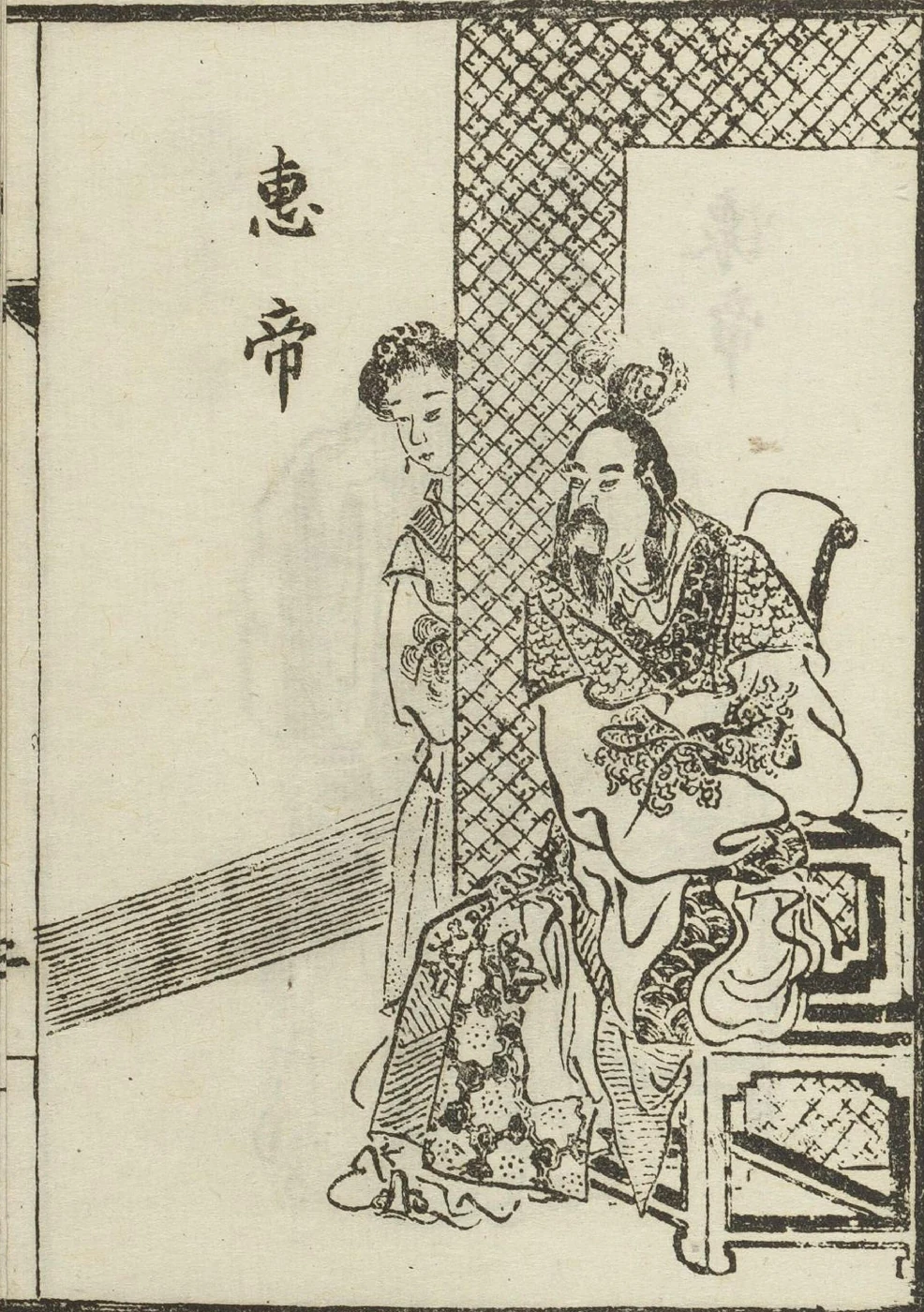
Biography
Family Background and Early Years
Sima Zhong was born in 259, the fourth year of the Ganlu era of Cao Wei. He was the second son born to Sima Yan, then Prince of Jin, and his consort Yang Yan. His elder full brother Sima Gui died young, so although Sima Zhong was formally the second legitimate son, he was in practice the eldest surviving legitimate son. The Sima clan came from Wen County in Henei and had been a Confucian scholarly family since the Eastern Han. Sima Zhong's great-grandfather Sima Yi seized control of the Cao Wei court after the Incident at the Gaoping Tombs; his grandfather Sima Shi and granduncle Sima Zhao successively dominated the government. His father Sima Yan replaced Wei with Jin in 265, the first year of the Taishi era, becoming Emperor Wu of Jin.
Sima Zhong displayed low intellectual ability from childhood and was described in historical accounts as “extremely foolish” or “simple in nature.” The *Book of Jin* records that Emperor Wu was deeply worried about the crown prince's abilities and tested his reasoning several times. On one occasion, Sima Yan gave him a question and ordered him to submit an answer within three days. Unable to answer, Sima Zhong relied on Crown Princess Jia Nanfeng, who summoned several learned elderly men to prepare a response for him. After reading it, Sima Yan believed that his son was capable of clear thought and was reassured. Yet Sima Zhong's limitations were fundamental, and many officials recognized them. At a banquet at Lingyun Terrace, the Palace Attendant Wei Guan, feigning drunkenness, knelt before Sima Zhong's couch, stroked it, and said, “What a pity for this seat,” implying that the crown prince was unfit to inherit the throne. Sima Yan nevertheless never resolved to depose him.
On the dingmao day of the first month of 267, the third year of Taishi, nine-year-old Sima Zhong was formally appointed crown prince. On the xinmao day of the second month of 272, the eighth year of Taishi, the fifteen-year-old crown prince married Jia Nanfeng, daughter of Jia Chong, by order of his father. Jia Nanfeng was then seventeen, two years older than Sima Zhong. She was described as unattractive, fiercely jealous, and violent in temperament, but also politically shrewd; she would later exert a decisive influence on Sima Zhong's political fate.
Accession and the Ascendancy of Empress Jia
On the twentieth day of the fourth month of 290, the first year of Taixi, Emperor Wu of Jin died. The thirty-two-year-old Crown Prince Sima Zhong ascended the throne as Emperor Hui of Jin, proclaimed a general amnesty, and changed the era name to Yongxi. He elevated his stepmother, Empress Yang Zhi, a cousin of Yang Yan, to empress dowager; made Crown Princess Jia Nanfeng empress; and, under Emperor Wu's testamentary order, appointed Defender-in-chief Yang Jun as regent. In the eighth month of the same year, he named his eldest son by a concubine, Sima Yu, crown prince.
After Sima Zhong's accession, he was wholly unable to manage government affairs, and political power quickly fell into the hands of the imperial relative Yang Jun. Yang Jun was the father of both Empress Wuyuan Yang Yan and Empress Wudao Yang Zhi. He had already wielded power during Emperor Wu's final years and now monopolized the court as Grand Tutor and regent. Empress Jia Nanfeng, however, was unwilling to remain outside the center of power. In the third month of 291, the first year of Yongping, she allied with Meng Guan, Gentleman of the Palace, Li Zhao, and others, forged an imperial order, killed Yang Jun and his faction, and reduced Empress Dowager Yang Zhi to commoner status; Yang Zhi was later starved to death in Jinyong City. Jia Nanfeng then used Sima Wei to kill Grand Steward Sima Liang, only to execute Sima Wei immediately afterward on the charge of unauthorized killing. From that point on, she effectively controlled the Western Jin government.
During the Yuankang era of Empress Jia's dominance (291–299), Sima Zhong became a complete figurehead. Jia Nanfeng frequently forged orders in his name to eliminate opponents, while Sima Zhong neither recognized nor reacted to what was happening. In 294, the fourth year of Yuankang, and 296, the sixth year of Yuankang, the Xiongnu brothers Hao San and others successively rebelled in the Shangdang, Fengyi, and Beidi regions. The Di leader Qi Wannian also proclaimed himself emperor in Guanzhong and was not suppressed until 299, the ninth year of Yuankang, by Meng Guan, General of the Left Crossbow Corps. Though these frontier disturbances were limited in scale, they already revealed the emerging crisis of Western Jin rule.
Deposition of the Crown Prince and the War of the Eight Princes
In 299, the ninth year of Yuankang, Jia Nanfeng began persecuting Crown Prince Sima Yu. Sima Yu was Sima Zhong's son by Consort Xie Jiu. Intelligent from childhood, he had been deeply favored by his grandfather Emperor Wu but was not born to Jia Nanfeng. Jia first engineered Sima Yu's deposition to commoner status and, in the following year, 300, the first year of Yongkang, forged another order and had him killed at Xuchang. This act became the immediate catalyst for the full outbreak of the War of the Eight Princes.
Sima Lun, Prince of Zhao, was the ninth son of Sima Yi and thus a granduncle of Sima Zhong. Claiming to avenge the crown prince, he forged an imperial order to depose and kill Jia Nanfeng, executed Minister of Works Zhang Hua, Director of the Department of State Affairs Pei Wei, and other officials, then made himself Chancellor of State and commander of all military forces inside and outside the capital, monopolizing power. In the eighth month of 300, Sima Yun, Prince of Huainan, raised troops against Sima Lun but was defeated and killed. In the twelfth month of the same year, Zhao Xin, Inspector of Yizhou, rebelled at Chengdu, marking the opening of a broader wave of refugee uprisings.
In the first month of 301, the first year of Yongning, Sima Lun went so far as to depose Sima Zhong and proclaim himself emperor. He honored Sima Zhong as Retired Emperor, confined him in Jinyong City, and renamed the city Yongchang Palace. This was a rare case in Chinese history in which a retired emperor was so designated by a subject who had usurped his throne. In the third month of that year, Sima Jiong, Prince of Qi; Sima Ying, Prince of Chengdu; Sima Yong, Prince of Hejian; Sima Ai, Prince of Changsha; and others raised troops against Sima Lun. After several months of warfare, Sima Lun was defeated and killed and Sima Zhong was restored. In the fifth month, Sima Shang, Prince of Xiangyang, was appointed imperial grandson and Yang Xianrong was made empress.
After Sima Zhong's restoration, the court successively fell under the control of Sima Jiong, Sima Ai, Sima Ying, Sima Yong, and other princes. The princes fought one another, and warfare spread from Luoyang to Chang'an, Ye, and other regions. In 303, the second year of Taian, Sima Ying and Sima Yong jointly attacked Sima Ai, leading to months of fierce fighting around Luoyang and tens of thousands of casualties. In 304, the first year of Yongan, Sima Zhong personally accompanied an expedition against Sima Ying at the Battle of Dangyin. His army suffered a crushing defeat; he was wounded in the face and struck by three arrows before being captured by Sima Ying. He was later seized by Zhang Fang, a general under Sima Yong, and taken to Chang'an. During this period of displacement, he endured severe hardship and was reduced to eating coarse rice.
Displacement and Death
Between 305, the second year of Yongxing, and 306, the first year of Guangxi, Sima Yue, Prince of Donghai, gradually became the strongest of the rival princes. In alliance with Sima Xiao, Prince of Fanyang, and others, he defeated the combined forces of Sima Yong and Sima Ying. In 306, Sima Yue's general Qi Hong led Xianbei troops into Chang'an, where they carried out widespread looting and killed more than twenty thousand people. Sima Yong was forced to kill Zhang Fang and seek peace with Sima Yue, but Sima Yue refused. In the ninth month of the same year, Sima Ying was captured while fleeing and subsequently killed, bringing the War of the Eight Princes to an end.
In the fifth month of 306, Sima Zhong was escorted back to Luoyang by Qi Hong and others. According to the *Book of Jin*, he “rode in an ox cart, while the traveling palace used grass as bedding and the dukes and high officials trudged on foot.” When he returned to the former palace at Luoyang, he “shed tears in grief.” Yet his suffering had not ended. On the gengwu day of the eleventh month of the first year of Guangxi (January 8, 307), Sima Zhong died in Xianyang Hall at Luoyang at the age of forty-eight. The *Book of Jin* states that he “died from poisoning after eating cakes,” and tradition holds that he was poisoned by Sima Yue, Prince of Donghai. He received the posthumous title Emperor Xiaohui and was buried in Taiyang Mausoleum. His younger brother Sima Chi succeeded him as Emperor Huai of Jin and changed the era name to Yongjia.
Sima Zhong was born in 259 and made heir apparent on the dingmao day of the first month of 267 at the age of nine. On the xinmao day of the second month of 272 he was married by Emperor Wu's order to Jia Nanfeng, then fifteen and two years his senior. When Emperor Wu died on the twentieth day of the fourth month of 290, the heir took the throne the same day as Emperor Hui, honoring the empress Yang, Yang Zhi, as empress dowager, making the consort Jia Nanfeng empress, and burying Wu at Junyangling on the thirteenth day of the fifth month.
At the outset he ordered every office in the realm raised one grade, those who had taken part in the mourning two, remitted a year's land tax and made all officials of two thousand shi and above marquises of Guanzhong; made Yang Jun grand tutor and regent; and on the twenty-sixth day of the eighth month made his son Sima Yu, Prince of Guangling, heir apparent with He Shao, Wang Rong and Yang Ji as his grand tutor, grand guardian and grand protector. But he soon left the government to the empress Jia, who ruled in his name and even forged his edicts. In 291 she attacked the empress dowager, stripped her of her rank and killed the grand steward Sima Liang and others, and that year had the empress dowager killed at Jinyong city. She then deposed and killed the heir apparent Sima Yu, whereupon the Prince of Zhao, Sima Lun, rose, deposed her and took the imperial title himself, opening the full course of the War of the Eight Princes.
Emperor Hui left behind famous anecdotes that later ages used to show his folly: when the realm was famine-stricken and the people starving, he asked why they did not eat minced meat; hearing frogs croak, he asked whether the sound was official or private. But the *Book of Jin* also preserves a countervailing scene: in 304, campaigning north at Dangyin, he was beaten by Shi Chao, a general of the Prince of Chengdu, Sima Ying, and his palace attendant Ji Shao was killed shielding him, his blood spattering the imperial robe; when the attendants wished to wash it, he said, "That is the blood of Ji the attendant; do not remove it." Later ages have taken this as proof that he was not wholly unable to tell loyalty from treason.
He was thereafter carried back and forth as the princes fought for power. On the gengwu day of the eleventh month of 306 (8 January 307) he died at Luoyang at forty-eight, said to have been poisoned by the Prince of Donghai, Sima Yue, and was buried at Taiyangling. His successor was Emperor Huai; the disorders within Jin and the risings of the northern peoples could no longer be checked, and the Western Jin fell a dozen years later. He reigned seventeen years, during which the government passed successively to the empress Jia and the princes, and his own initiative was slight; accounts of why the Western Jin fell generally begin with the succession arranged at his accession and the domination of the empress Jia.
The war of the eight princes is closely interwoven with Emperor Hui's own situation. After the empress Jia killed the heir apparent Sima Yu in 300, the Prince of Zhao, Sima Lun, rose, killed her and took the throne himself the next year; the Princes of Qi, Chengdu and Hejian, Sima Jiong, Sima Ying and Sima Yong, then rose against him in turn, Hui being carried back and forth between Chang'an and Luoyang. Defeated at Dangyin in 304, he was brought back to Luoyang by the Prince of Donghai, Sima Yue, in 306 and died that year. These events exhausted both the central armies and the princes, and the Xiongnu Liu Yuan and the Jie Shi Le rose in the opening, the Yongjia disaster following at once.
The *Book of Jin* sums up Emperor Hui in terms of a man who could not tell beans from wheat, its historians observing that the fall of the Western Jin was not his doing alone but that "Hui as a ruler" was the immediate condition of the catastrophe. Later writers often set the question of minced meat beside the refusal to wash the bloodstained robe, to show that an almost absurd remoteness and an instinctive decency existed in the same person. His tomb is Taiyangling, and his son Sima Yu was posthumously made Heir Apparent Minhuai; the fates of father and son together form the principal thread of the palace tragedy of the Western Jin.
Emperor Hui's reign was not entirely without institutional activity: the Kangkang years still saw the regular suburban sacrifices, amnesties and enfeoffments, and there were adjustments to local administration and relief in famine. But with central authority passing among the empress Jia, consort kin and princes, such edicts had little real effect. While the empress Jia dominated the court, Zhang Hua, Pei Wei and others worked to hold things together, so that the Kangkang years had a period of comparative stability which collapsed as soon as she killed the heir apparent.
Assessments of Emperor Hui rest chiefly on the annals in the *Book of Jin* and the sources it drew on, while the *New Account of Tales of the World* and similar works preserve many anecdotes of his words and acts. The selection and arrangement of this material carries its own bias: stories such as the question about minced meat were quoted again and again until they became the standard image of a benighted ruler, while the affair at Dangyin reminds the reader that he was not wholly ignorant. On the fall of the Western Jin, later writers point to structural causes — the enfeoffment of the imperial clan, aristocratic politics, the inward migration of frontier peoples and the decay of the military system — of which the emperor's own capacities were only one condition among several.
In the Kangkang years famine was constant in Guanzhong and Bingzhou, and the problems of the resettled Di, Qiang and Xiongnu and of displaced populations grew worse; the court issued relief edicts but could not truly settle the uprooted, and these people later became the social base of the Cheng-Han and the Later Zhao, the rising of Li Te and Li Xiong of the Ba-Di arising from precisely this. Another crucial change under Emperor Hui was that the princes of the imperial clan held frontier commands with strong troops of their own, hollowing out the central armies.
During Emperor Hui's reign the court made no effective limitation on the military commands held by the princes of the clan — an inheritance from the enfeoffments made at the dynasty's founding and a consequence of the empress Jia and the princes using one another.
He died only a dozen years before the Western Jin fell, the Yongjia disaster being directly linked to the disorder of government and armies in his reign.
He changed era names several times in seventeen years, a frequency that itself reflects the unsettled times.