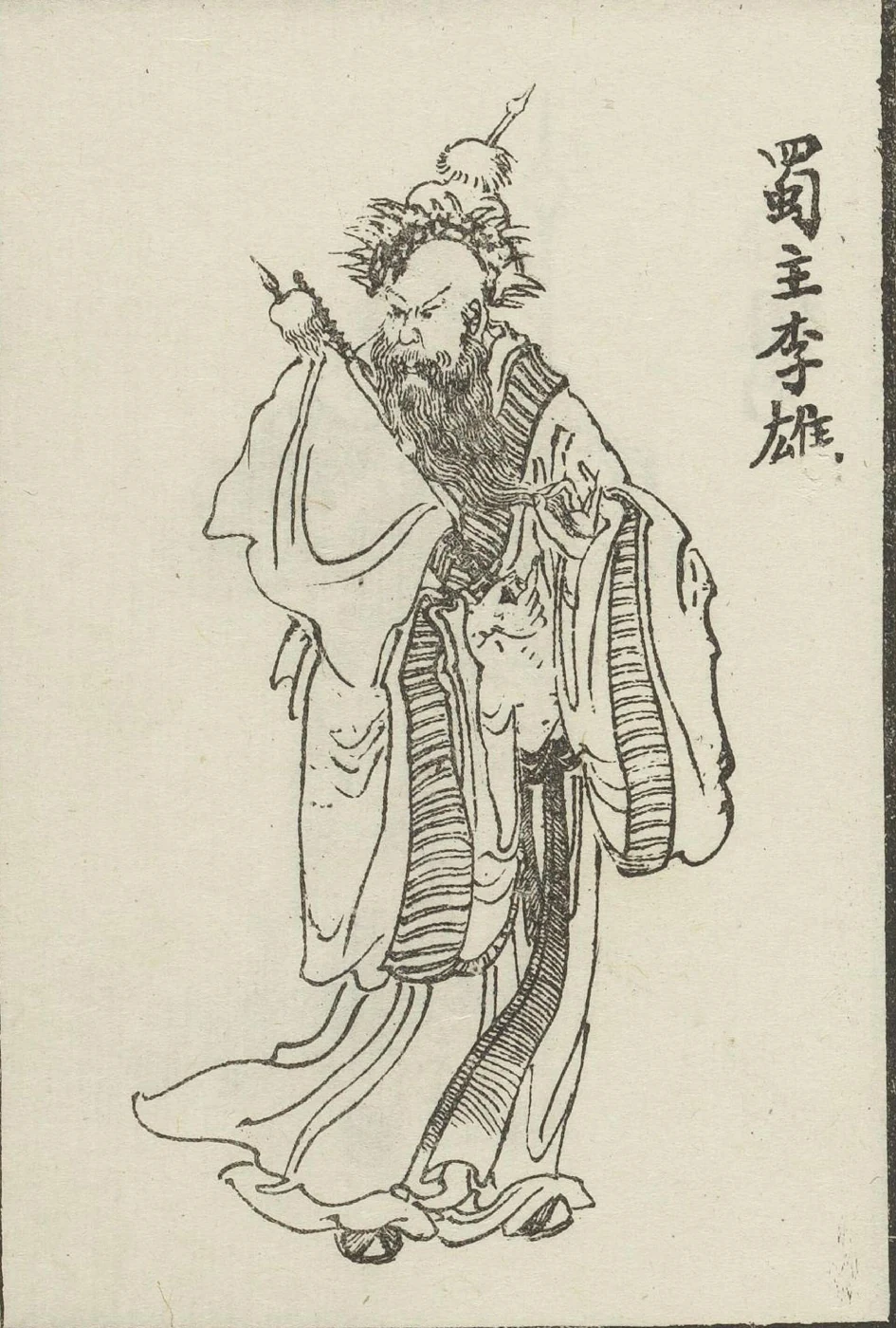
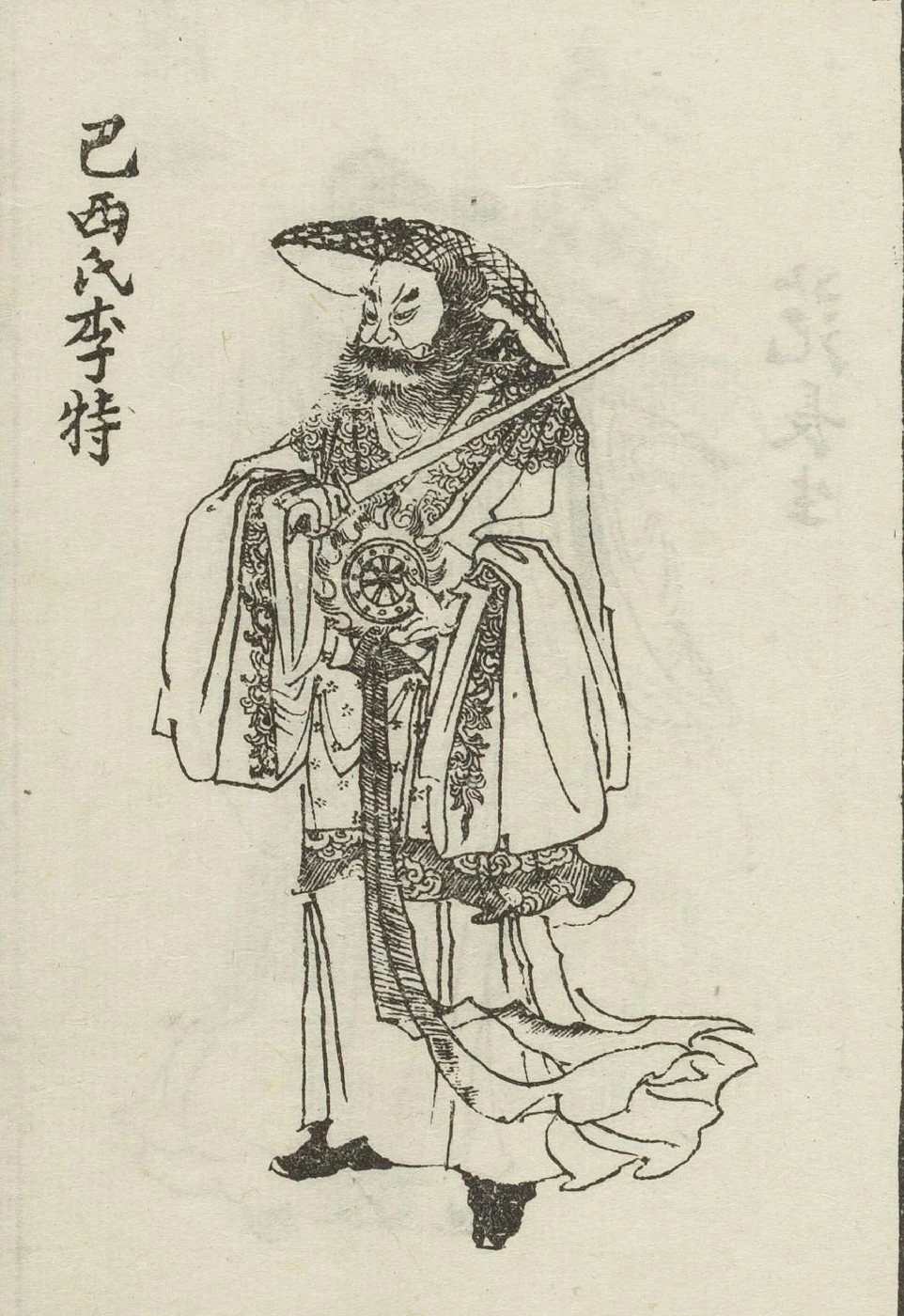
Cheng Han (304–347) was a regional regime of the Sixteen Kingdoms period, founded by Li Xiong, a leader of the Ba-Di (Cong) people. It controlled the Shu region of Yizhou and established its capital at Chengdu, and was therefore also called “Cheng” and “Later Shu.” In the final years of the Western Jin, refugees from the Guanzhong region moved south. Li Te, a leader of the Ba-Di, rose in rebellion against Jin. His son Li Xiong succeeded to the leadership, captured Chengdu in 304 and assumed the…
304 CE–347 CECapital · See entry
ERA OVERVIEW
Cheng Han (304–347) was a regional regime of the Sixteen Kingdoms period, founded by Li Xiong, a leader of the Ba-Di (Cong) people. It controlled the Shu region of Yizhou and established its capital at Chengdu, and was therefore also called “Cheng” and “Later Shu.” In the final years of the Western Jin, refugees from the Guanzhong region moved south. Li Te, a leader of the Ba-Di, rose in rebellion against Jin. His son Li Xiong succeeded to the leadership, captured Chengdu in 304 and assumed the title Prince of Chengdu, and in 306 proclaimed himself emperor under the state name “Cheng” (historically also called “Great Cheng”). In 338 Li Shou changed the state name to “Han,” and later histories therefore refer to the regime collectively as Cheng Han. The state lasted for about forty-four years and at its height roughly encompassed the whole of Yizhou. In 347 Huan Wen of Eastern Jin invaded Shu; the last ruler, Li Shi, surrendered and the regime was destroyed by Eastern Jin. During Li Xiong's reign, corvée and taxes were light and administration and punishments were relatively simple, bringing a period of stability to Shu. Cheng Han was one of the longer-lasting and more representative southwestern regional regimes among the Sixteen Kingdoms.
Time span304 CE–347 CE
CapitalSee entry
ERA TIMELINE
Li Xiong captured Chengdu, proclaimed Open
Li Xiong captured Chengdu, proclaimed himself Prince of Chengdu, adopted “Cheng” as the state name, and changed the era name to Jianxing, marking the beginning of the Cheng Han regime.
Li Xiong proclaimed himself emperor unOpen
Li Xiong proclaimed himself emperor under the state name “Great Cheng” and established his capital at Chengdu.
Cheng Han's campaigns in Nanzhong gradOpen
Cheng Han's campaigns in Nanzhong gradually produced results. In the first year of Yongjia (307), much of Nanzhong broke away from Jin control. In the first year of Taining (323), Li Xiong personally led a campaign in Nanzhong, won the Battle of Wenshui, and took Yuexi Commandery.
Zitong Commandery returned to Jin afteOpen
Zitong Commandery returned to Jin after its administrator was killed; the following year Cheng Han also lost Baxi Commandery.
Li Xiong sent forces to counterattack,Open
Li Xiong sent forces to counterattack, recovering Zitong and Fucheng, regaining Baxi Commandery in 311, and then taking Qianwei and Jiangyang commanderies, further expanding Cheng Han territory.
In the third month of the second year Open
In the third month of the second year of Jianwu (318), Rui proclaimed himself emperor and established his capital at Jiankang.
Li Xiong died of illness; Li Ban succeOpen
Li Xiong died of illness; Li Ban succeeded him and was soon killed by Li Qi.
In 336, Cheng Han lost Yelang and XingOpen
In 336, Cheng Han lost Yelang and Xinggu commanderies in fighting with Jin forces.
Huan Wen of Eastern Jin entered ChengdOpen
Huan Wen of Eastern Jin entered Chengdu; Li Shi surrendered and the Cheng Han regime ended.
FULL ENTRY
Overview
Cheng Han (304–347) was a regional regime of the Sixteen Kingdoms period, founded by Li Xiong, a leader of the Ba-Di (Cong) people. It controlled the Shu region of Yizhou and established its capital at Chengdu, and was therefore also called “Cheng” and “Later Shu.” In the final years of the Western Jin, refugees from the Guanzhong region moved south. Li Te, a leader of the Ba-Di, rose in rebellion against Jin. His son Li Xiong succeeded to the leadership, captured Chengdu in 304 and assumed the title Prince of Chengdu, and in 306 proclaimed himself emperor under the state name “Cheng” (historically also called “Great Cheng”). In 338 Li Shou changed the state name to “Han,” and later histories therefore refer to the regime collectively as Cheng Han. The state lasted for about forty-four years and at its height roughly encompassed the whole of Yizhou. In 347 Huan Wen of Eastern Jin invaded Shu; the last ruler, Li Shi, surrendered and the regime was destroyed by Eastern Jin. During Li Xiong's reign, corvée and taxes were light and administration and punishments were relatively simple, bringing a period of stability to Shu. Cheng Han was one of the longer-lasting and more representative southwestern regional regimes among the Sixteen Kingdoms.
Historical Development
Establishment: During the reign of Emperor Hui of the Western Jin, the War of the Eight Princes threw the realm into disorder. Natural disasters and warfare drove refugees from Lueyang, Tianshui, and other commanderies in Guanzhong southward into Yizhou in search of food. In 297, Li Te, a leader of the Ba-Di, led a refugee group south through Hanzhong and built up influence in Yizhou. In 302 he gathered the refugees in rebellion and assumed the titles of Acting with Credentials, Grand Commander, and General Who Guards the North. In the following year (303), he attacked Chengdu and fought Yizhou Inspector Luo Shang, but was killed in battle. His younger brother Li Liu then led the followers but died of illness soon afterward. Li Te's son Li Xiong succeeded as leader, captured Chengdu in 304, and in the tenth month proclaimed himself Prince of Chengdu, using “Cheng” as the state name and adopting the Jianxing era. In the sixth month of 306 he proclaimed himself emperor under the state name “Great Cheng,” posthumously honored his father as Emperor Jing, and assigned him the temple name Shizu.
Height: After proclaiming himself emperor, Li Xiong established his capital at Chengdu, abolished Jin institutions in favor of new legal provisions described in the historical records as seven articles, appointed Li Xiang as Grand Tutor and Li Shi as Grand Protector, and brought the Qingcheng Mountain recluse Fan Changsheng into government as Grand Councilor, honoring him as “Grand Master of Heaven and Earth.” Fan's followers were restored to him and exempted from taxation. Li Xiong ruled for about thirty years with relatively lenient administration, light corvée and taxation, and simplified criminal justice. This allowed the population of war-torn Shu to recover and marked the regime's high point. During this period Luo Shang at one point withdrew to Ba Commandery and continued counterattacks, while Cheng Han maneuvered among the regimes controlling the Central Plains and generally maintained stability in Shu.
Turning point: Li Xiong died of illness in 334 and ordered that his elder brother's son Li Ban succeed him. Within several months, however, Li Xiong's son Li Qi killed Li Ban and seized the throne. In 338 Li Shou, son of Li Te's younger brother Li Xiang, killed Li Qi and proclaimed himself emperor, changing the state name to “Han.” From this point the regime is conventionally called Cheng Han. Li Shou undertook extensive palace construction, lived extravagantly, and imposed harsh labor obligations on the population, pushing the state into a period of instability.
Decline: After Li Shou's death, his son Li Shi succeeded him. Li Shi carried out extensive killings and employed unsuitable officials; members of the ruling house and people within the realm became increasingly alienated, and the state's strength declined further.
Fall: In 347, Eastern Jin General Who Pacifies the West Huan Wen led an army into Shu against Han and advanced directly on Chengdu. Li Shi was unable to resist and surrendered. Cheng Han fell after a total of forty-four years. About two years later, around 349, its remaining forces were also eliminated by Eastern Jin, and Shu returned to Eastern Jin control.
Politics and Institutions
Cheng Han emerged from refugee rebellion and regional separatism, and its political institutions largely adapted older Han and Jin practices. Its rulers assumed the imperial title, first using the state name “Cheng” and later “Han,” hence the historical designation Cheng Han. The regime abandoned Jin institutions in some respects and established its own legal provisions, described as seven articles. Central offices included Grand Councilor, Grand Tutor, Grand Protector, Defender-in-Chief, Minister of Works, Grand Steward, Director of the Secretariat, and Vice Director, broadly continuing Han-Jin central-government structures. Local administration was organized through provinces and commanderies. Based in Yizhou, the regime's recorded jurisdictions included the Chengdu administration and the commanderies of Qianwei, Wenshan, Hanjia, Hanyuan, and Shenli under the metropolitan region; Zitong, Baxi, Dangqu, Guanghan, Deyang, and Hanzhong under Liangzhou; Jiangyang, Ba, Fuling, Badong, and Jianping under Jingzhou; Jinning, Zhuti, Nanguang, Yunnan, and Xingning under Ningzhou; and for a time Zangke, Yelang, Pingyi, and Xinggu under Jiaozhou. Appointments relied heavily on merit and kinship, while the regime also recruited local Shu elites and refugees. Overall, Cheng Han's civil administration developed pragmatically out of the needs of regional state-building; many institutional details remain difficult to reconstruct fully.
Military and Diplomacy
Militarily, Cheng Han relied on the defensive advantages of the Shu mountains and the Min and Tuo river systems, combining experienced refugee troops with soldiers from Ba and Shu. Its rise began with repeated struggles for Chengdu, as Li Te, Li Liu, and Li Xiong successively fought Yizhou Inspector Luo Shang before finally taking the Shu region. Thereafter the regime ruled from Shu, resisting the Guanzhong regimes to the north and Jin in the lower Yangtze region to the east. Its strategy was largely defensive and it did not undertake major campaigns to conquer the Central Plains. Diplomatically, Cheng Han alternated between war and accommodation with the late Western Jin, Eastern Jin, and northern regimes such as Former Zhao and Later Zhao. As a state based in Yizhou and coexisting with several Central Plains regimes, it was an important southwestern power during the Sixteen Kingdoms period.
Economy and Commerce
Shu had long been known for abundant grain and textiles and was celebrated as the “Land of Abundance.” Yizhou, the heartland of Cheng Han, had favorable agricultural conditions. Under Li Xiong, light corvée and taxation and policies of recuperation helped agriculture recover after warfare, while trade along routes through Chengdu and the wider Shu region continued. The relative reduction in warfare within the regime supported commerce between Sichuan and Shaanxi and between Sichuan and Yunnan, which provided important resources for the state. Under Li Shou and Li Shi, however, harsh labor demands and indiscriminate killings again damaged livelihoods and weakened the regime.
Culture and Society
Cheng Han arose amid the interaction of refugee migrants and local populations, and the culture of the Ba-Di (Cong) people interacted with indigenous traditions of Ba and Shu. The rulers were largely of Cong background but also drew local Shu scholars into government, and ritual practice and official institutions broadly followed Han Chinese models. Li Xiong honored the Qingcheng Mountain recluse Fan Changsheng, restored his followers, and exempted them from taxation; such measures reflect the regime's reliance on local social forces. The population included both refugees and people of Shu, and social organization combined tribal elements with registered households. Overall, culture in Cheng Han continued Wei-Jin traditions in Shu, but because the state had arisen through military struggle, its achievements in ritual, education, and literary culture were comparatively limited.
> This section explains the position of individual rulers within the evolution of the regime; full biographies are provided in the corresponding person entities.
Historical Assessment and Legacy
Contemporary assessment: Li Xiong's lenient administration and light taxation brought a temporary period of stability to postwar Shu and won him a favorable reputation among people living under the regional regimes of Ba and Shu. His respect for Fan Changsheng, restoration of Fan's followers, and tax exemptions likewise reflected a degree of respect for local social forces. By contrast, Li Shou and Li Shi were criticized for extravagance, harsh rule, and violence within the ruling house; heavy labor demands and executions alienated the population.
Later assessment: Later historians generally classify Cheng Han among the Sixteen Kingdoms and recognize its historical importance as a regime that ruled Shu for nearly half a century with its capital at Chengdu. They also note that its rise and fall depended heavily on the character of individual rulers and the ability of the ruling house to avoid internal conflict. The regime is an important case for studying refugee armies, regional rule in Ba-Shu, and ethnic interaction. After Cheng Han's fall, Shu returned to Eastern Jin, contributing to the renewed political consolidation of the south.