Birth | Born in Luoyang; later tradition told of a miraculous “divine radiance” at his birth
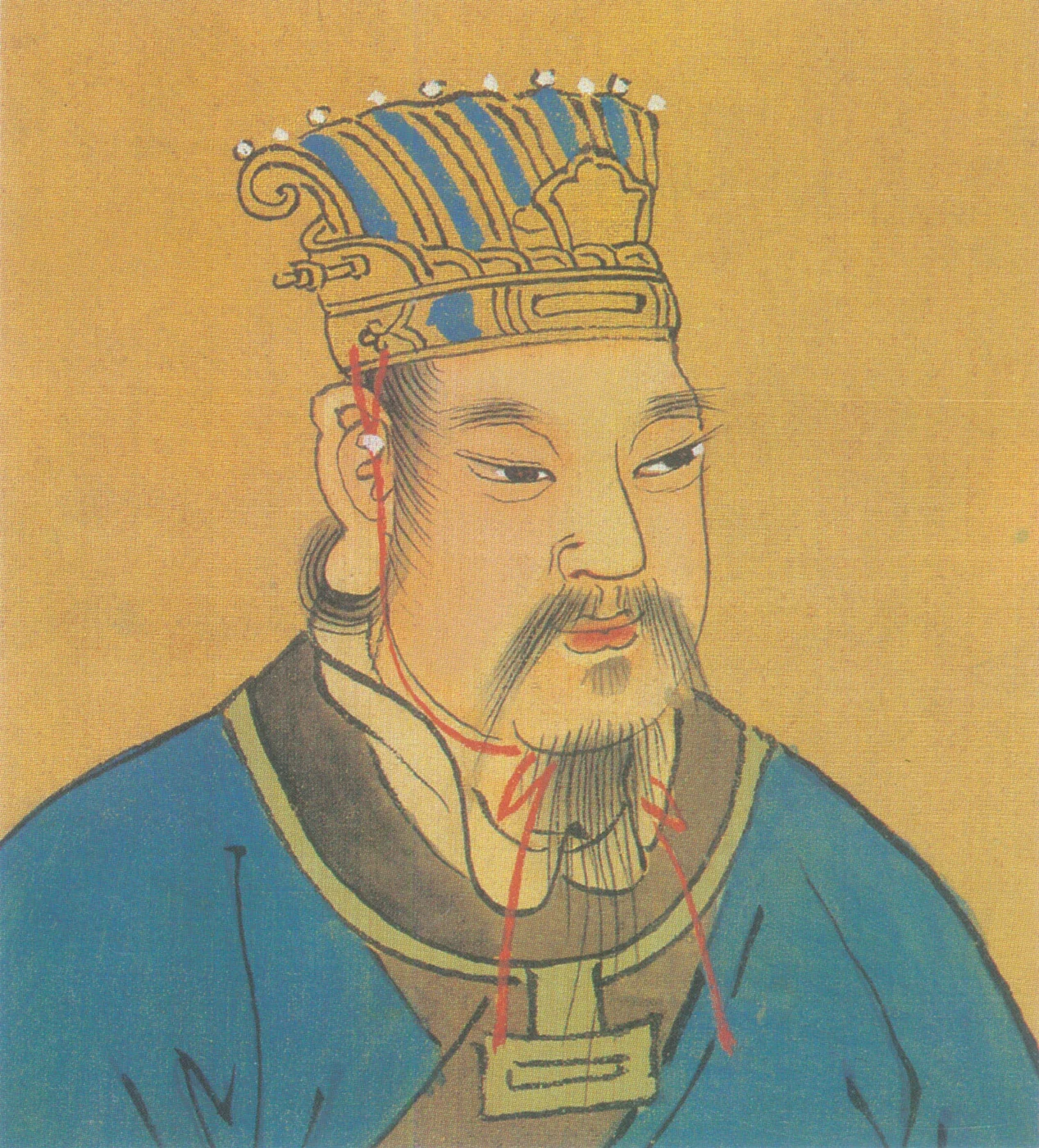
276 CE–323 CE
Emperor
Sima Rui
司马睿
Sima Rui (276–January 3, 323), courtesy name Jingwen, was a native of Wen County, Henei Commandery and the founding emperor of the Eastern Jin. He was a great-grandson of Sima Yi, posthumously honored as Emperor Xuan of Jin, and the son of Sima Jin, Prince Gong of Langya. His mother was Xiahou Guangji, consort of the Prince of Langya. He received the posthumous title Emperor Yuan and the temple name Zhongzong and was buried…
276 CE–323 CEEastern Jin
PROFILE
Sima Rui (276–January 3, 323), courtesy name Jingwen, was a native of Wen County, Henei Commandery and the founding emperor of the Eastern Jin. He was a great-grandson of Sima Yi, posthumously honored as Emperor Xuan of Jin, and the son of Sima Jin, Prince Gong of Langya. His mother was Xiahou Guangji, consort of the Prince of Langya. He received the posthumous title Emperor Yuan and the temple name Zhongzong and was buried at Jianping Mausoleum.
- Alternate name
- Emperor Yuan of Jin
- Courtesy name
- Jingwen
- Period
- Eastern Jin
- Dynasty/Regime
- Western Jin
- Identity
- Emperor
- Ethnicity/Ethnic affiliation
- Not recorded in historical sources
- Ancestral home
- Wen County, Henei Commandery
- Date of birth
- 276
- Place of birth
- Not recorded in historical sources
- Date of death
- January 3, 323
- Reign
- Not recorded in historical sources
- Predecessor
- Not applicable (founding emperor)
- Successor
- Emperor Ming of Jin (Sima Shao)
- Era names
- Not recorded in historical sources
- Temple name
- Zhongzong
- Posthumous name
- Emperor Yuan
- Major achievements
- Founding emperor of the Eastern Jin; established the regime in the south with the aid of Wang Dao and Wang Dun, in the political order described as “Wang and Ma sharing All Under Heaven,” and was troubled in his final years by Wang Dun's rebellion.
LIFE TIMELINE
Age fifteen | His father Sima Jin died, and Sima Rui inherited the title Prince of Langya
Age seventeen | Appointed Auxiliary Regular Mounted Attendant
Age twenty-nine | Followed Sima Yue in the campaign against Sima Ying; after the defeat at the Battle of Dangyin, escaped and returned to his fief
Age thirty | Appointed General Who Pacifies the East and Supervisor of Military Affairs of Xu Province, stationed at Xiapi
Age thirty-two | Following Wang Dao's plan, moved south to command from Jianye; appointed General Who Stabilizes the East and Commander of Military Affairs south of the Yangtze in Yang Province
Age thirty-five | Sent troops to assist Pei Shuo in defeating Zhou Fu and gained control of Huainan
Age thirty-six | Luoyang fell and Emperor Huai was captured; Sima Rui was promoted as leader of an alliance, defeated the Jiang Province inspector Hua Yi, and occupied Jiang Province
Age thirty-eight | Emperor Min of Jin ascended the throne; Sima Rui was promoted to Left Chancellor and Grand Commander of military affairs east of the Shaan divide
Age forty | Promoted to Chancellor and Grand Commander of military affairs within and beyond the court
Age forty-two | After news arrived that Emperor Min had been captured, assumed the title King of Jin and adopted the Jianwu era name
Age forty-three | After news arrived that Emperor Min had been killed, formally assumed the imperial title, founded the Eastern Jin, and adopted the Taixing era name
Age forty-six | Sent Dai Yuan to command at Hefei and Liu Wei at Huaiyin as precautions against Wang Dun
Age forty-seven | Wang Dun raised troops, entered Jiankang, and took control of the court
Age forty-seven | Died of illness amid grief and anxiety; buried at Jianping Mausoleum, with the temple name Zhongzong and posthumous title Emperor Yuan
BIOGRAPHY
Biography
Family Background and Early Life
Sima Rui was born into the Western Jin imperial clan. His grandfather Sima Zhou was a concubine-born son of Sima Yi. After the founding of the Western Jin, Sima Zhou was successively enfeoffed and ultimately became Prince of Langya, and he rendered major service in the conquest of Wu. Sima Rui's father Sima Jin inherited the title Prince of Langya but had no especially prominent political career.
Volume 6 of the Book of Jin, “Annals of Emperor Yuan and Emperor Ming,” states: “Emperor Yuan, personal name Rui and courtesy name Jingwen, was a great-grandson of Emperor Xuan and the son of Jin, Prince Gong of Langya. He was born in Luoyang in the second year of Xianning, when an extraordinary divine radiance filled the whole chamber and the straw on which he lay seemed freshly cut. When grown, a white hair appeared to the left of his forehead; he had a high nose and a dragon-like countenance, his eyes shone with brilliance, and his gaze was dazzling. At fifteen he inherited the title Prince of Langya. From youth he had a good reputation.” Much of this description is later laudatory language attached to an imperial founder.
Sima Rui was born in Luoyang in 276, the second year of the Xianning era under Emperor Wu of Jin. In 290, the first year of the Taixi era, Sima Jin died, and Sima Rui, only fifteen, inherited the princely title of Langya. In April of the same year Emperor Wu of Jin, Sima Yan, died. His successor, Emperor Hui Sima Zhong, was mentally impaired and unable to control the political situation. A struggle within the Western Jin ruling group that would last more than a decade, later known as the War of the Eight Princes, then began.
In this dangerous political environment, Sima Rui belonged to a relatively distant branch of the imperial house and adopted a policy of humility, frugality, and yielding in order to preserve himself. The upright court attendant Ji Shao was said to have recognized unusual qualities in him. The Book of Jin records: “During Emperor Hui's time the imperial house suffered repeated troubles. The emperor was always respectful, frugal, and yielding and thus escaped disaster. Deep and perceptive, with measured capacity, he displayed no conspicuous signs, so contemporaries did not yet recognize him. Only Attendant-in-Ordinary Ji Shao found him extraordinary and told others: ‘The Prince of Langya's bearing is unusual; he hardly has the physiognomy of a mere subject.’” In 292, the second year of the Yuankang era, Sima Rui was appointed Auxiliary Regular Mounted Attendant.
Moving Through the War of the Eight Princes
While in Luoyang, the only person with whom Sima Rui formed a close friendship was Wang Dao of Langya. Wang Dao came from the prestigious northern Langya Wang clan. Observing the changing political situation, he repeatedly urged Sima Rui to return to his princely territory and seek an opportunity to develop his position. Sima Rui agreed with the proposal but initially could find no way to leave.
In July 304, the first year of the Yongxing era, Sima Rui, then serving as General of the Left, followed the Prince of Donghai Sima Yue, who had taken control of Emperor Hui, in a campaign against the Prince of Chengdu Sima Ying. The court army was badly defeated at the Battle of Dangyin, fought near present-day Tangyin, Henan. Sima Yue fled to his fief, while Sima Rui, Emperor Hui, and numerous princes and high officials were carried off to Ye. Soon afterward, Sima Rui's uncle Sima Yao, Prince of Dong'an, was killed after offending Sima Ying. Fearing implication, Sima Rui secretly escaped from Ye and headed for Luoyang. He was nearly detained by a ferry official on the Yellow River and escaped only through the quick thinking of his attendant Song Dian. Once in Luoyang, he immediately took his household out of the capital and returned to the Langya fief.
In July 305, the second year of the Yongxing era, Sima Yue had recovered his strength and sought to dominate the central government. Under the pretext of restoring the emperor, he contacted regional commanders east of the mountains for a campaign against the Prince of Hejian Sima Yong, who held the Guanzhong region. Before departing, he appointed Sima Rui General Who Pacifies the East and Supervisor of Military Affairs of Xu Province, stationed at Xiapi in what is now northwestern Suining, Jiangsu, to guard his rear. Sima Rui invited Wang Dao to serve as military adjutant to the General Who Pacifies the East, and all “military plans and secret strategies” were entrusted to Wang Dao.
Crossing South to Jianye
During this period Sima Yue became increasingly violent and autocratic. Wang Dao and others anticipated greater chaos and pressed Sima Rui more urgently to take up a command at Jianye. Using his own concurrent role in the military administration of the Prince of Donghai, Wang Dao also secured the support of Pei, consort of the Prince of Donghai. In July 307, the first year of the Yongjia era, Sima Rui was therefore appointed General Who Stabilizes the East, Commander of Military Affairs south of the Yangtze in Yang Province, and Bearer of the Tally, enabling him to move south and establish his headquarters at Jianye, present-day Nanjing.
After the Western Jin conquest of Wu, southern aristocratic lineages had long been excluded from advancement and harbored considerable hostility toward northerners. Only shortly before Sima Rui's move south they had joined together to destroy Chen Min, the chancellor of Guangling who had attempted to establish a separatist regime in Jiangdong. Sima Rui himself was a distant imperial relative with little reputation or record of achievement. If he was to build a regime in former Wu territory with northern aristocrats as its core, winning cooperation from southern elites was therefore essential. On Wang Dao's advice, Sima Rui sent Wang Dao personally to visit the leading southern aristocrats He Xun and Gu Rong. Both accepted the summons, after which influential men throughout Wu followed their example, the populace inclined toward the new government, and “the rites between ruler and ministers were first established.”
A later story claimed that when Sima Rui first reached Jianye, people of Wu refused to attach themselves to him and, for more than a month, neither aristocrats nor commoners came to pay respects. When Sima Rui went out to observe a purification festival, Wang Dao had him ride in a formal carriage with an imposing ceremonial escort, while Wang Dao, Wang Dun, and other famous men rode alongside him. Ji Zhan, Gu Rong, and others were said to have been astonished and to have bowed by the roadside one after another. Sima Guang, however, already doubted this story in volume 4 of the Textual Research on the Comprehensive Mirror in Aid of Governance, and the modern scholar Tian Yuqing, through detailed analysis in Aristocratic Politics of the Eastern Jin, also argued that the account did not accord with historical circumstances.
Wang Dao played a decisive role in Sima Rui's establishment of power in Jiangdong. Sima Rui relied on him heavily and compared him to Xiao He. Wang Dao therefore remained at the center of government, and “court and countryside turned their hearts toward him, calling him Zhongfu.” Brothers and nephews of the Langya Wang clan occupied key offices. In March 309, the third year of Yongjia, Wang Dao's elder cousin Wang Dun became inspector of Yang Province, further increasing Wang clan power around Jianye.
Sima Rui was also said to have remained fond of drinking when he first moved south. Wang Dao repeatedly wept while remonstrating with him. Sima Rui accepted the advice, drank freely one final time, and then turned his cup upside down on the table to show his resolve to give up alcohol. He adopted Wang Dao's policy of “meeting gentlemen with humility, making resources sufficient through frugality, governing through tranquility, and soothing both newcomers and long-established residents,” which became a basic policy of the Jiangdong government. Under this approach he recruited Ji Zhan, Bian Kun, Liu Chao, Zhang Kai, Kong Yan, and other noted men into his staff, whose numerous members were collectively called the “one hundred and six clerks.” A Jiangdong regime centered on cooperation between northern and southern aristocratic lineages thus began to take shape.
Expanding Power and Responding to Northern Upheaval
In 309, the third year of the Yongjia era, Liu Yuan, who had established the Han-Zhao regime in Shanxi, twice sent armies against Luoyang. Sima Yue, who controlled the central government, ordered General Who Establishes Martial Power Qian Hui of the prominent Wuxing elite and Wang Dun to march to the capital's relief. Qian Hui reached Guangling, present-day Yangzhou, Jiangsu, but, fearing the strength of Han-Zhao, refused to advance. Sima Rui was ordered to compel him forward and threatened military punishment. Qian Hui responded by attacking Wang Dun, who was defeated and fled to Jianye. Qian Hui then openly rebelled, styled himself General Who Pacifies the West and Commander of Eight Provinces, installed a son of Sun Hao as King of Wu, and established a separatist regime. In March 310, the local magnate Zhou Qi of Yixing mobilized his retainers and, together with government troops, destroyed Qian Hui. Zhou Qi had already helped suppress the rebellions of Shi Bing and Chen Min; with Qian Hui's defeat, he had now “pacified Jiangnan three times.” Sima Rui appointed him administrator of Wuxing and independently created Yixing Commandery as a special reward. This unauthorized creation of an administrative unit already demonstrated Sima Rui's growing autonomy.
In October 310, the fourth year of the Yongjia era, the new Han-Zhao ruler Liu Cong mobilized a large army to attack Luoyang, placing the capital in danger again. Emperor Huai of Jin sent urgent proclamations to regional commanders requesting aid, but not a single relief army arrived. Zhou Fu, then General Who Guards the East and commander of military affairs in Yang Province, submitted a memorial from Shouchun, present-day Shouxian, Anhui, proposing that the capital be moved there. Sima Yue resented Zhou Fu's action, moved his own headquarters to Xuchang, and ordered Zhou Fu north. Zhou Fu, long dissatisfied with Sima Yue's autocracy, naturally refused. The Huainan administrator Pei Shuo then followed a secret order from Sima Yue and attacked Zhou Fu. After being defeated, Pei Shuo fled to Dong'e and appealed to Sima Rui. Sima Rui had already wished to absorb Zhou Fu's territory and now dispatched forces to assist Pei Shuo. Zhou Fu was defeated and captured, giving Sima Rui control of Huainan adjacent to Jianye and further expanding his sphere.
In March 311, the fifth year of Yongjia, Sima Yue died of illness at Xiangcheng. Grand Commandant Wang Yan and other princes and senior ministers escorting his coffin for burial in Donghai were surrounded and annihilated by Han-Zhao forces. Luoyang, left isolated, soon fell and Emperor Huai was captured. Situ Fu Zhi, Sikong Xun Fan, General-in-Chief Gou Xi, and Grand Marshal Wang Jun each established provisional administrations in different regions, supporting different imperial relatives and issuing proclamations to the realm. The provisional government organized by Xun Fan around the Prince of Qin, Sima Ye, was particularly influential and called on regional commanders to mobilize forces to rescue the dynasty. Among these competing forces, Sima Rui—now General-in-Chief Who Guards the East and commander of military affairs in Yang, Jiang, Xiang, Guang, and Jiao provinces—was the strongest and was naturally promoted as alliance leader. Yet he had no intention of marching north and concentrated instead on consolidating the south.
As large numbers of northern refugees fled south to escape warfare, Sima Rui adopted Wang Dao's proposal to recruit and settle them actively. He created many emigre provinces, commanderies, and counties on both sides of the Yangtze to administer displaced populations, and he established a temporary registration called “white registers” for northern immigrants, allowing them long-term reductions or exemptions from taxes, levies, and labor service. Leaders of refugee communities who moved south were given important offices so that they would serve the regime. Xi Jian and Zu Ti, both later major civil and military figures of the early Eastern Jin, arrived in this broader migration. These policies won Sima Rui the support of northern emigre aristocratic families, making them pillars of his regime. At the same time, they created confusion in Jiangnan's commandery-county and household-registration systems and made it easier for great families to conceal or absorb registered households.
The western part of Yang Province belonged to Jiang Province. To expand westward, Sima Rui had to control Jiang Province, but its inspector Hua Yi regarded himself as an appointee of the central court and refused to obey Sima Rui's orders. Relations between the two became extremely tense. In June 311, Sima Rui transferred Zhou Fang to Pengze, in the area north of present-day Poyang Lake, Jiangxi, placing pressure on Yuzhang, present-day Nanchang, which served as the provincial seat, and then attempted to force Jiang Province to replace its senior local officials. Hua Yi refused. Sima Rui therefore ordered Wang Dun, Gan Zhuo, Zhou Fang, and others to combine their forces against Jiang Province. Hua Yi was defeated and killed, and Jiang Province was occupied. At the same time, Pei Xian, inspector of Yu Province, was also driven out by Sima Rui's troops. Sima Rui's power thereby extended into the middle Yangtze region.
In February 312, the sixth year of Yongjia, news arrived that the Han-Zhao general Shi Le was preparing to move south, causing alarm in Jianye. Shi Le soon ravaged commanderies of Yu Province, returned toward the Yangtze, and encamped at Gebei, with plans to cross the Huai into the Yangtze region and seize Jianye. Sima Rui concentrated his main forces at Shouchun and appointed Ji Zhan, who was familiar with waterways, as General Who Displays Might to command the troops. Three months of continuous rain then caused severe famine and disease in Shi Le's army, forcing it to withdraw northward and bringing Jiangdong out of danger.
Assuming the Imperial Title and Founding the Eastern Jin
In 313, the first year of the Jianxing era, news reached Chang'an that Emperor Huai of Jin had been killed in the Han-Zhao capital Pingyang. Emperor Min of Jin, previously crown prince, then ascended the throne. On the renchen day of the fifth month (June 27), he promoted Sima Rui to Attendant-in-Ordinary, Left Chancellor, and Grand Commander of military affairs east of the Shaan divide, while Prince Sima Bao of Nanyang served as Right Chancellor and Grand Commander west of the Shaan divide. In 315, the third year of Jianxing, Sima Rui was promoted to Chancellor and Grand Commander of military affairs within and beyond the court.
In 317, the first year of Jianwu, General Who Pacifies the East Song Zhe reached Jiankang with news that Han-Zhao had captured Emperor Min the previous year. Song Zhe declared that Emperor Min had issued an edict authorizing Sima Rui to exercise comprehensive authority over state affairs. Officials led by Sima Yang, Prince of Xiyang, urged Sima Rui to take the imperial title. When he refused, they followed Wei and Jin precedents and instead had him assume the title King of Jin. At Jiankang he established a full bureaucracy, set up the altars of soil and grain, and adopted the era name Jianwu. Emperor Min was killed later that year, and when the news reached Jiankang in 318, the officials again urged Sima Rui to ascend. He then formally became emperor and changed the era name to Taixing. At the accession ceremony, surrounded by officials, he specially invited Wang Dao—who had helped him move to Jiangdong and win support from southern elites—to sit with him on the imperial throne, but Wang Dao declined.
Final Years and Wang Dun's Rebellion
After becoming emperor, Sima Rui sought to curb the excessive power of the Langya Wang clan. He personally favored Liu Wei and Diao Xie and pursued an approach described as “using the methods of Shen Buhai and Han Fei” and “controlling subordinates through law,” which included measures directed against the aristocratic lineages. Liu Wei repeatedly memorialized against abuses by Wang Han of the Langya Wang clan. He also impeached officials led by Zhou Yan, a subordinate official of the chancellery from the Zhou clan of Yixing, on the grounds that an overly harsh sentence had caused the death of Chunyu Bo, arguing that they were “unable to fulfill their duties.” This pressure forced Wang Dao himself to seek dismissal and accept blame. Liu Wei further impeached Zhou Yi, elder brother of Zhou Song, for “indulging petty men who gathered together to commit violence,” causing Zhou Yi's removal from office. Liu Wei and Diao Xie continued to promote a series of stringent policies that elevated imperial authority and restrained powerful families. Among these measures was the conscription of slaves and dependent retainers owned by aristocratic families to form military forces intended to support Liu Wei and Dai Yuan outside the capital. Such policies generated resentment among both northern and southern aristocratic groups, and Wang Dun in particular detested the actions of Liu Wei and Diao Xie.
In 322, the first year of the Yongchang era, General-in-Chief and Governor of Jing Province Wang Dun raised troops at Wuchang and marched on Jiankang under the slogan of eliminating Liu Wei. Sima Rui had in fact long been wary of Wang Dun. The previous year he had already sent Dai Yuan out as General Who Conquers the West to command from Hefei and Liu Wei as General Who Guards the North to Huaiyin, present-day Huai'an, Jiangsu, as external supports. On hearing of Wang Dun's uprising, he recalled both to defend Jiankang, appointed Wang Dao Forward Grand Commander, and personally put on armor to inspect the Six Armies outside the capital. When Wang Dun reached Jiankang, however, he attacked Stone City. Its commander Zhou Zha opened the gates to him, allowing Wang Dun to seize the position. Sima Rui then ordered his armies to attack Stone City, but they were defeated. Unable to resist further, the emperor compromised, and Wang Dun appointed himself chancellor and took control of government.
Pressed by Wang Dun, Sima Rui fell ill from fear and grief and died on the jichou day of the intercalary eleventh month of that year, January 3, 323, at the age of forty-seven. He was buried at Jianping Mausoleum and received the temple name Zhongzong and the posthumous title Emperor Yuan.
The Wang Dun Rebellion and His Last Position
In the first month of 322 Wang Dun raised troops at Wuchang in the name of executing Liu Kui, and Shen Chong, general of the dragon steed, rose in Wuxing in support. Sima Rui recalled Dai Ruosi and Liu Kui to defend the capital, made Wang Dao commander of the vanguard, sent Zhou Yan with three thousand men against Shen Chong, and "in person put on armour and reviewed the six armies outside the city," sending Tao Kan to Jiangzhou and Gan Zhuo to Jingzhou "to follow on Wang Dun's heels." In the fourth month Wang Dun's vanguard attacked Shitou, Zhou Zha opened the gate to him and Hou Li died in the fighting; Wang Dun occupied Shitou, and when Dai Ruosi and Liu Kui attacked and Wang Dao, Zhou Yi, Guo Yi and Yu Tan came out by three roads, the six armies were beaten; Diao Xie, director of the secretariat, fled to Jiangcheng and was killed, and Liu Kui fled to Shi Le. Sima Rui sent word to Wang Dun: "If you have not forgotten the court, stop your troops here and the empire may still be at peace together. If it is otherwise, I shall give way to you by retiring to the princedom of Langya." After mastering the government Wang Dun killed Dai Yuan, Zhou Yi and others, promoted and dismissed ministers at will, and held Sima Rui in the palace without freedom of movement; in the fourth month he withdrew to Wuchang, leaving a resident office at Jianye to control the court, and afterwards took command also of Ning and Yi and replaced the commanders of the key garrisons with his own kin and intimates. Thereafter the military and political power of the Eastern Jin lay with the Wang clan, and the imperial house was one in name only.
Two episodes of these years show his attitude toward the north. In the eleventh month of 316, with Chang'an cut off, its troops worn out and its food gone, Sima Rui refused to send relief, and Emperor Min was forced to surrender; when the news reached the south he "drew up his army and encamped, making a show of launching a northern campaign to rescue the emperor," and a few days later the performance was dropped, and to excuse himself he had Chunyu Bo, the transport secretary of the chancellery, put to death on the charge of "delaying the transport of grain." Chunyu Bo's death provoked wide resentment: "the common people clamoured and men and women crowded to look, all saying he was wronged," and even Liu Kui, his own confidant, memorialized on his behalf, the history recording that "the blood of the executed man clung to the pillar and ran upward to a height of two feet three inches"; Liu Kui asked that the responsible officials be dismissed, and Wang Dao and others offered to resign, but Sima Rui answered only that "failure in government and justice is all my own dullness," and in the end no one was questioned, and he admitted only that he had put an innocent man to death. Toward Zu Ti's northern campaign he gave equally limited support: after Zu Ti set out his plan, the court merely "made him general of the brave and governor of Yuzhou, with a thousand men's rations and three thousand bolts of cloth, but no armour or weapons, to raise his own troops." Zu Ti recovered much of Henan but never won the court's trust, and hearing of Wang Dun's arrogance and the growing quarrels at court, he fell ill of grief and died. Later writers therefore blame Sima Rui for "being able only to hold a small Jiangzuo, with no thought at all of recovering the Central Plain."
Major Activities
Establishing the Eastern Jin Regime
Against the background of the Western Jin's collapse and the loss of the Central Plains, Sima Rui used his status as a member of the Western Jin imperial house to combine the strength of northern and southern aristocratic lineages and reestablish Jin rule in the south, allowing the dynasty's claim to legitimate succession to continue there. He controlled large areas in the middle and lower Yangtze as well as parts of the Huai and Pearl River basins, laying a territorial and political foundation for later Eastern Jin rule. He recruited men such as Xi Jian and Zu Ti and created emigre provinces, commanderies, and counties to settle displaced northerners. Jiangnan consequently became a refuge for northern aristocrats and common migrants, which objectively encouraged cultural interaction between north and south and contributed to the development of the southern regions.
Political Measures
Sima Rui adopted Wang Dao's policy of “meeting gentlemen with humility, making resources sufficient through frugality, governing through tranquility, and soothing both newcomers and long-established residents” as a basic principle of the Jiangdong government. He recruited Ji Zhan, Bian Kun, Liu Chao, Zhang Kai, Kong Yan, and other noted figures into his staff, collectively known as the “one hundred and six clerks.” In governing Jiangdong he successively suppressed rebellions by Qian Hui, Du Tao, Du Zeng, Xu Fu, and others, stabilizing the south. He also established a system of emigre administrative units on both sides of the Yangtze and created white household registers for immigrants from the north, granting them long-term reductions or exemptions from taxes and labor service.
Relations with Aristocratic Lineages
Sima Rui's regime rested on cooperation between northern and southern aristocratic elites. He relied on the brothers Wang Dao and Wang Dun of the Langya Wang clan to obtain the support of southern lineages, producing the political order remembered as “the Wangs and the Simas share All Under Heaven.” Yet he also attempted to restrain aristocratic power, promoting Liu Wei and Diao Xie and their stringent policies aimed at curbing powerful families, ultimately provoking Wang Dun's rebellion. His relationship with the Zhou clan of Yixing was likewise complicated. Zhou Qi had helped pacify Jiangnan three times, and Sima Rui rewarded him by appointing him administrator of Wuxing and specially creating Yixing Commandery; nevertheless, Sima Rui remained wary of Zhou's local power and transferred him three times, reportedly causing Zhou Qi to become angry, fall ill, and die.
Attitude Toward Northern Expeditions
Sima Rui focused on consolidating the south. After Emperor Min was captured, northern leaders such as Liu Kun, Duan Pidi, Shao Xu, the Duan tribes, and Murong Xianbei jointly submitted memorials supporting Sima Rui's elevation, and Sima Rui himself issued proclamations calling for a northern expedition. Even so, he did not actually lead troops north. Zu Ti, who had ambitions to recover the north, requested permission to campaign but received little support. Sima Rui provided only provisions for one thousand men and three thousand bolts of cloth and told Zu Ti to recruit his own troops, without even supplying weapons or armor. Through his own efforts Zu Ti successfully won back territory south of the Yellow River, but the court remained preoccupied with struggles involving the Langya Wang clan. In 321, the fourth year of the Taixing era, Dai Yuan was even sent outward as a counterweight to Wang Dun. Concerned that aristocratic conflict at court was undermining the northern campaign, Zu Ti fell ill and died that same year.
Household Registration, the Guest System, and the Curbing of the Wangs
To restore imperial authority Sima Rui issued two edicts for the searching out of unregistered households. The first, in 318, required the two-thousand-bushel officials to register households truly and promote farming, in order to increase the state's registered population and the central revenue; the second, in 321, shows his wish to enrol refugees in the army and strengthen his own military power, a measure which the Zizhi Tongjian attributes to Diao Xie's counsel. To secure obedience he promulgated the "guest system," framed on the Western Jin system of sheltered retainers but adapted to Eastern Jin conditions: the numbers of tenant guests that officials of the first and second grades might shelter were somewhat reduced, but those of all lower grades were greatly increased — the third grade from ten households to thirty-five, the fourth from seven to thirty, and even the eighth and ninth from one to ten and five. The system kept the old numbers of sheltered food-and-clothing guests and added provisions for sheltered accountants, and laid down further that "every guest shall be entered in the household register," that they "shall owe no tax or corvée," and that "the rent of their fields shall be divided with the master." In law it once more confirmed the great families' power to hold persons privately, showing how strong the gentry were in the Eastern Jin and how weak and dependent the throne was upon them; its chief purpose, however, was to check the excessive swallowing of the state's people by the great houses and to force the surplus back to the state.
The reorganisation of the central offices and of military command was another face of the same intention. After the accession Wang Dao was made general of the flying cavalry, casual attendant, commander of military affairs at home and abroad, director of the secretariat, keeper of the seals and governor of Yangzhou, holding several posts at once, both the chief figure of the advisory system and the chief director of the administrative one, a great obstacle to any strengthening of the throne. Sima Rui therefore adjusted the central appointments: in the second month of his reign he made the grand commandant concurrently keeper of the seals, and three months later appointed Diao Xie director of the secretariat, splitting Wang Dao's administrative power; in the advisory system he merged the secretariat, the seat of confidential business, into the bureau of casual attendants, cutting Wang Dao's power of decision, after which the chancellery's authority grew until it became "the throat and tongue" of the court. In military matters he first made Sima Cheng, of the imperial clan, governor of Xiangzhou as a shield for the house, with the famous exchange in which he asked Sima Cheng, "Xiangzhou is a stronghold of Chu in the south, the key of the upper waters, holding the meeting of three provinces, a country for the use of arms — how would it be if my uncle were to hold it?" and Sima Cheng answered that "your command is to be obeyed with all my strength; how should I decline?" In 321 he made Dai Yuan, president of the secretariat, general of the western expedition and governor of Sizhou, stationed at Hefei, and Liu Kui, prefect of Danyang, general of the northern garrison and governor of Qingzhou, stationed at Huaiyin, "both with the staff of authority and troops — in name to attack the barbarians, in fact to guard against Wang Dun."
The reform of administration and of the selection of officials carried the same purpose. In 318 Sima Rui issued two edicts: in the third month one that approved quiet government while undertaking to punish lawless officials, saying that "men are moved by deeds, not words, and heaven is answered in substance, not in form," and ordering that "gifts from far and near be cut off altogether"; and in the seventh month one in a severer tone, requiring the two-thousand-bushel officials and magistrates to "revere the old statutes, keep themselves upright and make the law clear, press down the powerful, comfort the orphaned and alone, truly register the households and encourage farming," and requiring governors and inspectors "to examine one another and not to neglect the public for private ends," with penalties for those who failed to recommend the public-spirited or punish the corrupt. For the selection of officials he adopted the proposal of Chen Jun, president of the board of rites, that "the old system should gradually be followed and candidates tested in the classics and policy," and decreed that "where those recommended fail the test, the governor or prefect shall be dismissed"; the result was that the recommended scholars and filial sons did not dare to come, and those who did pleaded illness, so that for three years no one sat the test. Meanwhile friction between northern and southern gentry grew plainer: the Zhou clan of Yixing was strong and to the people's liking, and Sima Rui "feared and distrusted" it; Zhou Qi, resentful at not being transferred, plotted with Wang Hui of Donglai to kill the ministers, and when the plot leaked he died of grief and rage, telling his son Xie on his deathbed that "it is the northerners who kill me; if you can avenge me you are my son." Zhou Xie, carrying out his father's words and using southern resentment, plotted revolt, and Xu Fu, the revenue officer of Wuxing, falsely claiming the authority of Zhou Zha, gathered a following "in the name of attacking Wang Dao and Diao Xie," with Sun Bi of the Sun Hao clan rising at Guangde in support; when it failed Sima Rui, holding the Zhou to be a great house of Wu revered by the southerners, did not press the matter but soothed them as before. These measures and conflicts together show how delicately the early Eastern Jin throne depended on, and rubbed against, the émigré and southern gentry alike.
Personal Relations
- Sima Yi (great-grandfather); Sima Zhou (grandfather, Prince Wu of Langya); Sima Jin (father, Prince Gong of Langya); Xiahou Guangji (mother, consort of the Prince of Langya); Sima Shao (son, Emperor Ming of Jin); Sima Pou (son, Prince Xiao of Langya); Sima Chong (son, Prince Ai of Donghai); Sima Xi (son, Prince Wei of Wuling); Sima Huan (son, Prince Dao of Langya); Sima Yu (son, Emperor Jianwen of Jin)
- Wang Dao (close friend and chief minister, associated with the phrase “the Wangs and the Simas share All Under Heaven”); Wang Dun (elder cousin of Wang Dao, later rebelled); Liu Wei (trusted minister who promoted stringent policies); Diao Xie (trusted minister who handled confidential affairs with Liu Wei); Gu Rong (leader of southern aristocratic lineages); He Xun (leader of southern aristocratic lineages); Ji Zhan (senior minister repeatedly entrusted with military duties); Xi Jian (refugee leader and later senior Eastern Jin official); Zu Ti (general of the northern expedition who did not receive full support); Zhou Qi (helped pacify Jiangnan three times and later died in resentment after becoming a target of suspicion)
- Emperor Hui of Jin, Sima Zhong (nominal sovereign); Emperor Huai of Jin, Sima Chi (nominal sovereign); Emperor Min of Jin, Sima Ye (nominal sovereign); Sima Yue, Prince of Donghai (formerly his superior, later followed a separate course); Sima Bao, Prince of Nanyang (Right Chancellor governing the western side of the Shaan divide)
- Wang Dun (raised troops in rebellion and took control of the government); Qian Hui (rebelled and was suppressed); Hua Yi (inspector of Jiang Province, refused Sima Rui's orders and was defeated and killed); Zhou Fu (General Who Guards the East, defeated and captured); Zhou Xie (son of Zhou Qi, plotted rebellion unsuccessfully)
Historical Assessment
Eastern Jin and Northern–Southern Dynasties
Wang Dao once commented on Sima Rui: “The Prince of Langya is rich in benevolence and virtue, but his public reputation is still slight.” (Book of Jin, “Biography of Wang Dao”)
The Jinyang Qiu, written by Sun Sheng of the Eastern Jin, recorded the “Ox succeeding the Horse” story and claimed that Sima Rui was born from an illicit relationship between Xiahou Guangji and a minor official surnamed Niu. The story was later included in the Book of Wei, where Wei Shou more directly described Sima Rui as an illegitimate son of Niu Jin and Xiahou Guangji.
Tang Period
Fang Xuanling and the other Tang compilers of the Book of Jin commented in the historian's judgment: “The Jin house did not foresee its danger; beyond the central current, the Five Hu grasped the cauldron and the dignity of the seven ancestral temples collapsed. When overwhelming disorder moved abreast, the people then cherished the old virtue. In former times Emperor Guangwu rose from several commanderies, while Emperor Yuan reached the imperial position from a single province. Was this because the lingering transformation of Wu and Xuan still flourished in Langya, or because the benevolence of Wen and Jing transmitted its fragrance to Nandun? This is what may be called coming after Heaven's timing but before human affairs. Memorials sped in offering titles, high carriage canopies formed shade, stars displayed auspicious signs, and Jinling showed its celebration.” The passage gave positive recognition to Sima Rui's founding of the Eastern Jin from the base of a single province.
The Book of Jin also stated: “The emperor was simple, frugal, modest, and unadorned by nature; he accepted direct remonstrance and humbled himself in dealing with others.” It praised his “virtue of respect and frugality” while also suggesting that “the enterprise of restoration truly lacked the right man.”
Song and Yuan Periods
Sima Guang recorded Sima Rui's career in the Comprehensive Mirror in Aid of Governance. In volume 4 of the Textual Research on the Comprehensive Mirror in Aid of Governance, he questioned the Book of Jin account that “the people of Wu did not attach themselves” when Sima Rui first reached Jianye: “At this time Rui had already been in Jianye for three years; how could it say ‘for more than a month’? Moreover, although Rui's reputation may have been slight, how could he have served as commander for several years without any gentry or commoners ever coming to him?” This reflects the rigorous source criticism of Song historiography.
Ming and Qing Periods
Wang Fuzhi of the Ming commented in Reflections on Reading the Comprehensive Mirror: “Emperor Yuan's establishment did not result from merit or virtue toward the realm. He was simply a close descendant of the Prince of Langya, relying on Wang Dao to found a state east of the Yangtze. Although called an emperor, in reality he was only a regional commander.” The assessment emphasized the weakness of imperial power in the early Eastern Jin.
Zhao Yi of the Qing, discussing the phrase “the Wangs and the Simas share All Under Heaven” in Notes on the Twenty-Two Histories, wrote: “Emperor Yuan of Jin crossed south as Prince of Langya, and Wang Dao in fact assisted him on both sides. Thus when Emperor Yuan took the throne he promoted Dao for the foremost merit and called him Zhongfu. But Dao's elder brother Dun also used the merit of suppressing rebels to monopolize authority in the upper Yangtze. The emperor could not control him, and so came Wang Dun's rebellion.”
Modern Assessments
Tian Yuqing, in Aristocratic Politics of the Eastern Jin, systematically examined Sima Rui's relationship with the Langya Wang clan, arguing: “Sima Rui's ability to establish a regime east of the Yangtze depended chiefly on the support of the Langya Wang clan. Wang Dao operated at the center to mediate relations between northern and southern aristocracies, while Wang Dun controlled military power outside, creating mutually supporting internal and external positions.” He argued that the phrase “the Wangs and the Simas share All Under Heaven” did not describe a simple ruler-minister relationship, but rather a pattern of shared rule between the imperial house and great aristocratic lineages under Eastern Jin aristocratic politics.
Lü Simian wrote in History of the Jin and Northern and Southern Dynasties: “Although Emperor Yuan was a founding ruler, his abilities were in fact ordinary. His success in establishing a regime east of the Yangtze depended entirely on the assistance of Wang Dao and others. Yet his capacity to employ capable men is also worthy of recognition.”
FIGURES ASSOCIATED WITH THIS DYNASTY
Bibliography
- Book of Jin*, vol. 6, “Annals of Emperor Yuan and Emperor Ming,” compiled by Fang Xuanling et al. (Tang)
- Book of Jin*, vol. 65, “Biography of Wang Dao,” compiled by Fang Xuanling et al. (Tang)
- Book of Wei*, Wei Shou (Northern Qi)
- Tian Yuqing, Aristocratic Politics of the Eastern Jin, Peking University Press, 2012
- Lü Simian, History of the Jin and Northern and Southern Dynasties, Shanghai Classics Publishing House
- Wang Fuzhi, Reflections on Reading the Comprehensive Mirror, Zhonghua Book Company
- Zhao Yi, Notes on the Twenty-Two Histories, Zhonghua Book Company