Birth | Born in Kaiyang County, Langya Kingdom, as the eldest son of Sima Rui and palace woman Lady Xun
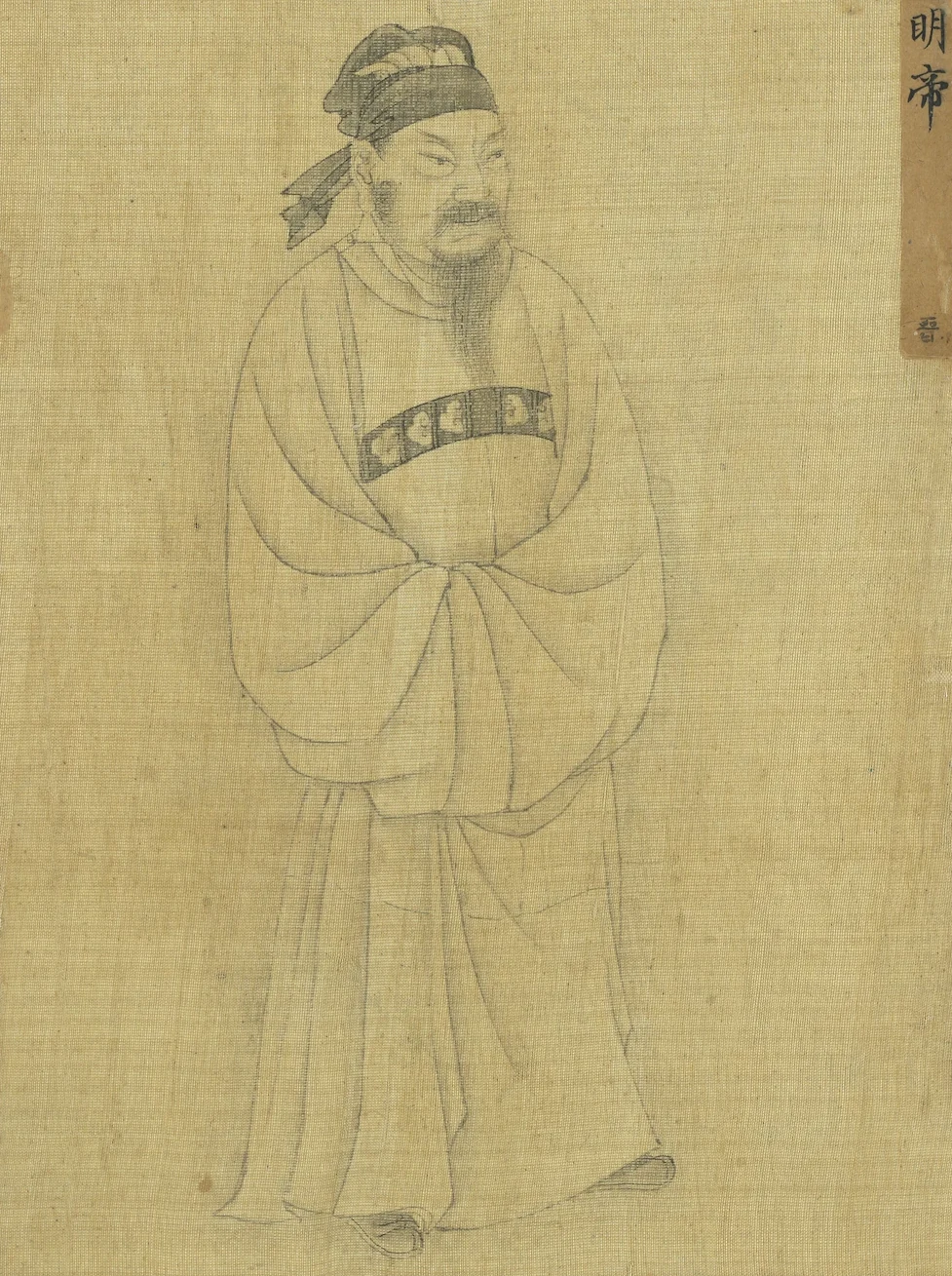
299 CE–325 CE
Emperor
Sima Shao
司马绍
Sima Shao (299–325), courtesy name Daoji, was a native of Wen County, Henei Commandery and was born in Kaiyang County of Langya Kingdom. He was the second emperor of the Eastern Jin and the eldest son of the dynasty's founder, Emperor Yuan Sima Rui. During a reign of less than three years, his greatest achievement was the suppression of Wang Dun's rebellion in 324, the second year of the Taining era, which stabilized the…
299 CE–325 CEEastern Jin
PROFILE
Sima Shao (299–325), courtesy name Daoji, was a native of Wen County, Henei Commandery and was born in Kaiyang County of Langya Kingdom. He was the second emperor of the Eastern Jin and the eldest son of the dynasty's founder, Emperor Yuan Sima Rui. During a reign of less than three years, his greatest achievement was the suppression of Wang Dun's rebellion in 324, the second year of the Taining era, which stabilized the turbulent early Eastern Jin political order. Sima Shao was regarded as intelligent from childhood and possessed both literary and military ability, winning broad respect at court and beyond. He nevertheless died of illness after only three years on the throne, at the age of twenty-seven. His posthumous title was Emperor Ming, his temple name Suzu—given as Suzong in the Comprehensive Mirror in Aid of Governance—and he was buried at Wuping Mausoleum.
- Alternate name
- Emperor Ming of Jin
- Courtesy name
- Daoji
- Period
- Eastern Jin
- Date of Birth
- 299
- Date of Death
- 325
- Dynasty/Regime
- Western Jin
- Identity
- Emperor
- Ethnicity/Ethnic affiliation
- Han Chinese
- Ancestral home
- Wen County, Henei Commandery
- Place of birth
- Kaiyang County, Langya Kingdom
- Reign
- Not recorded in historical sources
- Predecessor
- Emperor Yuan of Eastern Jin (Sima Rui)
- Successor
- Emperor Cheng of Eastern Jin (Sima Yan)
- Era names
- Not recorded in historical sources
- Temple name
- Suzu
- Posthumous name
- Emperor Ming
- Major achievements
- Second emperor of the Eastern Jin; decisively suppressed Wang Dun's rebellion, showed strategic ability, and died young.
LIFE TIMELINE
Age eight | Followed his father Sima Rui when the latter moved his headquarters to Jianye, later renamed Jiankang
Age fourteen | Appointed General of the East of the Household and stationed at Guangling
Age eighteen | After Sima Rui assumed the title King of Jin, Sima Shao was made crown prince of the King of Jin
Age nineteen | After Sima Rui became emperor, Sima Shao was made imperial crown prince
Age twenty-three | Wang Dun's rebellion broke out; Sima Rui died in grief and distress, and Sima Shao succeeded to the throne
Age twenty-four | Made Yu Wenjun empress; as Wang Dun's intentions to usurp became increasingly clear, Emperor Ming secretly strengthened his precautions
Age twenty-five | Disguised himself to reconnoiter Wang Dun's encampment; in July suppressed Wang Dun's rebellion and secured the Eastern Jin state
Age twenty-six | Made his eldest son Sima Yan crown prince; died of illness in the East Hall of the Jiankang palace during the intercalary eighth month
BIOGRAPHY
Biography
Family Background and Early Life
Sima Shao came from the Sima clan of Henei and was the eldest son of Emperor Yuan of Jin, Sima Rui, and a palace woman surnamed Xun. Lady Xun was from the Yan-Dai region and of humble origin, originally a palace servant and concubine of Sima Rui. Thus, although Sima Shao was the eldest son, he was not born to the principal wife. From childhood he was regarded as exceptionally intelligent and was deeply favored by his father. Volume 6 of the Book of Jin states that he “was intelligent and discerning from childhood and was especially favored by Emperor Yuan.”
The most famous story illustrating his childhood intelligence is the exchange later known as “the sun is near and Chang'an is far.” When Sima Shao was young, Sima Rui seated him on his knee just as an envoy from Chang'an arrived and asked, “Which is farther away, the sun or Chang'an?” Sima Shao answered, “Chang'an is nearer. I have never heard of anyone coming from the vicinity of the sun, so this can be known.” Sima Rui found the answer remarkable. The next day, at a banquet with assembled ministers, he asked the question again, but Sima Shao now replied, “The sun is nearer.” Sima Rui's expression changed and he asked why this differed from the previous day's answer. Sima Shao calmly said, “When I raise my head, I can see the sun, but I cannot see Chang'an.” The reply strengthened Sima Rui's belief that his son was a prodigy. The anecdote also appears in the “Precocious Wisdom” chapter of A New Account of the Tales of the World and became a celebrated story of cleverness.
In 307, the first year of the Yongjia era, the eight-year-old Sima Shao followed his father Sima Rui when he moved his headquarters to Jianye, later renamed Jiankang, present-day Nanjing. In 313, after Emperor Min of Jin, Sima Ye, ascended the throne, Sima Rui was promoted to Left Chancellor and Sima Shao was appointed General of the East of the Household and sent to guard Guangling, present-day Yangzhou, Jiangsu. At only fourteen, Sima Shao had already begun to bear responsibility for a regional command.
Years as Crown Prince
On the ninth day of the third month of 317, the first year of the Jianwu era, Sima Rui assumed the title King of Jin. On the fourth day of the fourth month, he designated Sima Shao crown prince of the King of Jin. On the tenth day of the third month of 318, the first year of the Taixing era, Sima Rui formally became emperor as Emperor Yuan of Jin, and on the twenty-fourth day of that month Sima Shao was established as imperial crown prince.
Sima Shao was described as extremely filial and as possessing both literary talent and military skill. He respected worthy men, welcomed guests, and was fond of literary composition. Noted ministers including Wang Dao, Yu Liang, Wen Jiao, Huan Yi, and Ruan Fang were all treated with particular closeness and respect. He once debated ministers over the meaning of the authenticity of sages and refused to yield even to the arguments of Wang Dao and others. He was also fond of martial practice and skilled at winning the loyalty of soldiers. Jiangdong then had many talented men, and people near and far were said to have placed their hopes in the crown prince.
In 322, the first year of the Yongchang era, Wang Dun's rebellion broke out. Wang Dun's army entered Jiankang and the imperial Six Armies collapsed. Sima Shao wished to lead troops personally into battle against the rebels and had already mounted his carriage to depart when Wen Jiao, then a palace official attached to the crown prince, firmly remonstrated and cut the horse harness with his sword, finally stopping him. Wang Dun had long believed Sima Shao to be martial, decisive, and strategically capable, and knew that he was admired and trusted by both court and populace. Wang Dun therefore attempted to depose him on an accusation of unfilial conduct. At a great assembly of officials, Wang Dun sternly demanded of Wen Jiao, “What virtue or merit does the crown prince possess that is worth praising?” intending to force him into endorsing deposition. Wen Jiao calmly replied that understanding profound principles of government and ensuring the long-term peace of the state could not be perceived by men of shallow insight, and that in terms of ritual this itself constituted filial conduct. The assembled officials agreed, and Wang Dun's plan was frustrated.
Accession and Suppression of the Rebellion
On the tenth day of the intercalary eleventh month of 322, Emperor Yuan Sima Rui died at the age of forty-seven after falling ill from grief and distress over Wang Dun's rebellion. On the following day, Crown Prince Sima Shao ascended the throne, proclaimed a general amnesty, and became Emperor Ming of Jin. He honored his birth mother Lady Xun as Lady of Jian'an Commandery.
In February 323, the first year of the Taining era, Sima Shao buried his father Emperor Yuan at Jianping Mausoleum. He walked barefoot all the way to the burial site as an expression of filial devotion. On the sixth day of the sixth month, he elevated his consort Yu Wenjun to empress.
Although Wang Dun had returned to Wuchang and controlled the court from a distance, he had not abandoned his ambition to usurp. In 323 he hinted that the court should summon him to the capital, whereupon Sima Shao issued a handwritten edict calling him in. That same year, General of the Martial Guard Wang Yunzhi pretended to be drunk at a banquet and learned of the treasonous plans of Wang Dun and Qian Feng. Returning to the capital, he informed his father Wang Shu, inspector of Jing Province. Wang Shu and Wang Dao reported the matter to Emperor Ming, allowing the court to prepare in advance.
In 324, the second year of Taining, Sima Shao actively organized the defense of the capital. He elevated Situ Wang Dao to Grand Commander with the acting tally and concurrent charge of Yang Province; made Wen Jiao, governor of Danyang, General of the Central Ramparts; assigned Right General Bian Dun to defend Stone City; appointed Minister of Imperial Ceremonial Ying Zhan as General of the Guard to command forces south of the Zhuque Bridge; had Secretariat Director Xi Jian act as General of the Guard and commander of the emperor's escort forces; had Palace Secretariat Supervisor Yu Liang concurrently serve as General of the Left Guard; and ordered Secretariat official Bian Kun to act as General of the Central Army. He also recalled General Who Pacifies the North Wang Sui, General Who Pacifies the West Zu Yue, inspector of Yan Province Liu Xia, administrator of Linhuai Su Jun, administrator of Guangling Tao Zhan, and others to defend the capital.
In July of the same year, Wang Dun sent his elder brother Wang Han together with Qian Feng, Zhou Fu, Deng Yue, and others at the head of 50,000 troops by land and water against Jiankang. Wen Jiao shifted his camp north of the water and burned the Zhuque floating bridge to blunt the attack. Sima Shao personally led the Six Armies to Nanhuangtang. At night he recruited brave men and sent General Duan Xiu and Central Army Adjutant Cao Hun with one thousand armored soldiers across the water to launch a surprise attack before the rebels were prepared. At dawn they fought at Yuecheng, inflicting a major defeat and killing the rebel vanguard commander He Kang. When Wang Dun, still in the rear, heard of the defeat, he died in anger and distress. Liu Xia, Su Jun, and others then arrived with ten thousand elite troops and heavily defeated Shen Chong, Wang Han, and the remaining rebel forces, which burned their camps and fled at night. Sima Shao returned to the palace and proclaimed a general amnesty, excluding Wang Dun's principal followers. He dispatched commanders in pursuit and the remaining rebel groups were eliminated.
After Wang Dun's rebellion was suppressed, Sima Shao ordered that ordinary members of Wang Dun's former official establishment no longer be prosecuted. He appointed Ying Zhan inspector of Jiang Province, Liu Xia inspector of Xu Province, Tao Kan inspector of Jing Province, and Wang Shu inspector of Xiang Province, thereby reorganizing the provincial balance and removing the earlier situation in which Wang Dun's Langya Wang clan had occupied key provinces and overshadowed a weakened imperial house.
Early Death
On the second day of the third month of 325, the third year of Taining, Sima Shao made his eldest son Sima Yan crown prince. On the nineteenth day of the intercalary eighth month, the emperor's health deteriorated severely. He summoned Grand Preceptor and Prince of Xiyang Sima Yang, Situ Wang Dao, Secretariat Director Bian Kun, General of Chariots and Cavalry Xi Jian, General of the Guard Yu Liang, General of the Central Guard Lu Ye, and governor of Danyang Wen Jiao to receive his final edict and assist Crown Prince Sima Yan. On the twenty-fifth day of the intercalary eighth month, October 18, Sima Shao died of illness in the East Hall at only twenty-seven years of age. The next day Crown Prince Sima Yan ascended the throne as Emperor Cheng of Jin. He gave his father the posthumous title Emperor Ming and the temple name Suzu, rendered Suzong in the Comprehensive Mirror in Aid of Governance. On the eleventh day of the ninth month, Sima Shao was buried at Wuping Mausoleum.
After taking the throne, Emperor Ming buried his father at Jianpingling in the second month of 323, walking barefoot to the tomb in mourning, and on the sixth day of the sixth month made his consort, Lady Yu, empress. He died at only twenty-seven, and since his successor, Emperor Cheng, was a child, the court was directed by the empress dowager Yu and the consort's kinsman Yu Liang, and within a few years came the revolt of Su Jun and Zu Yue. Imperial authority languished in the Eastern Jin long after him, and the brief promise of his reign was not carried on — a consequence directly bound to his early death.
Emperor Ming relied on Wen Jiao, Xi Jian and Yu Liang, and the aristocratic politics of the Eastern Jin took shape in his reign: after the Wang clan of Langya, the Yu of Yingchuan and the Xi of Gaoping in turn directed the court, the balance between throne and great clans becoming the defining feature of Eastern Jin politics. The histories record that he died of illness, entrusting the young Emperor Cheng to his ministers without arranging a firmer regency, and before long came the revolt of Su Jun, in which Jiankang itself fell.
The story in the New Account of Tales of the World that as a child he answered Emperor Yuan that one can look up and see the sun but not Chang'an became a favorite anecdote, often cited to show his early quickness of wit.
The Book of Jin calls him wise from childhood and notes both his civil and military ability and his skill in arms and care for his officers.
The Eastern Jin thereafter went on in the pattern of "the Wangs and the Simas sharing the realm," and the reign of Emperor Ming was an attempt by the throne to take back authority.
Major Activities
Suppression of Wang Dun's Rebellion
Sima Shao's greatest achievement as emperor was the suppression of Wang Dun's rebellion. Since 322 Wang Dun had used military force to dominate the government and harbored ambitions to usurp the throne. After succeeding to power, Sima Shao faced a crisis described as “Wang Dun, relying on power that shook the sovereign, was about to transfer the sacred vessel.” He responded with a series of measured but decisive steps.
First, he outwardly accommodated Wang Dun while using weakness to control strength. When Wang Dun hinted that he should be called to court, Sima Shao formally summoned him without revealing his intentions. When Wang Yunzhi secretly reported the conspiracy, Sima Shao worked with Wang Dao, Wang Shu, and others to prepare in advance.
Second, he personally reconnoitered the enemy. In the sixth month of 324, after secretly learning that Wang Dun intended to raise troops, Sima Shao disguised himself, mounted a fine horse from Ba and Dian, and rode to Wang Dun's headquarters at Yuhu, circling the encampment before leaving. When soldiers noticed him, Wang Dun sent five horsemen in pursuit. During his escape, Sima Shao poured cold water over his horse's dung so that it would cool and mislead the pursuers about how recently he had passed, and he gave an elderly woman at a lodging house a seven-treasures whip to further confuse them. He ultimately escaped. The story portrays both courage and quick thinking.
Third, he made careful military preparations. Wang Dao was made Grand Commander with overall responsibility; Wen Jiao and Bian Dun defended Stone City; Ying Zhan commanded forces south of Zhuque Bridge; Xi Jian commanded the imperial escort; Yu Liang took charge of the Left Guard; Bian Kun acted as General of the Central Army; and commanders from multiple regions were recalled to defend the capital.
Finally, he personally led the Six Armies against the rebels. On the first day, a renshen day, of the seventh month, Wang Han and Qian Feng brought 50,000 troops by land and water to the southern bank. Sima Shao led the Six Armies to Nanhuangtang and at night sent one thousand picked men across the water in a surprise attack. The rebels were decisively defeated at Yuecheng. Wang Dun died in anger and distress after hearing the news, and his remaining forces were successively destroyed.
Reorganization of the Provincial Balance
After suppressing Wang Dun's rebellion, Sima Shao worked to reorganize the regional military structure and remove the imbalance created by Wang Dun's placement of his own clan across key provinces. Ying Zhan was appointed inspector of Jiang Province, Liu Xia inspector of Xu Province, Tao Kan inspector of Jing Province, and Wang Shu inspector of Xiang Province, dispersing power in the upper Yangtze. The Book of Jin praised this as “correcting disorder and restoring the proper order, strengthening the trunk and weakening the branches.” Although Sima Shao's reign was brief, the reorganization had far-reaching significance for the stability of the Eastern Jin.
Mediating Tensions Between Northern and Southern Aristocrats
From the dynasty's establishment, tensions between northern immigrant aristocratic lineages and the native southern Wu clans had remained sharp, with southern elites often excluded or suppressed. Seeking to stabilize the regime, Sima Shao issued an edict one month before his death stating: “Among the descendants of famous generals, ministers, and worthies of the Wu era, if there are men able to continue and cultivate family teachings, who are loyal, filial, benevolent, and righteous, who quietly preserve themselves and maintain integrity but are not known in their age, the provincial and commandery rectifiers should quickly report their names and omit no one.” He sought to ease the divide between lineages and broaden recruitment for state service. In his final instructions, he also ordered that his funeral “must follow simplicity and economy” and avoid extravagance.
Disguised Reconnaissance of Wang Dun's Camp
In the sixth month of 324, as Wang Dun prepared to march on the capital, Sima Shao secretly learned of the plan, disguised himself, mounted a fine horse from Ba and Dian, and rode to Wang Dun's base at Yuhu, making a circuit of the encampment before departing. Wang Dun's soldiers spotted him and remarked, “This is no ordinary man!” Wang Dun was sleeping during the day and reportedly dreamed of the sun circling his city. Awaking in alarm, he said, “This must be that yellow-bearded Xianbei slave.” Sima Shao's mother Lady Xun came from Yan-Dai, a region with many Xianbei inhabitants, and Sima Shao was said to have had an appearance associated with northern peoples and a yellow beard; hence Wang Dun's expression. Wang Dun sent five horsemen in pursuit, but Sima Shao escaped by using cold water to cool his horse's dung and by giving a seven-treasures whip to an old woman to misdirect the pursuers.
Entrusting the Heir at His Deathbed
During the intercalary eighth month of 325, as Sima Shao became critically ill, he summoned Grand Preceptor and Prince of Xiyang Sima Yang, Situ Wang Dao, Secretariat Director Bian Kun, General of Chariots and Cavalry Xi Jian, General of the Guard Yu Liang, General of the Central Guard Lu Ye, and governor of Danyang Wen Jiao to receive his final edict and assist the crown prince. The group represented members of the imperial clan as well as several aristocratic factions, helping ensure an orderly transition. After Sima Shao's death, his five-year-old son Sima Yan successfully ascended the throne, and the Eastern Jin did not fall into immediate turmoil over the succession.
Sima Shao reigned less than four years, and his deeds center on two things. The first is his handling of Wang Dun's rebellion after taking the throne. Emperor Yuan died in the intercalary eleventh month of 322, and the next day the heir apparent took the throne, proclaimed a general amnesty and honored his birth mother, Lady Xun, as commandery mistress of Jian'an. Wang Dun had withdrawn to Wuchang in 322 but still aimed at usurpation; that year the guards general Wang Yunzhi, feigning drunkenness at a banquet, heard Wang Dun and Qian Feng plot treason, vomited over his clothes to hide his wakefulness, and on returning to the capital told his father Wang Shu, who with Wang Dao reported it to Emperor Ming, so that the court was forewarned.
The second is his conduct of the campaign. In 324 the emperor arranged the defense of the capital in detail: Wang Dao was made grand commander with the tally and governor of Yangzhou; Wen Jiao, governor of Danyang, was made general of the inner wall with the general of the right Bian Dun to hold Shitou; Ying Zhan, minister of the imperial household, became guard general with the tally and command of the forces south of the Red Sparrow bridge; Xi Jian, director of the Secretariat, acting general of the guard with command of the accompanying forces; Yu Liang, palace secretary, general of the left guard; and Bian Kun, minister, acting general of the center; while Wang Sui, Zu Yue, Liu Xia, Su Jun and Tao Zhan were summoned back to defend the capital. In the seventh month Wang Dun sent his brother Wang Han with Qian Feng, Zhou Fu and Deng Yue and fifty thousand men by land and water to the south bank. Wen Jiao moved north of the water and burned the Red Sparrow bridge to blunt their advance, and the emperor in person led the six armies out to the Southern August Hall, raised volunteers by night and sent the general Duan Xiu with Cao Hun, Chen Song and Zhong Yin and a thousand armored men across the water to strike them unprepared, routing them at dawn at Yuecheng and killing their vanguard commander He Kang. Wang Dun died in fury and grief. Yu Tan raised loyal troops at Kuaiji, Shen Chong came with more than ten thousand to join Wang Han, and Liu Xia and Su Jun arrived with ten thousand picked troops; Ying Zhan failed to hold the water line, and when the rebels reached the Xuan yang gate Liu Xia and Su Jun struck them in flank from Nantang and broke them, Liu Xia defeating Shen Chong again at Qingxi, and the rebels burned their camp and fled by night. The emperor returned to the palace, proclaimed an amnesty from which only Wang Dun's partisans were excluded, and sent generals in pursuit until the whole faction was destroyed.
Afterward he did not pursue the officials who had served Wang Dun, but appointed men to the provinces one by one, redressing the imbalance by which the Wang clan of Langya had held several provinces and overawed the throne. On the third month of 325 he made his eldest son Sima Yan heir apparent, and in the intercalary eighth month of that year he died in the palace at twenty-seven, buried at Wupingling with the temple name Suzong. He is recorded as perfectly filial, of civil and military ability, kind to his officers, with a full staff in the Eastern Palace and the allegiance of those near and far; his suppression of the revolt and its settlement were the key to the brief consolidation of imperial authority at the founding of the Eastern Jin.
Personal Relations
- Father: Sima Rui, Emperor Yuan of Jin and founding emperor of the Eastern Jin
- Mother: Lady Xun, Lady of Jian'an Commandery; a palace woman of Sima Rui from the Yan-Dai region
- Empress: Yu Wenjun, younger sister of Yu Liang and mother of Emperor Cheng and Emperor Kang of Jin
- Eldest son: Sima Yan, Emperor Cheng of Jin; made crown prince in the third year of Taining
- Second son: Sima Yue, Emperor Kang of Jin; first enfeoffed as Prince of Wu, later transferred as Prince of Langya
- Eldest daughter: Sima Xingnan, Princess Nankang; married Huan Wen
- Second daughter: Sima Nandi, Princess Luling; married Liu Tan
- Third daughter: Princess Dao of Nanjun; married Yang Ben
- Half-brother: Sima Yu, Emperor Jianwen of Jin and youngest son of Sima Rui
- Wang Dao: Situ and senior supporting minister who consistently supported the imperial house during Wang Dun's rebellion
- Wen Jiao: Former official of the crown prince and confidant of Emperor Ming; a key figure in suppressing Wang Dun's rebellion
- Yu Liang: Palace Secretariat Supervisor, elder brother of Empress Yu Wenjun, and one of the ministers entrusted with the heir
- Xi Jian: Secretariat Director and one of the ministers entrusted with the heir
- Bian Kun: Secretariat official and one of the ministers entrusted with the heir
- Huan Yi, Ruan Fang, and others: noted ministers whom Emperor Ming treated with particular favor
- Wang Dun: General-in-Chief who rebelled and attempted to usurp power; suppressed by Emperor Ming
- Qian Feng: Chief strategist of Wang Dun and participant in the rebellion
- Wang Han: Elder brother of Wang Dun, commanded the army attacking Jiankang
- Shen Chong: Follower of Wang Dun; defeated and killed
Historical Assessment
Eastern Jin and Southern Dynasties
- Cao Pi's sixth “Ancestral Temple Song of the Jin in Jiangzuo” praised Emperor Ming: “Illustrious, illustrious was Suzu, who expanded the imperial blessing. His heroic spirit emerged early, his pure radiance filled the road. Treacherous rebels unleashed their perversity and disregarded imperial law. He personally raised the vermilion banner and thereby cleared the path of Heaven. His great designs were deep and full, spreading high like clouds. All things were brought to peace, and the great foundation was made forever secure.”
- Xie He of Southern Qi, in Record of the Classification of Old Painters, assessed his painting: “Though somewhat abbreviated in form and color, it captured spirit and vitality. His brushwork was transcendent and also possessed remarkable sights.” The comment may refer to works attributed to Emperor Ming.
- A proclamation of Emperor Cheng of the Eastern Jin stated, “In former times our Zhongzong and Suzu established the foundation of the restoration” (Book of Jin, “Biography of Wang Dao”), placing Emperor Ming alongside Emperor Yuan as a ruler of restoration.
Tang Period
- The Book of Jin, vol. 6, compiled by Fang Xuanling and others, states: “The emperor was intelligent and possessed decisive capacity and was especially precise in understanding affairs. At the time warfare was fierce, the year yielded famine, and more than half the population died of epidemic; exhaustion was extreme and affairs were exceptionally difficult. Wang Dun, relying on power that shook the sovereign, intended to transfer the sacred vessel. The emperor advanced by riding out while nurturing his strength, used weakness to control strength, secretly planned and decided alone, and completely cleared away the great disorder. He reassigned Jing, Xiang, and the other four provinces to divide the power of the upper reaches, rectified disorder and restored the proper order, strengthened the trunk and weakened the branches. Though his days as ruler were few, the scale of his plans was broad and far-reaching.”
- The historian's judgment in the Book of Jin further stated: “He employed dragon strategy within his grasp and raised Heaven's banners on the riverbanks; he burned the remaining embers like autumn grasslands. He left mourning robes to enter the battlefield, cut down the great sea monsters, and bowed at the garden gates. He reduced threatening powers, divided the provinces along the Yangtze and Han, did not repeat the track of the overturned cart, and left plans for his descendants.”
- In a conversation evaluating Eastern Jin emperors, Yu Shinan said: “Since Jin moved its capital east of the Yangtze, powerful ministers controlled commands; the Son of Heaven sat facing south with folded hands, and government did not issue from himself. Wang Dun, a pillar of the imperial clan, held the upper reaches, relied on talent and territory, and harbored ambitions to seize the cauldron. Without Emperor Ming's heroic decisiveness and Wang Dao's loyalty, Jin's mandate would have passed to another clan. Had Heaven granted him a longer life, with worthy men assisting him, he could have drawn upon the surviving people of the Luo and Jian valleys and taken advantage of the decline of Liu and Shi; restoring the Central Plains would not have been difficult.”
Song, Yuan, Ming, and Qing Periods
- Sima Guang's Comprehensive Mirror in Aid of Governance refers to Emperor Ming by the temple title Suzong and gives a detailed chronological account of the suppression of Wang Dun's rebellion.
- Wang Fuzhi of the Qing gave a very high assessment in Reflections on Reading the Comprehensive Mirror: “Had Emperor Ming not died young, might the Central Plains have been recovered? Heaven allowed the Five Hu to throw China into chaos; it was the exhaustion of historical fortune, and the emperor died early. Wang Dun's arrogance caused Emperor Yuan to die trembling with anxiety. Emperor Ming, young and inexperienced, faced many disasters, yet his conduct was grand and exceeded all expectation. How could he not be called divinely martial?”
Modern Assessments
- Chen Yinke, in works including his lectures on Wei, Jin, and the Northern and Southern Dynasties, noted Wang Dun's description of Emperor Ming as a “yellow-bearded Xianbei slave.” Since Lady Xun came from Yan-Dai, a region with many Xianbei inhabitants, and Emperor Ming was said to have physical features associated with Xianbei, Chen treated the detail as evidence of the broader historical background of ethnic integration.
- Modern historians generally regard Sima Shao's reign as brief but important. His suppression of Wang Dun's rebellion, reorganization of provincial power, and efforts to mediate between northern and southern aristocratic groups are seen as helping establish the conditions for several subsequent decades of Eastern Jin stability and as making him an important ruler of restoration in the dynasty's early history.
FIGURES ASSOCIATED WITH THIS DYNASTY
Bibliography
- Fang Xuanling et al., Book of Jin, vol. 6, “Imperial Annals 6,” punctuated edition, Zhonghua Book Company
- Fang Xuanling et al., Book of Jin, vol. 7, “Imperial Annals 7,” punctuated edition, Zhonghua Book Company
- Sima Guang, Comprehensive Mirror in Aid of Governance, vols. 92–93, punctuated edition, Zhonghua Book Company
- Xu Song, Veritable Records of Jiankang, vol. 6
- Chen Yinke, Lectures on the History of the Wei, Jin, and Northern and Southern Dynasties, Huangshan Publishing House