Formative Years | Born into the prominent Zhuge lineage of Yangdu, Langya; studied classical canons and statutes, developing a commanding and severe demeanor.
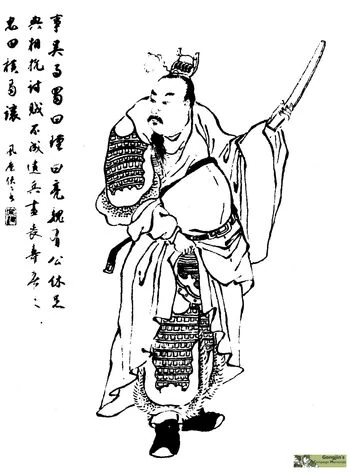
?–258 CE
Senior imperial generalstatesmanleader of the Third Shouchun RebellionMinister of Works (*Sikong*)
Zhuge Dan
诸葛诞
Zhuge Dan, courtesy name Gongxiu, a native of Yangdu in Langya Commandery (modern Yinan, Shandong Province), was an eminent military commander and senior statesman of Cao Wei during the Three Kingdoms period. Descended from the Western Han Director of Retainers Zhuge Feng, he was of the same illustrious lineage as Zhuge Liang of Shu Han and Zhuge Jin of Eastern Wu, celebrated in contemporary adage: "Shu gained the Dragon, Wu…
?–258 CEThree Kingdoms period
PROFILE
Zhuge Dan, courtesy name Gongxiu, a native of Yangdu in Langya Commandery (modern Yinan, Shandong Province), was an eminent military commander and senior statesman of Cao Wei during the Three Kingdoms period. Descended from the Western Han Director of Retainers Zhuge Feng, he was of the same illustrious lineage as Zhuge Liang of Shu Han and Zhuge Jin of Eastern Wu, celebrated in contemporary adage: "Shu gained the Dragon, Wu gained the Tiger, and Wei gained the Hound" (the term "hound" historically designating a fierce martial defender of the state). Zhuge Dan commenced his imperial career as Gentleman of the Masters of Writing and Magistrate of Xingyang before serving as Gentleman of Personnel, acclaimed for administrative transparency. His close intellectual fellowship with prominent figures such as Xiahou Xuan and Deng Yang earned widespread renown in Luoyang, but provoked the ire of Emperor Ming of Wei, who dismissed him in a campaign against "superficiality." Reinstated following the emperor's death, he successively governed Yangzhou, suppressed the conspiracy of Wang Ling, and weathered defeat at the Battle of Dongxing. In 255 CE, he executed envoys sent by rebels Guanqiu Jian and Wen Qin, leading forces to recapture Shouchun and winning promotion to Grand General Campaigning against the East and Marquis of Gaoping. Following the execution of Xiahou Xuan and the consolidation of autocratic power by Sima Zhao, Zhuge Dan grew terrified for his personal survival. He expended his wealth in Huainan, cultivating thousands of sworn retainers. In 257 CE, when Sima Zhao summoned him to Luoyang as Minister of Works, Zhuge Dan executed Yangzhou Inspector Yue Lin, dispatched his young son Zhuge Jing as a hostage to Eastern Wu for reinforcements, and launched a massive rebellion of over one hundred thousand troops at Shouchun. Sima Zhao personally surrounded Shouchun with 260,000 soldiers for ten agonizing months. As supplies vanished and civil starvation ensued, Zhuge Dan killed Wen Qin amidst internal discord. Sima Zhao breached the fortress, and Zhuge Dan was slain while attempting a mounted breakout, leading to the extermination of his lineage. Upon the fortress's fall, hundreds of his personal guards refused imperial pardons, declaring in unison: "To die for Lord Zhuge is without regret!" Their collective martyrdom was likened by contemporary historians to the ancient legend of Tian Heng.
- Courtesy / Art Name
- Gongxiu
- Era
- the Three Kingdoms period (Cao Wei,?—258 CE)
- Dynasty
- the Three Kingdoms period (Cao Wei,?—258 CE)
- Identity
- Senior imperial general, statesman, leader of the Third Shouchun Rebellion, Minister of Works (Sikong)
- Date of Birth
- Not recorded in historical sources
- Date of Death
- April 10 258
- Ethnicity
- Huaxia (Han Chinese)
- Ancestral Home
- Yangdu County, Langya Commandery (Modern Yinan County, Linyi, Shandong)
- Place of Birth
- Yangdu County, Langya Commandery, Xuzhou (present-day Yinan County, Shandong)
- Place of Death
- Unknown
- Lifespan
- Unknown
- Major Offices
- Gentleman of the Department of State Affairs, Magistrate of Xingyang, Gentleman of the Ministry of Personnel, Palace Assistant Censor-in-Chief, Minister, Prefect of Yangzhou, General Who Guards the East, General Who Guards the South, Grand General Who Guards the East, Grand General Who Conquers the East, Minister of Works
- Peerage
- Marquis of the Pavilion of Shanyang; Marquis of Gaoping
- Major Achievements
- He served successively as Gentleman of the Department of State Affairs, Palace Assistant Censor-in-Chief and Prefect of Yangzhou; dismissed by Emperor Ming of Wei in the case of the frivolous notables, he was restored in the Zhengshi era. After the Gaopingling coup he remained loyal to the court, foiled the plot of Wang Ling, and served as General Who Guards the East and General Who Guards the South. In the second year of Zhengyuan he killed the envoy of Guanqiu Jian and put down the second Huainan rebellion, being enfeoffed as Marquis of Gaoping and made Grand General Who Conquers the East.
LIFE TIMELINE
County magistrate of Xingyang | He went out from the post of gentleman of the Secretariat to be magistrate of Xingyang County, and when he and the deputy director Du Ji were shipwrecked on a trial voyage on the Tao River he called to the rescuers to save Du Ji first.
Heroic Sacrifice | Served as Gentleman of the Masters of Writing; shipwrecked during a naval trial on the Tao River with Du Ji, he refused rescue until Du Ji was saved, earning imperial admiration.
Entered the Ministry of Personnel | He entered the court as a gentleman of the Ministry of Personnel and was promoted to Censor-in-Chief and Director of the Secretariat, associating with Xiahou Xuan, Deng Yang and others.
Ministry of Personnel | Promoted to Gentleman of Personnel; mandated that all private solicitations be debated openly before appointments, purifying bureaucratic practices.
Dismissal for ostentation | Because Emperor Ming of Wei detested men of showy reputation, he was dismissed from office together with Deng Yang and others.
The Superficiality Purge | Censured by Emperor Ming for ideological cliques alongside Xiahou Xuan and Deng Yang; stripped of ministerial rank and returned to private life.
Imperial Reinstatement | Restored to office following Cao Shuang's regency; appointed Vice Censor-in-Chief, Master of Writing, and subsequently Inspector of Yangzhou.
Restoration under Cao Shuang | With Cao Shuang in charge of government he was restored to office as Censor-in-Chief and Director of the Secretariat, sent out as governor of Yangzhou and granted the title of General of Illustrious Martiality.
Defense of Huainan | Supported Sima Yi in suppressing Wang Ling's insurrection; promoted to General Pacifying the East and created Marquis of Shanyang Pavilion.
Defeat at Dongxing | Commanded seventy thousand soldiers attacking Eastern Wu's Dongxing Dam; ambushed in heavy snow by Wu general Ding Feng, resulting in administrative transfer to General Pacifying the South.
In 252 CE | In 252 CE, following the death of Sun Quan, Regent Zhuge Ke of Eastern Wu constructed the Dongxing Dam, erecting twin fortresses across the Yangtze to threaten Wei outposts.
Suppressing Huainan Insurgency | Executed emissaries sent by rebels Guanqiu Jian and Wen Qin; reclaimed Shouchun and was elevated to Marquis of Gaoping and Grand General Campaigning against the East.
The Second Huainan Rebellion and the Defeat of Liu Zan In 255 CE | ### The Second Huainan Rebellion and the Defeat of Liu Zan In 255 CE, Guanqiu Jian and Yangzhou Inspector Wen Qin rose in rebellion at Shouchun, issuing a fiery manifesto denouncing Sima Shi for deposing Emperor Cao Fang.
Confrontation with Jia Chong | Severely rebuked Sima Zhao's confidant Jia Chong over dynastic usurpation, secretly raising thousands of sworn retainers in Huainan for personal survival.
In the winter of 256 CE | In the winter of 256 CE, Zhuge Dan petitioned the court for an additional hundred thousand troops and permission to build riverine fortresses along the Huai, citing threat of Eastern Wu invasions.
The Shouchun Insurrection | Defied imperial appointment as Minister of Works, executed Inspector Yue Lin, sent his son Zhuge Jing to Wu as hostage, and revolted with over one hundred thousand troops.
In 257 CE | In 257 CE, when Sima Zhao summoned him to Luoyang as Minister of Works, Zhuge Dan executed Yangzhou Inspector Yue Lin, dispatched his young son Zhuge Jing as a hostage to Eastern Wu for reinforcements, and launched a massive rebellion of over one hundred thousand troops at Shouchun.
Siege, Defeat, and Martyrdom | Besieged in Shouchun for ten months until famine forced defeat; killed while breaking out; hundreds of captured retainers chose death over surrender, singing his praises.
In the first month of 258 CE | In the first month of 258 CE, as starvation forced survivors to resort to cannibalism, Zhuge Dan, Wen Qin, and Tang Zi manufactured siege ladders and assault towers, assaulting the southern circumvallation day and night for six desperate days.
The Fall of Shouchun and the Unmatched Martyrdom of the Retainers On April 10 | ### The Fall of Shouchun and the Unmatched Martyrdom of the Retainers On April 10, 258 CE (the 20th day of the second month), Sima Zhao ordered a simultaneous four-sided assault.
BIOGRAPHY
Biography
Ancestral Lineage and the Heroic Sacrifice on the Tao River Zhuge Dan traced his descent from Zhuge Feng, an incorruptible Director of Retainers during the Western Han dynasty whose family hailed from Yangdu County in Langya Commandery. At the close of the Eastern Han, amidst widespread civil destruction, the Langya Zhuge lineage branched across China's warring tripartite powers. Zhuge Jin rose to become Grand General of Eastern Wu; Zhuge Liang guided the state of Shu Han as its revered Chancellor; and Zhuge Dan dedicated his career to the northern hegemony of Cao Wei. Contemporary observers marveled at the familial distribution of genius, commenting: "Shu gained the Dragon, Wu gained the Tiger, and Wei gained the Hound." In Han classical idiom, the appellation "hound" (gonggou) carried no derogatory connotation, but denoted a resolute, indefatigable military champion guarding the realm's frontiers. Zhuge Dan entered imperial administration as a Gentleman of the Masters of Writing (Shangshu Lang). During the Huangchu era of Cao Pi, Zhuge Dan accompanied Vice Director Du Ji to conduct trials on newly engineered naval transports upon the Tao River. In the midst of the trial, an unanticipated gale capsized the flagship, plunging both officials into the torrential waters. When imperial guards arrived in light skiffs to pull Zhuge Dan from the whirlpools, Zhuge Dan, facing mortal peril, pointed into the tempest and shouted: "Rescue Lord Du first!" Though Du Ji tragically drowned due to advanced age, Zhuge Dan was swept toward a downstream sandbank, where physicians miraculously revived him from near-fatal asphyxiation. His selfless courage and moral magnanimity instantly captivated the capital elite. ### Administrative Rigor and the Superficiality Purge Following his recovery, Zhuge Dan served as Magistrate of Xingyang, earning a reputation for unblemished probity. Summoned back to Luoyang as Gentleman of Personnel (Libu Lang), he revolutionized appointment conventions: whenever aristocrats or court magnates petitioned him privately on behalf of candidates, Zhuge Dan openly published their endorsements before implementing the postings. If the appointee subsequently proved incompetent, the sponsoring courtier was held publicly accountable during performance reviews. Consequently, bureaucratic favoritism vanished overnight, as courtiers feared public exposure and degradation. Zhuge Dan advanced to Vice Censor-in-Chief and Master of Writing. During this period, his intellectual brilliance and aristocratic demeanor allied him closely with prominent figures such as Xiahou Xuan, Deng Yang, Li Sheng, and Ding Mi. Young scholars across the capital formed aesthetic and philosophical societies, styling Xiahou Xuan's inner circle the "Four Astute Ones" (Si Cong) and Zhuge Dan's cohort the "Eight Articulate Ones" (Ba Da). This cultural ascendancy, however, alienated Emperor Ming (Cao Rui). An adherent of rigorous statutory governance, Emperor Ming abhorred philosophical cliques and mutual flattery among aristocratic youth. In 239 CE, the emperor launched an imperial purge against "superficiality" (fuhua), declaring that Zhuge Dan and Deng Yang pursued empty celebrity at the expense of substantive duty. Zhuge Dan and Xiahou Xuan were stripped of their offices and banished to private life in their homelands. ### Regional Command in Huainan and the Battle of Dongxing Emperor Ming passed away in late 239 CE, leaving the child-emperor Cao Fang under the joint regency of General-in-Chief Cao Shuang and Grand Commandant Sima Yi. When Cao Shuang assumed dominance, he restored his former literary companions to office. Zhuge Dan was reinstated as Vice Censor-in-Chief and Master of Writing. Recognizing the vulnerability of the southeastern frontier, Cao Shuang appointed Zhuge Dan Inspector of Yangzhou, granted him the rank of General Inspiring Martial Valor, and stationed him at Shouchun to command theHuainan front against Eastern Wu. In 249 CE, Sima Yi executed the Gaoping Tomb Coup, annihilating Cao Shuang, Deng Yang, and their lineages. Because Zhuge Dan was stationed on the frontier and had maintained professional neutrality, he avoided the purge. In 251 CE, Grand Commandant Wang Ling conspired in Shouchun to depose Cao Fang in favor of Cao Biao, Prince of Chu. Sima Yi marched rapidly to the frontier, forcing Wang Ling's suicide. Zhuge Dan remained steadfastly loyal to the central government; in recognition of his service, he was promoted to General Pacifying the East, granted imperial tallies, appointed Military Commander of Yangzhou, and enfeoffed as Marquis of Shanyang Pavilion. In 252 CE, following the death of Sun Quan, Regent Zhuge Ke of Eastern Wu constructed the Dongxing Dam, erecting twin fortresses across the Yangtze to threaten Wei outposts. Zhuge Dan proposed a three-pronged counteroffensive to the imperial court. Sima Shi, who had succeeded his father Sima Yi, accepted the concept and ordered Hu Zun and Zhuge Dan to lead seventy thousand soldiers against Dongxing. The campaign ended in disaster. As winter snow blanked the battleground, Wei forces indulged in wine inside their encampments. Wu commander Ding Feng launched a daring raid with three thousand shock troops, while Lü Ju and Liu Zan attacked the rear. Panicking in the snowstorm, tens of thousands of Wei soldiers rushed toward the pontoon bridges across the river; the collapsed bridges drowned thousands, including commanders Han Zong and Huan Jia. Returning to Luoyang, Sima Shi took personal responsibility for the defeat, declaring: "This was my failure for not listening to Gongxiu." While Sima Zhao was demoted as supervisor, Zhuge Dan was simply transferred to General Pacifying the South, swapping regional commands with Guanqiu Jian. ### The Second Huainan Rebellion and the Defeat of Liu Zan In 255 CE, Guanqiu Jian and Yangzhou Inspector Wen Qin rose in rebellion at Shouchun, issuing a fiery manifesto denouncing Sima Shi for deposing Emperor Cao Fang. Guanqiu Jian sent secret couriers to Zhuge Dan, hoping to enlist his cooperation. Zhuge Dan, who had long detested Wen Qin's volatility and recognized the immense military superiority of the Sima clan, executed Guanqiu Jian's envoys and publicized their treason across the empire. When Sima Shi led the imperial suppression force, Zhuge Dan commanded the vanguard from Yuzhou, seizing Shouchun as Guanqiu Jian fled. The civilian population of Shouchun, fearing mass slaughter, scattered into the wetlands. Zhuge Dan enforced strict military discipline, sheltered refugees, and restored agrarian life. When Eastern Wu Chancellor Sun Jun approached Shouchun with a relieving army of tens of thousands, he found the citadel already secured by Zhuge Dan and ordered a retreat. Zhuge Dan dispatched his subordinate Jiang Ban to pursue the retreating forces, ambushing and slaying the veteran Wu general Liu Zan, capturing imperial tallies and returning his head to the capital. For these monumental services, the court elevated Zhuge Dan to Marquis of Gaoping with an estate of 3,500 households, naming him Grand General Campaigning against the East (Zhengdong Da Jiangjun) and Commander of Yangzhou. ### Paranoia, Retainers, and the Rupture with Jia Chong Despite reaching the pinnacle of military command, Zhuge Dan lived in suffocating terror. His closest comrades, Xiahou Xuan and Deng Yang, had been exterminated; Grand Commandant Wang Ling and Grand General Guanqiu Jian had died in ruin at Shouchun. Observing Sima Zhao's total monopolization of dynastic power, Zhuge Dan felt certain that his regional command and historic ties to the Cao regime marked him as the next target for elimination. To secure his survival, Zhuge Dan embarked on extensive preparations. He emptied his regional treasuries, distributing coin and grain to the soldiers, reducing agrarian rents, and forgiving judicial offenses. Within a year, he recruited thousands of wandering swordsmen and fierce martial youths throughout the Huai-Yang valleys, forging them into dedicated sworn retainers (sishi). In the winter of 256 CE, Zhuge Dan petitioned the court for an additional hundred thousand troops and permission to build riverine fortresses along the Huai, citing threat of Eastern Wu invasions. Recognizing signs of disaffection, Sima Zhao dispatched his confidant Jia Chong on a tour of inspection. Over banquet wine in Shouchun, Jia Chong tested Zhuge Dan's intentions: "The eminent sages of Luoyang all agree that the mandate of Wei is exhausted, and desire that a virtuous successor accept the dynastic abdication. What is your view?" Zhuge Dan's face turned crimson with rage. Slamming his table, he roared: "Are you not the son of Jia Kui? Your family received boundless grace from the house of Wei! How dare you contemplate transferring the imperial altars to another? If trouble erupts in Luoyang, I will die for the state!" Jia Chong sat silent in shame. Upon returning to Luoyang, Jia Chong warned Sima Zhao: "Zhuge Dan's prestige in Yangzhou commands absolute devotion. If you summon him now, he will certainly rebel, but the conflict will be brief. If you leave him unsummoned, the catastrophe will soon outgrow your capacity to suppress it." ### The Shouchun Revolt and the Meteorological Failure In May 257 CE, the court issued an imperial edict promoting Zhuge Dan to the exalted post of Minister of Works (Sikong), commanding him to immediately transfer his provincial commands and report to the capital. Recognizing this as a fatal snare, Zhuge Dan resolved to strike first. He mobilized his retainers, ambushed and executed Yangzhou Inspector Yue Lin in his yamen, and seized regional arsenals. He summoned more than one hundred thousand provincial troops and agricultural colonists across Huai-Yang, while securing forty to fifty thousand newly enlisted auxiliary warriors, sealing the massive city of Shouchun with enough stored grain to endure a twelve-month siege. Simultaneously, Zhuge Dan sent his chief clerk Wu Gang accompanied by his youngest son Zhuge Jing as a hostage to Eastern Wu, petitioning for immediate military intervention. Eastern Wu's dictator Sun Chen embraced the alliance, investing Zhuge Dan with imperial titles as Grand Defender of the Left, Grand Minister over the Masses, and Prince of Shouchun. Sun Chen dispatched generals Wen Qin, Quan Yi, Quan Duan, and Tang Zi leading thirty thousand veteran Wu troops. Before imperial encirclements closed, Wen Qin and the southern armies slipped through the mountainous approaches and entered Shouchun. When news of the insurrection reached Luoyang, Sima Zhao mobilized 260,000 soldiers, coercing Emperor Cao Mao and Empress Dowager Guo to accompany the expedition. Establishing headquarters at Xiangxian, Sima Zhao ordered Wang Ji and Chen Qian to construct double lines of earthworks, circumvallating Shouchun with deep moats and spiked palisades. Within the citadel, Zhuge Dan initially laughed with confidence. The geography of Shouchun was notoriously prone to summer inundations, with the Huai River flooding the surrounding plains annually. Zhuge Dan anticipated that Sima Zhao's encampments in the lowlands would be obliterated by seasonal downpours, leaving the imperial forces stranded in mud and vulnerable to devastating counterattacks. Yet nature betrayed him: from the commencement of the siege in June 257 CE until the following spring, eastern China experienced an unprecedented drought. Not a single drop of rain fell, the Huai River receded to historic lows, and Zhuge Dan's primary strategic calculation dissolved into dust. ### Cannibalism, Discord, and the Execution of Wen Qin Outside the walls, Eastern Wu relief armies under Zhu Yi suffered crushing ambushes along the Lijiang River, losing their entire logistical train to imperial cavalry under Shi Bao and Zhou Tai. Enraged by the stalemate, Sun Chen executed Zhu Yi and retreated southward, abandoning Shouchun to its fate. By early 258 CE, food within the city was utterly exhausted. Zhuge Dan's senior staff officers Jiang Ban and Jiao Yi urged him to concentrate his entire elite strike force on a single point to break the outer siege works. Zhuge Dan rejected their proposal with venom, suspecting them of treason; terrified, both commanders scaled the walls by night and defected to Sima Zhao. Shortly thereafter, Sima Zhao executed a brilliant forgery strategy masterminded by Zhong Hui: letters purportedly from the Wu court induced generals Quan Yi and Quan Duan to surrender with thousands of southern troops. In the first month of 258 CE, as starvation forced survivors to resort to cannibalism, Zhuge Dan, Wen Qin, and Tang Zi manufactured siege ladders and assault towers, assaulting the southern circumvallation day and night for six desperate days. Imperial forces hurled massive boulders from catapults and ignited the assault engines with incendiary arrows, littering the moats with corpses and forcing the survivors back into the city. With supplies gone, Wen Qin proposed an emergency measure: "The food is finished. We must expel all northern-born soldiers outside the walls to fend for themselves, preserving the remaining rice exclusively for our southern Wu troops to continue the defense." Zhuge Dan, himself a northern magistrate whose core following was drawn from Huai-Yang, was incandescent with fury. Their ancient mutual mistrust exploded; convinced that Wen Qin intended to betray him to the Wu court, Zhuge Dan drew his sword and executed Wen Qin on the spot. Wen Qin's sons, the celebrated champions Wen Yang and Wen Hu, were stationed in the citadel's secondary enclosure. Hearing of their father's decapitation, they attempted to lead an uprising, but their starving troops refused to move. Desperate, Wen Yang and Wen Hu leaped down the battlements and surrendered to Sima Zhao. Sima Zhao granted them clemency, creating both men secondary marquis and commanding them to circle the walls on horseback, shouting: "If the sons of Wen Qin are spared, why should any soldier fear death?" Hearing this, the final psychological resolve of Shouchun's defenders collapsed. ### The Fall of Shouchun and the Unmatched Martyrdom of the Retainers On April 10, 258 CE (the 20th day of the second month), Sima Zhao ordered a simultaneous four-sided assault. As imperial war drums shook the heavens, soldiers scaled the battlements with scaling ladders. The emaciated defenders offered virtually no resistance, casting down their weapons in exhaustion. In utter panic, Zhuge Dan mounted his horse and attempted to break out through a small postern gate accompanied by a handful of personal horsemen. Hu Fen, Sima Zhao's vanguard commander, had prepared an ambush outside the gate. In the ensuing clash, Zhuge Dan was impaled by a spear and decapitated. His severed head was paraded before the army, and his three generations of kin in Luoyang and elsewhere were exterminated, his son Zhuge Jing surviving only because he remained in Eastern Wu. Following the citadel's surrender, several hundred personal retainers who had sworn allegiance to Zhuge Dan were captured alive. Sima Zhao commanded that they be bound and arrayed in a single continuous line outside the fortress. The imperial executioner dragged the first man forward, decapitated him, and asked the second: "Surrender, and your life will be spared! Will you submit?" The retainer held his head high and proclaimed with defiance: "To die for Lord Zhuge is without regret!" The executioner's blade fell. The magistrate asked the third, who smiled serenely and repeated: "To die for Lord Zhuge is without regret!" From the first warrior to the last, down the entire row of hundreds of condemned men, not a single individual wavered, knelt, or pleaded for mercy. Each man walked unflinchingly to the block, offering his throat to the blade while singing praises to their fallen lord. Historian Gan Bao, recording the event in his Annals of Jin, wrote with profound emotion: "Hundreds of men stood hand-in-hand in ranks. With each man executed, the next was offered surrender; yet none wavered until all were slain. Contemporaries likened their deed to the five hundred followers of Tian Heng." In an era dominated by cynicism, betrayal, and dynastic usurpation, Zhuge Dan's tragedy closed with an astonishing testament to human fidelity, inscribing a solemn monument of honor in the annals of Chinese history.
Major Activities
Selfless Rescue on the Tao River During a naval disaster on the Tao River, Zhuge Dan surrendered his personal chance of survival to prioritize the rescue of senior minister Du Ji, exemplifying aristocratic virtue and establishing his reputation for supreme rectitude. ### Reforming the Selection of Imperial Officials Serving as Gentleman of Personnel, he instituted the practice of publicly broadcasting private recommendations, ensuring that nominations were scrutinized by collective deliberation and eradicating corruption within the civil bureaucracy. ### Defense of Huainan and the Slaying of Liu Zan Long stationed on the southeastern front, he pacified refugees after Guanqiu Jian's rebellion, demonstrated acute operational timing, and pursued and executed Eastern Wu's decorated veteran Liu Zan. ### The Third Shouchun Insurrection against the Sima Hegemony Faced with the systematic eradication of Cao Wei royalists, Zhuge Dan mobilized over one hundred thousand troops in Shouchun, defying Sima Zhao's overwhelming forces in the largest military rebellion of the late Three Kingdoms period. ### Inspiring Unwavering Devotion to the Death Through deep personal magnetism and generosity, he inspired an unmatched bond of loyalty among his retainers. Following the citadel's fall, hundreds of captured warriors faced the block without flinching, choosing death over surrender in an echo of Tian Heng's ancient martyrs.
Personal Relations
- | Category | Name | Relationship Details |
- | :--- | :--- | :--- |
- | Paternal Cousin | Zhuge Jin | Eldest cousin; Grand General of Eastern Wu and Marquis of Wanling, revered for monumental magnanimity |
- | Paternal Cousin | Zhuge Liang | Celebrated cousin; Chancellor of Shu Han and Marquis of Wuxiang, revered across China as a strategic sage |
- | Surviving Heir | Zhuge Jing | Youngest son; sent to Wu as hostage, survived the clan purge, and refused ever to look eastward toward the Jin court out of filial piety |
- | Close Companion | Xiahou Xuan | Renowned Wei scholar and companion of the "Four Astute Ones"; his brutal execution inspired Zhuge Dan's rebellion |
- | Close Companion | Deng Yang | Intimate friend and Cao Shuang partisan; executed in the Gaoping Tomb Purge |
- | Imperial Nemesis | Sima Zhao | Autocratic regent of Wei (later Emperor Wen of Jin); personally commanded 260,000 troops to annihilate Zhuge Dan and his clan |
- | Imperial Provocateur | Jia Chong | Sima Zhao's chief strategist; provoked Zhuge Dan in Shouchun and counseled his preemptive imperial summons |
- | Slain Adversary | Yue Lin | Inspector of Yangzhou and son of veteran Yue Jin; executed by Zhuge Dan during the initial outbreak of the revolt |
- | Volatile Ally | Wen Qin | Wei general turned Wu commander; reinforced Shouchun but was slain by Zhuge Dan during terminal internal disputes |
- | Surviving Defector | Wen Yang | Legendary warrior son of Wen Qin; defected to Sima Zhao after his father's murder, collapsing Shouchun's defense |
- | Sworn Retainers | The Hundreds of Martyrs | Devoted retainers who refused pardons upon Shouchun's fall, unanimously crying "To die for Lord Zhuge is without regret!" |
Historical Assessment
- Chen Shou, Records of the Three Kingdoms: "Zhuge Dan was severe, resolute, and imposing; Zhong Hui was acute and master of statecraft. Both attained distinction and exalted office, yet their ambitions outstripped prudence, bringing destruction upon their clans. How lamentable was their delusion!"
- Gan Bao, Annals of Jin: "Hundreds stood hand-in-hand in ranks; with each man executed, the next was offered surrender, yet none wavered until all were slain. Contemporaries likened them to the men of Tian Heng."
- Sun Sheng, Spring and Autumn Annals of Wei: "Shu gained the Dragon, Wu gained the Tiger, and Wei gained the Hound. In Wei, Dan was equal in fame to Xiahou Xuan; in Wu, the court deferred to Jin's magnanimity. Here, 'hound' refers to a fierce warrior of state, honoring his unyielding valor."
- Wang Shen, Book of Wei: "Dan was lavish in gifts; even when men committed capital crimes, he mitigated the law to preserve them. Thus, he was able to extract men's devotion unto death."
- Jia Chong: "In Yangzhou, Zhuge Dan's military reputation is long established; he commands the absolute devotion of men unto death."
- Zheng Qiao, Comprehensive Treatises: "The Jin histories sided with Jin against Wei, styling all who remained loyal to Wei as rebels. Wang Ling, Zhuge Dan, and Guanqiu Jian have carried their wrongful dishonor into the yellow earth."
- Wang Fuzhi, Readings in the Comprehensive Mirror: "Zhuge Dan rebelled at Shouchun, borrowing foreign arms to attack usurpers. Yet that hundreds of his retainers chose the executioner's blade rather than surrender, proclaiming to the end that dying for Lord Zhuge held no regret, proves how profoundly he moved the hearts of men."
FIGURES ASSOCIATED WITH THIS DYNASTY
Bibliography
- Chen Shou, Records of the Three Kingdoms, Volume 28, "Wei: Biographies of Wang, Guanqiu, Zhuge, Deng, and Zhong"
- Pei Songzhi, Annotations to the Records of the Three Kingdoms, Volume 28
- Fang Xuanling, Book of Jin, Volume 2, "Chronicles of Emperor Wen"
- Sima Guang, Comprehensive Mirror in Aid of Governance, Volume 77, "Wei Records IX"
- Gan Bao, Annals of Jin