Birth into Patrician House
Born into the preeminent Lu clan of Wu Commandery; orphaned young and raised his clan.
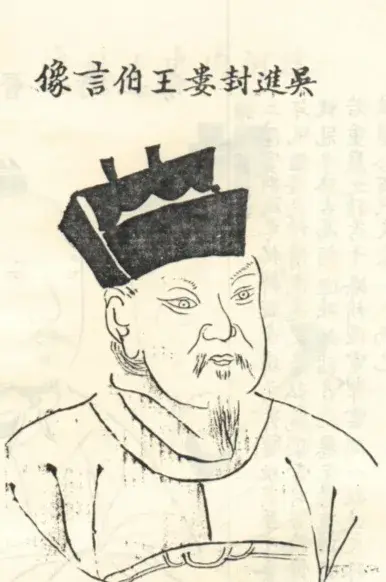
183 CE–245 CE
陆逊
Lu Xun (183–245 CE), original name Lu Yi, courtesy name Boyan, was a native of Wu County in Wu Commandery (modern Suzhou, Jiangsu). He was an illustrious military strategist, statesman, Chancellor, and supreme commander of Eastern Wu during the Three Kingdoms period, celebrated as one of the "Four Grand Viceroys of Eastern Wu" alongside Zhou Yu, Lu Su, and Lv Meng. Hailing from the Lu clan, the foremost among the aristocratic…
Lu Xun (183–245 CE), original name Lu Yi, courtesy name Boyan, was a native of Wu County in Wu Commandery (modern Suzhou, Jiangsu). He was an illustrious military strategist, statesman, Chancellor, and supreme commander of Eastern Wu during the Three Kingdoms period, celebrated as one of the "Four Grand Viceroys of Eastern Wu" alongside Zhou Yu, Lu Su, and Lv Meng. Hailing from the Lu clan, the foremost among the aristocratic lineages of Jiangnan, he rose to become Chancellor, Governor of Jing Province, and Marquis of Jiangling, posthumously honored as Marquis Zhao. Entering Sun Quan's administration in his early twenties, Lu Xun distinguished himself by pacifying the Shanyue tribes and promoting agricultural reclamation, prompting Sun Quan to give him his niece (daughter of Sun Ce) in marriage. In 219 CE, Lu Xun coordinated with Lv Meng, deploying flattering correspondence to lower Guan Yu's vigilance before executing the surprise invasion of Jing Province, severing Guan Yu's retreat into Sichuan. In 222 CE, when Liu Bei launched a massive imperial invasion to avenge Guan Yu, Lu Xun was appointed Grand Commander. Defying impatient senior generals, he held his defensive lines for months to exhaust the invaders before unleashing a devastating fire attack that incinerated over forty enemy camps at the Battle of Yiling, achieving one of the greatest defensive counteroffensives in Chinese military history. In 228 CE at the Battle of Shiting, Lu Xun crushed a hundred-thousand-strong invasion led by Cao Wei Grand Marshal Cao Xiu. Elevated to Chancellor in 244 CE, he governed with civic benevolence. However, in his final years, he was dragged into the bitter "Crown Prince Succession Struggle" between Sun He and Sun Ba. Adhering strictly to Confucian primogeniture, he submitted multiple memorials defending the legitimate heir, drawing Sun Quan's intense suspicion and severe reprimands. Lu Xun died in sorrow in 245 CE at sixty-two years of age. Revering his military genius and civic devotion, later generations honored him as the ultimate guardian of Eastern Wu.
Born into the preeminent Lu clan of Wu Commandery; orphaned young and raised his clan.
Entered Sun Quan's headquarters at twenty-one; served as Military Agricultural Commandant of Haichang.
Subdued regional brigands and Shanyue mountain tribes, recruiting thousands of seasoned troops and marrying Sun Ce's daughter.
Succeeded Lv Meng at Lukou, dispatching deferential letters to deceive Guan Yu before severing his retreat into Shu.
Appointed Grand Commander; deployed fire attacks to incinerate Liu Bei's camps, crushing the Shu Han invasion force.
Encircled and crushed Cao Wei Grand Marshal Cao Xiu at Shiting, capturing ten thousand enemy soldiers and baggage trains.
Elevated to Senior General-in-Chief and Right Protector-General, stationed at Wuchang to assist Crown Prince Sun Deng.
Succeeded Gu Yong as Chancellor of Eastern Wu, managing all executive and military state affairs.
Defended Crown Prince Sun He during the royal succession dispute; died in anguish following imperial reprimands (conferred the posthumous title Marquis Zhao by Emperor Sun Xiu in 258 CE).
Lu Xun was born into the Lu clan of Wu Commandery, the most prestigious aristocratic house of southern China. His grandfather Lu Yu served as Eastern Han Commandant of the City Gate, while his father Lu Jun was Commandant of Jiujiang. Losing his father during childhood, Lu Xun was raised by his grand-uncle Lu Kang, the Administrator of Lujiang. When the warlord Yuan Shu besieged Lujiang, Lu Kang sent the twelve-year-old Lu Xun back to Wu Commandery with the clan dependents. Despite his youth, Lu Xun shouldered the domestic management of the household, displaying exceptional maturity, filial discipline, and classical erudition.
In 203 CE, at twenty-one years of age, Lu Xun joined Sun Quan's administration, serving as a secretary in the East and West Bureaus and later as Military Agricultural Commandant of Haichang. When severe droughts struck the region, Lu Xun opened government granaries to feed starving refugees, introduced sophisticated irrigation projects, and encouraged agricultural cultivation. When fierce Shanyue tribes raided neighboring districts, Lu Xun submitted a memorial advocating domestic pacification: "Amidst the contention of regional warlords, we must eradicate internal perils to replenish our armies." Personally leading expeditions into rugged highlands, Lu Xun employed military pressure combined with economic rehabilitation, pacifying rebellious clans and enlisting thousands of sturdy mountain warriors into the army. Impressed by his administrative and military talents, Sun Quan commissioned him Colonel Who Establishes Awe and gave him the daughter of his late elder brother, Sun Ce, in marriage, inducting him into the royal circle.
In 219 CE, the Shu Han general Guan Yu launched his northern campaign against Xiangyang and Fancheng, capturing Yu Jin's seven legions and terrifying the northern court. Eastern Wu Grand Commander Lv Meng, secretly plotting to reclaim Jing Province, feigned serious illness and retired to Jianye to disarm Guan Yu's suspicions. Meeting Sun Quan at Wuhu, Lv Meng recommended the unheralded Lu Xun to take his place at Lukou, praising his deep vision and discretion.
Upon assuming command, Lu Xun analyzed Guan Yu's haughty psychology. He immediately penned a deferential missive to Guan Yu, lavishing praise on his northern victories, comparing him to the legendary generals Han Xin and Bai Qi, and presenting himself as a timid scholar who sought only protection under Guan Yu's shadow. Deceived by the letter's flattering tone, Guan Yu concluded that Eastern Wu posed no military threat. He ordered the bulk of his southern garrison troops stationed at Jiangling and Gong'an to march north to reinforce the siege of Fancheng.
The moment the river defenses were depleted, Lv Meng and Lu Xun executed their covert amphibious invasion. While Lv Meng conducted the "white-robed crossing" to capture Jiangling, Lu Xun commanded an auxiliary wing that advanced swiftly up the Yangtze, capturing Yidu, Zigui, and Zhijiang, seizing the strategic mountain defiles of the Three Gorges and completely cutting off Guan Yu's line of retreat into Sichuan. Lu Xun pacified local chieftains along the river, capturing thousands of enemy troops and securing the western frontier. Sun Quan rewarded his service by appointing him Right Division Commander, General Who Pacifies the West, and ennobling him as Marquis of Lou.
In 222 CE, having proclaimed himself Emperor of Shu Han, Liu Bei mobilized the full military might of his empire to launch a punitive eastern campaign to avenge Guan Yu and recover Jing Province. Sweeping through the gorges, Shu forces occupied Zigui and advanced to Yiling, establishing an unbroken line of fortified encampments stretching hundreds of li along the southern bank of the Yangtze. Terrified by the ferocity of the invasion, Eastern Wu's veteran commanders clamored for an immediate pitched battle. In this supreme crisis, Sun Quan elevated the thirty-nine-year-old Lu Xun to Grand Commander with imperial staff, committing fifty thousand elite troops to his authority.
Recognizing that Liu Bei's initial momentum was overwhelming and that the Shu army occupied impregnable mountain ridges, Lu Xun ordered his forces to construct deep earthen ramparts and avoid engagement at all costs. Veteran generals who had served three reigns, including Han Dang and Zhou Tai, openly resented the young scholar-commander, defying his defensive orders. Lu Xun gripped his sword hilt and addressed the council sternly: "I am indeed a scholar, yet I bear the supreme commission of our sovereign! Military discipline is as unyielding as a mountain; whoever defies orders shall face the martial blade without mercy!" Silenced by his iron resolve, the officers returned to their posts.
Lu Xun held his fortifications for over seven months, absorbing the assault from autumn through the scorching summer. Exhausted by heat and stalemate, Liu Bei moved his camps into dense forests and shaded ravines along the river. Seeing that enemy lines were extended and vulnerable to fire, Lu Xun launched his counteroffensive. He ordered each soldier to carry a bundle of dry thatch. Under cover of night, Wu infantry launched a coordinated incendiary raid, setting fire to the wooden stockades from the windward side.
Whipped by river gales, fire swept through the Shu encampments. Blinded by smoke and panic, the Shu host descended into total collapse. Lu Xun directed his naval and infantry detachments to encircle the retreating columns, slaying key enemy commanders including Zhang Nan, Feng Xi, and tribal king Shamoke. Over forty fortified camps were reduced to ash, tens of thousands of Shu soldiers were slain or captured, and military equipment clogged the Yangtze for miles. Liu Bei barely escaped with a hundred horsemen to Baidicheng, lamenting in grief: "That I should suffer humiliation at the hands of Lu Xun—is this not the will of Heaven!" The victory at Yiling decisively halted Shu Han's eastern expansion and permanently defined the geopolitical boundaries of the Three Kingdoms.
In 228 CE, Cao Wei Grand Marshal Cao Xiu fell into a trap engineered by Zhou Fang, the Administrator of Poyang, who feigned defection. Cao Xiu advanced into Wan County with one hundred thousand elite cavalry and infantry. Sun Quan appointed Lu Xun Grand Commander, coordinating three converging armies to spring an ambush at Shiting. In the ensuing clash, Lu Xun commanded the central army, launching a ferocious frontal charge while flanking columns severed the enemy retreat. The Wei army collapsed in panic, losing over ten thousand dead and captured, along with ten thousand transport carts and immense quantities of armaments. Cao Xiu escaped with difficulty, dying shortly thereafter of carbuncles brought on by humiliation.
In 229 CE, Sun Quan assumed the imperial title, creating Lu Xun Marquis of Jiangling and elevating him to Senior General-in-Chief and Right Protector-General, stationing him at Wuchang to tutor Crown Prince Sun Deng and oversee civil administration. In 244 CE, following the death of Gu Yong, Sun Quan appointed Lu Xun Chancellor, uniting supreme civil and military authority in his person.
However, in his final years, Lu Xun was ensnared in the destructive "Crown Prince Succession Struggle" between Crown Prince Sun He and the Prince of Lu, Sun Ba. Upholding Confucian ritual orthodoxy, Lu Xun adamantly insisted on the distinction between the legitimate heir and concubine-born princes, repeatedly submitting memorials urging Sun Quan to protect Sun He and dismiss Sun Ba to avert dynastic civil war. His steadfast opposition infuriated the increasingly paranoid emperor. Goaded by slanders from Princess Sun Luban and court partisans, Sun Quan dispatched imperial envoys to Wuchang to deliver blistering reprimands, while exiling Lu Xun's nephews Gu Tan and Gu Cheng to the southern border.
Crushed by imperial distrust and the sight of factional malice tearing the state apart, the loyal chancellor fell gravely ill. In February 245 CE, Lu Xun passed away in grief at sixty-two years of age. When imperial executors inventoried his estate, they found no accumulated wealth or luxury, but only rooms filled with military texts and classical scrolls. In 258 CE, Emperor Sun Xiu ascended the throne and issued an imperial edict rehabilitating Lu Xun, conferring upon him the posthumous title Marquis Zhao ("Marquis of Illustrious Virtue"), commemorating him as an unbending pillar of the southern state.
In 219 CE, Lu Xun composed masterful psychological letters that disarmed Guan Yu's suspicions, enabling the combined Wu offensive that reclaimed Jing Province and cut off Guan Yu's retreat, securing the vital upper Yangtze basin for Eastern Wu.
Confronting Liu Bei's vast invasion in 222 CE, Lu Xun exercised extraordinary strategic patience, enduring months of siege before deploying synchronized fire attacks that incinerated forty enemy camps and annihilated the Shu expeditionary army.
In 228 CE, Lu Xun coordinated a multi-pronged encirclement that shattered the hundred-thousand-strong host of Cao Wei Grand Marshal Cao Xiu at Shiting, neutralizing northern aggression for over a decade.
As Chancellor and Senior General-in-Chief, Lu Xun governed with civic integrity, promoting agriculture and education, while fearlessly confronting autocratic fury to uphold Confucian constitutional legitimacy during the royal succession crisis.
FIGURES ASSOCIATED WITH THIS DYNASTY