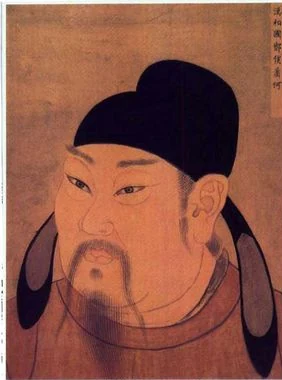
Biography
Family Background and Early Life
Xiao He was from Fengyi in Pei County and was said to descend from the ancient state of Xiao. He was knowledgeable about laws and regulations and was regarded as fair in applying them, avoiding unjust harm, which led to his service as senior clerk in the Pei county office. Within the Qin local administration, this was an important clerical post handling documents, litigation, and related matters. Xiao He and Cao Can, an official in the Pei prison administration, were both influential county functionaries with strong local reputations.
Before Liu Bang rose to power, Xiao He repeatedly used his position to protect him. After Liu Bang became a pavilion chief, Xiao He continued to advise and assist him. On one occasion Liu Bang traveled to Xianyang on official labor-service business. Other colleagues gave him three hundred cash for expenses, whereas Xiao He gave five hundred; the extra two hundred later became remembered as evidence of their early relationship. Xiao He's administrative skill also drew attention from a Qin supervising censor, who found that assignments entrusted to him were handled efficiently. He was promoted to an administrative post in Sishui Commandery and ranked first in the performance assessment. The censor wanted to recommend him for service at the central court, but Xiao He repeatedly declined and remained in Pei.
When Lü Gong moved to Pei County to escape an enemy and became friendly with the county magistrate, the local elite and officials came to congratulate him. Xiao He was responsible for receiving gifts and stipulated that those contributing less than one thousand cash would sit below the hall. Liu Bang submitted a visiting card claiming a gift of ten thousand cash even though he had brought nothing. Lü Gong was astonished and personally came to the entrance to welcome him and seat him in the hall. Xiao He warned that “Liu Ji always speaks grandly but seldom accomplishes what he says.” Lü Gong, believing Liu Bang's appearance extraordinary, nevertheless insisted on marrying his daughter Lü Zhi to him. Xiao He's remark later became part of the story of Liu Bang's rise.
When Liu Bang was ordered to escort laborers to Mount Li to work on the First Emperor's mausoleum, many fled along the way. Liu Bang eventually released the remaining laborers west of Fengyi and disappeared into the marshes and mountains around Mang and Dang with a small group of followers. Xiao He did not accompany him, but as an influential Pei official he continued to pay attention to Liu Bang's situation.
Uprising against Qin and Campaigning with Liu Bang
In the autumn of 209 BCE, the first year of Qin Er Shi, Chen Sheng and Wu Guang rebelled at Dazexiang, and people in commanderies and counties across the empire began killing local officials and rising in response. The Pei county magistrate, alarmed by the situation, also considered joining the rebellion. Xiao He and Cao Can advised him that, as a Qin official, he might not be able to command the trust of the local men if he rebelled openly, so he should summon fugitives from outside the county and use several hundred armed men to compel support. The magistrate therefore sent Fan Kuai to summon Liu Bang.
When Liu Bang returned with several hundred followers, however, the magistrate changed his mind, closed the gates, and considered killing Xiao He and Cao Can. The two climbed over the city wall and joined Liu Bang. After the elders of Pei killed the magistrate and opened the city, they intended to make Liu Bang county magistrate. Liu Bang declined, and Xiao He and Cao Can, as civil officials with families and positions to lose, were also reluctant to assume open leadership for fear that failure would bring extermination of their households. After repeated refusals, Liu Bang adopted the old Chu title “Duke of Pei,” and Xiao He became assistant magistrate, coordinating government affairs.
Xiao He followed Liu Bang in attacks on Huling, Fangyu, and other counties and helped secure the surrender of Ping, an official of Sishui. After Liu Bang suffered a setback at Fengyi, he and Xiao He, Cao Can, Liu Jiao, and more than one hundred cavalry joined Xiang Liang, with whom they supported King Huai of Chu. Liu Bang was later ordered to campaign west, with Xiao He accompanying him. In the tenth lunar month of 207 BCE, Liu Bang entered Xianyang and King Ziying of Qin surrendered.
After entering Xianyang, the commanders rushed toward storehouses of gold, silk, and valuables. Xiao He instead first entered the Qin chancellery and censorate and secured the legal statutes, maps, registers, and administrative documents. These records allowed Liu Bang to understand strategic passes, population figures, the relative strength of different regions, and local conditions, providing crucial information for later policy. After Xiang Yu entered the passes and burned Xianyang, Liu Bang was enfeoffed as King of Han and Xiao He became Chancellor.
The Chu-Han War and Defense of Guanzhong
Liu Bang, as King of Han, received Ba, Shu, and Hanzhong and established his capital at Nanzheng. Dissatisfied with Xiang Yu's settlement, Liu Bang wanted immediately to attack him. Zhou Bo, Guan Ying, Fan Kuai, and others encouraged this, but Xiao He advised that even if ruling Hanzhong was undesirable, it was still preferable to death. When Liu Bang asked why defeat meant death, Xiao He replied that their forces were inferior to Xiang Yu's and that repeated battle would bring repeated defeat. He cited the maxim that refusing what Heaven grants can bring disaster and argued that the name “Han” was auspicious. A ruler who could endure humiliation beneath one man in order later to rise above the lords of ten thousand chariots, he said, would be like Tang of Shang or King Wu of Zhou. Xiao He urged Liu Bang to rule Hanzhong, restore the population, attract worthy men, use the resources of Ba and Shu, return to pacify the Three Qins, and then contend for the empire. Liu Bang accepted the advice, went to his fief, and appointed Xiao He Chancellor.
Han Xin had served Xiang Yu without receiving important employment and then joined Liu Bang, where he was initially given only a minor grain-administration post. Xiao He repeatedly spoke with Han Xin, judged him to be an extraordinary talent, and recommended him several times to Liu Bang, who still did not promote him. Disappointed, Han Xin fled during the march toward Nanzheng. When Xiao He learned of this, he did not have time to report to Liu Bang and rode out at night to pursue him, giving rise to the later story of “Xiao He pursuing Han Xin by moonlight.” After bringing Han Xin back, Xiao He strongly urged Liu Bang to employ him, and Liu Bang eventually built an altar and appointed Han Xin General-in-Chief.
Throughout the Chu-Han War, Xiao He remained in Guanzhong, assisted Crown Prince Liu Ying, established regulations for the population, and consolidated the Han rear area. He continually sent soldiers and grain to the front. Whenever Liu Bang suffered setbacks around Xingyang and Chenggao, Xiao He was able to mobilize new troops from Guanzhong and provide grain and other supplies. Liu Bang repeatedly lost territory east of the mountains, but Xiao He kept Guanzhong intact, giving the Han armies a secure logistical base.
Establishment of Han and Distribution of Rewards
In 202 BCE, the fifth year of Han, Liu Bang proclaimed himself emperor. When rewards were distributed, many ministers argued that Cao Can, who had fought in many battles and captured cities and territory, had the greatest merit and should rank first. The Marquis of Guannei, E Qiu, objected. He argued that Cao Can's battlefield achievements were important but belonged to particular moments, whereas during five years of war against Chu the emperor had repeatedly lost armies and escaped alone, only for Xiao He to send replacement troops from Guanzhong at the moments of greatest danger. During the years of stalemate at Xingyang, when the army lacked grain, Xiao He kept supplies moving from Guanzhong. Though the emperor lost the eastern lands several times, Xiao He always preserved Guanzhong and waited for his return; this, E Qiu said, was an achievement for ten thousand generations.
The argument matched Liu Bang's own judgment. Xiao He was ranked first in merit and enfeoffed as Marquis of Zan with eight thousand households. Many military officers objected, saying that they had fought like hunting dogs and horses, risking death and bearing wounds, while Xiao He was merely a scholar with brush and speech. Liu Bang responded with a hunting analogy: those who chased the quarry were hounds, but the hunter was the one who found the trail and directed the hounds. The officers, he said, were the hounds, while Xiao He was the man who located the target and directed the pursuit. He added that many generals had followed him personally, whereas Xiao He's entire household and kin had committed themselves to his cause. The ministers could not answer.
Liu Bang also granted Xiao He the privilege of wearing a sword and shoes into the palace and entering court without hastening. After Xiao He's enfeoffment, the emperor added two thousand households to his fief in memory of the extra two hundred cash Xiao He had given him long before when he traveled to Xianyang for labor service.
Chancellor of State and Deliberate Damage to His Reputation
After the establishment of Han, Xiao He supervised the compilation of the *Statutes in Nine Chapters*, adding provisions on households, mobilization, and stables to the earlier Qin statutes and thereby laying an important foundation for Han law. In 198 BCE, the ninth year of Han, construction of Weiyang Palace under Xiao He's supervision was completed. Liu Bang, seeing its grandeur, rebuked him for building so lavishly while the empire remained unsettled. Xiao He answered that precisely because the realm was not yet secure, imposing palace architecture was needed to display authority. Liu Bang's anger turned to satisfaction.
In 196 BCE, the eleventh year of Han, Chen Xi rebelled and Liu Bang personally campaigned against him. Han Xin secretly communicated with Chen Xi. Empress Lü, using a plan devised with Xiao He, lured Han Xin into the palace on the pretext of celebrating Chen Xi's capture and had him executed for treason. When Liu Bang returned, he appointed Xiao He Chancellor of State, added five thousand households to his fief, and assigned five hundred soldiers as guards. While the other ministers congratulated him, the retainer Zhao Ping warned that disaster was beginning: the emperor was campaigning outside while Xiao He remained in the capital and had received great rewards despite no new battlefield achievement because Liu Bang suspected him. The five hundred soldiers, Zhao argued, were not protection but surveillance. He advised Xiao He to decline the reward and donate family wealth to the war effort. Xiao He followed the advice, and Liu Bang was pleased.
In 195 BCE, the twelfth year of Han, Ying Bu rebelled and Liu Bang again led the army out. He repeatedly sent messengers to ask what Xiao He was doing. Xiao He replied that he would carefully fulfill his office and again offered family property for military use. Another retainer warned him that he was close to destruction. Xiao He already ranked first in merit and could be given no higher reward; he had governed Guanzhong for more than ten years, deeply winning the people's attachment, and the emperor's repeated inquiries showed fear that Xiao He might mobilize the region against him. The retainer advised Xiao He to buy commoners' land cheaply and forcibly in order to ruin his own reputation and reassure the emperor. Xiao He did so. When Liu Bang returned, commoners stopped him on the road to complain, and the emperor mockingly remarked that the Chancellor of State was indeed “benefiting the people.”
Xiao He nevertheless later petitioned on behalf of the population, asking that unused land in Shanglin Park be opened to poor farmers. Liu Bang became furious, accusing Xiao of taking merchants' bribes and demanding the emperor's parkland for them. He ordered Xiao He arrested by the Commandant of Justice and placed in restraints. A commandant surnamed Wang defended Xiao He, arguing that petitioning for the people was precisely the Chancellor's duty. If the emperor suspected bribery, he should remember that Xiao He had not rebelled when he controlled Guanzhong in earlier years and would hardly now risk everything for small profits. The official also argued that Qin had fallen because the ruler could not hear his own faults and that Li Si's practice of helping his ruler conceal errors was no model. Liu Bang was displeased but released Xiao He the same day. Xiao He entered court barefoot to apologize. Liu Bang told him that by rejecting the petition he had behaved like the tyrants Jie and Zhou, while Xiao He had acted as a worthy minister; imprisoning Xiao, he said, had merely allowed the people to see the emperor's own fault.
Death and Legacy
After Liu Bang's death, Xiao He continued to assist Emperor Hui. In the seventh lunar month of 193 BCE, the second year of Emperor Hui, Xiao He became gravely ill. Emperor Hui visited him and asked who should succeed him. Xiao He replied that no one knew a minister better than his ruler. The emperor asked whether Cao Can would be suitable. Xiao He bowed and said that the emperor had found the right man and that he could now die without regret. Xiao He and Cao Can had long had personal tensions, but at the end of his life Xiao placed affairs of state first and recommended Cao as Chancellor of State. After Xiao He's death he received the posthumous title Marquis Wenzhong. Cao Can succeeded him and retained Xiao He's laws and administrative practices without alteration, giving rise to the saying “Xiao established the regulations, Cao followed them.”
His Early Years and the Rising at Pei
Xiao He was a man of Pei and had served in Qin times as a prison clerk and chief clerk of Pei county. By the Hereditary House of the Chancellor of Xiao in the Records of the Grand Historian, "when Gaozu was a commoner Xiao He several times shielded him in the matter of his duties; and when Gaozu was a village headman he was ever at his side," and when Gaozu went on service to Xianyang, "the clerks all gave him three hundred cash for the journey, and Xiao He alone five hundred." The Qin censor who supervised the commandery and his staff often had occasion to distinguish him, and Xiao He was made a clerk of the Sishui commandery and came first in the assessment; and the Qin censor wishing to memorialise to summon him, Xiao He earnestly begged to be excused and so did not go. When the Elder Lü of Shanfu, being at odds with someone, came to live at Pei, the great men and clerks of Pei, hearing that the magistrate had a distinguished guest, all went to congratulate him; and Xiao He, as chief clerk, had charge of the gifts and told the gentlemen that whoever brought less than a thousand cash should sit below the hall. Gaozu, then a headman and used to making light of the clerks, falsely announced a gift of ten thousand cash while in fact bringing nothing, and Xiao He said that Liu Ji was ever a great talker and seldom did anything; but the Elder Lü, who was fond of reading faces, was struck by Gaozu's appearance and honoured him, and in the end gave him his daughter. In the autumn of the first year of the Second Emperor of Qin, Chen Sheng and the rest rose at Qi and every commandery and county killed its chief officers to answer him, and the magistrate of Pei, in fear, wished to answer with Pei; whereupon the clerk and chief clerk Xiao He and Cao Shen said to him that as a Qin official turning against Qin and leading the young men of Pei, he would not be obeyed, but that if he would summon those who had fled abroad, several hundred might be got and with them the crowd could be coerced. So Fan Kuai was sent for Liu Ji; and afterwards Liu Ji, writing on silk and shooting it into the city, told the elders of Pei that the realm had long suffered under Qin, that if they would join to kill the magistrate and set up one of their sons who could be made leader in answer to the other lords, their families would be preserved; and the elders led their sons and killed the magistrate and opened the gate to Liu Ji, wishing to make him magistrate of Pei. Liu Ji declining, saying that the realm was in confusion and the lords rising and that a bad choice of leader would ruin all, and that "Xiao and Cao, being clerks, loved themselves and feared that if the thing failed their families would be wiped out by Qin, and so they all yielded to Liu Ji"; and as none dared take it, Liu Ji was made duke of Pei. Afterwards, the duke leading his troops against Feng and being unable to take it, he went with a hundred odd riders to see Xiang Liang, who added five thousand men and ten commanders of the fifth order; and the duke returning took Feng, and Yong Chi fled to Wei.
The Seizure of the Qin Records and His Counsel to Take Hanzhong
When the duke of Pei reached Xianyang the generals all hurried to the treasuries of gold, silk and goods to divide them, but "Xiao He alone went first to gather up the laws, orders and registers of the Qin chancellor and the censor and store them away"; and the duke becoming king of Han made Xiao He his chancellor. Xiang Yu burning Xianyang with the other lords, the king of Han was able to know all the defiles of the realm, the numbers of households, where strength lay and what the people suffered, precisely because Xiao He had got all the Qin registers. When afterwards Xiang Yu broke faith, changing Liu Bang to king of Han over the distant lands of Ba, Shu and Hanzhong with his capital at Nanzheng, the king of Han in anger wished to attack him, and Zhou Bo, Guan Ying and Fan Kuai all urging it, Xiao He remonstrated, asking whether, bad as it was to be king of Hanzhong, it was not better than death, and answering the king's question how so by saying that with fewer men than the enemy a hundred battles would be a hundred defeats and there was nothing for it but death; and he quoted the Book of Zhou that what heaven gives and one does not take brings harm instead, and the phrase "the heavenly Han," which was a fine name, and said that he who could bend beneath one man and yet stand over ten thousand chariots was Tang and Wu, and begged the king to reign in Hanzhong, nourish his people, draw in worthies, use the wealth of Ba and Shu and then return to settle the three Qin, after which the realm might be planned for. The king approving, he went to his domain and made Xiao He chancellor.
The Pursuit of Han Xin and the Setting of the Altar
Han Xin, having left Chu for Han and not being known, was a lian'ao and, having offended the law, was to be beheaded, thirteen of his fellows having already been killed, and when it came to his turn he looked up and saw the Duke of Teng and asked whether the king did not wish to win the realm, and why then kill a brave man; and the Duke of Teng, struck by his words and appearance, released him unkilled, spoke of him to the king, and he was made commandant of grain. Han Xin spoke with Xiao He several times and Xiao He thought him remarkable. Reaching Nanzheng, when dozens of generals deserted on the road, Han Xin, reckoning that Xiao He and the others had already spoken to the king several times without his being employed, fled; and Xiao He, hearing of it, went after him himself without waiting to report it. A day or two later Xiao He came to see the king, who was both angry and pleased and reviled him, asking why he had fled; and Xiao He answered that he dared not flee but had pursued a fugitive, and being asked whom, said Han Xin. The king reviling him again, that the generals who had fled were a dozen or more and he had pursued none, and that pursuing Han Xin was a lie, Xiao He said that generals were easy to come by, but that as for Han Xin he was a man of the state without peer; that if the king would be king of Hanzhong for long, he had no use for Han Xin, but if he would contend for the realm, there was none but Han Xin with whom to plan. The king saying that he too wished to go east and could not mope here for ever, Xiao He said that if the king meant to go east and could use Han Xin, Han Xin would stay, and if not, he would go; and the king saying that for his sake he would make him a general, Xiao He answered that as a general he would still not stay; and the king saying a commander-in-chief, Xiao He said that was excellent. The king then wishing to summon Han Xin and make him commander, Xiao He said that the king was ever rude and would make a commander-in-chief as if calling a boy, which was why Han Xin had gone, and that if he would truly do it he must choose a good day, fast, build a platform and perform the rites; and the king consented. The generals of the Han army, hearing of it, were secretly glad, each thinking himself to be made commander, and when the ceremony came and it was Han Xin, the whole army was astonished.
His Guardianship of Guanzhong, the Transport of Grain, and His Ranking First
In the second year of Han, when the king with the other lords attacked Chu, Xiao He held Guanzhong, served the heir apparent and governed Yueyang: he "made laws and ordinances, set up ancestral temples, altars of soil and grain, palaces and county seats, and would memorialise the throne, and when it was approved he was permitted to act; and where there was no time to memorialise he acted as seemed fitting and reported on the king's return"; and in Guanzhong he reckoned the households and brought grain by water and land to the army, so that "the king of Han having several times lost his army and fled, Xiao He would raise the men of Guanzhong and make good the losses," and the king therefore gave the whole business of Guanzhong into his charge. In the fifth month of the second year of Han the king camped at Xingyang, and Xiao He sent all the old and unregistered men of Guanzhong to the army. In the third year of Han, when the king faced Xiang Yu between Jing and Suo, he several times sent envoys to comfort the chancellor, and Bao Sheng told Xiao He that the king, exposed to sun and rain, was sending to comfort him repeatedly because he suspected him, and advised him to send all his sons, grandsons and brothers able to bear arms to the army; and Xiao He following his plan, the king of Han was greatly pleased. In the fifth year of Han, Xiang Yu being killed and the realm settled, the merits were assessed and fiefs granted, and the ministers contending over merit for more than a year without decision, Gaozu made Xiao He marquis of Zan as having the greatest merit, with a large fief. The ministers said that they had worn armour and borne weapons, some through more than a hundred battles, some through dozens of encounters, taking cities and land in varying measure, while Xiao He had never known the toil of a horse and had only handled brush and ink and talked, never fighting, and yet was placed above them — why? And Gaozu, likening it to the hunt, said that in the hunt the hounds chase and kill the game but the man releases them and points out where it is; that they could but take the running beasts and were hounds of merit, whereas Xiao He, who released and pointed, was a man of merit; and that whereas they followed him only in their own persons, two or three at most, Xiao He had brought dozens of his whole clan to follow him, a merit not to be forgotten; and the ministers dared say no more. The order of precedence being still undecided and the emperor wishing Xiao He first, the marquis of Guannei, Lord E, said that the ministers' view was wrong: for Cao Shen's merit of fighting in the field and taking land was but the business of a moment, whereas the emperor having faced Chu for five years, often losing his army and his men and fleeing for his life, Xiao He had constantly sent troops from Guanzhong to make good the losses, and when the emperor had not ordered or summoned him, tens of thousands had several times come to him when he was at the end of his resources; that Han and Chu holding Xingyang for years with no grain in sight, Xiao He had transported grain by water from Guanzhong without failing the supply; and that though the emperor had several times lost Shandong, Xiao He had always kept Guanzhong whole for him, which was a merit of ten thousand ages; that a hundred Cao Shens could be spared without loss to Han, and Han's survival did not depend on them, so how could the merit of a moment be set above the merit of ten thousand ages — Xiao He first and Cao Shen after him. Gaozu said it was well, and made Xiao He first, granting him the right to wear his sword and shoes in the hall and not to hurry in the court, and for Lord E's merit in advancing a worthy he enfeoffed him as marquis of Anping out of his former fief; and that day he enfeoffed more than ten of Xiao He's sons, brothers and kin with fiefs, adding two thousand households to Xiao He's own, because when the emperor had gone on service to Xianyang Xiao He alone had given him two hundred extra.
The Building of the Weiyang Palace, the Killing of Han Xin, and His Self-Defence
In the seventh year of Gaozu the ChangLe palace was finished and the chancellor and those below moved their administration to Chang'an; and Chancellor Xiao built the Weiyang palace with its eastern and northern gate towers, its front hall, its arsenal and its great granary. And Gaozu, returning and seeing the palace so magnificent, was angry and asked Xiao He whether, with the realm in turmoil and years of hard fighting and the outcome still uncertain, this was the time to build so extravagantly; and Xiao He answered that it was just because the realm was not yet settled that the palace could be built now, and that since the Son of Heaven has the four seas for his house, without magnificence his majesty could not be made weighty, and that it should also be such that later ages could add nothing. In the eleventh year of Han, Chen Xi rebelling, Gaozu went in person to Handan, and before that was ended the marquis of Huaiyin plotted rebellion in Guanzhong, and the empress Lü, using Xiao He's plan, put him to death: Xiao He deceived Han Xin, saying that even if ill he should force himself to come and congratulate, and Han Xin coming in, the empress had the guards bind him and behead him in the Bell Chamber of the ChangLe palace, and Han Xin as he died said that he repented not having used Kuai Tong's plan and had been tricked by a woman, and that it was heaven's doing, and his whole clan was destroyed. Afterwards Liu Bang sent to make the chancellor chancellor of state, adding five thousand households and giving him five hundred soldiers with a commandant as his guard; and all congratulated him but Zhao Ping alone mourned. Zhao Ping had been marquis of Dongling under Qin, and after Qin's fall was a poor commoner growing melons east of Chang'an, which were so fine that men called them the Dongling melons. He told Xiao He that his trouble began here, for the emperor, exposed abroad while he held the centre, was adding to his fief and giving him guards though he had not borne arrows and stones, because the marquis of Huaiyin had newly rebelled within, and he suspected him; and that the guard was not for his honour, and that he should decline the fief and give all his private wealth to the army, and the emperor would be pleased; and Xiao He following this, Gaozu was greatly pleased. In the autumn of the twelfth year of Han, Ying Bu rebelling and the emperor going in person against him, he several times sent to ask what the chancellor was doing; and Xiao He, because the emperor was with the army, soothed and encouraged the people and gave all he had to the army as in the time of Chen Xi. Then a retainer told Xiao He that his clan would not long escape destruction, for his office was chancellor of state and his merit the first, beyond which he could not rise, yet since first entering Guanzhong he had won the people's hearts for more than ten years, and the emperor's repeated inquiries were because he feared he would shake Guanzhong; and he advised him to buy much land and lend at low interest to defile himself, and the chancellor following this, the emperor was greatly pleased. When the emperor had dismissed the army against Ying Bu and returned, the people blocked the road and memorialised that the chancellor had forcibly bought their lands and houses at low prices to the value of tens of millions; and the emperor arriving, and the chancellor coming to see him, he laughed and said that the chancellor of state was indeed profiting from the people, and gave him all the people's memorials, telling him to apologise to the people himself. Afterwards the chancellor, pleading for the people, said that Chang'an was cramped and that the Shanglin park had much waste ground, and asked that the people be allowed to till it, keeping the grain and leaving the straw as fodder for the park's birds and beasts; at which Liu Bang in a fury said that the chancellor had taken much money from the merchants and was asking for his park, and handed him over to the commandant of justice in chains. Some days later the commandant of the guards Wang, attending, asked what great crime the chancellor had committed that he should be bound so violently; and the emperor said that he had heard that when Li Si was chancellor to the First Emperor of Qin he gave the good to his lord and took the evil on himself, whereas now the chancellor, taking much money from petty merchants, was asking for his park to curry favour with the people, and so he had arrested him. And Wang said that if in the course of his duties a man asks for what will benefit the people, that is truly the chancellor's business, and asked how the emperor could suspect him of taking merchants' money; and he added that when the emperor had faced Chu for years and Chen Xi and Ying Bu rebelled and he went in person, the chancellor holding Guanzhong had only to move his foot for all west of the pass to cease to be the emperor's; and that he had not profited then, so would he now covet a merchant's gold; and that Qin had lost the realm for not hearing of its faults, and Li Si's sharing of the blame was nothing to imitate, and how could the emperor suspect a chancellor so shallowly. The emperor was displeased, but that day sent an envoy with the tally to release the chancellor from prison. Xiao He, being old and ever modest and careful, came in barefoot to apologise; and the emperor said that he should say no more, for when the chancellor asked the park for the people and he refused, he was but a Jie or a Zhou and the chancellor a worthy minister, and he had arrested him only that the people might hear of his own fault.
The Han Code, His Libraries, and His Death
Xiao He had been chief clerk of Pei and knew the laws and institutions of the Qin empire; and the "three articles of agreement" proclaimed when Liu Bang entered the pass, abolishing the unreasonable harsh laws of Qin while retaining all that maintained social order, were made on his advice. Afterwards "the chancellor of state Xiao He gathered up the Qin laws and took what suited the times, making the code in nine chapters," hence the saying that He followed the agreed law; and he held to government by non-action, using the arts of the Yellow Emperor and Laozi to let the people rest. He gave great attention to the building of libraries: in the ninth year of Gaozu, 198, he had the laws, orders and registers of the Qin chancery and censorate stored up and built the Shiqu pavilion north of the Weiyang palace in Chang'an, making it the earliest central archive in China; and for fear of fire and for its protection, stone channels were laid beneath it to hold and lead water, whence its name of the Stone Channel pavilion. There was also the Tianlu pavilion, "to store secret writings and lodge men of talent," where at the end of Emperor Cheng's reign Liu Xiang directed the collation of books and under Wang Mang Yang Xiong continued it, the pavilion being both a storehouse and a place of collation; and in Xuandi's time the famous scholars Wei Xuancheng and Liangqiu He lectured on the classics and compiled histories there, so that the Shiqu pavilion became a centre of learning and historiography. In the second year of Emperor Hui, 193, Xiao He died and was given the posthumous name Marquis Wenzhong; his son Lu succeeding and dying without issue, the empress dowager Gao enfeoffed Xiao He's widow Tong as marquis of Zan and his younger son Yan as marquis of Zhuyang; in the first year of Emperor Wen Tong was deposed and Yan enfeoffed as marquis of Zan, and on his death his son Yi succeeded and died without issue; Emperor Wen then making Yi's younger brother Ze his heir, who was deprived for an offence; and in the second year of Emperor Jing a decree to the censors said that the former chancellor Xiao He had been a great minister of the founding emperor with whom he had won the realm, and that his sacrifices being now cut off the emperor pitied him, granting two thousand households of Wuyang county to Xiao He's grandson Jia as marquis; and in the Yuanshou period Emperor Wu decreed in turn that two thousand four hundred households of Zan be given to Xiao He's great-grandson Qing as marquis of Zan, proclaimed throughout the realm so that all should know the emperor's requital of Chancellor Xiao's virtue. Xiao He always chose poor and remote places for the land and houses he bought and never built walls about his dwelling, saying that if his descendants were worthy they could imitate his frugality, and if not, such a house would not be seized by the powerful. Xiao He and Cao Shen had never been on good terms; and when he fell ill and Emperor Hui came in person to see him and asked who could replace him after his death, Xiao He answered that no one knew a minister so well as his lord, and when the emperor named Cao Shen, Xiao He knocked his head on the ground and said that the emperor had found the man and that he could die without regret. As for his worship afterwards, by the Zhongmou county gazetteer of the seventh year of Zhengde in the Ming, the Hunanese official Liu Wei made a special journey to bow at Xiao He's tomb at Zhongmou and wrote a poem on it, with the lines that entering the pass he alone understood to gather the Qin registers, and that taking land he was first able to cut off Chu's grain, and that at the end he urged Cao Shen as his successor, his loyalty shining like sun and moon; and in the regulations drawn up in the Kangxi period of the Qing, every county office was to build a temple of the office god and a shrine of Xiao and Cao with images of the two, to encourage the county officers to take the models of former ages as their pattern in loyalty to the ruler and diligence in government; and the shrine of the marquis of Zan in Neixiang county of Nanyang in Henan is also called the temple of the office god, because Xiao He had been a clerk in the office at Pei before he became chancellor, so that those in the office, hoping to rise as he did, worship him there.